The silence in the ballroom was absolute until my father’s security team pressed the muzzles of their weapons against my husband’s temple. Adrian’s knees buckled, his tailored tuxedo jacket bunching awkwardly as he clawed at the air. The heavy scent of lilies and floor wax turned nauseating.
I stood near the mahogany podium, my pulse steady. The ballroom glittered in gold leaf, but the light hit the barrel of the Glock aimed at Adrian’s head with a dull, matte finality.
Adrian’s breath hitched, a wet, ragged sound. He turned his head toward me, eyes wide and bloodshot. You promised, he whispered, the arrogance of the last five years evaporating into a stutter.
I didn’t blink. His confusion tasted better than the vintage champagne he had been sipping ten minutes ago. I adjusted the strap of my clutch, feeling the sharp corner of the forensic audit file pressed against my hip. I could reach out and stop this, but I preferred the geometry of his terror. The exit doors were locked from the outside. I stepped closer, my heels clicking like a countdown on the marble floor. I finally owned every second of this room.
The morning had begun with the precise, rhythmic drip of the coffee maker, a sound so mundane it felt like a tether to a life that had never belonged to me. I had stood in the kitchen of our penthouse, the marble island cold against my palms, watching the steam rise in thin, translucent ribbons. Outside, the city was just waking up; the gray light of a Tuesday morning filtered through the floor-to-ceiling glass, turning the skyline into a blurred watercolor of concrete and steel.
I remember pouring the coffee into my favorite ceramic mug—the one with the hairline crack near the rim that Adrian always complained about. He had walked into the kitchen then, his silk robe tied loosely, his hair still messy from sleep. He didn’t look at me, just reached past my shoulder to grab the morning paper.
Coffee? I had asked.
He hummed, a non-committal sound that vibrated in the small, quiet space. He was already scrolling through his phone, his thumb tapping the screen with a sharp, impatient rhythm. The news was nothing but stock tickers and weather alerts—mild temperatures, light drizzle, the kind of day that required an umbrella but nothing more.
I left for the office at eight, my heels clicking a steady, predictable tempo against the lobby floor. The doorman, Marcus, tipped his cap. Another rainy one, Mrs. Vance, he said, holding the door wide. I nodded, offering the practiced, fragile smile I had perfected over five years of pretending to be a charity project. It felt like wearing a mask that had begun to fuse to my skin.
At the E.V. Foundation, the office was a sanctuary of beige walls and buzzing fluorescent lights. I spent three hours reviewing grant applications, my pen moving across the paper with clinical efficiency. The printer jammed twice, and I had to stand there, prying open the plastic casing, my fingers stained with black toner. I remembered the way the air smelled—that sharp, ozone scent of overheated electronics. It was the smell of normalcy, of a world that didn’t know the geometry of the accounts Adrian was bleeding dry.
Lunch was a quick salad at my desk, eaten while I listened to my assistant, Sarah, talk about her weekend plans. She mentioned the weather again, a passing remark about the wind whipping off the harbor. I didn’t tell her I felt the same gust, a cold draft that seemed to originate from the center of my own house. I just listened, nodding at the right intervals, playing the role of the devoted wife whose biggest concern was the gala menu.
When I returned home that evening, the penthouse was dim. I walked through the living room, touching the back of the velvet sofa, feeling the heavy, expensive silence that filled the rooms. I had a moment of clarity then, standing in the middle of that cavernous space: I was a ghost in my own home, haunting a life that had been built on a foundation of lies. I thought about the files tucked into the hidden compartment of my desk, the numbers that proved Adrian was not just a husband, but a parasite. I decided then that the performance was over. I was tired of the masquerade.
I turned toward the bedroom to change, ready to leave for the hotel, when the silence was shattered. The phone on the nightstand screamed, a harsh, jagged sound that tore through the quiet, vibrating against the mahogany surface. I stared at the screen, watching the caller ID flash in the shadows. It was the security firm, the one my father’s team used for the perimeter. I reached out, my fingers trembling just enough to notice, and tapped the green icon to answer.
The voice on the other end was clipped, metallic, and utterly devoid of professional warmth. It was my father’s lead head of security, a man who spoke only when the world was about to break. He told me the perimeter at the Vance Grand was compromised, not by an outside threat, but by the reckless movement of corporate assets under my husband’s name. I listened as he recited the location of the latest wire transfer, a sequence of digits that matched the offshore account Adrian thought he had hidden behind a wall of shell companies.
I set the phone down on the polished nightstand, the silence of the room returning like a physical weight. My reflection in the vanity mirror looked pale, the silk dress I had picked for the gala suddenly feeling like a funeral shroud. I didn’t cry. Instead, I opened the bottom drawer of my desk and retrieved the encrypted drive I had carried for months. The metal was cold, biting into my palm with a sharp, grounding reality. I thought of the years I had played the role of the humble, charity-focused wife, the girl who didn’t understand the high-stakes games Adrian played at the dinner table. I decided then that I would not wait for the gala to reach its climax in the shadows. I would force the light into the center of the room.
I walked to the closet and pulled out the evening bag, tucking the drive inside alongside my lipstick. My hand felt steady now. There was no room for hesitation when the architect of your own undoing was waiting for you to perform the final act of your domestic servitude. I walked out to the waiting car, the air outside humid and heavy with the scent of impending rain.
The hotel ballroom was a sea of glittering crystal and forced laughter. I found Adrian near the center dais, holding court with a group of investors, his hand resting possessively on the small of Celeste’s back. He caught my eye and offered that practiced, condescending smirk he reserved for when he wanted me to feel invisible. I didn’t smile back. I walked straight to the podium, past the confused silence of the waitstaff, and signaled toward the balcony.
My father’s men emerged from the shadows of the velvet curtains, their presence sudden and absolute. Within seconds, the room shifted from an elite gathering to a tactical containment zone. The music died. Adrian turned, his smile faltering as he saw the men flanking the exits. I reached the microphone, my fingers brushing the cool steel, and looked down at the crowd. I didn’t need to shout; the silence was already thick enough to carry a whisper. I clicked the drive into the master console, watching as the projector flickered to life. On the massive screen behind the dais, the ledger of the Vance family’s insolvency began to scroll in crisp, damning white text. I picked up the microphone, the feedback whine cutting through the room like a blade. Everything was ready.
The heavy velvet curtains muffled the screams from the ballroom as I ducked into the service stairwell. My phone burned against my palm. I dialed the head of the Vance family security desk, the man who had supposedly protected me for three years. The call connected on the fourth ring. A static-filled voice, unfamiliar and tinny, answered. When I pressed for the status of the vault keys, he claimed they had been surrendered to the police at dawn. I looked at the time-stamped log on my phone; the exchange had been logged for six in the morning. My father’s security team, however, had confirmed the vault was breached at noon. Two realities, both impossible. I hung up and leaned against the cold concrete wall, the smell of industrial floor cleaner sharp in my nostrils. I needed a pivot point.
I called the hotel concierge next. The line rang twice before the night manager, Henderson, picked up. He sounded frantic, his voice cracking with a high-pitched, rehearsed terror. He swore to me that no one had entered the office suite all evening. I gripped the railing, my knuckles turning white, recalling the scent of Lenora’s signature jasmine perfume that had clung to the carpet fibers in the hallway five minutes ago. If Henderson was lying, he was doing it for a paycheck I hadn’t signed. I pushed off the wall and began the descent toward the staff entrance.
At the bottom of the stairs, the door swung open to reveal my mother-in-law’s private nurse, Clara. She was huddled in the shadows near the trash compactors, frantically scrubbing her hands with a wet wipe. She looked up, her eyes wide and bloodshot, and immediately started apologizing before I had even spoken. She claimed she had been in the private medical wing the entire night, tending to Lenora’s migraines. I held up the digital access card I had lifted from Adrian’s desk—the one that logged the nurse’s entry to the ledger room twenty minutes ago. She froze, the wipe falling from her shaking fingers. She changed her story: she hadn’t been in the wing, she had been bribed to watch the door for an auditor. She didn’t know who.
I stepped past her, my heels clicking sharply against the linoleum. The information was a jagged, broken mirror; every reflection showed a different version of the same treachery. I reached the service exit and pushed the heavy metal door into the rain. A valet was standing by a idling town car, clutching a stack of invoices. I recognized him—the boy who had parked my car every Sunday for the last year. He looked at me, then at the car, his expression vacillating between pity and cold detachment. He told me the car had been cleared out of the garage an hour ago, taken by a woman in a grey coat. My car was sitting right there, dripping with rain, untouched. I realized then that the chaos wasn’t a failure of order; it was a deliberate fog. I climbed into the driver’s seat, the leather cold and unfamiliar under my touch. The keys were already in the ignition, dangling by a silver keychain I didn’t recognize. I turned the engine over, the hum vibrating through my spine. I knew now that no one was telling the truth because they were all waiting to see who would hold the power when the sun rose. I put the car in gear and pulled out into the street. The first stop was the bank, and for the first time in years, I wasn’t asking for permission.
The marble lobby of the Calder banking headquarters smelled of ozone and expensive floor wax. I walked past the night security guard, who didn’t look up from his screen, and bypassed the elevators for the stairwell. My heels clicked with a rhythmic, metallic finality against the concrete steps as I climbed toward the vault level. Reaching the heavy steel door, I pressed my thumb against the biometric scanner. The light blinked green, a soft, synthetic chirp that signaled the surrender of the Vance family’s financial autonomy.
Inside, the air was filtered and still. I pulled a stack of ledger printouts from my coat—the forensic audit Adrian had been too arrogant to think I was capable of commissioning. I laid them out across the mahogany table. Every diverted invoice, every offshore shell company, and every wire transfer to Celeste’s personal account sat illuminated under the harsh fluorescent lights. I had spent three years playing the role of the impoverished wife, the charity project he liked to parade in front of his board members to soften his image. I had listened to him call me a parasite while he bled my father’s empire dry, believing his own name was the only currency that mattered in this city.
I reached for the master console. My fingers hovered over the command to freeze the joint accounts, the final stroke that would turn his golden parachute into a lead weight. I remembered the night he slapped me in this very building because I had the audacity to suggest a different investment strategy. He had laughed then, a sharp, patronizing sound that I had stored away like a splinter. I tapped the screen, confirming the total liquidation of his access to the Calder conglomerate. I didn’t feel the surge of triumph I had expected. Instead, there was only a hollow, crystalline clarity. I looked up at the security camera, knowing Adrian’s head of private intelligence would be watching the feed from the gala. I leaned into the lens and whispered, You never owned a single thing that I didn’t let you believe was yours.
The memory of the slap is not a singular event, but a layering of pressure, like the tectonic accumulation that precedes a landslide. It started in the library of the Calder estate, a room that smelled perpetually of old calfskin and the metallic tang of my father’s fountain pen. I was seven, sitting on a Persian rug that felt like coarse wool against my bare legs, watching my father sign checks for charities he didn’t care about while my mother sat on the fainting couch, staring at a wall of books she never opened. She was a woman reduced to a silhouette, a decorative object whose primary function was to maintain the silence. My father didn’t speak to her; he issued directives as if she were a department head he expected to underperform. If she interrupted him, he would simply pause, the pen hovering in mid-air, and look at her with an expression of such profound indifference that she would instinctively shrink, pulling her cashmere shawl tighter around her shoulders. I learned then that silence wasn’t the absence of sound; it was a tactical maneuver.
I took that lesson to boarding school, where my name was merely Evelyn, stripped of the Calder suffix that would have invited sycophants instead of peers. I kept my head down, burying my intellect in textbooks while the other girls gossiped about debutante balls and the specific tax brackets of their fathers. One afternoon, Sarah, a girl with hair the color of straw and a mouth that leaked casual cruelty, cornered me in the locker room. She reached out and snatched the locket from my neck, the one my nanny had given me. It wasn’t expensive, but it was mine. She weighed it in her palm, sneering at the tarnished silver. She called it trash, a pitiful trinket that proved I didn’t belong in their circle. I didn’t cry. I didn’t beg. I watched her fingers, noting the way she held it—loosely, with the arrogance of someone who had never had anything taken from them. I waited until her back was turned, then I took a pair of surgical scissors from the biology lab and systematically shredded the lining of her varsity jacket. I didn’t do it to hurt her; I did it to show her that she was vulnerable in ways she couldn’t comprehend. She never spoke to me again, but the fear in her eyes when she saw me in the corridor was the first taste of power I ever truly enjoyed. It was a cold, precise thrill.
My brother, Julian, was the one who taught me about the price of discovery. He was three years older and possessed a natural talent for finding the fault lines in people. He would spend hours at the dining table, dissecting the staff, identifying who was stealing from the liquor cabinet and who was having an affair in the greenhouse. He told me once, while we were hiding in the pantry to avoid a dinner party, that the world was divided into predators and bait. He looked at me, his eyes sharp and analytical, and told me that if I ever let anyone know what I was truly capable of, I would be bait for the rest of my life. He was the one who encouraged me to be invisible, to play the role of the quiet, unremarkable sister. He thought he was protecting me, but he was really just training me to be an assassin. He died two months before my wedding to Adrian, a car accident that felt suspiciously like a tactical removal, though I never said that aloud. I stood at his funeral in the pouring rain, watching my father’s security team hover at the edges of the plot, and I realized that I had been playing the long game for a very long time.
When I met Adrian, I was looking for a break in the pattern. He was charming in a way that felt rehearsed, a suit-and-tie predator who mistook my quiet demeanor for emptiness. He pursued me with a relentless, shallow fervor, convinced that I was a charity project he could mold into the perfect social accessory. I let him believe it. I let him think I was the daughter of a mid-level executive with enough connections to be useful but not enough to be dangerous. I watched him at our first dinner, noting the way he signaled the waiter without looking at him, the way he calculated the cost of the wine before he even tasted it. He was a man built on the scaffolding of other people’s reputations. I felt a surge of pity for him, and then, immediately, a sharp, clinical disgust. I decided then that I would marry him, not because I loved him, but because I wanted to see how long it would take for him to devour himself.
The marriage began as a quiet war of attrition. He started by controlling the household budget, claiming it was for my own protection, a way to simplify our lives. I let him move my assets into joint accounts, watching him grow comfortable with the influx of capital. He didn’t realize that the accounts were shells, monitored by my father’s auditors, designed to track his every expenditure. He felt powerful when he purchased the Vance Grand Hotel, unaware that I had engineered the financing through a series of offshore entities that made me his primary creditor. I remember the night he slapped me; it was in the middle of a discussion about a merger that would have left me destitute. He didn’t just hit me; he humiliated me, laughing as he grabbed my chin, his fingers digging into my skin until it bruised. He told me that I was lucky he had even noticed me, that I would be nothing without his name. I felt the physical pain, sharp and hot, but it was eclipsed by the realization that the trap had finally snapped shut. I didn’t recoil. I looked him dead in the eyes and whispered that he was right—I was lucky. He took it for submission. He was too arrogant to see that I was actually counting the seconds.
I started documenting every instance of his cruelty, from the late-night visits from Celeste to the clandestine meetings with investors who were unaware that the Vance empire was a house of cards. I kept a ledger, hidden in plain sight, disguised as a philanthropic report for the E.V. Foundation. Every time he raised his voice, every time he insulted my intelligence or belittled my contributions, I added a line item. It became a rhythm, a steady, pulsing drumbeat of evidence. I stopped trying to please him. I stopped performing the role of the devoted wife. Instead, I became a mirror, reflecting his own ugliness back at him in ways he couldn’t grasp. I would suggest investment strategies that seemed sound but were designed to expose his lack of foresight, then watch him take credit for them, only for the market to shift and leave him looking incompetent. He grew increasingly desperate, his spending more erratic, his temperament more volatile. He was like a shark trapped in a net of his own making, thrashing and tearing at the mesh, not realizing that every movement was only tightening the knots.
I remember sitting in the penthouse, listening to him argue on the phone with a contractor in the next room. He was shouting, his voice echoing off the marble floors, full of the same hollow bluster I had heard my father use a thousand times. I felt a strange, detached peace. I went to the kitchen and made myself a cup of tea, the ceramic warm against my palms. I could have ended it then, could have walked out the door and never looked back, but I wanted more. I wanted him to see the end coming. I wanted him to watch as the architecture of his life collapsed, not by accident, but by my hand. I thought about the girl in the locker room, about the shredded jacket, about the locket I had never recovered. I realized that the price of being a hidden heiress was not the loss of love, but the loss of innocence. I had traded my softness for a scalpel, and it was time to perform the surgery. I walked to the window, watching the city lights flicker below, and decided that tonight would be the night the Vance name was erased from the ledger of the living. I didn’t feel afraid. I felt necessary. I put on my diamond-encrusted bracelet, the one he had given me as an apology for the last time he hurt me, and felt the weight of it on my wrist—a shackle I was about to break.
The velvet curtain of the ballroom foyer smelled of gardenias and impending ruin. My father, Roman Calder, stood near the marble pillars, his posture a masterclass in controlled predatory stillness. He watched me with eyes that had seen empires rise and crumble, his hand resting on the silver head of his cane—a man who prided himself on mercy while owning the law. Beside him, Lenora Vance gripped her clutch so tightly her knuckles were white, her practiced smile a mask slipping to reveal the raw panic of a mother who had built her social standing on a foundation of stolen credit. She had spent years whispering in my ear that I was lucky to be a Vance, a fragile bird she could cage for her own status, all while siphoning my foundation’s research grants to pay for her horse stables. I caught her gaze, and she looked away, her internal contradiction laid bare: she hated me for my wealth but despised herself for needing it to survive.
Adrian, my husband, paced by the champagne fountain, his movements jerky, arrogant, and entirely unaware of the invisible line I had drawn across the floor. He believed his power was absolute because he had inherited the Vance name, oblivious to the fact that he was merely a placeholder in my father’s larger game. Celeste, his mistress and supposed business partner, hovered a few feet away, clutching her tablet like a shield. She was the lawyer who had drafted the documents to strip me of my agency, convinced she was the architect of my downfall rather than the scapegoat for Adrian’s tax evasion. She caught my eye and narrowed hers, a flash of professional jealousy masking the truth—she had never wanted the man, only the prestige he promised to deliver.
I moved toward the center of the room, my heels clicking a sharp rhythm against the parquet. My brother, Julian, stood near the bar, nursing a drink he didn’t want, his face a map of the resentment he harbored for my father’s expectations. He had chosen the path of least resistance, a shadow-dweller who allowed Adrian to bully me because it kept the spotlight off his own gambling debts. He avoided my gaze, his hand trembling slightly as he adjusted his cufflinks. He was the one who had tipped me off about the offshore accounts, an act of cowardice he mistook for loyalty. I didn’t blame him; I simply used him.
I reached the podium, the microphone feedback creating a low, pulsing hum that mirrored the vibration in my own chest. A neighbor, Mrs. Gable, stood in the front row, her face etched with the condescension of a woman who had spent years critiquing my wardrobe, her disdain for my ‘charity work’ a thinly veiled envy of the independence she had never dared to claim. She didn’t know she was standing on the precipice of her own financial oblivion.
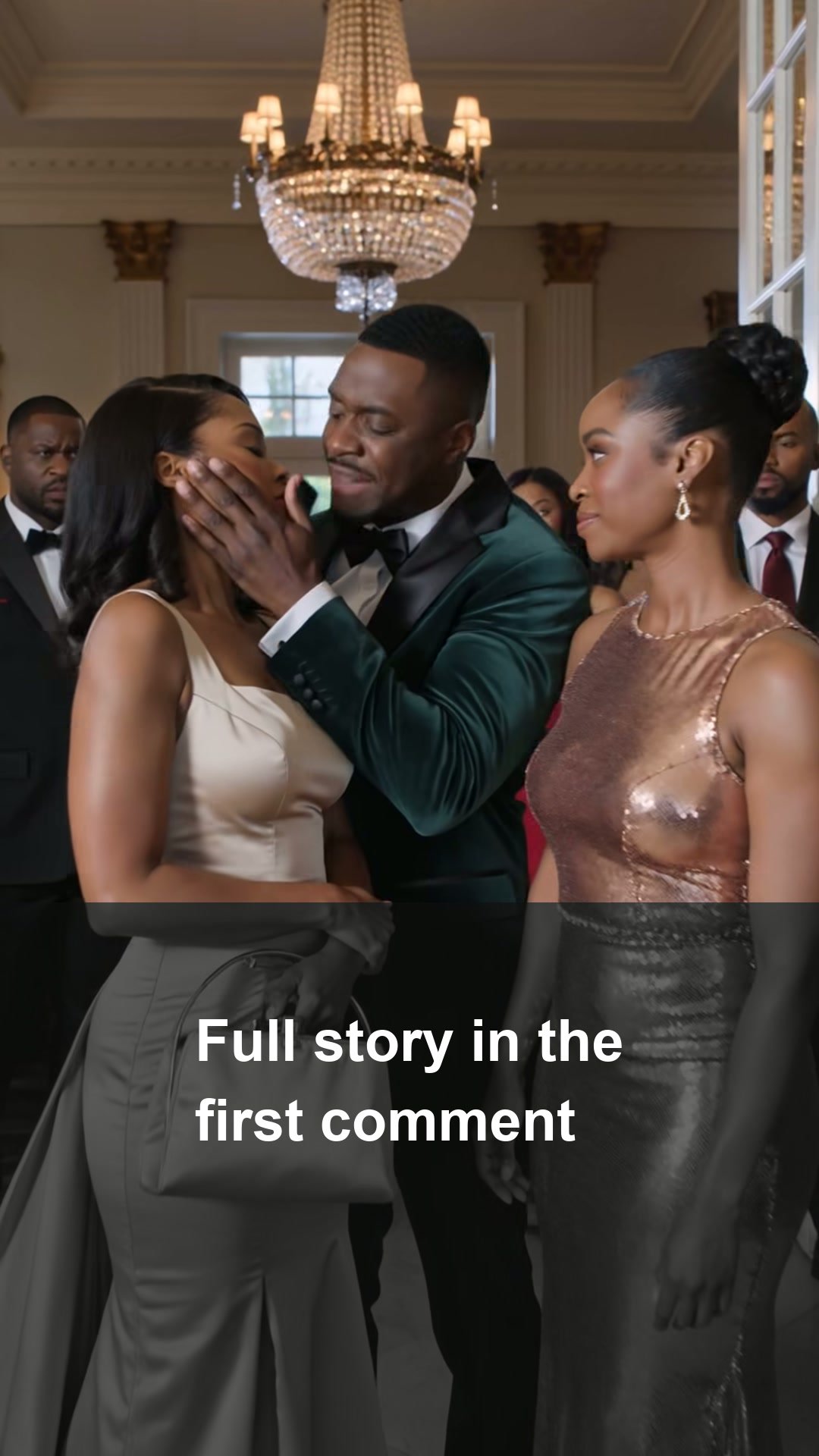
The security team—men my father had hand-picked from the quietest corners of the intelligence community—moved in unison. They weren’t there for protection; they were there for removal. I looked at Adrian, who finally stopped pacing, his face hardening as he noticed the barrel of a pistol resting against his ribs. I felt a surge of cold, clinical clarity. My father had taught me that leverage is only useful when you are willing to spend it all at once. I adjusted the microphone, the silence of the room absolute now, a heavy, suffocating vacuum. I didn’t need to speak to destroy them. I only needed to breathe. I tapped the base of the mic once, the sound echoing like a gunshot, and waited for the exact moment the light in Adrian’s eyes turned from arrogance to the realization that he had never possessed anything at all. The gala was over, and the audit was just beginning.
The microphone feedback hissed, a sharp, electronic whine that masked the sound of my own heartbeat. Adrian shifted, the security operative’s weapon digging a deeper indentation into the silk of his lapel. I didn’t look at him. I looked at the board members, their faces pale masks beneath the crystal chandeliers. I reached into my clutch and pulled out the flash drive. It was small, cold, and heavy with the weight of three years of forensic accounting. I placed it on the podium. The click of the metal casing hitting the wood sounded like a gavel.
I called Marcus, my father’s lead counsel, on the private line. The phone vibrated against the mahogany surface, a frantic, rhythmic pulse. He answered on the first ring, his voice measured, devoid of the frantic energy that defined Adrian’s circle. I told him to freeze the Vance family assets. Every account, every joint investment, every liquid credit line linked to their name. I felt the sharp sting of the engagement ring on my finger, a physical burden I had carried for too long. I turned to the audience and spoke, my voice steady, stripped of the trembling deference I had practiced for years. I stated clearly that the E.V. Foundation had been systematically bled by the Vance family, and that the evidence was now in the hands of the district attorney.
Adrian lurched forward, but the security team didn’t flinch. He hissed, his teeth bared in a snarl that lacked any true power. He asked me if I knew what I was doing, if I had considered the social suicide I was committing. I leaned into the mic and told him that the only suicide in the room was the one he had spent the last hour orchestrating.
I left the stage and walked toward the exit, the velvet curtains heavy and muffling the sudden, chaotic murmurs of the crowd. My phone began to ping—a waterfall of notifications. My bank apps were already reflecting the freeze. The screen showed zero balances across the board for the Vance accounts. It was clinical. It was efficient. It was the end of a lie.
The next morning, I sat in the high-backed leather chair of my lawyer’s office, the air smelling of ozone and old paper. The paralegal placed a pile of documents before me: the police report regarding the bruises Adrian had inflicted three weeks ago, the HR complaint filed against Celeste for the unauthorized funneling of foundation funds, and the court filing to dissolve the marital trust. Every signature felt like a weight lifting from my chest. I signed my maiden name, *Calder*, with a flourish that felt alien yet entirely right.
My lawyer, a woman with sharp eyes and hair pulled back in a severe bun, informed me that Adrian had already tried to move the remaining liquid cash into a shell account in the Caymans. She had blocked it. The counter-action was instantaneous: he had hired a high-profile firm to file for an emergency injunction, claiming I was mentally unstable and in the midst of a breakdown. He was pivoting to the oldest tactic in the book—the hysterical wife.
I felt a ghost of a smile touch my lips. I pulled out my tablet and opened the DNA test results I had commissioned months ago, back when I had first started noticing the discrepancies in his accounting and the strange, clandestine meetings with Celeste. It wasn’t about him being unfaithful. It was about the fact that the child Celeste claimed was his, the one he had used as leverage to demand a higher percentage of the foundation’s assets, had a genetic marker that ruled him out entirely. I handed the tablet to my lawyer. She scanned it, her eyebrows lifting. This would not just win the case; it would burn the last of his credibility in the city.
I left the office and walked to my car. The city was gray, the sky pressing down on the skyline, but the air felt thin and clean. My phone rang again. It was Adrian’s mother, Lenora. I let it go to voicemail. A second later, a text arrived: a threat, then a plea, then an offer of silence. I opened the messaging app and deleted the thread without reading it. I didn’t need their deals anymore.
I stopped at a public fountain near the park. I pulled the diamond-encrusted ring from my finger. It was cold, biting into my skin as I held it over the water. I thought of the long nights spent apologizing for his moods, the days spent curating a life that was nothing more than a cage built of stolen glass. I dropped it. The splash was tiny, insignificant against the roar of traffic.
I decided then to contest the will of the late Vance patriarch, a man who had left the majority of his holdings to Adrian under the assumption that he was a stable steward of their legacy. I had the documents to prove he wasn’t even blood-related to the primary estate, a detail hidden in the archives of a hospital in Switzerland that my father’s team had finally unearthed.
The consequences were already blooming. I could see the headlines on the kiosks as I walked: *Vance Holdings Faces Audit*, *Embezzlement Scandal Rocks Gala*, *The Calder Retraction*. The police sirens in the distance were no longer a sound of panic, but a soundtrack to my reclamation. Every step forward took me further from the girl who had believed that love was something earned through submission. I reached the foundation headquarters, the glass doors gleaming in the morning light. I placed my hand against the cool surface, feeling the strength in my own pulse. I was no longer a charity project. I was the architect of their ruin, and the building was finally mine.
The lobby of the E.V. Foundation was a cathedral of silence, save for the frantic hum of the news tickers scrolling across the wall-mounted monitors. I stopped at the reception desk, where Sarah, usually a portrait of composed efficiency, sat with her phone buzzing incessantly against the marble. She didn’t look up as I approached, her gaze fixed on a Twitter feed churning out fresh vitriol.
Evelyn, she whispered, her voice tight with a strange, nervous energy. People are calling. The board, the donors, even the janitorial staff’s union reps. Everyone wants to know if the rumors about the insolvency are true.
I leaned against the desk, my fingers tracing the cold, sharp edge of the granite. I didn’t answer her immediately. Instead, I watched a video playing on the screen behind her: a grainy, shaky-cam recording of Adrian being escorted out of the ballroom, his face pale and stripped of its usual, arrogant polish.
Tell them the truth, I said, my voice sounding foreign and clinical in the high-ceilinged room. Tell them the foundation is solvent, but the leadership is changing.
Sarah looked up then, her eyes searching mine, and for a moment, I saw the terror there—the realization that the world she had built her career upon was burning. She wasn’t just my assistant anymore; she was an accomplice to a collapse she hadn’t anticipated. I realized then that my isolation hadn’t just been Adrian’s doing. I had let them keep me small so they could feel safe.
I walked past her toward the elevators, the metallic *ping* echoing like a gunshot. The penthouse offices on the top floor were empty, a vacuum of air-conditioned air and expensive leather. I walked to the floor-to-ceiling windows, looking down at the city grid. Below, the streets were choked with cars, a swarm of ants unaware that their queen had just been dethroned. My phone vibrated in my palm—a deluge of messages from friends I hadn’t spoken to in years, their sudden interest smelling distinctly of opportunistic fear.
I reached into my pocket and pulled out the ring. It felt heavy, a burden of cold metal and empty promises. I set it on the mahogany desk, its diamond catching the harsh, flat light of the morning sun. A knock sounded at the door—my legal counsel, looking harried and disheveled.
The press is downstairs, Evelyn, he started, not waiting for an invitation to enter. The Vance family is claiming you embezzled the funds to frame them. They’re weaponizing the narrative.
I turned to face him, feeling a sudden, sharp clarity. They were still playing the game, assuming I would crumble under the weight of a smear campaign. They didn’t understand that I didn’t care about their narrative because I owned the platform.
Let them talk, I said, walking to my desk to pick up the tablet that held the keys to their destruction. Prepare the second round of disclosures. Every offshore account, every bribe to the city planners, every invoice for Celeste’s vanity projects. If they want a war of public perception, I’ll give them a funeral.
He hesitated, a shadow of doubt crossing his face, but he nodded and turned to leave. I watched him go, then walked to the window again. I was the architect of this ruin, and as the sirens wailed below, I decided that tonight, I would finally sleep without checking the locks.
The heavy mahogany doors of the Vance estate groaned as I pulled them shut for the last time. My key, once a symbol of domestic permanence, felt light and insignificant in my palm. I dropped it into the brass mail slot, hearing it clatter against the hardwood floor of the foyer where Adrian had once demanded I apologize for existing. The air outside was crisp, smelling faintly of the harbor, a sharp contrast to the stale, perfume-heavy atmosphere I had inhaled for five years. My car waited at the curb, its engine idling with a steady, rhythmic hum.
I didn’t look back at the windows. Instead, I focused on the weight of my maiden name, Calder, settling into my chest like a long-lost heartbeat. The forensic team was already inside, cataloging the remnants of the Vance fortune; there would be nothing left but the structural shell of a life I had played at living. I walked to the driver’s side, my heels clicking firmly against the pavement—a sound of complete ownership.
Inside the penthouse that was now exclusively mine, I moved through the rooms with a surgical detachment. I stripped the wedding band from my finger, the metal biting into the skin one last time, and carried it to the balcony. Below, the city sprawled in a grid of amber and violet light, indifferent to the implosion of the Vance empire. I held the ring over the railing, letting it slip through my fingers without a flicker of regret. It hit the pavement below with a soundless thud, absorbed by the vastness of the city.
I retreated to the bathroom, turning the shower to its highest heat. As the steam filled the room, I watched the expensive, synthetic fragrance of the gala slide off my skin and disappear down the drain. I scrubbed until my arms burned, erasing the tactile memory of Adrian’s grip. Wrapped in a towel, I walked to the kitchen and retrieved a simple bowl of fruit from the cold, quiet refrigerator. There were no voices to perform for, no justifications required for the way I held my fork or the silence I chose to maintain.
I sat by the floor-to-ceiling glass, watching the horizon soften from black to a bruised, hopeful grey. The sun began its ascent, illuminating the skyscrapers I effectively controlled. I had spent years hiding behind a shroud of humility, mistaking subjugation for grace. As the first light touched the skyline, I picked up my phone and opened the banking portal. I hit the final confirmation button, effectively liquidating the last of the Vance assets. I was finally, irrevocably, alone.
The morning air in the solarium felt different, scrubbed clean of the stale, heavy scent of gardenias and expensive gin. I set the bowl down on the marble tiles and listened to the hum of the city waking up below. It wasn’t the frantic pulse of a shark tank anymore; it was just a sound.
I stood and walked to the terrace, the cool air biting at my skin. My therapist had told me once that healing wasn’t a destination, but a series of quiet, unremarkable choices. I looked at the platinum band on my finger, the metal cold and heavy. I didn’t throw it into the sea. I simply slid it off and dropped it into the soil of the large terracotta pot by the door, burying it deep beneath the roots of a budding hydrangeas.
“You don’t have to carry the weight of the wreckage,” my lawyer had said, his voice clipped over the phone yesterday.
“I’m not,” I replied, watching a sparrow land on the railing. “I’m just clearing the space.”
He had hesitated, a rare crack in his professional armor. “Are you going to be alright?”
I looked at the garden, the vibrant, stubborn green leaves pushing through the dirt. For the first time in eight years, I didn’t feel the need to offer a polite, rehearsed reassurance. “I am going to be quiet,” I said, and ended the call.
I walked back inside and opened the sliding glass door fully. I picked up a small, worn leather leash from the side table—a gift I’d bought months ago and kept hidden in the back of a drawer. A golden retriever puppy, clumsy and soft, trotted out from the kitchen, his claws clicking rhythmically against the floor. He didn’t ask for anything but a touch. I sat on the floor, let him press his head against my chest, and breathed. The foundation of the house felt solid beneath me. I was finally, truly, beginning.
I reached into my pocket and pulled out the heavy platinum band. It felt cold, a dead weight that had anchored me to a version of myself I no longer recognized. I walked to the marble balcony, the night air crisp and sharp enough to sting my lungs. Below, the city sprawled out in a tapestry of electric light, indifferent to the empire currently crumbling in the dark. I held the ring over the railing, letting the moonlight catch the facets of the diamonds one last time before I opened my fingers. It didn’t make a sound when it hit the pavement seven stories down. I turned back toward the ballroom floor, where a discarded, diamond-encrusted bracelet lay half-submerged in a shallow, golden puddle of spilled champagne.
Leave a Reply