The champagne flute didn’t just shatter; it turned my silk bodice into a map of jagged, wet crimson.
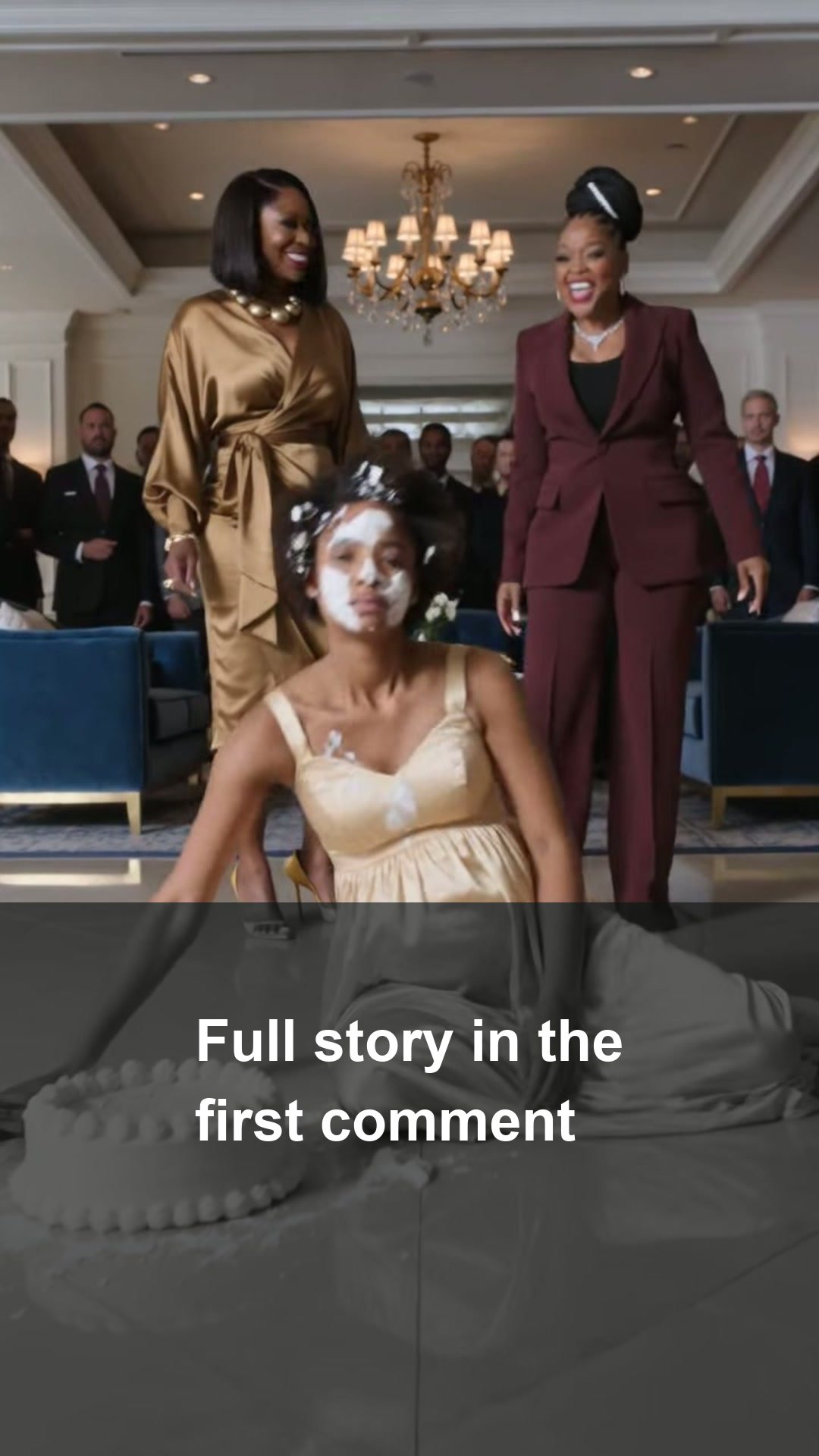
The Grand Atrium’s marble floor remained aggressively polished, reflecting the carnage of the ruined cake as Margaret stood over me, her manicured hand still poised in a delicate, cruel arc. Silence descended, heavy and pressurized, broken only by the hum of the climate control and the rhythmic clicking of heels retreating toward the elevators.
I wiped a smear of frosting from my cheek, the sugar gritty against my cooling skin. My breath hitched, trapped by the corset she had insisted I wear.
“You look exactly like the disaster you are,” Margaret said, her voice dropping to a surgical, low rasp. She didn’t blink.
I stared at the pristine white lace of my skirt, now weeping red wine and crushed sponge. My pulse drummed in my throat, a frantic, trapped bird. I realized then that my hands weren’t shaking because of her—they were shaking because I had finally stopped trying to appease her. I reached down, my fingers brushing the cold, slick marble. I stood up, ignoring the offered help from a nearby waiter. I was done being the liability.
The morning had started with the specific, metallic hum of my espresso machine, a sound that usually signaled the quiet rhythm of a Tuesday. I remember the way the steam curled toward the ceiling fan, dissipating before it could ever really take shape. I stood in the kitchen of our apartment, barefoot on the linoleum, listening to the muffled street noise four stories below. My task list for the day was scribbled on a yellow legal pad: three logo revisions for a local brewery, a dentist appointment at four, and a grocery run for milk and spinach. It was a life built on margins and manageable stressors.
I poured the coffee into my favorite ceramic mug, the one with the slight chip near the handle that I always traced with my thumb. It was tactile, grounding. The air smelled of burnt beans and the faint, citrusy tang of the dish soap I used to scrub the counter. I watched a pigeon land on the fire escape, its neck feathers shimmering a dull, oily purple in the flat, gray light of a city morning. I didn’t know then that the light would shift, or that the silence in the room was a luxury I was about to trade away.
The commute was its own kind of meditation. I took the bus, pressing my forehead against the cool glass, watching the storefronts blur into streaks of neon and concrete. A man in a charcoal suit stood next to me, his briefcase pressing into my hip, his phone emitting the tinny, high-pitched bleats of a game he was losing. I focused on the rhythm of the bus tires against the asphalt, the heavy, jolting stop-and-go that made my stomach flutter with a slight, persistent nausea.
At the office, the printer was acting up again. It emitted a rhythmic, grinding chirp that signaled a paper jam. I spent twenty minutes huddled over the machine, prying at the plastic tray with a letter opener, my fingernails accumulating tiny smudges of black toner.
“Going to be one of those days, Elena?” Sarah asked, leaning against the doorframe with her lukewarm tea.
“Just the usual,” I said, feeling the paper give way with a soft, satisfying tear. “Seems like the hardware just knows when I’m behind schedule.”
We talked about the weather—a damp, biting wind coming off the river—and the rising rent in the neighborhood. It was light, disposable conversation, the kind that filled the gaps between productive hours without demanding anything of my soul. I liked that. I liked the anonymity of the office, the way I could exist as a cog in a functioning machine rather than a person being weighed and measured by eyes I couldn’t see.
By two in the afternoon, I was back at my desk, sketching out the brewery’s font preferences while my stomach gave a small, sharp roll. I ate a plain granola bar, the oats dry and sweet against my teeth. The world felt solid. It felt like a collection of predictable parts: the ticking clock, the stack of invoices, the hum of the HVAC unit fighting the chill outside. I was entirely convinced that the trajectory of my life was a straight, narrow line I could walk without stumbling. I was wrong.
My phone, resting on the corner of the desk, vibrated. It wasn’t the usual ping of a client email or the gentle chime of a news alert. It was a long, jarring buzz that set the plastic desk surface rattling, a sound that cut through the office chatter like a blade. I didn’t reach for it immediately. I sat there for a second, watching the screen light up, the notification bar spilling over with a series of frantic, red-flagged messages from an unknown source. My heart rate jumped, a sudden, cold spike of adrenaline. I reached out, my fingers hovering over the glass.
I swiped the screen, my thumb trembling against the cool glass. The footage loaded instantly, a high-definition stream from the Thorne Hotel’s main atrium. It was grainy at the edges but the center was sharp: the marble floor, the towering floral arrangements, and there, in the center of the frame, was me. I was wearing the pale blue silk dress Marcus had insisted I wear, my hands resting instinctively on the curve of my belly.
Across from me stood Margaret, her posture a rigid, architectural feat of tailored wool and cold intention. She was holding a tiered cake, the white frosting shimmering under the chandelier light, before she deliberately tilted her wrists. The cake didn’t just fall; it surrendered to gravity, sliding off the silver tray and onto my shoulders. The impact was silent on the video, but I could feel the ghost of the weight, the sticky, sickening smear of sugar hitting my collarbone and dripping down toward my stomach.
Margaret didn’t scream. She didn’t apologize. She leaned in, her lips moving in a sharp, practiced cadence that the microphone captured with brutal clarity. You are a stain on this family, Elena, she said, the words echoing through the small, airless office. You are a placeholder, nothing more than a vessel for a name you were never meant to carry.
My breath hitched, the air in the room suddenly too thin to support. I looked down at my own hands, still clean, still detached from the scene unfolding on the screen. The shame should have been hot, a stinging, public burn, but instead, I felt a strange, icy detachment. This wasn’t a private family moment anymore; it was public property, a digital scar uploaded to the hotel’s social feed for thousands to dissect.
I stared at the screen as Margaret turned, expecting her usual entourage to applaud, but the camera shifted. A man in a dark suit stepped into the frame, his hand firm on Margaret’s arm. He wasn’t a waiter, and he wasn’t a guest. He was the barrier. My stomach tightened, a hard, protective knot around the baby. I realized then that my life wasn’t a line at all, but a cage, and the lock had just clicked open.
I stood up, the chair scraping against the linoleum, a harsh, screeching sound that made my coworkers look up from their screens. I didn’t acknowledge them. I grabbed my bag, the leather strap biting into my shoulder, and headed for the door. I had to reach the hotel. I had to see the look on her face when she realized the world was no longer watching her, but watching her lose. I reached for the door handle, my pulse steadying into a rhythm I didn’t recognize, a cold, calculated cadence. I stepped out into the hallway, the fluorescent lights humming overhead, and pushed into the unknown, leaving the quiet safety of my desk behind for the chaos waiting in the marble atrium.
The hallway was stifling, smelling of burnt coffee and ozone. I pressed my phone against my ear, the screen slick with sweat. Marcus answered on the fourth ring, his voice polished to a thin, synthetic sheen. I asked him why the security footage was public. He laughed, a dry sound that lacked any genuine humor, and told me the hotel’s server had suffered a glitch, a random upload error in the cloud. He sounded tired, his words clipped as if he were reading from a script. I told him the metadata suggested a deliberate export, not a glitch. He went silent, the line filling with the faint, rhythmic thrum of his own breathing. He told me to go home, that he’d handle the lawyers, and hung up. I stared at the blank wall, the silence of the office lingering in my head, and felt the first tremor of doubt.
I dialled the concierge desk at the Thorne. The man who answered, a junior clerk named Silas, didn’t sound like a man suffering from a server glitch. His voice was frantic, breathless. When I asked about the release, he stammered that his supervisor, Mr. Halloway, had personally overridden the system permissions at ten in the morning. He said he saw the security chief, a man who usually moved like a ghost, walking Margaret to the loading dock with a smile on his face. I pressed him for why, but he cut me off, whispering that his phone was being monitored and he couldn’t speak further. The line went dead. My gut twisted. If Halloway had the file, Marcus couldn’t have authorized the leak, and if Marcus was lying, he had a reason to protect someone higher up than his mother.
I shoved my phone into my pocket and walked toward the elevator. I needed to see the nurse, Clara, who had been on duty in the hotel suite when Margaret arrived that morning. I found her in the hospital breakroom, clutching a lukewarm tea. She wouldn’t look me in the eye. When I asked if Margaret had been alone, Clara shook her head, tracing the rim of her cup with a trembling finger. She said Margaret had been arguing with a man in an expensive gray suit, someone who wasn’t Marcus. She claimed the man handed Margaret a tablet with the footage already loaded, telling her it was time to ‘reset the narrative.’ Clara said the man wasn’t hotel staff; he looked like he owned the floor. I felt the floor tilt beneath me. I decided then that I didn’t need the police, and I didn’t need Marcus. I needed the witness.
I drove toward the hotel, my knuckles white against the steering wheel. The city blurred into gray streaks of rain and neon. Every story was a jagged piece of glass, and none of them fit the frame. I took the exit, the tires screeching against the wet pavement. I saw a man standing under the hotel’s portico, umbrella folded, watching the main entrance with an intensity that made my skin crawl. He matched the description. As I pulled the car to the curb, he turned, his face unreadable in the dim light. I watched him pull out his own phone, and the moment he saw my car, he stopped moving. He knew I was coming. I shifted into park, the engine ticking as it cooled, and wondered which version of the truth he was waiting to sell me.
The lobby air tasted like expensive lilies and synthetic floor wax. I stepped onto the marble, my heels clicking a hollow rhythm that echoed against the vaulted ceiling. Margaret sat in the center of a velvet settee, her spine a rigid line of impeccable tailoring, a silver tray of untouched petits fours beside her. The security chief stood three paces behind, his hand resting almost casually on his belt, his eyes tracking my every movement with the cold precision of a predator. I stopped ten feet away, the heat of the humiliation from the previous week still prickling the skin on my neck. Margaret didn’t look up from her tablet, though the slight tilt of her chin suggested she had sensed my arrival long before I breached the threshold. She smoothed a stray thread on her skirt, a gesture so practiced it felt choreographed. I reached into my bag, my fingers brushing the cool, sharp edge of the legal notice I had drafted, the paper crinkling against my palm. I could see my own reflection in the darkened glass of the atrium windows, a ghost hovering over the wreckage of my own life. I thought of the baby, the way the movement in my stomach had become the only thing I could trust. My pulse hammered in my throat, a frantic, rhythmic warning that I was playing a game with rules I hadn’t been allowed to write. I took a steadying breath, grounding myself in the quiet, absolute certainty that I was finished with the performance. Margaret finally lifted her head, her eyes scanning me with the same clinical disgust she might reserve for a stain on a silk rug, her lips curling into a thin, practiced sneer that dismissed my existence entirely. She opened her mouth to begin the practiced dismantling, but I stepped forward, cutting the space between us to nothing. I am not your guest anymore.
The kitchen linoleum in my childhood home was patterned with faded yellow daisies, and I remember staring at a single, peeling petal while my mother gripped the edge of the laminate counter until her knuckles turned the color of bone. She wasn’t shouting. She never shouted. She just waited for my father to finish his tirade about the utility bill, her silence acting like a vacuum that sucked the air out of the room. I was seven, pressing my back against the pantry door, holding my breath so I wouldn’t become the target of his redirected rage. My father tossed a crumpled stack of late notices onto the table, the paper sliding across the surface like a dead moth. You think you’re so careful, he said, his voice dropping into that dangerous, low register that promised a long night. My mother didn’t look at him; she just reached out and smoothed the crumpled paper, her movements deliberate and slow. I need the grocery money, she said, her voice steady as a heartbeat monitor. He laughed, a short, sharp bark that made me flinch. Money is for people who manage it, not people who bury it under a mattress of excuses. I decided then, watching her retreat to the bedroom with her head bowed, that I would never be the one asking. I would be the one who had everything perfectly lined up, the one who never left a paper trail of need for anyone to criticize.
Years later, in the drafty hall of my university dorm, the phone pressed against my ear felt like a hot coal. My sister, Clara, was crying on the other end, her sobs ragged and thin. He’s leaving, she whispered, the words catching on a hitch in her breath. He’s taking the car and he’s taking the accounts. I looked at my own textbooks, stacked in a precise, color-coded tower on my desk. I felt a surge of cold, detached clarity. Why did you let him? I asked, my voice devoid of the sympathy she was hunting for. There was a pause, a long, hollow silence that stretched across the miles between us. I loved him, Elena, she said, as if that were a currency that held value in the real world. I looked at the neatly sharpened pencils on my desk and realized that love was just a structural weakness, a crack in the foundation that allowed the house to eventually collapse. I told her to call a lawyer and hung up. I decided then that I would build a life so self-contained, so airtight, that no man could ever hold the keys to my survival.
But then I met Marcus, and his world was different—it was polished, marble-floored, and suffocatingly curated. The first time I walked into his mother’s estate, the air smelled of floor wax and forced lilies. Margaret sat in a high-backed velvet chair, her posture so rigid it looked painful. She didn’t stand when I entered. She watched me navigate the expanse of her living room, her eyes tracking the movement of my feet on the Persian rug as if calculating the dust I might be depositing. You’re from the city, she said, not as a question but as an indictment. She was pouring tea, the china clinking against the tray with the precision of a surgical instrument. I told her about my design work, the late nights, the freelance accounts I had spent years building from nothing. She took a sip of her tea, her gaze drifting toward the window. My son is prone to romanticizing struggle, she murmured, the steam from her cup curling around her face like a veil. I felt the familiar tightening in my chest, the old, ingrained instinct to be smaller, to take up less space, to prove that my presence was an asset rather than a complication. I smiled, a small, polite movement of the lips, and decided to say nothing at all. I thought if I stayed quiet, if I remained a blank canvas, she would eventually run out of ways to paint me as the villain.
The warning came six months into our engagement, over a lunch that felt more like a deposition. She had invited me to a club I wasn’t a member of, the walls lined with portraits of men whose names were synonymous with national debt. She leaned forward, the diamond on her finger catching the chandelier light and throwing a sharp, blinding reflection into my eyes. You have a certain… utility, Margaret said, picking at a piece of poached salmon. But a marriage in this family is a balance sheet. You are a variable we haven’t yet accounted for. I felt the bite of the silver fork against my tongue as I chewed, forcing myself to swallow a piece of fish that tasted like copper. I wanted to tell her that I wasn’t a line item, that I was a person who had fought for every inch of ground I stood on. Instead, I reached for my water glass, my hand perfectly steady. I understand the importance of stability, I lied, the words tasting like ash. I decided that I would play the part she wanted—the quiet, grateful outsider—until I could ensure my own safety. I thought I could outsmart a system designed to swallow people like me.
The night before the wedding, I found her in the library, going through a box of my personal correspondence I had left in the guest suite. She didn’t look up when the door creaked. She was holding a letter from my father, one that mentioned a bankruptcy from a decade ago. It was a secret I had guarded like a weapon, a testament to the fact that I had risen from wreckage. She folded it with agonizing slowness. History has a way of repeating itself, Elena, she said, her eyes meeting mine with a terrifying, predatory calm. People who come from nothing always find a way to return to it. I stood in the doorway, my heart hammering a rhythm of pure, unadulterated fear. I could have snatched the letter. I could have demanded she leave my things alone. Instead, I stayed frozen, trapped by the ghost of the little girl in the kitchen who knew better than to challenge the person holding the power. I decided to forgive the intrusion, to act as if it didn’t matter, hoping that my compliance would buy me a shred of mercy.
I was wrong. The patterns weren’t glitches; they were the design. The wine spilled on my dresses, the intercepted vendor emails, the constant, low-level humiliation of being treated like a decorator for a life I was ostensibly the co-author of—it wasn’t negligence. It was a process of erosion. She was wearing me down, grain by grain, until there would be nothing left of Elena Vance to object to anything she did. I looked at the reflection of the lobby chandelier in the eyes of the man behind the security desk, the way he watched us both with a detached, professional curiosity. I realized then that I had been training for this moment my entire life. I had lived in the shadow of my father’s temper, my sister’s fragility, and my mother’s forced silence. I had spent twenty-six years learning how to endure the weight of other people’s expectations until I had lost the ability to stand up straight. But the weight of the frosting, the sticky, cloying shame she had tried to smear across my face, didn’t feel like defeat anymore. It felt like a final, clarifying insult. I looked at Margaret’s perfectly coiffed hair, the way she stood as if she owned the gravity in the room, and I felt the last of the fear evaporate. It didn’t start today, this battle for the space I occupied. It started in a kitchen with yellow flowers and a mother who taught me that silence was a shield. I realized, with a sudden, violent thrill, that I had been holding the shield wrong the whole time. It wasn’t meant to protect me from them. It was meant to be dropped so I could finally see the exit.
Marcus arrived at the lobby entrance, his loafers clicking sharply against the marble, his face a mask of practiced corporate neutrality. He reached for my elbow, his touch light, testing the waters of my compliance as he had since the day he bought me my first diamond. He was thirty-two, a man who saw marriage as a merger and conflict as a PR crisis to be managed. He looked at the wreckage of the cake, then at his mother, Margaret, whose hands were still trembling with the adrenaline of her performance. He didn’t ask if I was hurt; he asked if the hotel manager had been notified of the potential for litigation. I watched the muscle in his jaw jump and realized he wasn’t protecting me; he was protecting his inheritance from the stain of a public scene. I stepped back, letting his hand grasp nothing but the air between us.
Margaret stood by the fountain, her silk scarf slightly askew, the first fracture in her armor. She had built her life on the currency of exclusion, believing that if she pushed hard enough, the world would eventually conform to her aesthetic. Her motive was always preservation—the preservation of a name that had been hollowed out by three generations of greed. I saw her glance toward the balcony, her eyes flicking toward the security cameras with a sudden, dawning terror. She was a woman who had mastered the art of the whisper campaign, but she was entirely defenseless against the cold, unblinking eye of a lens that had recorded her cruelty without a filter. She smoothed her skirt, her fingers clutching the fabric so hard her knuckles turned the color of bone. She wasn’t just a villain; she was a frightened child who had never learned that love couldn’t be bought, only bartered.
The security chief, a man named Elias whose history was carved into the jagged scar running along his hairline, watched us from the shadows of a pillar. He had served in the military before the private sector offered him a salary that could silence his conscience, yet he kept a photograph of his estranged daughter in his breast pocket. He saw the cake, the ruined dress, and the way Margaret loomed over me, and he saw his own failure to protect his family mirrored in my stillness. His hand moved toward his radio. He didn’t care about the Hale family fortune or the social hierarchy of the lobby. He cared about the simple, brutal truth of the footage he had already uploaded to the central server. He looked at me, a quick, almost imperceptible nod, and I knew the threshold had been crossed.
I looked at Margaret, really looked at her, and saw the decades of bitterness that had curdled her heart into something jagged. She opened her mouth to snap a correction about my posture, but no sound emerged. The silence hung between us, heavy and smelling of vanilla and decay. I thought of my own mother, who had taught me that silence was a shield, and I finally understood why she had been so tired all the time. She had been carrying the weight of other people’s reputations, just as I had been carrying the weight of Margaret’s expectations. I decided then that I would not be the next link in that chain. I turned away from the fountain, away from Marcus’s outstretched, grasping hand, and walked toward the glass doors. I didn’t look back to see the security team move in to intercept her. The hook was set; the empire was already falling, and for the first time in three years, I could breathe without asking for permission.
The air outside the Thorne Hotel was biting, a sharp contrast to the humid, sugar-choked lobby. I stood on the sidewalk, the heels of my shoes sinking into the damp pavement. My phone, tucked into my purse, vibrated with a rhythmic intensity. I ignored it, pulling my coat tighter until I felt the baby shift, a sharp, grounding jab against my ribs. I walked three blocks to a public library, the only place I could think of that felt neutral, and found a quiet corner in the computer lab.
My fingers trembled as I logged into my bank portal. I pulled up the joint account Marcus insisted we maintain for household expenses. With a single click, I transferred the entirety of my own freelance savings—the money I had earned designing logos in the middle of the night while he slept—into a private account at a different bank. I canceled the auto-pay features on the credit cards he had provided, effectively severing the financial umbilical cord that Margaret had used to monitor my every purchase, from prenatal vitamins to books on postpartum recovery.
I opened a blank document and began to type. It was a formal deposition of the events at the Grand Atrium, detailing the public humiliation, the intentional destruction of my property, and the verbal threats Margaret had leveled against my character. Every sentence felt like a brick being pulled from a wall I had spent years helping her build. I printed the document and walked two miles to the nearest police precinct.
The station smelled of industrial cleaner and stale coffee. I handed the paperwork to a desk sergeant whose eyes were hooded with indifference until he scanned the names. When he saw the Hale family crest on my stationary, he straightened up.
I am filing a report for harassment and destruction of property, I said, my voice steady, though my heart thrummed against my throat like a trapped bird.
He didn’t ask questions. He didn’t tell me to go home and talk to my husband. He just typed, the keys clicking in a staccato rhythm that sounded like a countdown. As I signed the document, my phone buzzed again. A text from Marcus: Where are you? My mother is hysterical. She says you’re making a scene.
I typed back: The scene ended when you walked away. I am not coming back.
I left the station and hailed a cab to the law firm of Aris & Thorne. I had read about them in the business section—the firm that specialized in dismantling high-net-worth reputations. When the senior partner, a woman with silver hair and a gaze like a surgical blade, led me into her office, I didn’t mince words. I wanted to contest the prenuptial agreement. I wanted a court-ordered DNA test to establish the baby’s lineage outside of the Hale family’s control. I wanted a restraining order that would force Margaret to remain at least one hundred yards from me at all times.
You understand the retaliation this will invite? she asked, leaning back in her leather chair. They will strip your assets. They will attempt to paint you as unstable.
Let them, I said, feeling the weight of the frosting-stained dress finally lift from my shoulders. I have the security footage.
I didn’t have to explain. She knew. The Thorne Hotel was a client of hers, and the owner was a man who detested public scenes as much as he loved a good leverage play.
The retaliation arrived before I even reached the lobby. My phone lit up with a barrage of notifications: a frantic email from HR at the firm where I had once consulted, informing me that my contract had been terminated effective immediately due to a sudden restructuring. Then, a message from the landlord of the apartment I had been renting under the Hale family’s corporate lease. We have been informed of a breach of contract, the email read. You have forty-eight hours to vacate.
I sat on a park bench and watched the screen flicker. Every action I took was being countered by a move from their board. It was a game of chess played with real lives, and for the first time, I wasn’t just a pawn. I was the player.
I pulled up the website for the Thorne Hotel. The video was already live. It had been titled The Price of Pride. It showed Margaret in her glory, her face twisted in that familiar sneer, the wine glass hovering, the moment of impact. The comments were already numbering in the thousands. The Hale family stock had dipped four points in the hour since I left the lobby.
My phone rang again. It was a number I didn’t recognize. I answered, expecting the cold, clipped tones of a family attorney. Instead, a deep, resonant voice spoke.
Ms. Vance, this is the office of the Thorne estate. My employer would like you to know that the hotel is prepared to offer you temporary, secure housing. Your autonomy is currently a liability to the Hales, and they are moving to suppress it. We find that unacceptable.
I looked at the park, the trees losing their last leaves to the gray sky. The choice was simple: go back to the gilded cage and beg for forgiveness, or step into the unknown with the backing of a man who held the keys to the kingdom.
I am in, I said.
The call ended. A black car pulled up to the curb a moment later. The driver didn’t look at me with pity or judgment; he held the door open with the professional distance of a guard. As I climbed in, I saw a notification pop up on my screen: a legal summons from Margaret’s lawyers, charging me with theft of family property—the engagement ring I had left on the vanity.
I looked at my bare hand, then at the driver.
Let them come, I whispered. I am ready to be the villain in their story if it means I am the hero in my own.
The digital landscape moved faster than the lawyers. By the time the car reached the city limits, my phone was a vibrating weight in my pocket, a relentless pulse of toxicity. A dozen notifications from local news aggregators pinged at once: The Hale family stock had dipped four points in pre-market trading, sparked by the viral loop of Margaret’s face—contorted, ugly, and caught in high definition—as she’d barked at me in the atrium. I watched a stranger’s TikTok analysis of my body language while the car wove through traffic. The comments were a riot of armchair psychologists and social-climbing vultures dissecting my posture, my silence, and my maternity dress.
My childhood friend Sarah sent a text, followed by three missed calls. She wasn’t checking on me; she was asking if I’d heard the rumors about the Thorne Hotel’s security chief being fired, or if Margaret was actually going to file a restraining order to force me into a deposition. I didn’t reply. I dropped the phone into the footwell and watched it slide under the seat. The silence in the back of the car was sharp, clinical, and for the first time in three years, entirely my own.
I stared out the window at the skyline. The school where I’d planned to enroll the baby had already sent an automated email: an invitation to a private donor gala, followed immediately by a curt notice that our application was under review due to recent public scrutiny. Even the institutions I hadn’t yet touched were already recoiling from the smell of the fallout. I felt the baby shift, a sharp, insistent kick against my ribs that forced me to catch my breath. It wasn’t a movement of distress; it felt like a declaration of space.
The car slowed as we approached a small, nondescript apartment complex on the edge of the city. This was the place the hotel owner had provided—a temporary sanctuary, stripped of the velvet curtains and the judging eyes of the Hale inner circle. I stepped onto the pavement, the air tasting of exhaust and oncoming rain. A neighbor I didn’t know lingered by the mailboxes, eyes flicking toward the black sedan, then toward my stomach, then back to the sedan. She looked ready to ask for a selfie or a confession, her mouth half-open.
I walked past her without meeting her eyes. I didn’t owe her the narrative. I didn’t owe the internet the explanation of why I’d chosen to dismantle my own comfort.
Inside, the apartment was sparse. No heavy heirlooms, no portraits of ancestors I’d never met, just white walls and the sound of my own footsteps echoing on hardwood. I went straight to the bathroom and turned on the faucet. The water ran hot, stinging my skin as I scrubbed the remnants of that afternoon from my face. I looked in the mirror, searching for the girl who had spent years apologizing for taking up too much room, but she was gone. In her place was a woman with a hollowed-out stare and a stomach that held the future.
I took off the expensive, ruined dress—the fabric still tacky with sugar—and threw it into the trash can. It felt like shedding a skin that had never fit. I reached into my bag and pulled out a simple, oversized cotton robe. As I pulled the fabric over my shoulders, the phone in the other room began to ring again, a shrill, persistent sound that filled the empty space. I walked toward it, my pulse steady, and reached for the device. I didn’t answer it. I pressed the power button until the screen went black, then tossed it onto the kitchen counter. The silence that followed was absolute. It was the first time I had been truly alone, and for the first time, I wasn’t afraid of what came next.
The lobby of the Thorne Hotel echoed with the sharp, rhythmic click of my heels against the marble as I walked toward the revolving doors. Behind me, the security chief, a man whose face remained a granite mask, cleared the path. Ahead, Margaret stood near the entrance, her silhouette framed by the harsh glare of the streetlights outside. Her chauffeur’s car was absent, replaced by a cold, gray fog clinging to the glass. She looked small, stripped of the aura of invincibility she had draped over herself for years. Her fingers were curled tightly around the handle of her leather bag, the knuckles bone-white.
I stopped ten feet away. She turned, her eyes darting toward the security chief before landing on me with a flicker of practiced disdain that didn’t quite reach her gaze. The lawsuit papers were already in the post, the hotel’s legal team having moved with surgical precision.
“You think this changes your station?” she asked, her voice raspy. “You are still nothing.”
I watched her, noticing for the first time the deep lines around her mouth, the exhaustion written into the slump of her shoulders. She was fighting a ghost, and the ghost had finally packed its bags. I didn’t offer a rebuttal. There was no need to defend my existence to a woman who had spent a lifetime trying to erase hers. I simply reached into my pocket and touched the cold edge of the apartment key I had retrieved from the realtor an hour ago.
“I’m not part of your station anymore, Margaret,” I said. My voice was steady, lacking the tremor that had haunted our every conversation for months.
She opened her mouth to retort, but the security chief took a half-step forward, his presence a wall between us. She shrank back, a sharp intake of breath signaling her sudden, terrifying awareness of her own isolation. Her influence had dissolved the moment the hotel released the footage; she was no longer a matriarch to be feared, but a liability to be escorted out.
I pushed past her, stepping out into the crisp, cool air of the city. The billionaire’s private car waited at the curb, its door held open by a driver who didn’t recognize me, yet treated me with a deference that had nothing to do with the Hale name. I climbed into the leather seat, the interior smelling of cedar and rain. As the car pulled away, I looked back once. Margaret was standing on the sidewalk, alone, watching the glass doors of the Thorne reflect nothing but the empty street. I turned my head, rested my hand on my belly, and breathed. The engine hummed, carrying me away.
The car deposited me at a small cottage three hours north, where the tide pulled the salt air through the screen door. I spent the first week learning how to inhabit my own skin again. Every morning, I woke to the rhythm of the waves rather than the chime of a deadline or the sharp, rehearsed critique of a mother-in-law. I sat on the porch, my feet tucked under a wool blanket, listening to the wood expand in the sun.
I began to garden, digging my fingers into the damp, black earth behind the house. I planted rows of snapdragons and lavender, watching the dirt cling to my nails. One afternoon, a stray terrier with mismatched eyes trotted up to the fence. He didn’t demand anything; he just sat, head cocked, until I opened the gate.
Do you want some water, little guy? I asked, my voice rusty from days of near-silence.
He wagged his tail against the gravel, a soft, rhythmic thumping that echoed the way the baby moved beneath my ribs. A sudden, sharp kick startled me, and I laughed—a genuine, unvarnished sound that felt strange in my throat. It wasn’t the polite, muffled laughter I had performed for years. It was loud and startling.
I realized then that the weight I’d been carrying wasn’t just the child. It was the constant, suffocating expectation of performance. I stood up, brushing the dirt from my knees, and walked to the kitchen. For the first time in months, I prepared a meal that was entirely my own: thick sourdough toast with salted butter and sliced tomatoes from the local market. I ate standing at the counter, the juices running down my chin, not caring about the mess. The silence of the house no longer felt like a void to be filled by someone else’s demands; it felt like a wide, open room. I was no longer waiting for the next shoe to drop. I was simply here, breathing.
I walked back to the living room where the afternoon light pooled on the hardwood. My old life felt like a costume shed in the dark, stiff and constricting. I pulled the heavy, velvet curtains back, watching the sun hit the dust motes dancing in the air. My phone sat on the side table, its screen dark, devoid of the usual frantic notifications from the Hale estate. I didn’t reach for it. Instead, I moved to the foyer and picked up the small cardboard box I had packed earlier. Inside lay the silver-threaded maternity gown Margaret had forced me to wear for our last gala. I didn’t fold it; I shoved it into the trash can. On the floor, near the threshold, a single, pristine baby shoe sat abandoned, its tiny white lace trailing across the polished marble.
Leave a Reply