The padlock lay in two jagged pieces on the foyer rug, a heavy, iron-scented exclamation mark against the polished hardwood.
Kristin stood at the top of the stairs, her silk robe cinched tight enough to bruise, her face drained of its practiced, porcelain composure. I held the bolt cutters at my side, the rubber grips slick with a thin film of condensation from the morning air. The house was silent, save for the rhythmic tick of the grandfather clock I had moved to the landing—the only heartbeat left in this hollow shell.
“You broke the seal,” she whispered, her voice fracturing like thin ice.
I didn’t answer. I watched the way her knuckles whitened as she gripped the banister, the sudden, frantic flicker of her eyes scanning the shadows for a weapon or an exit. She had spent three years calculating the exact frequency of my silence, assuming it was compliance. She was wrong; it was merely a long, cold study of her architecture. I placed the cutters on the mahogany console, the metallic clatter echoing through the vaulted ceiling. I had finished dismantling their perimeter. Now, I would start on their foundations.
The coffee maker whistled, a thin, shrill sound that sliced through the pre-dawn kitchen. I poured the grounds into the filter, watching the dark silt settle. It was a Tuesday, the kind of Tuesday that stretched out like a flat, grey ribbon. Outside, the neighborhood was still held in the grip of a thick, damp fog that swallowed the streetlights, leaving the world feeling soft and indistinct. I tapped the glass carafe against the base, waiting for the drip to finish. The rhythm was soothing, a metronomic pulse that allowed for the slow, mechanical shedding of sleep.
By eight, I was navigating the commute. The interstate was a river of brake lights, a rhythmic stop-and-start that required nothing more than muscle memory. I kept my eyes on the taillights of the sedan ahead, watching the way the red glow bled into the wet asphalt. I thought about the grocery list I needed to write. Milk, eggs, the specific brand of Earl Grey that Mark preferred, though he rarely drank it. It was better to have it in the pantry anyway. It was a hedge against a day where he might actually sit down for a moment of quiet.
The office was predictably climate-controlled. The air smelled of ozone and stale toner from the printer, a sharp, chemical sting that greeted me every morning. I stopped by Sarah’s desk, pressing a small, foil-wrapped chocolate onto the corner of her blotter. She looked up, startled, then offered that practiced, polite smile that never quite reached her eyes.
Did you finish the quarterly report? I asked, keeping my voice neutral, professional.
Almost, she said, her fingers dancing over the keyboard without losing their rhythm. Just waiting on the final figures from the audit department. It is always a slow process, isn’t it?
I nodded, feeling the familiar weight of the office chair beneath me. Everything was precise. Everything was accounted for. Outside the window, a light drizzle began to streak the glass, blurring the world into a smudge of concrete and green. I spent the morning filing invoices, the stapler providing a satisfying, mechanical snap every few seconds. There was a profound comfort in the taxonomy of paperwork. It was a world of rigid lines where mistakes were just numbers that could be corrected with a few keystrokes.
I ate my sandwich at the desk, watching the clock. 12:47. The hum of the computer fans was the only conversation I needed. I thought about the weekend, the way the house felt when the sun hit the parlor windows just right, illuminating the dust motes dancing in the air like suspended gold. It was a life built on habit, a series of rituals so ingrained they felt like natural law. We moved through the hallways of our lives, adjusting our posture to fit the expectations of the rooms we occupied.
The afternoon wore on with the same grey efficiency. The printer jammed once, and I spent ten minutes meticulously clearing the paper path, my hands steady, my breath even. It was a small, tangible problem with a clear, logical solution. I liked those. I liked the way the machine sighed back to life once the obstruction was removed.
At 4:15, I packed my bag. The transition from the office to the car was a seamless slide, the transition from the car to the house a familiar closing of a door. I turned the key, stepped into the cool, silent hallway, and felt the house settle around me like a familiar coat.
Then, the silence broke. A sharp, insistent ringing pulled me toward the kitchen, the sound vibrating against the granite countertop.
I stared at the phone. The caller ID was a string of zeros, a blocked number that felt like a cold prickle against my thumb. I picked it up. My breathing remained steady, a habit from thirty years in hospice care, where panic was a luxury no one could afford.
Yes, I said.
The voice on the other end was not a person, but a recording, clipped and professional. It informed me that my access to the secondary security gate had been revoked due to a change in the primary account holder’s credentials. The line clicked dead.
I looked toward the hallway. The house had shifted. The air felt thinner, scrubbed clean of my presence. I walked to the front door, my boots clicking against the marble floor I had paid to have polished only three months ago. I reached for the brass handle, turned it, and felt nothing but the resistance of a deadbolt that refused to give. They hadn’t just changed the code; they had reinforced the lock from the inside.
I went to the service entrance. My hands, which had once cradled the dying, moved with clinical precision toward the heavy-duty bolt cutters I had retrieved from the garage. The steel handles were cold, biting into my palms. I positioned the jaws around the heavy iron padlock Kristin had installed while I was out to lunch. It was a cheap, gaudy thing that clashed with the mahogany frame.
The sound of metal shearing against metal at dawn was the first honest thing my daughter-in-law had heard in years. It was a sharp, jagged snap that echoed through the foyer, splintering the early morning stillness. The padlock fell to the floor, hitting the tile with a dull, heavy thud.
I stood there for a moment, listening. Upstairs, the floorboards groaned under the weight of someone pacing. Then, the sound stopped.
Elena? Mark’s voice was thin, muffled by the ceiling. What are you doing down there?
I didn’t answer. I stepped over the severed lock, leaving it where it lay like a discarded confession. I felt a sudden, sharp clarity, a lightness in my chest that had nothing to do with the heavy tool in my hand. I walked into the kitchen and set the bolt cutters on the granite island. The metallic clang was final.
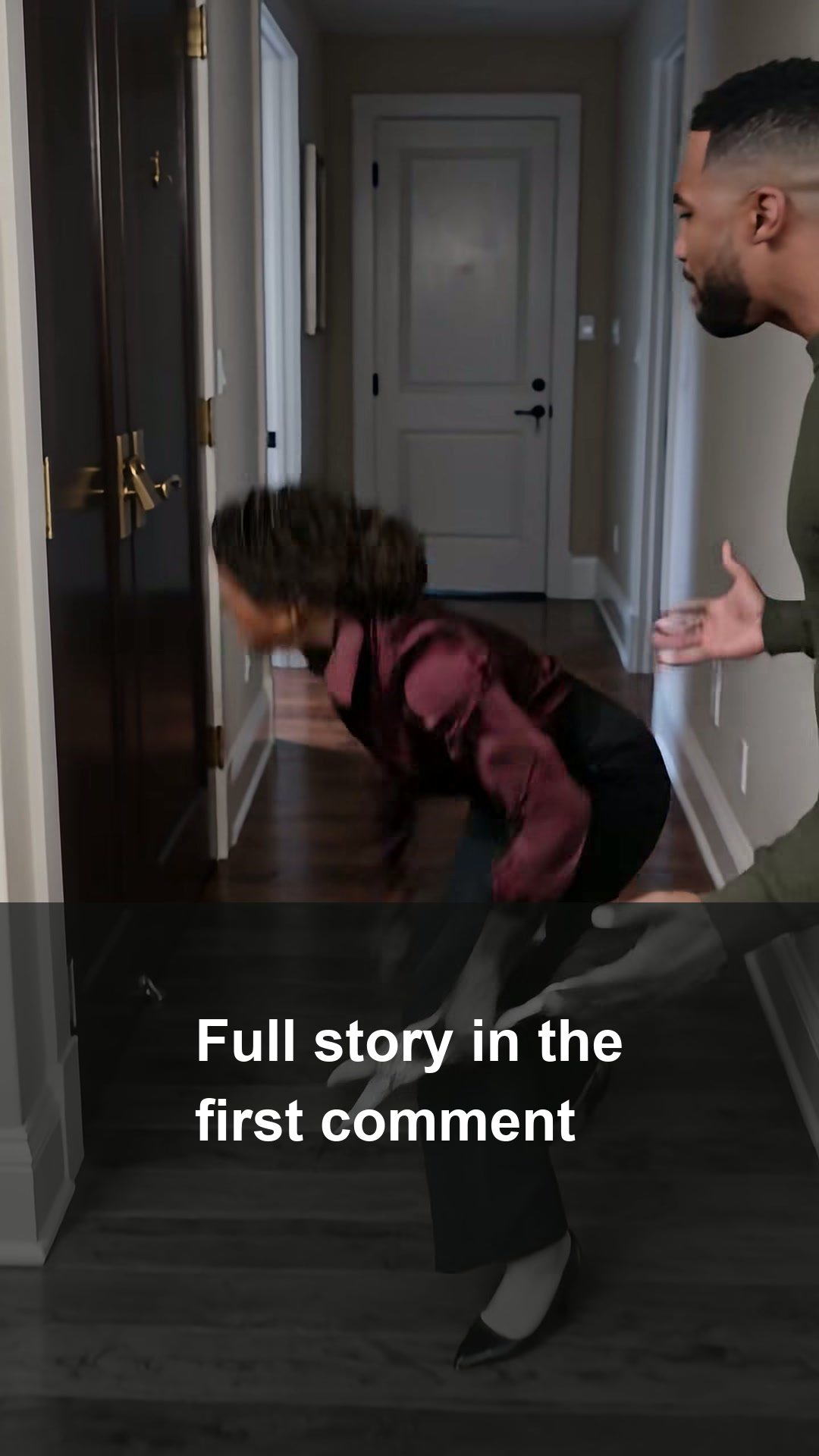
Kristin appeared on the landing, her robe clutched tightly at her throat, her face a mask of performative confusion that didn’t quite reach her eyes. She started to speak, a practiced script of indignation ready on her tongue, but I held up a hand. The gesture was small, but it carried the weight of a scalpel. She stopped.
I don’t need an explanation, I said, my voice barely above a whisper. I just need you to look at what you’ve done.
I walked past her, toward the stairs, leaving the heavy front door standing wide open to the gray light of dawn. The house was finally breathing.
The kitchen tile was cold beneath my bare feet, a sharp contrast to the humid heat rising from the kettle. I held the receiver of the landline, the plastic cord coiled like a dead snake against my forearm. I dialed the number for the boutique hotel where Mark claimed he had stayed during his business trip last week.
“Vance, room 402,” I said, my voice steady. “I’m checking the folio for a forgotten item.”
The clerk paused, the clatter of a keyboard audible in the silence. “Ma’am, there’s no Vance registered for the last ten days. We had a group booking, but that name isn’t on the manifest.”
I hung up, the dial tone a flat, hollow sound. Mark had sworn he was in the city for the board meetings. I moved to the hallway, where the sunlight caught the dust motes dancing over the console table. I pulled my phone from my pocket and messaged Sarah’s former nurse, the one Kristin insisted had quit due to a family emergency.
“You didn’t leave because of your mother,” I typed. “Kristin paid you to stop coming here. Why?”
The reply came seconds later, three dots pulsing rhythmically before the text popped up: “She said you were becoming confused, Elena. She told me you were wandering into the garden at night and she couldn’t risk the liability. I didn’t want to lose my license.”
I stared at the screen, the clinical terminology twisting in my gut. I had never wandered, not once. I had been in the library reading, or in the sunroom watching the moon. I looked up at the wall. The portraits of my husband were gone, replaced by abstract prints that meant nothing. I picked up my keys. The brass felt heavy, a burden I had carried for far too long.
I drove to the clinic where Mark’s assistant, Julian, worked. I caught him in the parking lot, his briefcase tucked under his arm like a shield. He looked at me, then at the sky, his feet shifting.
“Mark told me you were taking a sabbatical,” he said, his voice straining for a natural pitch. “He said you were tired, Elena. He said you wanted the house to be quiet while you recovered.”
“Recovered from what, Julian?” I asked.
He didn’t answer, just opened his car door, his hands trembling enough to rattle the keys. “I just do the scheduling. I don’t know what happens behind your front door.”
I turned the ignition, the engine catching with a rough, uneven shudder. The stories were fraying, the threads pulling apart to reveal the rot underneath. Mark said he was working; the hotel said he wasn’t there. Kristin said the nurse left because of family; the nurse said Kristin lied to isolate me. Each piece of information was a jagged glass shard, none of them fitting into the image of a struggling but honest family. I pulled out of the lot, heading toward the bank. If the house was a lie, the finances would be the truth. I needed to see the ledger, to feel the weight of the actual debt. The steering wheel felt like a surgeon’s tool, steadying my hands as I realized I was no longer the patient in this house. I was the one performing the autopsy.
The bank manager’s office smelled of stale coffee and expensive upholstery. I sat in a chair that offered no comfort, my coat still damp from the morning mist. Across the desk, the ledger lay open like a wound. I traced the lines of red ink, the spiraling withdrawals, and the systematic draining of my retirement accounts. Each entry was a rhythmic betrayal, a heartbeat of greed masked by the soft, polite language of family support. I remembered Mark at ten, his scraped knees, his small hands clutching mine in the hospital corridor while he promised never to let go. He had held on, alright, but only until he could pry my fingers loose from everything I had spent forty years building.
I didn’t cry. My clinical training had stripped away the vanity of grief long ago. I looked at the totals, the foreclosure notices tucked into the back of the file, and the sheer, breathtaking audacity of the fraud. Kristin had been the architect, but Mark had laid the foundation, brick by deceitful brick. He had signed his name to my ruin, believing I was too old, too tired, or too senile to notice the arithmetic of his malice.
I stood, the paper rustling sharply in the dead-air silence of the room. I walked out into the lobby, where Mark sat waiting, his phone held to his ear, his face tight with the rehearsed anxiety of a man who thought he was still playing the victim. When he saw me, he stood, smoothing his tie, his eyes flickering toward the door with a practiced, desperate hunger to maintain the performance. He took a step forward, his voice dripping with the fake warmth he used to gaslight me into submission. He started to explain, to weave another tapestry of excuses, but I simply held up the ledger, its weight pulling at my wrist.
I looked at my son and realized he was a stranger I had raised to kill me.
You are not my son, you are just a debtor.
My father died in a room that smelled of antiseptic and stale coffee, and I, at twenty-two, had been the one to sign the DNR order. I remember the weight of the pen, how it felt like a surgical instrument, cold and final. My mother sat in the corner of that room, not crying, but folding her napkin into smaller and smaller squares until it was a thick, useless knot of linen. She taught me then that grief was a structural failure, something to be managed through silence and the rigorous application of household chores. I spent the next forty years applying that same antiseptic logic to my life, scrubbing away the debris of other people’s catastrophes, convinced that if I kept the borders of my world pristine, nothing would ever dare to cross them.
When Mark was six, he broke his arm jumping from the garage roof. He didn’t scream when he landed; he just sat there in the dirt, staring at the unnatural angle of his forearm with a terrifying, quiet curiosity. I scooped him up, my heart hammering against my ribs, but his gaze remained fixed on the bone, clinical and detached. I brought him to the emergency room, and while the doctor set the fracture, I watched him study the tray of instruments. He looked at the needle, the gauze, and the silver tongs, and for a second, he looked exactly like my father. He wasn’t afraid of the pain; he was interested in the mechanics of it. I told myself then that he was just resilient, that he had my iron constitution. I didn’t see the deficit. I didn’t see that he lacked the ability to connect the cause of his fall to the physical cost of the break.
Years later, when the house was finally paid off, I sat at the kitchen table and watched Mark trace the grain of the wood. The deed was sitting between us, a heavy, cream-colored document that felt like a shield. I wanted to give him the security I never had, the certainty of a foundation that couldn’t be shaken by an unexpected bill or a sudden illness. I pushed the paper toward him, my hands steady. He looked up at me, his eyes wide and bright with a gratitude that felt almost religious. I thought I was securing his future, turning the house into a sanctuary for his growing family. I didn’t know then that I was merely handing over the keys to a cage I had built for myself.
Kristin entered the room a moment later, her heels clicking on the hardwood like a countdown. She didn’t look at the document; she looked at the walls, her eyes measuring the square footage, calculating the potential. She walked over to the window, pulled back the curtain, and let the light flood in, not because she wanted to see the garden, but because she wanted to see what she could change. She touched the mantel, brushing off a layer of dust that didn’t exist, a gesture of ownership that made my skin crawl. She spoke about renovations, about opening up the floor plan, about decluttering. She used the language of improvement, but I heard the language of erasure. I sat there, my tea cooling in my hand, and let her talk. I was so used to being the one in control, the one who dictated the flow of a room, that I assumed I could guide her. I underestimated the hunger of someone who had never had anything of their own.
There was a Sunday dinner, three months after they moved in permanently. The house was full of the noise of their life, a cacophony of banging cabinets and slamming doors that felt like a localized earthquake. I watched Mark from the kitchen doorway as he struggled to balance the checkbook. He was sweating, his fingers fumbling with the calculator. When he saw me, he swept a stack of envelopes into a drawer with a frantic, jerky motion. It was the same look he had when he was a boy, caught trying to hide a broken vase. I should have walked over and asked him what the invoices were for, what kind of hole he was digging, but I held back. I was the nurse, the professional, the one who waited for the patient to admit they were dying before I started the treatment. I stayed in the doorway, letting the lie fester between us.
I remember finding the first photo of my husband in the trash. It was in the bin under the sink, buried beneath eggshells and coffee grounds. I picked it up, the glass cracked across his face, and walked into the living room where Kristin was arranging a collection of minimalist, colorless vases. I held the picture out, my hand steady, my voice measured. She didn’t flinch. She looked at the photo, then at me, and said it didn’t fit the aesthetic. She said it was time to move forward, that the past was just extra weight holding the house back from its potential. I looked at the mantle, now populated by her sterile, hollow objects, and I felt the air leave the room. I didn’t scream. I didn’t fight. I walked back to my room and closed the door, locking it for the first time in thirty years. I stood there, listening to the house settle, realizing that the structure wasn’t holding me up anymore; it was leaning on me, waiting for me to collapse so it could flatten me.
There was a night when Mark came to me, his face pale, his hands shaking. He asked for money. Not a loan, but a liquidation of the savings I had set aside for my own twilight years. He spun a story about a market dip, a bad investment, a temporary shortfall that would right itself if I just gave him the cushion. I saw the fear in his eyes, the same fear my father had when he realized he couldn’t pay the mortgage. I looked at my son, the boy who had once watched his own broken arm with curiosity, and I saw that he hadn’t grown into a man; he had grown into a bottomless well. I gave him the money. I gave it to him because I thought if I filled the well, he would finally be satisfied. I gave it to him because I was still convinced that I was the one in charge of the remedy.
I realized the mistake on a Tuesday, when I found the eviction notice addressed to me, written by a lawyer they had consulted in secret. It wasn’t a legal document—it was a performance, a piece of theater designed to test my resolve, to see if I was still the woman who could be managed. They thought I would crumble, that I would retreat into the hospice nurse’s quiet stoicism and pack my bags without a word. They had been counting on my silence for years. They had been counting on the idea that I would prioritize their comfort over my own existence. I stood in the kitchen, reading the letter, and the sound of the house—the creaks, the hum of the refrigerator, the muffled arguments behind the walls—suddenly became clear. It wasn’t a home. It was a machine that had been designed to strip me for parts.
I looked at the counter, at the pile of mail Kristin had intercepted for my own good, and I realized I hadn’t been a resident for a long time. I was a tenant in a house I had paid for, in a life I had sacrificed to make space for people who couldn’t stand the sight of me in their periphery. I went to the junk drawer, the one where they kept the spare keys, and I felt the weight of them in my palm. I knew then that the only way to save the house was to break it. I decided that the next time they tried to lock me out, it wouldn’t be because I forgot my key; it would be because I had changed the locks entirely. I went to the shed, found the heavy-duty bolt cutters, and felt the familiar, cold weight of steel. It wasn’t a tool of violence; it was a tool of surgery. It was time to excise the rot. The dawn was coming, and for the first time in my life, I wasn’t afraid of the light.
The damp grass soaked my slippers as I made my way to the gate, the iron chain groaning under the bolt cutters. It was a precise, clean snap, the sound echoing against the silent, sleeping facade of the house. Inside, my son Mark was likely dreaming of his next promotion, a fantasy he curated with the same desperate precision as his bank statements. He lived in the permanent state of a man expecting a windfall that would never come, his spine softened by the ease of taking what I had spent thirty years building. I remembered him at six, clutching a broken bird, begging me to fix it. He never learned that some things, once shattered, cannot be mended by a simple bandage.
Kristin was already awake, standing in the kitchen doorway with a glass of water, her face a mask of calculated indifference. She looked at the gate, then at me, her fingers tightening around the crystal until her knuckles went white. She was the one who curated our lives, stripping the walls of my late husband’s portraits to make room for minimalist prints that meant nothing. She believed that if she controlled the aesthetics of our existence, she could suppress the reality of the mounting debt hidden in the pantry folders.
I don’t think you should be doing that, Elena, she said, her voice steady but thin, like paper stretched too far.
I kept the cutters held against my thigh, the metal still humming from the vibration of the break. I am simply reclaiming the perimeter, I replied.
She looked past me, toward the driveway where the cars sat, symbols of a liquidity that didn’t exist. She was terrified of the neighbors seeing a crack in the veneer. I stepped closer, observing the faint tremor in her lower lip, the mark of someone who had gambled her own worth on the hope that I would remain invisible until the foreclosure notice arrived. She thought she was the architect of our domestic order, but she was merely the last tenant to realize the floorboards were rotting.
Mark shuffled into the hallway, rubbing his eyes, his hair standing in erratic tufts. He wore the pajamas I had bought him for Christmas, the wool scratching against his neck. He looked at me, then at the open gate, his gaze flickering between the fear of his wife and the ingrained deference he held for me. He was the enabler, the man who let his home become a cage because he lacked the courage to say no to the woman he married or the mother who loved him too much to let him fail.
Mom, what is this, he asked, his voice cracking.
It is an inventory, Mark, I said. I am counting what is left before there is nothing to tally.
He stood silent, the weight of his own passivity visible in the sag of his shoulders. He didn’t want the truth; he wanted the comfort of the house without the burden of the mortgage. I watched his internal struggle—the boy who needed me versus the man who needed the facade. He chose the silence, turning his back to walk toward the stairs, a coward’s retreat that only cemented my resolve.
Sarah appeared on the landing, clutching a stuffed rabbit, her eyes wide. She was the only one who truly watched, the quiet observer in a house of loud performances. She understood more than they gave her credit for, noticing the tension in the way her mother gripped the counter, the way her father avoided the mail. She looked at me, not with judgment, but with an ancient, terrifying clarity. I realized then that she was the one I was actually saving—by showing her that a house is not a home if you are not allowed to open the doors yourself. I dropped the bolt cutters into the grass with a heavy thud, the sound final and absolute. I would finish the filing by noon.
I stood in the center of the foyer, the air thick with the metallic scent of rust and the lingering ozone of my own defiance. Kristin descended the staircase, her silk robe cinched tight enough to bruise, her face a mask of performative indignation. She didn’t look at the bolt cutters on the porch. She looked at me as if I were a smudge on a pristine window. You’ve lost your mind, Elena, she said, her voice dropping into that practiced, patronizing register she used when she wanted to remind me I was merely a guest in the life I had built for them. I didn’t answer. I reached into my purse, pulled out the bank statement I had intercepted three days ago, and laid it on the mahogany console table. The red ink circled the overdraft fees like a sniper’s target. I am not losing my mind, I said, my voice steady, stripped of the warmth I had wasted on them for a decade. I am reclaiming the ledger.
I walked to the kitchen and placed my phone on the island, dialing the number for the local precinct. My pulse was a rhythmic, clinical beat, the same sensation I felt before intubating a patient in the trauma unit. I reported the unauthorized entry into my locked personal storage space in the basement. As I spoke, listing the inventory of missing heirlooms, Mark stumbled into the room, his eyes puffy with sleep and his hair disheveled. He opened his mouth to protest, but I held up a hand, a gesture of absolute authority that stopped him mid-breath. I am filing the report, Mark, I told him, looking directly into his pupils. You can explain the missing property to the officers, or you can explain it to the bank.
Kristin lunged for the phone, but I pivoted, my hip hitting the counter to block her path. The reaction was immediate—her face flushed a splotchy, uneven red. She shrieked, a high, thin sound that lacked the resonance of true conviction. She grabbed the statement off the table and crumpled it, her movements jagged and desperate. You’re destroying us, she hissed, her facade fracturing into jagged, ugly pieces. I watched her struggle to maintain control, the realization dawning in her eyes that I was no longer the soft, aging woman they could dismiss. I picked up my bag and walked toward the door. I had an appointment at ten with a real estate attorney who didn’t care about family dinners or the ghost of my late husband. I needed to know if the deed transfer was voidable due to the coercion documented in the private emails I had printed from Mark’s laptop.
The drive to the office was silent, a rare luxury. By the time I reached the glass-fronted building downtown, my hands were steady. I spent an hour laying out the timeline: the fraudulent signatures, the hidden debts, the systematic removal of my autonomy. The lawyer was a man of cold, efficient grace. He didn’t offer sympathy; he offered strategy. He advised me to file an HR complaint against Kristin at her firm, citing the misappropriation of my retirement funds to cover her personal expenses. It was a surgical strike. I drafted the letter in his waiting room, my pen scratching against the heavy bond paper like a scalpel. By noon, the complaint was sent, a ticking clock placed under the foundation of her professional reputation.
I returned home to find the locks changed again. The house, usually so welcoming, felt hostile, a fortress built on sand. I didn’t reach for the bolt cutters this time. Instead, I pulled out my laptop and logged into the joint accounts I had shared with Mark for twenty years. With a few calculated clicks, I cancelled the automatic payments for the property taxes and the home insurance. I watched the screen blink, the digital confirmation of the severance. This was the consequence engine at work. If they wanted the house, they would have to find a way to breathe without my lungs.
Mark called from behind the door, his voice muffled by the heavy oak. Mom, please, let’s just talk about this. Don’t be dramatic. I leaned against the exterior wall, feeling the wood vibrate with his agitation. The dramatic phase ended when you stopped being honest, I said to the wood. I had one more thing to do. I pulled the DNA kit from my pocket—not for the house, but for the truth. I had long suspected that the financial desperation was rooted in a deeper, more pathological lie about their paternity claims regarding the trust. If the bloodline was not what they claimed, the entire legal framework of their entitlement would collapse.
A car pulled into the driveway—Kristin’s sister, arriving for an unscheduled intervention. She stepped out, her expression a mix of concern and practiced hostility. Elena, what is going on? she asked, her voice dripping with artificial empathy. I didn’t speak. I simply handed her the copy of the police report. The reaction was instantaneous; she looked at the paper, then at the house, her eyes widening as she realized the tide had shifted. She turned back to me, but I was already walking toward my car. I had a court filing to submit, a formal petition to contest the will and the deed transfer.
The house loomed behind me, a structure of glass and ego that was already beginning to groan under the weight of its own lies. I drove until the suburban sprawl gave way to the sharp, bracing scent of the coast. My phone vibrated in the passenger seat, an endless stream of frantic notifications from Kristin, Mark, and even Sarah’s school. I silenced them all. I didn’t look back to see if they were watching. I knew they were. I knew they were pacing the floors, wondering how the woman who had spent her life tending to their wounds had suddenly become the one holding the knife. I reached the apartment complex, a modest, quiet place with a view of the gray, churning ocean. I checked the key in my pocket, feeling the cold, jagged edge of the metal. It fit the lock perfectly. The house was theirs, but the peace was mine. And the collapse had only just begun.
The transition from private dysfunction to public spectacle occurred on a Tuesday. I sat in my new kitchen, the linoleum cool under my slippers, watching the morning news while sipping black coffee. A local investigative reporter stood outside the gates of my old property, microphone in hand, gesturing toward the overgrown hedges that Kristin had neglected to trim. The headline crawled across the bottom of the screen in aggressive red font: Local Family Faces Imminent Eviction Following Allegations of Elder Financial Exploitation.
My phone buzzed against the granite countertop, a relentless mechanical insect. I didn’t pick it up. Instead, I watched the footage of Mark. He looked disheveled, his shirt collar askew, shielding his face from the camera as he retreated behind the front door. He looked smaller than I remembered, stripped of the bravado he wore like an ill-fitting suit.
There was a sharp, rhythmic rapping at my apartment door. I didn’t get up. I knew the cadence—the frantic, uneven strike of someone who had never had to consider the boundaries of others.
Elena, please, Kristin’s voice muffled through the wood, high-pitched and strained. The neighbors are staring. People are taking photos. Do you have any idea what this is doing to Sarah?
I walked to the window and peeled back the curtain just a fraction. Two of my neighbors were standing on the sidewalk, their faces upturned toward my balcony, their smartphones held out like shields. They weren’t looking for a story; they were looking for a villain. I let the curtain fall. The cost of my autonomy was this—the sudden, violent stripping away of my invisibility. I was no longer the quiet grandmother in the corner; I was a cautionary tale, a disruptor of the status quo.
The silence in my apartment felt heavy, like the atmospheric pressure before a storm. I thought of the hospice patients I had tended for decades, the way they clung to their secrets until the very end, terrified that the truth would tarnish their legacy. I had spent my life mopping up the blood and the bile of strangers, keeping their dignity intact even when they had none left. Now, the roles had inverted. My own family’s dignity was hemorrhaging in the public square, and I was the surgeon who had stepped back from the table.
My phone finally stopped buzzing. I felt a hollow ache in my chest, a phantom limb syndrome for a life of service I no longer recognized. I had traded the warmth of a dysfunctional home for the cold, clinical clarity of the truth.
I picked up the phone. Kristin had left a final message, her voice trembling with a mixture of rage and terror. If you do this, there is no coming back. We are finished.
I set the phone down on the table, face up. I didn’t reply. I went to the small hallway closet and pulled out a stack of financial records—the paper trail I had meticulously gathered, documenting every cent they had siphoned from my accounts under the guise of family necessity. I decided then that I would submit the final set of documents to the lawyers by noon. I would finish what I started, regardless of the noise outside. I turned toward the balcony door, the ocean wind rattling the glass, and stepped out into the salt air. I was alone, exposed, and for the first time in twenty years, I was completely, terrifyingly free.
The final papers were buried under a heavy glass paperweight in the attorney’s office, a thick sheaf of signatures that effectively erased my presence from the mortgage and the title. I sat in a stiff leather chair while the clerk stamped the last page with a rhythmic, percussive thud. Outside, the midday sun blazed against the pavement, turning the city into a landscape of white light and sharp, unforgiving shadows.
Mark didn’t look at me when he walked into the lobby. His shoulders were hunched, the expensive suit he wore looking a size too large, his face a map of exhaustion and failed gambits. Kristin stood a few paces behind him, her eyes darting toward the exit, her hands clenched so tightly the knuckles were white. She didn’t speak. She hadn’t spoken since the eviction notice was pinned to the oak front door.
I signed the final receipt for the storage unit access. The ink felt cool against my skin.
I’m leaving the keys on the console, I said. My voice sounded thin, clinical, stripped of the cadence of motherhood.
Mark finally raised his head. His eyes were bloodshot, searching mine for a flicker of the old softness, a hint of the woman who would have paid his debts out of her own pension. I gave him nothing. The resentment that had once choked me had evaporated, replaced by a crystalline, quiet detachment.
Is this what you wanted? he asked, his voice barely rising above the hum of the air conditioner.
I thought about the house, the way it had groaned under the weight of their secrets, the way I had spent years nursing a life that was never meant to be mine. I felt the sharp edge of my own house key pressing against my palm through my pocket—the key to a small, salt-weathered apartment in a town where the tide dictated the rhythm of the day.
It is what I earned, I replied.
I turned and walked toward the glass doors. I didn’t look back to see if they followed. As I pushed the door open, the scent of the coming storm reached me, mixing with the smell of exhaust and dry pavement. I reached the car, my movements deliberate and steady. I didn’t need to check the rearview mirror; the house, the debt, and the false peace were already ghost-images behind me. I started the engine, the vibration humming through the steering wheel, and pulled away. The road ahead was empty, winding toward the coast, and for the first time in my life, I wasn’t heading toward someone else’s sanctuary. I was simply driving home.
The keys to the new apartment were cool against my palm, a heavy, jagged reassurance. I unlocked the front door and stepped into a room that held nothing but the late afternoon light and the faint, dusty scent of sea salt drifting from the open window. It was a small space, a singular volume of air that finally belonged only to me.
I set my bag on the bare wooden floor. My fingers brushed the surface of the empty kitchen counter, tracing the grain of the oak until they hit the cold, stainless steel sink. I turned the tap, watching the water run clear and steady, filling a glass until it brimmed.
I have enough, I whispered to the stillness.
The silence didn’t demand an answer. There was no rattling of silverware in a frantic kitchen, no hushed voices arguing over interest rates in the hallway. I sat on the floor, my back against the wall, and drank the water. It tasted of nothing but clarity.
I thought of the garden I had abandoned, the hydrangeas I had pruned for years to please a house that never thanked me. Here, there was only a terracotta pot on the balcony holding a single, sturdy rosemary plant. I stood up and walked toward the light, my footsteps echoing against the hardwood.
I reached for the latch on the balcony door. The metal clicked—a crisp, definitive sound that required no master key, no permission. I stepped outside and felt the ocean breeze hit my face, stripping away the lingering grit of the suburbs. Below, a man walked a golden retriever along the dunes, the dog pulling happily against the leash. I watched them until they rounded the bend.
I took a breath, letting my lungs expand without the weight of other people’s expectations pressing against my ribs. I chose to stay right here, in this quiet, for as long as I needed. The sun began to dip, painting the horizon in shades of bruised violet, and for once, the evening held no agenda.
I walked back inside, the floorboards cool and steady under my bare feet. My new space was small, stripped of the heavy mahogany furniture that had once defined my domestic prison. I moved to the kitchen island, a modest stretch of white laminate that held only what I required. The evening air felt thin and clean. I reached into my pocket and pulled out the brass padlock I had removed from the basement gate three weeks ago. It was heavy, a dense knot of iron and history, but its teeth were finally hollowed out. I set it down on the center of the table. It sat there, unlocked and discarded, its shackle hanging loose, catching the final, sharp sliver of sunset light before the room fell into shadow.
Leave a Reply