The room went dead silent the moment the wig hit the floor, but it was my doctor’s voice that finally shattered the glass. My mother gasped, a sharp intake of air that sounded like a serrated knife against silk. Beside her, my brother recoiled, his hand hovering near his champagne flute as if the sight of my bare, scarred scalp were an infectious disease.
The ballroom smelled of lilies and forced expensive perfume. I stood on the polished parquet, my heels sinking slightly into the wood, feeling the cool, unfamiliar draft against my skin where the synthetic hair had suffocated me for months.
Dr. Aris stepped forward from the back of the room, his white coat a violent contrast to the sea of midnight-blue tuxedos. He didn’t look at the crowd. He looked directly at my father. Your little situation, my mother had called it, as if my cells were merely misbehaving furniture.
I don’t want to be here, I thought, watching the color drain from their curated faces. I turned toward the exit. The sunlight spilled across the threshold, blinding and honest. I took the first step, and for the first time, I didn’t look back to see if they were following.
The morning light hit the kitchen island at a sharp, insistent angle, illuminating the dust motes dancing over my half-empty mug of French roast. I stood in the silence of my apartment, listening to the hum of the refrigerator. It was Tuesday. The rhythm was established, predictable, and entirely devoid of the jagged edges that usually defined my existence. I checked the calendar on the wall; the only notation was a reminder to pick up dry cleaning before the office gala.
I pulled the milk from the fridge, the carton sweating condensation against my palm. I added a splash to the dark coffee, watching the brown swirl into a pale, swirling marble pattern. I didn’t think about the weekend. I didn’t think about the appointments or the pills or the way my mother tilted her head when she looked at me, assessing my pallor as if I were a piece of decor that had started to peel at the corners. I just drank the coffee. It was hot, bitter, and grounding.
My commute was the same crawl through gray, gridlocked traffic. I listened to a podcast about urban architecture, focusing on the geometry of bridges until the words lost their meaning and became nothing more than a rhythmic background hum. When I reached the office, the lobby smelled of floor wax and expensive, artificial lilies.
At my desk, the printer was jammed again. I pulled the tray out, my fingers tracing the familiar, warm plastic. I found the snagged sheet of paper—a corporate quarterly report—and yanked it out. It came away in jagged ribbons.
Morning, Claire, Sarah said, leaning against the cubicle wall with a lukewarm tea in her hand. Did you catch the game last night?
I didn’t watch it, I said, carefully realigning the paper tray. It clicked back into place with a satisfying, mechanical thud.
Sarah shrugged, her smile tight. You’re always so busy. You need to take a breath, you know.
I looked at her, noting the way the fluorescent overhead light caught the edges of her earrings. I’m fine, I said. Just a lot on my plate.
I turned back to my monitor, the cursor blinking at the end of an empty sentence in a design brief. The office was humming—the clatter of keyboards, the muffled murmur of a conference call next door, the distant chime of the elevator. It was a symphony of indifference. I felt invisible, and for once, that felt like a luxury. I was just a graphic designer with a deadline. I wasn’t a daughter, I wasn’t a patient, I wasn’t a project to be managed.
I reached for my phone to check the time, but the screen was dark. I set it back down on the desk, right beside my notebook. The air conditioning kicked on, a sudden rush of cold air that raised gooseflesh on my forearms. I shivered, then leaned into the draft. I felt steady. I felt like I had finally reached a point where the chaos of my life had flattened into a manageable, straight line. I took a deep breath, ready to start the day.
Then, the phone on my desk buzzed. It wasn’t the soft vibration of a text; it was the harsh, rattling judder of an incoming call, the plastic vibrating against the laminate desk. I looked at the caller ID. It was a private number. I hesitated, my hand hovering over the receiver, feeling the sudden, cold prickle of an old, familiar dread. I picked it up.
Hello, Claire. It is Dr. Aris. I am calling because the final pathology report from your last scan came back, and there is something we need to discuss regarding the clinical notes your mother requested last week. My voice sounded thin, like paper tearing in a quiet library. I gripped the edge of the desk until my knuckles turned white, the familiar numbness of chemotherapy-induced neuropathy radiating through my fingers. I did not move. I did not breathe. I simply stared at the wedding veil draped over the back of my chair, a ghostly heap of lace and synthetic silk.
Claire, are you there? he asked, the silence stretching tight between us.
I am here, I whispered, though my throat felt thick with the sudden, metallic taste of copper.
He cleared his throat. I have to be direct. Your mother called the office yesterday. She requested that I omit the specific details of your bone marrow suppression and the subsequent complications from your records. She told my receptionist that for the sake of the wedding invitations and the family’s social standing, we needed to reclassify your absence last year as a routine recovery from a minor elective procedure.
The room tilted. I looked at the framed photo of my parents on the bookshelf. In it, my mother was leaning into me, her hand gripping my shoulder with a pressure that had never felt like comfort, only possession. She had called it my little situation for two years. She had turned my survival into a series of punchlines at dinner parties to explain away my weight loss and the shadow under my eyes.
Is that all? I asked, my voice terrifyingly calm.
No, he replied. There is more. She offered a donation to the hospital wing if we would provide a sanitized summary for your insurance adjusters. She is trying to scrub the evidence of your illness from the paper trail, Claire. She is trying to pretend you were never sick at all.
I looked down at my hands. I thought about the months spent in the dark, the way they had watched me struggle to walk to the kitchen while they complained about the cost of the house-call nurse. I realized then that they did not want a daughter; they wanted a portrait that stayed within the frame. If the portrait cracked, they would simply paint over it.
I am going to send you the original files, Dr. Aris said. You need to see what has been documented.
I closed my eyes, seeing the ballroom set for the reception, the expensive flowers, the curated perfection of the lies they had built for me. I would not be their prop today. I would not be the silent, recovered victim of their inconvenient tragedy. I stood up, feeling the weight of the heavy wig on my head—a hot, suffocating prison—and I reached up, pulling the pins loose. I am coming to see you, I said, and hung up. The truth wasn’t a choice anymore; it was the only air left to breathe.
My thumb hovered over my mother’s contact name. I pressed call while pacing the narrow, tiled length of the bridal suite, the silk of my dress rustling like dry leaves. She answered on the first ring, her voice coated in that practiced, brittle sweetness she reserved for public events. Claire, darling, you are ten minutes late for the photos, she chirped, the background noise of clinking silverware and low, cultured chatter bleeding through the speaker. I stopped pacing, staring at the discarded wig on the carpet, its synthetic curls mimicking a life I no longer inhabited. Mom, Dr. Aris just called, I said, my voice steady, stripped of its usual tremor. There was a pause, so sharp and sudden it felt like a physical blow. Dr. Aris is a man who enjoys the sound of his own importance, she replied, her tone hardening into a diamond-edged dismissiveness. Don’t let him ruin your light today. The call dropped. I stared at the phone, then dialed my brother. His voicemail picked up immediately, the greeting a recorded, smug quip about being out of reach. I didn’t leave a message.
I shoved the phone into my clutch and walked to the hotel lobby. The concierge, a man I had known since childhood, stood behind the mahogany desk, his face a mask of polite indifference. I leaned over the counter, the smell of floor wax and lilies thick in the air. Who paid for the suite extension, Mark? I asked, my voice barely audible over the lobby fountain. He didn’t look up from his ledger. Your mother settled the account this morning, Miss Parker. She said you needed the privacy for your recovery, he murmured. My chest tightened. I had paid for that extension from my own savings account three days ago. Someone had redirected the funds, or someone had lied about the origin. I reached out and tapped the ledger with a manicured nail. She didn’t pay for it, I said. He finally met my eyes, his expression shifting from bored to pitying. I’m sorry, but that’s the record, he said, turning away to field a question from a guest.
I stepped outside, the humid afternoon air hitting my bare scalp like a benediction. I drove to the oncology clinic, the city streets blurring into gray streaks of motion. Aris was waiting in the reception area, his lab coat rumpled, his eyes tired. He gestured toward his office, closing the door firmly behind us. I asked him about the missing treatment logs, the ones my parents claimed were lost in a clerical error. He sat behind his desk and opened a file, his hands trembling slightly. Your mother insisted on controlling the communications, Claire, he said, sliding a sheet of paper toward me. It was a formal request for information restriction, signed in my handwriting—a signature that was almost, but not quite, my own. My stomach turned. I hadn’t signed this. My parents had told me the paperwork was for insurance verification, something mundane and bureaucratic. Aris sighed, rubbing his temples. They told me you were too fragile to process the complications, he whispered. I stood up, the chair scraping harshly against the floor. I didn’t say goodbye. I walked back to my car, the keys cold and heavy in my palm, and realized that every conversation I had ever held with them had been a trap built with my own trust. I started the engine, the engine’s rumble the only thing keeping the silence from swallowing me whole.
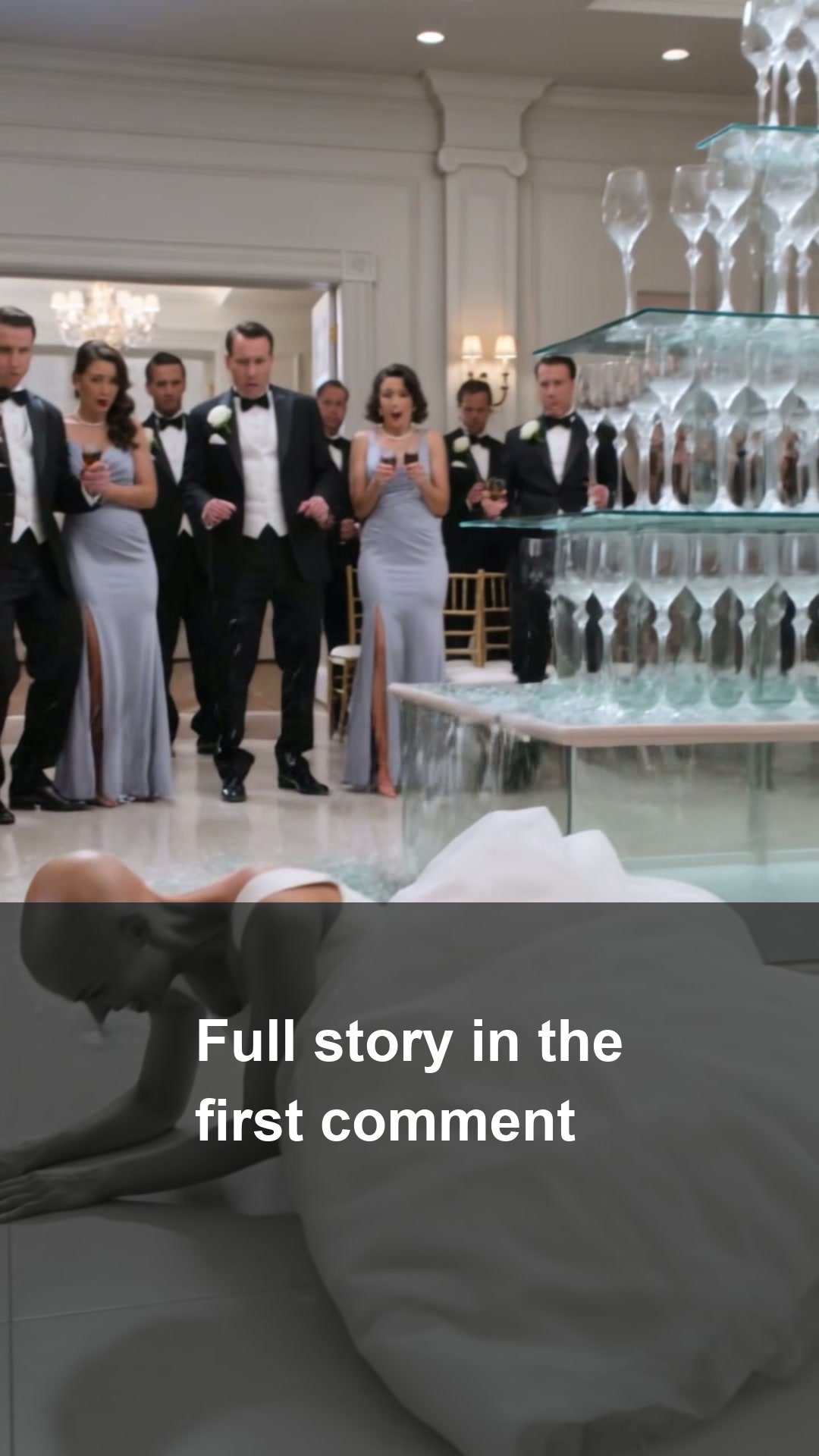
The ballroom smelled of lilies and forced cheer. My mother stood near the dais, adjusting a silk napkin with the clinical precision of a surgeon. When I entered, the air shifted, the polite hum of the guests thinning into a nervous, jagged silence. I walked toward the center of the room, my heels clicking like a metronome on the parquet floor. My scalp itched beneath the heavy, synthetic hair of the wig. I reached up, my fingers finding the internal pins, and pulled. The wig slipped, caught for a heartbeat on my earring, and then thudded onto the plush carpet.
The room froze. My mother’s eyes widened, her hands snapping to her throat as if I had just disrobed in front of the bishop. My brother took a half-step back, his glass of champagne trembling, the liquid sloshing over the crystal rim. I looked at their faces—not the faces of parents watching their daughter on her wedding day, but of business owners assessing a damaged asset. They were terrified. Not for me, but for the optics.
I felt the cool, stagnant air of the ballroom on my skin, an abrupt contrast to the suffocating heat of the synthetic fibers. My pulse hammered against my ears, a steady, rhythmic protest against years of muted agony. I reached into my clutch and pulled out the folded document Aris had given me, the ink still dark and accusing.
I walked until I stood inches from my mother. She stared at my scalp, her lip curling in a reflex of revulsion she couldn’t quite mask. The room was a vacuum. I didn’t care about the guests or the expensive lace pooled at my feet. I leaned in, my voice devoid of the tremor I had spent my life perfecting for their comfort. I looked her directly in the eyes and said, I would have died if you had let me live for you.
The smell of lavender and antiseptic, that was the baseline of my adolescence. I remember standing in the kitchen, the marble island cold against my palms, watching my mother scrub a red wine stain out of a white tablecloth as if she were trying to erase an incriminating confession. I was ten, and I had just dropped my science grade from an A to a B-plus. My father sat at the head of the table, his newspaper folded into a perfect square, a blockade between us. He didn’t look up when he spoke. He asked if I intended to keep being a disappointment or if I planned to join the rest of the family in reality. I didn’t cry. Crying was considered a loss of control, and loss of control was the only sin my parents truly feared. I gripped the edge of the counter until my knuckles turned bloodless, and I made a vow to be so efficient, so polished, that they would never have a reason to look at me with that specific, hollow boredom again.
High school was an exercise in curation. I learned to edit my sentences before they left my lips, stripping away the jagged edges of my personality. My brother, Julian, was the inverse; he was the golden, reckless mirror of their own narcissism. He threw parties while they were out of town, broke windows, and totaled his first car, and all they did was hire lawyers to sanitize the wreckage. I, on the other hand, was the one who had to be perfect because Julian was the one who was allowed to be broken. I remember sitting in the passenger seat of my mother’s car after a minor car accident that wasn’t my fault. I was shivering, the glass shards still clinging to my sweater. She looked at her reflection in the rearview mirror, adjusted her earrings, and told me to stop hyperventilating because it would make my face puffy for the charity gala that evening. I turned my head to the window and watched the world blur, deciding then that my physical form was not my own; it was a prop, a vessel for the family image.
The money came in strings, woven into the fabric of every transaction. When I started art school, the tuition was deposited into my account with a text message detailing how much I owed them in terms of future professional prestige. My father treated my life like a venture capital firm, always waiting for a dividend that I could never quite pay out. I remember the day I got the first biopsy report. I was twenty-six, sitting in a small, sterile exam room, the fluorescent lights humming a low, discordant note. I called my mother from the parking lot. I didn’t tell her the word cancer immediately; I said I had been feeling ill, that the tests were concerning. She didn’t ask how I felt. She asked if I could still attend the housewarming party for my cousin’s new estate, because it would look suspicious if the entire family wasn’t present. I sat in my car for two hours, watching the sun sink behind the skyline, feeling the weight of the silence I was expected to maintain.
My marriage to Ethan was the first time I dared to build a foundation outside of their blueprint. I kept the engagement quiet for three months, terrified that if they touched it, they would break it. When I finally told them, over a dinner that felt more like a tribunal, my father didn’t talk about love. He talked about the social standing of Ethan’s firm and whether or not my medical bills would be covered by his insurance. My mother spent the duration of the meal analyzing my appearance, pointing out that my skin looked sallow, that I needed to be more aggressive with my skincare routine. I didn’t say a word. I just chewed my steak until it was flavorless, my throat tight, imagining the moment I would finally stop asking for their permission to exist.
The chemotherapy hit me like a slow-moving train. There were mornings when I couldn’t lift my head from the pillow, when the nausea was a physical weight pushing me into the mattress. Julian would visit, but he never stayed in the room. He would stand in the doorway, scrolling through his phone, and make jokes about how my lack of hair made me look like an alien from a low-budget horror film. He’d send them to the family group chat, accompanied by laughing emojis. I would lie there, listening to the chime of notifications, watching the light shift across the ceiling, and wonder how he could be so cruel and so loved at the same time. I never told him to stop. I just disabled the notifications, tucked my phone under the covers, and pretended I was asleep.
The worst part wasn’t the pain; it was the performance. I had to look presentable for every single check-up, every family brunch, every moment someone might see me. I spent thousands on high-end wigs, the kind that cost more than my first car, because the alternative was the sight of my mother’s face when she looked at my thin, patchy scalp. She didn’t look at me with pity. She looked at me with an aggressive, pointed annoyance, as if my cells were refusing to cooperate with her schedule. She kept the invoices for my treatment in a file on her desk, a ledger of my survival that she would occasionally wave at me during arguments. She reminded me that I was a financial sinkhole, that I was lucky they were willing to keep me afloat while I was, as she put it, having my little situation.
I remember a Sunday afternoon in the garden. I was trying to read, but the light was too bright, too piercing. My mother walked past, trailing the scent of expensive perfume, and stopped to pluck a dead head from a rosebush. She didn’t look at me, but she told me that the neighbors had asked where I had been lately, and that she had told them I was traveling for a consulting project. She said she was tired of making excuses for my absence. I looked at her—the way her posture was a rigid, practiced line—and realized she hadn’t been shielding me from the world; she had been shielding herself from the inconvenience of my reality. The realization didn’t burn. It was cold, sharp, and final.
I had been ignoring the warnings for years. My friends told me I was too defensive, that I was too quick to apologize, that I walked as if I were perpetually bracing for an impact. They didn’t see the impact; they only saw the results of the collisions. They didn’t know about the times I had sat in the dark of my childhood bedroom, listening to my parents argue about the cost of my extracurriculars, or the way my brother would snatch things from my hands just to see if I would scream. I never screamed. I just learned to absorb, to hide, and to wait.
The day of the wedding was the culmination of all those years of careful, suffocating architecture. I stood in the bridal suite, surrounded by the smell of lilies and the sound of my mother giving instructions to the caterers about the precise temperature of the champagne. I felt like a museum exhibit, a curated piece of history being prepped for display. Every pin in my hair, every layer of makeup, every ounce of fabric was an act of deception. I looked at myself in the full-length mirror and saw the ghost of the girl who had promised to be perfect. I touched the synthetic fibers of the wig, the texture so foreign and artificial against my scalp, and I felt the history of every unspoken insult rising in my throat.
I walked toward the ballroom, the weight of the veil dragging against my shoulders, the weight of the expectations dragging against my soul. I could hear the murmur of the guests, the polite, rehearsed laughter of people who knew the price of a good reputation. I knew that once I stepped through those doors, I was expected to play the part one last time. But as I stood at the threshold, the air suddenly felt thin, insufficient. I thought about the document in my clutch, the truth that Aris had unearthed, the final, undeniable proof that my family had been liquidating my assets while I was fighting for my life.
I didn’t step into the room to be a bride. I stepped in to dismantle the sanctuary they had built on the wreckage of my autonomy. I remembered the feeling of the hospital bed, the sound of the monitors, the way they had leaned over me not to offer comfort, but to ask when I would be back at work. The memory was a key turning in a lock I hadn’t realized I was holding shut. I wasn’t there to celebrate; I was there to end the charade. I reached up, my hand trembling just for a second, and found the seam of the wig. It was time for the truth to be the only thing in the room.
My mother, Evelyn, stood by the champagne tower, her spine a rigid line of practiced composure. She had spent twenty years polishing our family’s reputation, believing that if the surface was seamless enough, the rot underneath wouldn’t matter. She tightened her silk shawl, her eyes flicking toward the exit, calculating the social cost of my scene. She thought of me as a broken ornament, an investment that had failed to yield its dividends in status. I watched her hand tighten around the crystal flute, the glass perilously close to snapping. She wanted to preserve the lie because, without it, she was just a woman who had failed to love her own daughter. I walked toward her, my scalp feeling the sudden, sharp bite of the ballroom air. She didn’t look at my face; she looked at the disaster I had become. You are making a scene, she whispered, her voice a serrated blade meant only for my ears. I saw the tremor in her chin, the secret fear that her friends would finally see the vacancy in her soul. I realized then that she hadn’t just ignored my illness; she had hated it for being inconvenient.
My brother, Julian, stood a few paces away, his phone already out, tapping out a message to the group chat that would surely frame me as unstable. He grew up in the shadow of my parents’ expectations, his own failures masked by his talent for mocking others. He lived for the irony of a situation, using humor as a shield to keep from ever having to grow up. He smirked at me, expecting me to shrink back into the costume of the grateful daughter. He was the golden boy who had never faced a trial, and the sight of my bare head offended his need for a comfortable, unchallenging world. I took his phone from his hand, the metal cold and heavy, and set it on a table. He looked small without his digital armor, a man who had never once dared to be authentic. You don’t have to carry this anymore, I told him, though I knew he lacked the courage to put it down.
Dr. Aris, who had followed me into the ballroom, stood near the center of the floor, his presence a jarring medical reality in a room of synthetic glamour. He had saved my life, yet he had also stood by in the hospital while my mother debated the cost of my medication. He was a man of science who believed that by staying neutral, he was being professional. He looked at the floor, then at me, the weight of his own silence finally pressing down on him. He had chosen peace over justice for too long. He cleared his throat, the sound cutting through the ambient hum of the room. I think you should tell them, he said, his voice steadying. He wanted to reclaim his own integrity, to wash his hands of the deal he had struck with my mother to keep my prognosis quiet for the sake of the family brand. I nodded, and the room went still, the air thick with the scent of lilies and impending ruin. I was no longer the patient or the bride; I was the witness. I turned toward the crowd, ready to finish what I had started.
The champagne flute in my mother’s hand didn’t shatter when I spoke; it merely tilted, a slow, golden spill soaking into the silk of her skirt. I didn’t wait for the shock to curdle into a defense. I stepped off the dais, the heels of my shoes clicking against the hardwood with the rhythmic finality of a gavel. The first call went out from the lobby, my fingers punching the numbers into my phone as I bypassed the gawking guests. I dialled the precinct, the ringing tone sounding hollow and clinical. I reported the embezzlement of my medical trust, dictating the dates and the wire transfers my mother had diverted while I was too weak to monitor my own accounts. The desk sergeant’s voice was grainy, disinterested, but he logged the file number. That was the first thread pulled.
I walked to the hotel exit, the air outside smelling of exhaust and freedom. My next stop was the parking garage, where I sat in the driver’s seat of my sedan and opened a secure document app. I drafted an email to the family firm’s human resources director, attaching the screenshots of the Slack logs where my brother had mocked my chemotherapy-induced hair loss and my physical tremors during board meetings. I hit send, knowing the corporate culture of the firm demanded immediate, fire-on-sight termination for harassment of that caliber. He would be out of his office before the sun dipped below the skyline. My phone began to vibrate, a frantic, persistent buzzing against the console. It was him, then her, then him again. I blocked the numbers, one after the other, the silence that followed more intoxicating than any wine served at the reception.
The following morning, the office of a high-profile litigator felt colder than the hospital ward I had lived in for six months. I placed the stack of papers on the mahogany desk, my skin still pale, my movements deliberate. I hired him to contest the will—the one my grandmother had left for my care, which my parents had systematically raided under the guise of paying my medical bills that they never actually settled. The lawyer’s eyes widened as he flipped through the bank statements, his pen already hovering over a legal pad, calculating the ruin. When I left his office, I felt the sharp prick of adrenaline replacing the exhaustion. I walked three blocks to the diagnostic lab, the air biting and clean. I requested a DNA paternity test, the final act of skepticism. If they had lied about my health for the brand, I had to know if they had lied about the bloodline itself. I left a vial of my own cells on the counter, a ghost of a life they had tried to curate into a product.
By Tuesday, the counter-offensive arrived in the form of a cease-and-desist letter delivered by a courier. My mother’s lawyers claimed slander and defamation, their language bloated with threats of lawsuits intended to drain my remaining savings. I read the document in my kitchen, the paper thick and expensive, smelling of ink and desperation. I laughed, a dry, sharp sound that startled the cat. I didn’t need to reply; I had already filed the motion in court to freeze all joint assets. The notification of the freeze hit their accounts at noon.
I checked my phone to see the inevitable: a notification from the bank confirming that the secondary accounts, the ones they had used to fund my brother’s lifestyle under my name, were now locked. The bank’s fraud department had already flagged the activity. A notification popped up from the HR department at the firm; my brother’s employment had been terminated for cause, effective immediately. His response was a wall of text, a desperate, scrambling plea for me to call them back, to think of the family name, to stop being so small, so petty, so ungrateful. I deleted the message without reading the rest.
I went to the bathroom and stared into the mirror. My face was bare, the harsh lines of the concealer scrubbed away, revealing the faint, map-like scars of my ordeal. I looked at the medicine cabinet, reaching for the remaining prescription bottles that were still in my mother’s name, evidence of her insurance fraud. I put them in a clear plastic bag, ready for the investigator. Every action I took was a brick pulled from the foundation of their house. I felt the house groan. The foundation was shifting. They were screaming into the void, but for the first time, I wasn’t listening. The lawyer called an hour later, his voice clipped and urgent. They had retained a criminal defense firm. They were preparing to fight for the inheritance. They were escalating. I checked the lock on the front door and sat down at the table, my laptop open, my fingers steady as I began to draft the formal statement for the court. The war was no longer about my health; it was about the truth, and the truth was a weapon they had forgotten how to handle. Outside, the sky turned a bruised purple, and I waited for the next knock, the next threat, the next move in a game where I had finally decided to change the rules of engagement. I was no longer a casualty of their pride. I was the one holding the torch.
The notification chimes on my phone didn’t stop for three days. My screen became a graveyard of blue bubbles: messages from cousins I hadn’t spoken to since childhood, frantic demands from my mother’s bridge club, and passive-aggressive inquiries from my brother’s business partners. I left the phone face down on the kitchen island, the vibration sounding like a trapped insect against the granite. When I finally dared to swipe through, the vitriol was buried under a thin layer of social performance. They weren’t asking if I was okay; they were asking how I could be so cruel as to ruin the season’s most anticipated event.
I walked to the window. Across the street, the Millers were watching. Mrs. Miller pulled her blinds shut the moment our eyes locked, a physical rejection that stung more than any formal letter. The neighbors had picked their side, and it wasn’t the one currently sitting in a hollowed-out house without a daughter. My life had become a public utility, a local tragedy consumed by people who preferred the fiction of our success over the grit of my recovery.
My laptop pinged. An email from the firm managing the family business landed in my inbox—a formal notification that my brother, Marcus, had been placed on indefinite leave. The partners had seen the footage from the ballroom. They had heard the doctor’s testimony about the financial manipulation. I stared at the blinking cursor, my pulse steady, a strange, cold clarity settling into my chest. I drafted a single line in response: I have no further comment at this time. I closed the lid, the sound sharp and final in the quiet room.
I walked into the bathroom and stared at the mirror. The heavy makeup I’d worn to hide the pallor of chemotherapy was starting to crack around my eyes. I reached for a washcloth, dampened it with warm water, and scrubbed. I didn’t stop until my skin was raw and the synthetic color of my concealer swirled down the drain. I looked like a stranger, but for the first time in twenty-eight years, it was a stranger I recognized.
The doorbell rang. It wasn’t the frantic, rhythmic pounding of my father, nor the hesitant tap of a messenger. It was a slow, deliberate sound. I moved to the front hall, my feet silent on the hardwood. I didn’t look through the peephole. I already knew who it was—someone looking for an apology, or perhaps just a version of me that still existed to be managed.
I reached for the deadbolt. The metal was cold under my thumb. My breath hitched, a fleeting ghost of the terror I used to feel when they walked through a door, but it vanished as quickly as it came. I didn’t owe them a performance. I didn’t owe them a seat at the table. I turned the lock. The door creaked open just an inch, showing me the driveway where my life used to be parked, now entirely empty and waiting for me to drive away. I stepped back, leaving the door unlatched, and walked toward the bedroom to pack the only bag I would ever need.
The hotel bathroom was a sterile, marble-lined box that smelled of expensive lilies and the underlying rot of a facade coming apart. I stared at my reflection, the heavy, layered foundation cracking around my mouth. I took a damp washcloth and pressed it against my skin, dragging the synthetic mask away until the raw, pale reality of my face appeared beneath. The skin felt thin, tender, and mine.
The door clicked open, and Ethan stood there. He didn’t look at the mess of discarded lace and silk piled on the vanity. He just held up a small, worn leather bag. The keys to his old sedan jingled against the porcelain countertop.
Are you ready, he asked, his voice low and devoid of the performative pitch he used for my parents.
I nodded, gripping the edge of the sink until my knuckles turned white. It’s done, I said. The inheritance paperwork was sitting on the nightstand, shredded into ribbons of confetti. They’d spent the last of it on a party for a daughter they refused to acknowledge, and now they had nothing left but the creditors.
I walked out of the suite, the floorboards silent under my bare feet. I didn’t look back at the room. I didn’t look at the expensive, suffocating dress bunched on the floor, shedding its faux pearls like gravel. My father’s car was still idling in the driveway, his silhouette slumped against the steering wheel, waiting for me to emerge and beg for a reprieve I no longer required.
I kept my gaze forward, toward the gravel path where Ethan’s car waited in the shadows. We reached the vehicle, the door latch clicking with a sharp, final mechanical snap. I slid into the passenger seat, the upholstery smelling of stale coffee and freedom.
He started the engine, and the low hum vibrated through the frame of the car, grounding me in the immediate present. As we pulled away, I caught a glimpse of the ballroom windows, glowing like a stage set. My mother was standing at the glass, a frantic, blurred shape in the periphery, her hand raised as if to signal us, or perhaps just to ward off the encroaching dark.
I looked at the road ahead, the asphalt stretching out into the quiet, unscripted night. The weight of every lie I had ever told to appease them dissolved, leaving my shoulders feeling impossibly light.
I didn’t say goodbye. I didn’t have to. The silence in the car was the loudest thing I had ever heard, and it was entirely my own. We merged onto the highway, the city lights shrinking into nothingness behind us.
The coastal cottage smelled of salt and drying pine, a scent that finally scrubbed the artificial perfume of the hotel from my pores. I sat on the porch steps, the wood still holding the day’s warmth against my bare thighs. Ethan stepped out, carrying two bowls of steaming pasta, the steam swirling in the cool, humid air. He sat beside me, the wood creaking under his weight, and handed me a fork. The weight of the world had shifted from my chest to the simple act of lifting a noodle to my mouth. It tasted of garlic and sea air, the first meal in years that didn’t feel like a performance for an audience of critics. I chewed slowly, focusing on the texture, the heat, the sheer reality of it. You’re quiet, he said, his voice dropping into the rhythm of the crashing surf nearby. I looked at the dark horizon, where the stars met the black water, and felt a draft across my scalp, a sensation that used to terrify me but now felt like permission. I’m just listening, I said. For the first time, there was nothing else to hear. No phone buzzing with passive-aggressive texts, no curated expectations, just the tide pulling against the shore. I realized then that my identity wasn’t something to be maintained, but something to be reclaimed in the spaces I chose to inhabit. I set the bowl down on the porch and leaned my head back against the railing, closing my eyes. Tomorrow, I would walk down to the water without a scarf or a hat, and for the first time, the wind wouldn’t be a threat to my facade. It would just be wind. I took a deep breath, the air filling lungs that no longer felt tight with the effort of hiding. I am here, I thought, and that is enough. I reached out, finding Ethan’s hand, and held on until the rhythm of the waves became my own heartbeat.
I walked back inside, the floorboards cool and uneven beneath my bare feet. In the center of the living room, resting atop the polished mahogany side table, sat the velvet-lined box that had once held my mother’s heirloom veil. I picked it up, the silk heavy and suffocating in my palm, and carried it to the trash bin in the kitchen. I didn’t hesitate or fold the lace; I simply let it slide from my grip. It landed in a tangled, grey heap against a discarded coffee filter and the remnants of our dinner. I turned the handle of the back door, stepping out into the porch light. On the small wooden table, a single, coarse-bristled brush lay discarded, its head thick with the loose, soft strands of my own growing hair.
Leave a Reply