The ink on the divorce decree was still wet when the security gate clicked shut, sealing the Cortez family inside my estate like prize cattle in a slaughterhouse.
Teresa stood on the manicured gravel, her white linen blazer unblemished, while the heavy iron bars rattled into place behind her. The sound was final, a metallic thud that vibrated through the soles of my Italian heels. She turned, her lip curling into that practiced, patronizing sneer she had perfected over years of Sunday brunches.
“Is this some kind of pathetic power play, Mariana?” she asked, her voice tight with a mixture of annoyance and genuine confusion.
I didn’t answer. I merely adjusted my cufflink, watching the color drain from Rodrigo’s face as he glanced at the dead signal on his smartphone. The silence stretched between us, thick and suffocating, until the only sound remaining was the distant, rhythmic hum of the irrigation system. I felt the familiar, cold clarity of a closing ledger. My pulse remained steady, rhythmic, and entirely indifferent to their mounting panic. I checked my watch. The acquisition window opened in exactly four minutes. It was time to show them exactly what their contempt had actually cost.
The alarm clock clicked at 5:30 AM, a sterile, digital chirp that cut through the predawn gloom of our bedroom. I rolled over, my skin brushing against the cold, high-thread-count sheets that Rodrigo insisted on, though he rarely noticed the quality. He was still snoring, a rhythmic, uneven sound that used to feel like companionship but had long since curdled into a reminder of his indifference. I slid out of bed, my feet finding the plush carpet, and moved to the kitchen before the house could wake.
The coffee machine hummed, a low-frequency vibration that rattled the porcelain mug on the granite island. I measured the grounds with surgical precision. One scoop, two, leveled off with the back of a knife. I watched the dark liquid drip, counting the seconds—twenty-two seconds per ounce—while the morning light began to bleed gray across the limestone floors. My life was a series of these small, calibrated movements, a performance of domestic competence that nobody asked for but everyone expected.
By 7:45 AM, I was in the elevator, the steel doors sliding shut with a soft, pneumatic sigh. I checked my reflection in the brushed-metal panel, adjusting the collar of my blazer. I looked exactly like the wife of a Cortez: polished, muted, and entirely ornamental. In the lobby, the doorman nodded, his smile practiced. I offered a slight, tight-lipped acknowledgment in return.
The commute was a steady crawl through the smog-choked streets. I sat in the passenger seat of the SUV, staring at the back of the driver’s head, listening to the radio play a loop of market updates I had already analyzed three hours prior. The air inside the cabin smelled faintly of Rodrigo’s leather seats and the expensive, ozone-heavy scent of his cologne. He was tapping his fingers on the steering wheel, restless, checked out, talking about a lunch he didn’t want to have.
I’m thinking about the printer, I said, interrupting his monologue about a new driver for his car. It jammed again. I need to order the replacement drum.
He didn’t look over. He just waved a hand, dismissing the logistics of the household as if they were background noise. Whatever, Mariana. Just handle it. Don’t bother me with office supplies.
I stared at the dashboard. I decided then that the printer would stay broken. It was a small, petty act of sabotage, a refusal to facilitate the smooth operation of a house that didn’t know I existed. I felt a cold, sharp thrill in my chest—the secret satisfaction of the architect who knows which load-bearing wall to whisper against.
When I reached my desk, the office was quiet, smelling of dry toner and stale coffee. I spent the morning clearing the backlog of the Cortez accounts, balancing the ledgers that Rodrigo thought were just numbers on a screen. I was the ghost in the machine, shifting capital, securing assets, building the cage while they talked about their social calendar. The phone on my desk gave a single, piercing ring, cutting through the hum of the ventilation system. I picked it up.
It was Teresa. Her voice arrived without a greeting, brittle as scorched silk. She did not ask how I was; she demanded to know why the monthly stipend for the Valle de Bravo estate hadn’t cleared the vault. I watched the cursor blink against the screen, rhythmic and patient, while I traced the vein at my wrist. Outside, the city heat distorted the glass of the high-rise windows, turning the skyline into a wavering, liquid mess. I shifted my weight, feeling the firm support of the ergonomic chair against my spine, a small, solid comfort.
I told her, my tone perfectly level, that the accounts were being audited for irregularities. Silence followed, heavy and pregnant, the kind that usually precedes a tantrum. I imagined her knuckles white against her receiver, the frantic pulse in her neck. She sputtered, a low, guttural sound of disbelief. She told me I had overstepped, that I was a mere functionary, a footnote in the Cortez history they had graciously allowed to breathe their air. I didn’t interrupt. I let the silence hang, letting her words echo until they sounded small, desperate, and hollow in the vast, sterile space of my office.
It was time. I didn’t care about the rage. I cared about the sequence. I pressed the key that triggered the final lockout. Across the city, in the ornate, mahogany-paneled offices they called a legacy, their access to the central liquidity fund vanished. I saw the prompt flash: AUTHORIZATION REVOKED. The system didn’t care about their pedigree or their social standing; it only cared about the mathematical truth of the debt. I felt a surge of clarity, the kind that comes when a long, tedious calculation finally resolves into a single, elegant zero.
I stood up, sliding my laptop into my bag with clinical precision. The air in the office felt thinner, sharper, as if the oxygen had been scrubbed clean. I looked at the photograph on the wall, a picture of Rodrigo at the gala, his smile wide and oblivious, and felt nothing but the distant, clinical curiosity one feels for a dead insect. I had spent years meticulously stitching this shroud, thread by invisible thread, and now the fabric was complete.
I walked toward the elevators, my heels clicking a steady, relentless rhythm on the polished concrete. My heart wasn’t racing; it was cool and steady, a metronome keeping time for a funeral. The elevator doors opened with a soft, pneumatic sigh. I stepped inside, pressing the button for the lobby. The world below was still spinning, still under the illusion that the Cortez family held the reins of their own extinction. I checked my watch. In exactly thirty-two minutes, the first legal notice would hit their primary holding company, and the gates at the estate would lock them out for good. My phone buzzed in my bag, a frantic, persistent vibration. I ignored it. I already knew exactly what they were going to say.
I let the phone rattle against the polished chrome wall of the elevator until the vibration died. It was Rodrigo. He wouldn’t call if he hadn’t realized the accounts were frozen. I stepped out into the lobby, the air smelling of expensive leather and floor wax, and dialed the private line for the family estate’s head of security, Hector.
He answered on the first ring, his voice tight. I stared at a potted fern, tracing the serrated edge of a leaf with my index finger. I asked him about the night the guest wing was cleared out. He told me the staff had been given the weekend off by Teresa herself, claiming they needed privacy for a family retreat. He sounded nervous, his breath hitching as he mentioned he hadn’t actually seen the family leave.
I hung up, the answer already tasting like a lie. If the staff were gone, who had opened the service gate for the caterers at three in the morning?
I walked to the curb, signaled my driver, and pulled out my tablet. I dialed the nurse who had been attending to old man Cortez before his sudden relocation to the private clinic. Elena picked up, her voice a low murmur, barely audible over the hum of city traffic. She told me the patriarch hadn’t been moved by the family at all. She said a private transport team with legal credentials had arrived Tuesday, two days before the supposed retreat. She claimed she didn’t see their faces, just the official stamp on the transfer forms.
The sky was bruising over, clouds thick and heavy with the promise of a storm. I checked the digital ledger. The transfer forms were dated for Wednesday, not Tuesday. Someone had faked the timeline.
I slid into the back of the town car, the leather cool against my skin. I called the concierge at the hotel where Paola supposedly stayed the night of the incident. The desk clerk was eager, his voice polished to a professional shine. He confirmed Paola checked in at eight, but then he hesitated. He admitted he’d seen her husband leave through the side entrance at midnight, alone, carrying a heavy garment bag.
I looked out the window as the city blurred into streaks of gray. My chest tightened, not with nerves, but with the cold satisfaction of a puzzle piece locking into place. The concierge’s account contradicted the social media posts Paola had uploaded from the hotel balcony. She had tagged her location at ten and then again at one, but the timestamps were manipulated.
I reached for my laptop, my fingers hovering over the keys. I could hear the city—the screech of tires, the distant sirens—but it felt like background noise. I thought of Teresa’s face, that mask of iron-clad propriety, and how it would crack when she realized I had the footage of her husband’s secret exit.
I instructed the driver to take the mountain pass to the Valle de Bravo estate. I needed to see the gate for myself. I needed to know if the lock had been changed from the inside or the out. The deeper I went into the web, the more the contradictions sharpened into weapons. I didn’t want the truth; I wanted the leverage that came from knowing exactly which version of the story they had chosen to sell. I took a breath, the air in the car tasting of ozone, and prepared my next call. It was time to see who would be the first to break.
The estate gates groaned as they swung inward, the wrought iron scraping against the gravel like a long-forgotten secret. My heels clicked rhythmically against the stone foyer, each step a deliberate intrusion into the life I had once scrubbed clean for them. Teresa stood by the floor-to-ceiling windows, her silhouette sharp against the fading mountain light, a glass of amber liquid trembling almost imperceptibly in her manicured hand. When she turned, her eyes darted to the legal folder in my grip, then back to my face, searching for a trace of the submissive wife she had spent a decade molding.
I placed the folder on the mahogany sideboard, the leather cover hitting the wood with the dull thud of a closing coffin lid. Rodrigo emerged from the study, his collar unbuttoned, his usual arrogance flickering into a pale, hollowed-out confusion. He didn’t speak, he just stared at the heavy paper, the weight of his own signature appearing to pull his shoulders downward. I felt the familiar pull of my old life—the instinct to smooth his tie, to apologize for the intrusion, to offer a solution to a problem I had meticulously authored. It was a reflex, a phantom limb I had to actively suppress.
I realized then that this wasn’t about the money or the bankruptcy hearings. It was about the slow, agonizing erosion of their delusion, watching the architecture of their pride collapse under the sheer gravity of my silence. I stepped closer, closing the distance until the scent of his expensive cologne clashed with the sterile, sharp metallic smell of the documents. Teresa shifted, her jaw tightening as she sensed the shift in the room’s oxygen. I didn’t reach for the papers. I didn’t offer a compromise. I just looked at the man who had spent years calling my work a hobby and finally let the silence do the heavy lifting.
I am not the one who is losing this house.
The kitchen in my childhood home always smelled of burnt coffee and the metallic tang of my mother’s sewing machine needles. I remember the sound of her counting coins on the Formica table—the sharp, rhythmic *clink-clink-clink* that served as the heartbeat of our household. When I was seven, I watched her trace the seams of her dresses, her fingers calloused from years of mending other people’s reputations. She didn’t look up when the landlord’s knock rattled the door frame. She just pushed a stack of small, folded bills toward me and whispered, keep your eyes on the ledger, Mari. They only see the dress, never the stitch. That was the first time I understood that power wasn’t in the fabric; it was in the math that allowed you to survive the seams.
I carried that lesson into university, a scholarship student in a sea of silk ties and effortless inheritance. In the library, I watched the scions of old money trace the spines of books they never intended to read. They moved through the halls with a soft, cushioned gait, the kind of walk that only comes from never having to worry about a loose floorboard. I spent those years building my own armor. I took extra courses in forensic accounting, learning how to track the invisible threads of leverage. When the professors spoke of macro-economics, I looked for the singular, overlooked variable that could collapse a monolith. I didn’t want their comfort; I wanted the ability to see the architecture of their security and find the load-bearing wall.
Then came the gala where I met Rodrigo. The lights were too bright, the champagne was too cold, and the conversation was a series of rehearsed anecdotes about summer homes and offshore trusts. He approached me with a smirk that felt like a challenge, his blazer tailored to perfection, his ego even tighter. He asked what I did for a living, and when I told him, his smile didn’t reach his eyes. He laughed, a short, dismissive sound that reminded me of my father’s empty promises. It’s a cute little hobby, he said, smoothing his lapel. You should focus on something that doesn’t keep you up at night with spreadsheets. I remember the way he looked at me—as if I were a piece of furniture he was considering for a guest room. I didn’t correct him. I just leaned in, tracking the watch on his wrist, the cufflinks that signaled a man who thought his bloodline was a liquid asset.
Our courtship was a lesson in systematic erasure. Every time I tried to discuss the reality of the family company, Teresa would interrupt with a sharp, pointed comment about the seating arrangements for the next charity event. Paola, his sister, was even more surgical. She would look at my clothes, my shoes, my choice of wine, and offer a comment that felt like a papercut—sharp, precise, and calculated to sting just enough to make me doubt myself. You have such an interesting eye for detail, dear, she’d say, her voice dripping with artificial sweetness while she nudged my plate away as if it were contaminated. It’s a shame your tastes are so… unconventional for a family like ours. I would watch them—the Cortez family—in their gilded bubble, convinced that the world was built to accommodate their existence. They were a house of cards held together by the heavy, humid air of tradition.
The wedding was the first time I saw the cracks in the foundation. The florist was late, the caterer was stalling, and the stress turned the family into a pack of snarling animals. Teresa gripped my wrist in the dressing room, her nails digging into my skin. This day is about the image, Mariana, she hissed, her eyes scanning my face for a flicker of fear. If you falter, if you let a single detail go wrong, you are admitting that you don’t belong here. I looked at her, truly looked at her, and realized she was terrified. The entire Cortez reputation was a fragile, crystalline structure, and she was so afraid of a single fracture that she had become a jailer. I smiled at her, the same smile I used when I negotiated a hostile takeover, and told her everything would be handled. I was lying, of course. I had already begun moving the pieces.
Marriage to Rodrigo was a slow study in the limitations of arrogance. He believed that because he owned the company, he owned the reality of it. He would come home, toss his keys on the marble foyer table, and complain about the board, about the taxes, about the people he thought were trying to cheat him. I watched him make mistake after mistake, buying assets he didn’t understand and firing the people who actually kept the balance sheet from bleeding out. He never asked for my help; he asked for my silence. He wanted a trophy that didn’t have an opinion. Every night, I would sit in my study, the blue light of my monitor reflecting in the dark windows, mapping the flow of their money. I tracked the shell companies, the hidden debts, the way the Cortez family systematically drained their own resources to fuel their lifestyle. It was elegant, really. They were eating their own tail, and they were so blinded by their own name that they didn’t even notice the hunger.
One afternoon, I sat in the living room while Paola criticized the way I’d arranged the centerpieces for a dinner party. It’s just so sterile, she remarked, flicking a petal off a rose. It lacks the warmth of a home that has seen generations. I thought of my mother’s sewing machine, the way she could take a torn piece of silk and make it stronger than it was before it broke. I thought of the way the Cortez family would treat a housekeeper, the way they would hold their noses at the mere suggestion that their wealth was ephemeral. I looked at Paola—her perfect hair, her porcelain skin—and I realized she had never had to build anything in her life. She was a guest in her own existence, waiting for someone else to provide the heat. I didn’t say anything. I just nodded, a small, polite movement of my head, and made a mental note of the interest rates on the loan she had recently taken out for her failing jewelry line.
The insults became a rhythm. At dinner, Rodrigo would talk over me, explaining my own field of expertise to me with the patronizing tone of a teacher addressing a slow student. Teresa would make veiled comments about my background, her words circling the idea of my ‘unrefined’ upbringing like a vulture. They thought they were shaping me. They thought they were molding me into the quiet, compliant wife they had purchased. They didn’t realize that every time they spoke down to me, they were giving me another piece of data. They were telling me exactly where their pride was most vulnerable, where they needed to be touched to feel the most pain. I kept the records. I kept the dates, the amounts, the broken promises, and the quiet humiliations.
I remember standing in the kitchen of our estate, the morning I decided the architecture was ready to be dismantled. The marble counters were cold against my palms. Rodrigo was in the other room, shouting at a broker about a dip in the market, his voice cracking with a desperation he would never admit to. I stood there, listening to him, and felt nothing but a profound, chilling clarity. They had spent years trying to make me invisible, never realizing that being invisible is the ultimate tactical advantage. You can see everything from the shadows, and you can strike without the target ever knowing where the blow came from. I looked at my reflection in the darkened window—my hair pulled back, my expression neutral, my pulse steady. I was the person they thought I was, and I was the person who was going to take everything they valued, not because I hated them, but because they had taught me exactly how to do it.
The silence that filled the house that morning wasn’t empty; it was heavy with the weight of what I had prepared. I walked into the study, the floorboards silent beneath my feet, and saw the stack of bank statements sitting on the desk. Rodrigo had left them there, thinking them unimportant, just another chore for his accountants. I picked them up, the paper crisp and expensive, and saw the final confirmation of their insolvency. They were gone. They just didn’t know it yet. I took a breath, the air in the room tasting of old dust and expensive wood, and realized that my mother had been right all those years ago. The house was just a shell. The real work was in the stitch, and I had been sewing the shroud for this family since the day I walked through their front gate. I turned back toward the door, ready to face the man who thought he was the master of a house that had already stopped belonging to him.
I found Rodrigo in the conservatory, swirling a glass of amber liquid as if he could drink his way back to solvency. He wore his arrogance like a poorly tailored suit, shoulders tight, eyes darting toward the window whenever a car drove up the gravel path. He had always believed that being a Cortez was an immunity, a biological defense against the vulgarity of debt. Behind his practiced sneer, he was terrified, a man who had never paid a real utility bill in his life. I saw him glance at his watch for the third time in a minute. He didn’t want the truth; he wanted a bailout he could frame as a victory. I stepped into the light, letting the floorboards creak under my boots.
Teresa was already seated on the velvet chaise, her posture rigid enough to snap. She had spent forty years curating a reputation built on the corpses of her husband’s competitors, yet she hadn’t noticed the rot in the foundation until the walls started bowing. She looked at me, not with the curiosity of an ex-wife returning to the fold, but with the reflexive disdain she reserved for the help. She wanted to believe this was a social call, a chance to mock my supposed failure. I knew she was hiding a bank notice beneath her handbag. She was the matriarch of a crumbling cathedral, praying that if she sat still enough, the ceiling wouldn’t collapse.
Paola stood by the glass door, her reflection ghostly against the darkening valley. She lived for the slow destruction of others, feeding on gossip like a starving animal, yet her hands wouldn’t stop trembling. She glanced at Rodrigo, then at me, her eyes darting between our faces for a clue to her own fate. She wasn’t worried about the family; she was worried about her place in the social registry. She was a parasite who had forgotten that the host was dying. She adjusted her diamond pendant, a piece of jewelry that likely hadn’t been fully paid for, and cleared her throat to speak.
Carmen stood just behind me, a shadow in a charcoal blazer. She didn’t look at them; she looked at the ledger in her briefcase. For her, this wasn’t revenge; it was an audit of the soul. She had spent her career dismantling the empires of men who thought they were gods. She enjoyed the silence as much as I did, the way it stripped the vanity from the room. She was the knife I had sharpened, and she was waiting for the word to cut.
I took the center of the room, my shadow stretching long across the Persian rug. The air grew heavy, the kind of silence that precedes a lightning strike. Rodrigo started to stand, a patronizing smile fixed on his face, ready to deliver a line about how time had been unkind to me. I didn’t let him finish. I placed the documents on the mahogany table, the sound echoing like a gavel.
Their eyes dropped to the paper. I watched the realization move through them, a slow, sickening wave of comprehension. The arrogance didn’t vanish—it turned into something smaller, colder. They weren’t fighting for their legacy anymore. They were fighting for the next twenty-four hours.
What will you do when the bank arrives at dawn? I asked, my voice steady, stripped of the warmth I used to feign for their approval.
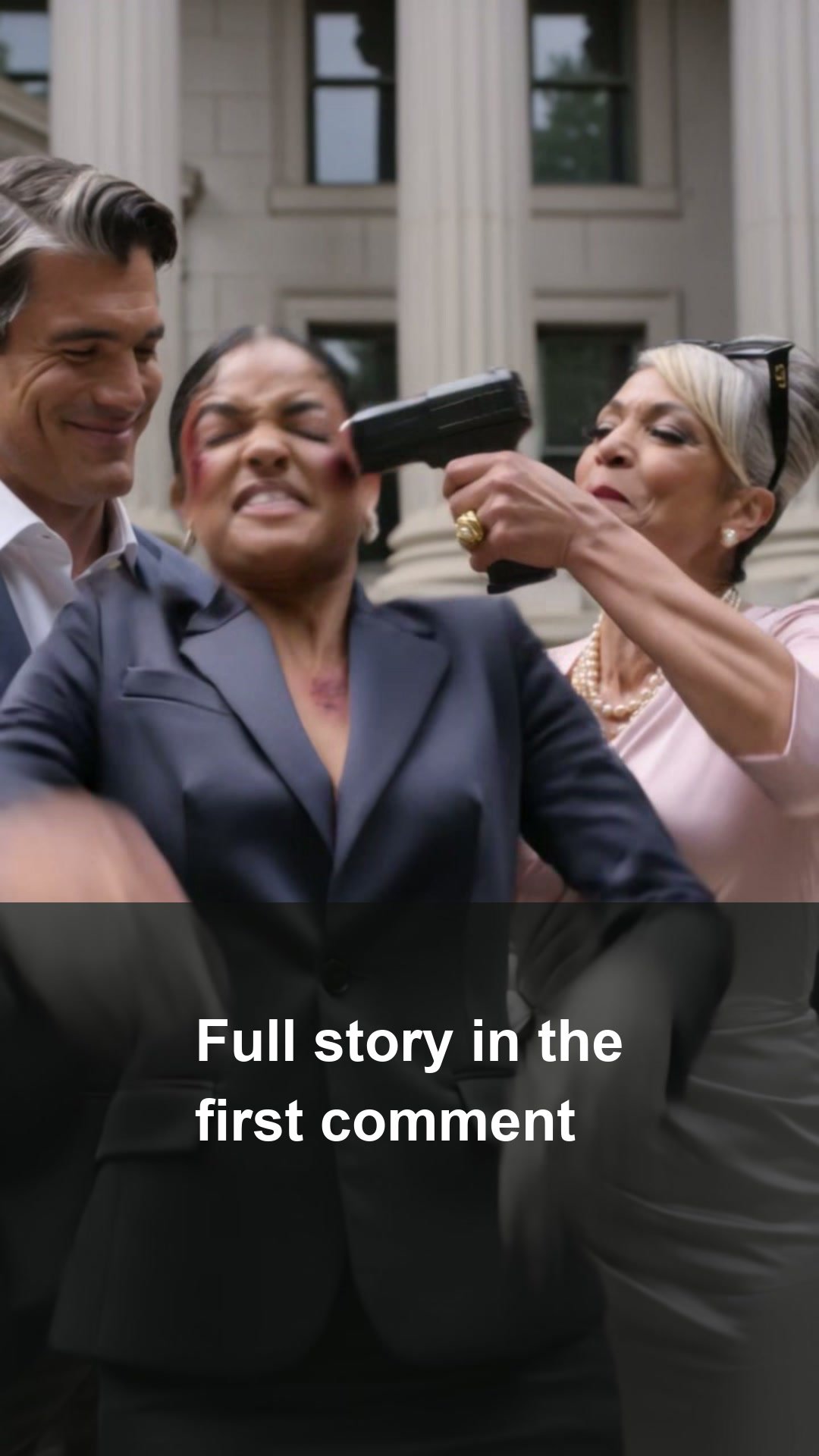
The silence that followed was not the quiet of a house, but the suffocating vacuum of a tomb. I had them exactly where I wanted them.
The silence stretched until it became a physical weight, pressing against the mahogany table. Teresa’s hand, adorned with a ring that now felt like a leaden anchor, trembled as she reached for the document. She didn’t read it; she stared at the letterhead, the logo of my firm—a firm they didn’t even know I owned.
I stood up, the chair scraping sharply against the polished marble floor. I walked to the window, watching the gardeners move in the distance. They were unaware that the property they tended was already under a lien I had filed four hours ago.
Rodrigo spoke first. His voice was brittle, a frantic attempt to regain a posture of authority. Mariana, this is some pathetic game. You think you can scare us with legal jargon? We have the best firm in the city on retainer.
I turned to face them, my hands clasped loosely in front of me. Your firm hasn’t been paid in three months, Rodrigo. I checked the ledger. I also took the liberty of emailing the senior partner this morning, formally notifying him that the Cortez liquid assets are non-existent. They withdrew from your representation at eleven o’clock.
Teresa stood, her face drained of color. How dare you? We are the Cortez family. This—this is blackmail.
I walked toward her, slowing my pace to ensure every step felt like a drumbeat. Blackmail requires a secret, Teresa. This is merely an audit. I pulled my phone from my pocket and tapped the screen, the blue light reflecting in the dark lenses of my glasses. I’ve filed a formal report with the financial crimes division regarding the discrepancies in your late husband’s trust. The investigation into the misappropriation of investor funds begins tomorrow.
A sharp gasp broke from Paola’s throat. She looked at her mother, then at the door, as if calculating the distance to her car. You’re destroying us, she hissed, her voice cracking. You were one of us.
I was never one of you, I said, my voice devoid of default. I was an employee you refused to pay.
I walked to the sideboard and poured a glass of water, the sound of the liquid hitting the crystal echoing in the tense, airless room. My phone buzzed again. A notification from my lawyer: the injunction against their secondary holding company had been granted.
I tapped the screen once more, cancelling the automatic transfers that had been keeping the family’s vanity projects afloat. The lights in the chandelier flickered for a second, a small, mechanical groan of the house’s internal power grid straining against a sudden demand.
Rodrigo moved toward me, his face a mask of sweating, unbridled rage. He grabbed my arm, his grip tight, fingers digging into my skin. You think this ends with a signature? You’re going to walk away from this house, and you are going to call your office and fix this, or I swear—
I didn’t flinch. I stared at his hand until his grip faltered, his bravado dissolving into a pathetic, reflexive panic. He looked around the room, expecting his mother to intervene, but Teresa was staring at the wall, her mouth slightly agape, the veneer of the matriarch finally shattering.
I have already hired counsel to handle the dissolution of our marriage settlement, I said, pulling my arm away. The DNA test for the biological verification of the estate’s secondary claims came back this morning, Rodrigo. It was in the envelope. You might want to look at the last page.
He grabbed the paper from the table, his eyes scanning the lines of genetic data. His face went gray. The paternity suit against him was no longer a threat; it was a mathematical certainty.
The silence returned, heavier this time, thick with the smell of old paper and dust. I walked to the door, my heels clicking with precise, rhythmic intent. I paused at the threshold, not bothering to look back.
The court date is set for Tuesday, I said. I suggest you find somewhere else to sleep by then. The bank has already initiated the foreclosure proceedings. The locks will be changed before sunrise.
I stepped out into the hallway. The air was cool, smelling of damp earth and coming rain. Behind me, the muffled sound of a chair falling over, then Teresa’s voice, shrill and pleading, shattered the quiet I had left behind.
I walked to my car, the gravel crunching beneath my tires. My heart beat with a steady, metronomic efficiency. I opened the door, the leather cool against my skin. As I started the engine, my phone vibrated in the console. Another alert: the Cortez stock had just dipped below the critical threshold. Trading was halted.
I pulled out of the driveway, the high, iron gates opening as I approached. I didn’t look in the rearview mirror. I watched the road ahead, the headlights cutting through the darkening valley.
The first domino had fallen, but the cascade had only just begun. I checked my calendar for the following day. A meeting with the executors of the estate, a deposition at noon, and a final review of the asset transfer forms. Everything was proceeding exactly according to the model I had built during those long, invisible years of silence.
I turned onto the main road, leaving the estate to its inevitable collapse. The house of cards was folding, and for the first time in a decade, I wasn’t the one holding the deck. I was the one holding the house.
The notification sound on my phone was a sharp, rhythmic pinging, a digital heartbeat accelerating in the quiet of my car. I pulled into a rest stop, the gravel crunching beneath my tires like breaking glass. The screen was a strobe light of headlines, each one a different angle on the same surgical excision. Cortez Industrial stock had plummeted thirty points in ninety minutes. The social media feed was a feedlot of vitriol; former allies were posting screenshots of Rodrigo’s leaked bankruptcy filing alongside laughing emojis. I watched a video of their townhome in Polanco being cordoned off by local authorities, the bright yellow tape snapping in the wind.
I tapped the screen, opening a thread from a mutual acquaintance. The tone was performative pity, masked with the sharp teeth of glee. I wonder if they know she was the one who pulled the thread, the message read. I looked at my reflection in the dark window, my own face appearing thin and clinical. I didn’t feel the rush of victory. I felt the dry, calculated satisfaction of a ledger finally balancing to zero.
My phone rang. The screen flashed the name of my assistant, though it was midnight. I swiped right, the silence on the other end heavy with static.
Mariana, the school sent an email, she said, her voice tight, devoid of its usual professional sheen. They’ve suspended Paola’s children from the academy. Effective immediately. They cited the media circus and the potential for reputational damage to the institution.
I stared at the dashboard, watching the low fuel light blink in steady, amber pulses. I thought of the children, their uniforms crisp, their lives entirely constructed around the proximity to a name that now functioned like a toxin. I hadn’t included them in the model. They were collateral damage in a war of attrition, ghosts in the machine.
It’s just a school, I said, my voice sounding flat, even to me. They have plenty of options.
They don’t, Mariana. Nobody is taking their calls. The entire district is blacklisting the family. Even the florist canceled their standing order for the villa.
I hung up, the silence returning to the car, thicker than before. The weight of it pressed against my chest. I had spent years being the one who smoothed over their social edges, who handled the petty grievances of their status-obsessed world. Now, the vacuum I had created was consuming them, and the debris was catching on my coat. My own social circle was fracturing, friends I had known for years sending cryptic texts asking if I was safe, or worse, if I was still holding the debt. They were scared of the contagion.
I started the engine. The car purred, the luxury of it suddenly feeling like an accusation. I could feel the eyes of the city on me, waiting to see if I would emerge as the victor or the villain. It didn’t matter. The distinction was a luxury I had surrendered the moment I decided to stop being silent.
I turned the steering wheel, heading toward the city, my mind already calculating the next phase of the liquidation. There was a meeting at eight. I needed to be precise, to be the coldest person in the room, because the moment I allowed myself to feel the cost of what I had done, the entire structure would collapse on top of me. I checked my reflection one last time, smoothed my hair, and drove toward the noise.
The notary’s office smelled of stale parchment and expensive leather, a sensory memory of the days I had spent managing the Cortez family’s falsified ledgers. I placed the final stack of transfer deeds on the mahogany desk, the heavy paper weighted with the cold certainty of a closing balance sheet. Rodrigo sat across from me, his tailored suit hanging loosely on a frame that had lost its posture over the last week. He reached for his pen, his fingers trembling against the polished wood.
“Is this the end of it, then?” he asked, his voice stripped of the arrogance that once defined his public persona.
I didn’t answer him. I watched the clock on the wall, the rhythmic ticking marking the final seconds of their public relevance. Carmen Solis, my legal counsel, stood by the window, her silhouette sharp against the midday sun, her eyes fixed on the street below where the paparazzi had already begun to disperse, sensing the shift in power.
“Sign, Rodrigo,” I said, my voice steady, devoid of the heat I had suppressed for so many years.
He pressed the nib to the paper, the ink blooming like a stain as he signed away the family’s controlling interest in the industrial conglomerate. Teresa, sitting in the corner chair, stared at the wall, her hands locked tightly in her lap. The woman who had once critiqued my choice of jewelry at every gala now looked like a ghost haunting her own past. There was no grandeur in their defeat, only the mundane administrative reality of a company being stripped of its assets.
When the last page was witnessed and stamped, I felt the phantom weight I had been carrying for a decade dissolve. I didn’t feel triumph; I felt the vacuum left by the absence of their influence. I stood up, smoothing the skirt of my coat, the fabric cool against my palms.
“The security team will arrive at the estate within the hour,” I said, addressing the room at large. “You have until sunset to remove your personal effects. Anything left behind will be liquidated as part of the holding company’s acquisition.”
Teresa finally looked at me, her eyes clouded with a frantic, unvoiced question. She opened her mouth, perhaps to demand an explanation or to beg for a reprieve, but the silence I offered her was impenetrable. I turned toward the door, my heels clicking sharply against the marble floor. As I stepped out into the hallway, I realized I had already forgotten the color of Rodrigo’s eyes. The door latched behind me with a final, metallic click, and I walked toward the elevator, already composing the email that would begin the next, quiet chapter of my life.
The salt air at the coast smelled of iodine and rotting kelp, a scent that finally scrubbed the sterile, chemical polish of the city from my lungs. I sat on a weathered driftwood log, my toes sinking into sand that was still cooling from the afternoon heat. Beside me, a golden retriever mix named Leo leaned his heavy, warm weight against my shin. He had been a blur of nervous energy at the shelter, but here, his breathing matched the steady rhythm of the tide. I reached down to scratch the thick fur behind his ears, feeling the vibration of his low, satisfied rumble. It was the first time in a decade that my pulse didn’t feel like a frantic ticking clock.
I pulled a small, silver thermos from my bag and poured a cup of lukewarm jasmine tea. The steam curled into the darkening sky, drifting away like the smoke of a burnt bridge.
Where are you going to hide all that money? my mother had asked once, her voice sharp with caution.
I don’t need to hide it, I whispered to the waves. I just need to stop looking at it.
The thought of the Cortez family, now reduced to footnotes in a ledger, felt surprisingly small. They were ghosts of a life I had played a part in, actors in a script I had finally finished writing. The guilt I expected never arrived; instead, there was only the quiet expansion of space in my chest where a knot had lived for years. I had spent so long calculating the cost of everything that I had forgotten the price of my own peace.
I stood up, brushing the grit from my linen trousers. The sun had dipped below the horizon, leaving a bruise-colored light across the water. I whistled for Leo, who trotted to my side, his tail thumping against the tall dune grass. I decided then that I would not check the market numbers tomorrow. I would buy fresh peaches at the market and walk until I found a garden that needed weeding. The next chapter didn’t need to be earned; it just needed to be lived.
The gravel path crunched beneath my heels, each step distancing me from the echoing chambers of the villa. My phone buzzed in my pocket, a persistent rhythm of panicked notifications from the Cortez firm, but I didn’t reach for it. Instead, I pressed the off button, watching the screen fade into a flat, black void. I stopped at the iron gate, where the estate’s heavy brass seal lay partially submerged in the damp soil. It had fallen during the landscaping earlier that morning, a jagged crack running through the center of the embossed crest. I watched the gardener’s mower pass inches from it, the spinning blades throwing a spray of clover and dark, wet earth over the metal until the family name was completely obscured by the mud.
Leave a Reply