The doctor didn’t look at my son or his wife, he looked at me, and with one sentence, he turned their inheritance into a prison.
The fluorescent lights of the exam room hummed, a sharp, buzzing vibration that settled into my marrow. Sloan’s manicured fingers tightened on her clutch, the leather creaking in the sudden, suffocating stillness. Beside her, Caleb stared at the floor, his jaw working rhythmically, his focus anchored to the scuffed linoleum as if he could dissolve into the tiles.
I didn’t blink. I smoothed the lap of my wool coat, feeling the hidden weight of the digital recorder in my pocket—a cold, hard rectangle of insurance against their rehearsed empathy.
Caleb finally shifted, his voice thin and brittle. Is that… is that permanent, Doctor?
Sloan interrupted, her tone sharp with forced, clinical concern, but the mask was slipping, revealing the frantic calculation beneath. We need to discuss the logistics of the house immediately, she said, her eyes darting toward the exit.
I watched them scramble. They were already spending money they hadn’t touched yet. I decided then: they would have to learn the architecture of a house they could never own.
The alarm clock clicked to life at six, the rhythmic, metallic hum cutting through the quiet of my bedroom before the birds even began their chorus. I sat up, the joints in my knees offering their customary, dry complaint as I swung my legs over the edge of the mattress. My feet found the familiar chill of the hardwood floor, a texture I knew as well as my own reflection. I pulled on my silk robe, the weight of the fabric grounding me, and walked toward the kitchen.
The house was still holding its breath. The floorboards didn’t creak if you knew how to step near the baseboards, and the windows, original wavy glass from 1894, glowed with the soft, blue-grey light of a Portland morning. I measured the coffee grounds—precisely three scoops, dark roast, the scent sharp and grounding. While the machine gurgled and hissed, I wiped a single, phantom speck of dust from the mahogany sideboard. It was a ritual of structural maintenance, a way to ensure everything remained in its place.
I sat at the breakfast nook, the porcelain mug warming my palms. The weather report on the radio promised a light drizzle, a standard grey day that would dampen the hydrangea bushes and slick the cobblestone path. It felt permanent. It felt like a foundation that would never shift.
By nine, I was at the city archives, my sanctuary of paper and ink. The air there always smelled of cedar shavings and decaying pulp, a scent I found infinitely more honest than fresh paint. My contact, Arthur, pushed a stack of building permits across the desk.
Evelyn, are you sure about the zoning inquiry? he asked, his voice muffled by the stacks of folders.
I adjusted my glasses, tracing the lines of a century-old survey map. Stability is rarely a mistake, Arthur, I replied, my tone as measured as the drafting pencil I gripped.
He shrugged, his attention already snagged by a ledger from the twenties. You’re always looking for structural integrity where others just see dirt.
I didn’t answer. I only looked down at the grid of my own neighborhood, a neat arrangement of lines and historical markers. It felt solid. My world was a blueprint I had curated for decades, a sequence of routines that kept the chaos of other people’s lives at bay. I finished my tea, packed my bag, and walked out into the cool, damp air.
The commute home was uneventful. The city moved in its usual, sluggish crawl, wipers slapping against windshields in a syncopated rhythm. I stopped at the market for fresh bread and a small jar of rosemary honey, the kind of purchase that signaled a Tuesday afternoon spent reading by the hearth. Everything was exactly as it had been the week before, and the week before that. There was a comfort in the repetition, a sense that as long as the foundation held, the structure remained upright.
I stepped through the front door of the Victorian, the heavy oak swinging shut with a satisfying, airtight thud. The hallway was dim, smelling faintly of lemon oil and dry paper. I set my keys on the console table, the metal chiming against the wood—a sharp, clear note in the stillness.
I was just reaching to loosen my scarf when the silence of the house was punctured. It wasn’t the creak of a floorboard or the rustle of the trees outside. It was the sharp, jagged intrusion of the landline, ringing through the empty foyer with an urgency that made my hand freeze in mid-air. I stared at the receiver, the cord coiled like a black snake against the wallpaper, waiting for the third ring.
I let the fourth ring vibrate through the foyer before lifting the receiver. My fingers traced the worn plastic, cool and unyielding.
Caleb’s voice hit the line before I could offer a greeting. It was thin, frayed at the edges, and carried the rehearsed cadence of a man who had practiced his lines in the mirror. Mother, there’s been an accident at the house. You need to come to St. Jude’s. Sloan is… she’s very shaken up.
I looked at the hallway mirror. My reflection was a static, architectural constant: grey hair, posture rigid as a structural beam, eyes focused. I didn’t ask how she fell. I didn’t ask which room. I simply replaced the receiver, the click echoing with finality.
The drive to the hospital was a blur of rain-slicked asphalt and the rhythmic thrum of windshield wipers. When I stepped into the sterile, fluorescent-drenched wing of the trauma unit, the smell of antiseptic hit me—sharp, clinical, and devoid of the history that defined my own walls.
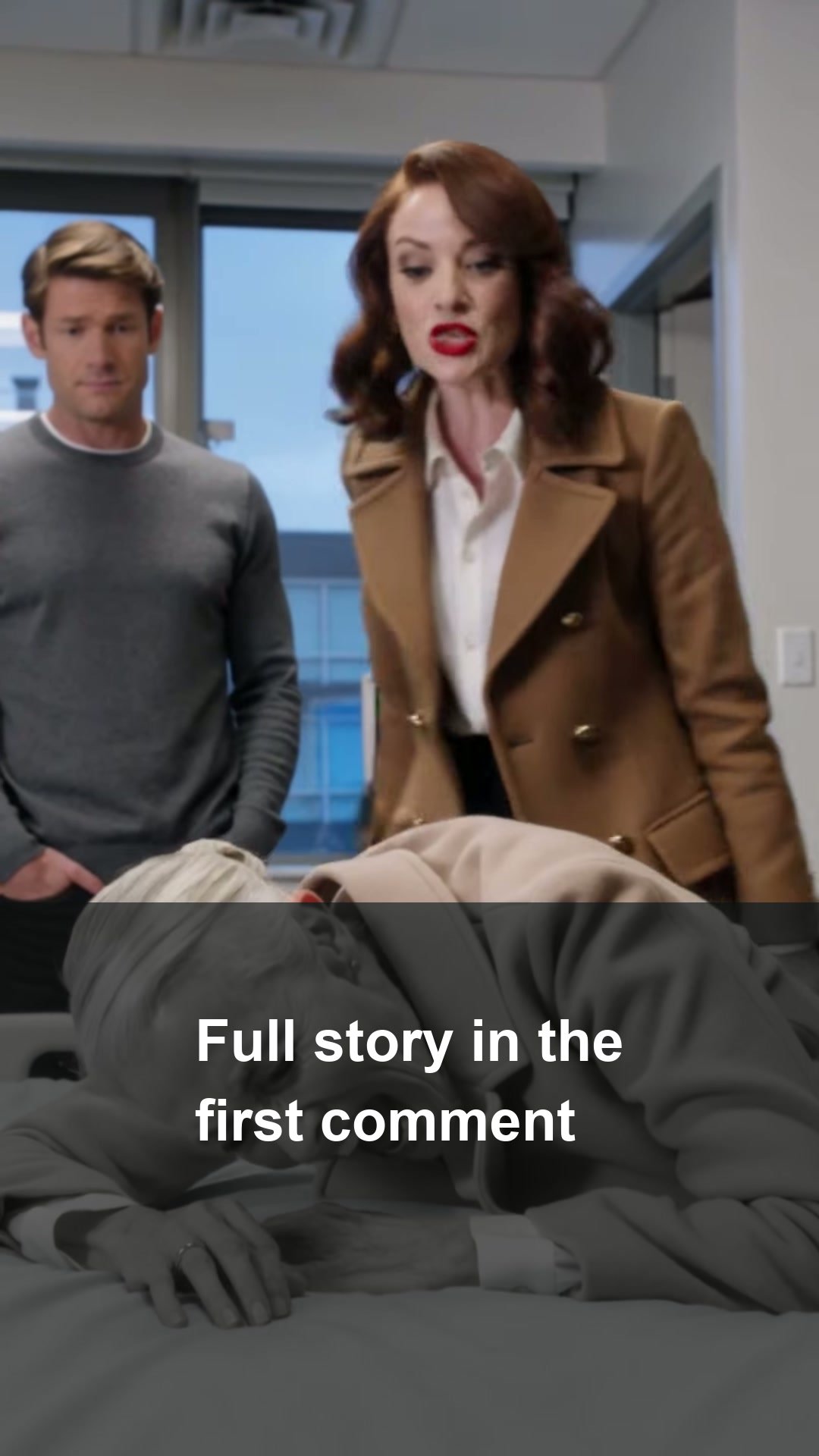
Caleb stood near the vending machines, his tie loosened, his hands deep in his pockets. Beside him, Sloan paced, her movements too frantic, her eyes darting toward the double doors of the exam room. When she saw me, her expression shifted instantly into a mask of practiced concern.
Evelyn, oh, thank god you’re here, Sloan said, rushing forward to grip my elbows. She didn’t look at my face; she looked past me, scanning the hallway as if verifying I had come alone. It was a terrible fall. She tripped on that loose runner in the library. Caleb was just… he was in the kitchen.
Caleb didn’t look up. He stared at the linoleum, his knuckles white against the seams of his trousers. I’m fine, I said, my voice steady, feeling the weight of the phone hidden in my coat pocket. Where is Dr. Vance?
He’s in there, Sloan murmured, pointing to the room. He needs to discuss the next steps. Placement, really. It’s for your own safety now.
The heavy door creaked open. Dr. Vance stepped out, his face a landscape of professional detachment. He held a clipboard like a shield. He didn’t look at Caleb or Sloan; he moved straight to me, his gaze lingering on mine with a startling, direct clarity.
Mrs. Gable, he began, ignoring the couple’s sudden, sharp intake of breath. I have the results of the imaging and the assessment of the site’s conditions.
I held his gaze, feeling the hum of the hospital around us—the distant buzz of monitors, the squeak of shoes on tile. I knew exactly what he was about to say. My foundation was solid, but I was ready to let the walls collapse on them.
The doctor didn’t look at my son or his wife, he looked at me, and with one sentence, he turned their inheritance into a prison.
I’ll need you to sign, he said, gesturing toward the desk. We are ready to initiate the transfer.
I stood in the fluorescent glare of the hospital corridor, the cold air hitting my skin like a structural draft. My hand went to my purse, feeling the hard, rectangular outline of my phone. I needed to move before the shock wore off their faces. I walked to the glass-walled atrium, the heels of my loafers clicking with a precise, rhythmic cadence that felt like a ticking clock.
I called the boutique hotel where Sloan claimed I had suffered my dizzy spell three days ago. The receptionist answered on the second ring, her voice clipped and professional. I asked about the surveillance footage from the foyer.
We don’t have a record of a fall, Mrs. Gable, she said, her voice flattening. There was no incident report filed on Tuesday. We were fully booked for a gala. You weren’t even in the lobby.
I stared at the reflection of the vending machines in the glass. My memory was a blueprint, and it didn’t have a room for a lie like that. I hung up, my thumb hovering over the next contact: the home health nurse, Elena.
Elena, tell me again, I said, my voice steady, stripped of its usual warmth. What time did you arrive at the house on Tuesday morning?
I didn’t come on Tuesday, Evelyn, she replied, the sound of a rattling cabinet coming through the speaker. Sloan called me off. Said you were going to be at the hospital for observation. She told me you had collapsed in the kitchen.
I gripped the phone, my knuckles turning white. A collapse in the kitchen versus a fall in a hotel lobby. The structural integrity of their story was failing, collapsing under the weight of its own inconsistencies. I decided then: no more questions for them, only for the people who had been watching.
I dialed the neighbor, Mr. Henderson, whose driveway abutted my garden fence. He picked up immediately, his tone bordering on agitated.
Evelyn? Is that you? I’ve been trying to get through to your son. There was a car parked in your driveway all day Tuesday. A silver sedan. Some man in a suit was carrying boxes out of your house, not into it. He kept looking at the gate like he was waiting for the police.
I leaned against the cold brick of the atrium wall, looking out at the parking lot where Caleb’s SUV sat idling. The logic of their greed was jagged, unaligned. They weren’t just plotting a guardianship; they were clearing the house before the ink on the medical forms was even dry.
I needed to see the house. I needed to see what was missing.
I turned back toward the room. Sloan was standing by the window, her back to me, her shoulders rigid. Caleb was hunched over, his hands buried in his pockets. I walked past them, not stopping, my pace brisk and purposeful.
I’m going home, I said, not waiting for their permission.
Caleb turned, his face pale. Mom, the doctor said—
The doctor said what you told him to say, I cut in, my voice sharp as a chisel.
I didn’t look back to see their reaction. I knew the look—the sudden, frantic realization that the person they had been measuring for a coffin had just checked the structural load-bearing capacity of their floorboards. The drive home would be long, but for the first time in years, the road ahead was finally clear.
The house greeted me with the familiar, suffocating scent of lemon polish and decay. I stood in the foyer, the brass handle of my bag digging into my palm, feeling the weight of the floorboards beneath my feet. They were solid, unlike the people following me through the front door. Sloan’s heels clicked against the mahogany, a sharp, nervous rhythm that she usually reserved for cocktail parties. Caleb trailed behind, his hands fidgeting with the collar of his shirt, eyes darting toward the desk where the legal documents sat under a glass paperweight.
I didn’t offer them a seat. I walked straight to the mantle, my fingers tracing the dust-free edge of a photo frame—my husband, standing in the garden he had planted for me decades ago. The house held its breath. I felt the humidity of the afternoon pressing against the windows, the glass vibrating with the distant rumble of a storm.
Sloan stepped forward, her smile thin and practiced, a mask of curated concern. Evelyn, let’s be reasonable. The house is far too large for you to manage alone now. Caleb just wants you to be safe, somewhere with professional eyes on you around the clock.
I turned slowly, my joints stiff but my posture absolute. I watched Caleb flinch. He couldn’t meet my gaze; he stared instead at the rug, his mouth a flat, colorless line. He was waiting for the script. He was waiting for the cue to suggest the sale, to talk about equity and liquidity and the inevitable decline he had spent months rehearsing in my presence.
I reached into my pocket and touched the cold, hard edge of the digital recorder. My heart beat with a steady, architectural rhythm. I looked at my son, the man who had traded his mother for a mortgage, and I saw only the foundation he had failed to build for himself.
You aren’t here for my safety, Caleb; you are here because you are broke.
The scent of floor wax and stale coffee in the hospital hallway pulled me backward forty years. It was the same chemical bite as the linoleum in my father’s study, the room where I first learned that love was a variable to be balanced in a ledger. My father, a man who viewed human beings as load-bearing walls, had sat behind his mahogany desk and explained why my brother, Julian, would inherit the firm while I, the architecturally inclined daughter, would receive a finishing school education. He hadn’t looked at me then, either. He had looked at the blueprints spread across his desk, his fingers tracing the structural integrity of a foundation he never intended me to share.
I am not the woman who cries over structural flaws. I am the woman who reinforces them.
I remember the day Julian married his first wife. My father had stood in the foyer of our family home, checking his watch, his movements sharp and dismissive as he rearranged the floral arrangements. He didn’t care for the bride’s family; they were new money, erratic and loud. He told me, in that same clipped tone Caleb uses now, that status was a matter of curation. If you didn’t curate the people around you, they would inevitably erode the integrity of your house. I watched him smooth his lapel, his reflection in the grand foyer mirror distorted by the curvature of the glass. He had looked at his own reflection with more affection than he ever showed his children.
Caleb was four when I realized he had inherited my father’s cowardice. We were in the kitchen, the sunlight hitting the granite island in a way that made the room look like an altar. Caleb had broken a ceramic bowl—a piece I’d brought back from a trip to Florence. The sound of the shatter was sharp, a sudden fracture in the quiet life I had built. He stood there, frozen, his small hands stained with the blue glaze of the pottery. He didn’t apologize. He didn’t try to sweep it up. He waited, his chest heaving, until he heard my footsteps approach. He looked toward the hallway, already calculating the distance to his bedroom, already framing a narrative that placed the blame on the cat.
I didn’t scold him for the bowl. I scolded him for the silence that followed. I told him that a man who hides the broken pieces is a man who will never know how to build anything new. He looked at me then, his eyes wide and vacant, and I saw the first shadow of the man he would become. He didn’t see the beauty of the broken clay; he saw only the evidence of his own mistake.
The marriage to Sloan was merely the final stage of that same pattern. When they met, she was a whirlwind of social ambition and manicured fingernails, a woman who treated home ownership like a competitive sport. I remember the first dinner she held in my house—a dinner where she insisted on rearranging the seating, moving my late husband’s chair to the shadows because it interfered with her lighting scheme. Caleb had sat there, smiling that thin, brittle smile, watching as she dismantled the history of the house, piece by piece. He looked at me, hoping for an objection he could use to justify his own eventual silence. He wanted me to fight her so he wouldn’t have to.
I said nothing. I sipped my wine and watched the way she touched the silver, her fingers lingering on the hallmarks as if calculating their pawn value. I knew then that the house was in danger, not because of a structural fault in the foundation, but because of a structural fault in my son’s character. He was a vacuum, and Sloan was merely the air rushing in to fill the void.
I recall a Tuesday, three years ago, when the roof leak started. It was a minor thing, a slow drip in the library that darkened the wallpaper like a bruise. I called a professional, a master craftsman who knew the house as well as I did. Caleb intervened. He told me it was too expensive, that we should use a sealant, a quick fix that would satisfy the home insurance company long enough to inflate the property’s appraisal. He stood in the library, his hand hovering over the water-stained wall, and he spoke of liquidity and market trends while the ceiling wept. He was managing my decline, checking the boxes of my obsolescence, all while wearing the same tailored suits my father had favored.
I remember his voice, smooth and calculated, echoing the very words he had used when he first suggested I move to the cottage. He talked about safety, about the burden of property taxes, about the weight of history that I could no longer carry. He didn’t care about the leak; he cared about the house as a financial instrument. He looked at the water damage and saw a bargaining chip.
I told him then, in the library, that a house is not a bank. I told him that a home is a living entity that requires the owner to be its steward, not its master. He laughed, a short, dry sound that lacked any warmth. He told me I was being romantic, that in the real world, sentiment was a liability. He walked out of the room, leaving me alone with the drip, the sound marking the rhythm of his betrayal.
Every time he brought up the hospital, every time he spoke of ‘the necessary steps’ for my care, I heard the echoes of those childhood lessons. He was repeating the patterns of a man who thought that by controlling the narrative, he could escape the consequences of his actions. He believed that if he kept the house bright, if he staged it with enough fresh flowers and expensive staging furniture, no one would notice the rot in the joists.
I remember my father’s funeral. The house was full of people who had never stepped foot inside it while he was alive. They drank his scotch and whispered about his debts. Caleb was a teenager then, standing near the door, his face a mask of practiced solemnity. He had looked at the crowd and then at me, and he had asked, with a voice that was too loud for the occasion, what would happen to the house now. He hadn’t asked if I was grieving. He hadn’t asked if I was frightened. He asked who held the deed.
I should have known then. I should have seen the way he stood, the way he measured his own worth against the square footage of the rooms, the way he calculated the value of the silence that filled the gaps between our conversations. He was already planning his own inheritance, already waiting for the moment when I would become as obsolete as the furniture he wanted to auction off.
The doctor’s office in the hospital was a cage of glass and chrome. When I had arrived, I had been trembling, not from the fear of the diagnosis, but from the realization that this was the endgame. I had seen the look on Sloan’s face in the waiting room—the predatory patience of a woman who had already spent the proceeds of a sale. She had been checking the market, her thumb scrolling through real estate apps as if my life were a fluctuating stock.
I sat there, in that cold, blue light, and I remembered the smell of the house before they moved in. It was a smell of beeswax, dust, and tea. It was a smell of permanence. I decided, in that moment, that the house would remain exactly as it was. I would be the final architect of its fate. I would ensure that the foundation held, even if I had to let the walls collapse around me to prove it.
Caleb looked at me now, his eyes darting toward the door as if he could escape the gravity of my stare. He was still waiting for the script. He was still waiting for me to play the part of the frail, forgetful mother who would sign away her legacy because she was too tired to argue. He didn’t realize that the silence he had taught me to use had become my strongest building material.
I checked my pocket one last time. The recorder was there, a cold, hard weight against my hip. The memory of the library leak, the broken bowl, the funeral—they all converged into a single, sharp point of clarity. I reached for the handle of the office door, my grip firm, my knuckles white with the architecture of my own resolve. The house was not theirs to strip; it was mine to anchor. And as I turned the handle, I felt the final, perfect alignment of a decision long overdue.
The office smelled of lemon polish and stale coffee, a scent that clung to the upholstery like a desperate habit. Dr. Vance sat behind a mahogany desk, his fingers steepled with the precision of a surgeon who had long ago traded his scalpel for a pen. He was a man who measured his life in intake forms, yet his eyes held the weary, sharp intelligence of someone who saw the truth before it was spoken.
“Evelyn,” he said, tapping a folder, “there are no signs of cognitive decline.”
Caleb shifted in his chair, the leather creaking beneath him. He looked at the floor, his hands locked between his knees, avoiding the space where my gaze landed. He was a man built on the scaffolding of other people’s expectations, and beneath his professional suit, he was still the boy who hid behind my skirts whenever the sky darkened. He didn’t want my house; he wanted the peace that came with me not being there to watch him fail at his own life.
Sloan, however, was already leaning forward, her posture calculated. She adjusted the silk scarf at her throat, a nervous tic that betrayed her need to control the narrative. She had spent years cultivating the image of the dutiful daughter-in-law, a role she wore like expensive jewelry, hoping it would hide the fact that she viewed my home as nothing more than a capital asset in a declining market.
“Are you certain, Marcus?” Sloan asked, her voice pitched to a sympathetic tremor. “We’ve seen such lapses. The stove left on, the confusion over the mail.”
I looked at her, seeing the desperation she masked with concern. She needed the house to bridge the gap between her lifestyle and her bank account. I didn’t say a word. I simply watched the light hit the dust motes dancing between us, waiting for the structural integrity of her lie to crack under its own weight.
Vance looked from her to me, then back to the folder. He knew exactly what was being orchestrated. He had seen a thousand families try to trade a parent’s dignity for a down payment. He hated the transaction, yet he was the only one with the authority to stop it.
“The test results are conclusive,” Vance said, his voice flat and devoid of the empathy Sloan was fishing for. “Evelyn is capable of managing her own affairs. If there is a conversation to be had about the house, it will be between her and her counsel.”
Caleb exhaled, a sharp, ragged sound that betrayed his sudden, panicked realization that his safety net had just been dismantled. Sloan’s face tightened, the mask of the loving relative slipping for a fraction of a second to reveal the cold, hard ambition beneath. She looked at me, not with care, but with the frustration of a player whose winning hand had just been called a bluff.
I felt the recorder in my pocket, the plastic casing biting into my skin. It was a small, silent witness to the entire theater of greed. I realized then that I hadn’t come here to defend my house; I had come to watch them realize they had lost it.
I stood up, the movement slow and deliberate, my joints aching in the humid air of the room. I didn’t look at Caleb, and I didn’t offer Sloan the comfort of an explanation. Instead, I turned toward the door, my pulse steady. I was no longer the frail woman they had constructed in their minds. I was the architect of my own exit, and the foundation they were standing on was about to be pulled out from under them. I pushed the door open, leaving them in the silence they had built for me.
The fluorescent lights of the hospital lobby hummed with a clinical, static buzz that matched the vibration in my pocket. I reached into my coat, feeling the plastic casing of the recorder, a small, hard secret that felt heavier than the house itself. Caleb and Sloan remained in the room, likely debating whether my departure was a symptom of confusion or a tactical retreat. They didn’t know I had already placed a call to Julian Vane, the attorney who had handled my husband’s estate decades ago.
I pushed through the glass revolving doors and stepped into the cool, sharp air of a Portland evening. My driver was waiting, but I waved him off, choosing instead to walk the three blocks to the intersection where the office of the preservation society stood. My heels clicked against the wet pavement, a rhythmic, purposeful sound. Every step felt like the removal of a load-bearing wall. By the time I reached the lobby of the Vane & Associates building, my lungs burned, but my mind was a blueprint of calculated maneuvers.
I sat in Julian’s office, the leather chair cool beneath me. He looked older than I remembered, his skin mapped with the same fine lines as the documents he held. I pulled the recorder from my pocket and set it on the mahogany desk between us.
I want this house designated as a historic landmark, I said. I want the trust to be irrevocable.
Julian adjusted his glasses, his eyes widening as he listened to the short, damning audio clip I played for him—Sloan’s voice, cold and precise, calculating the profit margins of my forced relocation. He leaned back, his professional mask slipping into a look of genuine shock.
Evelyn, this will make the house unsellable for decades, he cautioned, his pen hovering over the contract. It’s a scorched-earth policy.
It is a structural necessity, I replied.
He signed the papers, and I felt the weight shift. That night, I didn’t go home. I checked into a hotel downtown, the room smelling faintly of lemon cleaner and anonymity. I sat on the edge of the bed and pulled out my tablet. With a few taps, I canceled the automatic payments for the gardening service and the routine home maintenance upgrades Sloan had scheduled. I replaced them with a digital notification to the bank, freezing the joint accounts Caleb had been siphoning from under the guise of my care.
The next morning, the consequences began to manifest. My phone started vibrating against the nightstand, a persistent, aggressive hum. Caleb was calling. I let it ring. Then Sloan. Then Caleb again. When I finally answered, I didn’t let them speak.
I have filed a formal complaint with the firm, I said, my voice steady. I have documented the unauthorized financial withdrawals and the medical coercion. Your access to the estate is severed.
Mother, you’re not thinking clearly, Caleb sputtered, his voice cracking with the frantic energy of a man watching his parachute fail to open. Sloan is trying to help you.
I don’t need help, Caleb. I need a foundation that isn’t rotting.
I hung up and checked my email. A notice had arrived from the city: the preliminary application for the historic landmark status had been accepted. The house was now officially under review. No renovations, no staging, no sales. It was legally frozen in time.
I spent the afternoon at the county courthouse, filing the paperwork for a DNA test for my grandchildren. It was a cruel, necessary measure; I needed the truth about the paternity Sloan had been so cagey about, the secret she had used to leverage Caleb’s compliance. If the house was to be preserved, it would only be for those who shared my blood, not those who merely wore the name.
As I walked out of the courthouse, I saw them. Caleb and Sloan were waiting by the steps, their faces pale, their clothes looking suddenly expensive and out of place against the gray concrete of the public building. Sloan’s composure was shattering; she was clutching her purse with white-knuckled intensity.
You’ve ruined us, Sloan hissed, stepping into my path. You’ve locked up everything we worked for.
I looked past her at Caleb. He looked smaller than I remembered, his shoulders hunched, his eyes darting toward the street as if he expected the ground to open up. He didn’t defend me. He didn’t defend her. He just stood there, waiting for someone else to fix the structural failure of his life.
I walked toward my car, ignoring her protests. As I pulled away, I watched them in the rearview mirror—two figures standing on the sidewalk, caught in the sudden, sharp silence of their own making. I felt no triumph, only the cold, clear satisfaction of a restoration project completed. The house was saved, the rot was exposed, and for the first time in years, the foundation was entirely my own. I turned the ignition, the engine purring with a steady, uninterrupted rhythm, and drove toward the cottage on the edge of the woods, where the keys were already waiting in my palm. The Victorian was a museum now, and I was finally, mercifully, free of the exhibit.
The fallout did not arrive with a crash, but in the persistent, rhythmic vibration of my phone resting on the laminate counter of my new kitchen. It was an intrusion I had not invited. My son’s name pulsed on the screen, a digital heartbeat of desperation. I watched it until the glow faded, then picked up the device and blocked the number. The silence that filled the cottage was immediate, dense, and remarkably clean.
At the bakery, the morning air smelled of yeast and burnt sugar. I stood in line, my coat collar turned up, clutching my reusable bag. The girl behind the counter, someone I had known since she was a toddler running through the garden of the Victorian, wouldn’t meet my eyes. She busied herself with the register, her fingers hovering over the keys a beat too long.
That will be six dollars, she murmured, her voice stripped of its usual warmth.
I placed the exact change on the counter. The metal clinked, a sharp, lonely sound in the quiet shop. Behind me, I felt the shift in the room—a collective stiffening of shoulders, the sudden, intense interest in the display cases of scones. They knew. The story of the guardianship attempt and the subsequent historic preservation designation had rippled through the neighborhood like a tectonic tremor.
I am sorry, Evelyn, she whispered, not looking up. It is just… things are very complicated right now.
I nodded once. The complication was theirs, not mine. I stepped out into the crisp Portland air, feeling the weight of their scrutiny like a physical pressure against my spine.
My inbox was a graveyard of abandoned allegiances. There were emails from Caleb’s firm, asking for verification of medical records I had long since secured, and frantic, misspelled messages from Sloan accusing me of malice. She had tried to frame her actions as protective, a daughter-in-law’s misguided devotion to an aging woman’s safety. But the recording I had leaked to the local preservation board—the one where she discussed the floor-plan for the master suite renovations—had stripped the veneer off her empathy.
Back at the cottage, I sat in my wingback chair, watching the shadows lengthen across the floorboards. Caleb had been placed on administrative leave; his firm, built on a brand of curated, wholesome family stability, could not afford the optics of a junior partner attempting to liquidate his mother’s historic property through deceit. He had called my lawyer, then my cousin, then the local vicar. He was looking for a mediator to tell him that he was still the victim, that I was the one who had fractured the foundation.
I reached for the tea service, my hands steady. The iron key to the Victorian sat on the side table, a relic of a life spent managing other people’s expectations. I would return it to the trust board on Monday. I had no further use for the lock or the key.
My phone buzzed again, a phantom vibration against the wood. I stood and moved to the window, watching a neighbor walk her dog past my gate. She slowed, glanced at my porch, and then hurried her pace, pulling the leash taut. Isolation had a texture; it was thin and sharp, but it kept the draft out. I decided then that I would not check the messages again. The house was secure, the history was documented, and the ghosts of my family’s greed had been locked firmly on the other side of the property line. I poured my tea, the steam rising in a lazy, unhurried spiral. I was finally, unequivocally, alone.
The final signatures were dry by the time I walked through the parlor one last time. I ran my fingertips over the mahogany wainscoting, feeling the deep, familiar grain of wood that was no longer a commodity to be liquidated. My lawyer had left an hour ago, his briefcase echoing against the floorboards as he walked toward the exit, carrying the deed that effectively ended my son’s inheritance. I picked up the heavy iron key from the foyer table and dropped it into the mahogany bowl. It made a hollow, metallic clink that sounded like the shutting of a heavy tomb.
Caleb’s car pulled into the driveway, the crunch of gravel under his tires jarring the silence I had spent weeks curating. He stepped out, his posture sagging, his expensive suit looking suddenly too large for his frame. Sloan remained in the passenger seat, staring straight ahead at the Victorian façade. I met him on the porch, not as a mother waiting for a visit, but as a landlord witnessing a vacancy. He opened his mouth, his lips trembling with a rehearsed apology, but I held up a hand, palm flat.
I don’t want to hear it, I said, my voice as steady as the foundation beneath our feet.
His eyes darted to the front door, then to the legal notice taped to the glass—the one declaring the house a permanent historic trust, stripped of its sale value. He looked at me then, really looked at me, seeing the steel he had always mistaken for frailty. He realized, finally, that the money he had gambled on my decline was gone, spent on a life he could no longer afford to maintain. He didn’t speak. He just turned, his heels catching on the stone steps, and retreated to the car. They pulled away, the engine whine fading into the quiet afternoon, leaving nothing but the smell of exhaust and the heavy, sweet scent of the rosebushes.
I went inside and closed the heavy oak door, throwing the deadbolt. It slid home with a satisfying, resolute thud. I walked to the small cottage I had leased, a modest space two towns over that smelled of lavender and old paper. I set my single suitcase on the bare floorboards and breathed in. The air was light, stripped of the expectations that had choked the Victorian halls. There were no secrets here, only the soft hum of a life I had reclaimed by letting go. I sat in my new armchair, watched the sun dip below the horizon, and for the first time in thirty years, the house did not hold its breath.
The next morning, I stepped into the garden. My hands, once trembling with the effort of masking my exhaustion, felt steady as I gripped the shears. The rosebushes were overgrown, their canes reaching out like neglected promises. With a sharp, rhythmic snip, I cleared the deadwood. The scent of bruised stems and damp earth rose to meet me, sharp and clean.
I stopped when the neighbor’s Golden Retriever pressed its nose through the wire fence. I knelt, the gravel biting into my knees, and offered a hand. The dog’s breath was warm, a living contrast to the clinical chill of the hospital corridors.
Do you belong to someone, I whispered. The dog merely wagged its tail, a golden blur against the green.
I looked at the house—my house—and realized I didn’t care who owned the property line anymore. My son was a stranger, and my home was a foundation that no longer required my constant bracing. The weight in my chest, a physical structure I had built to house my anxieties, finally collapsed into rubble. It was a relief to be empty.
I went back inside and put the kettle on. The water took its time to boil, a slow, patient climb toward heat. I sat at the small pine table, watching the steam curl into the morning light. I hadn’t eaten a full meal in weeks, but the hunger that arrived now was simple and grounding. I buttered a slice of crusty bread, the sound of the knife against the loaf the only noise in the room. I took a bite, tasting salt and yeast, and felt the return of my own rhythm. I did not check my phone. I did not listen for the gravel crunch of a car in the drive. I simply sat, and for the first time, I was the only person living in my own skin. I decided then: I would plant peas in the shade.
I walked to the foyer, my slippers padding softly against the unvarnished floorboards of my new cottage. The air here held no history of whispered schemes or staged falls; it smelled only of cedar and the faint, sharp tang of drying lavender. I reached into my pocket and withdrew the heavy iron key I had retrieved from the estate lawyer’s office that morning. It was an antique piece, cold and ornate, fashioned for a lock that no longer existed in this world. I placed it in the center of the mahogany side table, the metal clicking against the wood with a final, definitive resonance. I left it there, exposed and solitary, beneath the glow of the lamp, its jagged teeth biting into nothing at all.
Leave a Reply