The sting on my cheek from his mistress was the first thing in six years that finally woke me up.
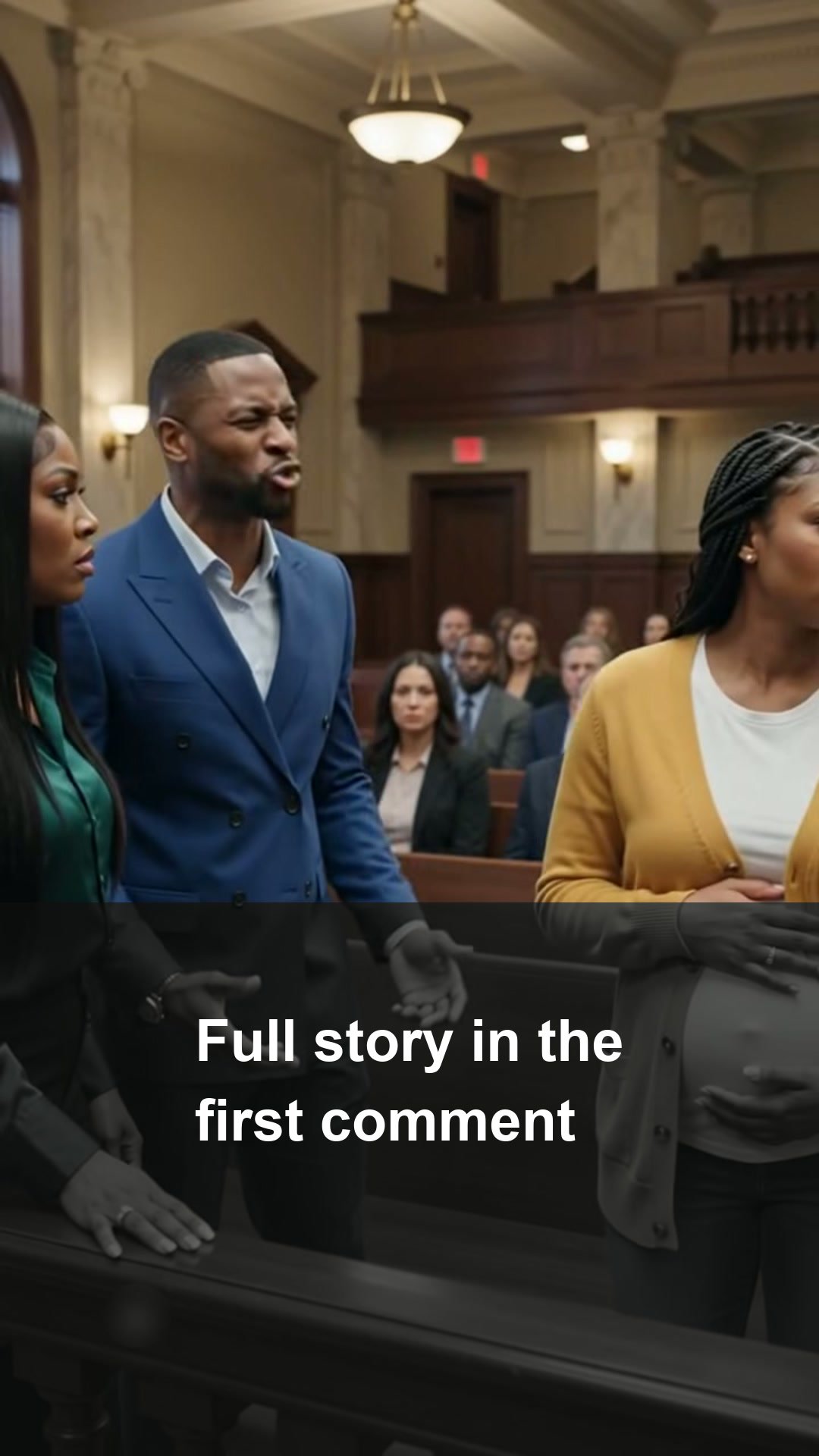
The marble floor of the courthouse lobby felt impossibly cold against my palms where I’d stumbled. Tiffany stood over me, her chest heaving, the frantic smear of her lipstick matching the raw, jagged heat blooming across my face. A bailiff’s heavy boots thudded against the stone nearby, but the sound was muffled, distant.
“You don’t belong here anymore, Elena,” she spat, her voice trembling with a frantic, unearned authority.
I didn’t answer. I looked up at the vaulted ceiling, tracing the ornate molding I had spent months trying to preserve in my own home, now feeling only the sudden, sharp clarity of a blade hitting bone. My hand went instinctively to my stomach, shielding the baby from the chaotic noise of the room. I felt nothing for Harrison in that moment, only a predatory focus on the security footage camera rotating slowly in the corner. I stood up, smoothing my skirt with clinical detachment. I didn’t need a lawyer to see the opening. I needed a mirror. I was done being the silent witness. I walked toward the exit, smiling.
The morning sun hit the marble island in the kitchen at exactly 7:15, casting long, geometric shadows across the polished white quartz. I stood there waiting for the coffee machine to finish its cycle, the rhythmic gurgle of the water the only sound in the house. Harrison was already gone, his side of the bed made with the military precision he demanded of the housekeeping staff. I pressed my palm against the cool stone and looked out at the manicured hedges of the estate. It was a Tuesday, unremarkable and predictable, the kind of day that felt like a well-oiled machine.
I took the mug to the island, the ceramic warm against my fingers. I checked the calendar on my tablet. Project site visit at ten, a lunch with the board of the hospital foundation at one, and then back home to finalize the color palette for the nursery. Everything was in its place. I pulled a stray thread from my silk blouse, feeling the familiar, hollow comfort of a routine that required no original thought.
The commute was a silent affair, the leather seats of the SUV absorbing the vibration of the road as I drove toward the city center. The radio was off; I preferred the hum of the tires against the asphalt. At the office, the air smelled faintly of ozone and expensive toner. Sarah, the receptionist, didn’t look up from her screen as I walked past, just gave a practiced nod.
The printer in the back room was jammed again. I spent ten minutes pulling crumpled sheets of architectural blueprints from the internal rollers, my fingernails getting smudged with black ink. When the machine finally sighed into motion, I leaned against the cold metal casing and watched the pages slide out, crisp and perfect.
How’s the progress on the west wing? Sarah asked, poking her head into the room, her voice bright and hollow.
It’s moving, I said, wiping my hands on a paper towel. We’re ahead of schedule, I think.
She offered a tight, sympathetic smile. You look tired, Elena. You should be taking it easier. The pregnancy, you know.
I’m fine, I replied, though the lie felt heavy in my throat. I just need to get the records sorted before the merger meeting on Friday.
I returned to my desk, staring at a stack of land deeds that needed to be filed. My life was a series of glass walls, beautiful and transparent, separating me from the messy reality of the world outside. I knew the rhythm of my days better than I knew the rhythm of my own heartbeat. I felt safe, or at least, I felt as though I was playing the part of someone who was. I picked up a pen, turned to the next page of the ledger, and focused on the precision of the lines.
I thought about the baby, a small, hidden weight in my stomach. I wondered if he would inherit Harrison’s obsession with order, or if he would find a way to breathe in this stifling, gilded cage. I decided then that I would finish the filing, go to the lunch, and keep the afternoon quiet. I had everything I needed.
My phone, resting on the mahogany surface of the desk, suddenly buzzed. It slid an inch toward the edge, the vibration sharp and jagged in the stillness of the office. I didn’t recognize the number. I hesitated, looking at the screen, then reached out and tapped the glass to answer.
The courtroom floor was cold, polished granite that reflected the harsh, overhead fluorescent lights. I stood by the heavy oak doors, the air smelling faintly of floor wax and old paper. Beside me, the silence of the corridor felt heavy, almost suffocating. My hand brushed against the cool, smooth fabric of my coat, tucking a loose strand of hair behind my ear. The phone call had been brief, a static-filled voice warning me of a misfiled motion, but the urgency had lingered in my marrow.
Tiffany stood near the water fountain, her heels clicking a rhythmic, impatient staccato. She looked at me, her eyes narrowing into thin, predatory slits. She stepped forward, her body tense, weaving through the small crowd of attorneys. I turned to walk toward the elevator, wanting to put distance between us, but she intercepted me with a swift, predatory stride.
You think you are so fragile, don’t you, Tiffany said, her voice dropping to a jagged whisper that carried just enough venom to make the nearby bailiff glance over. You think because you carry his child, you own the narrative. You are just a placeholder.
I kept my gaze steady, refusing to retreat. I don’t want the narrative, Tiffany. I want the truth.
She didn’t wait for a rebuttal. Her hand moved faster than I could track, a blur of motion that culminated in a stinging, white-hot slap across my left cheek. The impact sent my head snapping to the side, the sound of skin meeting skin echoing through the marble hallway like a gunshot. My ears rang, the sudden rush of adrenaline turning the room into a blurred smear of greys and whites.
The sting was visceral, a sudden shock that shattered the long, quiet numbness I had lived in for years. I felt the heat rising on my skin, an angry, throbbing pulse that matched the frantic rhythm of my heart. I touched my cheek, my fingers coming away steady. I didn’t cry out. I didn’t cower. For the first time in six years, the terrifying silence inside me snapped.
I realized then that she was as desperate as she was reckless. She wasn’t an adversary; she was a fuse. If she was willing to strike me here, in the heart of the courthouse, Harrison had pushed her to the brink of insanity. She was his weapon, and he had aimed her poorly.
I looked at her, watching the smug satisfaction melt into something approaching fear as a court reporter stepped out from a side door, witnessing the entire exchange. The incident wasn’t an end; it was the crack in the foundation. I took a slow, deliberate breath, feeling the baby kick against my ribs—a small, sharp reminder of what was at stake. I would not press charges for the assault. I would use the record of this violence to draw the light into the dark places Harrison tried to keep hidden. I turned toward the judge’s chambers, my path finally clear.
The hallway of the courthouse smelled of industrial lemon cleaner and stale fear. My phone buzzed against my thigh, the screen illuminating a text from my mother: Stay quiet, Elena. Don’t ruin the settlement. I ignored it, stepping into the alcove where the reception was just strong enough to hold a call.
I dialed the hotel concierge at the St. Regis, Harrison’s usual retreat when he claimed to be in Singapore. I asked for the room service logs for the week of the merger. The concierge was hesitant, his voice a tight, practiced glide. He told me the suite had been occupied by a corporate guest, a Mr. Thorne, who had checked in alone and left no visitors. I thanked him, hung up, and immediately dialed the nurse at the fertility clinic where we’d allegedly conceived.
I’m sorry, Mrs. Prescott, but the records for your file were moved to private storage last month, the nurse said, her tone clinical and brittle. Per Mr. Prescott’s request.
I walked toward the exit, the glass doors looming like a guillotine. Harrison’s narrative was seamless, yet he was leaving threads everywhere. I thought of the night he’d brought me the emerald necklace—the night he claimed he was at the hospital board dinner. If he hadn’t been there, who had signed off on the grant?
I pulled up the contact for Julian Vane. He answered on the first ring, his voice raspy, like he’d been shouting at a wall. I told him I needed the 2018 deed verification for Miller Manor.
That property was cleared of all liens by your husband’s firm three years ago, Vane said, the sound of a clinking glass audible in the background. It was a clean transfer.
It wasn’t clean, I whispered, stepping onto the hot asphalt of the parking lot. I have the secondary audit.
Vane went silent. Then, a low, humorless laugh. Elena, the secondary audit you’re talking about doesn’t exist. I shredded those documents myself when your husband bought my silence.
My heart thudded against my ribs, heavy and frantic. The lie was a loop; everyone had a different version of the truth, all of them curated by Harrison. I climbed into my car, the interior stifling, and dialed the last number on my list: the gardener who had worked the Miller estate for thirty years.
Mr. Henderson, I said, my voice steady despite the tremor in my hands. Do you remember the demolition on the west wing in 2018?
The old man sighed, the sound of static-filled wind over the line. There wasn’t any demolition, Miss Elena. Your husband had the crew come in at midnight to bury something. They poured concrete over the foundation of the rose garden. Said it was for the structural integrity of the house.
I looked at the dashboard, at the reflection of my own pale, tight-lipped face. The hotel concierge said he was alone. The nurse said the files were gone. The accountant said the records were shredded. And the gardener said they buried the history. I put the car in gear. I didn’t head home. I turned toward the estate. I had to see the rose garden for myself.
The scent of damp earth hung heavy in the evening air as I stepped out onto the terrace. My heels sank into the soft mulch of the garden bed, but I didn’t care about the ruin of the leather. I knelt in the dirt, the garden spade I’d grabbed from the shed feeling cold and heavy in my palm. The moonlight caught the white stone of the Manor, turning the familiar facade into something jagged and unfamiliar. I struck the ground. The blade hit concrete only three inches beneath the surface, a dull, hollow thud that vibrated up my arms and settled in the marrow of my bones.
Harrison appeared at the French doors, a silhouette framed by the golden, curated warmth of our living room. He didn’t rush out. He stood there, holding a crystal tumbler, his posture radiating that practiced, effortless grace that had once made me feel safe. He watched me dig with a detached, clinical curiosity, as if I were a gardener performing a routine chore rather than a wife unearthing his rot.
I stood up, wiping mud onto my coat, my breath hitching in a chest that felt suddenly too small for my lungs. The distance between us was only twenty feet, but it felt like a canyon lined with years of curated lies. I wanted to scream, to throw the spade, to shatter the pristine glass of his composure, but the cold weight of the truth pinned me to the spot. I looked at the concrete, then at his wedding band, catching the porch light. He had built our entire life on this foundation, a monument to a man who didn’t exist. I looked up, meeting his eyes, and the silence stretched until it hummed.
I don’t think you ever loved me; I think you just loved owning me.
The library at Miller Manor smelled of cedar and the specific, metallic tang of old money. I was ten, sitting beneath the heavy mahogany desk, tracing the intricate carvings of a gargoyle on the table leg. My mother, Claire, stood by the window, her silhouette a sharp, unforgiving line against the sunset. She was talking to my father about the quarterly dividends, her voice a low, rhythmic hum of competence. Then, the door opened. It wasn’t a knock, just a sudden intrusion of air. My father entered, his tie loosened, his face flushed with the kind of performative fatigue he reserved for high-stakes deal-making. He didn’t look at her. He walked straight to the decanter and poured a drink, the glass clinking against the crystal decanter with a sound that felt like a gavel strike. My mother stopped speaking mid-sentence. She waited for him to acknowledge her, her hands clasped so tightly her knuckles looked like polished river stones. He drank, exhaled a ragged breath, and said, I need the signatures on the land deed by morning. Don’t ask questions. She didn’t ask. She simply nodded, her spine stiffening, her gaze shifting to the rug as if it held the answers to a question she was too afraid to voice. I pulled my knees into my chest, a small, invisible witness to the transactional nature of their affection. I realized then that in this house, silence was not the absence of communication; it was a currency used to buy peace.
Ten years later, I sat in the dean’s office at the university, staring at a letter of disciplinary action. I had been accused of plagiarism in a history seminar. The reality was that I had merely cited a source Harrison had told me to use—a source that hadn’t existed, a ghost document created to bolster his argument about urban development. He had sat across from me in the campus coffee shop, his hand over mine, his eyes wide with a manufactured, boyish earnestness. Elena, darling, the truth is a matter of perspective, he had said. If you want to build something lasting, you have to be willing to shape the narrative before someone else does. He squeezed my hand, a gesture that felt protective but functioned as a tether. I looked at the dean, then at the letter. I apologized, knowing full well I was protecting a lie that would eventually house me in a marriage of gilded cages. I decided then that I would be the mirror he wanted, reflecting back a version of his own ambition that made him feel untouchable. I went home and burned the original source material in the fireplace, watching the paper curl into black confetti. I didn’t cry. I just felt a strange, hollow efficiency settling into my bones.
By the time we married, the pattern was cemented. We were at the rehearsal dinner, the champagne flutes catching the flicker of a hundred votive candles. Harrison was speaking to a donor, his hand resting on the small of my back—a proprietary grip that left a faint, stinging imprint through my silk dress. I saw my mother watching us from across the room. She looked tired, her eyes darting between Harrison’s animated gestures and the nervous, flickering movements of the catering staff. When he turned to me, his smile was perfect, but it didn’t reach his eyes. You look lovely, but your hair is a bit loose, he whispered, reaching up to tuck a strand behind my ear with such force it pulled at my scalp. I smiled, a tight, practiced twitch of the lips. I felt the weight of my grandmother’s diamond choker, a heavy, cold circle of silver against my throat, and realized I had traded my voice for the privilege of being his centerpiece. I decided to stop suggesting the colors for the reception and let the wedding planner take over entirely. I wanted to see how far he would go if I became a ghost in my own life.
The first Christmas at the manor, the cracks widened. Harrison had gifted me a vintage Cartier watch, the strap too tight for my wrist. I mentioned it during dinner, a minor observation about the jeweler needing to add a link. He stopped chewing, his fork poised halfway to his mouth. It’s perfect as it is, Elena, he said, his tone devoid of heat but thick with warning. It’s a gift, not a request for alteration. I looked at my plate, the roasted lamb suddenly tasting like ash. My brother, Julian, who was home from the city, shot me a look of sharp, pitying recognition from across the table. He knew. He had seen the way Harrison moved the chess pieces of our lives. I reached up and adjusted the watch, the metal digging a red line into my skin. I didn’t say a word. I just kept my eyes fixed on the tablecloth, tracing the embroidery until the pattern blurred. I realized then that I wasn’t his partner; I was a restoration project he was managing to fit a specific aesthetic. I made the decision to stop telling him about my day. If I gave him nothing of myself, he would have nothing to distort.
Six months before the trial, the silence in the house became a physical weight. We were in the master suite, the air conditioner humming a flat, monotonous note. I was folding laundry, my movements slow and deliberate. Harrison sat on the edge of the bed, reviewing documents on his tablet. He had been gone for three days, a business trip he hadn’t fully explained, and his scent—a mix of expensive cologne and ozone—clung to the curtains. He looked up, his glasses catching the light. Why are you so quiet lately? he asked, not looking at me, just flicking through pages. I felt a surge of cold, sharp clarity. Because there is nothing left to say that you haven’t already written for me, I thought. I didn’t say it. I just folded a sweater, the fabric soft and heavy against my skin. Instead, I said, I’m just tired, Harrison. He looked at me then, a brief, dismissive glance, and returned to his screen. That’s good, he murmured. Rest is important for the baby. I turned away, gripping the dresser edge so hard my nails dug into the wood. I decided that night to start keeping a ledger, not of our finances, but of the moments he lied—the dates, the names, the discrepancies in his stories. I needed a map of the rot he had sown.
The final insult arrived in the form of a package on my vanity. It was a necklace, far too expensive, far too heavy, with a note apologizing for his absence at the hospital for my ultrasound. The note was typed, formal, and ended with a command: Wear this to the gala on Friday. I held the necklace in my palm, the diamonds cold and unyielding. It felt like a shackle, a shiny, glittering reminder of everything he thought he could buy. I looked in the mirror, searching for the girl who had once thought his control was a form of devotion. She was gone, replaced by a woman who recognized the predator in the room. I didn’t put the necklace on. I walked to the safe in the closet, the heavy steel door swinging open with a sigh, and placed the jewelry inside, turning the dial until it clicked into place. I walked out of the bedroom and sat on the balcony, watching the moon rise over the estate. The air was crisp, unburdened by the scent of his cologne. I realized that my entire existence had been a long, slow accumulation of these small, suffocating warnings, ignored in favor of a stable, curated peace. The silence was finally breaking, not because I was shouting, but because I had stopped listening to the lies he used to fill it. I was ready to dismantle the empire, one brick at a time, starting with the quiet, devastating realization that he had never known who I was at all.
The kitchen island was a slab of polished Carrara marble, cold enough to draw the heat from my palms. My mother, Claire, stood across from me, her movements sharp, the silver stirrer clinking against her espresso cup with rhythmic precision. She had spent thirty years cultivating the Miller Manor reputation, a woman who treated every social snub as a tactical error to be corrected. She didn’t look at me; she looked at the reflection of the garden in the window. I remembered her once telling me that a marriage was a balance sheet, but today, her hands trembled as she reached for the sugar. She had been blinded by Harrison’s charm, seeing him as the heir the family lacked, only to realize too late that he was a parasite. I watched her struggle to maintain her composure, the woman who had once navigated a hostile boardroom now humbled by the fact that her own daughter was the collateral damage of her ambition. She needed this redemption as much as I needed my freedom.
I didn’t reach for her hand. Instead, I opened the leather-bound ledger I had pulled from the library floorboard. It was the original 2018 deed, the one Harrison swore had been lost in the fire. My mother gasped, a sharp intake of breath that sounded like a dry leaf skittering across pavement. She traced the forged signature with a manicured nail, her face draining of color until she looked like the marble beneath us. She whispered that she had trusted him with everything, even my inheritance. I didn’t tell her that I had known for months, that I had traded my soul for the safety of this house, but I decided then that the ledger was our weapon. I would hand it to Julian Vane.
Julian sat in a booth at the back of a diner off the interstate, his coat stained with the grime of three different cities. He was a man who had been hollowed out by a single failure, a forensic accountant who had once been the best in the state before Harrison destroyed his license. He picked at a greasy plate of fries, his eyes scanning the parking lot as if expecting a process server to jump from every shadow. When I slid the ledger onto the table, he didn’t touch it. He looked at me with a mixture of pity and cynicism, a man who had long ago stopped believing that the truth carried any weight in a courtroom. His contradiction was his obsession; he hated the system, yet he couldn’t stop trying to fix it. He took the ledger, and for a moment, the shift in his gaze told me he was ready to burn his remaining bridges to see Harrison fall. I walked back to my car, the gravel crunching under my boots, feeling the weight of the phone in my pocket.
Judge Randall Thompson was waiting in the shadows of the courthouse parking structure. He wore his judicial robes like a suit of armor, though the hem was frayed. He had been a colleague of my grandfather, a man who harbored a secret, burning resentment toward the Prescott expansion that had pushed his own family out of the market. He wasn’t acting out of justice; he was acting out of spite. He looked at me, his eyes hard and glassy. He warned me that if I opened this door, there would be no closing it, not even for the sake of my child. I leaned against the cold concrete pillar and told him that the nursery was already empty of Harrison’s influence. He looked away, his jaw tight. He would be the instrument, but he was a jagged blade. I watched him walk toward his sedan, a man trapped between his duty to the law and the vendetta he had carried for a decade. The final piece was Tiffany. She was waiting for her next set of instructions, still believing she was the architect of her own future, unaware that she was merely the sacrificial lamb Harrison had groomed for the slaughter. I dialed her number, the ringtone echoing in the empty garage.
The phone rang four times before Tiffany picked up, her voice already dripping with the practiced, haughty detachment of a woman who thought she held the winning hand. I didn’t let her speak. I held the phone away from my ear, staring at the oil stains on the garage floor, the darkness beneath the surface of my own life finally visible. I told her that Harrison had moved the offshore accounts into his sister’s name to shield them from the divorce discovery phase, meaning Tiffany’s promised settlement was now a ghost. I heard the sharp intake of her breath, the silence that followed heavy with the sudden, terrified realization of her own expendability. She hung up without a word, and I knew she would go to the apartment in the Heights to look for the ledger.
I drove straight to the precinct. The air inside smelled of stale coffee and industrial floor wax. I sat on a molded plastic chair, watching a clock tick with agonizing lethality, and filled out the police report for the assault in the courthouse corridor. The officer, a woman with tired eyes and a name tag that read Miller, didn’t look up as I detailed the exact force Tiffany had used, the way my skin had burned where her nails had raked me. I didn’t frame it as a lovers’ spat. I framed it as a targeted act of intimidation meant to interfere with a pending legal proceeding. The officer’s pen stopped. When she looked up, she saw not a grieving wife, but a victim who had become a witness. I handed over the digital recording of the incident—a crisp, high-definition clip provided by the courthouse security feed I had leveraged a favor to secure.
Back in my car, I pulled up the banking app for our joint accounts. My fingers hovered over the screen, the weight of the phone feeling like a leaden anchor. I selected the transfer option, moving the entirety of the liquid assets into an escrow account controlled by the firm I had hired that morning. My heart hammered against my ribs, a trapped bird wanting out. By the time I hit confirm, the notifications would be pinging Harrison’s phone in a boardroom somewhere, a silent klaxon announcing that the funding for his philanthropic vanity projects had just been severed. The decision felt like shedding a skin. I wasn’t waiting for permission anymore.
I drove to the law offices of Sterling and Vance. The lobby was all brushed steel and silence, the kind of place where money was used as a weapon rather than currency. Mr. Sterling listened to my account of the forged land deeds from 2018 with the clinical detachment of a man performing an autopsy. When I finished, he didn’t offer comfort. He offered a retainer agreement. I signed it with a hand that had finally stopped shaking. He warned me that Harrison would strike back through the board, that the Miller Manor board members were already in his pocket. I told him I had already drafted the emails terminating their proxies, effective immediately.
The next morning, I stood in the lobby of Miller Manor, the company Harrison had tried to hollow out from the inside. I walked into the HR department and slid the formal complaint across the desk, a fifty-page document detailing Harrison’s harassment, the surveillance, and the documented pattern of his financial coercion. The HR director, a man named Halloway who had looked the other way for years, stared at the file as if it were a bomb. I told him he had until five o’clock to initiate an internal investigation or I would be handing the entire dossier to the SEC. He didn’t argue. He only looked at the door, hoping I would leave before anyone else saw us.
I went to the clinic in the afternoon. The sterile white walls felt like a sanctuary after the chaos of the last forty-eight hours. I sat in the exam chair, the paper crinkling beneath me, and requested the DNA test to confirm the biological timeline of the pregnancy. I needed the legal shield, a document that Harrison couldn’t spin or destroy. The nurse was efficient, almost too quiet, as if she knew the weight of what she was drawing. As the needle pricked my skin, I thought of the nursery at home, the one I had stripped bare of his expensive, gilded furniture, leaving only the floorboards.
By evening, I was in the office of the probate attorney. I laid out the evidence of the 2018 forgery, the paper trail leading directly to the falsified signatures on my grandfather’s estate. We drafted the motion to contest the will. It was an act of scorched earth. It would invalidate the very legal foundation that Harrison had used to secure his initial stake in the company. The lawyer looked at me over his spectacles, his voice low. He told me that filing this would be the point of no return. I nodded, the image of Harrison’s face when he realized he had lost his claim to the Miller estate flickering in my mind like a strobe light.
I walked out of the office into the cool, biting air of the parking lot. My phone buzzed incessantly in my purse—a string of missed calls from Harrison, then texts, then a final, desperate voicemail where his voice cracked, switching from fury to a chilling, rehearsed sweetness. I listened to the first ten seconds, then deleted the file. I pulled out of the lot, heading home, but the house didn’t feel like a prison anymore. It felt like a bunker. I was waiting for the fallout. I had pulled the pins on every grenade I could carry, and now, I simply had to wait for the blast. I looked into the rearview mirror, checking for headlights, but there was only the long, empty stretch of the canyon road. The silence of the car was finally my own, sharp and clean as a razor.
The silence of the house lasted exactly four hours. It broke not with a knock, but with the rhythmic ping of notifications on my laptop, sitting on the mahogany desk in the library. By midnight, the Miller Manor email server was hemorrhaging. Investors, former board members, and local journalists were screaming into the digital void, their messages shifting from polite inquiries to panicked demands for transparency as the stock price of Prescott Strategic Holdings began its downward spiral. I watched the charts on my screen, the red line plummeting like a lead weight, and felt nothing but the slow, steady hum of my own pulse.
I walked to the kitchen and filled a glass with tap water, the porcelain cold against my palm. The phone on the island vibrated, sliding across the granite surface. It was a text from the head of the local charity gala, a woman who had spent months fawning over Harrison. I read the screen: We need you to issue a statement clarifying the, ah, rumors. The donors are distressed. I didn’t reply. I dropped the phone into the sink, listening to the hollow thud it made against the stainless steel, and walked back to the living room.
Outside, a pair of headlights swept across the bay window, illuminating the dust motes dancing in the air. A black SUV idled at the edge of the driveway, the engine a low, predatory growl. It wasn’t Harrison. It was a photographer, a scavenger looking for the first glimpse of the disgraced wife. I stood in the dark, watching him raise a telephoto lens, his flash strobing against the glass. He was capturing my silhouette, my shadow, the physical manifestation of a collapse he didn’t yet understand. I reached out and drew the heavy velvet curtains, sealing the house against the world.
My mother called then, her voice thin and brittle. Elena, the neighbors are asking if I’m still on the board. The country club sent a courier with a letter asking for my membership card. She sounded small, stripped of the armor she’d worn for decades. I looked at the ivory wedding ring on my finger, a circle of diamonds that had felt like a shackle for years. I had traded my identity for this house and this status, and watching it dissolve was like watching a fever break. The community wasn’t mourning the truth; they were mourning the convenience of our perfection.
I went to the nursery, the room Harrison had insisted on painting in aggressive, masculine tones. The crib, a grotesque piece of gilded mahogany, sat in the center of the floor. I didn’t want it. I took a hammer from the utility drawer and struck the side rail. The wood splintered with a sharp, satisfying crack. I wasn’t just breaking furniture; I was dismantling the narrative of the perfect heir, the perfect wife, the perfect life.
The front door chimed. Someone was pressing the intercom, demanding entry, their voice muffled by the thick oak. It was Tiffany, her tone jagged with panic, her earlier defiance replaced by the screeching realization that Harrison had already moved to cast her aside as his legal liability. She was the one who had hit me in the courthouse, and now she was at my door, begging for a shared front. I sat on the floor of the nursery and watched the shadows stretch across the walls. I decided then that I would not open the door. I would not offer her the validation she craved, nor would I engage with the chaos she helped create. I turned off the main breaker, plunging the house into a profound, suffocating darkness, and waited for the morning headlines to finish the job I had started.
The sun hit the floorboards at six in the morning, a thin, unrelenting line of light that signaled the end of the silence. I sat on the floor of the nursery, the floorboards cold against my legs, and listened as the heavy thud of boots on the porch announced the arrival of federal agents. I did not move when the doorbell chimed, a sharp, electronic sound that cut through the quiet house like a serrated blade. Through the window, I watched Harrison emerge from his black sedan, his posture slumped, his expensive suit rumpled as if he had spent the night sleeping in the backseat.
He looked up at the window, his eyes searching for mine, but I did not offer him the satisfaction of a glance. I watched as the lead agent read the warrant, the paper trembling slightly in the morning wind. Harrison’s mouth moved in a frantic, desperate protest, but the officer simply motioned toward the idling cruiser. I leaned forward, pressing my palm against the cool glass, feeling the vibration of his final, shouted denial as the handcuffs clicked into place. It was a rhythmic, metallic sound that signaled the permanent severance of our life together.
My mother was waiting in the foyer when I finally unlocked the front door. She didn’t speak, merely stepped aside to let me pass. On the mahogany console sat the divorce decree, the ink dark and final against the heavy cream paper. I signed it without reading the clauses, the pen scratching against the parchment with a finality that made my hands shake. When I stood up, I reached for the diamond tennis bracelet Harrison had insisted I wear to every gala, the cold weight of it always a reminder of my status as his property. I unclasped the lock and dropped the jewelry into the trash bin beneath the desk.
The office was empty, the air smelling of stale coffee and the ozone of a laser printer. I sat in the high-backed chair that had belonged to my grandfather and began the process of reassigning the voting shares of Miller Manor. With every signature, the walls seemed to expand, the corporate architecture of his design crumbling under the weight of the forensic audit I had triggered. There was no triumph, only the hollow, steady pulse of relief. I picked up my phone and saw the notification that the nursery paint had arrived. I looked out the window at the horizon, the sky clearing to a pale, unburdened blue. I was finally alone in a house that was entirely my own.
The nursery paint was a soft, chalky white, the color of wet limestone rather than the sterile cream Harrison had insisted upon. I pried the lid open with a screwdriver, the metallic pop echoing through the empty house. The smell of fresh, VOC-free pigment replaced the lingering scent of Harrison’s cedar-wood cologne. I dipped the roller into the tray and pressed it against the wall, watching the dark, ornate floral pattern he had chosen vanish under a singular, quiet stroke.
I worked until my shoulders ached and the evening light turned the room a dusty gold. Downstairs, the diamond tennis bracelet Harrison had given me for our third anniversary sat on the marble kitchen island. I didn’t look at it. I walked to the window, pushed the sash up until it hit the frame, and listened to the distant, rhythmic surf of the coast.
I made a bowl of plain pasta, tossing it with nothing but olive oil and a heavy pinch of sea salt. I sat on the floor of the kitchen, back against the cool cabinetry, and ate with a fork that felt heavy and real in my hand. No one asked me how the sauce tasted. No one analyzed my posture. I just chewed, feeling the heat of the starch and the salt on my tongue, entirely unobserved.
A golden retriever puppy slept in a heap of tangled limbs near my feet, his breathing uneven and soft in his sleep. I reached out, my fingers sinking into the coarse, warm fur behind his ears. He let out a sigh, a small, trusting sound that vibrated against my palm. The silence of the house wasn’t oppressive anymore; it was a blank canvas. I wiped a smear of white paint from my wrist, looked at the empty, neutral walls of my new life, and realized I didn’t need to plan a single thing for the next hour. I closed my eyes and simply existed.
The afternoon light shifted, stretching across the hardwood floor until it reached the nursery. I stood in the doorway, the quiet hum of the house settling into my bones like a long-held breath finally released. I thought of the heavy, gold-leafed vanity Harrison had insisted upon, the one that had held my reflection like a captive, and then I turned my gaze toward the center of the room. I had stripped away the imported silk drapes and the sterile, expensive gadgets that once occupied every corner. In their place stood a single, unpolished wooden crib. It was simple, raw-grained, and smelled faintly of pine and dust. I walked over and rested my hand on the smooth, unfinished railing, feeling the honest texture of the wood against my palm.
Leave a Reply