The kitchen floor felt like ice against my bare heels, the air thick with the sickly-sweet rot of unburnt gas. I didn’t breathe; I couldn’t.
Leo stood by the stove, his posture rigid, his legs no longer trailing that useless, phantom limp. He reached up, his fingers snapping the gas dial shut with a sharp, metallic click. The silence that followed was heavy, pressing against my eardrums like deep water.
“He’s gone to the station to set his alibi,” Leo said, his voice stripped of its usual stutter, landing with the clinical precision of a scalpel. He didn’t look at me. “He thinks we’re already dead.”
I gripped the edge of the granite counter until my knuckles turned white. My husband, the man who kissed my forehead every morning, had traded our lives for a ledger entry. The realization didn’t make me cry; it made my vision clear, sharpening the corners of the room into dangerous edges. I looked at the boy, truly looked at him, and realized I hadn’t been living with a child, but a ghost who had been waiting for the exact moment to strike back. We had to leave. Now.
The morning air in the kitchen was sterile, smelling faintly of the lemon-scented floor cleaner I’d used the night before. I stood at the island, watching the rhythmic drip of the coffee maker. It was a sound I usually found comforting, a mechanical heartbeat for a house that felt too large for the three of us. The sun filtered through the blinds in thin, amber strips, illuminating the dust motes dancing over the granite. Everything looked exactly as it should: the mail stacked neatly in the wicker basket, the calendar marked with Ethan’s upcoming board meeting, the silence thick and heavy as velvet.
I poured the coffee, the steam rising to meet my face. When Ethan walked in, he was already wearing his navy tie, his movements fluid and rehearsed. He leaned over to kiss my temple, his skin cool and smelling of sandalwood.
Did you sleep well, Clara? he asked, his voice low, vibrating slightly against my ear.
I blinked, pulling back just enough to offer a practiced smile. Like a log. And Leo?
He’s already downstairs, Ethan said, gesturing toward the basement door. He’s been working on his physical therapy exercises since six. The boy is a marvel of discipline, isn’t he?
I nodded, feeling a familiar twinge of guilt for not checking on him sooner. I really should go down and see if he needs water, I said, reaching for a glass.
No, let him be, Ethan replied, his hand resting briefly, firmly, on my shoulder. He needs to build that strength on his own. You know what the doctor said about independence.
I hesitated, the glass cold against my palm. I looked at the back of his head as he turned to retrieve his briefcase. He was right, of course. He was always right about the logistics of our lives. I let the thought go, washing the glass instead. The decision to stay upstairs felt like common sense, a way to keep the domestic machinery running without friction.
I finished my coffee and walked to the mudroom to grab my coat. The drive to the office was predictable: the same winding road through the pines, the same static on the radio, the same lingering fog clinging to the low-lying fields. At the office, I spent three hours clearing paper jams from the ancient printer that groaned every time it handled heavy cardstock. My coworker, Sarah, hovered by my desk, complaining about the damp weather and the humidity that made her hair frizz. I listened, nodding in the right places, offering small, polite murmurs of agreement. It was the choreography of a life built on solid ground.
I went to lunch at the diner on the corner, ordered a turkey club, and spent twenty minutes reading a book about Victorian botany. The world felt solid under my feet, predictable in its smallness. I was a librarian, a wife, a stepmother. I was part of the scenery, a fixture in a quiet, gated existence that felt impervious to catastrophe. I thought about the evening ahead—roasting the chicken, folding the laundry, watching Ethan read his reports—and found it peaceful. Safe.
Back at my desk, the afternoon stretched thin. The office was quiet, save for the rhythmic clacking of keyboards and the distant hum of the ventilation system. I was in the middle of reorganizing a stack of invoices when the silence was shattered.
My phone, sitting face-up on the desk, lit up with a harsh, white glare. The screen vibrated against the mahogany surface, a frantic, buzzing insect. I stared at the name blinking on the display—Ethan—and felt a sudden, inexplicable coldness crawl up the back of my neck. I reached out, my fingers trembling slightly as I pressed the green icon.
Clara, a voice said, but it wasn’t Ethan. It was a sharp, rhythmic tapping on my front door.
I hung up without a word, the silence in the office suddenly ringing like a bell. My lungs felt brittle, as if the air had been vacuum-sealed out of the room. I drove home with my knuckles white against the steering wheel, the town’s manicured hedges blurring into a smear of aggressive green.
When I pulled into the driveway, the house sat perfectly still under the afternoon sun, a monument to Ethan’s domestic theater. The front door was slightly ajar. I pushed it open, and the air hit me first—a sharp, chemical bite that stung the back of my throat. The smell of natural gas was heavy, cloying, pressing against my senses like a physical weight. I stumbled into the foyer, my heart hammering a frantic rhythm against my ribs.
Leo was in the kitchen.
He was standing.
For three years, I had watched him confined to his chair, his legs draped in soft wool blankets, his movements limited to the delicate manipulation of his wheels. Now, he stood by the oversized range, his back rigid, his hand firmly gripping the gas valve. He didn’t look like a boy. His face was a mask of cold, precise geometry, stripped of the hesitant, wide-eyed innocence I had cataloged every day. He twisted the dial with a sharp, metallic click. The hiss died.
I stood paralyzed, the grocery bags slipping from my fingers to the hardwood with a dull, echoing thud. Apples rolled across the floor, ignored.
Leo turned. He didn’t flinch at the sight of me. He didn’t reach for his crutches. He took a steady, deliberate step forward, his feet finding purchase on the floorboards with the confidence of someone who had never known a day of weakness.
He looked at me, his eyes dark and entirely empty of the warmth he usually reserved for our quiet afternoons. He pointed a finger toward the basement door, then toward the master bedroom, mapping out the architecture of our death.
Ethan had adjusted the pilot lights, he whispered. The voice wasn’t a child’s; it was thin, jagged, and terrifyingly calm. He rigged the stove to vent into the ventilation system. He wanted us sleeping when the saturation reached the spark point.
The weight of the last three years collapsed inward. I realized then that the crutches in the corner of the living room were not tools of support, but props in a play I hadn’t realized I was starring in. My husband was a hunter who had turned his home into a slaughterhouse, and the boy standing before me had been calculating the odds of his own survival while I was busy folding laundry.
I thought of the life insurance policy, the ink still fresh in my memory, and the way Ethan’s hand felt on my shoulder during dinner.
I need you to listen, Leo said, his voice dropping an octave. We have to be gone before he pulls into the drive.
I left the kitchen, my footsteps muted by the heavy rug, and ducked into the pantry. The air there still tasted of copper and stale gas. I gripped my phone, the screen slick with sweat, and dialed my sister-in-law, Sarah. She picked up on the first ring, her voice bright with the curated cheer she used for family functions. I didn’t give her the pleasantry. I asked about the funeral costs for Leo’s mother, the one Ethan had handled entirely alone three years ago. Sarah laughed, a sharp, brittle sound. She told me there was no payout, that the insurance had lapsed months before the accident, and that Ethan had paid for the cremation out of his own savings. I looked at the wall, at the framed photo of Ethan holding a check for a local charity, and felt the floor tilt.
I hung up and called the hotel where Ethan claimed to have stayed during his last business trip. The receptionist sounded bored, tapping keys in the background. I gave her the dates. She sighed, a long, drawn-out sound of digital searching. She told me Mr. Miller hadn’t checked in for those dates, but that he had called twice that week to verify his booking from a private line. I gripped the shelf, my knuckles turning white. He hadn’t been away; he had been nearby, watching.
I walked to the hallway where the nurse, Mrs. Gable, kept her charts. She had been the one to insist on Leo’s daily physical therapy, the one who told me his legs were unresponsive to touch. I found her personal number on the emergency contact list and pressed call, my thumb trembling. When she answered, she sounded breathless, perhaps mid-task. I asked her about the medical report from six months ago, the one that claimed permanent nerve damage. She went silent, the line filling with the static of a distance that felt suddenly unbridgeable. Then, she whispered that she had never signed that report, that Ethan had brought her a pre-filled document and threatened to report her for negligence if she didn’t affix the clinic’s stamp. She said she had been too afraid of his influence in the town to speak up.
I dropped the phone. It hit the carpet with a soft thud. My mind raced, trying to reconcile the image of the man who led our choir with the man who had ghost-written a child’s disability. I realized then that every stone I turned over revealed not just a lie, but a blueprint for a funeral. I needed to see the witness, the old groundskeeper, Mr. Henderson, who had been the only one on the property the day Leo’s mother died. I grabbed my keys, the metal biting into my palm, and headed for the garage. I didn’t look back at the living room where Leo stood, a silent sentry in a house of ghosts. I pulled the car onto the main road, the tires kicking up dust in the fading light. Every mile felt like a betrayal of the woman I used to be. My phone buzzed in the passenger seat—a text from Ethan. *Running behind. Start the oven for dinner. It’s a cold night.* I stared at the screen, the blue light reflecting in my eyes, and hit delete. I was already driving toward the truth, and for the first time, I wasn’t afraid of what I might find in the dark.
The precinct smelled of stale coffee and industrial cleaner, a scent that cut through the lingering phantom of gas fumes in my lungs. Detective Halloway sat behind a desk piled with yellowing folders. He didn’t look up as I approached, his eyes fixed on a report. I dropped the small, handheld digital recorder onto the desk. It landed with a hollow thud that seemed to vibrate through the floorboards. I thought of my wedding ring, still sitting on the kitchen counter at home, a gold band that felt like a shackle I had finally unclasped. My heart hammered against my ribs, a frantic rhythm of adrenaline and long-delayed rage. I had spent three years believing I was the fragile one, the woman who needed protecting from her own failing memory. Now, standing under the harsh glare of the fluorescent lights, I felt the sharp edges of my own resolve cutting through the fog of Ethan’s gaslighting. Halloway finally looked up, his brow furrowed as he touched the play button on the recorder. Ethan’s voice filled the room, smooth and measured, reciting the logistics of a planned leak as if he were discussing a grocery list. Every word was a surgical strike against the life I had curated to please a man who viewed me as nothing more than a payout. I watched Halloway’s expression shift from boredom to a grim, hardening realization. I had carried this secret like a lead weight, burying my instincts beneath layers of manufactured affection and forced smiles. I realized then that my survival had never been about his mercy; it was about my capacity for silence. I leaned in, my hands steady for the first time in years, and met Halloway’s gaze. The air in the room grew heavy, suffocatingly still. I didn’t need to explain the horror; it was already vibrating in the space between us. I looked him dead in the eye and said, You need to arrest him before he finishes what he started with his first wife.
The linoleum floor of my childhood kitchen had a pattern of faded daisies, the yellow petals worn away by my mother’s frantic pacing. I was seven, sitting under the breakfast table, watching her heels click-clack against the tile as she talked to my father on the landline. She was holding a grocery bill, her thumb tracing the red ink of the total, her knuckles turning the color of bone. He was telling her the money was gone, vanished into a bad investment in a strip mall that never broke ground. My mother didn’t scream. She reached for the kitchen drawer, pulled out a stack of envelopes, and began methodically tearing them in half. I remember the sound—a dry, crisp rip that filled the room, replacing the hum of the refrigerator. She looked down, saw my eyes peering from beneath the tablecloth, and she didn’t shush me. She just smiled that tight, terrifying smile she used for the neighbors. It’s okay, Clara, she whispered, smoothing her hair back with trembling fingers. We just have to be very good at playing house. That was the first lesson: survival was a performance, and the audience was always waiting for a mistake.
Years later, I met Ethan at a charity gala for the local library, a setting that felt safe, intellectual, and worlds away from the frantic, debt-ridden geometry of my upbringing. He was standing by the punch bowl, his suit perfectly pressed, his posture suggesting a man who had never once worried about the price of eggs. He talked about his late wife, Sarah, with a soft, mournful cadence that made my chest ache. She was an angel, he told me, her hand resting on his arm, her eyes full of a light that simply vanished one Tuesday during a home renovation accident. He didn’t say it was a tragedy; he said it was a test of faith. I remember the way he tilted his head, his gaze lingering on me with a heavy, deliberate intensity that felt like being chosen. I was twenty-six, working a dead-end job, drowning in student loans, and suddenly here was a man who looked at me and saw a solution to his loneliness. He promised me stability. He promised me that I would never have to calculate the cost of a gallon of milk again. I married him three months later, believing that my mother’s frantic pacing was a ghost I had finally outrun.
The signs were there, masquerading as thoughtfulness. Six months into our marriage, Ethan insisted on installing a high-end, custom gas range in the kitchen. It was an industrial beast, far too large for a couple with a child, but he spent hours explaining the safety features to me, his hands lingering on the brass knobs. Clara, you’re too distracted, he’d say, his voice a smooth, velvet warning as he guided my hand away from the dial. You forget things. You’re always leaving the iron on, or the front door unlocked. He would stand behind me, his chest pressing against my back, his breath warm against my ear, making me feel small and cherished and utterly incompetent. I started checking the locks three times, then four. I started writing notes on my palm to remind myself to check the stove. Every time he caught me, he would shake his head, a look of profound, pitying disappointment crossing his face. I began to trust his version of me more than my own memory. I became a woman who lived in a state of perpetual, low-level apology.
Leo was different. From the moment I moved into the house, he was a silent presence, a boy who seemed to exist in the peripheral vision of the world. He was four when the “accident” happened to his mother, and he had learned early that noise was a luxury he couldn’t afford. I remember the first time I tried to hug him. He went rigid, his small frame stiffening like a board, his eyes darting to the doorway to see if his father was watching. I pulled back, feeling a sharp, hot sting of rejection. Ethan walked in a second later, draping an arm around Leo’s shoulder with a suffocating, paternal squeeze. He’s a sensitive soul, Ethan murmured, his voice thick with a fake, performative love. He misses his mother, Clara. It makes him difficult. You have to be patient. I nodded, swallowing the lump in my throat, deciding that patience was just another word for submission. I watched Leo watch me, his eyes dark, unreadable, and ancient. He didn’t look like a child. He looked like someone who had spent his entire life calculating the distance to the nearest exit.
My own father died when I was twenty, leaving behind a stack of unpaid medical bills and a life insurance policy that didn’t cover the funeral costs. My mother lived the rest of her days in a rented room, terrified of every knock at the door, her spirit crushed by the weight of a life she couldn’t afford to lose. I swore I would never be that woman. I spent my twenties chasing a stability that felt like a fortress. When Ethan presented me with the life insurance paperwork, the papers were thick, heavy, and smelled of expensive ink. He sat across from me in his study, the desk lamp casting long, jagged shadows across his features. It’s for the house, he explained, his pen hovering over the signature line. If something happened to me, or to you, we need to know that the legacy is protected. God would want us to be prepared for the worst. I looked at the premium, a number that made my stomach turn, and I signed. I felt like I was securing my future, but as the ink hit the paper, I felt a strange, cold shiver run down my spine. It felt less like a policy and more like a price tag.
The house became a cage of my own design. Every room had a purpose, every object a place, every silence a mandate. I stopped having friends over because Ethan found them distracting. I stopped working because he told me my contribution was to manage the home, to keep the peace. I spent my afternoons watching the dust motes dance in the sunlight, feeling the walls slowly creeping inward. One evening, I found Leo in the backyard, sitting in his wheelchair, staring at the gate. He wasn’t crying. He was just watching the way the wind moved the tall, unruly grass. I brought him a glass of water, and for a brief second, his guard slipped. He looked at the house, then back at me, his lip curling in a way that wasn’t quite a sneer. They think we don’t hear them, Clara, he whispered, his voice startlingly clear. They think if they build the wall high enough, we can’t see the bodies buried underneath. I stared at him, my heart hammering against my ribs, and I felt the air leave my lungs. I wanted to ask him what he meant, but I heard the screen door creak behind us. Ethan was standing there, the light from the kitchen turning him into a silhouette of authority. Leo immediately went slack, his eyes dulling, his head drooping against his chest. He was the broken boy again. I was the doting, oblivious stepmother.
The pattern was etched into the architecture of my existence. I knew the way Ethan’s mood shifted when the market dipped, the way he stopped eating dinner with us, the way he spent his nights in the office, the door locked, the hum of the shredder a constant, rhythmic heartbeat in the house. I had seen the look on his face when he talked about Sarah—that same, thin-lipped grimace he wore when he discussed his finances. It wasn’t grief. It was annoyance. A messy end to a bad investment. I had spent years telling myself that I was safe, that I was the one who had finally done it right, that I had married the man who would keep the wolf away from the door. I didn’t realize that the wolf hadn’t been standing outside. The wolf had been holding my hand, whispering promises of safety while he measured the dimensions of my coffin. I walked back to the kitchen, the memory of my mother’s torn envelopes suddenly, violently present, and I realized that I had been playing house in a graveyard for three years. I wasn’t the damsel; I was the inventory. And the clock was ticking.
I looked at Leo. He was standing by the stove, his small hands—usually so limp and doll-like—gripping the heavy iron knob with terrifying authority. He didn’t look like a boy who had spent three years in a wheelchair. He looked like an accountant tallying up a debt.
Why? I whispered, my voice barely audible over the hiss of the gas still lingering in the air.
He didn’t turn. His mother died because she saw the spreadsheets, he said, his voice as flat as a sidewalk. He didn’t kill her for money. He killed her because she noticed the inconsistencies. She was a math teacher, Clara. She knew that numbers don’t lie, even when he does.
I felt a cold shiver crawl up my spine, grounding me. Ethan, my husband, the man who spent every Sunday in the second pew praying with his eyes squeezed shut, was a man whose soul was built on the foundation of erased people. My mind raced to his mother, Margaret, who lived three towns over. She wasn’t a victim; she was a facilitator. Every time she sent a card with a hundred-dollar bill, she was laundering his conscience, buying her own peace of mind while her son treated life like a series of transaction logs. I decided then that she would be the first one we contacted. She knew how to bury things.
I stepped toward the landline on the wall, but Leo reached out and caught my wrist. His grip was surprisingly calloused.
Don’t use that, he said. The house is hardwired. He hears everything.
I looked down at his legs. They were thin, pale, and trembling, yet they held his weight perfectly. He had spent years atrophy-acting, training his muscles in secret, waiting for the day Ethan would finally deem him a liability. It was a masterclass in survival that made my own attempts at being a good wife seem pathetic. I had played the role of the frail librarian, the woman who needed a protector, because it was easier than admitting I had married a predator. I had been a coward, hiding behind my own manufactured fragility.
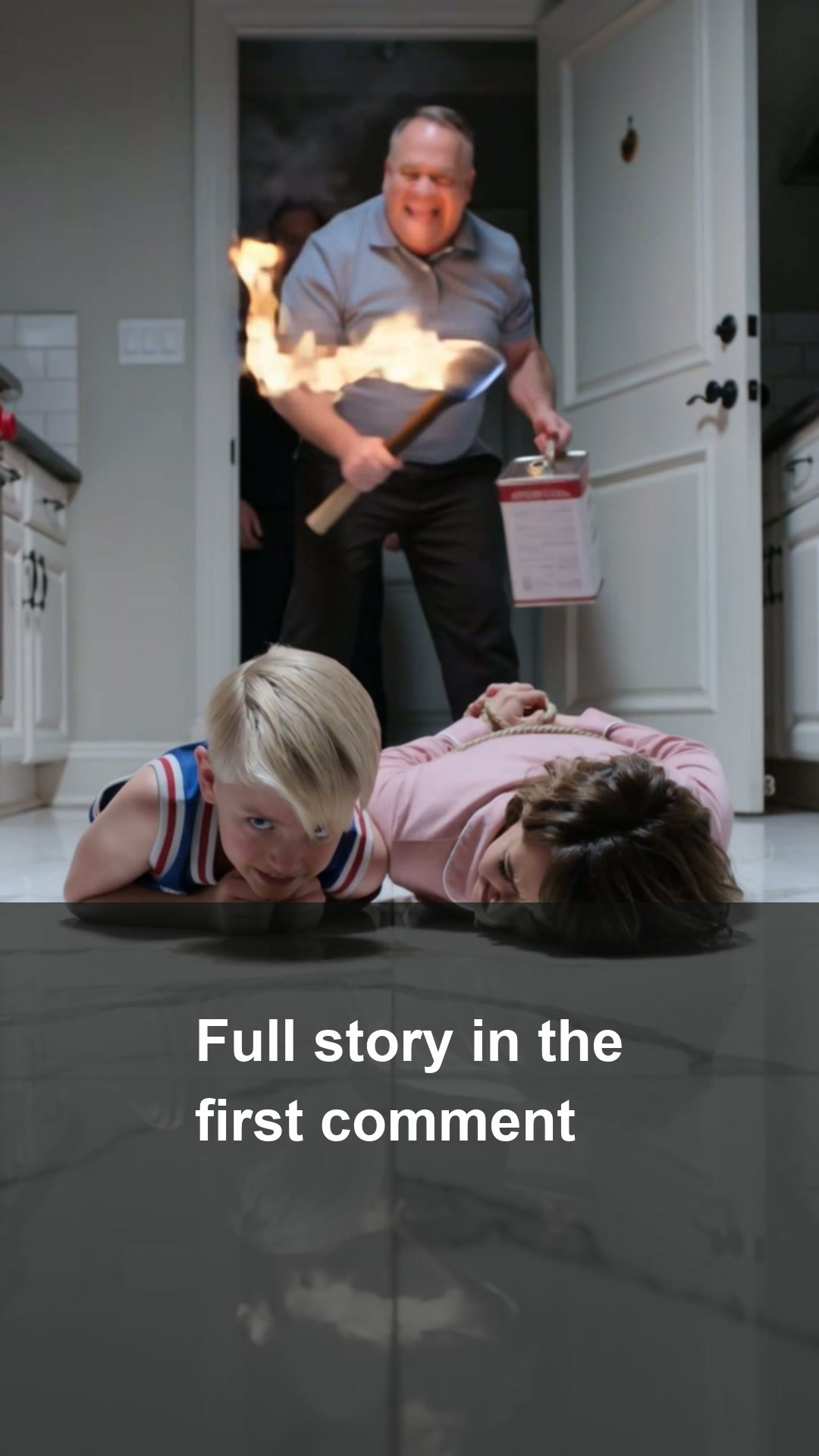
We moved to the kitchen island, the wood cold and hard beneath my palms. We needed a lawyer, but not a public one. We needed someone who thrived on the destruction of men like Ethan. Mr. Henderson, our neighbor and town councilman, was a man whose own life was a private ruin of gambling debts and desperate, hidden loans. Ethan held those over him. If we freed Henderson, he would be the wrecking ball we needed to tear down the Miller reputation.
Are you ready to lose the house? I asked, my voice finally steady.
Leo looked at the framed photos on the mantle, the ones of us at the beach, all grins and staged affection. He didn’t smile. He just picked up a heavy cast-iron skillet from the rack. I’m ready to stop pretending I can’t walk, he said.
I realized then that I wasn’t saving a child; I was aligning with a co-conspirator. The silence in the kitchen wasn’t empty anymore; it was heavy with the weight of our new, brutal reality. I reached for the spare key to the office drawer, the one Ethan thought was tucked deep in his pocket, and felt the metal bite into my palm. We had the evidence of his accounts. We had the confession. And now, we had the truth. I checked the window, catching a glimpse of Ethan’s sedan turning into the long, winding driveway, the headlights cutting through the dusk like searchlights. The wolf was coming home. I grabbed Leo’s hand, squeezed it, and turned to face the door.
The headlights swept across the kitchen ceiling, a slow, rhythmic pulse of white light that turned the room into an interrogation chamber. Leo pulled his hand away, his small fingers cool and dry, and moved with a fluid, unnatural grace toward the pantry. He didn’t use the crutches. He didn’t even limp. He simply vanished into the shadow of the pantry door, leaving me to anchor the house. I took the key from my pocket—the one I had spent months convincing myself was lost—and slid it into the lock of Ethan’s mahogany desk drawer. My heart hammered against my ribs like a trapped bird, but my hands were steady. I pulled out the ledger, the one detailing the “accidental” expenses of his first wife, and dropped it into my handbag alongside the digital recorder.
The front door groaned on its hinges. Ethan’s boots clicked against the hardwood, a measured, confident sound that used to make me feel safe, but now sounded like the cocking of a gun. He whistled a hymn, low and off-key, as he hung his coat. I stood in the center of the kitchen, the ledger weighing heavy in my bag. When he walked in, his eyes narrowed, scanning the room for the scent of gas he clearly expected to find. He stopped when he saw me, his smile shifting from performative warmth to a sharp, predatory curiosity.
Where is the boy, Clara? he asked, his voice a soft, terrifying rasp.
He’s in bed, I said, my voice sounding hollow but firm. I didn’t tremble. I didn’t look away.
Ethan took a step toward me, his hand reaching out to touch my shoulder in that proprietary, bruising grip he favored. I stepped back, the movement sharp and deliberate. That small retreat was the end of the marriage. He stared at me, his face a mask of practiced concern that couldn’t quite hide the flicker of confusion behind his eyes. He didn’t know yet that the power dynamic had shifted. He thought he was dealing with the woman who apologized for existing. I knew I was dealing with a man who had already failed to kill me.
I walked past him toward the mudroom, my pulse a steady, frantic drum. I locked the back door—not to keep the world out, but to ensure he couldn’t leave.
I didn’t wait for him to process the change. I went straight to the upstairs landline, the only one he hadn’t yet wired into his surveillance hub. I dialed the local precinct, the line crackling with static. When the dispatcher answered, I didn’t offer a polite preamble. I told them there was a domestic emergency at the Miller estate, gave them my name, and told them exactly where to find the ledger. Then, I hung up before they could ask a follow-up.
I went to my laptop and opened the banking portal. Ethan’s confidence relied on the illusion that I was financially illiterate, a decorative feature of his life. I had spent three years watching him type his passwords over his shoulder, a habit I had carefully memorized. I initiated the transfer of every liquid asset into a dormant account I had opened in my maiden name years ago. The screen blinked: Transfer Successful. I saw him coming up the stairs, his footsteps heavy and annoyed, and I slammed the lid of the computer shut just as he reached the landing.
He stood in the doorway, his chest heaving slightly. Why the frantic calls, Clara? What are you doing?
I am separating our interests, I said. I had already called the lawyer, a man in the city who specialized in high-stakes divorces and criminal negligence. He was expecting my email the moment the sun rose. I looked at Ethan, noting the way his jaw tightened, the way his hands curled into fists at his sides. He looked human for a second, small and desperate.
You think you can survive without me? he laughed, a brittle sound that didn’t reach his eyes. You don’t have the stomach for this, Clara. You’re a librarian. You sort things. You don’t destroy them.
I didn’t answer. I reached into my pocket and pulled out the DNA test kit I had ordered under a false name, the one I had used to confirm that the lock of hair I’d taken from his first wife’s brush months ago matched the samples I’d secretly secured from his own razor. It was a cold, clinical piece of evidence. I set it on the nightstand between us.
I know about the mechanical failure, Ethan, I said. The words hung in the air, cold and definitive.
His face drained of color, his skin turning a sickly, translucent grey. He looked at the kit, then back at me, his mouth opening and closing like a fish pulled from the water. The predator had been out-hunted. He lunged for the kit, but I was faster, pulling it away and retreating into the hallway.
He followed, his composure shattered, his movements frantic and uncoordinated. He was no longer the master of the house; he was a man witnessing his own demolition. I ducked into Leo’s room, locking the door behind me. I heard his heavy shoulder slam against the wood, the house shaking under the impact of his rage. Leo sat on the edge of his bed, his eyes dark and bright, holding a cell phone he had clearly been using to record the entire interaction from behind the door.
He’s finished, Leo whispered, his voice as calm as a summer morning.
I walked to the window and looked out. The driveway was empty, but in the distance, I saw the twin beams of a police cruiser turning onto our lane. I looked back at the door, the wood splintering under Ethan’s weight, and felt the finality of the choice I had made. The police were coming, the accounts were empty, and the truth was finally, violently, coming home. I grabbed Leo’s hand, pulled him toward the back fire escape, and didn’t look back as the house began to groan under the pressure of the coming storm.
The community center smelled of industrial floor wax and stale coffee, a scent that now triggered a sharp, metallic tang in the back of my throat. I sat on a folding chair in the corner of the room, my fingers tracing the jagged edge of a chipped fingernail, while the town council meeting devolved into a cacophony of shouting voices. Outside the narrow windows, a news van sat idling, its satellite dish like a giant, lidless eye aimed directly at our lives.
Mrs. Gable, the PTA president who had once praised Ethan’s charity gala speech, leaned across the aisle and hissed, It’s a disgrace, Clara. We had the whole choir over for Christmas dinner. We sat at the table he built.
I looked at her, noting the way her foundation had settled into the fine lines of her mouth, and said nothing. Her disappointment wasn’t about the crime; it was about the inconvenience of having been fooled by a man they had placed on a pedestal.
I’m sorry, I murmured, though the apology felt like a lie. I wasn’t sorry for her disillusionment. I was sorry that my survival had become public theater.
My phone vibrated against my thigh, a relentless pulse of incoming messages. I didn’t look at the screen. I knew the tone of them: shock, curiosity, and the predatory glee of people who had been waiting for the Miller family to crack. Every notification was another fissure in the wall I was trying to build between my past and the person I was becoming.
Leo shifted beside me, his movements fluid and unencumbered, finally free of the crutches that had been his cage. He reached out and tucked his small, cool hand into mine. He wasn’t watching the council members or the cameras; he was watching the exit sign, his eyes tracking the movement of people in the hallway. He was checking for exits even in a room full of neighbors.
The detective who had handled the investigation into Leo’s mother pushed through the double doors, his expression grim. He caught my eye and gave a single, sharp nod. The investigation into the financial records was complete. Ethan’s previous business ventures, the ones that had ended in mysterious structural fires and sudden liquidations, were no longer considered accidents. The realization hit me then, a physical weight in my chest: my husband hadn’t just been a monster to me; he was a machine that had been churning out tragedies for years.
I stood up, the chair scraping harshly against the linoleum. The room went silent. All eyes, once filled with admiration for the Miller name, were now fixed on me with a mixture of pity and suspicion. They wanted to know if I had been a victim or a co-conspirator. They wanted a narrative that fit their comfortable, compartmentalized world.
I’m going home, I said, my voice steadier than I felt.
Leo rose with me, his posture upright, his gaze fixed on the front doors. We walked past the rows of chairs, ignoring the hushed whispers that followed us like a draft. When we stepped out into the cool evening air, the news cameras swiveled in unison, a synchronized mechanical movement that made me want to cover my face.
We climbed into the neighbor’s car, the only thing we had left. As we pulled away, I glanced back at the community center. The lights were still burning, casting long, distorted shadows of the people inside against the brickwork. I reached into my pocket, felt the cold, hard weight of the house key I’d kept, and realized I didn’t want it anymore. I dropped it into the gutter as we turned the corner. The sound was swallowed by the hum of the tires, a small, final note in a symphony of broken glass.
The handcuffs clicked around Ethan’s wrists at the front gate, the sound metallic and final against the silence of the cul-de-sac. He didn’t struggle; he simply stared at the house, his face a mask of calculated confusion that no longer fooled anyone. The police cruiser blocked the driveway, its lights pulsing rhythmically against the pristine white siding he had spent years painting. I stood on the neighbor’s lawn, my hand resting on the back of Leo’s neck. He leaned into my palm, his breathing steady, the crutches he had used as props now discarded in the tall grass near the curb. The shadow they cast stretched long and thin toward the setting sun, a monument to a performance that had finally ceased.
I walked to our mailbox, the brass letters of our name glinting in the dying light. I hooked my fingernails under the M, pulling until the metal groaned and tore away from the wood. It fell into the dirt with a dull thud. Leo stepped up beside me, his gait fluid and confident, no longer needing to drag a leg or feign the weakness that had kept him invisible. He watched the officers lead his father toward the backseat, then looked up at me. He didn’t cry. He hadn’t cried once since the night the gas hissed in the kitchen.
The house looked smaller now, stripped of the manufactured perfection Ethan had cultivated. I reached out and pushed the front gate wide open. It swung back on its hinges, groaning against the lock, and stayed there, unchained, inviting the wind to pass through the empty rooms. The neighbors kept their curtains drawn, a collective shunning that felt like fresh air. We didn’t need to say anything; the truth was written in the flashing blue lights and the absence of the man who had owned our futures.
Later, in the kitchen of the woman next door, we sat at a laminate table while she made tea. The stove was electric, a simple, modern appliance that hummed with a quiet, predictable rhythm. I stared at the burner, waiting for the phantom smell of gas, but there was only the scent of peppermint and hot water. Leo took a sip, his eyes tracking the movement of a moth against the window screen. He reached out and tapped the tabletop, a sharp, rhythmic beat of contentment. We were hungry, but we didn’t eat. We just watched the driveway, waiting for the last of the police lights to fade, finally alone in the silence of our own lives.
The following week, the air tasted of salt. We drove to the coast, the windows rolled down until the upholstery was dusted with sand. I parked where the pavement ended and the dunes began. Leo climbed out of the car, his legs moving with a fluid, uneven grace that made my chest ache. He didn’t use the crutches; he left them in the trunk, a heap of discarded metal that no longer held us captive.
I stood by the tide line, the freezing Atlantic water curling over my toes. The physical shock was a tether, pulling me back into my own skin.
Look, Leo said, pointing at a jagged piece of driftwood snagged in the kelp. It looks like a boat.
I stepped closer, the hem of my jeans soaked. It’s a ship, I corrected, my voice raspy from disuse. It’s heading out.
He laughed, a small, brittle sound that bloomed into something warmer. He started building a castle, his fingers working the wet sand with a frantic, focused precision. I sat down behind him, letting the sun press against my shoulder blades. I thought about the brass sign I had ripped from the mailbox—how it felt like nothing more than cheap, plated metal in my palm. I had spent years polishing that sign, believing it was a reflection of our worth.
Do you think we’ll stay here? he asked, not looking up.
We’ll stay until the sun goes down, I said. Then we’ll go home and make toast.
Just toast?
With too much butter, I promised.
He nodded, satisfied, and shoved a shell into the highest turret of his tower. I watched his hands, steady and capable. I decided then that I would stop checking the locks every hour. I would let the front gate swing open. The tide was coming in, erasing the footprints he had left behind, and for the first time, I didn’t feel the urge to look back.
The crutches were heavy, balanced against the rusted metal of the bin. I walked toward them, my sneakers crunching over the gravel driveway that had once felt like a cage. Leo followed, his gait uneven but determined, his eyes fixed on the horizon rather than the ground. We didn’t speak. The silence wasn’t the suffocating pressure of a secret anymore; it was just air. I reached out, my fingers brushing the cold, padded grips that had defined his performance for so many years. I didn’t hold them. I pushed them until they clattered into the bin, buried under a pile of discarded grocery circulars. The sun dipped low behind the house, stretching the shape of the abandoned supports across the pavement. They looked like a long, thin scar, fading into the dark.
Leave a Reply