The federal agents didn’t use the service entrance; they walked straight through the champagne reception, their windbreakers clashing against the sea of black-tie silk.
The room went hollow. My father’s champagne flute slipped from his grip, shattering against the parquet floor in a rhythmic, jagged staccato. Mother’s face drained of color, turning the exact translucent shade of the lilies lining the altar. She didn’t scream. She just locked her jaw, staring at the lead agent as he held up a thick, manila-bound warrant.
“Arthur Vance?” the man asked. The silence that followed was suffocating, heavy with the scent of expensive lilies and impending ruin.
My father looked at me, his eyes wide and pleading, searching for a lifeline I had burned three years ago. I didn’t blink. I smoothed the lapel of my jacket, feeling the cold weight of the keys in my pocket. I had spent my entire life documenting the structural weaknesses of old buildings, and tonight, I finally understood the architecture of a collapse. I stepped toward the exit, letting the heavy ballroom doors hiss shut behind me, effectively sealing my family inside the wreckage of their own choosing.
The humidity of a Boston Tuesday clung to the glass of my office window, blurring the brickwork of the neighboring brownstones into smudged charcoal lines. I pressed my forehead against the cool pane, watching the steady, rhythmic pulse of morning commuters. Below, the sidewalk was a sea of navy umbrellas and hurried shoulders, each person locked into the precise geometry of their own routine. I took a breath of the stale, recycled air of the archives and turned back to my desk.
My mug sat precisely where I had placed it: three inches from the edge of the mahogany blotter, the coffee inside gone cold and stagnant. I picked it up, the ceramic rim biting into my lip, and took a sip of the bitter, metallic dregs. It tasted like ash, a familiar flavor I had long ago stopped trying to disguise. I set it down, the sharp clink of china against wood echoing in the quiet room.
“Elena, did you see the forecast?” Marcus asked, leaning against the doorframe without entering. He held a stack of blueprints, his tie loosened just enough to suggest a long morning of failed negotiations.
“Rain until Thursday,” I replied, not looking up from the spread of 19th-century facade elevations before me. “It’s consistent, at least.”
He sighed, a sound that carried the weight of his own tedious obligations. “Consistent. That’s a word for it. We’re still waiting on the foundation report for the library project. If the moisture levels are off, the whole restoration is back to square one.”
“I’ll check the moisture logs again,” I said. It was the correct thing to say, the professional response that kept the day moving along its track.
I watched him walk away, his heels clicking in a sharp, predictable cadence against the hardwood. I felt a fleeting, detached curiosity about his life—the house he drove home to, the wife he kissed at the door, the specific brand of disappointment he likely hid from her. I turned my attention back to the drawing. The ink lines were delicate, precise, and entirely manageable. I preferred the structural integrity of a century-old building to the shifting, uneven foundations of the people I had been forced to interact with over the last few months.
I reached for the office printer, the machine groaning as it sucked in a fresh sheet of heavy-weight paper. The process was meditative: the hum of the rollers, the sharp mechanical click of the paper tray, the scent of ozone and toner. It was a world of cause and effect, where every input produced an expected output. If I input the data, I received the report. If I turned the key, the door locked. If I stayed silent, the world remained stable.
I walked to the printer, waiting for the document to slide into the tray. Outside, a sudden gust of wind rattled the windowpane, and a stray raindrop tracked a crooked path down the glass. I thought of the penthouse, the silence of the high-ceilinged rooms, and the way the morning light caught the dust motes in the library. It was a structure I understood, a ledger I had kept balanced.
My phone vibrated on the desk, a sharp, staccato buzz that broke the low hum of the office. I didn’t move immediately. I watched the screen glow, the notification pulsing like a heartbeat against the wood. It was an unrecognized number, a string of digits that didn’t belong to the office, to the archives, or to the life I had so carefully curated. I reached out, my fingers hovering just above the screen, sensing the abrupt, violent shift in the air. The phone rang again, insistent and shrill.
I touched the screen. The silence on the other end was heavy, textured with the background static of a busy lobby.
Julian Thorne’s voice was clipped, devoid of the usual professional veneer. The audit is triggered, Elena. The foundation accounts are being frozen as we speak.
My hand tightened around the handset until my knuckles throbbed. I looked at the blueprints spread across my desk, the lines of a nineteenth-century renovation that now felt like a paper thin shield. I’m at the ballroom, I said, my own voice sounding thin and detached. They’re waiting for me.
The line hissed. Don’t go in there empty-handed. If you start this, you don’t stop.
I set the phone down. The decision was not a choice; it was an architectural inevitability. I pulled the heavy, embossed envelope from my satchel, the one my grandmother had pressed into my palm three years ago with a warning that now burned against my skin. I stood up, the chair scraping sharply against the polished floorboards. I walked toward the door, my heels rhythmic and deliberate, leaving the quiet sanctuary of my office for the glass-walled foyer that led to the hotel’s grand ballroom.
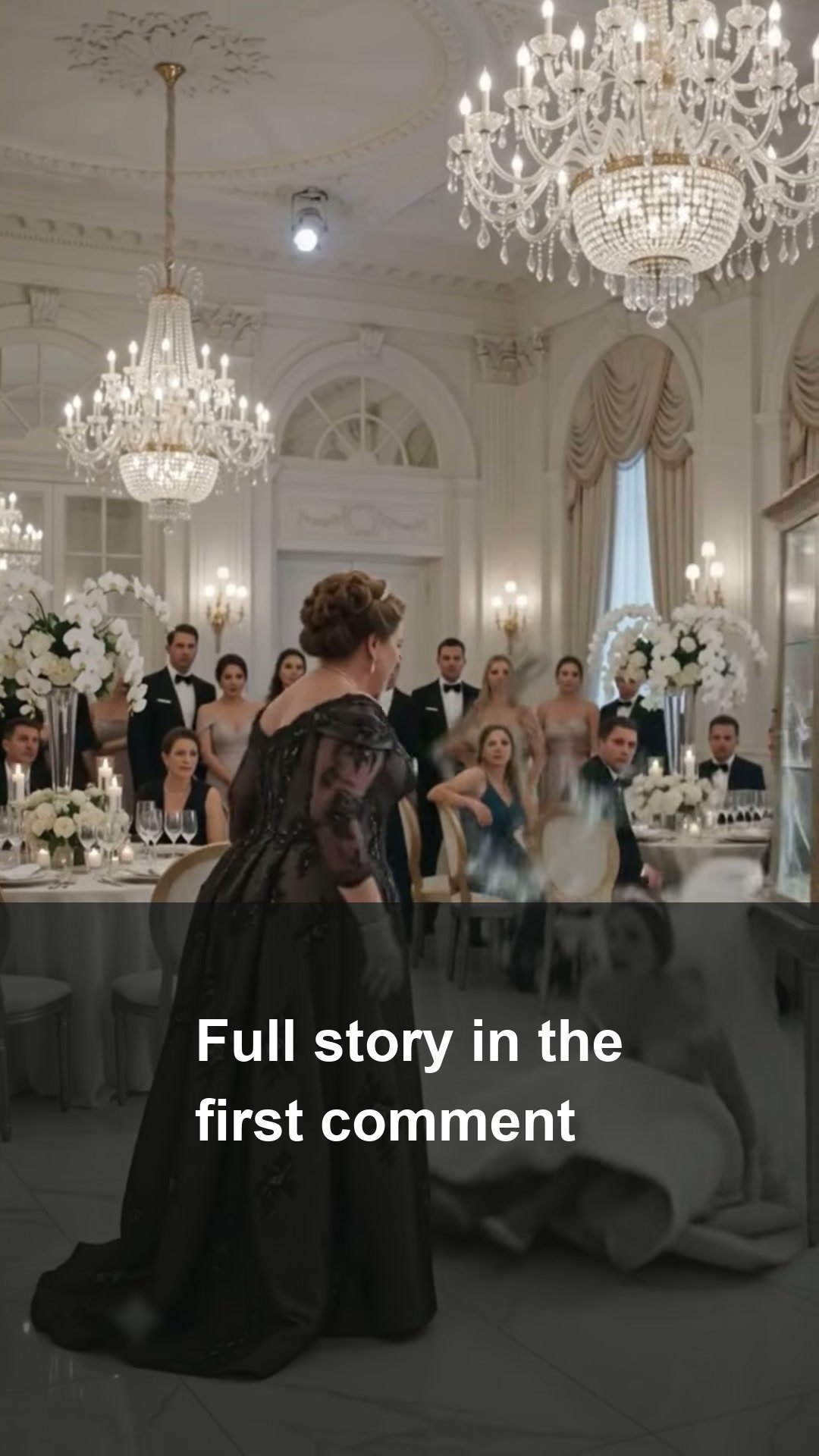
The air inside the ballroom was thick with the scent of lilies and expensive perfume. The chandelier light caught the dust of three hundred people vibrating with forced gaiety. I saw them immediately: Catherine and Arthur standing near the stage, their postures rigid with the terrifying, artificial elegance of predators. Sophie stood between them, her white lace train fanned out like a shroud. As I moved through the crowd, the room’s ambient noise seemed to thin, a vacuum forming around my trajectory.
Elena. Catherine’s voice didn’t welcome me; it anchored me. She took my arm, her grip bruisingly tight. We were just discussing the penthouse. The toast is in five minutes. You’re going to be a gracious sister, aren’t you?
I pulled away, the fabric of my dress sliding through her fingers. I’m not here for a toast, Mother.
Arthur stepped forward, his smile not reaching his eyes. Don’t cause a scene, Elena. Not today. It’s a simple transfer of the deed. You’ve had your fun with the history books. It’s time to be practical.
I felt the weight of the envelope in my bag, a physical burden of truth. I looked at the stage, where a microphone stood draped in gold ribbon. I looked at the crowd, the faces of Boston’s elite waiting for a spectacle. My grandmother’s voice echoed in my head, a cold, sharp reminder that foundations built on rot eventually collapse under their own weight.
I reached for my left ear, undoing the clasp of the diamond earring. It was a heavy, cold weight. I let it drop. It hit the marble floor with a piercing, crystalline ring. The conversation stopped. Three hundred heads turned toward the sound. I looked at my mother, whose face had drained of color, and stepped toward the stage. This was the foundation of the house, and I was going to tear it down.
I walked past the silent guests, the click of my heels against the marble floor sounding like a ticking clock in an empty room. My father was the first stop. He stood near the service entrance, his tuxedo jacket rumpled as if he had been physically wrestling with his own conscience. I pressed my phone against my ear, even though he was three feet away. When he answered, he didn’t look at me, but his voice shook. He told me the wedding expenses were paid in full by the Vance Foundation, a claim that made my skin crawl. I watched his eyes dart to the exit, his mouth a thin, trembling line. He was lying, but his panic was sincere; he was terrified of what the bank would find if they actually looked. I hung up and dialed Julian Thorne. The connection crackled. He told me the foundation had been dormant for three years, its accounts frozen long before the invitations were printed.
I turned my back on the ballroom and stepped into the hotel lobby. The air here was cooler, smelling of floor wax and forced luxury. The concierge, a man who had known me since I was six, kept his eyes fixed on a ledger when I asked about the room block. He mumbled that the suite had been booked under a shell company, paid for in cash by a courier who didn’t speak. I looked at the security footage screen behind him; the hallway leading to the penthouse was a blur of static. He insisted the service elevator had been out of commission for the entire week, yet I had seen the catering staff emerge from it ten minutes ago. My chest tightened. I decided then that I would not leave the premises until I understood why they were so desperate to get me to sign over the deed before the clock struck midnight.
I walked to the corner of the lobby where the head nurse, Mrs. Gable, was standing. She had been my grandmother’s primary caretaker during her final months in the penthouse. She pulled her cardigan tighter around her shoulders, her hands fluttering like trapped birds. When I asked about the last night, she looked over her shoulder, her eyes wide. She told me grandmother had been perfectly lucid, dictating a final letter of support for my parents, begging me to transfer the penthouse to their control for the sake of the family business. I knew that was impossible. Grandmother had barely been able to lift a pen, and she had despised my mother’s business ventures. Mrs. Gable looked at the gold watch on her wrist and suddenly remembered an urgent appointment. She walked away, her pace frantic.
I stepped outside into the biting Boston wind. A valet stood by the curb, his eyes bloodshot. I gripped his arm, my nails digging into his wool sleeve. He was the witness I needed. He swore he’d seen my father hauling crates of legal files out of the service entrance in the middle of the night, loading them into an unmarked van that belonged to no one. He looked at me, shivering, and said the van had vanished into the tunnels toward the financial district. I let go, the cold air stinging my face. My father said the books were clean; Julian said the accounts were dead; the nurse claimed a deathbed conversion; the valet described a midnight heist. I took a deep breath, the taste of ozone and exhaust sharp on my tongue. I walked to my car, my decision made. If they were hiding the truth in the tunnels, I would go to the source. I reached for the ignition, the engine turning over with a low, predatory growl. The first thread was pulled, and the entire tapestry was starting to unravel.
The lobby of the Vance family office was a mausoleum of polished mahogany and guilt. I walked past the reception desk, my heels clicking like a metronome against the Italian marble, each strike sounding like a gavel. I didn’t wait for the security guard to check his list; I simply pushed through the glass doors, the cold air of the climate-controlled archives hitting me like a physical weight. My father was there, hunched over a heavy oak desk, his face bathed in the sickly blue light of a laptop screen. He was frantically shredding thin strips of paper, his fingers trembling with a frantic, animal energy. The hum of the machine was rhythmic, a low-frequency vibration that rattled the inkwells on the desk.
He didn’t look up when I stepped into his field of vision. He kept feeding the documents into the maw of the shredder, his movements disjointed and desperate. I watched a ledger page disappear, the date visible for a fraction of a second—a date that coincided exactly with the foundation’s largest phantom donation. The air smelled of ozone, burnt plastic, and the dry, suffocating scent of pulverized history.
I stepped closer, reaching out to touch the heavy, leather-bound volume sitting untouched at the edge of the desk. It was the original ledger, the one my grandmother had kept hidden beneath the floorboards of the penthouse. My father’s hand shot out, grabbing my wrist with a grip that left white indentations against my skin. He smelled of scotch and expensive, panicked sweat.
He hissed, his eyes darting toward the door as if he expected the walls to collapse in on us. I didn’t pull away. I looked down at the ledger, then back at him, seeing for the first time the man beneath the expensive tailoring—a man who had spent three decades building a kingdom out of smoke and stolen light.
I pulled my hand back slowly, the silence in the room thickening until it felt like water filling my lungs. I leaned in, my voice barely a whisper.
I know whose signature is on the second mortgage.
The library of our childhood home smelled of cedar and the sharp, chemical tang of the industrial-strength wax Mother insisted the maids use on the parquet floors. I was seven, sitting cross-legged beneath the mahogany desk, watching the dust motes dance in the sliver of light that pierced the heavy velvet curtains. Above me, the floorboards groaned under the weight of my father’s pacing. The rhythmic *thud-drag* of his leather soles was the heartbeat of our house, a frantic metronome that only stopped when the door opened.
Catherine, my mother, stepped into the room. The click of her heels was precise, clinical, and utterly devoid of warmth. She placed a glass of amber liquid on the desk, the ice chinking against the crystal with a sound like breaking teeth.
Arthur, stop it, she said. The pacing ceased. You are vibrating the floor.
I have to move the assets, Eleanor, or the board will see the deficit by Monday, my father replied. His voice was thin, stripped of its usual boardroom gravel.
Mother didn’t flinch. She never did. She leaned over the desk, the silk of her robe rustling against the wood. We will move them through the foundation. The philanthropic arm is a black hole, Arthur. Use it. If the grandmother asks, tell her it’s a donation to the arts program. She’s senile enough to believe it, and if she isn’t, we’ll make sure she’s too medicated to care.
I held my breath, pressing my cheek against the cold underside of the desk. My father laughed then—a hollow, brittle sound that made my skin crawl. You’re a cold woman, Catherine.
I’m a woman who enjoys the view from this balcony, she countered. Don’t forget who built it for you.
I decided then that I would never look at the view. I would look at the floor. I would look at the foundations. I crawled out from under the desk that night after they left, my knees stained with dust, and traced the line where the wall met the floorboard. It was a secret I kept like a jagged stone in my palm, sharp enough to draw blood whenever I closed my fist.
Years later, at boarding school, the silence in my room felt like a physical weight. Sophie was three years younger, and she had spent the afternoon crying because the headmistress had seen through her attempt to plagiarize a history paper. I sat at my desk, sketching the elevation of the chapel, the lines clean and logical, a stark contrast to the chaos of my family’s correspondence sitting in my wastebasket.
Elena, Sophie’s voice was a wet, congested hum from her bed. You’re good with words. Can you write a note to Mother? Tell her it was a misunderstanding. If she finds out, she’ll cut my allowance. She’ll stop the weekend trips to the city.
I looked over my shoulder. Sophie was curled into a ball, her hair a tangled mess of blonde. She didn’t want the truth; she wanted a script that would keep the money flowing.
I’m not writing your lies, Sophie, I said, turning back to my drafting paper.
She sat up, her eyes narrowing. You’re so boring. You walk around here like you’re better than everyone because you keep your nose in those dusty books. You don’t know what it’s like to actually have to work for their approval.
I do, I said, my voice barely rising above a whisper. I just stopped caring about the prize.
Sophie laughed, a high, thin sound that reminded me of my mother’s crystal. You’ll care when you’re out of this school and you realize you have no one but them.
I picked up my eraser and scrubbed a line clean until the paper thinned. I decided that I would build a life where I didn’t need their approval, a life that didn’t require a script. But the hook was already in my throat. I left the room, leaving her to choke on her own desperation.
Then came the summer Grandmother passed. The house in Back Bay was filled with the scent of lilies, a cloying, funeral sweetness that made the air feel stagnant. I found my father in the kitchen, surrounded by piles of tax documents and legal briefs that had no business being on the marble island. He was sweating, his tie undone, his hands trembling as he shoved papers into a leather satchel.
Where is the key? he demanded when he saw me. He didn’t even look up.
What key? I asked, leaning against the doorframe, feeling the cold marble bite into my shoulders.
The key to the safe in the penthouse. Your grandmother didn’t leave a will, Elena. She didn’t leave anything. And that penthouse is the only thing left that covers the margin calls.
I knew it was a lie the moment he said it. I had been there the day before, sitting by her bed, watching her slide a heavy brass key into my palm while her eyes—clear and sharp, not senile at all—held mine.
She left it to me, I said, my voice steady.
He stopped, his hand hovering over a ledger. He looked at me, and for a second, I saw the terror he tried to hide behind his tailored suits. He wasn’t a patriarch; he was a man holding a collapsing dam with his bare hands.
You don’t understand, he whispered, moving toward me. The money isn’t just mine, Elena. It’s the firm’s. It’s the investors’. If that property isn’t liquidated, we go to prison.
The weight of the key in my pocket felt heavy, like a lead anchor. I realized then that my father hadn’t called me to ask about my life in three years because he was busy building a prison for us all. I thought of the library floorboards, the stolen scholarship money, the way Sophie had learned to mimic Mother’s disdain to stay safe. It was a cycle of theft, a pyramid of paper that Mother and Father had spent their lives polishing.
I looked at his hands—the hands that had paid for my tuition, my clothes, my history degrees—and saw them for what they were: the hands of a thief.
I’m not giving it to you, I said.
His face went white, then mottled with a dark, dangerous red. You ungrateful brat. I have given you everything.
You gave me nothing that wasn’t borrowed, I replied.
I walked out of the kitchen, the brass key burning against my thigh. I went to the penthouse that night, not as a guest, but as a sentinel. I spent the next six months studying the architecture of the family’s deceit. I poured over the ledgers, the foundation filings, the offshore accounts. Every time I hit a wall, I remembered the way my father’s feet had paced the floor, the way my mother had dismissed the truth as something to be managed.
The decision came in the middle of a Tuesday, watching the rain streak against the glass of the penthouse windows. I realized that my autonomy was not a gift they would ever grant me. It was something I had to carve out of their destruction. I contacted Julian Thorne. I didn’t tell him everything, not then. I just asked him to look at the foundation’s books.
The day the audit started, Mother called. Her voice was like a knife sliding through velvet. Elena, darling, I hear you’ve been asking questions. Questions are for people who don’t have a place in this family.
I didn’t argue. I didn’t scream. I just listened to the sound of her breathing, the rhythm of a woman who had spent thirty years hiding the mold behind the wallpaper.
I have a place, Mother, I said. It’s just not in your house.
I hung up, the finality of the silence ringing in my ears. I knew the wedding would be their last attempt to force my hand, a public stage for a private extortion. I knew they would try to shame me into submission. But they were playing a game of theater while I was playing a game of structure, and I knew exactly which beam held the roof up. I walked to the window, watching the city lights blur in the rain, knowing the foundation was already cracked. I was finally ready to let it fall.
The lobby of the hotel smelled of lilies and high-interest debt. My father, Arthur, stood by the mahogany concierge desk, his fingers rhythmically tapping the surface—a nervous tic he’d developed the year the charity foundation began hemorrhaging cash. He looked at me, his eyes darting toward the security guard, seeking an ally in a man paid to ignore him. He was a man who had built his reputation on the appearance of stability, yet his silk tie was knotted off-center. I wondered if he felt the phantom weight of the handcuffs he’d been avoiding for a decade. He wanted me to hand over the deed to the penthouse, a peace offering to the banks he’d fleeced. I didn’t speak. I simply adjusted my coat, feeling the heavy, cold edge of the trust documents pressed against my ribs. He looked away, his jaw tightening into a line of brittle, performative resignation.
Sophie emerged from the bridal suite, her gown trailing like a white shroud. She stopped, her eyes searching the room for a target. She had spent her life navigating the narrow corridors of my mother’s expectations, and today, she wore her victimhood like a designer accessory. She walked toward me, her smile tight and rehearsed. Elena, you’re making such a scene of being difficult, she whispered, her voice a serrated blade wrapped in velvet. It’s my wedding. Can’t you pretend to be part of the family for just one hour? I watched her, noting how her hand trembled as she reached for her champagne flute. She wasn’t asking for family; she was asking for my silence so the bill for the wedding wouldn’t be traced back to the offshore accounts. I saw the fear beneath the vanity. I chose to say nothing, watching her face crumble into a look of genuine, terrified confusion.
Julian Thorne stood in the shadow of a marble pillar, his tablet glowing with the cold, blue light of a forensic audit. He was the only one in the room who understood the geometry of the coming collapse. He was a man of precise, mathematical morality, a man who viewed human greed as a simple variable to be balanced. He nodded once at me, a signal that the bank records were locked and the subpoenas were already in the mail. He didn’t care about the wedding cake or the social standing of the guests; he only cared about the truth of the ledger. I felt a strange surge of kinship with him, a man who saw the world as a structure that could either stand or fail based on its integrity.
My mother entered the foyer then, her heels clicking against the floor like gunfire. She didn’t look at the decor; she looked for leverage. She saw Arthur’s hesitance and Sophie’s distress, and she instinctively moved to dominate the space. She marched toward me, her face a mask of practiced concern, a woman whose entire existence was predicated on the belief that she could buy her way out of gravity. Elena, darling, she began, the word dripping with venom. We have so much to discuss regarding the penthouse. Her hand reached for my arm, her grip thin and demanding. I stepped back, letting the movement speak for me. The silence in the room deepened, the guests sensing the shift in the air. I looked at the marble floor, then at the elevator, knowing the truth was about to render their performances irrelevant. I had the keys to the legacy, and for the first time, I knew exactly how to lock the door behind me.
The elevator doors slid shut, severing the connection to the ballroom’s suffocating warmth. I stood in the mirrored reflection of the small, gilt-edged car, watching my face settle into a mask of professional neutrality. My pulse didn’t race. Instead, it slowed, cooling into the rhythmic, clinical precision of an architectural blueprint. I pulled my phone from my clutch, the screen illuminating the contacts list with a harsh, blue light. I tapped the icon for Julian Thorne.
The phone rang three times before his voice, clipped and efficient, cut through the static. Elena, he said, no greeting required. I looked at the floor indicator, counting the floors as we descended. I’ve activated the failsafe, I said, my voice steady enough to surprise me. The foundation audit begins tomorrow. Thorne was silent for a second, a beat that suggested he was already moving papers across his desk. Then, pull the trigger on the filing, he replied. I’ll meet you at the precinct.
I stepped out into the hotel lobby, the marble cold beneath my heels. My father was already there, pacing near the revolving doors, his face a mottled, panicked gray. He stopped when he saw me, his hands twitching at his sides. Elena, he hissed, stepping into my path, his shadow looming over me. Don’t be a fool. You don’t understand the leverage we hold. You’ll be ruined right alongside us. I bypassed him, the scent of his expensive, metallic cologne nauseating, and pushed through the heavy glass doors into the biting Boston air. I didn’t look back. I didn’t need to; his reaction was a confirmation of his guilt.
The police precinct was a tomb of fluorescent lights and the smell of stale coffee. I sat on a molded plastic chair, watching a sergeant type my statement into a terminal. Every keystroke felt like a tectonic shift. I detailed the accounts, the ghost employees, the diverted charitable donations that were meant for the city’s historic preservation projects but had instead padded my mother’s shopping trips. When I signed the report, the ink bled into the paper, a permanent scar of accusation. I am holding you to this, the sergeant said, not looking up. This is a massive claim, Ms. Vance. I nodded, the weight of the physical document in my hand shifting the balance of power. I know exactly what I am doing, I replied.
By the time I reached my car, three missed calls from my mother burned on my screen. I didn’t open them. Instead, I opened my banking app. With a flick of my thumb, I canceled the standing monthly payment I had been forced to make to the family firm under the guise of an investment contribution—a payment I now recognized as a cover for their laundering scheme. Within minutes, a notification chimed. My mother’s bank portal had triggered a withdrawal error. She was trying to pull the funds before I could finalize the freeze. She was predictable, panicked, and sinking.
I spent the next hour in a sterile office downtown, the air thick with the smell of old paper and legal ambition. My lawyer, a woman who specialized in estate dissolution, studied the documents I had brought. She looked up, her spectacles sliding down her nose. This will effectively strip them of their board seats, she said, her tone clinical. It will also trigger a forensic review of the entire Vance portfolio. Are you prepared for the collateral damage, Elena? She meant my sister, Sophie, who lived off the dividends of those very funds. I thought of the way Sophie had looked at me during the wedding rehearsal, as if I were a structural defect to be plastered over. I want the truth, I said. Nothing else matters.
I watched her draft the motion to contest the will, a document that would expose the forgery my parents had attempted to place on my grandmother’s signature. As she typed, my phone vibrated again. A text from my father: You have ten minutes to call off the audit, or we will disinherit you and claim you are incompetent. I stared at the screen, the threat pathetic in its naked desperation. I deleted the message. I didn’t need their inheritance; I had the penthouse, and now, I had the law.
I took the final, irreversible step at 2:00 AM. I sent the files—the emails, the ledger screenshots, the recording of my grandmother—to the district attorney’s office. The “Send” button felt heavy, a physical weight beneath my finger. As the progress bar loaded, the screen flickered. A notification appeared from the hotel’s security team. They were requesting a meeting about the keys I held. My parents had reported the penthouse as stolen property. I felt a surge of cold, sharp triumph. They were playing their final card, but they had forgotten that I held the deed.
I sat in the dark of my kitchen, the silence absolute. I had dismantled a dynasty in a single night. My mother would be waking up to a world that was suddenly, violently turning its back on her. My father would be looking at a pile of empty accounts. I reached into my bag and pulled out the DNA test kit I had ordered weeks ago, the one I had been terrified to use until tonight. I had finally realized that their need to control me was never about blood; it was about the power they thought they owned over my autonomy. I opened the box, the sterile plastic rattling in the quiet room. I decided then that I wouldn’t stop with the money. I would know the truth of my own origin, even if it shattered the last remaining lie of my childhood. The doorbell rang, a sharp, intrusive sound that echoed through the empty hallway, signaling the arrival of the authorities. I rose, calm and anchored. The escalation was complete, and now, the reckoning would begin.
I checked the security monitor before opening the heavy oak door. Two men in dark, ill-fitting suits stood in the hallway, their posture rigid. They were not police, but the private security firm contracted by the hotel to manage the optics of the disaster. Behind them, a woman in a trench coat held a microphone, her eyes darting toward the penthouse door with the hungry precision of a scavenger.
The security guard shifted his weight, his badge glinting under the recessed lights. He didn’t meet my gaze. I opened the door just enough to slide my hand through, clutching the envelope containing the initial findings Julian had messengered over an hour ago.
We need you to leave, Miss Vance, the guard said. The hotel management is concerned about… the atmosphere.
The atmosphere, I repeated, looking past him to the reporter who took a sharp step forward.
She shouted, Elena, is it true your father funneled foundation grants into offshore accounts?
I didn’t answer. I reached out and took the clipboard the guard offered, signing my name with a fountain pen that felt weighted with lead. I felt a strange, detached empathy for him; he was merely a cog in a machine that had just ground to a halt. When I closed the door, the silence of the penthouse rushed back in, though it felt different now, heavy with the dust of centuries.
My phone vibrated against the marble entry table, a relentless, rhythmic thrum. It was a group thread from my sister’s bridal party—a digital war zone. I tapped the screen. The messages were a blur of vitriol. *How could you? Sophie is devastated. The entire firm is locked down. You’ve ruined every single person who ever cared about you.*
I scrolled past the threats. I reached the message from a former colleague at the architecture firm, a woman I had considered a mentor. *I have been instructed to distance myself from any association with the Vance Foundation. Do not contact me.*
I felt a cold, hollow ache in my chest, a physical manifestation of the social vacuum I had just created. I set the phone face-down on the granite. I had expected the legal blowback, but the speed of the social erasure was visceral. I was no longer an architect or a person; I was a toxic asset to be liquidated.
I walked to the kitchen and began to boil water for tea. My hands were steady, but the rhythm of my heart felt frantic, like a bird trapped in a chimney. The news alerts began to chime, a discordant chorus of headlines detailing the freeze on my father’s assets. I saw a picture of my mother, caught by a paparazzo as she left the ballroom, her face a mask of jagged, exposed nerves.
I didn’t feel triumph. I felt an immense, crushing fatigue. I sat at the island, listening to the hum of the city through the thick, triple-paned glass. Outside, the world was rearranging itself around my wreckage. I thought of the penthouse, the mahogany, the history I had fought to preserve. Was it worth the isolation?
I looked at the DNA kit sitting on the counter, still unopened. I realized then that my autonomy had been paid for in full. I reached for the box, tearing the seal. If I was going to be an outcast, I would at least be an honest one. I decided, then and there, that tomorrow I would stop reading the headlines. I had work to do on the foundation, and for the first time in my life, the blueprint was entirely my own. The phone buzzed again, but I didn’t look. I pulled the swab from the package, the plastic cool against my palm, and leaned into the truth.
The final envelope from the probate court arrived on a Tuesday, heavy with the weight of embossed stationery and the scent of legal archives. I sat at the kitchen island, the marble cool beneath my forearms, and used a steak knife to slit the edge. The settlement was finalized: the foundation was officially dissolved, its remaining assets seized for tax arrears, and the penthouse title was now irrevocably in my name. Outside, the Boston skyline began to bruise with the arrival of dusk, the city lights flickering to life like distant, indifferent stars.
I stood and walked to the hallway closet, pulling out a heavy cardboard box. It was time to clear the last of the artifacts. I placed my mother’s framed wedding photo face-down at the bottom, the glass hairline-fractured from when I had swept it off the mantel earlier that week. My father’s influence had evaporated in a matter of hours; I had seen him on the news, a grey, hollowed-out man leaving the federal building with his head bowed, his reputation effectively liquidated alongside his bank accounts. There would be no more gala invitations, no more curated social theater. The silence in the penthouse was thick, but it was finally mine, unpolluted by their frantic, grasping voices.
I moved to the window, watching the reflection of the room stretch across the glass. I reached up and unclasped my earrings, the diamonds catching the fading light before dropping them into the velvet tray on the vanity. The house felt lighter, stripped of the expectations that had tethered me to a life I never built. I took a deep breath, the air smelling faintly of cedar and old paper. The grandmother I had idolized had been flawed, perhaps even calculating, but she had handed me the tools to dismantle the prison they had constructed for me.
I walked back to the kitchen and filled the kettle, the sound of water hitting the metal steady and rhythmic. As it began to whistle, I opened the contact list on my phone. My thumb hovered over the names—Mother, Father, Sophie—all of them now ghosts of a narrative I had spent a lifetime editing. I hit delete on each one, the screen flashing confirmation for every action. There was no closure in the digital sense, no grand apology to be had, only the quiet, permanent exit. I poured the boiling water over the loose-leaf tea, watching the steam rise in the soft, amber light of the kitchen. Tomorrow, the renovation of the west wall would begin, and for the first time, I wouldn’t be checking the doors.
The morning air in the Seaport arrived with a salt-sharp edge that cut through the stale scent of the city. I stepped onto the balcony, the wrought-iron railing still cold against my palms from the night’s frost. Below, the harbor was a sheet of hammered pewter, undisturbed by the frantic energy of the week before. I felt my chest expand, the jagged tightness of the last few months finally pulling loose.
I walked to the garden beds I had insisted on keeping, running a thumb over the rough, grey stone of the planter. A stray, golden-furred dog trotted across the patio of the neighboring unit, yapping at a gull. Its owner, a man in a rumpled sweater, looked up and offered a hesitant, tired wave.
I’ll walk with you, he called out, his voice thin against the wind. It’s too quiet to be out alone today.
I hesitated, the impulse to retreat behind the glass doors rising like a reflex. Instead, I unlatched the gate. I haven’t walked without a purpose in years, I said.
The man shrugged, a genuine, crooked smile breaking across his face. Good. That makes two of us.
I stepped off the terrace and onto the gravel path, the crunching sound grounding me. I realized then that I didn’t need to document the history of this place to justify my presence here. I didn’t need to curate a legacy for anyone else’s consumption. I felt the weight of the penthouse keys against my hip, no longer a burden of legal protection, but simply metal and utility. I could breathe without calculating the cost of the oxygen. I reached out to touch a budding lilac, the leaves waxy and firm under my fingertips. I didn’t look back at the windows. There was no one left inside to watch me. The day was entirely mine to waste.
I walked back into the silent foyer of the penthouse, the floorboards no longer feeling like a minefield of secrets. The house was finally just a structure of stone and plaster, stripped of its ability to demand a performance. I moved to the master suite, where the evening light hit the mahogany vanity at a sharp, uncompromising angle. I reached up and unclasped the heavy diamond studs, the metal cool against my lobes. I had worn them for years as armor, a signal of my mother’s brittle expectations. Now, I simply placed them on the dark, polished wood. They lay there, two brilliant, jagged points of light, forgotten and static, as I turned my back to walk into the kitchen and put on the kettle.
Leave a Reply