The bedroom floor was littered with shattered crystal, my own reflection splintered across the hardwood. Elena sat in the velvet armchair, her breathing shallow, her eyes fixed on the heavy mahogany wardrobe. She didn’t flinch when I stepped on the glass. The crunch echoed like small-arms fire in the sterile silence of the estate.
I looked at the mahogany doors. They were slightly ajar, revealing the faint, rhythmic glow of a recording device tucked between my spare dress shirts.
Why is this here, Elena? I asked. My voice remained level, though my blood felt like cooling lead.
She looked at me, then at the wardrobe, and whispered, Ricardo said he wanted to watch me learn how to miss you.
The air in the room grew thin. I realized then that my military training hadn’t prepared me for a war fought in my own bedroom. My hands curled into fists, the knuckles whitening as I calculated the distance to the device. I needed to know exactly how much of our lives they had already consumed. I reached for the handle, my heart a steady, cold cadence. I was going to dismantle them, one recorded lie at a time.
The sunlight hit the kitchen tile at exactly 6:15 AM, carving a sharp, geometric wedge across the granite island. I stood in the silence, listening to the hum of the refrigerator. It was a domestic sound, rhythmic and dull, the kind of background noise you stop hearing after three days of living in a house. I measured the coffee grounds into the filter, three leveled scoops, shaking them flat with a flick of my wrist.
Elena walked in, her feet bare against the cold floor. She was wearing my oversized grey sweatshirt, the sleeves pulled down over her hands like mittens. She didn’t say anything. She just leaned against the counter and pressed her forehead into my shoulder. I smelled her shampoo—lavender and something sharper, like citrus. It was a quiet morning, the kind that feels heavy with the promise of nothing happening.
Coffee? I asked.
She nodded once. Just black.
I poured the water, watching the dark liquid bloom through the grounds. It was predictable. Everything was predictable. We drank the coffee standing up, watching the fog roll in off the coast, obscuring the horizon line until the ocean and the sky were the same shade of slate.
I’ve got the quarterly audit today, I said, setting my mug down. It’s going to be a long one.
Don’t let them keep you past six, she whispered, not looking up from her cup.
I won’t. I’ll be back for dinner. We’ll order the Thai place on 4th.
She offered a small, tired smile that didn’t quite reach her eyes, but it was enough. It was normal. I drove the commute with the radio off, memorizing the rhythm of the traffic lights. The city was waking up, a tide of brake lights and shifting gears. At the office, the printer was jammed again, spewing out half-printed spreadsheets that curled like dead leaves. I spent the morning clearing the paper path, my fingers stained with toner, making small talk with the receptionist about the unseasonable humidity.
It feels like rain, she said, gesturing to the window.
Likely, I replied. The pressure’s dropping.
The day stretched out in a series of administrative tasks, emails flagged and filed, reports submitted to the board. It was frictionless work. I felt the familiar, comfortable weight of a life built on solid ground. By four o’clock, the monotony had settled into my bones like a sedative. I was thinking about the Thai food, about how the house would be quiet, about the way the light hit the hallway at dusk. I was a man who checked his watch, who accounted for his time, who expected the world to stay exactly where he left it.
I closed my laptop, the click of the screen latch sounding unusually loud in the empty office. I took a breath, ready to leave the building, ready to start the drive back to the coast, ready to be home.
My phone vibrated on the mahogany desk. It was a sharp, frantic buzz against the wood, a sudden intrusion of static into the silence. I didn’t recognize the number, but I reached for it, my thumb hovering over the screen, my mind already cataloging the next task on my list. The screen lit up with a notification, a string of text that made the room suddenly feel very cold.
The message was three words long. Get the hell out. It didn’t come from Elena. It came from a burner account I’d spent two years trying to scrub from my personal metadata, a relic of a life I’d left behind in the desert. My pulse did not spike; it leveled out, the familiar, clinical rhythm of a combat alert.
I walked to the car, my movements calibrated for efficiency. The drive to the coastal estate usually took forty minutes, but I pushed the engine until the needle climbed into the red, the salt air hitting the windshield like buckshot. I didn’t reach for my sidearm. I didn’t need to yet. I needed eyes.
The gate was locked. Not just the standard digital security, but a secondary, physical padlock I hadn’t installed. I used a tension wrench from my kit, the metal clicking against the shackle with a satisfying, familiar snap. The estate was dark, the manicured hedges looking like jagged teeth against the moonlight.
I entered through the laundry room, avoiding the floorboards I knew would creak. The house smelled of lavender floor wax and something sharp—antiseptic. I moved through the hallway, my boots silent on the marble. I heard the muffled sound of a television in the master suite, the volume high, a frantic, bright sitcom canned-laughter loop that didn’t match the heavy, suffocating silence of the rest of the house.
I pushed the door open. Elena was sitting on the edge of the bed, her back to me. She was staring at a wall covered in framed family photos—pictures of me at graduation, pictures of my brother, Ricardo, smiling with my mother, Doña Victoria. She didn’t turn.
Elena, I said. My voice was steady, a low hum that didn’t ripple the air.
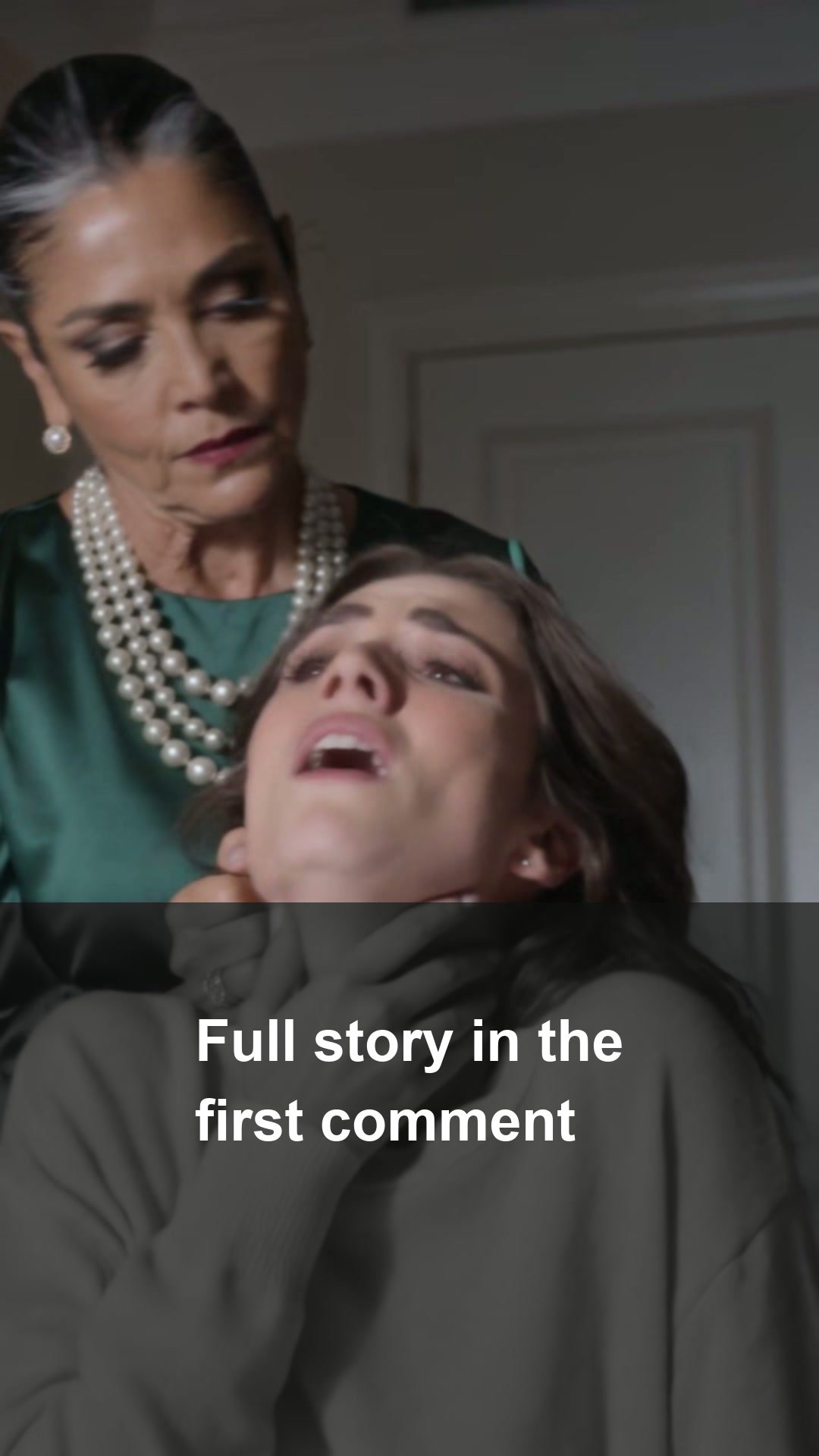
She flinched. It was a sharp, jagged movement, the way a wounded animal reacts to a sudden shadow. She turned, and the light from the television caught her face. Her cheek was a landscape of bruised violet, a stark, ugly contrast to the pale, expensive silk of her robe. Her hand moved instinctively to cover it, but the fabric slipped, exposing the purple bloom spreading across her jaw.
They said you weren’t coming back, she whispered. Her voice was cracked, like dry glass. They said you died in the sand.
I looked at her, cataloging the damage. My mother hadn’t just taken the house; she’d tried to erase the person living in it. I walked toward the bed, my gaze dropping to the floor. There, tucked under the vanity, was a stack of legal documents—my signatures, forged in ink that still looked wet.
I have them, I said, looking at the door. I’m going to make them pay for every second of this.
Elena pulled her knees to her chest, her eyes searching mine for a flicker of the man she married. I didn’t give her comfort. I gave her a tactical assessment. The gate was only the beginning.
The mahogany desk in the home office felt like a crime scene. I sat in the leather chair, the leather still molded to Ricardo’s posture, and dialed my mother’s direct line. The phone hummed against my ear—a steady, bureaucratic pulse. When she picked up, her voice was warm, dripping with the practiced syrup of a woman who never worried about bills.
Alejandro, darling, she said. I heard the house was finally being attended to. Ricardo mentioned you needed help with the transition.
I looked at the forged Power of Attorney document, the ink mocking me with its sharp, clean edges. I need to know why the staff was replaced, I said. Elena tells me she hasn’t left the house in three months.
A sharp intake of breath. Oh, she’s been so fragile since the news of your passing, Alejandro. She had a breakdown. The staff change was for her protection, on the doctor’s orders.
I stood up, the chair spinning away from me. Which doctor, Mother?
Dr. Aris. The one who handles the estate. She’s stable now, but she shouldn’t be traveling or handling finances. We’re just keeping her safe.
I hung up. I didn’t believe the tone of her voice; it was too practiced, like a script rehearsed in front of a mirror. I grabbed my keys and headed for the door, my movements efficient, stripped of hesitation.
The clinic downtown was a sterile, windowless box. I pushed past the receptionist and cornered the nurse at the station. She smelled of bleach and cheap coffee. When I mentioned Elena’s name, her eyes darted to the camera in the corner.
Mrs. Elena? She hasn’t been here in a year, the nurse whispered, her hands trembling as she straightened a chart. Dr. Aris isn’t a psychiatrist. He’s a plastic surgeon. He handles the family’s cosmetic requests.
My blood turned to ice. A plastic surgeon. I thanked her with a curt nod and walked out into the blinding midday heat. The contradiction sat heavy in my gut: my mother claimed medical oversight, but there was no medicine here. Only vanity, or perhaps something more sinister.
I pulled the car over on the shoulder of the coast road, the engine ticking as it cooled. I called the Grand Hotel, where Ricardo had claimed I’d stayed during my leave—the leave I never took. The concierge was helpful, eager to please.
Mr. Ricardo stayed in your suite last month, he said. He brought a woman. Not your wife. She was young, blonde, very loud. They left after two days, leaving a mess of broken glass and a bill charged to your corporate card.
I stared at the grey horizon, watching the waves hammer the rocks. Ricardo hadn’t been mourning; he had been celebrating. I started the engine, shifting into gear. I had enough threads now to weave a shroud. My mother had the signatures, the doctor had the name, and my brother had the arrogance.
I drove toward the city center, my knuckles white on the steering wheel. I knew where Ricardo kept his files—not in the office, but in a private lockbox at the club he loved so much. I didn’t need to ask for permission anymore. I checked the weight of the tactical flashlight in my pocket. If the paper trail wouldn’t hold them, I’d force them to admit the truth in the dark. The investigation was over; the operation had begun.
The club smelled of expensive cedar and stale ambition. I bypassed the valet, moving through the service entrance with the practiced stillness of a man who spent three years stalking shadows in the desert. The lockbox was tucked behind a vanity mirror in the men’s changing area. It took four seconds to bypass the electronic deadbolt. Inside, the ledger was heavy, bound in the same tan leather Ricardo used for his bespoke shoes.
I flipped the pages. My own handwriting stared back at me, perfect and forged, authorizing the transfer of Elena’s remaining private trusts into my mother’s name. My chest tightened, a cold, clinical pressure that had nothing to do with fear. I photographed every page, the shutter sound muffled by the hum of the ventilation system. Then, I heard the heavy, rhythmic thud of expensive loafers against the marble floor.
Ricardo walked in, humming a melody he had lifted from my own radio station. He stopped short when he saw the empty safe, his grin faltering into a mask of pale confusion. He reached into his jacket, his hand trembling as it hovered near his breast pocket. I stepped out from behind the partition, the ledger heavy in my grip. I didn’t reach for my weapon; I didn’t need to. I saw the way he shifted his weight, the way he glanced at the door, realizing he was trapped in a room with a man he had spent months trying to erase.
I thought of Elena’s wrists, the way she flinched at the sound of a closing door, the way she had stopped looking at mirrors. The rage was a quiet, humming current in my blood, stripped of all sentiment. I held the ledger up, letting the pages fan out like a deck of cards.
I looked him dead in the eyes and said, I am going to make you thank me for the poverty I am about to give you.
The silence in the room was not a void; it was an architecture. I stood there, watching Ricardo’s throat move as he swallowed, and I remembered the summer I was twelve, sitting at the mahogany dining table while my mother, Doña Victoria, corrected the angle of my fork. She didn’t scold me; she simply took my hand, guided it three millimeters to the left, and whispered that a man who could not hold his cutlery correctly would eventually lose his grip on his inheritance. I was a child, but I understood then that everything in our house was a test of alignment. If you moved out of place, you were corrected. If you resisted the correction, you were replaced.
I remembered the smell of the library, that heavy mix of floor wax and old, unread leather. I had been reading a book about the logistics of the Roman legions, tracing the supply lines across maps. My brother, Ricardo, had walked in and knocked the book from the table, his smile sharp as a shard of glass. He was two years older and possessed a natural talent for making me feel like an intruder in my own home. He told me that soldiers were the help, that families like ours provided the gold for the campaigns, not the boots for the mud. He hadn’t changed; he had only traded the library for my living room.
When I met Elena, she was a mistake I made on purpose. We were at a gallery opening, and she was the only person in the room who wasn’t evaluating the price of the art. She looked at the canvas and saw the brushstrokes; I looked at her and saw a version of life that didn’t require a ledger. My mother smelled that independence on her like smoke on a coat. I remember the Sunday lunch when Elena first visited the estate. Victoria didn’t speak to her; she spoke through her, asking me if I was certain Elena had the stamina for our particular pedigree. She poured tea with a steady hand, her eyes never leaving my face. Elena had reached for a napkin, and I had watched the way my mother tracked the movement, calculating the cost of the cloth.
I realized then that my mother did not want a daughter-in-law. She wanted a satellite, a body that would orbit the family fortune without generating its own gravity. When I signed my enlistment papers, I thought I was buying us freedom. I thought that by proving myself in a theater of war, by gaining the distance that only a thousand miles of ocean could provide, I would render their interference obsolete. I was wrong. I had confused geography with independence. The military taught me how to secure a perimeter, how to identify an insurgent, and how to operate under extreme duress. I had mastered the logistics of a war zone, but I had failed to apply the same cold logic to the living room.
I looked at the scars on my knuckles from a training exercise in Kandahar and compared them to the silence Elena had cultivated during my deployment. I had sent letters home, full of sanitized descriptions of the landscape, never mentioning the taste of metal in the air or the way we had to scrub the blood off our boots. Elena had written back with stories about the garden, about the way the jasmine climbed the trellis. I didn’t know then that the jasmine was dying. I didn’t know that my mother had replaced the gardener with a man who reported directly to her, or that the security gates had been reprogrammed to lock Elena inside while I was overseas.
The memory of a phone call from three months ago surfaced, the connection static-heavy and thin. I had been in a bunker, the air thick with the smell of diesel. I had told Elena I loved her, and for a second, there was a pause—not a hesitation, but a vacuum. She had said, I’m learning to be quiet, Alejandro. Don’t worry. The way she said it then, I thought she meant she was learning patience. Now, looking at Ricardo, I understood she meant she had been trained to disappear. She was a Logistics Officer’s wife, and she had been forced to learn the art of non-existence.
I remembered the time Ricardo had asked me for a loan to start his first venture, a boutique consultancy firm that collapsed within a year. My father had written the check, but Victoria had made sure it came with conditions. She had me sign a promissory note, a legal formality, she said, to keep the brothers honest. I had signed it without reading the fine print, trusting the blood connection as a safeguard. That note was likely the lever they had used to dismantle the assets I thought were untouchable. They had treated my life like a balance sheet, cutting the expenses they deemed unnecessary—and Elena had been the first item on the chopping block.
I touched the edge of the ledger in my hand. The weight of it felt like a weapon. I thought of the way my father’s portrait still hung in the hallway, his face a mask of stern indifference. He had never been a man of words, only of outcomes. If he saw us now, he would not be disappointed that we were fighting; he would be disappointed that I had been caught off guard. He taught us that the world was a zero-sum game. If I was to win, I had to be colder than the woman who gave birth to me and more precise than the brother who had usurped my bed.
I looked at the watch on Ricardo’s wrist—my watch, the one I had left in the safe before I deployed. He was wearing it with a casual ease, as if it had always belonged to him. He didn’t even have the decency to hide it. He had spent his whole life trying to fit into my clothes, my career, my life, and he had finally succeeded in becoming a hollowed-out version of me. He was a parasite that had finally killed its host, and now he was starving, looking at me with the frantic desperation of a scavenger.
I remembered the last time I saw Elena before I left. She was standing in the doorway, her hands tucked into the pockets of her cardigan. She hadn’t kissed me goodbye; she had simply looked at me, as if she were memorizing the geometry of my face. I thought she was being stoic. I didn’t realize she was looking at a ghost. I had spent months planning our future, saving every credit, building a foundation for a life we would start when I returned. They hadn’t just taken the money; they had taken the time. They had turned our marriage into a prison, and they had done it while smiling at the neighbors.
The room felt smaller now. The air was heavy, static with the weight of decades of unsaid insults and suppressed rage. I didn’t need to shout. I didn’t need to break anything. I just needed to show them that I was finally home, and that I had brought the battlefield with me. I turned the ledger toward him, pointing to the line where his signature had been forged. It was a sloppy imitation, a sign of his arrogance. He hadn’t bothered to mimic the pressure of my hand; he had assumed I would never return to check the math.
I thought about the word *family*. For them, it was a brand, a shield to hide their crimes behind. For me, it had been a cage. I had spent twenty-nine years playing by rules I never agreed to, governed by a matriarch who saw people as assets to be depreciated or liquidated. I looked at the exit, then back at Ricardo. The decision was already made. There would be no negotiation. I would strip this estate down to the foundation, stone by stone, until there was nothing left but the truth.
I leaned in closer, until I could smell the expensive cologne he used to mask the scent of his own fear. I didn’t need to speak to break him. He was already trembling. I felt a cold clarity settle over me, the same sensation I got when I lined up a target through a scope. The mission wasn’t to reclaim the house. The mission was to burn the architecture of their control to the ground. My mother had taught me that a man who couldn’t hold his fork would lose his inheritance. She was right. I had lost everything, and in doing so, I had finally gained the freedom to take it all back. The war had followed me home, but it was a war I was finally equipped to win.
The kitchen island was a slab of polished quartz, cold under my palms as I surveyed the new staff. They were ghost-white, faces scrubbed of personality, moving with the rhythmic precision of prison guards. My mother, Doña Victoria, sat at the head of the table, her spine a straight line of iron. She was sipping tea, her fingers adorned with rings that had once belonged to my grandmother, now repurposed as collateral for her grand design. She believed legacy was a fortress built of blood and titles; she didn’t understand that a fortress is just a tomb with a better view. She loved me, she insisted, but her love was a currency she only spent when it could buy her leverage. I watched her check her reflection in the silver teapot, smoothing a stray gray hair. She was terrified of age, yet she spent her days ensuring I had no youth left to enjoy.
I stepped into the dining room where Ricardo paced. He wore my charcoal suit, the fabric pulling slightly at his shoulders because he lacked my frame, or perhaps just the weight of the life he’d stolen. He looked at me, his gaze darting toward the hidden cameras I’d already mapped out in the ceiling molding. He was a man drowning in a shallow pool, desperate to project the image of a titan. He wanted my status, but he hadn’t the stomach for the cost. He tapped his foot, the rhythm erratic, a nervous tic born from knowing the foundation beneath him was hollow. I remembered him as a boy who cried when he skinned his knee; now, he was a man who broke bones to stop from crying.
Elena stood by the pantry, her frame fragile, hands tucked deep into her pockets. She had stopped trying to meet my eyes when I entered a room, a defensive habit she’d developed to avoid the scrutiny of my mother’s spies. I remembered her as the woman who once filled our apartment with oil paint and loud music. Now, she was an object, a piece of inventory in their ledger. Every time she breathed, it was a silent negotiation of her own survival. She saw the way I looked at Ricardo—the cold, tactical appraisal—and her shoulders dropped an inch. She didn’t know if I was a savior or another soldier coming home to occupy her space.
I walked to the sideboard and poured a glass of water, my movements measured, clinical. The glass clinked against the marble, a sharp sound that caused Ricardo to flinch. I let the silence hang, a heavy, suffocating blanket. I was the ghost of the man they thought they’d liquidated. They saw a veteran with a fractured past; I saw a man with a target-rich environment. My mother looked up, her expression a mask of practiced concern. Tell me, Alejandro, she said, her voice dripping with artificial warmth, are you planning to join us for the board meeting, or are you still adjusting to the quiet?
I watched her eyes flick toward the door. She was waiting for me to break, to scream, to provide the emotional volatility she needed to have me committed. I looked at the glass in my hand, then back at her. I’m not here for the meeting, I said. I’m here for the audit. The air in the room shifted. Ricardo paled, his hand going to his tie as if he were choking on his own ambition. I knew then that the house wasn’t just a building; it was a complex system, and I knew how to jam the gears. I walked past them, my boots silent on the marble, and headed for the study. Every step was a decision. I had finished grieving the family I thought I had; now, I would dismantle the strangers who had taken their place.
The heavy mahogany door to the study locked with a satisfying, mechanical click. I did not bother with the lights. The moonlight through the floor-to-ceiling windows provided enough visibility to navigate the desk. I pulled the external hard drive from my tactical vest—a small, black brick containing the software I needed to scrape the server. I slotted it into the hidden port beneath the console. My fingers moved with the muscle memory of a hundred field missions.
The door handle rattled. A sharp, rhythmic knocking followed. Alejandro, open this door immediately, my mother’s voice was thin, sharpened by the sudden loss of control. I didn’t answer. I watched the progress bar on the monitor creep toward ten percent. The security footage from the main server was being mirrored. Every transaction, every unauthorized transfer of my military pension, every forged document filed in my name while I was in the desert—it was all being pulled into the drive.
The knocking stopped. Then, the sound of a heavy object—a vase, perhaps—collided with the wood. Ricardo’s voice drifted through the gap, muffled but frantic. You think you can just march in here and burn it down? We own the ink on those contracts, brother. You’re legally nonexistent.
I watched the screen. Forty percent. I pulled my phone and hit the speed dial for the law firm I’d vetted during my flight home. The line connected on the second ring. Mr. Thorne, I said, keeping my voice flat. I have the digital trail. The audit logs are being compiled as we speak. I need you to file the injunction against the estate’s corporate assets by sunrise.
The reaction was immediate. My mother began to scream, the sound echoing through the vents. It was a calculated, hysterical performance designed to summon the private security team they’d hired to replace my own. I didn’t care. I opened my email and attached the digitized copies of my deployment orders, date-stamped and signed by my commanding officer. I sent them to the local police department’s fraud division with a brief, clinical summary of the identity theft.
I thought about the way Elena had looked at me earlier, her hands tucked deep into her sleeves to hide the bruising. She was a silent witness to a crime I was now actively cataloging. I clicked ‘send’ on the final package of evidence to the district attorney.
The door shuddered under a heavy impact. They were using a shoulder ram. I didn’t reach for a weapon. I reached for the drawer of the desk, finding the family’s original will—the one before they had coerced my father into amending it. I tucked it into my jacket. The server progress bar hit ninety-nine percent. I pulled the drive just as the door frame groaned, the wood splintering under the pressure of the security detail Ricardo had finally mobilized.
I walked to the French doors leading to the balcony and stepped out into the humid coastal air. Below, in the courtyard, I saw the flashing lights of the patrol cars I had summoned. They were early. My mother had expected to handle this within the family, but the police don’t care about bloodlines; they care about signatures.
As I descended the stone staircase, I pulled my phone again. I contacted the DNA laboratory I’d sent the hair samples to three days ago. The results were ready. I checked the screen: the genetic markers confirmed the forgery of the estate’s medical power of attorney. They hadn’t just stolen my money; they had used a fake proxy to medically gaslight Elena while I was away.
Ricardo burst onto the balcony above, his face purple, his expensive suit rumpled. You’re destroying us! he shrieked, his voice losing its composure. You’re a soldier, not a king! You can’t just walk away with the keys!
I looked up at him, pausing on the lawn. I wasn’t looking at a brother. I was looking at a target. I’m not walking away, I said, my voice carrying clearly in the stillness of the night. I’m clearing the LZ.
The lead officer stepped forward, holding a tablet. Mr. Thorne had moved fast. The injunction was active. I handed the officer the hard drive. Every file you need to freeze the accounts is in there, I told him. My brother has been operating under my credentials. The forgery of my father’s signature is detailed in the final folder.
The officer looked at the drive, then at the house, then back at me. He nodded once, a professional acknowledgment of the evidence. I watched as he signaled his men to move toward the front entrance. Ricardo disappeared from the balcony, likely scrambling to find a lawyer who wouldn’t hang up on him the moment they heard the charges.
I walked toward the edge of the property, where Elena was waiting in the shadows of the oaks. Her face was pale, but her posture had changed; she was no longer shrinking. She was watching the spectacle with a cold, sharp focus that mirrored my own. I reached out and took her hand. It was steady.
We didn’t look back as the patrol cars surged up the driveway, their lights washing the house in a chaotic, rhythmic pulse. The estate, my mother’s pride, was no longer a home. It was a crime scene. I felt the weight of the original will in my pocket—the anchor that would keep them tied to the consequences of their greed for years to come. I had cut the lines. Now, I just had to watch the structure collapse. I squeezed Elena’s hand, feeling the hum of the engine as we walked toward the gate. The hardest part was over; the dismantling had begun.
The neighborhood watch group chat pinged with a frantic, rhythmic intensity that turned my phone into a vibrating dead weight in my palm. I stood on the sidewalk outside the estate’s main gate, watching the blue-and-red strobes reflect off the manicured hedges. My mother had spent twenty years curating a reputation of unassailable prestige; tonight, that image was being shredded by the arrival of forensic accountants and state investigators.
A neighbor, Mrs. Gable, slowed her sedan as she passed, her face pressed against the glass like a moth to a flame. I caught her eye, my expression neutral, and she quickly looked away, accelerating as if my proximity were contagious. The social shunning had already begun. By morning, the country club board would have an emergency session. By lunch, the corporate board would be scrambling to distance themselves from Ricardo’s fraudulent signatures.
Elena leaned against the sedan, her posture loose, not the rigid, shell-shocked frame she had worn for months. She watched the officers carry out boxes of paper records—the paper trail of my family’s arrogance.
They took everything, she said, her voice barely a whisper against the hum of the idling squad cars. Every cent, every document.
They were sloppy, I replied. They acted as if the law was a suggestion rather than a perimeter.
I looked at my hands. They were steady, but the phantom tension of the battlefield never truly left my shoulders. I had spent my career securing logistics chains, ensuring the survival of units in hostile terrain. Applying that same cold, clinical logic to my own blood felt like surgery on a gangrenous limb. It was necessary, but the sickness of it clung to the air.
My phone chimed again. A notification from a local news outlet—a headline already live: Estate Seized in Multi-Million Dollar Fraud Investigation. The story was moving faster than the police tape could be unspooled. Friends who had praised Ricardo’s entrepreneurial spirit at last month’s gala were now scrambling to delete their associations, scrubbing their digital footprints of any mention of the family name. The social fallout was a domino effect; one piece tipped, and the entire architecture of their influence flattened.
I felt the weight of the key in my pocket—not to the house, but to the storage unit where I had secured the original signatures before Ricardo could burn them. The strategy had been simple: let them build their castle on sand, then wait for the tide.
Alejandro, look, Elena said, pointing toward the front door.
Ricardo emerged, flanked by two officers. He looked small without his bespoke suit, his hands cuffed behind his back. He caught sight of me standing by the gate. For a second, his bravado flared—a sneer that was meant to command authority—but it collapsed under the weight of his reality. He looked at the flashing lights, the cameras gathering at the edge of the property line, and then at the neighbors watching from their driveways. He realized then that he had lost the only thing he actually valued: the applause.
I turned my back to him, facing the road. My decision was made before the first siren sounded. We would not stay to watch the final, miserable act. The house was a hollow shell now, stripped of the status that had fueled my mother’s cruelty.
Let’s go, I said, opening the car door.
As I pulled away, the estate shrank in the rearview mirror, just another coordinate on a map. I stopped checking my pulse. The mission was complete.
The tires crunched over the loose gravel of the driveway, the sound sharp and final against the silence of the evening. Elena sat in the passenger seat, her hands resting flat on her thighs, not clutching her bag for once. I reached across the center console and shifted the gear into drive. The weight of the estate—the marble pillars, the manicured hedges, the suffocating history of the floorboards—vanished as we crossed the threshold of the iron gates. They didn’t close behind us; they simply stood open, unguarded, no longer protecting anything of value.
I pulled into the gravel shoulder of the coastal highway a mile down. The engine ticked as it cooled, the only rhythm in the sudden vacuum of our lives. I reached into my jacket pocket and pulled out the set of heavy, ornate gold keys to the main house. They felt leaden, cold metal against my palm. I looked at Elena. She wasn’t watching the house. She was watching the horizon where the sun was beginning to bleed into the dark water.
Do you have everything? I asked, my voice steady, stripped of the clipped tactical cadence I had used for months.
She nodded, a small, genuine movement of her head. Everything that matters.
I stepped out of the car. The air smelled of salt and drying kelp, a sharp contrast to the antiseptic sting that had haunted our bedroom for years. I walked to the edge of the overlook, where a stone fountain stood cracked and dry, a relic from the estate’s early days. I didn’t hesitate. I dropped the keys. They hit the bottom of the basin with a hollow, metallic ring that seemed to swallow the last of the resentment I had been carrying. I didn’t look back to see them settle among the dead leaves and dust.
I returned to the car and locked the door, the click resonating like a safety being engaged one last time. There were no assets to reconcile in my head, no legal counter-moves to calculate, no more digital logs to audit. The corporation, the reputation, the inheritance—all of it was being dismantled in a courtroom we would never have to enter.
I tapped the steering wheel twice. Ready?
She reached over, her fingers brushing the back of my hand, grounding me in the present. I am, she said.
I shifted the car into gear and turned onto the highway, moving away from the lights of the estate and into the dark, quiet road ahead. I didn’t look in the rearview mirror again.
The engine hummed a steady, rhythmic cadence that lacked the jagged anxiety of the estate. We pulled into a gravel lot bordering a stretch of beach I hadn’t visited since before the deployment. The air here was sharp with salt, peeling away the metallic scent of old office files and sterile boardrooms. I cut the ignition, and the silence that followed wasn’t heavy; it was merely empty, waiting to be filled with something other than strategy.
I stepped onto the sand, my boots sinking into the damp, cool shelf near the tide line. Elena walked a few paces ahead, her shoulders finally dropping away from her ears. She stopped to pick up a piece of sea glass, turning the frosted blue shard over in her palm. It’s smooth, she said, her voice lacking the tremor that had haunted her for months. I watched the way she held it—not like evidence, but like a trinket. I realized then that I had spent my entire leave looking for landmines, but here, there was nothing to trip over.
The weight in my chest, a permanent knot of tactical alertness, loosened just enough for me to breathe in the brine. I didn’t need to check the horizon for threats. I didn’t need to map the exits. I just needed to watch her walk toward the water.
I reached out, taking her free hand, and her grip was firm, warm, and entirely her own. We are going to make breakfast, I said, the words feeling strange and domestic on my tongue. She turned to me, a small, genuine smile cutting through the weariness in her eyes. Pancakes? she asked. I nodded, pulling my phone from my pocket and turning it off completely, dropping the device into the glovebox of my mind. The morning was ours, and for the first time in years, there was no mission left to accomplish.
The silence in the kitchen was heavier than the desert heat I had carried for years. I watched Elena lean against the marble counter, her fingers tracing the grain of the wood, no longer flinching at the sound of the screen door clicking shut. The legal binders, once our primary ammunition, sat stacked in the trash bin, bound by rubber bands like spent casings. I walked to the side drawer, pulling out the heavy brass key ring—the master access to the estate gates and the security grid that had turned our home into a cage. I didn’t look back at the marble floors or the portraits of ancestors who had signed my name in blood. At the courtyard fountain, I let the gold rings slip through my palm. They hit the dark water with a final, hollow chime.
Leave a Reply