The divorce papers were tucked under my sleeping bag like a landmine. I sat on the edge of the velvet armchair in the parlor, the dust motes dancing in the sterile morning light of a house that never felt like mine. My mother stood by the window, her silhouette rigid against the manicured lawn. She held a lukewarm coffee mug with both hands, her knuckles white. I didn’t wait for her to turn. I reached into my coat pocket and pulled out the set of house keys, setting them on the glass coffee table with a sharp, final clack. The sound echoed through the high ceilings. She didn’t look back. Did you pack everything, she asked, her voice a hollow shell of composure. I am not coming back for the rest, I said. My heart felt like a detached organ, beating rhythmically in a chest that had grown numb. I stood up, the floorboards groaning under the weight of my single suitcase. I walked toward the front door, my hand hovering over the cold brass handle. If I open this, I am erasing the last nine years. I turned the lock.
The morning air in the kitchen smelled exclusively of dark roast coffee and the lemon-scented floor cleaner my mother insisted on using every Tuesday. I stood by the island, watching the steam curl from my mug in a thin, grey ribbon that vanished before it hit the ceiling. The granite countertop was cold against my elbows. It was 7:15, the exact minute my father usually descended the stairs, his briefcase already clicking against his knee.
He walked in, tie knotted with geometric precision, and didn’t look at me. He looked at his reflection in the darkened window of the microwave. Did you fix the leak in the upstairs guest bath, he asked, not turning around. I’ve been meaning to call the plumber, but the office has been a nightmare this week. I traced the vein of a grey streak in the granite with my thumbnail. It’s not leaking, I said. It never was. He paused, his hand hovering over the toaster, and then he just nodded as if I had spoken in a language he only half-understood. Fine, he muttered. Just see that it doesn’t become a problem.
I thought about the books I needed to catalog at the library that afternoon, the quiet hum of the microfiche machine, the scent of dust and aging paper. It was a predictable, static life. I chose to prioritize the quiet. I walked to the hallway to grab my bag, my movements practiced and efficient. Everything in the house felt curated to prevent friction, a series of surfaces so smooth that nothing—not even a conversation—could find purchase.
My commute was a twenty-minute drive through neighborhoods where the lawns were manicured to the millimeter. At the library, the printer jammed on the third page of a student’s thesis. I pulled the tray open, the sharp tang of hot toner filling the air. Small talk with the clerk at the next desk was a ritual of weather reports and traffic complaints. It’s going to be a humid one, she said, leaning against the copier. I suppose so, I replied.
The detachment felt like a physical weight, a coat I wore that kept the edges of the world from touching me. I spent the afternoon filing index cards, feeling the rhythmic, sterile satisfaction of order. I was a ghost in my own life, an observer documenting the minutiae of a reality that didn’t require me to be anything more than a shadow. I decided then that I would finish the shift early, buy a new notebook on the way home, and maybe read in the park before the dinner hour—a dinner hour where I would sit in my designated chair, listen to the clinking of silverware, and say nothing of substance.
I was reaching for my coat when the desk phone chirped. It was a jarring, mechanical sound that tore through the library’s heavy silence. I stared at the blinking light, my hand frozen in mid-air, the plastic casing of the phone vibrating against the mahogany surface. I didn’t know who would be calling me here. My heart knocked against my ribs—a sudden, sharp intruder in a day of perfect, unremarkable geometry. I took a breath, the air tasting of static and paper, and lifted the receiver.
Elena, Sarah’s voice brittle, the words skipping like a stone across ice. I don’t care that you’re working, you need to be home. Mark is in the study, and your father is pacing, and we have guests arriving at six. I stared at the wood grain of the desk, tracing a knot that looked like a bruised eye. The library was closing, the smell of dust and old glue thick in my throat. I didn’t ask what had happened. I knew the rhythm of their panic; it was always centered on the sanctity of the dinner table. Why? I asked, my voice thin, clinical. It doesn’t matter, she snapped, the line crackling with her impatience. Just get here. The connection severed with a sharp, final click. I held the receiver until the dial tone hummed in my ear, a flat, dissonant note that seemed to vibrate through my very marrow. The injustice of it wasn’t the command, but the assumption that my time was merely a placeholder for their chaos. I looked at my coat, draped over the chair like a discarded skin. The city buses would be running, and the train station was only four blocks away. I realized then that the silence of my home wasn’t just a lack of conversation; it was a vacuum designed to swallow me whole. If I walked through that front door, I would be consumed again. I folded my notebook, sliding it into my bag alongside a heavy, leather-bound volume I hadn’t yet checked out. My movements were precise, devoid of the tremor I expected to feel. I walked toward the exit, the heavy glass doors swinging open to reveal a sky turning the bruised purple of an oncoming storm. I didn’t look back at the stacks. I didn’t think about the shift I was abandoning or the questions that would be waiting for me tomorrow. I stepped onto the sidewalk and turned left, away from the suburb, away from the expectation of my designated chair. The city air was different here, smelling of exhaust and freedom. I kept my head down, my pace brisk and rhythmic, matching the ticking of the streetlights. Every block I put between me and that mahogany desk felt like shedding a layer of armor I no longer needed to carry. I reached the station just as the commuter train hissed to a halt, the doors sliding open to reveal a brightly lit, sterile interior. I climbed the steps and chose a seat in the very back, facing the window. As the train lurched forward, pulling away from the familiar grid of my life, I watched the suburb shrink until it was nothing more than a cluster of lights flickering against the dark. I didn’t reach for my phone to tell them I wasn’t coming. I let it sink to the bottom of my bag, a dead weight, as the city began to swallow the horizon. I was no longer a witness to their performance; I was simply gone.
The phone vibrated against the laminate tabletop of the diner, a frantic buzzing that felt like a trapped insect. I stared at the screen. Dad. I didn’t pick up. Instead, I dialed the number for the reception desk at the Sterling Heights Hotel, where my father claimed to have been during his last business trip. The receptionist’s voice was thin, filtered through a headset that hissed with static. No, she told me, there was no record of a David Miller checking in on the fourteenth. She checked twice, her keyboard clacking in a sharp, rhythmic staccato. I felt a cold, clinical detachment settle into my chest. He had told me he was there, he had told me he was struggling to secure the contract that would pay for my tuition. I hung up before she could ask if I wanted to leave a message.
I moved to the next contact: the nurse who had overseen my brother’s recovery from his supposed minor sports injury last winter. Her voice was warmer, tired. When I asked about Mark’s physical therapy schedule, she paused. The silence on the line was heavy, underscored by the distant, rhythmic beeping of monitors. She told me Mark had never been a patient there. She said the facility hadn’t even treated a patient with his name in the last three years. My fingers tightened around the edge of the table, the plastic biting into my skin. The narrative of my brother’s fragility, the one that justified my exclusion from every family event, was a ghost. A fabrication.
I dialed the neighbor, Mrs. Gable, who was always home to watch the comings and goings of our driveway. She sounded surprised to hear from me. She confirmed the cars had been moving, but not the way they told me. She saw my parents leaving for the airport, but they only ever took one suitcase. Not four. Not the family-sized trunks for our vacations. Just one. I looked at the suitcase sitting beside me, my own, the weight of it suddenly feeling like a hollow confession.
I stood up, the chair scraping loudly against the floor. I walked to the glass window, looking out at the rain slicking the pavement. Every piece of information I had collected was a serrated edge, cutting through the history I had been forced to memorize. They hadn’t been protecting the family; they had been performing a life that didn’t include me, using the excuse of my brother’s needs as a stage direction.
I pulled out my keys, my hands steady now, the tremor gone. I knew where they were. Not at the office, not at the hospital, not on any business trip. I started the car, the engine turning over with a low, predatory growl. I needed to see the house while it was empty, to see if the mantle was truly as bare as I suspected. As I merged onto the highway, the city lights blurred into long, distorted streaks of amber and white. The truth wasn’t a discovery; it was a demolition. I reached for the radio, silencing the music, and drove into the dark, watching for the turnoff that would take me back to the start of the lie. The next stop was the front door, and this time, I wasn’t going to be a ghost in the hallway.
The driveway was slick with late-autumn frost, reflecting the pale, clinical glow of the security lights I had once been forbidden to touch. I stepped out of the car, the gravel crunching under my boots—a sound that used to signal my father’s return, but tonight, it only announced my intrusion. The front door was unlocked, a testament to the arrogance of a house that assumed no one would ever dare to leave it.
Inside, the foyer smelled of lemon polish and the stale, manufactured silence of a museum. I walked into the living room. The mantle was worse than I had imagined. It wasn’t just that my photos were gone; they had been replaced by a singular, gold-framed portrait of Mark, his graduation cap tilted at a jaunty, artificial angle. I traced the empty dust-shadow where my middle-school portrait had sat for years, a rectangle of clean wood surrounded by a grey perimeter of neglect.
Footsteps echoed from the top of the stairs. My mother appeared, wrapped in a silk robe, her face tightening into a mask of practiced irritation before settling into a hollow, performative concern. She didn’t look at my face; she looked at the doorway behind me, checking to see if I had brought trouble home.
“Elena,” she said, her voice thin and sharp, like glass under tension. “We were just discussing how to handle your little dramatic excursion.”
I didn’t answer. I looked at the wall, then at her, watching the way her eyes darted away, unable to hold the weight of her own reflection in my presence. She fidgeted with the belt of her robe, a small, rhythmic motion meant to signal that she was the one in control, the one who held the narrative together.
I leaned against the mantle, the wood cold and hard beneath my palms, and stared directly into the center of her eyes.
“You didn’t forget me,” I said. “You just decided I wasn’t worth the cost of keeping.”
The kitchen floor was always polished to a mirror finish, a surface so reflective it felt like walking on water. I was seven, balancing on the edge of the linoleum, when the mail arrived. My father laid the brochures on the granite island—three glossy pamphlets for a resort in the Rockies. I reached for one, my fingers hovering over the image of a ski lift, when my mother stepped into the space, her hand moving with practiced, surgical speed to tuck the third pamphlet into her leather tote. She didn’t look at me, just turned to the sink to scrub a clean glass. I watched her reflection in the darkened window, the way she hummed a melody that had no melody at all. I decided then that if I stayed perfectly still, if I didn’t ask about the missing chair at the dinner table or the way my suitcase remained tucked under my bed while theirs stood in the hall, I might stop being a ghost. I leaned against the counter, the cold granite biting into my elbows, and whispered to the empty air that I would be gone before the snow melted. The hook was set: I stopped waiting for an invitation to exist.
Years later, the sound of a locker slamming shut in the hallway of my high school became the rhythm of my existence. I stood by my locker, pulling out a math textbook, when Mark walked past with his friends. He didn’t acknowledge me, but he dropped his gym bag at my feet, his eyes signaling a demand for me to carry it to his practice. I looked at the bag, then up at the ceiling, tracing the industrial lights. I felt the familiar tightening in my chest, a structural weakness I had spent years hiding behind clinical indifference. I decided I would no longer be the ballast that kept their ship upright while they pitched me overboard to save their own speed. I left the bag on the floor, turned my back, and walked toward the library. The silence I carried home that day was not an absence of sound, but a mounting pressure, a dam waiting for the slightest fracture to break.
The library was my sanctuary, but even there, the ghosts of home followed. I sat at a study carrel, the smell of old paper grounding me, when my phone vibrated. It was a calendar alert: Dad’s business trip. The same week as my fifteenth birthday. I stared at the screen, watching the pixels shift. I remembered the year before, the way my mother had told me, through a closed bathroom door, that my birthday was a logistical inconvenience they couldn’t afford to celebrate properly because Mark needed a tutor for his chemistry final. I had sat on the cool tile of the hallway floor, listening to the soft, rhythmic hum of the vacuum cleaner in the living room, trying to reconcile the image of a happy family with the sound of my own quiet sobbing. I thought about the way they treated my academic awards—not as achievements, but as assets to be displayed on the mantle only when the neighbors were coming over for drinks. I decided that the next time they asked me to perform for the family image, I would give them nothing. No smile, no report card, no presence. I watched the phone screen go black and felt a hollow, sharp sense of clarity.
The dining room table was a mahogany expanse, usually polished to a point where I could see the distorted oval of my own face. My father sat at the head, his eyes fixed on a financial ledger, while Mark talked about his acceptance to the university. My mother poured wine, her movements fluid and rehearsed. When she looked at me, her gaze skipped over my face as if I were a smudge on the glass. I picked up my fork and let it clatter against the china. The sound was deafening. They both looked up, startled, their expressions shifting from annoyance to a fleeting, panicked recognition that I was actually there. I didn’t speak. I looked at the centerpiece, a vase of dead flowers my mother had forgotten to replace, and realized they hadn’t seen me for months. They saw a function, a placeholder. I decided then that the performance was over. I pushed my chair back, the screech of wood against the hardwood floor echoing through the sterile, silent house, and walked out of the room without a word.
I remember the day they removed my photos from the mantle. I was ten, sitting in the carpeted hallway watching them move the frames. They were making room for Mark’s soccer trophies. My mother handled my portrait as if it were a dirty dish, wiping a smudge from the glass before sliding it into a cardboard box. I didn’t cry. I watched the empty space on the mantle, the way the sunlight hit the dust motes where my face had once been. I thought about the way they apologized to me later, not for the act, but for the ‘clutter’ I caused. I decided that if I wasn’t allowed to be a part of the permanent record, I would become an architect of my own erasure. I walked into my room, shoved my belongings into a box, and pushed it into the deepest, darkest corner of my closet. I began to practice being invisible, mastering the art of the soft footstep and the averted eye. It was a survival strategy, a way to ensure that when I finally left, there would be nothing left of me to mourn.
The marriage of my parents had always been a brittle thing, held together by the same logic that governed our house: everything was a cost-benefit analysis. I stood outside their bedroom door, the wood grain rough against my cheek, and listened to them argue about the cost of my tuition versus the investment of Mark’s car. My father’s voice was low, clipped, the sound of a man trying to balance a ledger that was fundamentally broken. My mother’s voice was the sound of glass under tension, sharp and thin. They didn’t see me standing there, a witness to their failure. I realized then that they didn’t just neglect me because I was difficult; they neglected me because I was a constant reminder that their ‘perfect’ life was built on a series of calculated losses. I thought about the warnings Aunt Linda had given me, the way she had looked at me over a cup of tea, her eyes filled with a sadness I couldn’t yet name. She had told me to find a way out before the house swallowed me whole. I decided, right there in the dark hallway, that I would listen to her. I would be the silence that finally broke the rhythm of their lives.
Looking back, the patterns were so clear they were blinding. The ‘family only’ vacations were the most clinical of all. They would sit at the table, my father with his calculator, my mother with her calendar, and they would plan the trips. I would stand in the doorway, watching them, waiting for them to acknowledge the math that never quite added up to four. They never did. They just handed me a key to the house and a list of chores, telling me it was for the ‘family’s stability.’ I would spend those weeks in the quiet, empty house, reading books and learning how to feed myself, how to keep the furnace running, how to be my own guardian. I thought about the neighbors, the way they would wave through the windows, never asking why the daughter of the house was always alone. I decided that my independence wasn’t a choice; it was the only logical response to a family that had decided I was a disruption. I felt a cold, sharp thrill in my chest, a sense of power that came from knowing I was already gone, long before I ever walked out the door. The foundation of this life was built on a hollow space, and I was finally ready to let the whole thing collapse.
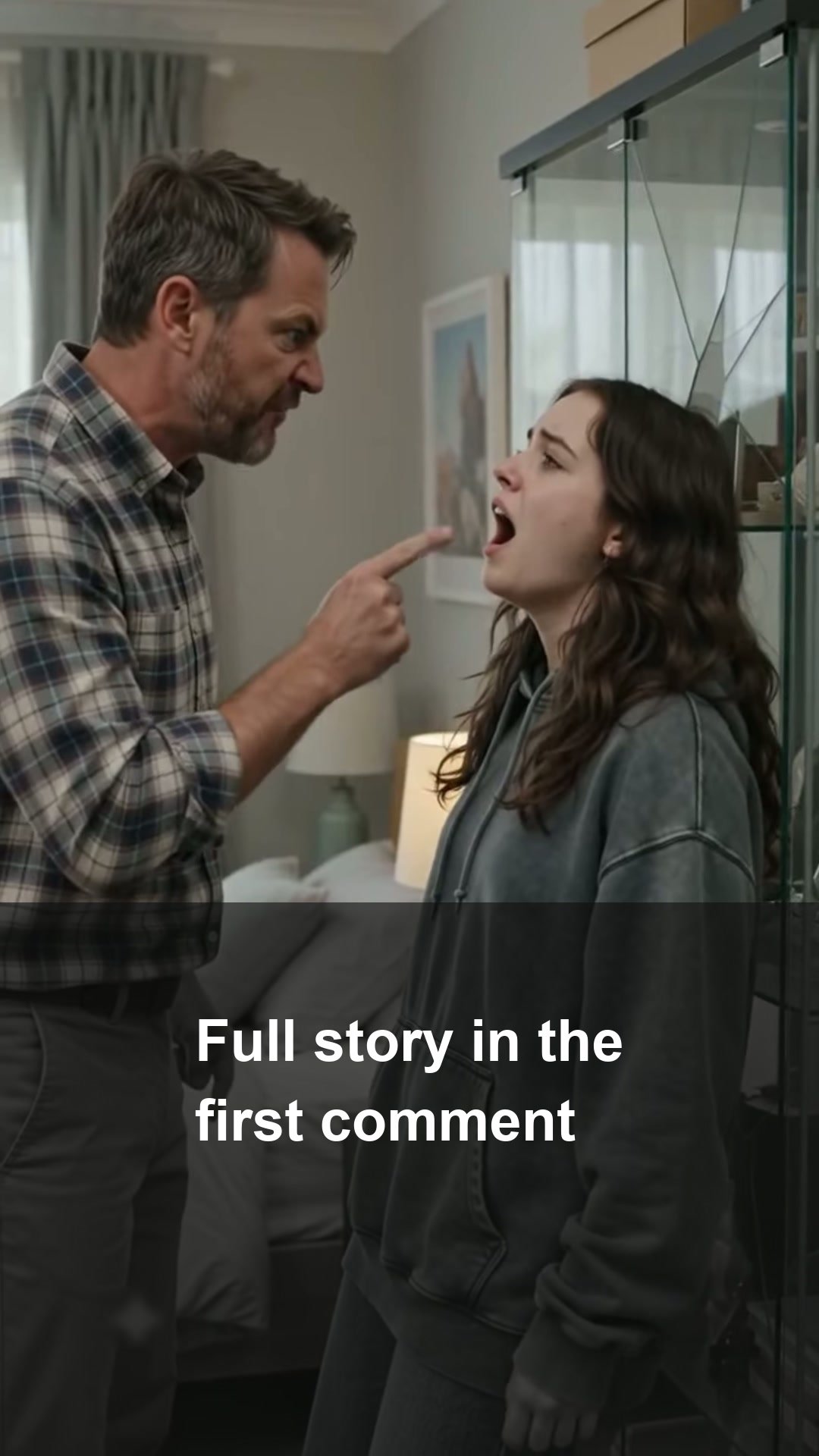
In the kitchen, my mother stood by the granite island, her hands meticulously folding a linen napkin into a perfect, razor-sharp triangle. Her life was an act of architectural preservation, a desperate attempt to keep the walls from bowing under the weight of her own exhaustion. She caught my eye in the reflection of the stainless-steel refrigerator. She wanted me to apologize for the silence, for the way I stopped filling the air with the noises of a daughter. I didn’t. I watched her thumb trace the edge of the napkin, the way she pretended that if the house stayed clean enough, the gaps in our history wouldn’t be visible to the neighbors. She loved the idea of a family more than the people living in it, and that was the friction that burned her from the inside.
My father sat at the head of the table, his eyes fixed on a tablet, the glow casting a sickly blue hue over his professional, ironed shirt. He was a man who measured affection in billable hours and spreadsheet projections. I knew he was currently hiding the insolvency of his firm by liquidating the college funds he had promised were untouchable. He viewed our existence as a series of accounts receivable, and he was currently panicking because he realized I had been the only one paying attention to the fine print. He didn’t look up when I walked past. He couldn’t afford to see me as a person, because to see me was to see the ledger entries he’d falsified to cover the cost of Mark’s private tutors and the curated vacations that never included me.
Mark, meanwhile, slumped in the breakfast nook, his phone clutched like a lifeline. He was the golden boy, the burden of excellence heavy on his shoulders, though he lacked the callousness to truly enjoy the favor he was shown. He looked at me with a mixture of resentment and envy, hating that I was free from the expectations he was drowning in, yet terrified that without his sister to serve as the baseline for his own success, he was just an ordinary, struggling boy. He wanted to be an individual, but he had been raised as a symbol, and he didn’t know how to exist without the spotlight. I knew he would eventually break under the pressure, a collapse facilitated by his own lack of survival skills.
Aunt Linda arrived at the foyer, the scent of damp wool clinging to her coat, a sharp contrast to the antiseptic sterility of our home. She was the one who had slipped me extra cash when the cupboards were left bare, yet she stayed silent at the dinner parties, maintaining the facade to avoid being ostracized by her own sister. Her contradiction was her comfort; she saved me in shadows while fueling the darkness by keeping their secrets. She squeezed my hand, her grip frantic, a silent plea for me to keep her complicity hidden.
I looked at the four of them—the curator, the accountant, the actor, and the silent witness—and realized they were all trapped in a web they had spun for me, only to find themselves entangled. My mother’s napkin fluttered to the floor. My father’s tablet clicked off. Mark exhaled, a jagged, uneven sound. I turned toward the hallway, toward the suitcase I’d left by the door. I didn’t owe them a closure they hadn’t earned. I stepped over the threshold, the floorboards silent beneath my feet, leaving them to stare at the space where I had once been forced to stand. The silence behind me was no longer loud; it was finally, mercifully, empty. I walked into the suburbs, the cold air hitting my face, and wondered if they would even know how to begin the search for someone they had never actually seen.
The sterile air of the local precinct smelled of floor wax and stale coffee. I sat on a molded plastic chair, watching the clock tick in rhythm with my pulse. When the officer finally gestured for me to approach the desk, I didn’t hesitate. I laid out the documentation I had spent three weeks gathering: the bank statements showing the systematic draining of my college fund into Mark’s tuition accounts, the medical records detailing the years of neglected specialized care, and the correspondence where my parents explicitly denied my existence in community documents. I spoke with the clinical detachment of a witness describing a stranger’s accident. The officer’s eyebrows rose as he scanned the paper trail of financial abandonment. He looked up, his expression shifting from bored to professional concern. He didn’t ask why I wanted to press charges for financial elder-abuse-of-a-minor; he simply handed me the intake forms. As I signed my name, the ink felt heavy, marking the point of no return.
Within forty-eight hours, the first counter-move arrived in the form of a cease-and-desist letter from my father’s high-priced firm, demanding I retract the statement and return the laptop he had purchased for my university studies. I ignored the courier standing on Aunt Linda’s porch and walked straight to the office of a family law attorney, a woman named Miller who had a reputation for enjoying the destruction of suburban facades. I dropped the laptop on her mahogany desk. I wanted nothing that linked me to their house. I hired her on the spot, using the meager savings I had stashed away from my library job, and gave her clear instructions: contest the family trust. They had used my name to shelter assets while denying me basic necessities. The look on Miller’s face when she read the ledger was the first time I felt the power dynamic shift. She didn’t offer sympathy; she offered strategy.
The response was swift and ugly. Aunt Linda’s phone began to ring at three in the morning, her voice strained as she repeated her refusal to disclose my location. Then came the HR complaint. My mother, desperate to maintain the illusion of my instability, contacted the university’s dean, claiming I was experiencing a mental health crisis and had stolen family funds to fuel a delinquent lifestyle. They wanted me disgraced, stripped of my standing, and rendered unreliable. I sat in the dean’s office the following Tuesday, the carpet plush under my boots, and presented a copy of the police report and my own letter of grievance regarding the family’s abuse of power. The dean, a man who loathed liability more than he valued wealthy donors, listened without interrupting. By the time I left, the disciplinary hold on my account had been lifted.
The escalation didn’t stop at professional warfare. I checked my mailbox at the library to find a thick envelope from my mother. Inside was not an apology, but a copy of my birth certificate and a handwritten note implying that my paternity was an open question, a final, pathetic attempt to invalidate my claim to the family estate by casting doubt on my very identity. My hands didn’t shake. I drove to the lab that afternoon, paid the fee, and collected the kit for a DNA test. I didn’t care about the biology; I cared about the record. I wanted the truth of my heritage established so that when I dismantled their reputation in court, there would be no shadow of doubt left for them to hide behind. The technician’s gloves snapped as she sealed the vial, a clean, sharp sound that signaled the end of my past.
Back at Linda’s, the air was thick with the scent of pine cleaner. I found a summons waiting on the kitchen table. They were suing for the return of the heirloom jewelry they claimed I had taken, a blatant lie intended to frame me as a thief. It was a classic projection, the move of people who knew their own foundation was rotting. I took the document, folded it precisely, and placed it in my briefcase next to the draft of my deposition. I was no longer the silent girl at the table; I was the architect of their public unraveling.
My phone buzzed—a text from Mark, the first one in months. It wasn’t an apology, but a desperate, frantic demand that I stop the legal filings because he couldn’t afford the legal fees they were siphoning from his own account to fight me. The realization hit me then: they weren’t protecting the family name anymore; they were cannibalizing each other. I looked at the screen, typed a single word—No—and blocked the number. I walked into the backyard, where the evening shadows were stretching across the grass. Every bridge was burning, the orange glow bright against the darkening sky. I wasn’t just leaving; I was ensuring that when they finally looked for me, there would be nothing left for them to find but the charred remains of the life they had tried to curate for themselves. I went inside and started preparing the final filings for the probate court. The silence of the house was gone, replaced by the relentless, grinding hum of the machine I had set into motion. I sat at the kitchen table, took a deep breath, and began to write. The truth, I discovered, was much heavier than the lie, but it was finally all mine.
The screen of my laptop glowed with the blue-light intensity of a medical monitor, casting sharp angles across the library desk. I pressed send on the final disclosure form, the click of the mouse echoing in the near-empty room. Outside, the suburbs were waking up to the rumor. My phone, silenced and face down, vibrated against the mahogany surface like an insect trapped in glass. It was my mother. I didn’t touch it. I walked to the window and watched a group of neighbors clustering on the sidewalk two blocks over, pointing toward our house. The “perfect family” had become a neighborhood curiosity, the kind of scandal that drained the color from manicured lawns.
I pulled my scarf tighter, feeling the cold seep through the glass. A woman from the community board, someone who used to praise my piano recitals to my mother, stopped her car mid-street, staring at the front door. She didn’t know I was watching. She was just looking for a spectacle. I wondered if she felt cheated, or if she was simply relieved that the cracks in the foundation were finally visible.
My phone buzzed again, a frantic rhythm this time. I picked it up, reading the preview: *David is being audited. People are talking. Where are you?* I stared at the name—Aunt Linda. She was playing the bridge, trying to keep the structure from collapsing, but the foundation was already sand. I typed back: *Tell them the truth.*
I didn’t wait for her reply. I walked to the breakroom and poured a cup of coffee that tasted like burnt plastic and old paper. The news of the audit was the first domino. My father’s professional stability—the very thing he’d prioritized over every birthday and milestone—was revealed as a house of debt built on the neglect of his own records. The community saw the financial ruin, but they didn’t see the cost of the neglect. They didn’t see the nine summers of empty seats.
I checked my social media feed, a mistake I hadn’t made in weeks. Mark’s name was trending in the local university circles. Someone had posted a video of him in the quad, shouting at a professor about a grade that didn’t matter, his voice raw, unpracticed in the art of independence. He looked like a child lost in a supermarket. The comments were brutal, picking apart his privilege with the surgical precision of people who had been waiting for him to fail. I felt a hollow ache in my chest, not for him, but for the version of me that had once tried to protect him from his own fragility.
I walked back to my desk and gathered my things. I wasn’t going back to that house, but the fallout was starting to follow me. My phone rang again. This time, it was my father. His voice was a thin, trembling wire. Elena, he said, just come home. We can explain the numbers. We can fix the narrative.
I looked at the phone, then at the rows of books lining the walls. The silence of the library was the only thing I trusted. I realized then that my parents were trying to negotiate with reality, still believing that a narrative could be edited like a draft. They didn’t understand that the story had already been published.
I hung up and powered the device down. The screen went black, reflecting my own face—calm, tired, and entirely singular. I decided to walk to the station. Every step away from the center of town felt like shedding a weight I hadn’t realized I was carrying. As I rounded the corner, I saw a car I recognized, my mother’s sedan, idling near the park entrance, searching for a ghost. I didn’t hide. I stepped into the shadows of the oaks, watching them circle, and realized the fallout wasn’t an explosion after all; it was just the slow, inevitable collapse of a theater whose audience had finally walked out. The next train arrived with a screech of iron, and I boarded, leaving the wreckage behind.
The mediator’s office smelled of lemon floor wax and stale coffee, a sterile environment that mirrored the clinical detachment I had cultivated over the last decade. My parents sat across from me, their posture stiff, David twisting his wedding band while Sarah gripped her purse like a life raft. The mediation agreement lay on the glass table, a document that finalized the severance of my legal dependency and the settlement of the trust fund they had once used as a leash. I pushed the pen toward them, the metal tip catching the light. Sign, I said, my voice steady enough to register as a cold fact. David looked at the page, then at the gray walls, his silence heavy with the debris of lost social standing and the quiet collapse of his career. He didn’t look at me; he looked at the ink. He signed, the pen scratching harshly against the paper, a sound that felt like the final period at the end of a long, rambling sentence. Sarah reached out, her fingers trembling, but stopped short of touching my hand. She tried to craft a smile that didn’t reach her eyes, a performative gesture for an audience that had long since departed. I am sorry, she whispered, the words thin and brittle. I didn’t offer a platitude in return; I didn’t owe her the comfort of my grace. I simply stared at the signed document, the paper now an objective record of their failure. I stood up, the chair scraping against the floor, and felt the shift in my own gravity. The resentment that had fueled my departure for so long suddenly seemed like a waste of remaining energy. I didn’t need their redemption to validate my existence. I gathered my things, the weight of the files in my bag feeling lighter than the air in the room. As I turned toward the door, I didn’t check to see if they were watching. I knew they were, trapped in their own habit of observing the lives they had failed to nurture. I stepped out into the hallway, the fluorescent lights humming overhead, and pushed through the heavy glass doors into the parking lot. The afternoon sun hit my face, unfiltered and warm. I walked toward the bus stop, the city skyline looming ahead of me, a map of possibilities I was finally free to trace on my own terms. The distance between us wasn’t just physical anymore; it was final. The road in front of me was wide open, and for the first time, I didn’t look back to check if anyone was following.
The apartment smelled of rosemary and dust, a scent that finally belonged to no one but me. I sat on the floor, my heels pressed into the worn floorboards, and pulled a thread from the hem of my thrifted wool blanket. Across the room, Buster—a rescue mutt with one ear that sat permanently askew—gnawed on a synthetic bone, the plastic clicking rhythmically against the hardwood. This was the soundtrack of my Tuesday. No one was screaming, no one was performing, and no one was expecting me to be anything other than the quiet girl in the corner.
I picked up the ceramic mug on the rug, the heat seeping through the glaze into my palm. It was the first time I had cooked a meal that didn’t feel like a transaction. I had spent forty minutes chopping carrots, the blade moving in steady, meditative arcs, not because I had to prove my competence to a dinner table full of ghosts, but because I was hungry.
I am not sure how long you have been sitting there, I said aloud.
Buster stopped chewing, his brown eyes tracking the movement of my hand. He let out a soft, huffing sigh and rested his chin on his paws. The silence wasn’t a void anymore; it was a container. It held the space between my breaths without demanding I fill it with apologies or achievements.
I looked at the garden box on the fire escape. The basil was finally reaching toward the glass, a stubborn, vibrant green against the city grit. I had kept it alive for three weeks. I hadn’t watered it to avoid a lecture or to demonstrate my utility; I had watered it because it asked, and I listened.
I stood up, my knees cracking in the quiet, and walked toward the window. I didn’t look for a reflection. I simply watched the street below, waiting for the dusk.
I reached for the deadbolt, the metal cool and familiar under my thumb. My father had once told me that a house only functions when every part serves the structure, a machine governed by the weight of its own inhabitants. I turned the lock. The click echoed through the small apartment, sharp and singular. My phone buzzed on the kitchen counter, a notification from my mother about family plans I was no longer invited to attend. I silenced the screen, the blue light fading into the dark hallway. I didn’t need to check the weight of my bag or worry if the floorboards creaked under a hidden presence. In the corner of the entryway, my suitcase stood upright. It was empty, its zippers pulled shut, casting a long, steady shadow against the baseboard.
Leave a Reply