fter enduring a demanding day on your feet, your body often signals its fatigue with unmistakable symptoms: throbbing arches, taut calf muscles, and a persistent ache in the lower back. The good news is that an effective remedy might be closer than you think, possibly tucked away in your closet or garage.
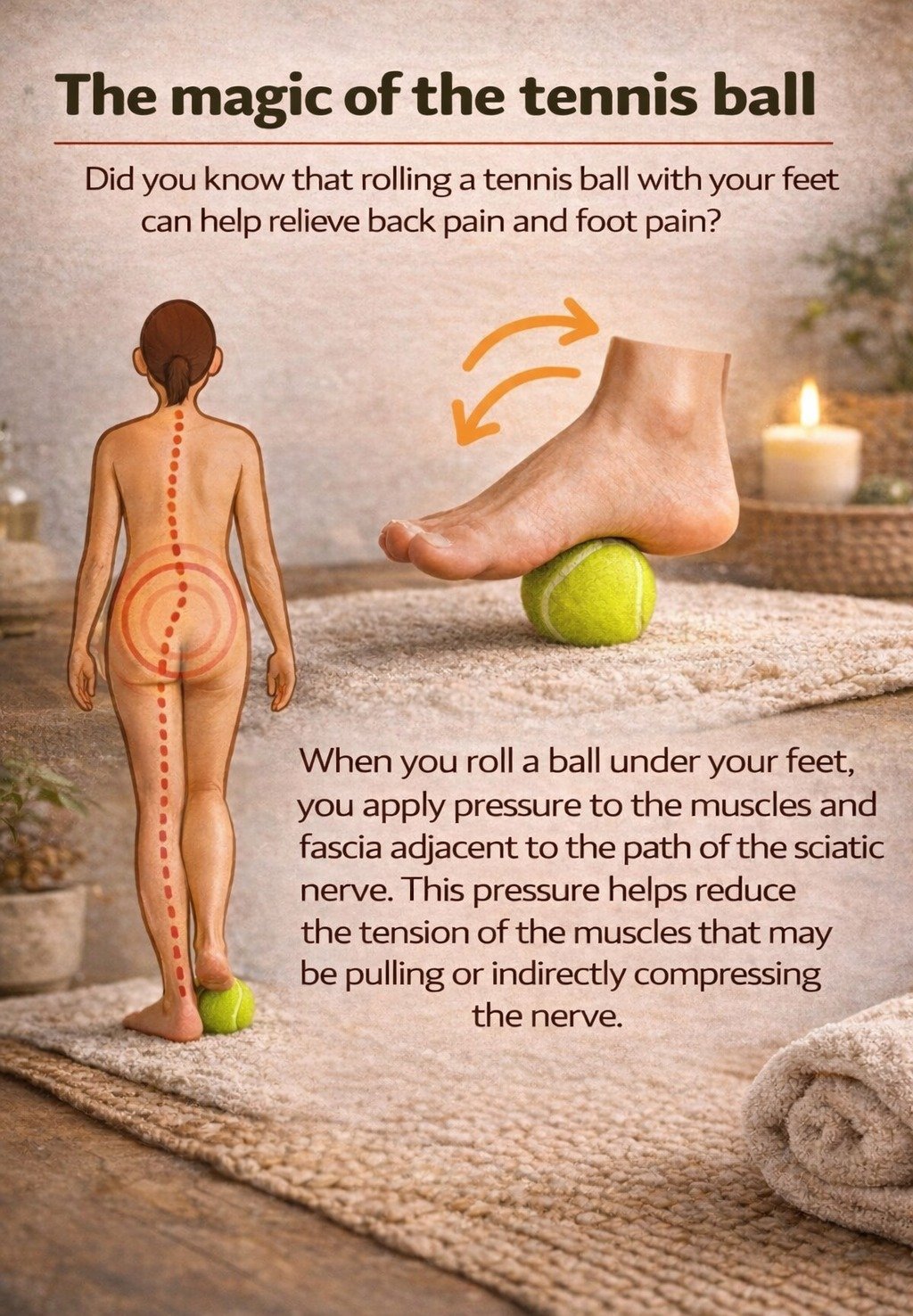
Believe it or not, a simple tennis ball can transform into an incredibly potent tool for alleviating foot discomfort and easing the tension that radiates upwards through your body. This straightforward, budget-friendly technique is widely embraced in various self-massage and myofascial release practices, and you can easily perform it at home in just a few minutes.
Let’s delve into the mechanics of this method, understand its benefits, and learn the correct way to incorporate it into your routine.

The Science Behind Rolling a Tennis Ball Under Your Foot
Your feet are complex structures, housing over 100 muscles, tendons, and ligaments. Among these, the plantar fascia stands out as a crucial element—a robust band of connective tissue that spans the entire sole of your foot.
When this vital tissue becomes constricted or tight—often a result of prolonged standing, extensive walking, wearing inadequate footwear, or intense physical activity—it can trigger discomfort not only within your feet but also extend into your calves, hips, and lower back.
Here’s a closer look at why this happens:
-
The human body operates as an interconnected system.
-
Any tightness in the feet can disrupt proper body alignment.
-
Poor alignment, in turn, can intensify stress and strain in the lumbar region of the back.
Gently rolling a tennis ball under your foot effectively stimulates and massages the plantar fascia. This simple action can lead to several positive outcomes:
-
Enhance blood flow and circulation
-
Alleviate muscle tightness and tension
-
Foster a sense of relaxation throughout the foot
-
Contribute to improved body posture
-
Mitigate pressure patterns that often contribute to lower back stiffness
This technique offers an accessible form of self-myofascial release, requiring no specialized or costly equipment.
A Step-by-Step Guide: Using a Tennis Ball for Foot Pain Relief
Simply follow these straightforward instructions:
1️⃣ Position the Tennis Ball on the Floor
Place the tennis ball on a stable, flat surface. A yoga mat or a carpeted area is ideal to prevent the ball from slipping away.
2️⃣ Gently Place Your Foot on Top
Whether standing or seated, comfortably rest one of your feet directly on the ball.
3️⃣ Roll Slowly Back and Forth
Delicately move your foot from the heel towards the toes and back again, applying a gentle to moderate amount of pressure.
4️⃣ Adjust Pressure as Needed for Comfort
If applying pressure while standing feels too intense, simply sit down to reduce the body weight bearing down on your foot.
5️⃣ Continue for 1–2 Minutes Per Foot
Once finished with one foot, switch to the other side and repeat the process.
💡 Tip: When you encounter particularly tender spots, pause briefly on them and remember to breathe deeply.
Key Benefits of a Tennis Ball Foot Massage
🌿 1. Alleviates Plantar Fascia Stiffness
Regular rolling helps to release tightness within the connective tissue of the foot, proving particularly beneficial after extended periods of standing.
💆♀️ 2. Promotes Lower Back Comfort
Given the significant influence feet have on overall posture, relaxing them can effectively lessen the strain often experienced in the lumbar region.
👣 3. Enhances Foot Mobility
The gentle stimulation provided by the ball encourages greater flexibility and an improved range of motion in the foot.
🔄 4. Boosts Local Circulation
The rolling motion actively promotes increased blood flow to the area, which is essential for supporting tissue recovery and health.
🧘 5. Fosters Deep Relaxation
Engaging in slow, deliberate rolling combined with conscious deep breathing can have a calming effect on the entire nervous system.
Optimal Times to Utilize This Technique
This method is particularly effective and recommended:
-
Following a demanding workday
-
If your job requires you to stand for prolonged durations
-
After engaging in any form of exercise
-
As part of your post-workout or injury recovery routines
-
Before going to bed to aid in relaxation
It also integrates seamlessly into a holistic wellness regimen, complementing activities like stretching, wearing appropriate footwear, and light strengthening exercises.
Recommended Frequency of Use
For routine maintenance and general well-being:
✔ Aim for 1–2 times daily
For addressing occasional tightness or discomfort:
✔ Use as frequently as needed
Remember, consistency in your practice is far more impactful than the intensity of each session. A gentle, daily routine will yield superior results compared to infrequent, aggressive pressure.
Expert Tips for Maximizing Results
-
Always use slow, deliberate, and controlled movements
-
Practice deep breathing throughout your rolling session
-
Ensure your shoulders remain relaxed, not tensed
-
Never push into sharp pain; mild discomfort is acceptable, but acute pain is a sign to stop
-
Combine this technique with targeted calf and hamstring stretches for comprehensive relief
Should you desire a more profound pressure, you might consider using a firmer massage ball, but it’s always advisable to begin with a tennis ball to assess your sensitivity.
Is This Technique Suitable for Everyone?
Generally, this self-massage exercise is considered safe for individuals in good health. However, it’s crucial to exercise caution or consult a medical professional if you are experiencing any of the following:
-
Recent foot injuries or trauma
-
Severe or acute plantar fasciitis
-
Diagnosed nerve disorders affecting the feet
-
Known fractures or areas of acute inflammation
When in any doubt regarding your specific health condition, always seek advice from a qualified healthcare provider.
Concluding Thoughts
Often, the most straightforward tools are capable of producing the most profound and impactful results.
Utilizing a tennis ball to massage your feet is an incredibly simple, cost-effective, and highly efficient method for reducing foot tension and promoting overall body comfort. Dedicating just a few minutes each day to this practice can help you feel lighter, more relaxed, and better aligned from the ground up.
Remember this valuable technique, give it a try tonight, and provide your feet with the well-deserved care they need. 💚
Leave a Reply