Imagine a society where access to fundamental services, from a driver’s license to basic healthcare, is entirely dependent on one single factor: legal immigration status. This isn’t a hypothetical thought experiment for many; it’s the core of a fiery and often uncomfortable debate sweeping across communities and political landscapes. The sentiment is stark, unwavering, and increasingly vocal:
“They shouldn’t be allowed to sign up for ANYTHING. Literally nothing. You get your freedom and that’s it, and only if you came legally!”
This powerful declaration cuts to the heart of a complex issue, challenging prevailing notions of human rights, societal integration, and the very definition of who belongs. It raises critical questions about the responsibilities of a nation to its residents, regardless of how they arrived, and the perceived fairness of access to resources. But what exactly does “literally nothing” encompass, and what are the deep-seated reasons behind such a definitive stance?
The “Legal Pathway First” Argument
At the core of this perspective is a profound emphasis on the rule of law and the sanctity of legal immigration processes. Proponents argue that a nation’s sovereignty is undermined when individuals bypass established procedures to enter or remain within its borders. They believe that upholding legal pathways is not merely a bureaucratic formality, but a fundamental pillar of national security, economic stability, and social order.
This viewpoint posits that the act of entering or residing in a country without authorization inherently forfeits any claim to the privileges and benefits typically afforded to legal residents or citizens. It’s a belief that adherence to the law should be the prerequisite for societal inclusion, and that any deviation from this principle could incentivize further undocumented immigration, thereby exacerbating existing challenges.
Defining “Anything”: What Services Are at Stake?
When the call is made to restrict undocumented immigrants from “literally nothing,” the implications are vast and touch upon numerous aspects of daily life. This isn’t just about voting rights or citizenship; it extends to a wide array of services and opportunities that many legal residents take for granted.
- Driver’s Licenses: A common point of contention, with arguments ranging from road safety to proof of identity.
- Healthcare Access: Debates often center on emergency care versus non-emergency services, and the financial burden on public hospitals.
- Public Education: While federal law mandates access to K-12 education, debates persist over in-state tuition for higher education.
- Social Benefits: This includes welfare, food assistance, housing aid, and unemployment benefits, which are generally restricted but sometimes accessed indirectly.
- Banking and Financial Services: Access to bank accounts, loans, and credit can be limited without proper identification.
- Professional Licenses: The ability to work in certain regulated professions often requires legal status.
Each of these areas represents a battleground where the principle of legal status clashes with humanitarian concerns, economic realities, and varying interpretations of societal responsibility. The “literally nothing” stance seeks to draw a clear, unyielding line across all these domains.
The Economic and Social Strain Perspective
A significant part of the argument for strict limitations stems from concerns about economic and social strain. Many believe that undocumented immigrants, by accessing services without contributing through taxes in the same way legal residents do, place an undue burden on public resources.
This perspective often highlights the costs associated with emergency healthcare, public schooling, and other social safety nets. The argument is that these resources are finite and should primarily serve those who have followed the legal process, contributing to the system through taxes and adherence to regulations.
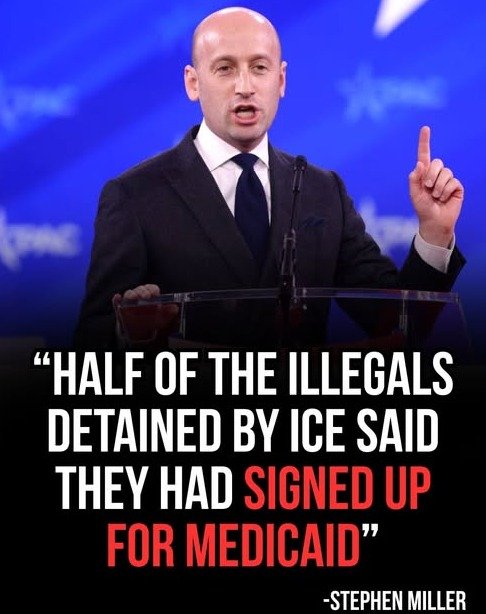
“Our system is already stretched thin,” one advocate might argue. “Allowing unrestricted access only makes it harder for our own citizens and legal residents to get what they need.”
This sentiment often resonates with those who feel that their own communities are struggling with resource allocation and who perceive undocumented immigration as a contributing factor.
Freedom, But Only Under Specific Conditions
The original statement’s phrase, “You get your freedom and that’s it, and only if you came legally!” is particularly illuminating. It suggests a very specific, limited definition of “freedom” for those without legal status – perhaps merely the freedom from physical detention, but not the freedom to participate fully in society. It explicitly links even this basic freedom to the method of entry, implying that even the most fundamental liberties could be conditional.
This interpretation of freedom differs sharply from broader human rights frameworks that advocate for certain universal rights regardless of legal status. However, proponents of the “legal pathway first” approach often distinguish between universal human rights and the specific privileges and benefits of citizenship or legal residency, arguing that the latter must be earned through adherence to national laws.
The Counter-Arguments: A Complex Web of Realities
While the demand for strict limitations is clear, the debate is rarely one-sided. Counter-arguments often emerge, highlighting the practical complexities and ethical dilemmas of such a restrictive approach. These include:
- Humanitarian Concerns: Critics argue that denying basic services like emergency healthcare or education goes against fundamental human dignity and can lead to severe public health crises or create an uneducated underclass.
- Economic Contributions: Many studies suggest that undocumented immigrants contribute significantly to the economy through labor, consumption, and sales taxes, often filling essential roles in sectors like agriculture, construction, and hospitality.
- Practicality and Enforcement: Completely barring access to “anything” can be logistically challenging and expensive to enforce, potentially driving individuals further underground and making integration or even deportation more difficult.
- Public Safety: Denying driver’s licenses, for example, might not stop people from driving, but instead lead to more uninsured and untrained drivers on the road.
These counterpoints underscore that the issue is not simply a matter of legal principle, but also involves profound social, economic, and ethical considerations that impact everyone in a community, regardless of their legal standing.
The Legal Landscape and Policy Implications
The extent to which undocumented immigrants can access services varies significantly across different states and municipalities within the United States, reflecting the ongoing political and social debate. Some states have moved to expand access to driver’s licenses or in-state tuition, while others have implemented stricter enforcement measures and limited access to public benefits.
These differing policies highlight the lack of a unified national approach and the decentralized nature of decision-making on this issue. The “literally nothing” stance, therefore, represents an aspiration for a more uniform and restrictive legal framework, pushing for policies that would eliminate any perceived loopholes or avenues for undocumented individuals to access societal benefits.
Conclusion: A Debate with Far-Reaching Consequences
The call to restrict undocumented immigrants from “literally nothing” beyond their basic freedom – and only if they arrived legally – is a powerful and resonant sentiment for many. It embodies a deep commitment to the rule of law, a concern for national sovereignty, and a desire to protect the resources and benefits intended for legal residents.
This perspective forces a critical examination of what it means to belong to a society, what rights are considered universal, and what privileges must be earned through legal processes. While the debate is fraught with complexity and differing viewpoints, the intensity of this particular stance ensures that the discussion surrounding immigration, rights, and access will remain a central, defining feature of public discourse for the foreseeable future, with far-reaching consequences for millions.
Leave a Reply