Imagine waking up one day to a seismic shift in American democracy, a change so profound it could redefine who votes and how. For years, the contentious battle over voter identification has been waged in statehouses and courtrooms, often stalled by partisan gridlock in Congress. The question of whether citizens should be required to show photo ID at the polls has become one of the most polarizing issues in modern politics, dividing lawmakers, legal experts, and the American public.
While various states have implemented their own versions of voter ID laws, ranging from strict photo requirements to more lenient non-photo requests, a uniform federal standard has remained elusive. This fragmented landscape creates confusion and inconsistency, leaving many to wonder if a universal solution will ever emerge. Now, a provocative question hangs in the balance: what if the Supreme Court, the highest judicial authority in the land, were to step in and mandate voter ID for every single election across the nation?
The Longstanding Battle Over the Ballot Box
The debate surrounding voter identification isn’t new; it has deep roots in America’s ongoing struggle to balance election security with ballot access. Historically, voting requirements have evolved significantly, from property ownership to universal adult suffrage. Each step has been met with fierce debate, often reflecting broader societal tensions and power dynamics.
In recent decades, the push for stricter voter ID laws gained significant traction, primarily championed by conservatives and Republicans. They argue that such measures are essential safeguards against voter fraud, ensuring the integrity and public confidence in election results. Without proper identification, they contend, the system is vulnerable to exploitation, potentially undermining the legitimacy of democratic processes.
Conversely, civil rights groups, progressive organizations, and many Democrats have vehemently opposed these laws. Their primary concern is that strict voter ID requirements disproportionately disenfranchise eligible voters, particularly minorities, the elderly, students, and low-income individuals who may lack readily available government-issued photo identification. They view these laws as a form of modern-day voter suppression, creating unnecessary barriers to participation.
Why Supporters Champion Voter ID
Proponents of mandatory voter ID often emphasize the principle of election integrity. They argue that showing identification at the polls is a common-sense measure, akin to presenting ID for everyday transactions like boarding an airplane, cashing a check, or purchasing alcohol. This simple act, they believe, instills greater confidence in the fairness of elections.
“Ensuring that only eligible citizens cast ballots is fundamental to a healthy democracy. Voter ID is not about suppressing votes; it’s about securing them.” – A common argument from voter ID advocates.
Furthermore, advocates point to the potential for impersonation fraud, where an individual attempts to vote as someone else. While documented cases of such fraud are rare, supporters argue that even the potential for it warrants preventative measures. They contend that robust identification requirements deter fraudulent activity and uphold the sanctity of each legitimate vote.
Many also believe that voter ID laws increase public trust in election outcomes. In an era of heightened political polarization and skepticism, measures that visibly enhance security can help reassure the electorate that results are accurate and untainted. This perceived transparency, they argue, is vital for the stability of democratic institutions.
The Alarming Concerns of Opponents
On the other side of the aisle, critics of strict voter ID laws raise serious alarms about their impact on democratic participation. They highlight that millions of Americans, despite being eligible to vote, do not possess government-issued photo identification. Obtaining these IDs can be burdensome, requiring birth certificates, proof of residency, travel to government offices, and sometimes fees – obstacles that disproportionately affect marginalized communities.
For example, elderly individuals who no longer drive may have expired IDs or none at all. Students living away from home might not have local identification. Low-income workers may struggle to take time off work to navigate the bureaucratic process of obtaining an ID. These logistical hurdles, opponents argue, are not accidental but rather serve to suppress turnout among specific demographics that tend to vote for particular parties.
- Disproportionate Impact: Studies suggest that minority groups, the poor, and the elderly are less likely to have required photo IDs.
- Cost and Time: Obtaining an ID can involve fees, transportation costs, and significant time commitment.
- Limited Evidence of Fraud: Opponents frequently cite the rarity of in-person voter impersonation fraud, arguing that the “solution” (voter ID) is far more damaging than the “problem” it purports to solve.
- Fundamental Right: They assert that voting is a fundamental right, and the state should make it easier, not harder, to exercise it.
Critics often frame voter ID laws as a modern form of poll tax, creating a financial or logistical burden that acts as a de facto barrier to voting. They argue that the focus should be on expanding access to the ballot box, not restricting it, especially when the alleged threat of widespread in-person voter fraud remains largely unsubstantiated by evidence.
Congressional Gridlock: A Decades-Long Stalemate
The issue of voter ID has been a recurring flashpoint in Congress for many years, consistently dividing lawmakers along partisan lines. Democrats, largely aligned with civil rights advocates, have consistently resisted federal mandates for strict voter ID, viewing them as attempts to suppress votes and undermine the fundamental right to participate in elections. They have actively worked to block legislation that would impose such requirements nationwide.
This “obstruction,” as characterized by some, stems from a deep-seated belief that federal intervention should protect and expand voting rights, not restrict them. Democrats often push for comprehensive voting rights legislation that includes provisions for automatic voter registration, same-day registration, and expanded early voting options, rather than measures they perceive as restrictive.
Republicans, on the other hand, have repeatedly introduced legislation aimed at strengthening election security, often including provisions for national voter ID standards. They accuse Democrats of resisting common-sense measures that would protect the integrity of the ballot box, suggesting that opposition is politically motivated to benefit their own electoral prospects by maintaining looser voting rules.
The result of this ideological chasm has been a consistent stalemate. Major federal voting rights legislation, particularly anything involving national voter ID, has failed to pass Congress, leaving the issue primarily to individual states to decide. This legislative paralysis underscores the profound disagreements and the high stakes involved in shaping the future of American elections.
The Supreme Court’s Looming Shadow
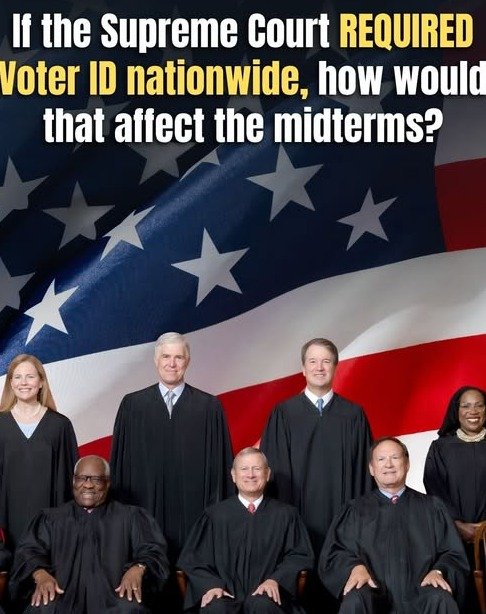
Given the persistent congressional deadlock, the prospect of the Supreme Court intervening to mandate national voter ID is a scenario that sends ripples through the political landscape. While the Court has previously weighed in on various aspects of election law, including the Voting Rights Act and campaign finance, a direct mandate on voter ID would represent a significant expansion of its role in federal election administration.
The legal basis for such a ruling would likely hinge on interpretations of the Constitution’s Elections Clause, which grants Congress the power to regulate federal elections, and the Fourteenth Amendment’s Equal Protection Clause. The Court would have to navigate complex questions about states’ rights to set their own election rules versus the federal government’s interest in ensuring fair and secure elections nationwide.
Past Supreme Court decisions, such as Crawford v. Marion County Election Board (2008), have upheld state voter ID laws as constitutional, provided they do not place an undue burden on voters. However, a ruling to mandate voter ID for all states would be a far more sweeping decision, potentially setting a precedent that reshapes the balance of power between federal and state authorities on electoral matters.
Such a decision would undoubtedly ignite a constitutional firestorm, with immediate challenges from states, civil rights organizations, and political parties. The Court would be asserting a powerful federal prerogative over an area traditionally managed by states, raising questions about federalism and the appropriate scope of judicial power.
What Would a National Mandate Mean?
If the Supreme Court were to mandate national voter ID, the implications would be immediate and far-reaching. The most significant impact would be on voter turnout and demographics. Millions of Americans who currently lack compliant identification would suddenly face a new hurdle to exercising their right to vote. While some might quickly obtain the necessary documents, others could be effectively disenfranchised.
The logistical challenges for states would be immense. A national mandate would require every state to conform to a uniform standard, potentially overturning existing, less restrictive laws. States would need to establish clear processes for issuing free IDs to those who lack them, conduct massive public awareness campaigns, and train poll workers on new procedures. This would incur substantial costs and demand significant administrative effort.
Politically, a national voter ID mandate could dramatically shift the electoral landscape. Depending on the strictness of the requirements and the demographics most affected, it could lead to a measurable drop in turnout among certain groups, potentially altering the outcomes of elections at all levels – from local races to presidential contests. This is precisely why the debate is so fiercely contested: both sides understand the profound political consequences.
Beyond the immediate electoral impact, a Supreme Court mandate could also deepen partisan divisions and erode public trust in the judiciary. Critics would likely view it as an overreach of judicial power, while supporters would hail it as a victory for election integrity. The ruling would undoubtedly become a central issue in subsequent elections and political discourse for years to come.
Navigating the Future of American Elections
The question of a Supreme Court-mandated national voter ID is more than a hypothetical legal exercise; it represents a potential inflection point for American democracy. It forces us to confront fundamental questions about who participates in our elections, how we balance security with access, and the ultimate role of federal power in shaping our democratic processes.
Regardless of one’s personal stance on voter ID, the possibility of a nationwide mandate from the Supreme Court highlights the urgent need for a robust and informed public discourse. Understanding the arguments from all sides – the calls for election integrity, the concerns about voter suppression, and the complex constitutional implications – is crucial for every citizen.
As the debate continues to unfold, the stakes could not be higher. A Supreme Court ruling to mandate voter ID would not merely settle a long-standing political argument; it would fundamentally reshape the future of voting in America, impacting every election and every voter for generations to come. Are we prepared for such a monumental shift?
Leave a Reply