Imagine paying the lion’s share for a club membership, only to find most other members aren’t chipping in. That’s precisely the ‘one-way street’ scenario President Trump has painted for NATO, an alliance he believes has placed an unfair financial burden on American taxpayers for decades. But is this accusation truly justified, and what would a fundamental re-evaluation mean for global stability and America’s standing in the world?
For years, the North Atlantic Treaty Organization (NATO) has stood as the bedrock of transatlantic security, a formidable shield against external threats. Yet, President Trump has consistently challenged its operational model, arguing it disproportionately benefits some member states at the expense of others, particularly the United States. His ‘America First’ doctrine demands a hard look at every international commitment, and NATO is no exception.
The ‘America First’ Doctrine and NATO’s Reckoning
President Trump’s ‘America First’ philosophy isn’t just a catchy slogan; it’s a guiding principle for foreign policy that prioritizes American interests above all else. This means scrutinizing alliances, trade deals, and international agreements through the lens of what directly benefits the American people, their economy, and their security. When it comes to NATO, this perspective has ignited a fierce debate about burden-sharing and the very purpose of the alliance in the 21st century.
The accusation of NATO being a ‘one-way street’ is not new, but President Trump amplified it to unprecedented levels. He contends that while the U.S. pours billions into collective defense, many European allies fall far short of their financial commitments, essentially free-riding on American military might. This isn’t just about money; it’s about perceived fairness and the strategic allocation of resources.
NATO’s Origins: A Shield Against the Iron Curtain
To understand the current debate, it’s crucial to revisit NATO’s genesis. Formed in 1949, in the shadow of World War II and the emerging Cold War, NATO was designed as a collective defense pact against the Soviet Union. Its core principle, enshrined in Article 5, states that an attack on one member is an attack on all. This mutual defense clause has been invoked only once, after the 9/11 terrorist attacks on the United States.
For decades, NATO served its purpose, preventing Soviet expansionism and maintaining peace in Europe. The United States, with its unparalleled economic and military strength, naturally took on a leading role, committing substantial resources to protect its allies. This leadership was accepted, even welcomed, by European nations still recovering from war and facing a formidable ideological foe.
The 2% Pledge: A Lingering Discrepancy
The issue of defense spending has been a contentious point for years. In 2006, NATO members agreed to a guideline that each nation should spend at least 2% of its Gross Domestic Product (GDP) on defense. This target was reaffirmed in 2014, especially in response to Russia’s aggression in Ukraine, underscoring the renewed importance of robust defense capabilities.
However, adherence to this 2% target has been inconsistent, to say the least. While the U.S. consistently exceeds this threshold, often spending upwards of 3.5% of its GDP on defense, many European allies have historically lagged. This disparity is at the heart of the ‘one-way street’ argument, fueling the perception that American taxpayers are subsidizing the security of prosperous European nations.
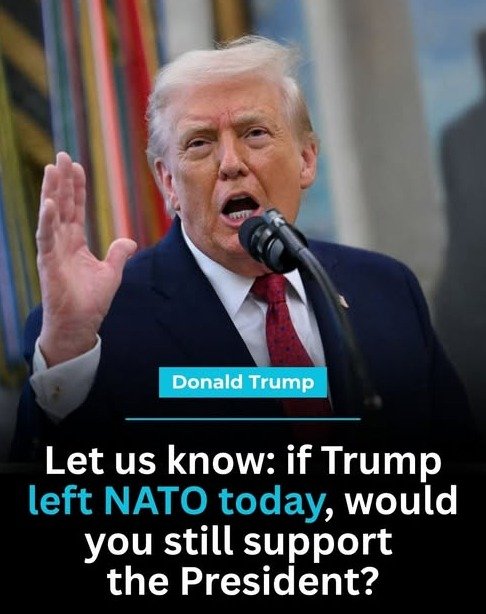
“When you look at the amount of money spent on NATO by the United States and you look at the amount of money spent by other countries, it’s not fair. It’s a one-way street.” – Donald J. Trump
The numbers speak volumes. For years, only a handful of NATO’s 30+ members consistently met the 2% target. Critics argue that this underinvestment by allies forces the U.S. to shoulder an outsized burden, diverting funds that could otherwise be used for domestic priorities like infrastructure, healthcare, or education. The argument is simple: if these nations can afford robust social programs, they can certainly afford to contribute adequately to their own defense.
Beyond the Numbers: The Strategic Value of NATO
While the financial argument is compelling, proponents of NATO emphasize its immense strategic value to the United States. NATO isn’t just a military alliance; it’s a political one, providing a powerful platform for diplomatic cooperation and intelligence sharing. It projects Western values and influence globally, acting as a deterrent against adversaries and a framework for managing international crises.
- Collective Security: NATO ensures that the U.S. is not alone in confronting global threats.
- Interoperability: Standardized training and equipment allow allied forces to operate seamlessly together.
- Intelligence Sharing: A vital exchange of information enhances national security for all members.
- Geopolitical Influence: NATO amplifies American diplomatic leverage on the world stage.
- Burden Sharing (Non-Financial): Allies contribute troops and resources to missions worldwide, even if their direct defense spending is lower.
Detractors of Trump’s ‘one-way street’ assessment argue that the benefits the U.S. derives from NATO extend far beyond mere financial contributions. A stable, secure Europe is crucial for American economic interests and global trade. Furthermore, the U.S. gains significant military advantages from NATO’s network of bases, logistical support, and access to crucial strategic locations.
The ‘America First’ Re-evaluation: What’s at Stake?
President Trump’s call for a re-evaluation of America’s role in NATO isn’t just about demanding more money. It’s about fundamentally questioning the terms of engagement and whether the alliance, in its current form, still serves American interests optimally. This could lead to various outcomes, from renegotiating burden-sharing agreements to potentially reducing U.S. troop presence in Europe, or even, in the most extreme scenarios, a partial withdrawal.
Such a shift would have profound implications. For European allies, it would necessitate a significant increase in their own defense spending and a greater assumption of responsibility for regional security. This could foster greater European integration and military autonomy, but also create instability during the transition. For the U.S., it could free up resources but potentially diminish its global leadership role and weaken a crucial bulwark against rising powers.
The Future of Transatlantic Ties: A Crossroads
The debate over NATO’s ‘one-way street’ status highlights a critical juncture for transatlantic relations. President Trump’s approach forces allies to confront uncomfortable truths about their commitments and the future of collective defense. It challenges the complacency that some believe has settled into the alliance, particularly since the end of the Cold War.
Ultimately, the discussion is less about abandoning NATO entirely and more about recalibrating its structure to reflect contemporary geopolitical realities and a more equitable distribution of responsibilities. Whether this leads to a stronger, more balanced alliance or a fractured one remains to be seen. What is clear, however, is that the ‘America First’ lens has irrevocably altered the conversation, demanding that every ally pull their weight.
The stakes are incredibly high. A strong, cohesive NATO remains a vital instrument for global stability in an increasingly complex world, facing threats from resurgent authoritarian regimes to cyber warfare and terrorism. President Trump’s re-evaluation, while controversial, compels a necessary reckoning: can NATO adapt to ensure its continued relevance and equitable burden-sharing, or will the ‘one-way street’ ultimately lead to a divergence in transatlantic security?
The answer will shape not only the future of this historic alliance but also the landscape of international security for decades to come. American taxpayers, and indeed the world, are watching closely to see if this pivotal re-evaluation strengthens or strains the bonds that have long defined the Western world.
Leave a Reply