Imagine working tirelessly, paying your taxes, and then discovering a significant portion of your hard-earned money is going towards programs designed for individuals who aren’t even legal citizens. For countless Americans, this isn’t just a hypothetical scenario; it’s a stark reality that fuels a growing sense of frustration and injustice. The debate over who qualifies for federal benefits has reached a boiling point, and now, a groundbreaking piece of legislation aims to finally put American taxpayers first.
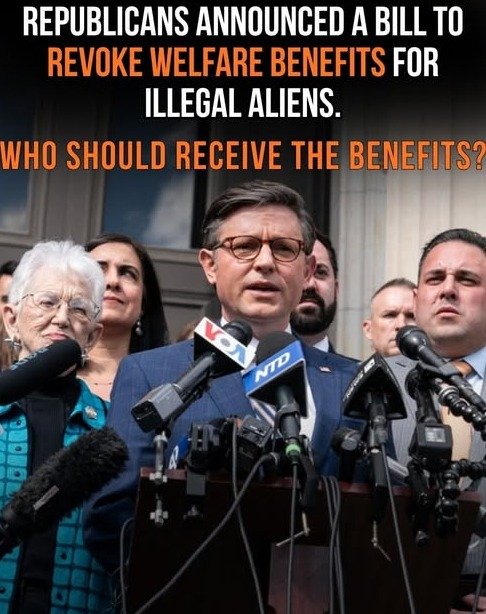
Republicans in Congress are taking decisive action, introducing the bold “No Welfare for Non-Citizens Act.” This pivotal bill is designed to fundamentally reshape how federal assistance is distributed, drawing a clear line in the sand: taxpayer-funded benefits are for citizens and legal residents, not those unlawfully present in the United States. It’s a move that promises to spark widespread discussion, but for millions of Americans, it represents a long-overdue step towards fiscal sanity and fairness.
The Heart of the Matter: What is the “No Welfare for Non-Citizens Act”?
At its core, the “No Welfare for Non-Citizens Act” seeks to strengthen and enforce existing laws while closing perceived loopholes that have allowed individuals who are not legal citizens to access federal welfare programs. This isn’t just about a single program; it encompasses a wide array of vital safety nets, from housing assistance and food stamps to non-emergency Medicaid and Temporary Assistance for Needy Families (TANF).
The legislation aims to explicitly prohibit federal funds from being used to provide these crucial benefits to individuals who are not lawfully present in the United States. This includes those who have entered the country without authorization, those who have overstayed their visas, and others who do not possess a recognized legal status. The intent is clear: to ensure that the generosity of the American taxpayer is directed where it was always intended – towards its own citizens and those who have followed the legal pathways to residency.
Why Now? The Mounting Pressure on American Taxpayers
The introduction of this act comes at a time when American families are grappling with inflation, economic uncertainty, and an ever-increasing national debt. Taxpayers are rightfully questioning where their hard-earned dollars are going, and the idea that a significant portion might be supporting non-citizens has become a major point of contention.
“Our primary responsibility is to the American people who pay the taxes that fund these programs. We cannot continue to ignore the strain placed on our social safety nets when they are accessed by those who have not legally earned the right to be here,” stated a proponent of the bill.
The fiscal impact of providing benefits to non-citizens is substantial, though often difficult to quantify precisely due to the complex nature of existing programs and data collection. However, estimates from various think tanks and government watchdogs consistently point to billions of dollars annually being spent on services and benefits that, many argue, should be reserved for citizens and legal immigrants.
The Current Landscape: Understanding the Loopholes
While existing laws, such as the Personal Responsibility and Work Opportunity Act (PRWORA) of 1996, already limit welfare benefits for most non-citizens, critics argue that these laws have been circumvented or misinterpreted. One of the most frequently cited issues is the concept of “mixed-status households.”
In such households, a U.S. citizen child or a legal resident parent might qualify for benefits, even if other members of the household are undocumented. While the benefits are technically for the eligible individual, the resources often support the entire household, effectively providing indirect assistance to non-citizens. This grey area is precisely what the “No Welfare for Non-Citizens Act” seeks to clarify and, in many cases, eliminate.
- Food Assistance (SNAP): While undocumented individuals are generally ineligible, their U.S. citizen children can receive benefits.
- Housing Assistance: Similar to SNAP, mixed-status families can sometimes access subsidized housing.
- Medicaid: Non-emergency Medicaid is largely restricted, but emergency medical care is often provided, regardless of immigration status, creating a significant cost burden on hospitals and state budgets.
- Education: Public education is mandated for all children residing in the U.S., regardless of status, leading to increased costs for local school districts.
These examples highlight the indirect and direct ways in which taxpayer money can flow towards supporting non-citizens, placing immense pressure on state and local resources, which ultimately circle back to the federal budget and, by extension, the American taxpayer.
A Call for Fairness: Protecting Our Social Safety Nets
Proponents of the “No Welfare for Non-Citizens Act” argue that this legislation isn’t just about saving money; it’s about preserving the integrity and sustainability of critical social safety nets for those who truly rely on them. When resources are strained, the quality and availability of benefits for eligible citizens and legal residents can suffer.
Furthermore, the argument for fairness extends to the millions of individuals around the world who are patiently waiting to immigrate to the United States legally. They follow the rules, go through extensive vetting processes, and often face significant financial and personal hurdles. The idea that someone can bypass these legal channels and still access the same benefits as a citizen or legal immigrant strikes many as fundamentally unjust.
Economic Impact: Billions in Potential Savings
While precise figures are debated, studies and government reports have consistently shown that the cost of providing services and benefits to non-citizens runs into the tens of billions of dollars annually. By tightening eligibility requirements and closing loopholes, the “No Welfare for Non-Citizens Act” has the potential to generate substantial savings for federal and state budgets.
These savings could then be redirected to shore up existing programs for American citizens, reduce the national debt, or even fund initiatives that directly benefit taxpaying communities. It’s a powerful argument for fiscal responsibility and a direct response to the public’s demand for more accountable government spending.
Strengthening the Rule of Law and Incentivizing Legal Immigration
Beyond the financial considerations, the act is also seen as a crucial step in upholding the rule of law. A nation’s sovereignty is intrinsically linked to its ability to control its borders and enforce its immigration policies. Providing welfare benefits to those who have violated these laws, critics argue, sends the wrong message and can even act as a “pull factor,” encouraging further illegal immigration.
By removing the incentive of federal handouts, the bill aims to reinforce the principle that the United States is a nation of laws, and that the proper path to residency and access to public benefits is through legal immigration channels. This shift could encourage more orderly and lawful immigration, benefiting everyone involved.
Addressing the Broader Immigration Debate
The “No Welfare for Non-Citizens Act” is not an isolated piece of legislation; it’s part of a broader, ongoing national conversation about immigration reform, border security, and national priorities. As the southern border continues to face unprecedented challenges, and resources are stretched thin, this bill offers a concrete proposal to manage the fiscal implications of immigration.
It acknowledges the humanitarian aspects of immigration but firmly asserts that the government’s primary duty is to its own citizens and the responsible stewardship of their tax dollars. This perspective resonates deeply with a significant portion of the American electorate who believe that national interests must take precedence.
What Happens Next?
The introduction of the “No Welfare for Non-Citizens Act” marks a significant moment in the ongoing debate over immigration and fiscal policy. It will undoubtedly face rigorous debate, scrutiny, and potential challenges. However, its very existence signals a clear intent from a segment of Congress to address what they see as a critical issue impacting the financial well-being of American taxpayers.
As this bill moves through the legislative process, it will be crucial for citizens to stay informed about its provisions and potential impact. The future of federal welfare programs, and indeed the responsible use of taxpayer money, hangs in the balance. This act represents a powerful statement that for American taxpayers, the era of federal handouts for non-citizens must come to an end.
Leave a Reply