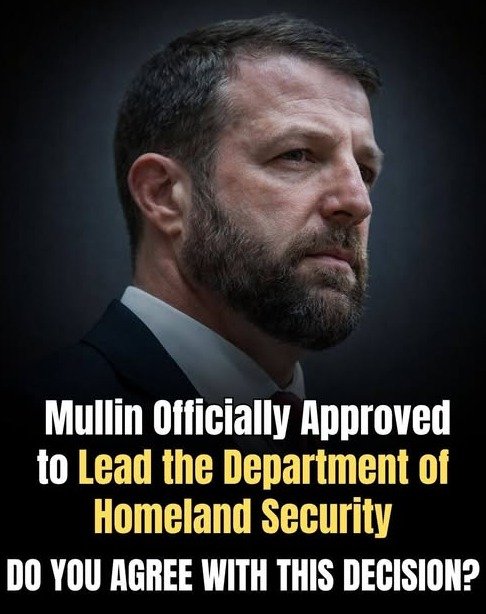
A seismic shift just rocked the Department of Homeland Security, and its ripple effects are already being felt across Washington and beyond. In a move that signals both urgency and a decisive new direction, the Senate has officially confirmed Markwayne Mullin as the next Secretary of Homeland Security. This swift leadership transition follows the unexpected departure of Kristi Noem, leaving many to wonder about the immediate challenges and future course of one of the nation’s most critical agencies.
This isn’t just another cabinet appointment; it’s a pivotal moment for national security, border policy, and the very fabric of American protection. Mullin, known for his unique background and robust political career, steps into a role fraught with complex challenges, from cybersecurity threats to ongoing border crises. His confirmation marks the beginning of a new chapter for DHS, promising a fresh perspective on its multifaceted mission.
Who is Markwayne Mullin? From Octagon to Oval Office
Before stepping onto the national political stage, Markwayne Mullin carved out a name for himself in an entirely different arena: professional mixed martial arts. A former MMA fighter, Mullin’s journey from the octagon to the halls of Congress, and now to a cabinet position, is nothing short of remarkable. This background has often been highlighted as a testament to his tenacity and ability to adapt under pressure, qualities that will undoubtedly be tested in his new role.
Beyond his athletic prowess, Mullin built a successful career as a businessman, owning and operating several companies in Oklahoma. His practical, results-oriented approach to business has often informed his legislative style. He served as a U.S. Representative for Oklahoma’s 2nd congressional district from 2013 to 2023, before being elected to the U.S. Senate in 2022. During his time in Congress, Mullin was a vocal advocate for conservative principles, focusing on issues like fiscal responsibility, energy independence, and national security.
The Confirmation Process: A Swift and Decisive Vote
The Senate’s confirmation of Mullin was notably swift, underscoring the perceived need for stable leadership at DHS following the vacancy created by Kristi Noem’s departure. The process involved rigorous hearings where Mullin faced questions on a wide range of critical issues, including border enforcement, counterterrorism strategies, cybersecurity vulnerabilities, and disaster response preparedness. Senators pressed him on his vision for the agency and his plans to address its most pressing concerns.
Despite some expected partisan debate, Mullin garnered sufficient support to secure the confirmation. Proponents highlighted his strong conservative credentials, his experience in national security matters during his time in Congress, and his commitment to a robust defense of American interests. Opponents raised concerns about his past policy positions and potential approaches to sensitive issues, but ultimately, the need for a confirmed leader at DHS prevailed.
“Mullin’s confirmation reflects a bipartisan acknowledgment of the critical need for continuity and strong leadership at the Department of Homeland Security. His unique background brings a different flavor to the cabinet, and it will be fascinating to see how his experience shapes his approach to these complex challenges,” remarked Dr. Evelyn Reed, a political analyst.
The Departure of Kristi Noem: What We Know
The immediate catalyst for Mullin’s rapid ascent was the sudden departure of former Secretary Kristi Noem. While the official reasons for Noem’s exit were initially kept under wraps, speculation has been rife across political circles. Her departure created an immediate and significant leadership void within an agency responsible for safeguarding the nation against a multitude of threats.
Noem’s tenure, though relatively short, was marked by her distinctive approach and strong public profile. Her decision to step down necessitated a quick replacement to ensure the continuity of critical operations at DHS. The swiftness of the Senate’s action on Mullin’s nomination indicates a collective desire to stabilize leadership and maintain focus on the department’s crucial responsibilities without prolonged interim periods.
The Immense Responsibilities of the DHS Secretary
The Secretary of Homeland Security oversees an agency with a monumental mandate, touching nearly every aspect of American life. It is not merely a single department but a sprawling network of agencies, each with vital functions. Mullin will now be responsible for:
- Border Security: Managing and enforcing immigration laws, securing land and maritime borders, and overseeing agencies like CBP and ICE.
- Cybersecurity: Protecting critical infrastructure from cyberattacks, coordinating national cybersecurity efforts, and responding to digital threats.
- Counterterrorism: Leading efforts to prevent terrorist attacks within the U.S., working with intelligence agencies, and securing transportation systems.
- Disaster Response: Overseeing FEMA and coordinating federal responses to natural disasters and other emergencies.
- Critical Infrastructure Protection: Safeguarding key sectors like energy, transportation, and finance from physical and cyber threats.
- Law Enforcement Coordination: Working with state, local, tribal, and international partners to combat crime and enhance security.
Each of these areas presents its own unique set of challenges, demanding a leader with a comprehensive understanding and strategic vision. Mullin’s ability to navigate these complex waters will define his success.
Challenges and Opportunities for Mullin’s DHS
Markwayne Mullin steps into the DHS Secretary role at a time of unprecedented global and domestic challenges. The agency is constantly on the front lines of evolving threats. Among the most pressing issues he will immediately confront are:
- The Southern Border Crisis: Managing record numbers of migrant encounters, addressing humanitarian concerns, and implementing effective enforcement policies.
- Ransomware and Cyberattacks: Combating sophisticated cyber threats from state-sponsored actors and criminal organizations targeting government and private entities.
- Domestic Extremism: Addressing the rising threat of homegrown terrorism and politically motivated violence.
- Climate-Related Disasters: Preparing for and responding to increasingly frequent and severe natural disasters, from hurricanes to wildfires.
- Workforce Morale and Retention: Boosting morale and ensuring adequate staffing for the agency’s diverse components, many of which face high-stress environments.
However, alongside these challenges come significant opportunities. Mullin has the chance to modernize DHS operations, enhance inter-agency cooperation, and implement innovative solutions to persistent problems. His background as a businessman and legislator could bring a fresh, pragmatic approach to bureaucratic hurdles and resource allocation.
What Mullin’s Appointment Means for Policy and the Public
Mullin’s confirmation is expected to usher in a period of significant policy review and potential shifts within DHS. Given his conservative political leanings, observers anticipate a reinforced focus on border enforcement, potentially including stricter immigration policies and increased deployment of resources to the southern border. His emphasis on fiscal responsibility might also translate into a reevaluation of agency spending and efficiency.
For the average American, this leadership change could mean a variety of things. Enhanced cybersecurity measures might offer better protection against data breaches, while changes in border policy could impact economic and social dynamics in border communities. The effectiveness of disaster response under his leadership will directly affect communities recovering from unforeseen emergencies. The public will be watching closely to see how his vision translates into tangible improvements in national security and everyday safety.
Looking Ahead: The Path Forward
As Markwayne Mullin officially assumes his duties, the eyes of the nation, and indeed the world, will be on the Department of Homeland Security. His leadership will be crucial in navigating the complex landscape of national security threats and ensuring the safety and resilience of the United States. The swiftness of his confirmation underscores the urgency of the moment and the critical importance of a stable, decisive hand at the helm of this vital agency.
This new chapter at DHS promises to be dynamic, challenging, and ultimately, a defining period for both Secretary Mullin and the agency he now leads. The coming months will reveal the full scope of his strategic vision and its impact on America’s homeland security posture.
Leave a Reply