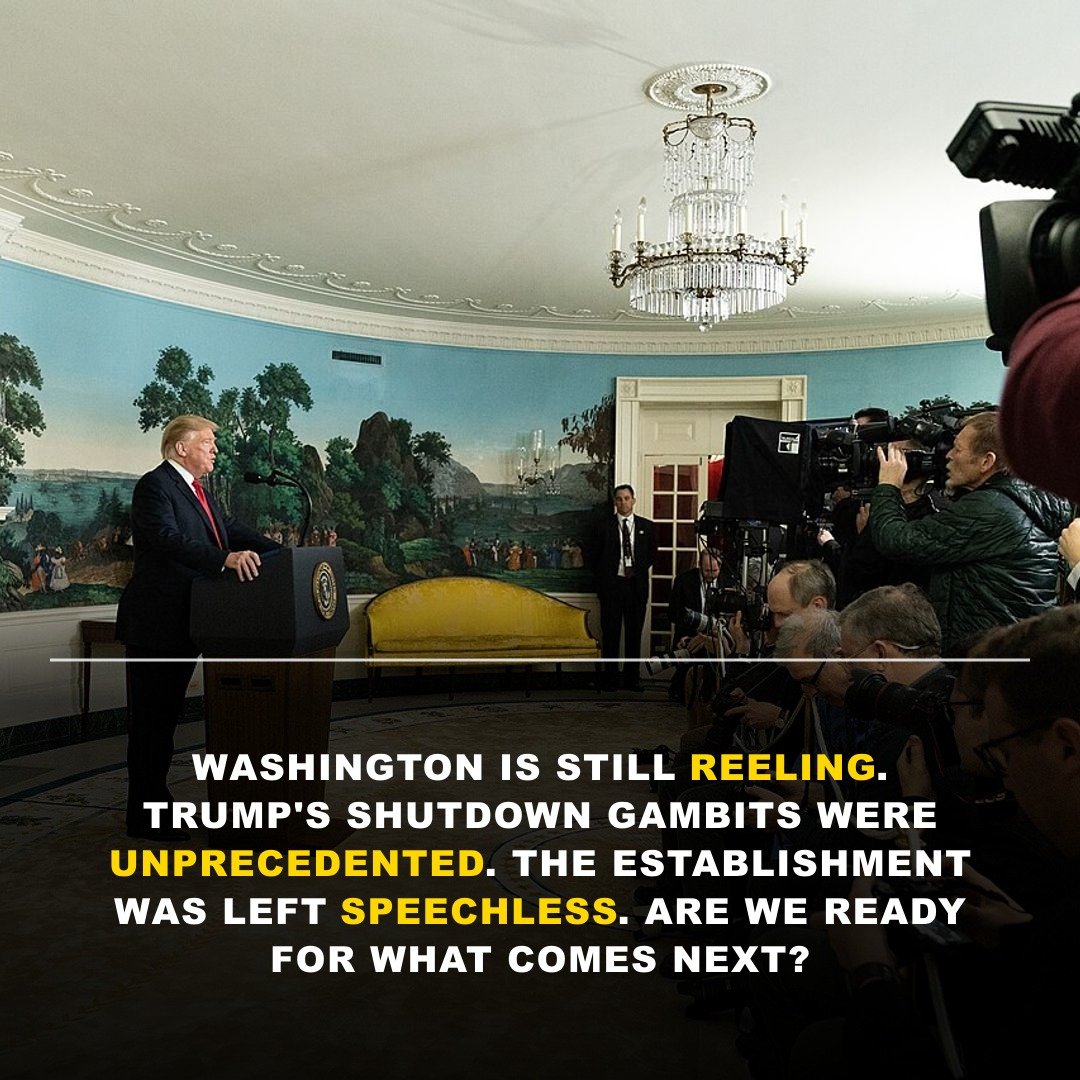
Remember when Washington actually *functioned*? Or at least, pretended to? Because let’s be honest, the political landscape we navigate today feels like a permanent battlefield, and a huge part of that transformation can be traced directly back to the seismic shifts of the Trump administration. Among the most chaotic, most disruptive, and arguably most defining moments were the government shutdowns. Not just *a* shutdown, mind you, but a series of high-stakes gambles that left the establishment reeling and exposed the raw nerves of American governance.
It wasn’t just about budget squabbles; this was about a President, Donald J. Trump, who came into office promising to dismantle the status quo, and then proceeded to do exactly that, often with a wrecking ball. His approach to governing, characterized by an “Art of the Deal” mentality, clashed violently with the entrenched traditions of legislative compromise and backroom negotiations. The shutdowns weren’t just failures of negotiation; they were deliberate, often provocative, acts of political will designed to force a narrative, or a concession, from a deeply resistant Congress.
The Washington Juggernaut Meets a Wrecking Ball
From the moment Trump stepped into the Oval Office, it was clear he wasn’t playing by the old rules. He saw government not as a delicate balance of powers, but as a mechanism to be bent to his will, or broken if it stood in his way. The idea of using a government shutdown as a negotiating tactic wasn’t new, but Trump elevated it to an art form, a test of wills where he was determined to be the last man standing.
This wasn’t just political posturing; it was a fundamental challenge to how Washington had operated for decades. Previous shutdowns, while disruptive, often felt like predictable, if regrettable, bumps in the road. Trump’s felt different. They felt personal, confrontational, and deeply unsettling, particularly for the federal workforce caught in the crossfire.
The Battle for the Wall: A 35-Day Standoff
The most infamous of these episodes, of course, was the unprecedented 35-day shutdown that stretched from December 2018 into January 2019. This wasn’t just a minor disagreement; it was an all-out war over one of Trump’s signature campaign promises: the border wall. He demanded $5.7 billion in funding for its construction, and House Democrats, led by Nancy Pelosi, dug in their heels, refusing to give him a single dime.
The stakes were astronomically high. Trump framed the wall as an absolute necessity for national security, a non-negotiable demand to fulfill a promise to his base. Democrats saw it as an expensive, ineffective vanity project and a symbol of xenophobia. Neither side blinked, and the American government, for over a month, ground to a halt.
“I will take the mantle. I will be the one to shut it down. I’m not going to blame you for it… I will take the blame for it.” — Donald Trump, in a December 2018 meeting with Chuck Schumer and Nancy Pelosi, before the longest shutdown.
This quote, uttered directly to his political adversaries, perfectly encapsulates the defiant, take-no-prisoners attitude that defined his approach. He wasn’t just threatening a shutdown; he was embracing it, daring Congress to challenge him. And challenge him they did.
The Unseen Casualties: Real Americans Caught in the Crossfire
While politicians traded barbs on cable news, real people bore the brunt of this political deadlock. Roughly 800,000 federal employees were either furloughed without pay or forced to work without knowing when their next paycheck would arrive. Imagine trying to pay rent, buy groceries, or cover medical bills when your income suddenly vanishes, with no end in sight.
The impact rippled far beyond individual households. Essential government services, the very fabric of our daily lives, began to fray:
- Airport Security: TSA agents, working without pay, called in sick, leading to longer lines and concerns about safety.
- Food Safety: FDA inspections for certain foods were reduced, raising public health anxieties.
- National Parks: Many parks remained open but unstaffed, leading to overflowing trash, damage, and unsanitary conditions.
- Tax Refunds: Initial concerns about delays in processing tax refunds created widespread worry for millions of Americans.
- Small Businesses: Loan applications from the Small Business Administration were put on hold, stalling growth and investment.
This wasn’t just theoretical; it was tangible chaos. It was a stark reminder that when Washington plays political games, it’s ordinary citizens who pay the price. The human cost was immense, creating stress, financial hardship, and a profound sense of betrayal among those who serve our country.
Political Theater or Principled Stand? The Blame Game Unfolds
As the shutdown dragged on, the blame game reached fever pitch. Trump and his allies argued that Democrats were obstructing vital national security, prioritizing political spite over border safety. Democrats countered that Trump was holding the country hostage for a wasteful wall, using federal workers as pawns in a cynical game.
Public opinion, predictably, was divided, but leaned towards blaming Trump and the Republican Party. The optics of federal employees resorting to food banks and GoFundMe pages while politicians remained deadlocked did not play well. The question wasn’t just *who* was right, but *who* was willing to inflict the most pain to get their way.
This period also sparked intense debate about the separation of powers. Was the President overstepping his authority by using a shutdown to force Congress’s hand on appropriations? Or was Congress being obstructionist, refusing to fund a legitimate presidential priority? The answers varied wildly depending on your political affiliation, further entrenching the partisan divide.
A New Normal? Trump’s Legacy of Confrontation
What made Trump’s shutdowns so unsettling, beyond their duration and impact, was the palpable sense that something fundamental had shifted. Previous administrations, even when facing shutdowns, often sought to minimize the disruption and find common ground relatively quickly. Trump, however, seemed to relish the fight, treating it as a demonstration of strength and resolve.
This wasn’t just a temporary hiccup; it was a redefinition of presidential power and legislative strategy. It normalized the idea that the President could, and would, wield the threat of shutting down the government as a primary tool in policy disputes. It set a precedent for future administrations, signaling that the gloves were off and that traditional norms of compromise were, at best, optional.
The shutdowns also highlighted the increasing polarization within Congress. The ability to find common ground, to negotiate across the aisle, seemed to evaporate under the intense pressure of presidential demands and partisan loyalty. The result was a government that often felt paralyzed, unable to address pressing national issues without resorting to brinkmanship.
The Unsettling Truth: What Did We Learn?
The Trump administration’s shutdowns were more than just budget crises; they were a profound stress test for American democracy. They exposed vulnerabilities in our system, revealing how easily essential services can be disrupted when political will outweighs the public good. They showed us a presidency willing to push the boundaries of executive power and a Congress struggling to adapt to an unprecedented challenge.
So, what’s the unsettling truth we’re left with? It’s that the era of predictable, relatively contained political disagreements might be over. We’ve seen how far a determined president can push the system, and how deeply entrenched partisan lines can become. The question isn’t whether another shutdown will happen, but when, and what new, shocking tactic will define it.
Are we prepared for a future where government shutdowns are not an anomaly, but a recurring feature of our political landscape? Are we ready for the next leader who decides that chaos is a valid path to achieving their goals? The Trump shutdowns didn’t just rattle Washington; they fundamentally altered its trajectory, leaving us all to wonder what norms will shatter next.
Leave a Reply