The process server’s hand didn’t tremble when he pressed the thick stack of documents into Daniel’s chest, effectively silencing the toast to his own brilliance.
The garden went deathly still. The clinking of crystal flutes ceased as if a conductor had sliced through the air. Daniel stared down at the blue-backed filing, his face draining of its practiced tan, the celebratory smile curdling into a slack-jawed mask of confusion. Margaret clutched her pearls, her frail-act posture vanishing to reveal a rigid, cornered animal.
I stood by the koi pond, the silk of my dress cool against my skin. I watched the realization ripple through the crowd—the shifting eyes, the sudden, frantic whispers among the elite who had come to witness a graduation and stayed for a dismantling. Daniel looked up, his gaze locking onto mine. He opened his mouth, but no sound emerged; he looked like a fish gasping in the dry, suburban heat. I didn’t offer a nod. I didn’t offer comfort. I simply turned away, walking toward the gate. Beneath my palm, the brass key to my storage unit felt heavy and cold. My life was finally, perfectly, undone.
The morning air in Connecticut always held a sharp, metallic edge in October, a reminder that the seasons were changing even if our habits refused to shift. I sat at the kitchen island, the granite cool against my forearms, watching the steam curl from my porcelain mug. The coffee was black, brewed exactly to the setting Daniel preferred. He had complained once, years ago, that my lighter roast tasted like dishwater, and I had simply adjusted the machine to keep the peace. It was a small concession, one of thousands that had layered over the years until they formed the architecture of my daily existence.
The kitchen was silent, save for the rhythmic hum of the refrigerator. I stared at the grains of sugar sitting in the silver bowl, perfectly centered on the lace runner Margaret had insisted on buying. She believed lace suggested heritage, a veneer of old-world stability she liked to project whenever the neighborhood association held their meetings. I finished the last sip of coffee and stood to rinse the cup. My movements were automatic: rinse, dry, place in the cabinet. I checked the clock. Seven-forty. Daniel would be out of the shower in three minutes, and Noah would be dragging his gym bag down the stairs by eight.
I walked to the mudroom, the heels of my slippers clicking against the polished hardwood. I grabbed my bag and checked the contents—my restoration kit, a small magnifying glass, the brushes I used for the delicate work of lifting grime from centuries-old pigments. I liked the work. It was honest. When I cleaned a canvas, the truth was underneath, waiting to be revealed. I stepped into the garage, where the SUV sat waiting, gleaming under the fluorescent lights as if it had never been driven. I reached for the garage door opener, my thumb pressing the button with a dull, familiar click. The heavy door groaned upward, revealing a street that looked exactly as it had every morning for the past decade: manicured hedges, grey asphalt, the neighbor’s golden retriever barking at a squirrel near the storm drain.
At the office, the printer jammed on the first copy of the quarterly report, a shrill, protesting beep that cut through the office chatter. I tapped the side of the machine, sliding the paper tray out with a practiced, gentle tug. Sarah, my assistant, leaned over the partition.
Did you see the forecast? It’s supposed to hit sixty by noon, she said, her voice light and thin.
I smiled, a rehearsed upward tilt of my lips. It would be a nice change, I replied.
I returned to my desk, the smell of toner and stale air filling my lungs. I sat down and opened my planner. The week was a grid of obligations—lunch with the garden committee, a check-up for Margaret’s supposed heart condition, a dinner reservation at the club where Daniel liked to showcase his status. It was a life of seamless edges and polished surfaces. I looked at the framed photo of our wedding on the bookshelf. In the picture, I was smiling at a man I didn’t recognize, in a dress I no longer owned, living in a house that had never really felt like home.
My cell phone, sitting on the edge of my desk, suddenly vibrated. The sound was sharp, aggressive, cutting through the low-level hum of the office.
The screen illuminated the dark wood of the desk: a message from an unrecognized number. I tapped it open. A high-resolution photo filled the display, showing a set of internal bank documents, specifically the wire transfer logs Daniel had sworn were for business expansion. The recipient name was Clare, followed by an account number I recognized as a private holding vehicle in the Cayman Islands.
My pulse didn’t race. Instead, a peculiar, cold clarity settled behind my eyes. I stood up, the chair scraping sharply against the hardwood floor.
Daniel walked into the room a moment later, his gait loose and confident. He held two glasses of champagne, the bubbles dancing in the late afternoon light. He didn’t look at me, but rather at the reflection in the window, adjusting his silk tie with a practiced flick of his wrist.
Are you ready? he asked, his voice dripping with that artificial warmth he reserved for public appearances. The guests are already milling around the terrace. Noah is asking for you.
I picked up the phone and turned it face down on the blotter. I want to talk about the Cayman account, Daniel, I said. My voice was steady, lacking even a tremor of accusation.
He froze, the glass halfway to his lips. He let out a short, dismissive bark of laughter. You’ve been reading those files again, haven’t you? I told you that was for the merger. You don’t have the head for the fiscal nuances of this firm, Evelyn. Stop acting like the fragile victim. It’s pathetic.
His eyes scanned mine, looking for the usual retreat, the subtle apology I would offer to keep the peace. He stepped closer, invading my space, his cologne—a cloying, expensive mix of cedar and citrus—filling my nostrils. He reached out to pat my shoulder, a gesture designed to infantilize rather than comfort.
I stepped back, ensuring the gap between us remained absolute. I’m not asking, I said. I’m informing you that the audit is already in the hands of the firm’s lead counsel.
His face shifted, the mask of the doting husband slipping to reveal the jagged, ugly arrogance beneath. He set the glasses down on the desk with a sharp click. Don’t play these games today. It’s Noah’s graduation. If you ruin this, if you make a scene, I will ensure you’re written out of every single asset we share. You’ll be begging for a coat closet in your sister’s basement by Monday.
I looked at the framed wedding photo one last time, then back at him. His desperation was starting to leak through the seams of his tailored suit. I realized then that he truly believed I had nowhere to go.
I turned toward the door, my decision hardening into a final, immovable geometry. I will see you on the terrace, Daniel, I said, walking past him.
The garden was waiting, the guests were laughing, and the wreckage was already set in motion. Now, I just had to watch it burn.
The morning air in the solarium was thick with the scent of lilies and the sharp, metallic tang of the espresso machine. I pulled my phone from my pocket, the screen cold against my palm. I dialed my mother-in-law, Margaret. The line clicked open on the second ring, her breathing practiced and shallow, the sound of a woman who enjoyed the theater of frailty. She told me she was resting at the sanitarium in Greenwich, recovering from the mild stroke Daniel had mentioned to the neighbors last month. She sounded fragile, brittle, yet I could hear the faint, rhythmic clinking of ice against crystal in the background. My internal compass flickered; a stroke victim does not typically toast to their own recovery at ten in the morning. I hung up before she could ask why I was calling.
I moved to the kitchen island, tracing the grain of the white marble until my nails bit into the stone. The decision was simple: the sanitarium was a lie. I stepped into the foyer and called the front desk of the facility. I posed as a concerned acquaintance checking on visiting hours for Margaret Reed. The receptionist, a voice as flat and uninterested as a dial tone, informed me that no one by that name had checked in since February. When I pressed, she grew defensive, then whispered that the wing Margaret claimed to occupy had been under major structural renovation for three months. No patients, no staff, just dust and scaffolding.
My pulse remained steady, a rhythmic, cool beat in my throat. If Margaret wasn’t in a bed, she was somewhere else, likely overseeing the final liquidation of the accounts she’d promised were ‘frozen’ by the board. I grabbed my car keys, the heavy brass biting into my palm, and walked to the garage.
The drive into town was a blur of manicured hedges and stone walls, symbols of a life I had spent decades polishing. I pulled up to the local clinic where my husband’s nurse, Elena, supposedly took his mother for her bi-weekly physical therapy. I walked in, my heels clicking like gunfire against the linoleum. Elena was at the nurse’s station, laughing with a colleague. She froze when she saw me, her smile dissolving into a mask of professional concern. I asked about Margaret’s chart. Elena didn’t blink, didn’t stammer. She looked me dead in the eye and said she hadn’t seen Margaret in weeks because the woman had been moved to a private facility in upstate New York at Daniel’s request.
I looked at the logbook on the desk, partially obscured by a stack of insurance claims. My eyes caught a signature—Daniel’s—dated yesterday morning. He had been there, signing for something, while he was supposed to be at the club. The lie was so clumsy, so blatantly arrogant, it almost insulted my intelligence. I realized then that they weren’t even trying to hide the cracks anymore; they assumed I wouldn’t bother to look. I turned toward the parking lot, the sunlight blindingly bright against the windshield of my car. I reached for my phone again, dialing Rachel Lean. I didn’t need to ask for advice; I needed to move the deadline up. The house of cards was leaning, and I was holding the match.
The glass patio doors slid open, admitting the scent of expensive gin and forced, celebratory laughter. I stepped into the garden, my heels sinking into the manicured lawn of our Connecticut estate. Daniel stood by the stone fountain, his hand resting possessively on Clare’s waist. He was mid-anecdote, the practiced charm coating his words like varnish, while Margaret watched from the terrace, her chin tilted in that familiar, predatory smirk. They looked like a portrait of a dynasty, oblivious to the fact that the canvas was already rotting beneath the paint.
I approached them slowly, my fingers brushing the envelope tucked inside my blazer—the audit Rachel had finalized only an hour ago. The air felt thin, vibrating with the static of the impending collapse. Daniel saw me, his smile wavering for a fraction of a second before he recovered, smoothing his expression into the patronizing mask he reserved for my supposedly fragile state.
Evelyn, darling, you look pale, he said, his voice dropping into that infuriating, soothing register he used to quiet me during public functions. I really think you should go inside and lie down. You’ve had such a difficult week with your nerves.
Clare shifted, her eyes darting toward the driveway where a black sedan had just pulled up, carrying the process server I had hired. The guests nearby fell silent, drawn by the sudden tension radiating off the terrace. I felt a cold, crystalline clarity settle into my chest, a sensation of absolute, surgical precision. I didn’t reach for the envelope yet. I simply looked at the man who had spent three decades treating my existence as a clerical error to be corrected. He was still waiting for my compliance, his thumb tracing a rhythmic, dismissive pattern against Clare’s skin.
I stepped into his personal space, the silence in the garden deepening as the music faded into the background. I looked him directly in the eye, stripping away the performance.
Daniel, you forgot that I’m the one who handles the restorations, so I’m the only one who knows exactly when something is too broken to save.
The smell of turpentine and old dust always brings me back to my father’s workshop, the narrow space where I learned that anything can be salvaged if you have the patience to scrape away the rot. I remember him sitting at his scarred workbench, his eyes magnified by thick spectacles, pointing at a cracked mahogany dresser. He told me that people who don’t know quality will look at a gouge and see a tragedy, but the craftsman sees a path to the foundation. I was ten, and I wanted to be that kind of observer. I wanted to be the person who saw the truth behind the surface.
When I met Daniel, I was twenty-two, working in a gallery in Boston. He was the kind of man who moved through a room as if he were measuring it for purchase. We were at an exhibition of late-period portraits, and he stood before a damaged canvas, his fingers hovering just millimeters from the oil, never quite touching. He asked me, with that same clinical intensity he would later use to talk about our joint accounts, why I thought the artist had chosen to leave the background unfinished. I gave him an answer about fragility and intent, and he smiled, a thin, sharp movement of his lips. He told me then that he loved how I didn’t clutter the room with unnecessary noise. I didn’t realize he meant he loved the silence of a void he could fill with his own requirements.
My mother-in-law, Margaret, was the first one to teach me the rules of the house. We were at her summer home in Maine, two years into the marriage, and I had accidentally set a heavy vase on a mahogany sideboard without a coaster. She didn’t shout. She simply walked over, picked up the vase, and wiped the surface with a silk cloth while looking at me with a terrifyingly serene expression. She said, dear, you have to be careful with things that hold value; they’re temperamental, and they don’t respond well to carelessness. She was talking about the furniture, but her eyes were fixed on the ring on my finger. She was establishing the hierarchy of the inheritance, ensuring I understood that I was a caretaker of the Reed legacy, not a stakeholder in it.
I should have recognized the pattern when my brother, Thomas, came to visit. He was the only person who saw through the polish of my life in Connecticut. He sat in our living room, his hands wrapped around a coffee mug, and asked me why I looked so tired. I told him it was just the pace of the restoration work, the late nights in the studio. He leaned forward and whispered that I was shrinking. He said he saw the way Daniel spoke to me, the way he would interrupt a sentence of mine to ask for his glasses or his keys, as if I were a piece of hardware he’d forgotten how to use. I told him he was being sensitive, that Daniel was simply focused on his career. I chose to defend the trap because admitting I was caught would have meant acknowledging my own failure to negotiate a partnership.
The financial erosion started subtly, like a slow oxidation of bronze. Daniel began suggesting that we simplify our finances, moving everything into his name to facilitate estate planning. He used phrases like tax efficiency and risk mitigation, words that sounded like the protective language of a partner. I signed the documents because I wanted to be the wife who made things easy. I wanted to be the partner who supported his trajectory. I remember sitting at the kitchen table, the light hitting the granite countertops, and thinking that if I just kept the books tidy and the house quiet, the friction would cease. I thought I was buying us peace. I didn’t know I was paying for my own erasure with every signature.
Noah was the final piece of the architecture. When he was young, he was sweet, prone to wandering into my studio to watch me mix pigments. But as he grew into his father’s shadow, the change was imperceptible until it was absolute. I remember the day he came home from his first year of university, his voice already possessing that precise, condescending cadence of his father. He looked at a sculpture I had spent months repairing, a piece I was proud of, and remarked that it looked a bit dated, maybe better suited for a garage than the entryway. Daniel laughed—a short, percussive sound—and put his arm around Noah, nodding in agreement. In that moment, the betrayal wasn’t just my husband’s; it was my son’s. He had learned that the easiest way to belong was to join the chorus of the dismissive.
There were red flags I simply decided not to see. There were the missing earrings, which Daniel claimed were lost in a move, but which I later saw Margaret wearing at a charity gala, her neck stiff with the weight of stones that belonged to my grandmother. When I asked about them, she simply laughed and told me I was becoming forgetful, that my mind was fraying under the pressure of the work. I went to the bathroom and looked in the mirror, searching for the person I used to be, the woman who could spot a flaw in a masterpiece from across the room. I felt the heat of the humiliation, but I pushed it down. I decided that to fight them would be to invite a chaos I wasn’t prepared to manage. I chose to be the silent artist, the one who worked in the dark while the house was lit with their performances.
The final warning came in the form of a phone call I overheard in the library. Daniel wasn’t talking about a merger or a client. He was talking about a timeline, listing dates and logistics that sounded suspiciously like a departure. He was discussing the house, the distribution of the art, and the minimization of legal exposure. He sounded calm, rational, and completely devoid of human connection. I stood behind the door, my hand on the handle, and felt a cold, crystalline clarity settle into my chest. It wasn’t shock. It was the realization that the restoration I had been performing for thirty years was actually a demolition. They hadn’t been building a life with me; they had been waiting for the structure to become old enough to tear down.
I walked back to my studio that night, the house silent around me. I looked at my tools, the scalpels and the brushes, the chemicals that could strip away decades of varnish to reveal the original, raw wood underneath. I realized then that I had been the one holding the tools all along. I had spent years meticulously tracking their movements, recording the shifts in their rhetoric, and securing the evidence of every lie they told to keep me compliant. I had created a ledger of their arrogance, a record so precise that it could only lead to one result. I didn’t scream. I didn’t cry. I made a cup of tea, sat in the dark, and decided that the foundation they had built for themselves was structurally unsound.
I decided that if they wanted an architect for their downfall, I was the only person with the skill to design it. I started by documenting the accounts, mapping the flow of money into accounts I didn’t recognize, linking the names and the dates, the small, selfish decisions they made thinking I was too distracted to notice. Every time they insulted my intellect, I thanked them for the lesson. Every time they made me feel small, I took it as a prompt to make my reach wider. They thought they were disposing of an accessory, but they had actually been training the one person who knew exactly where the load-bearing beams were hidden.
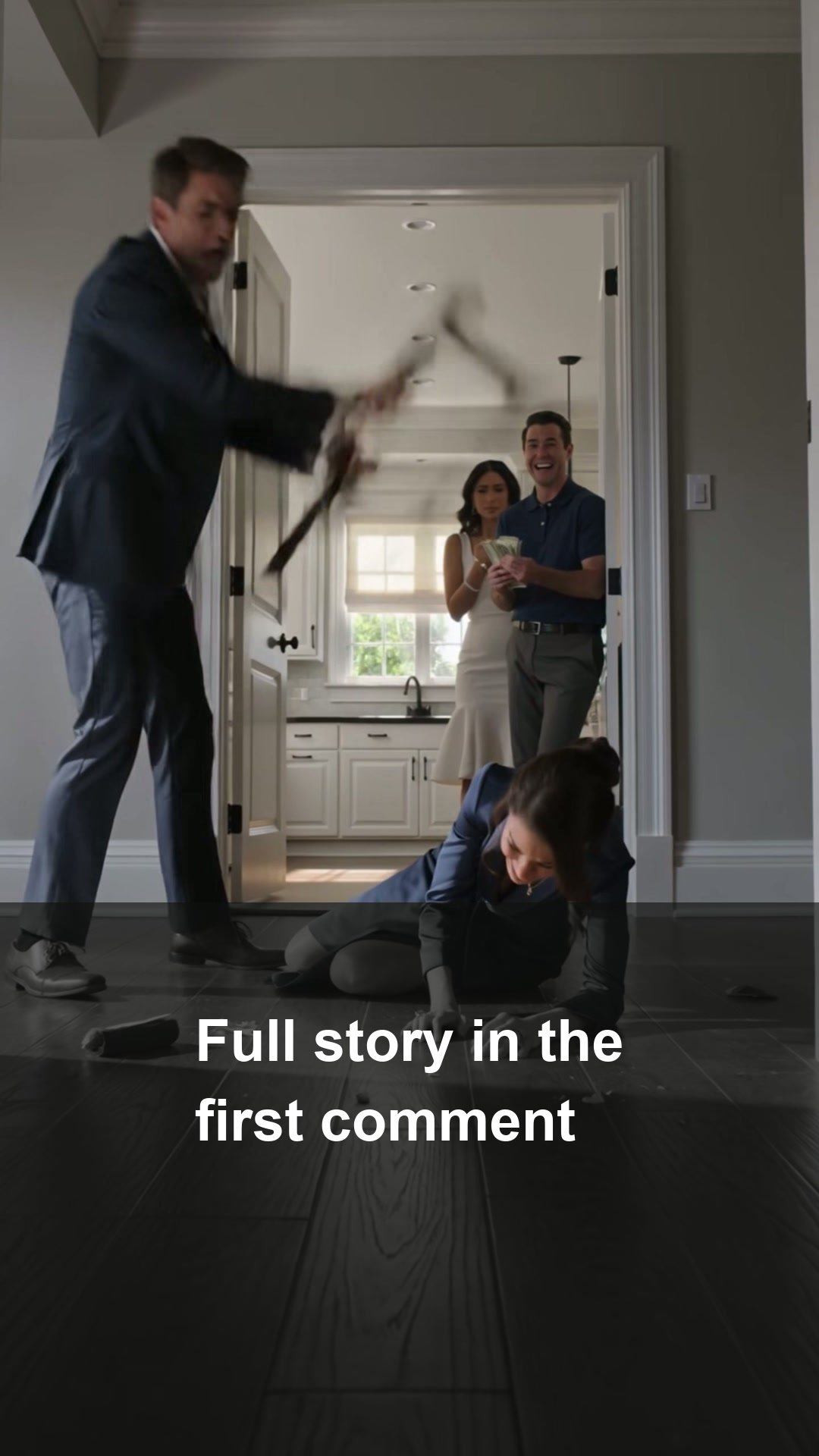
The graduation party was the final stage of the restoration. It was the moment where the paint finally dries and the true image is revealed to the world. I stood there, watching them bask in their own importance, completely oblivious to the fact that their world was currently being liquidated in real-time. I remembered every insult, every condescending smile, every instance where my silence was weaponized against me. I realized that my silence hadn’t been a lack of voice, but a strategic pause, the breath before the strike. I looked at the glass in my hand and felt the weight of the years dropping away. The house was theirs, the money was theirs, the prestige was theirs—but the reality was something I had carefully, silently, and completely dismantled. I was no longer the broken thing being appraised. I was the architect of their silence, and the design was finally complete.
Daniel stood by the limestone fountain, smoothing his silk tie with the practiced vanity of a man who believed his image was bulletproof. He checked his watch, a vintage Patek Philippe he had “acquired” from my grandfather’s estate, his fingers drumming a nervous, erratic rhythm against the gold casing. He looked up, caught my eye, and offered a tight, patronizing smile—the look of a man who thought he had successfully relegated me to the category of a sentimental, easily managed ornament. He didn’t know that every cent of the capital funding his current lifestyle had been rerouted into a dormant escrow account three hours ago. I watched the muscle in his jaw jump; he was already thinking about his next business pivot, unaware his accounts were currently hemorrhaging dry. I decided then to let him toast his own bankruptcy.
Margaret sat on the shaded patio, her legs draped in a cashmere throw despite the humid afternoon. She clutched a lace handkerchief, performing her signature act of fragile matriarchal grace for the benefit of the neighbors. She looked at me, her eyes narrowing beneath a veil of feigned exhaustion. She wanted my pity, a currency she had spent greedily for decades to excuse her interference in our home. I recalled the way she used to hide my mail, whispering to Daniel that I was too fragile to handle the “complexities” of household management. She patted the chair beside her, a command disguised as an invitation. I turned away, choosing to focus on the ice melting in my glass instead of her performance. Her cruelty had been a slow, quiet poison, and today, she would finally be forced to swallow the antidote.
Noah leaned against the garden gate, his posture a mirror of his father’s—shoulders back, chin slightly elevated, a sneer of inherited arrogance etched into his youth. He was clutching a beer, talking to Clare with an intensity that made it clear he was trying to prove he was the architect of his own adulthood. He had spent the morning helping his father move my desk into the garage to make room for Clare’s “project space.” He thought he was participating in a necessary transition, a pragmatic shedding of dead weight. When he glanced at me, he saw a ghost, an inconvenience he had been trained to ignore. I looked at the boy who had once cried when I scraped my knee and felt the final severance of maternal duty. He was choosing his father’s shadow, and he would have to learn to live in the dark when that shadow finally collapsed.
Clare hovered near the catering table, her expensive heels sinking into the soft lawn. She was laughing too loudly at Daniel’s joke, her hand resting possessively on his forearm. She played the part of the sophisticated muse, but her eyes flickered toward the driveway every time a car approached, checking for the courier I had hired. She was an amateur in the art of erasure; she thought she was stealing a life, failing to realize she was inheriting a liability. I watched her adjust her pearl earrings—my earrings—and felt a cold, sharp satisfaction. She wanted the status, the address, and the man. She would get all of them, along with the impending criminal investigation into the firm’s missing ledger. I walked toward the edge of the terrace, ready to signal Rachel. The web was tight, the knots were tied, and the descent was about to begin.
The terrace air tasted of gardenias and impending ruin. I stepped into the shadows behind a cluster of manicured boxwoods, the cold weight of my smartphone pressing against my palm. I tapped the screen, the notification confirming the wire transfer freeze was active. Every joint account, every credit line, and the offshore holding company Daniel had used to fund his secret life with Clare were now legally locked. My fingers brushed the fabric of my dress, smoothing a wrinkle I hadn’t noticed before, my pulse steady as a pendulum. I hit send on an encrypted email to the local police precinct, attaching the digital ledger I had been curating for six months. It detailed not just Clare’s minor embezzlement, but the systematic tax fraud Daniel had engaged in since he took over the family firm.
The screen flickered. A notification popped up: *Action logged. Digital evidence submitted. Case file 889-B assigned.*
I moved back toward the center of the terrace, stopping near the buffet table. I picked up a glass of lukewarm champagne, the crystal stem smooth against my fingertips. Noah was standing by the fountain, his face flushed with the smug, rehearsed confidence of his father. He was laughing at something Margaret said, his posture mimicking Daniel’s exact, arrogant slant. I remembered his first steps in the living room, the way he used to grip my finger to steady himself. That boy was gone, replaced by a ghost of the man who currently stood near the gazebo, checking his watch with impatient, jagged movements.
I walked over to the patio table where Daniel’s leather-bound portfolio rested. I reached into my purse, retrieving the envelope that felt heavier than its contents—the DNA results for the paternity claim I’d quietly filed against the estate last month, a contingency for a future I knew was coming. I tucked the envelope deep into the pocket of his blazer while he was distracted by a guest, a small, surgical placement. He wouldn’t feel the bulk until it was too late.
Daniel turned, his eyes narrowing as he caught sight of me. He wiped his face clean of irritation, replacing it with the practiced, patronizing smile he used when he thought I was fraying at the edges.
Evelyn, he said, his voice dropping to that low, soothing register meant to pacify an invalid. You look tired. Perhaps you should go inside and lie down before the speeches begin. Margaret is worried about your temperament tonight.
I looked at him, my expression blank, a void he couldn’t fill with his usual reassurances. I am not tired, Daniel, I said. I am just observing.
He laughed, a sharp, dismissive sound that drew the attention of a nearby couple. She’s been under a lot of stress lately, he said, gesturing to the guests as if I were a malfunctioning appliance. The transition has been… difficult for her.
I didn’t answer. I merely turned my head toward the drive. A black sedan pulled up, its headlights cutting through the dusk. Rachel stepped out, her tailored suit catching the light of the house, a briefcase in her left hand. She didn’t look at me. She walked with the surgical precision of a raptor closing in on prey.
My heart didn’t race. I felt a strange, detached curiosity. I watched as Rachel bypassed the main entrance, heading straight for the back terrace where Daniel stood.
Who the hell is that? Daniel muttered, his brow furrowing. He looked at me, his eyes suddenly sharp with suspicion. Did you invite someone, Ev?
I didn’t look at him. I looked at the ledger I had sent, the documents now sitting on a detective’s desk, and the legal papers Rachel was currently presenting to the house security at the gate. I felt the finality of the decision, the way the air in the garden seemed to thicken.
I didn’t invite her, I said softly. I simply scheduled the inevitable.
Daniel’s face shifted. The smugness wavered, replaced by a momentary flash of something akin to fear. What are you talking about?
I took a sip of the champagne. The acidity bit at my tongue. Your mother’s house is currently being searched by the probate court, Daniel. It seems the will you drafted for her was missing a few key disclosures regarding the original family trust. I contested it this morning.
He stepped closer, his hand gripping my arm with just enough pressure to bruise. You did what? You’re delusional. You have no standing.
I have every standing, I whispered, leaning into his space. I’m the one who restored the firm’s reputation for the last fifteen years. You’re just the man who spent the proceeds.
Behind him, I saw Clare freeze. She had been watching us, her glass poised halfway to her lips, her eyes widening as she spotted Rachel approaching the terrace steps. She dropped her phone; it clattered against the stone tiles, the screen shattering. She looked at Daniel, her mouth opening to speak, but no sound came out.
Daniel turned, finally seeing Rachel. He dropped my arm, his composure splintering in real-time. He looked back at me, his eyes searching my face for the familiar, submissive mask, but finding only a cold, architectural clarity.
I walked past him, my heels clicking sharply against the stone. I reached the terrace stairs just as Rachel stepped onto the platform. She handed me a slim folder. I took it, feeling the weight of the court orders inside. This was the point of no return. There was no apology possible, no negotiation that could pull us back from this threshold.
I turned to face the party. The guests were silent now, sensing the shift in the atmosphere, the tension radiating from the center of the terrace like a shockwave. Daniel stood frozen, his hand still reaching for the pocket where I had hidden the documents. He looked small, suddenly, stripped of the backdrop of his carefully curated life.
I stepped up to the microphone set for the graduation toasts. The feedback shrieked, a high, piercing sound that silenced the entire lawn. I stood there, looking out at the faces of people I had fed and entertained for decades, knowing they would never look at me the same way again. I didn’t care. I felt the air moving past me, cool and clean. I opened the folder. The first page was a copy of the warrant for his arrest. I didn’t need to read it; I just needed to start the clock.
The sound of the papers hitting the microphone stand was a dry, percussive snap, like a bone breaking. I watched the crowd. The initial hush didn’t last; it curdled into a low, buzzing static of whispers. Mrs. Gable, who had sat at my dinner table every Christmas for twelve years, stared at the bank statements I had pinned to the trellis with the same intensity she usually reserved for a prize-winning orchid. She grabbed her purse, her knuckles white, and backed away from Daniel as if his tailored suit were contagious.
I stepped down from the podium. My heels felt steady against the bluestone patio. I didn’t look at Daniel, but I heard the wet, rhythmic sound of his breathing—a frantic, shallow rasp. A notification pinged on my phone, then another, then a chorus of them. I pulled it from my pocket. My social media mentions were a cascading waterfall of screenshots, tagged photos, and demands for comment. The local news had already picked up the wire. My sister, Sarah, sent a text: *Are you safe? The driveway is blocked by three news vans.*
I bypassed the front gate, slipping through the gap in the boxwood hedge I had spent years pruning. The air in the driveway was thick with the exhaust of idling engines. I saw Clare standing near her car, her face a mask of smeared mascara and shock. She was trying to call someone, but her hands were shaking too violently to grip the device. I walked past her, indifferent. She wasn’t a rival anymore; she was a variable I had already solved.
The walk to the edge of the property felt like shedding a skin. Behind me, the graduation party had dissolved into a riot of splintering allegiances. I saw the headmaster of the academy intercepting Noah, likely trying to distance the school from the looming scandal. Noah stood in the center of the lawn, his graduation cap hanging limply in his hand, looking at his father with an expression of pure, unadulterated repulsion. It was the first honest look he had ever given him.
My own phone buzzed again. An unknown number. I declined it and turned the power off. The silence that followed was a physical weight, lifting from my shoulders. A neighbor’s gardener stopped his mower, staring at the chaos spilling out of our gates. I caught his eye and nodded once, a brief acknowledgment of the curtain falling on the neighborhood’s favorite performance.
I reached the rental car parked two streets over. The interior smelled of sterile plastic, a welcome departure from the scent of lilies and expensive perfume that defined my life with Daniel. My hands were trembling, but not from fear. It was the adrenaline of precision. I looked at the dashboard clock. It was four in the afternoon. By six, the forensic audit would hit the federal portal. By morning, the name Reed would be a synonym for everything this town pretended to despise. I started the engine, set the navigation for the coast, and drove away without looking back at the house that had been my prison.
The coast house sat tucked behind a screen of weeping willows, smelling of salt and cedar. I unlocked the front door, the key turning in the deadbolt with a crisp, heavy click that resonated through the quiet foyer. I dropped my suitcase on the hardwood floor, the thud echoing in the emptiness. My phone vibrated against the mahogany entryway table, displaying a string of frantic texts from Margaret. I didn’t read them. I simply tapped the power button until the screen went black and tossed the device into the trash bin beneath the counter.
The silence was not empty; it was structural. It felt like the space left behind after removing a load-bearing wall that had been rotted through for years. I walked into the kitchen, the sunlight hitting the granite island in long, clean bars. There were no ghosts here, only the prospect of a quiet evening. I opened the refrigerator, finding the small carton of milk and the bowl of seasonal berries I had purchased two days prior. I poured a glass of water, the cold liquid sharp against my throat.
I thought about Daniel. By now, he was likely standing in the middle of our former living room, his face drained of blood as he realized the foundation of his career had been dismantled by the very woman he thought too fragile to manage a bank account. I imagined his hand gripping the edge of the mantle, his voice failing him for the first time in three decades. I felt no surge of triumph, only a clinical satisfaction, like completing the final brushstroke on a damaged canvas. The repair was finished. The original image was gone, and underneath, there was finally a clean, stable surface to work on.
I walked to the small study, where a mahogany desk stood bare and waiting. I pulled out a set of drafting tools, their weight familiar and grounding. I needed to focus on the project for the gallery restoration; the work was honest, and it demanded my full attention. I sat down, the chair adjusting to my posture. I moved a lamp so the light hit the paper at the perfect angle. I reached for my pencil, the lead sharp and dark against the white grain of the parchment. I took a deep, steadying breath, listening to the tide pulling away from the shore just outside my window. Tomorrow, I would wake up and decide what to eat for breakfast, and for the first time in thirty years, the choice would be entirely mine. I began to draw.
The morning sun pooled on the hardwood floor, a steady, honey-colored warmth that felt like an apology. I moved to the kitchen, the silence of the house no longer a vacuum but a canvas. I reached for the French press, the coarse grind of the coffee beans echoing against the marble countertops. Daniel had always insisted on a specific, complex brew that tasted like burnt ambition; today, I measured out a simple, dark roast, watching the steam rise in a lazy, unhurried spiral.
I carried the mug to the porch, where the salt air bit at my skin with invigorating cold. A stray terrier, scruffy and missing a patch of fur behind its left ear, sat at the edge of the dunes. It didn’t belong to anyone, yet it watched me with a cautious, hopeful patience. I whistled, a low, soft sound.
“Come here,” I said. My voice sounded deeper, stripped of the brittle politeness I had worn for decades like a costume.
The dog trotted forward, its nails clicking against the wooden deck. It leaned its weight against my shin, a solid, living presence. I felt the vibration of its steady heartbeat against my leg. I didn’t need to ask for permission to offer it a crust of toast or a spot in the shade. The simplicity of the interaction felt like a physical weight lifting from my shoulders.
I thought about the paintings waiting in my studio, the cracked varnish of a seventeenth-century landscape begging for a gentle hand. For years, I had been the one being restored, patched over by the expectations of others until the original design was lost. I looked at the horizon, where the sea met the sky in a seamless, indifferent blue. I could be whoever I chose to be, starting with the next hour. I finished my coffee, patted the dog’s head, and walked toward the studio. The door clicked shut behind me, the lock turning with a final, satisfying snap.
I stepped into the studio, the air thick with the scent of turpentine and aged linen. My workbench was bathed in the late afternoon sun, illuminating a pile of discarded trinkets I had swept from my bedside table that morning. Among them lay the diamond studs Daniel had gifted me, the ones he insisted I wear whenever he wanted to showcase a curated, compliant version of a wife. I picked one up, feeling the cold, clinical weight of the stone against my thumb. It was an accessory of a life I no longer inhabited, a glittering shackle that had lost its luster the moment I stopped caring about his reflection. I dropped the earrings into the ceramic trash bin and reached for the heavy, brass keyring that opened my new, empty apartment.
Leave a Reply