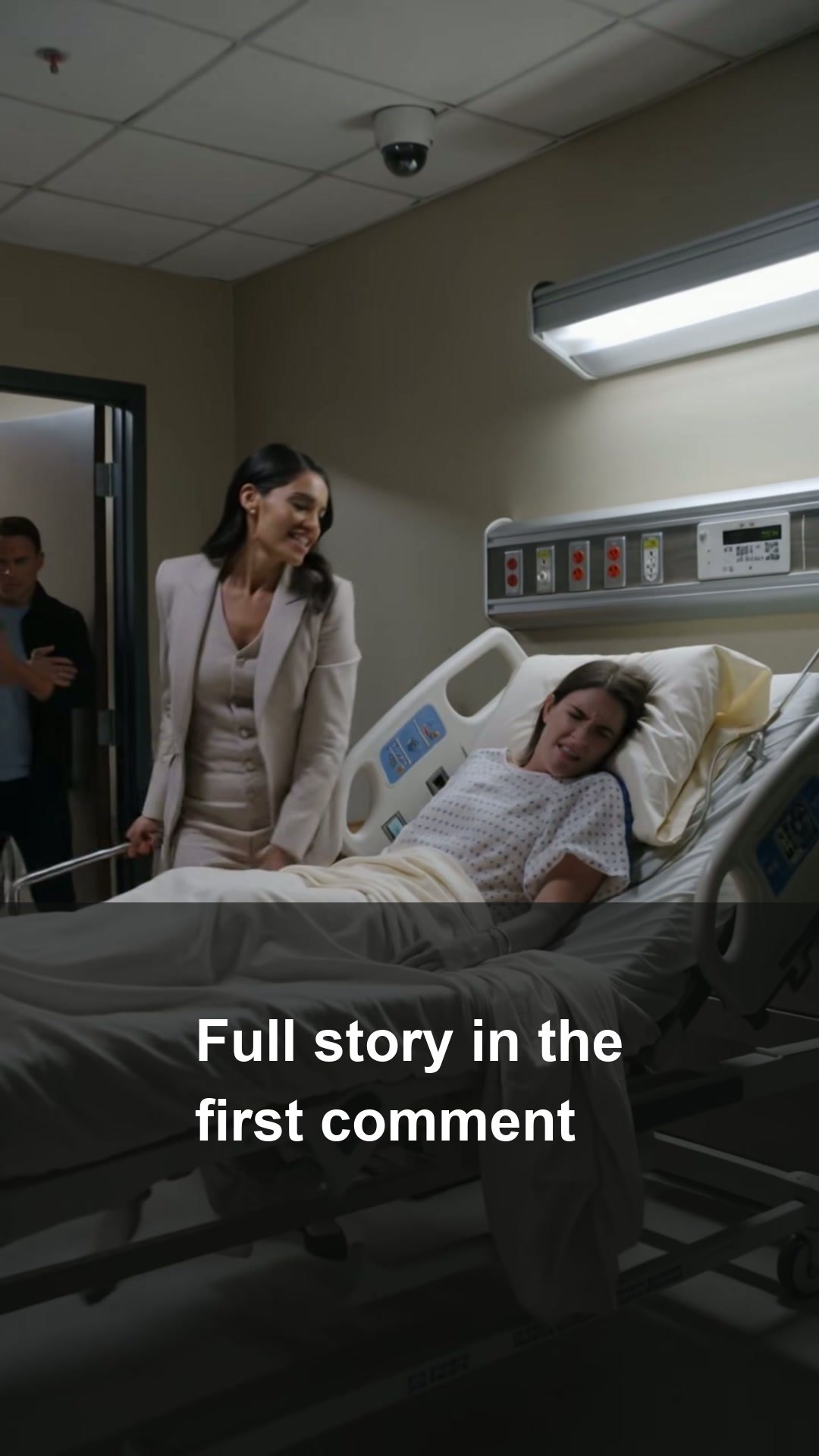
The syringe hit the floor with a hollow, plastic click, and Lenora’s composure shattered exactly three seconds later. I stared at the clear liquid pooling on the linoleum, the smell of antiseptic suddenly sharp enough to burn my throat. My heart hammered against my ribs—a frantic, uneven rhythm I couldn’t regulate.
Lenora didn’t move. She stood by the bed, her fingers trembling as she smoothed the front of her silk blouse, her face a mask of practiced, fragile concern.
Do you have any idea what that was? I whispered, my voice barely scratching the air.
Lenora sighed, the sound thin and rehearsed. It was just a supplement, Tessa. For your nerves. You’re being dramatic again.
She reached for the vial, her hand steadying with terrifying efficiency. I watched her, mapping the predatory tension in her shoulders. She wasn’t my mother; she was a ledger entry I had finally decided to balance. My stomach turned, cold and heavy, but my mind sharpened into a singular point. I had to get to the nurse’s station. I had to lock the screen before she realized I knew the camera in the corner was recording. I tapped the sensor.
The coffee was still lukewarm, a thin film of oil swirling on the surface of the mug. I sat at my mahogany desk, the wood cool beneath my forearms, watching the sunlight trace the grain of the oak. It was 7:14 AM. The office was silent, save for the rhythmic, metallic tick of the radiator and the distant hum of the downtown traffic beginning to clot on the expressway. I stared at the burgundy folder sitting to the left of my keyboard. It contained the quarterly projections, a list of assets that required my signature before the board meeting at nine. My morning routine was a ritual of precision: two sugars, a splash of almond milk, four minutes of silence, and then the systematic dismantling of the day’s problems.
I tapped the mouse, waking the monitor. A cascade of emails flooded the screen—Priya asking for budget authorizations, the landscaping firm requesting a deposit, and an automated notification from the office printer. I stood, my knees popping, and walked to the printer room. The air there always smelled of ozone and hot plastic. I adjusted the paper tray, clicking the plastic latch into place with a satisfying snap.
Tessa?
I turned. Lenora stood in the doorway, her cashmere scarf draped with calculated casualness over her shoulders. She looked as though she had just stepped off a runway, her hair pulled back into a severe, polished chignon. She held a travel thermos, her smile bright and tight, the kind of expression that didn’t reach her eyes.
You look tired, she said, tilting her head. Did you sleep? I thought I heard you pacing at three.
I just had a lot on my mind, I replied, my voice steady. The printer churned, spitting out the first page of the report. The sound was abrasive, a mechanical scream in the quiet room.
You should let me handle the scheduling this week, Lenora said, stepping closer. You’re overextending yourself. It’s bad for the brand, and frankly, it makes Arthur worry. He was up half the night reading your latest emails.
I watched her hand reach for the edge of the printer tray, her fingers white-knuckled. I didn’t move. I simply watched the paper feed, noting the slight tremor in her index finger. It was a detail I hadn’t noticed before—a crack in the porcelain.
I have it under control, Lenora. I said the words carefully, stripping them of any defensive default.
She stiffened, her gaze snapping to mine. For a second, the mask slipped. Her eyes, usually carefully veiled, were hard, flicking toward the security camera mounted in the corner of the ceiling. She adjusted her scarf, recovering instantly.
Well, if you say so. You’re so brave, carrying all this.
She turned and walked out, her heels clicking against the marble floor of the hallway. I waited until the sound faded completely, replaced only by the steady, mindless cycle of the printer. I picked up the document, the ink still fresh and slightly damp. I felt a strange, detached calm—the sensation of a structural engineer realizing a bridge is about to collapse and deciding, for the first time, to simply step back and watch the physics do its work.
I walked back to my desk, the carpet muffling my steps. I sat down and placed the report in the center of the desk, perfectly square. I reached for my pen, intending to sign the authorization, when the world interrupted.
A sharp, shrill vibration echoed off the glass walls. My phone, tucked into the leather organizer, began to dance against the hard surface, the screen glowing with an incoming call from a restricted number. The rhythm of the buzz was erratic, urgent, and final. I stared at it, the silence of the office suddenly feeling heavy, suffocating. My thumb hovered over the glass. I didn’t know who it was, but the tone of the ring—staccato, demanding—told me that the routine was over. I pressed the green icon and held the device to my ear.
Lenora’s voice didn’t arrive with a greeting. It bloomed in the receiver, thin and perfectly modulated, like a blade sliding through velvet.
Tessa, darling, you’ve left the accounts for the Q3 audit in a state of absolute disarray. I’m in your office now.
I looked at the mahogany desk. It was spotless. The quarterly projections were filed in the burgundy folder, exactly where I’d left them before the accident. I stood, but the weight of my left leg felt like a rusted hinge. My hip burned.
I’m looking at the ledger, Lenora, and the figures are accurate, I said. My voice was raspy from the hospital’s sterile air.
Don’t be difficult. It’s unsightly, especially now that you’re… incapacitated.
The word hung between us. It wasn’t a medical assessment; it was a cage. I remembered being sixteen, sitting on the kitchen floor while she swept around me, her broom bristles occasionally catching my hair, a silent reminder that I was just another piece of dust she hadn’t yet cleared away. I tightened my grip on the phone. The plastic casing creaked under my pressure.
I need you to authorize the transfer, she continued, the cadence dropping into that patronizing, syrupy tone she saved for board members. For the medical expenses. Your father is worried, and I’ve already taken the liberty of drafting the signature block.
I looked toward the door. Through the frosted glass of my office, a shadow moved. It wasn’t the rhythmic stride of a colleague; it was the predatory, rhythmic pace of someone who knew exactly where the exits were.
Is Dad there? I asked.
He’s busy, Tessa. Don’t be a burden. Just hit accept on the portal link I’m sending.
I didn’t answer. I leaned heavily against the desk, my knuckles white, and swiped to open the email. The attachments weren’t medical bills. They were wire transfer requests to an offshore account in the Caymans—accounts that didn’t belong to the Restoration Group, but to an entity I didn’t recognize. My pulse spiked, a sharp, rhythmic drumming in my ears that drowned out the hum of the HVAC system.
Lenora, these aren’t the hospital invoices, I said.
Her silence on the other end was absolute, a void where her usual pretense of maternal concern vanished. When she spoke again, the mask had dropped.
You’re in no position to audit me, you pathetic girl. You’re broken, and you’re useless, and you will sign those documents before the board finds out you’ve been mismanaging your own recovery.
I looked at the screen, then at the camera mounted in the corner of the office—the one I’d installed for security, the one she thought was disabled. My finger hovered over the record button on my internal interface.
I’m signing nothing, I said.
The door handle turned. She was coming inside. I had ten seconds to ensure the proof was uploaded to the cloud.
The door handle clicked, but the mechanism remained locked. I leaned back into the plush leather of my desk chair, the phantom ache in my hip throbbing in rhythm with the blinking upload status on my tablet. Outside, the muffled sound of Lenora’s manicured nails tapping against the frosted glass sounded like a death knell. I didn’t wait for her to break in. I picked up my phone and dialed the hospital’s patient advocacy line.
The line rang four times before a woman with a flat, clinical tone answered. I didn’t identify myself as the daughter; I identified as a patient needing clarity on discharge protocols.
The protocol is clear, the woman said, her voice dry as parchment. Your medical power of attorney signed the transfer order at seven this morning. She stated you were non-responsive and required immediate transition to an assisted living facility.
I looked at the clock. It was nine-fifteen. I had been sitting in my office at Rowan Restoration for two hours.
I’m standing in my office, I said, my voice steady despite the adrenaline spiking my pulse. I have not been hospitalized since Tuesday.
There was a heavy silence. Then, a sharp intake of breath. That’s impossible. You were discharged from Room 214 an hour ago. A private transport service collected you. Your stepmother said you were heavily sedated.
I gripped the edge of the desk until my knuckles turned white. My mother had taught me that truth was a lever; if you pushed hard enough, the structure had to give. I ended the call and dialed Marisol Vega, the night shift nurse who had tucked a slip of paper into my hand three days ago.
She picked up on the first ring, sounding breathless. Tessa? You shouldn’t be calling this line.
Who picked me up, Marisol? Who authorized the transfer?
She lowered her voice to a conspiratorial whisper. Lenora arrived with a man in a black suit. She told the front desk you had a seizure. She had the documents, Tessa. Real ones, with the hospital seal. They let her walk you out the side exit. I tried to stop them, but she threatened to report me for malpractice. She said you were delusional.
I stared at the computer screen. The upload hit one hundred percent. The footage of Lenora, her face twisted in a mask of calculated malice as she stood over my bed, was now sitting in a secure, encrypted folder.
I checked the firm’s internal ledger. The five-hundred-thousand-dollar transfer Lenora had initiated yesterday—the one she claimed was for my specialist care—had been routed to an offshore account in the Caymans. It hadn’t been marked as an expense. It had been marked as a salary advance.
I drove the Mercedes toward the rehabilitation center, the steering wheel vibrating under my hands. I needed a witness, someone who hadn’t been bought. I pulled into the parking lot and found the maintenance worker, Miller, leaning against a smoking shed.
You saw me leave today? I asked, rolling down the window.
He squinted at me, his eyes clouded by exhaustion. You didn’t leave today, Miss Rowan. I watched them roll you out yesterday evening. You looked like you were sleeping, but you were limp. Dead weight.
My heart hammered against my ribs. I had been in my own bed last night. I had checked my email at 3:00 AM.
I’m the one who drives the van, he added, dropping his cigarette. And I’m telling you, I dropped you off at the nursing home in the valley twelve hours ago.
I stared at him, the contradictions stacking like cordwood in my mind. If I was in the valley, who was in my office? If I was sedated, who had been managing the board reports? I shifted the car into gear, the realization hitting me with the force of a physical blow: Lenora wasn’t just stealing money; she was erasing me.
The lobby of the Rowan Restoration Group smelled of industrial floor wax and stale coffee. I walked past the glass partitions, my gait stiff, nursing the phantom ache in my hip. My office door was slightly ajar. Inside, the silhouette of a woman sat at my mahogany desk, the desk light casting a soft, golden halo over her silver-streaked hair. She was signing papers with my fountain pen, her movements fluid and practiced. It was my handwriting, my stroke, my authority being bled onto the page.
I leaned against the doorframe, my palm sweating against the cool wood. I thought of the van driver’s cigarette ash hitting the pavement in the valley, the impossible timeline of my own disappearance. I had been ghosted while still breathing, replaced by a mannequin who looked, sounded, and signed exactly like me. My stomach coiled into a tight, hard knot. If she could make the world believe I was in a care facility, she could make them believe I was dead.
I took a shaky step forward. The floorboards didn’t creak, but the shift in the room’s air made her freeze. She didn’t look up immediately. She finished the final loop of the capital R with a flourish, a small, satisfied smile tugging at the corner of her mouth. She was rewriting the history of my life, one signature at a time, scrubbing me from the ledger of my own company.
I needed to see her face. I needed to see the eyes that had watched me from behind the curtain of maternal concern for two decades. I braced my weight against the edge of the desk, the wood biting into my hip, and tapped the surface. She looked up, her expression shifting instantly from predatory triumph to a mask of practiced, fragile sympathy.
I looked at the forged document, then at the woman who had spent my entire life teaching me how to be useful, only to decide I was no longer necessary.
I hope you know I’m not dying for you.
The house smelled of floor wax and the stifling, ozone-heavy scent of an air purifier that never quite cleared the dust of my mother’s absence. I was sixteen, standing in the kitchen, holding a stack of unpaid utility bills that my father had left on the island like sacrificial offerings to a god he was too exhausted to appease. My mother had been dead for six months. Lenora entered the kitchen not as a guest, but as an encroaching front of low-pressure weather. She was wearing a silk blouse the color of a bruised plum, her posture so rigid it seemed to defy gravity. She didn’t look at me; she looked at the mess of papers. I felt the familiar tighten in my chest, the urge to disappear into the architecture. Lenora picked up a bill, her manicured nail tapping the red ink of the past-due notice. She didn’t raise her voice, which made the silence feel like a physical weight pressing against my eardrums. You are letting the entropy take over, Tessa, she said, her tone clinical, as if diagnosing a rot in the foundation. I took the paper from her, my fingers trembling slightly. I apologized, the words tasting like ash. She reached out, placing a hand on my shoulder, not to comfort, but to anchor me in place. You have to be the glue, she whispered, tilting her head with a look of feigned, tragic intimacy. Your father is a broken man. If you aren’t useful, if you aren’t the one holding the ledger, we all fall apart. I looked at her, searching for a flicker of genuine warmth, but found only the cold, sharp reflection of my own obligation. I decided then that I would be the most useful daughter in history. I would be the one who prevented the fall. That was the first stitch in the shroud she wove for me.
Years later, the office at Rowan Restoration Group was a cathedral of glass and mahogany, but the air felt identical to that kitchen. I was twenty-four, working through a weekend to reconcile the accounts after a project lead had mismanaged the procurement phase. My phone hummed on the desk, a rhythmic, insistent pulse. It was Lenora. She was calling to ask about the family trust, her voice layered with that saccharine, performative concern that always preceded a demand. Tessa, darling, she said, ignoring my greeting. Your father is so worried about the volatility of your portfolio. Perhaps it’s time to move the oversight to someone with a cooler head. I looked at the spreadsheet, the numbers blurring into a map of my own exhaustion. I had been working fourteen-hour days, neglecting my own health, convinced that if I stopped producing, I would cease to exist. I told her the assets were safe. I told her I had everything under control. She laughed, a sound like glass breaking in another room. Control is a fragile illusion for someone so young, she replied. I felt a spike of adrenaline, the defensive reflex I had honed since childhood. I didn’t want her to think I was struggling. I didn’t want her to have the leverage of my weakness. I closed the file, the screen reflecting my tired, hollowed-out eyes. I made the decision to work harder, to show her that I was untouchable, that I was the iron rod of the company. I didn’t see that she was merely waiting for the metal to fatigue.
University was a blur of calculated choices, a long line of hurdles I jumped simply to prove I could. I remember my graduation day, the sunlight bouncing off the stadium seats. My father was there, blinking against the glare, looking lost, while Lenora stood beside him like a stage manager, adjusting his tie, correcting his posture. She hugged me when I stepped off the stage, her perfume cloying and heavy, clinging to my skin long after she pulled away. You look so small in that gown, she whispered into my ear, her voice devoid of any maternal pride. It’s a good thing you have the company to fill you out, or you’d be entirely empty. I stiffened, the bite of her remark carving a hollow space beneath my ribs. I had graduated at the top of my class, but in her hands, it was reduced to a deficit. I pulled back, my smile fixed and brittle. I am doing just fine, I said, the clinical precision of my voice surprising even me. She only tilted her head, her eyes scanning the crowd, already looking for the next person to manage, the next theater to occupy. I should have walked away then. I should have realized that nothing I did would ever be enough to satisfy a woman who fed on the depletion of others. But I was addicted to the validation of being needed, even when the person needing me was the one sharpening the blade.
My marriage was another project I managed with the same cold efficiency I applied to the firm. Mark was a decent man, but he was a variable I couldn’t account for, a source of spontaneous emotion that threatened the equilibrium Lenora had established. We sat in the living room of our apartment, a space that felt like a showroom rather than a home. Lenora had stopped by unannounced, as she often did, bringing expensive gifts that felt like bribes. She sat on the edge of the sofa, watching us with that predatory, observant gaze. Mark was talking about a trip he wanted us to take, his hand resting on my knee. Lenora interrupted, her voice cutting through the room like a scalpel. Tessa has a board meeting in two weeks, she said, not looking at him, but at me. She doesn’t have the luxury of leisure. Mark looked at me, a flicker of confusion in his eyes. He didn’t know the rules of the game. He didn’t know that I had already internalized Lenora’s voice as my own internal monologue. I pushed his hand away, my movements stiff and practiced. She’s right, I said, the words feeling like a betrayal of my own desires. I have to be there. Mark looked at me, his expression shifting from confusion to a subtle, growing resignation. He realized, long before I did, that I was not a partner to him; I was a tenant in my own life, paying rent in labor and loyalty. I watched his face and felt a cold, sinking realization that I had traded my autonomy for a seat at a table that was already being cleared.
When the injury finally came, when the wall collapsed and the world narrowed down to the sterile, white-tiled reality of a hospital room, the cycle reached its inevitable conclusion. I lay there, my body a map of broken things, and I watched Lenora orchestrate the void. She didn’t see a daughter in pain; she saw a ledger that needed balancing. She moved through the room with a terrifying grace, checking the monitors, adjusting my pillow, speaking to the nurses with a practiced, performative grief that made my skin crawl. Every time she spoke to me, it was to remind me of what I couldn’t do. You aren’t strong enough to handle the audit, Tessa, she said, her voice a gentle, suffocating pressure. I am doing this for you, so you can focus on healing. I looked at her, seeing the history of every small, calculated erasure, every time she had replaced my voice with her own, every time she had convinced me that my weakness was her opportunity. I felt the surge of a long-dormant anger, a sharp, clean heat that cut through the haze of the painkillers. I realized then that I wasn’t in a hospital to recover; I was in a cocoon of her design, waiting for her to finish the harvest. The alarm clock that had gone off in my head wasn’t a warning of a collapse. It was the sound of a reckoning. I looked at the clipboard in her hand, at the pen poised to rewrite my life, and I finally understood the price of my own usefulness. It was everything. And I was done paying it.
The room smelled of antiseptic and the cloying, floral perfume Lenora wore to mask the scent of her own desperation. She clicked her fountain pen, a gold-plated instrument that had signed away my mother’s legacy one signature at a time. I watched her thumb trace the edge of the medical power of attorney form. She looked, as always, like a portrait of devotion—shoulders squared, eyes soft with the practiced empathy she used to manipulate my father.
Arthur, sitting in the corner armchair, didn’t look up from his tablet. He had spent twenty years perfecting the art of tactical invisibility. If he stayed quiet, he didn’t have to choose. If he didn’t choose, he didn’t have to lose his wife or acknowledge his daughter’s slow erosion. He was a man who loved the idea of peace more than he loved the reality of justice.
Lenora leaned in, her voice a low, honeyed vibrato. Tessa, darling, the doctors say your cognitive recovery is still in the early stages. You shouldn’t be stressing yourself with the firm’s quarterly reports. Just authorize the transfer. It’s for your protection.
I watched the vein in her temple pulse. She didn’t want my protection; she wanted my access. I looked at the surveillance lens in the corner of the ceiling. Marisol, my nurse, had told me about the blind spots, but she had also told me about the cloud-synced backups. Marisol was a woman who lived by the clock, her compassion buried under a thick crust of professional boundary, yet she was the only one who had left a carafe of water within my reach when Lenora wasn’t looking. She was terrified of the fallout, but she feared the violation of patient trust more.
I took the pen from Lenora’s hand. The metal was cold. I felt the familiar pull of the guilt she had instilled in me since I was sixteen, the weight of being the useful one, the one who held the house together after the funeral. I thought of Priya, the CFO, waiting in the hallway with a flash drive full of forensic errors. Priya was intimidated by Lenora’s social standing—a woman who feared that admitting to embezzlement would reflect on her own competence—but she had reached her limit when she realized the money Lenora was siphoning was meant for our reconstruction projects.
I don’t think I’ll sign that, I said. My voice was thin, but it didn’t shake.
Lenora’s face tightened, the mask slipping just enough to reveal the predatory exhaustion beneath. You aren’t thinking clearly, Tessa. You haven’t been thinking clearly for a long time.
Arthur finally looked up, his eyes darting between us. He opened his mouth, a protest forming, then closed it, retreating behind his screen. His silence was a physical weight, the same silence he had used to bury my mother’s ghost.
I looked at Lenora, really looked at her, and saw the gambling debts, the frantic, late-night emails to offshore accounts, and the crumbling facade of her marriage. She was a hollow structure held up by my labor.
I’m thinking more clearly than I have in years, I said, setting the pen on the tray.
I reached for the call button to summon Marisol. I decided then that I wouldn’t wait for the audit to finish. I would burn the house down while I was still inside it. The door to the hallway opened, and I heard the steady, rhythmic click of heels—not Lenora’s, but the authoritative, flat-footed stride of someone coming to collect a debt. I saw the flash of the officer’s badge behind Marisol’s shoulder, and for the first time, I felt the space in the room expand. The hook was set.
The officer’s uniform looked like a stiff, blue barricade against the sterile white of the hospital room. He stood with his thumbs hooked into his duty belt, his expression somewhere between professional boredom and the forced gravity of a man who dealt with domestic drama daily. Marisol stood beside him, her arms crossed tight over her scrub top, eyes fixed on the ceiling tiles as if she were counting them to keep from screaming.
I didn’t offer a smile. I pointed to the tablet resting on the over-bed table. The screen displayed the forensic report Priya had sent over an hour ago, the columns of diverted funds highlighted in aggressive, neon-yellow digital ink. I tapped the screen.
Officer, I said, my voice steady despite the ache in my hip, I am filing a formal report for financial exploitation and theft. My stepmother, Lenora Rowan, has been rerouting corporate capital into personal high-risk accounts.
The officer leaned in, squinting at the spreadsheet. He wasn’t a financial crimes expert, but he understood the sight of money moving where it shouldn’t. He pulled a notepad from his pocket, the scratching of his pen against the paper sounding like a dry branch snapping. I dictated the dates, the amounts, and the specific shell companies Lenora had used, my clinical detachment acting as a shield. Each number I recited felt like a stone being pulled from a foundation I had spent decades propping up.
As I spoke, the hallway outside erupted. Lenora’s voice, a carefully modulated blend of maternal concern and frantic hysteria, cut through the quiet of the ward. She was telling the floor nurse that I was having a psychotic break, that my medication was making me paranoid, and that she needed to intervene immediately to protect my health.
I looked at the officer. I am not having a break, I said, my eyes locking onto his. I am having an audit.
Before the officer could respond, the door swung open. Lenora burst in, her face arranged in a mask of weeping sympathy that slipped the moment she saw the uniform. She froze, her hand hovering in mid-air as if she were reaching out to stroke my hair. The air in the room curdled.
Tessa, darling, she began, her voice pitching up, what have you done? You’re ill. You don’t know what you’re saying.
I didn’t answer her. I reached for my phone—the one I had retrieved from the nurse’s station—and dialed my lawyer’s number. I put it on speaker, my thumb hovering over the interface. David, I said, skipping the pleasantries. I am revoking Lenora Rowan’s medical power of attorney effective immediately. I am also freezing all company credit lines currently linked to her authorization.
Lenora let out a sharp, jagged gasp. She lunged forward, her fingers clawing at the air, but the officer stepped between us, his palm raised in a gesture that was both a stop sign and a threat. She scrambled back, her composure splintering into a frantic, ugly glare.
You foolish girl, she hissed, her voice shedding its melodic lilt for the sharp, serrated tone I had known since I was sixteen. Do you have any idea what you’re doing? You’re burning the only thing keeping you relevant. Without me, you’re just a broken woman in a hospital gown.
I picked up the burgundy folder I had kept hidden under my pillow. I flipped it open to the DNA test results I had commissioned weeks ago, the paperwork confirming the lineage of the accounts she’d been siphoning. I slid it across the table toward the officer.
I’m not irrelevant, Lenora, I said, my pulse barely quickening. I’m just finished being your primary source of income.
She stared at the file, then at the officer, then back at me. She started to reach for her phone, perhaps to call my father, perhaps to call her private accounts, but I had already triggered the remote command to lock her out of the Rowan Restoration Group servers. I saw the realization hit her eyes; she was no longer an administrator of my life, but a trespasser.
The officer moved toward her, his tone shifting from professional to firm. Ma’am, I’m going to need you to step out into the hall. We have a few questions about these financial documents.
Lenora looked at me, her eyes darting to my crutches leaning against the wall, then to my face, looking for the usual flicker of doubt. She found nothing but the cold, hard precision of a managing member conducting a hostile takeover. She turned on her heel and strode out, the click of her heels sounding like a retreat.
I waited until the door latched shut. The room felt lighter, the oxygen finally reaching my lungs without being filtered through her permission. My hand shook as I reached for the cup of water on the tray, but I didn’t stop. I reached for the lawyer’s line again, ready to contest the will she had forced me to witness years ago.
The hook was still set, but now, I was the one holding the line. My next move was the hardest: I had to call my father. I picked up the phone, the screen showing his contact photo—a man who had spent thirty years looking everywhere except at the destruction his wife was causing. I pressed the call button, listening to the first ring, the second, the third. Each one was a step away from the life I had been coerced into living. When he finally answered, his voice was thick with the anxiety of a man expecting bad news, but for the first time, I didn’t soften my tone to comfort him.
Dad, I said, I need you to listen. We have things to discuss, and you aren’t going to like the truth.
The silence on his end was heavy, suffocating, but I didn’t rush to fill it. I watched the sun dip below the hospital roofline, casting long, sharp shadows across the linoleum. I was tired, my body was broken, and I was entirely alone in the room, but for the first time in my life, the silence was mine.
The phone burned against my ear, its plastic casing slick with the moisture of my own palm. My father’s breath hitched, a jagged sound that used to signal my cue to soothe him, to offer a solution, to make the problem go away. I stared at the IV port in my forearm, the clear tubing snaking toward the bag like a vine, and refused to speak. I let the silence stretch until it became a physical weight, a barrier between his desperate avoidance and my sudden, crystalline clarity. When he finally stammered a protest about Lenora, about the sanctity of the family, I didn’t interrupt. I just hung up.
The digital notification chime of my private email account began to ping, a staccato rhythm that mirrored the frantic pacing of my pulse. I opened the folder Priya had sent. It wasn’t just missing petty cash; it was a map of systematic rot. There were ghost employees on the payroll, shell accounts siphoned through our restoration projects, and digital signatures forged in my own name. I scrolled through the attachments, my thumb numb, until I hit a thread from our firm’s lead architect to the board. They were already speculating. The rumor mill in the office had shifted from concern over my accident to an open inquiry into my competence.
I moved to the window, bracing my weight against the sill. Below, in the visitor parking, I saw a black sedan I recognized. It wasn’t my father’s car. It belonged to the vice president of the local chamber of commerce, a woman Lenora cultivated with expensive luncheons and strategic philanthropy. She was standing near the entrance, her phone pressed to her ear, gesturing with a manicured hand toward the hospital wing. Even from the third floor, I could see the performative tilt of her head, the look of a martyr in mourning. She was curating the narrative before I had even cleared the initial round of antibiotics.
My own phone buzzed—a flurry of texts from friends, or what I had once considered friends. They were variations of the same script: asking if I was holding up, if I needed someone to talk to, if I had considered letting Lenora handle the logistics for a while longer. They weren’t checking on my recovery; they were scouting for information. I felt a cold, sharp detachment as I swiped through them. I was no longer a person to these people; I was a source of gossip, a failing stock, a cautionary tale.
I sat back down, the motion a dull ache in my hip, and pulled up the security portal. I didn’t look at my medical charts this time. I navigated to the directory for the board of directors. I had forty-eight hours before the audit deadline, and the leverage I had wasn’t just the footage; it was the sheer, ugly transparency of the truth. I began to draft the email, my fingers flying across the keys with a clinical, detached rhythm. I didn’t seek sympathy. I didn’t ask for forgiveness. I simply laid out the forensic evidence, the account numbers, and the dates of the forged documents.
I looked toward the heavy oak door. The sound of a heel click echoed in the hallway—slow, rhythmic, practiced. It was the sound of a woman who expected the world to part before her. I reached for the tablet on the bedside table, my thumb hovering over the button to broadcast the surveillance feed directly to the board’s server. My hands were steady. I felt the familiar pull of the old, useful Tessa—the one who wanted to smooth things over—but I pushed it down, burying it under the weight of the facts. I wasn’t going to be the martyr of this story. I was going to be the witness. I pressed send, and the silence in the room finally felt like a weapon.
The heavy door swung open, and Lenora stood there, her face set in a practiced mask of maternal concern. She clutched a bouquet of lilies, the stems dripping water onto the pristine floor. She didn’t see the tablet screen flashing with the transfer status; she only saw a patient she expected to be pliable.
Lenora stepped inside, her tone dripping with saccharine concern. You look so tired, darling, she said, reaching for the bedside water carafe as if to pour me a glass. You really should let me handle the board meeting this afternoon. You aren’t in any state to make decisions.
I watched her hand hover over the carafe. The image of the forged signatures was still burned into my mind. I didn’t reach for my walker. I didn’t apologize for my silence. I simply met her gaze and said, The board has already seen the files, Lenora. All of them.
Her hand froze. The mask didn’t break immediately; it just curdled, the corners of her mouth twitching in a spasm of denied reality. She laughed, a short, brittle sound. What files? You’re hallucinating again. The medication—
Two uniformed officers appeared in the doorway behind her. They didn’t wait for an invitation. One of them held a warrant, the paper crisp and authoritative. Lenora Rowan? he asked, his voice flat.
She turned, her posture collapsing as the weight of the cameras and the digital trail hit her. The lilies fell, the stems cracking against the linoleum. She didn’t scream. She just looked at me, her eyes searching for a crack in my resolve, a flicker of the old need to be useful, to be the peacemaker. I held my breath, waiting for the familiar ache of guilt to pull me under. It didn’t come.
I looked toward the window, at the sharp, clear light reflecting off the lake. I realized then that my life wasn’t a tragedy I had to manage; it was a structure I had allowed to become rotten. I picked up the pen on my table and signed the final document stripping her of her remaining proxies.
Lenora was escorted out, her heels clicking a frantic, irregular rhythm against the tile, fading until they were silenced by the heavy automatic doors. I sat alone in the quiet. I reached out and deleted the tracking app from my phone, watching the map pinpoint fade into nothingness. I stood up, gripping the edge of the desk, and took three steps toward the door without leaning on the crutches. My legs held. I wasn’t useful to anyone today, and for the first time, the silence didn’t sound like a threat. It sounded like air.
The hospital garden was a pocket of unmanicured wildness tucked behind the sterile wing. I sat on a weathered wooden bench, my fingers tracing the grain, feeling the uneven texture of the wood. The air smelled of damp earth and late-blooming jasmine, a sharp contrast to the antiseptic sting of the ward. I didn’t look at my watch. I didn’t check the notifications that were no longer screaming for my attention.
Marisol walked toward me, her gait loose, unburdened by the heavy plastic clipboard she usually carried. She held two paper cups, steam curling from the lids. She sat down, leaving a respectful distance between us.
You missed the morning rounds, she said, her voice dropping the clinical register.
I liked the quiet, I replied, staring at a sparrow hopping through the mulch.
She nudged a cup toward me. Black coffee. No artificial sweetener, no agenda. I took a sip. It was bitter, grounding, and entirely my own. The heat radiated through my palms, settling into the ache in my joints that was finally beginning to dull. I thought about the house, the empty rooms I hadn’t stepped foot in for weeks, and the crushing weight of the administrative files Lenora had forced me to curate. None of that existed in this garden.
I’m taking the dog for a walk later, Marisol said, watching the birds. A golden retriever, clumsy and loud. You want to come?
I looked down at my hands. They were steady. The tremor that had plagued me for months, the one Lenora always pointed out to diminish my competence, was gone.
I’d like that, I said.
I stood up, testing the weight on my heels. No alarms, no surveillance, no script. I realized then that my life was no longer a project to be managed. It was just a day. I turned toward the gate, ready to walk into the noise of a world that didn’t know my name.
I walked back into the office, the silence of the room no longer heavy with expectation. My old ergonomic chair stood centered behind the mahogany desk, its leather worn into the specific, painful shape of Lenora’s demands. I pushed it toward the far wall, the casters grating against the hardwood like grinding teeth. In its place, I pulled up a simple, wooden guest chair—hard, unyielding, and mine. In the corner, where the shadows usually gathered to hide my medical charts, I leaned the pair of aluminum crutches against the baseboard. I didn’t store them in the closet or tuck them behind the curtains. I left them exactly where the light caught the scuffed rubber tips, a jagged metallic silhouette resting against the clean, white paint of a wall that held no more secrets.
Leave a Reply