The silence in the room was heavier than the ringing in my ears when the guest showed me exactly who pulled the trigger. I leaned against the mahogany bar of the estate’s library, my right hand gripping the edge until my knuckles turned white. My vision blurred into a smear of grey, the edges of the room undulating like water under a storm. Mark stood in front of me, his shadow stretching long across the Persian rug. He didn’t speak, he just held his phone out, the screen glowing with a grainy, high-definition loop of the wedding terrace. I watched the confetti cannon spark. I watched Emily’s hand steady the base, her face a mask of serene, bridal joy. She wasn’t smiling at the groom. She was smiling at the trajectory. My breath caught, sharp and metallic, as the reality of the structural failure in our sisterhood set in. I didn’t cry. Instead, I cataloged the evidence like a stress fracture in a foundation. I looked at the screen, then at the heavy oak door leading to the ballroom. I had to decide: hold the beam, or let the whole house collapse.
The kitchen tiles felt cool against my bare feet, a sensory grounding I craved before the day demanded I inhabit my architectural persona. I stood by the espresso machine, watching the dark liquid bead and drip, the rhythmic hiss of steam the only interruption to the morning silence. It was a Tuesday, the kind of unremarkable morning that existed to facilitate the survival of the rest of the week. I measured the grounds with precision, leveled them, and pressed, my thumb finding the familiar resistance of the tamper. It was a small, satisfying calibration—a perfect puck of coffee before the inevitable erosion of the day.
My phone sat on the granite island, dead and dark. I didn’t reach for it. I focused instead on the way the early light cut through the kitchen, highlighting the dust motes dancing in the air above the counter. Outside, a light drizzle blurred the edges of the Hudson Valley trees, stripping the landscape of its usual sharp, manicured edges. I liked the rain. It softened the lines of the estate, making the centuries-old stone feel less like a fortress and more like a home.
When the milk steamed, the screech was sharp enough to make me wince. I adjusted the dial, listening for the change in pitch that signaled the correct temperature. A knock at the heavy oak servant’s door rattled the frame.
Clara? You in here?
It was Julian. He entered with his sleeves rolled up, his dress shirt unbuttoned at the collar. He looked tired, the kind of exhaustion that sleep didn’t reach.
Coffee? I asked, sliding a second mug across the counter toward him.
He took it, his fingers brushing the ceramic. The kitchen was cold. This place was always cold, even in July. He didn’t look at me, but stared out the window at the grey, weeping sky. Think it’ll hold up for the rehearsal? The florist is worried about the humidity ruining the silk arrangements.
I traced the rim of my mug. If the humidity is the biggest threat to the structural integrity of your wedding, Julian, you’re in better shape than most people.
He let out a short, hollow laugh. A half-truth, maybe. Emily’s stress levels are spiking. She’s obsessed with the lighting for the terrace. Says if the sun hits the cannons at the wrong angle, the photos will look cheap.
I remembered the boxes I’d seen tucked away in the storage room—the heavy, industrial-grade canisters Emily had insisted on sourcing from a private vendor. They seemed excessive for a garden party, but Emily had a way of turning every aesthetic choice into a tactical maneuver. I shrugged, dismissing the prickle of unease at the back of my neck. People in our circle lived to be seen. It was the currency we traded in.
I’ll check the floor plans again, I said, reaching for my tablet. I have the load-bearing calculations for the terrace stages. If she wants those cannons mounted, we need to ensure the anchoring won’t crack the flagstone.
It’s just a wedding, Clara. Don’t overthink it, he muttered, finally meeting my eyes. His expression was guarded, a flicker of something—fear, perhaps—passing behind his irises before he masked it with a practiced, indulgent smile.
I turned back to my drink, the bitterness of the espresso settling on my tongue. The silence returned, thicker than before, filled with the hum of the refrigerator and the steady, insistent rhythm of the rain against the glass. Everything was exactly as it should be. The foundation was solid. The timeline was set.
Then, the piercing shrill of the landline on the wall shattered the quiet. I froze, my hand hovering over the tablet, as the phone vibrated against the wood, a frantic, rhythmic buzzing that felt, for a split second, like a heartbeat.
I grabbed the receiver, the plastic slick with the condensation from my glass. My father’s old study smelled of lemon wax and stale tobacco, a sharp contrast to the humid Hudson Valley night pressing against the windowpane. I didn’t speak. I didn’t have to.
Clara, the voice on the other end was a low, jagged tremor. It was Mark, though he didn’t introduce himself. He didn’t have time for the niceties that usually governed our social circle. You need to look at the floor plans for the ballroom, he said, his breathing heavy, as if he were running. Check the blast radius for the confetti cannons. Emily didn’t order the standard canisters.
My pulse skipped, a stutter in the rhythm of the room. I felt the familiar itch to analyze, to pull the architectural blueprints from my bag and trace the structural load, but my fingers wouldn’t move. Why would she care about the blast radius? I asked, the words feeling thin and hollow.
Because they aren’t filled with paper, Clara. They’re rigged.
The line went dead with a soft, clinical click. I stood there, staring at the darkened hallway, the silence returning with a predatory weight. My mind jumped to the storage room delivery I’d seen three days ago—the heavy, lead-lined crate Emily had insisted was merely vintage floral displays. I realized then that I had been walking through a house of cards, ignoring the vibration of the floorboards because I didn’t want to admit the structure was failing.
I set the phone down. My decision crystallized in the quiet: I had to see the firing mechanism myself before the ceremony began. I walked toward the ballroom, my steps measured, calculating the distance to the stage. I was an architect; I knew how to read a space for its weaknesses. I just hadn’t realized I was the one being marked for demolition.
I pushed open the heavy mahogany doors. The room was bathed in golden, artificial light, the air thick with the scent of lilies and expensive perfume. Emily stood in the center of the floor, her white dress blooming around her like a shroud. She was watching a technician adjust the cannons, her posture rigid, a terrifying, predatory focus in her eyes that I had never seen before. She wasn’t just planning a wedding; she was conducting a structural collapse.
I took a step forward, the floorboards groaning under my weight. Emily turned. The mask she wore—the soft, doting bride—slid perfectly into place, but her eyes remained cold, analytical, and empty.
Oh, Clara, she said, her voice dripping with a sweetness that made my skin crawl. You’re just in time to see the show.
I looked at the cannon, then back to her, seeing the trigger wire snaking beneath the carpet. The room tilted. I realized with a sudden, sickening clarity that I wasn’t just a sister here; I was a liability, and she had already calculated the cost of my removal. The ringing in my ears started then, long before the first spark ignited.
The hospital room smelled of chemical citrus and stale lilies. I gripped the phone, my knuckles white against the plastic casing, while the screen blurred into a smear of light. My sister’s voice on the other end was a rehearsed melody of concern.
Clara, sweetheart, it was just a technical malfunction, she said, her tone smooth as polished marble. The pyrotechnic team apologized profusely. I’ve already signed the insurance release for you.
I looked at the bandage over my eye, the darkness pressing in from the left side of my periphery. Who hired them, Emily? I asked. The silence on the line was precise, measured to the millisecond.
A local agency, she replied, though her voice hitched—a structural weakness in her foundation. I don’t recall the name. The wedding planner handled the contracts.
I tapped the screen, ending the call before she could offer a consolation. I didn’t believe the wedding planner had the clearance to sign off on high-velocity hardware. I dialed the hotel manager’s office instead. The line hummed with static, then a harried voice answered.
Mr. Henderson, I said, my voice steady despite the nausea. I need the delivery logs for the estate on Saturday. The cannon.
There was a frantic shuffling of papers. Miss Clara, the wedding planner brought everything in herself, he whispered, dropping his voice as if someone were listening in the hall. She insisted on bypassing our security team. She claimed the equipment was fragile.
My mind snapped back to the rehearsal dinner—Emily hovering over the floor plan, her manicured finger tracing the exact trajectory where I was meant to stand. I hung up. The hotel said the planner. The bride said the agency. The inconsistencies were piling up like faulty masonry.
I dialed the nurse’s station next, catching her just as she finished my infusion. She was a woman of sixty with tired eyes. Did you see who cleaned up the debris after the blast? I asked, grabbing her wrist.
The room went cold. The security team cleared it within minutes, she said, pulling away. They were very thorough. But the lead tech, the one with the scarred hands? He wasn’t from any agency. He was wearing a family crest pin. The same one you’re wearing.
My heart hammered against my ribs. The family crest was exclusive; it belonged to our mother’s estate, to the inner circle of the lawyers and executors. I stood up, the room spinning, and ignored the nurse’s protest as I grabbed my coat.
I found Mark waiting in the parking lot, his car idling in the shadows of an oak tree. He looked up, his face lined with the weariness of a man who had seen too many accidents framed as luck. You’re looking for the purchase order, he said without preamble, holding out a crumpled receipt.
I took the paper, my fingers trembling. It was stamped with a shell company name—one I recognized from my mother’s tax filings. This wasn’t an outside contractor. This was an internal requisition.
Why show me this? I asked.
Because I don’t like being used as a prop in a murder, Mark replied, clicking the gear shift. Get in. We’re going to the storage facility. If you want the truth, you have to see where the paper trail actually ends.
I climbed in, the scent of gasoline and old leather filling the cabin. Every beat of the engine felt like a countdown. Emily had built her story on the assumption that I wouldn’t look past the surface. I realized then that I wasn’t just investigating a crime; I was dismantling a fortress. I stared at the receipt, watching the ink smudge under my thumb, and saw the final, terrifying crack in the wall. The cannon wasn’t bought for a show. It was ordered six months before the date of the wedding.
The storage facility was a concrete lung, cool and smelling of mothballs and damp dust. Mark’s flashlight cut a harsh, surgical beam through the dark, landing on a wooden crate tucked behind a stack of moth-eaten velvet chairs. The shipping label was still taped to the side, the company name—AeroPyro—stamped in bold, black ink. I stepped forward, my boots clicking against the concrete, the sound echoing with an unnatural sharpness.
I reached out, my fingers tracing the jagged edge of the crate. It wasn’t the cannon that paralyzed me; it was the invoice folder tucked inside the lid. I pulled it out, the pages stiff and cold. There was the purchase order, dated precisely three days after the lawyers confirmed the probate terms of our mother’s estate. Beneath it, a hand-drawn diagram mapped out the exact radius of the shrapnel dispersion, calculated with the cold, geometric precision I used for my own structural blueprints. Emily hadn’t just planned an accident; she had designed a structural failure of my own body.
Mark stood back, his face a grim mask of recognition. He didn’t offer comfort. He knew that in this world, sentiment was just another liability. I stared at the handwriting on the manifest—the elegant, looping script that Emily practiced for hours to master, the same script that now signed off on the eradication of her own sister. My lungs felt tight, the air in the room thinning as the final layer of denial stripped away. I remembered how she had smoothed the veil over my shoulders that morning, whispering about how beautiful the photos would be, how we were finally going to be a perfect, unified front.
I turned the page to the signature line, where her name was written in bold, unforgiving ink. I looked at Mark, the ringing in my ears finally fading into a hollow, crystalline clarity.
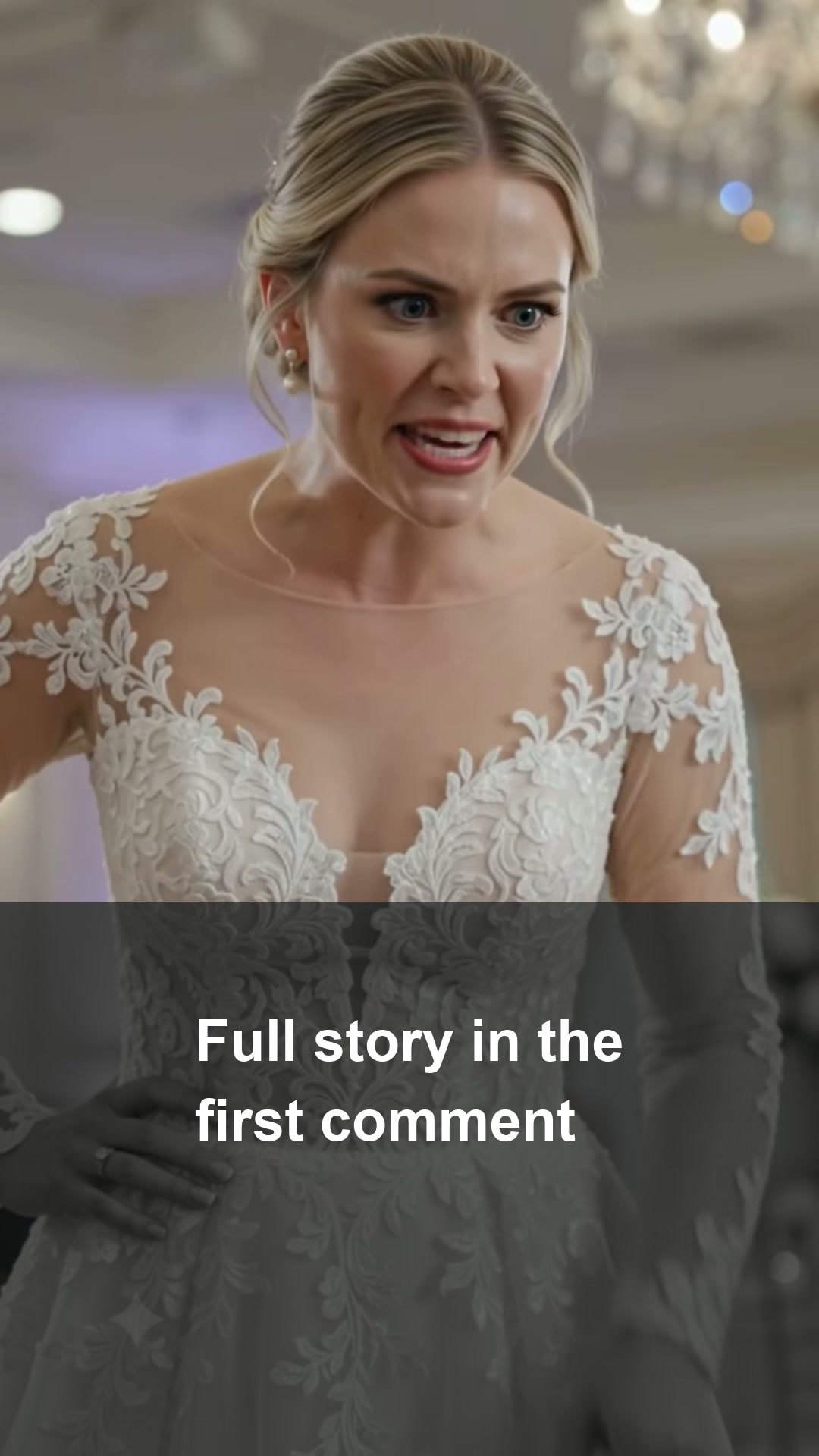
I just wanted to know if you knew you were the target, Clara.
The truth wasn’t a lightning bolt; it was a slow, structural failure, the kind I spent my life identifying in old brownstones before the walls buckled. It began in the summer of our tenth year, in the attic of our family’s summer home, where the heat turned the air thick as syrup. Emily was holding a magnifying glass over a colony of ants, her face a mask of detached, scientific interest. I watched, my seven-year-old hands gripping the wooden railing, as she focused the light until the ground began to smoke. She didn’t smile when the insects started to scramble. She just watched, her eyes wide and unblinking, until the movement stopped. When I asked her why she did it, she looked at me with that same curated softness she wore for our mother. It’s just an experiment, Clara, she said, her voice steady. You have to see how things react under pressure to know what they are capable of.
I remember the scent of lavender sachets and dust, the way she tucked a stray lock of hair behind my ear, a gesture that felt like a caress but held the weight of a leash. That night, I found my favorite porcelain doll with its head twisted cleanly off, resting in the center of my bed. Emily was already asleep, her breathing deep and rhythmic, the picture of angelic repose. I didn’t cry. I didn’t tell Mother. I just picked up the pieces, my fingers tracing the jagged neck of the doll, and placed them in a box I hid behind the floorboards of my closet. I knew even then that the damage wasn’t an accident. It was a statement of territory.
By middle school, the pattern had refined itself. Emily was the golden child, the one who navigated the social currents of our private academy with the grace of a shark. She would lose a necklace, or a bracelet, or a rare first edition book, and Mother would scour the house, her anxiety escalating until Emily would conveniently find the item in my room, tucked under a pile of my schoolwork. I remember the look on Mother’s face—a mixture of profound disappointment and exhaustion. Clara, I expected better, she would sigh, rubbing her temples, her eyes sliding past me to settle on Emily, who stood in the doorway, eyes brimming with a rehearsed, fragile pity. I stood still, my hands clenched in my pockets, feeling the heat rise in my throat. I couldn’t explain the logic of a setup to a woman who only valued the appearance of order. I learned to keep my mouth shut, to analyze the angles of their gaze, to see the trap before the door slammed.
The money came next, a phantom that haunted every dinner conversation. Our inheritance was a gilded cage, tied to a clause in Mother’s will that demanded we remain unified, a mandate for a connection that had been severed years ago. Emily understood the value of that unity better than anyone. She didn’t want the money to spend it; she wanted it to prove that she was the primary entity, the one who held the keys. I remember standing in the kitchen, the moonlight slicing through the window, as she leaned against the counter, tapping a knife against her palm. If you don’t sign the documents, Father’s estate will be tied up in litigation for decades, she murmured, her voice stripped of its usual melodic lilt. Do you really want to be the reason this family falls apart, Clara? She made the destruction of our history sound like a moral failing on my part. I looked at the way she held the knife, the precision of her posture, and I realized then that she had been practicing for this moment for years.
Then came the marriage, the final, desperate move in a game I hadn’t realized we were playing. Julian was a soft man, a man who liked to be told what to do by someone who looked like they knew the future. I watched them in the garden, the way Emily steered him toward the light, her hand possessively on his arm. She was building a kingdom, and I was the structural flaw she needed to sand down. I remember the rehearsal dinner, the clinking of crystal, the way the light caught the rim of my glass. She stood up to give a toast, her gown shimmering like spilled mercury. To my sister, she said, raising her glass to me, her smile tight and perfectly calibrated. To the girl who has always kept me whole. The room erupted in applause, and I felt a chill trace my spine. It was a threat disguised as an homage. I looked down at my plate, the food turning to ash in my mouth. I had ignored the warnings for twenty years—the broken dolls, the missing trinkets, the subtle gaslighting—because I wanted to believe that somewhere, beneath the layers of performance, there was a sister who loved me.
I remember walking into the storage room two days before the wedding, searching for a spare box of programs. The air was cool and smelled of ozone. I stumbled upon the heavy, unmarked crates, the ones Emily had insisted be placed behind the structural supports of the reception tent. I reached out to touch the label, but a shadow fell across the threshold. I turned to see Emily, her silhouette stark against the light. She didn’t move. She didn’t speak. She just watched me with that same look she had when she burned the ants in the attic, her expression perfectly blank, an absence of humanity that terrified me more than any outburst. I felt a sudden, sharp clarity—the kind of awareness that only comes when you realize the foundation of your world has been rotting for years. I didn’t ask about the crates. I didn’t ask why she looked at me like a problem to be solved. I simply stepped back, my heart hammering against my ribs, and walked away.
The wedding day dawned with a deceptive, polished brightness. I helped her dress, my hands trembling as I smoothed the lace, the weight of the veil feeling like a shroud. She looked at me in the mirror, her reflection serene, almost holy. You look so nervous, Clara, she whispered, her fingers grazing my cheek with a phantom touch. You should try to be happy for me. It was the same tone she used to use when she told me to stop crying over the broken doll, a demand for submission wrapped in the language of sisterhood. I forced a smile, the muscles in my face aching. I decided then, in the silence of the dressing room, that I wouldn’t play the game anymore. I wouldn’t be the structural flaw she could prune away. I would be the witness.
I walked toward the altar, the hum of the guests a low vibration in the floor. I thought of the way she had rehearsed the placement of the cannons, the deliberate geometry of the floor plan, the way she had ensured I would be standing in the line of sight of the focal point. It wasn’t just a wedding; it was an installation, and I was the centerpiece. I took my place, the air heavy with the scent of lilies and cold, expensive perfume. I looked at Julian, who wouldn’t meet my eyes, and then at the cannons, glinting in the afternoon light. The realization was as cold as a surgical scalpel: the accident wasn’t an accident. It was the conclusion of a lifetime of rehearsals. I looked at Emily, her back to me, her posture perfect, and I felt the last of my illusions shatter. She didn’t just want the inheritance. She wanted the erasure of the person who knew what she was. I took a breath, my vision blurring at the edges, and for the first time in my life, I stopped trying to fix the cracks. I let them be. I let them stay broken. The decision was absolute, a silent, internal hardening. Whatever happens next, I thought, I will not look away. I will watch the wall come down.
The library smelled of old paper and the sharp, metallic tang of the oxygen tank Mark kept tucked behind the velvet armchair. He tapped his cane against the floorboards, a rhythmic, impatient sound that grated against the silence. I sat opposite him, my eyes straining to focus on the lines of his face—a map of failed investigations and quiet guilts. He reached into his coat pocket and slid a crumpled receipt across the mahogany table. It was for the cannon’s custom-built firing mechanism, dated three weeks prior. He didn’t look at me; he looked at the window, where the sun was beginning to dip behind the Hudson cliffs. He wanted redemption for the cases he’d walked away from twenty years ago, but he was terrified that the truth would finally force him to act. I didn’t reach for the paper. I simply watched his hands tremble. If I took it, I became his accomplice in his final, desperate bid for absolution. I took it, and the paper felt impossibly heavy.
The door clicked open, and Julian entered. He held two crystal flutes, his grip so tight his knuckles were white. He was a man who had built his life on the promise of social standing, a fragile architecture of status that Emily had promised to complete. Now, he looked like a guest in his own home, checking the hallway behind him before whispering, “She knows I saw the delivery log.” His voice was a thin, panicked thread. He wanted out, but he was chained to the very wealth he had sacrificed his autonomy to secure. He glanced at me, his eyes pleading for a way to rewrite his own history. I said nothing. I allowed him to see the coldness in my eyes, the mirror of his own cowardice. He turned and left, his footsteps muted by the expensive rugs, leaving behind the ghost of a man who realized too late that he had married his own cage.
Sarah found me in the hallway ten minutes later. She didn’t offer a greeting, merely a checkbook and the smell of expensive, cloying perfume. She was the architect of our family’s public image, a woman who treated trauma as a structural flaw to be plastered over with fresh paint. “Clara,” she said, her voice smooth as glass, “a generous donation to your architectural firm would go a long way toward smoothing over these unfortunate medical expenses. Think of the estate. Think of the brand.” She looked at me not as a daughter, but as a liability, a loose screw in a machine she had spent decades calibrating. I looked at the checkbook, then at the sharp, desperate lines around her mouth. She knew what Emily was. She had always known. She had simply decided that a monster was preferable to a scandal. I closed her hand over the checkbook, pressing the plastic against her palm until she winced. I wouldn’t be bought. She pulled away, her mask slipping for a fraction of a second, revealing a hollow, terrified woman underneath.
Then came Detective Miller, standing by the fireplace with his notebook tucked under his arm. He wasn’t looking at me; he was studying the dust motes in the light, his patience a deliberate weapon. He was the only one in the room who didn’t want anything from me. He wanted the truth, not because he was virtuous, but because he was a creature of habit who found comfort in the order of law. He caught my gaze, his eyes hard and unblinking. He knew I had the receipt. He was waiting for me to hand it over, to become the final gear in the investigation he had started months ago. I looked at the fireplace, at the warmth of the flames that would never reach the people in this room. My decision solidified. I would burn the entire estate to the ground to see the truth standing in the light. I walked toward Miller, and as I reached for my pocket, I saw Emily at the edge of the shadows, watching us, her performance finally failing. I reached for the paper, ready to break the world apart.
The weight of the thermal paper in my pocket felt like a live coal as I pressed it into Detective Miller’s palm. The station was a tomb of fluorescent lights and the smell of stale coffee, far removed from the manicured hedges of our family estate. Miller didn’t smile; he didn’t even blink. He tucked the receipt for the industrial-grade confetti cannon into a clear plastic sleeve. Outside, the rain smeared the city lights into streaks of neon grey, mirroring the blur in my left eye, a permanent reminder of the night Emily decided my life was an obstacle to her inheritance.
I walked to the public phone in the lobby, my fingers tracing the jagged edges of my key ring. I dialed my bank’s fraud department, the hold music a monotonous, synthetic lullaby. When the representative answered, I gave them my account numbers and pulled the plug on the monthly stipend Emily and I shared from the estate’s liquid assets. The silence that followed the representative’s confirmation was the first note in a symphony of destruction. Within twenty minutes, the bank had frozen the secondary accounts, effectively severing Emily’s financial lifeline. I knew she would notice by morning, and I knew exactly who she would call: Sarah.
Three hours later, I sat in a mahogany-paneled office in Midtown, the smell of old paper and expensive floor wax settling into my lungs. My attorney, a woman named Halloway who wore suits that looked like armor, laid a stack of documents across the desk. I signed the request for a formal HR inquiry into the estate’s management company, a company Emily had staffed with her own sycophants. It was a direct challenge to the throne.
As I left the building, my phone buzzed against my thigh. It was a message from Sarah, a string of passive-aggressive emojis and a single, curt request: come to the house, we need to discuss the future. I ignored it, stepping into a cab instead. I headed to the clinic I had researched for weeks, the one that handled private, high-stakes medical verification. I didn’t need a doctor to tell me the damage was permanent; I needed the state-certified record of the blast trauma to attach to the civil suit I was filing against Emily for grievous bodily harm.
The following morning, the repercussions arrived in the form of a knock at my apartment door. It was Julian, his face a map of exhaustion and terror. He looked at me as if I were a ghost, his hand trembling as he held out a legal summons Emily had already filed against me, alleging I had stolen family heirlooms. It was a clumsy, desperate counter-move.
You have no idea what you are doing, Clara, he whispered, his eyes darting toward the hallway as if he expected Emily to materialize from the shadows. She is already liquidating the stocks. If you keep this up, there will be nothing left for anyone.
I didn’t answer him. I merely walked past him to the kitchen counter, picked up the phone, and dialed the lawyer again. I watched Julian’s face crumble as he realized I wasn’t backing down. I instructed Halloway to file for an immediate injunction to stop the liquidation. Every action had an equal and opposite reaction, but I had calculated the trajectory of this collapse months ago.
By the afternoon, the doorbell rang again. This time it wasn’t Julian, but a courier with a heavy envelope sealed in wax. Inside was an offer from Sarah’s legal team: a settlement that would make me wealthy enough to leave the country, provided I signed an NDA and withdrew the police report. I took the envelope to the sink and turned on the faucet. I watched the ink bleed, the offer dissolving into a grey slurry.
I reached for my phone and opened the portal to the state court filing system. With a single click, I uploaded the medical records, the forensic analysis of the cannon, and the affidavit from Mark, the investigator who had seen Emily testing the firing mechanism behind the barn two days before the wedding. The screen blinked green: Filing Successful.
The silence that followed was heavy, the kind that precedes a landslide. I knew that by dawn, the estate’s board would receive the HR complaint. I knew Emily would be spiraling in that gilded cage of hers, realizing for the first time that the walls she’d built to keep me out were now closing in on her. I walked to the window and looked out at the city. My vision was compromised, a dark smudge hanging in the corner of my sight, but for the first time in years, the world ahead was perfectly clear. I had initiated the irreversible, and now, I only had to wait for the glass to shatter.
The notification chime on my laptop became a rhythmic, persistent metronome, signaling the disintegration of my life in real-time. My inbox filled with headers from news outlets, legal firms, and former clients, all asking if the rumors regarding the wedding, the cannon, and my sister were founded in fact. I sat at my drafting table, the precise lines of a structural blueprint blurring into grey static as I squinted. I didn’t open the emails. Instead, I watched the social media landscape shift. Emily’s curated Instagram feed, usually a polished carousel of bridal perfection, had been swarmed. Thousands of comments, once praising her aesthetic, now demanded answers to the question of intent. She had become a case study in digital infamy.
My phone vibrated against the wood, a frantic, buzzing insect. It was a local number, one of the neighbors from the Hudson Valley estate. I let it ring until it cut to voicemail. The silence that followed felt like a vacuum. I thought of my mother’s estate, the way the foundations were built on prestige and buried secrets, and realized how easily that house of cards had folded once I pulled the central support. I wasn’t just exposing Emily; I was dismantling the entire social currency we had been forced to trade in for decades.
I stood and walked to the kitchen, my hand tracing the cold edge of the granite counter. My reflection in the darkened window was distorted, the left eye still struggling to process the light. I had cost myself my career, my family standing, and perhaps my own physical health to see this through, but the weight in my chest had finally shifted. I poured a glass of water, watching the liquid ripple.
A sharp rap at the front door broke the stillness. I didn’t reach for the handle. I knew it was Julian, or perhaps Sarah, coming to offer a settlement or a threat, their faces twisted with the realization that their reputation could no longer be bought. I walked to the door and pressed my forehead against the cool, painted wood, feeling the vibrations of their frantic knocking. They were desperate to contain a leak that had already flooded the entire valley.
I thought of the legal filings I had submitted, the cold, clinical reality of the evidence I had surrendered. There was no going back to the comfortable, suffocating performance of sisterhood. I had moved from the role of victim to the role of architect, and I was finally drafting a life that didn’t depend on them.
I pulled back the deadbolt. The door swung open, revealing Julian’s pale, sweat-slicked face. He opened his mouth to speak, a practiced plea already forming, but I didn’t give him the air.
I held up my hand, signaling for him to stop. I watched the confusion flicker across his eyes, the realization that he no longer held the power to dictate the narrative. I looked past him at the long driveway, where a black sedan was pulling in, the engine idling like a warning.
It was Detective Miller. The process had begun, and there was no exit strategy for any of us. I stepped onto the porch, leaving the house behind me, and waited for the law to catch up to the truth.
The gravel crunched under the detective’s heavy boots as he stepped out of the sedan, his shadow stretching long and thin across the manicured lawn. He didn’t offer a greeting, only a manila folder tucked firmly under his arm. I stood still, the cool Hudson Valley air biting at my cheeks, watching as the front door behind me groaned shut. Julian remained on the threshold, a ghost in his own home, staring at the legal reality unfolding in the driveway.
Miller stopped three feet from me and extended a fountain pen. The black ink looked like a dark, permanent stain against the white paper of the estate dissolution agreement. My hand felt steady as I took the pen, the weight of it anchoring me to the earth. I looked at the signature line, the final hurdle in the architecture of our family’s collapse. By signing, I forfeited the inheritance, the Hudson Valley estate, and the status that had served as a cage for twenty-six years.
I leaned against the hood of his car, the metal cold and unyielding, and scrawled my name. The ink bled slightly into the grain of the paper. It was a clean fracture.
Miller took the folder back, his gaze lingering on the house where Emily was currently pacing behind the curtains of the master suite. He didn’t need to ask if I was ready. He tapped his radio twice, a sharp, metallic sound that signaled the officers waiting at the gate. I watched the cruiser lights spark into life, two flickers of blue and red reflecting in the glass of the front windows.
My phone vibrated against my hip, a frantic stream of messages from Sarah, offering digits that no longer held any weight. I pulled the device from my pocket, watched the screen light up with a desperate, typed plea for a meeting, and pressed the power button until the display went black. I dropped the phone into the tall grass at the edge of the driveway.
I turned my back on the estate, the pillars and the grand foyer shrinking into the distance as I walked toward Miller’s sedan. I didn’t look back to see Emily’s face when the officers reached the porch. The silence in the car was absolute, stripped of the performative noise that had defined my life for so long. I stared out the window at the receding horizon, the road ahead finally clear, and realized that for the first time in my life, I couldn’t see the end of it.
The rental cottage smelled of ozone and dried kelp, a sharp departure from the sterile, floral air of the estate. I sat on the porch, my hands buried in the thick, coarse fur of a golden retriever I’d adopted from a shelter three towns over. He leaned his weight against my shins, a grounding pressure that tethered me to the deck planks.
I set a plate of grilled trout and lemon-drenched asparagus on the small wooden table. It was the first meal I had prepared without calculating the cost of my sister’s judgment or the optics of the kitchen aesthetic. I took a bite; the fish was slightly overcooked, the skin charred, and it tasted like freedom.
The neighbor’s wind chime clattered—a soft, metallic melody that didn’t trigger the phantom hiss of a pressurized cannon. I exhaled, feeling the tension bleed out of my shoulders, the muscle-memory of bracing for an impact finally beginning to fade.
I leaned back, eyes tracing the jagged horizon where the ocean met the darkening sky. The trauma had left a permanent blur in my left peripheral vision, a soft smear of gray I had learned to navigate like a structural flaw in an otherwise sound wall.
“You’re okay, aren’t you?” I whispered to the dog. He let out a low, rumbling sigh and rested his chin on my knee.
I picked up a trowel and turned toward the patch of overgrown earth beside the porch. I had decided to plant lavender, something simple that didn’t require constant, violent pruning to maintain its shape. I pressed the cold steel into the damp soil, the scent of wet earth rising to meet me. The past was a foundation I had finally finished excavating. I picked up the first seedling, pushed it into the dark, receptive ground, and waited to see what would grow in the quiet.
The air in the garden held no tension, only the steady drip of the morning mist against the porch steps. I reached into the crate for the last of the lavender, my fingers brushing against the rough burlap, finding a jagged shard of glass caught in the weave. It was a remnant from the night of the ceremony, a sliver of crystal I had somehow carried back like a souvenir of my own undoing. I held it up to the pale, diffuse light. It caught the sun, a sharp, crystalline splinter that fragmented the horizon into a thousand unreadable shapes. I didn’t try to piece the edges back together. I opened my palm, let the glass fall into the deep, dark loam, and pressed the heavy soil over it with my heel.
Leave a Reply