The police cruiser’s blue lights rhythmically pulsed against my father’s confused, slack-jawed face.
I stood on the manicured lawn of our Connecticut home, the damp grass soaking into my heels. Arthur blinked, his hand still gripping the steering wheel of my SUV, the engine idling with a low, metallic hum. He looked at me, then at the officer approaching with his hand resting on his holster.
“Maya, tell him this is a misunderstanding,” Arthur stammered, his voice cracking with the indignity of a man who had never been told no. “It’s a family vehicle. You’re being dramatic.”
I didn’t blink. The officer tapped the driver’s side window. “Sir, step out of the car. Now.”
My pulse remained steady, a perfect, logical metronome. This wasn’t anger; it was an audit of his entire existence. I felt the weight of the legal title tucked into my blazer pocket, a slip of paper that had just cost my father his pride. I realized then that my validation wasn’t a resource I needed to earn, but a liability I had finally liquidated. I stepped forward, ready to sign the statement that would ensure he never drove my property again.
The scent of the office was a blend of ozone from the high-capacity printer and the burnt bitterness of the breakroom coffee. I sat at my desk, the dual monitors glowing with a sprawling spreadsheet of municipal tax assessments. My morning had been a symphony of predictable, granular movements: the rhythmic *thwack* of my heels on the linoleum, the precise three-second pause at the security scanner, and the lukewarm latte I’d sipped while checking the overnight market fluctuations. Everything was in its place. The world was a series of reconcilable entries.
“Maya, you catch the weather report?”
Marcus leaned against my cubicle wall, holding a plastic cup that was sweating onto his khakis. He was a creature of mild habits and predictable small talk.
“Unseasonably warm for November,” I said, not looking up from the B-column variance.
“Supposed to hit seventy. Might actually get out early for once.” He tapped his watch, a nervous tic. “You got plans for the weekend?”
“Just the usual audit backlog,” I lied. The truth was that I had spent the last three hours mentally itemizing the depreciation on my own life, calculating the ROI of my filial piety. I didn’t tell him that. I didn’t tell him that I felt like a ghost haunting my own cubicle.
“Well, don’t work too hard. It’s a nice day to be stuck in here.”
I gave him a tight, professional smile, the kind that communicated both friendliness and a firm desire for solitude. He took the hint and retreated. I stared at the blinking cursor, watching it pulse like a steady, detached heartbeat. My life was a ledger. Everything had a cost, everything had a value, and everything was currently balanced to the cent. I liked the safety of it. The monotony was a wall, a buffer between me and the messiness of the house back in Connecticut. I had successfully compartmentalized the resentment, tucking it into a file folder in the back of my mind labeled ‘Pending Resolution.’
I reached for my coffee, finding the bottom of the cup cold and grit-filled. It was time to refresh. I stood up, smoothing the front of my blazer, and walked toward the breakroom. The office was humming—a low, mechanical drone of productivity. People were laughing near the water cooler, discussing brunch plans and upcoming travel. It was the sound of a world that didn’t know how fragile it was, a world that assumed tomorrow would look exactly like yesterday.
I stopped at the water cooler, watching the bubbles rise to the surface in the inverted jug. I was thinking about the keys in my purse, the ones to the SUV. I was thinking about the fact that I was technically paying for a life I didn’t get to lead. My hand rested on the cool, hard plastic of the cooler’s spout. I felt a sudden, sharp clarity. It was time to stop balancing the accounts for people who didn’t know how to read the bottom line.
I walked back to my desk, my pace measured and firm. I had a draft of an email to my accountant pulled up, a sequence of instructions meant to tighten the reins on the family trust. I was ready to press send. I took a breath, my finger hovering over the mouse, the cursor poised to initiate a chain reaction that would dismantle the facade I had spent years propping up.
My phone vibrated. It was a sharp, frantic buzz against the mahogany desk, a jarring intrusion into the sterile silence of the office. The screen lit up, displaying the caller ID. It was him. The phone kept ringing, a piercing, demanding sound that cut through the low hum of the office like a razor.
I let the phone ring, watching the pixels dance until the call dropped to voicemail. I didn’t want the static of his voice, only the facts. A notification popped up seconds later: a photo of the garage, sent from Emily’s number. In the grainy image, my SUV—the silver sedan I’d spent thirty-six months financing and maintaining—was being backed out into the driveway by my sister. She looked over her shoulder, her smile wide and unburdened by the cost of the engine she was burning. Behind her, Arthur stood in the doorway, hands shoved deep into his pockets, nodding as if he had performed a great act of charity.
My pulse remained steady, a flat, rhythmic line. I typed a quick reply, my thumbs moving with the clinical speed of an auditor reconciling a ledger. Where are you taking it?
Emily’s text arrived instantly: Dad said it’s time I had a reliable car for the baby. You have the company fleet, Maya. Don’t be petty.
I stared at the screen. The word reliable felt like an insult. I had paid for that reliability in five-dollar coffees and missed weekends. I looked at the draft on my computer, the cursor blinking like a heartbeat. The house, the trust, the accounts—everything was technically mine, a safety net I had built for them while they spent their days pretending they were the ones who held the strings.
I stepped out of my office and into the hallway. The fluorescent lights hummed, cold and unforgiving. I called Julian, my lawyer, and skipped the pleasantries.
Julian, I said, my voice devoid of the tremor I expected to feel. The theft has occurred.
There was a short silence on the other end, followed by the soft sound of a pen clicking. Are you certain, Maya? This isn’t just about the car anymore. Once we pull this thread, the whole sweater unravels.
I looked out the window at the parking lot, imagining the distance Emily was putting between me and the last tangible proof of my own labor. I thought about the way Arthur used to look at me, a mixture of pride for my income and contempt for my autonomy. The facade was finally thin enough to see through. I realized then that I wasn’t just reclaiming an asset; I was ending a service.
I’m certain, I said. Revoke the power of attorney. Send the notice of intent to vacate for the house. Today.
Arthur expects you to handle this, Julian noted, his tone hovering between professional caution and dark amusement. He thinks you’ll come home and argue. He thinks there is a script.
He’s right about the argument, I replied, my eyes fixed on the empty space in my calendar. But he’s wrong about who writes the script.
I hung up. I stood in the quiet hallway, feeling the weight of the keys in my pocket. The next step was a demolition. I walked toward the elevator.
The first call was to my father’s nurse, a woman named Elena who usually answered on the second ring. I leaned against the lobby wall of my firm, watching the marble floor for cracks as the phone vibrated against my ear. When she picked up, the background was a cacophony of beeping monitors and the aggressive, synthetic chime of a medication cart.
He isn’t here, Maya, she said, her voice tight and hurried. Arthur checked himself out three hours ago. He said you were paying the bill and that it was all settled.
I looked at the digital readout on my watch. I hadn’t authorized a discharge. He wasn’t scheduled for release until Thursday. He told me he was still under observation, I countered, my voice flat.
Elena sighed, a sound of weariness that cut through the sterile noise. He wasn’t under observation for anything but his blood pressure, and he was bored. He told the clerk you had an emergency and needed him home immediately.
I hung up, the silence of the lobby rushing back to fill the space. He had lied to the medical staff, using my name as a voucher for his impatience. I pressed the contact for the regional manager of the hotel where Emily and her husband were supposedly staying.
The manager was polite, his voice dripping with the practiced deference of someone who deals with entitled families all day. Mr. and Mrs. Miller? No, they checked out yesterday morning, he said. They told us the house in the suburbs was being renovated and they needed to move back in early.
I felt a cold prickle at the base of my neck. My father had told me on Tuesday that the hotel was paid for through the end of the week. My account records showed the pending charge, but now it was clear: they had leveraged the refund to move into the house ahead of schedule.
I called Emily. She answered on the fourth ring, the sound of a fussy infant crying in the background. Her voice was brittle, coated in that specific brand of martyrdom she wore like a winter coat.
Maya, I’m busy, she snapped. The baby has a fever and Dad is pacing the kitchen like a caged animal. Why aren’t you here helping?
Where are you, Emily? I asked.
In the kitchen. Where I’m supposed to be. Dad says the car is in the shop for a minor repair, so he needs you to come over and drop off the grocery run you promised.
The car wasn’t in the shop. It was in the garage, registered in my name, being used as a bargaining chip to keep her subservient to his whims. I didn’t correct her. I needed to know if they were already inside the house, or if they were still lingering in the driveway, waiting for a key I hadn’t given them.
I’ll be there in an hour, I said.
I drove the long way, my hands tight on the steering wheel, mapping out the architecture of their deception. Every detail I gathered was a loose thread in a garment that was clearly falling apart. The nurse said he was home; the hotel said he left; Emily said he was waiting for groceries. None of them knew the others were talking to me. I pulled onto the street, the tires crunching against the gravel. The garage door was shut, but the lights were blazing in the living room. I didn’t pull into the driveway. I parked three houses down, watching the silhouette of my father pace past the window, his movements jagged, restless, and entirely unaware that his daughter was no longer the asset manager of his life.
I walked up the driveway, the evening air biting at my skin. The front door was unlocked, a testament to Arthur’s unshakable belief that the world owed him privacy and protection. I stepped inside, the foyer smelling of expensive scotch and the lingering, cloying scent of Emily’s vanilla-scented diaper bags. My heels clicked against the hardwood, a rhythmic, mechanical sound that silenced the television in the den. Arthur stood by the fireplace, a glass in one hand, looking every bit the patriarch until he saw me. He didn’t look guilty; he looked inconvenienced, his brow furrowing as if I were a client arriving ten minutes past the agreed hour.
“Maya,” he said, his voice dropping into that practiced, weary tone he used to suggest I was being hysterical. “You’re making a scene again. Emily is upstairs with the baby. We discussed this. The SUV was an investment in the family’s stability, not a personal transaction.”
I watched his throat move as he swallowed, his gaze darting toward the hallway where Emily’s footsteps had just gone silent. He still thought in terms of leverage and debt, convinced that if he spoke calmly enough, he could re-reconcile the balance sheet of my life. My pulse was a steady, cold hum in my ears. I reached into my bag and pulled out the manila folder, the heavy cardstock sharp against my thumb. The house wasn’t his. The accounts weren’t his. Even the chair he was leaning on was a line item I had audited out of his possession months ago. I set the document on the mahogany side table, right next to his glass, and watched his hand tremble as he reached for it. He read the header, the color draining from his face, leaving him looking like a ghost in his own living room. He looked up, his eyes wide, finally understanding that I wasn’t here to negotiate.
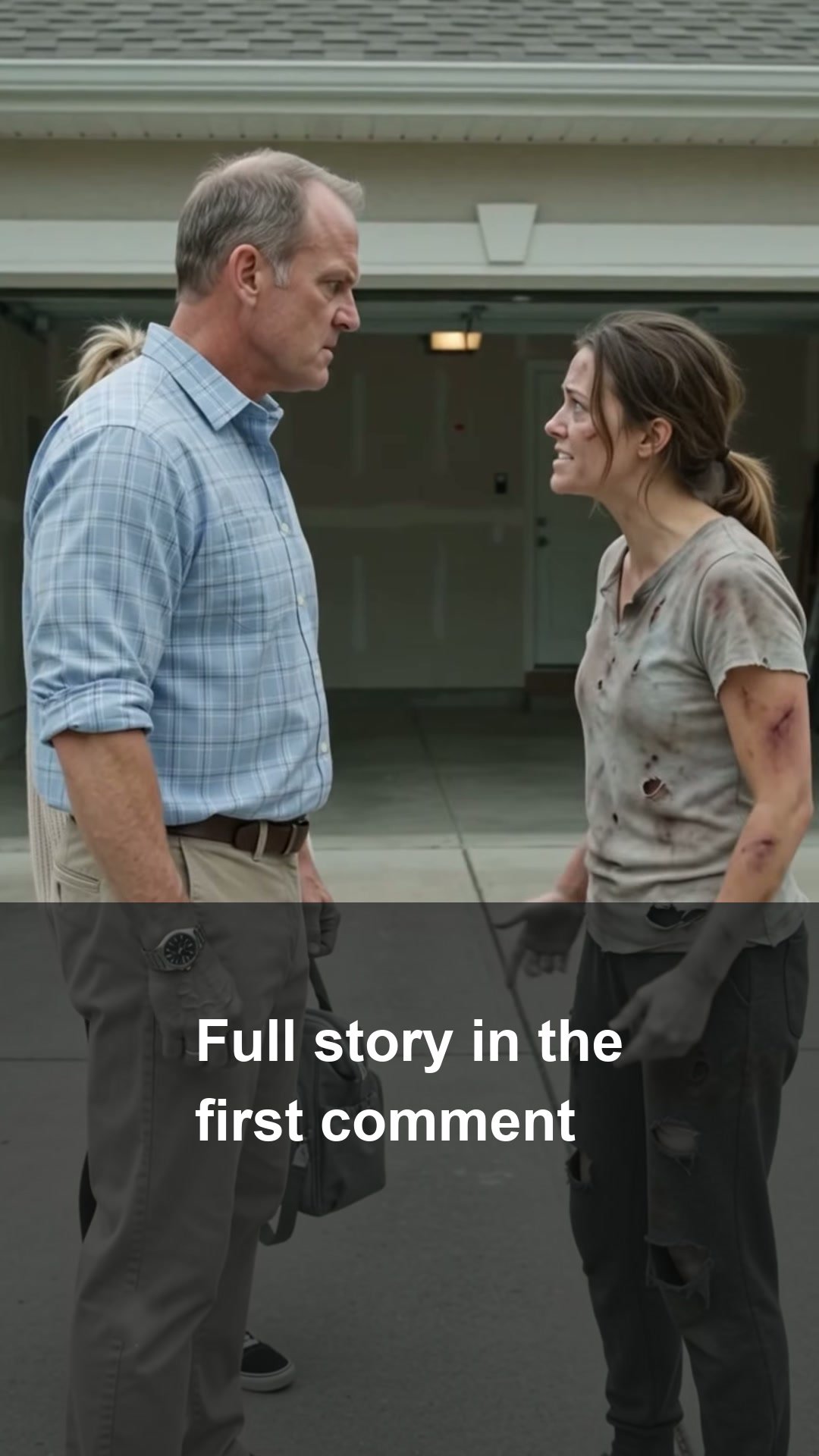
“I didn’t steal that car, Dad, I just took back what was always mine.”
The linoleum floor of our childhood kitchen was a checkerboard of yellow and white, scuffed by the constant motion of a family running in place. I was ten, sitting on a stool that felt two sizes too tall, watching my father peel an orange with a paring knife. He didn’t look at me. He was looking at the stack of envelopes on the island, the ones with the red “Past Due” stamps that seemed to multiply like bacteria. He sliced the rind in a perfect, continuous spiral, his movements surgical. When he finished, he didn’t offer me a segment. He pushed the plate toward my sister, Emily, who was busy coloring in a book she had demanded just that morning. I had asked for a new pair of sneakers because my toes were curling against the rubber of my current ones, a tight, cramped feeling that echoed in my chest every time I stood up. Dad looked at the sneakers, then at the bills, then at me. He laughed, a dry, dismissive sound that caught in his throat. You want new shoes, Maya, he said, but we have to prioritize the things that actually matter. Things that keep this roof over our heads. He didn’t say that the roof was leaking or that the bills were a testament to his own inability to manage a budget. He just folded the word prioritize around me like a shroud. I looked at the floor, counting the scuffs, and decided then that I would never be the one asking for anything that cost money. I would be the one who made sure there was enough so that the question never had to be asked again.
Years later, the high school counselor’s office smelled of stale coffee and industrial carpet cleaner. I sat across from Mrs. Gable, holding my report card. Straight A’s, a clean slate of academic perfection, the kind of data set that promised a ticket out of the cycle of overdraft fees and hushed arguments. My mother hovered in the doorway, her hands wringing a damp tissue, her eyes darting toward the clock. She was worried about being late for a dinner party Dad insisted they attend, a party he couldn’t afford but felt compelled to grace with his presence. Maya is so capable, my mother whispered to the counselor, as if I weren’t sitting right there. She’s the one who helps her father with the filing. She’s the one who tracks the utilities. It was meant to be a compliment, a badge of maturity, but it felt like a cage. I realized then that my worth was defined entirely by my utility. I wasn’t a student; I was an asset manager. I looked at the counselor’s kind, pitying face and felt a cold, sharp resentment bloom. I decided to apply for every scholarship I could find, not because I wanted to go to the best school, but because I wanted an account number that was mine and mine alone. When I left that room, I didn’t tell my parents about the early acceptance letter from the state university. I kept it in the bottom of my backpack, a secret I guarded like a weapon.
The wedding day for Emily was an exercise in theatrical bankruptcy. The venue was a rustic estate in the Berkshires, a location that required a deposit far beyond our family’s means. Dad had called me three weeks before, his voice tight with the kind of performative panic he used to extract capital. It’s for your sister, he’d said, and I’m a bit short on the final disbursement. I was twenty-two, working my first internship, living on ramen and cheap coffee. My bank account was a delicate ecosystem of savings meant for my own future. When I hesitated, he didn’t get angry; he got disappointed. He spoke about family loyalty as if it were a debit card I was obligated to use until the balance reached zero. I looked at my reflection in the office window, the dark circles under my eyes a stark contrast to the immaculate spreadsheet I was building on my laptop. I transferred the money. I did it because I needed to see the transaction clear, to prove to myself that I could afford to lose it. At the reception, Emily danced in a dress that cost more than my first year of tuition, spinning in circles while Dad toasted to his success as a provider. He clinked his glass against mine, his smile wide and unburdened. You’re a good girl, Maya, he said, patting my shoulder with a hand that felt heavy, possessive. I felt a knot of bile rise in my throat. I smiled back, a polite, practiced gesture, and decided that the next time he asked for a contribution, I would have a contract waiting.
I remember the Tuesday he came to my apartment, unannounced, his face flushed with the indignity of a late-payment notice he’d received in the mail. I was sitting at my desk, organizing my own finances, the numbers lining up in perfect, logical columns. He paced the length of my small living room, complaining about the unfairness of the world, about the ways the bank was predatory, about how he had been wronged by circumstance. He didn’t ask; he assumed. He looked at my desk—at the expensive monitor, the ergonomic chair—and he saw excess. He saw a surplus that he felt entitled to redistribute. I listened to his voice, the cadence of it so familiar it felt like a recording playing on a loop. It was the same voice that had dismissed my hunger as a child, the same voice that had demanded my savings for a wedding I hadn’t wanted to attend. I thought about the thousands of dollars I had poured into a house that was technically in my name, a house he treated like a hotel. I felt a strange, detached clarity. The anger was gone, replaced by the clinical precision of a forensic auditor. I realized he didn’t think he was stealing. He thought he was harvesting. I stood up, walked to the closet, and pulled out the file containing the power-of-attorney documents I had started drafting months earlier. I handed them to him, watching the way he fumbled with the paper, his fingers thick and clumsy. He didn’t read the clauses that limited his access. He didn’t notice the change in the language. He just saw the signature line and a way to push the problem forward another month. I watched him walk out my door, his gait confident, and I realized that I had finally given him the rope.
The final warning I ignored was my own reflection. I was twenty-seven, standing in the kitchen of the family home, staring at the marble countertop. My mother walked in, carrying a tray of iced tea, her face fixed in that permanent, fragile mask of domestic peace. Maya, honey, she said, don’t be so hard on your father. He’s just under a lot of pressure. I looked at her, really looked at her, and saw the lines of exhaustion carved into her skin, the way she had surrendered her own identity to keep the facade from cracking. She was the collateral damage of his ego, and she was asking me to be the same. I thought about the SUV, the one I had saved for, the one I had paid for with four years of overtime and skipped vacations, the one he had already promised to Emily because she “needed it for the baby.” I thought about the thousands of dollars in property taxes I had paid, the utilities I had kept on when he claimed he was broke. I looked at my mother and saw not a victim, but an accomplice. A shift occurred, a sudden, irreversible snap in the logic of my life. I didn’t argue. I didn’t defend myself. I just picked up my keys and walked out, the sound of the screen door clicking shut behind me. I had been the reliable one, the scapegoat, the silent bank. But even a bank has a limit to its credit. I realized then that I wasn’t just walking away; I was preparing for the audit. I sat in my car, the engine idling, and mapped out the timeline of every cent, every favor, every stolen moment of my life, turning my history into a weapon. I wasn’t going to be the martyr anymore. I was going to be the auditor. And the books, I decided, would be balanced to the penny.
The kitchen tile felt cold through the soles of my shoes, a sharp contrast to the humid air of the suburbs. I stood by the marble island, watching Sarah arrange a vase of hydrangeas with trembling hands. She smoothed a petal, her face a mask of practiced serenity, desperate to convince herself that the silence in the house was merely a lull and not the beginning of a collapse. She loved me, I knew that, but she loved the narrative of our perfection more, a fragile structure she had spent twenty years maintaining against the erosion of Arthur’s ego. I set my legal pad down, the hard thud echoing like a gavel. She flinched, her gaze skittering toward the hallway where Arthur’s heavy footsteps were approaching. He walked with the swagger of a man who owned the horizon, still convinced that his redistribution of my SUV was a paternal act of kindness rather than theft. He stopped when he saw me, his smile tightening into a thin, brittle line. He had always played the provider, a role he protected by draining my accounts to subsidize Emily’s lifestyle, convinced that his status as patriarch granted him immunity from the laws of arithmetic. I saw his jaw clench, the subconscious twitch of a man realizing the tide had turned. He cleared his throat, ready to deploy the usual patronizing charm, but I didn’t give him the oxygen. I handed him the printout from Julian’s firm. The document detailed the house’s deed, which I had quietly transferred into my name as a condition for covering the taxes three years ago. His fingers shook as he scanned the line items, his eyes widening as the facade of the untouchable head of the house flickered and died. He looked at me, not as his daughter, but as a creditor. Behind him, Emily drifted in, clutching her phone, her eyes bright with the vapid certainty that someone else would always fix her messes. She was a mother who demanded luxury as a birthright, yet she couldn’t account for a single dollar she had spent of my inheritance. She paused, sensing the shift in pressure, her entitlement wilting under the weight of the silence. I didn’t offer a compromise. I didn’t offer a path back to the lie. I looked at each of them—the enabler, the thief, the parasite—and saw the exact cost of their comfort. I had spent years buying their affection with my stability, and today, the balance sheet reached zero. I walked past them toward the door, my pulse steady. Julian was waiting in his car at the curb, his silhouette a dark, professional anchor against the manicured lawn. He had told me that the law was a blunt instrument, but in the right hands, it was a scalpel. I reached for the handle, feeling the weight of the keys in my pocket. The house was no longer a home; it was an asset I was about to liquidate. As I stepped out, the air felt lighter. Behind me, the house remained, a hollow shell of people who had forgotten how to stand on their own. I didn’t look back when Arthur finally called my name, his voice thin and cracking with the sudden, terrified realization that he had no leverage left. I kept walking. The audit had only just begun.
The interior of Julian’s Lexus smelled of sterile leather and expensive cologne. He didn’t ask how I felt; he simply slid a manila folder across the console. Inside, the theft report for my SUV was typed in clean, sans-serif font, waiting for a signature. My hand didn’t shake. I signed my name at the bottom, the ink bleeding slightly into the paper. It was a tangible act of severance. When I handed the document back, Julian tapped his steering wheel, his eyes tracking the front door of my father’s house.
Arthur emerged onto the porch, his movements frantic, phone pressed to his ear. He looked smaller than I remembered, his posture collapsing under the weight of his own sudden insecurity. He shouted something toward the driveway, but the windows of the Lexus were soundproof. I watched his mouth move, a silent, jagged rhythm, and realized I felt absolutely nothing for the man who had built his life on the back of my silence.
The police arrived twenty minutes later. I sat in the front seat, watching the cruisers block the driveway, their lights reflecting off the hood of my stolen SUV, which Emily had parked right in the center of the walkway. The officer took my statement with the detached professionalism I had spent my career cultivating. When he walked toward the porch to speak to Arthur, the look on my father’s face shifted from blustering entitlement to a pale, sharp-edged panic. He looked toward the Lexus, searching for me, searching for the daughter who always fixed his mistakes. I stared straight ahead, checking the balance on my phone app, and hit the transfer button. The joint account, the one Arthur had treated as his personal slush fund for years, hit zero.
The notification pinged on my screen: Funds transferred. Access revoked.
I walked into the kitchen of the house ten minutes later while the officer was still questioning Emily. She sat at the marble island, her face puffy with indignation. When she saw me, her eyes widened. Maya, you have to tell them this is a misunderstanding, she snapped, her voice high and thin. Dad said it was fine. He said you wanted us to have it.
I placed the stack of formal notices on the counter. My voice was steady, stripped of the apologetic lilt I had been forced to adopt since I was a teenager. It isn’t a misunderstanding, Emily. It’s an audit. The SUV is registered in my name, the insurance is in my name, and the payments you missed have been flagged as unauthorized transactions. I’m not paying for it anymore. I’m not paying for anything anymore.
She stood up, knocking her water glass over. The liquid pooled across the marble, dark and spreading. You can’t just stop, she whispered, her bravado faltering. You’re the responsible one. That’s your role.
I am the owner, I corrected. The distinction felt heavy, final.
Arthur stormed in from the porch, his face mottled with rage. He looked at the papers on the counter, his eyes darting across the legal jargon. He didn’t read them; he felt their weight. He stepped toward me, his hands balled into fists, but stopped when he saw the cold, clinical distance in my gaze. You’re ruining us, he hissed. Over a car? Over money? This is family, Maya.
Family is a contract, Arthur, I said, turning toward the door. And you breached it.
I walked past him and stepped into the living room, where I began to systematically remove the items I had purchased over the last five years. The television, the espresso machine, the rug beneath his feet. Each object was a line item in a ledger, a debt I was finally collecting. As I unplugged the router, the silence in the house grew absolute. The internet died, the television went dark, and the rhythm of their pampered existence stuttered to a halt.
By the time I reached the front door, the house felt diminished. I left the eviction notice on the foyer table, weighted down by a set of keys to the storage unit where I had already moved my most important documents. As I walked out, Arthur stood at the window, his reflection ghostly against the glass. He was trapped in the very infrastructure he had assumed was his domain.
I reached the Lexus, and Julian started the engine. He didn’t ask what I’d done, but he watched the house through the rearview mirror as we pulled away. I opened my laptop and began drafting the letter to the HR department of the firm where Arthur still served as a consultant, documenting the embezzlement I had uncovered in his expense reports. Every action had a consequence, a ripple effect that dismantled the facade piece by piece.
My phone buzzed. A message from my mother, the one who always stayed out of it. Maya, please. Just talk to him. He’s scared.
I deleted the message without replying. My finger hovered over the screen, and then I blocked the number. The car turned onto the main road, leaving the subdivision behind. I watched the numbers on my bank statement update, the figures rising as I liquidated the last of the joint assets. I wasn’t just reclaiming my money; I was reclaiming the space in my head they had occupied for two decades.
The next step was the court filing for the property partition. It would be a messy, public dissolution of the estate. I pulled up the legal portal, my fingers flying over the keys. I could see the path forward clearly now, a sequence of events designed to force them into the sunlight of reality. I felt a strange, cold clarity—the satisfaction of a balance sheet finally reconciled, every debt accounted for, every liability removed. I was no longer the architect of their comfort. I was the demolition crew.
The notification from the county clerk’s office arrived on a Tuesday, blinking in my inbox like a flare in the dark. I was sitting in my office, the air conditioning humming a steady, clinical note that barely masked the vibration of my phone. Emily had posted a screenshot of the eviction notice to her Instagram stories, tagging the local community group with the caption: Does anyone have a heart? #FamilyBetrayal. The comments were already a roiling mass of suburban outrage, strangers dissecting my character with the confidence of people who had never seen an audit trail.
I stood up and walked to the window, watching the Connecticut rain blur the lines of the parking lot. My phone buzzed again, a torrent of messages from our high school alumni group. Sarah, a woman I hadn’t spoken to since graduation, sent a pointed link to a thread where I was being labeled a heartless careerist. I didn’t delete the app. I watched the numbers tick up, a metric of my own social disintegration. The cost wasn’t just the money anymore; it was the erasure of my identity in favor of the villain they needed to keep their narrative alive.
My boss, Marcus, stopped by my cubicle door at noon. He looked tired, his eyes flicking to his tablet. Maya, we’ve had a few calls from board members of the community trust where your father sits. They’re asking if there’s a conflict of interest regarding your current projects.
I kept my gaze on my spreadsheet, my pulse rhythmic and slow. I’m an auditor, Marcus. I don’t bring my personal liabilities to the ledger.
He shifted his weight, his silence an indictment. It’s becoming a distraction, he said, his voice dropping an octave. The firm values optics.
I turned to face him, my expression a mask of professional neutrality. I’ll draft a statement clarifying that the property dispute is a separate legal matter. It will be resolved by the end of the month.
He lingered for a second, a flicker of pity crossing his face that hurt more than the anger. When he walked away, I felt a sharp, hollow ache in my chest—the price of autonomy was isolation. I picked up my phone and saw a missed call from my father. I didn’t listen to the voicemail. I knew the cadence of his voice by heart: the performative wheeze, the feigned confusion, the weaponized disappointment.
I opened a new document, the cursor blinking rhythmically against the white screen. I began to map out the next phase of the liquidation, cold and precise. If they wanted to play the victim in the public square, I would ensure the facts were impossible to ignore. I blocked the comments on my social media, silencing the noise of the community that had once felt like home. The decision was made; there was no room for sentiment in a dissolution.
I reached for my keys, hearing the jingle of metal against wood. Tomorrow, I would drive to the house. Not as a daughter, but as the primary creditor. I needed to see the foyer one last time before the locks were changed, to witness the final state of the house that had been the anchor of my life. I logged out of the firm’s portal, the screen darkening, leaving only my own reflection in the glass. The fallout had begun, and for the first time, I wasn’t afraid of the wreckage.
The living room smelled of damp cardboard and stale coffee. Arthur sat on a folding chair in the center of the hardwood floor, his coat pulled tight, staring at the empty walls where the family portraits had hung for two decades. Emily stood by the window, clutching a diaper bag, her eyes red-rimmed and darting toward the driveway where the moving truck idled, its engine a low, rhythmic growl. I walked past them, my heels clicking like a metronome against the bare floorboards. I placed the final stack of documents on the kitchen island, right beside the granite slab that had served as the altar of our compliance.
“It’s all itemized,” I said, my voice clinical and flat. “The utility arrears, the property taxes I covered for three years, and the liquidation schedule for the remaining furniture.”
Arthur looked up, his face sagging into a mask of sudden, frantic age. “Maya, we can talk about a payment plan. You don’t have to do this, not after everything.”
“There is no ‘we’ in this account, Arthur,” I replied, opening the folder to reveal the signature line. “The sale closed at 0900. The developers expect the keys by noon.”
Emily stepped forward, her voice trembling. “Where are we supposed to go? You’re my sister.”
“I’m the person who paid for your lack of ambition,” I said, meeting her gaze without blinking. “That debt is settled now.”
I turned away, the detachment I had practiced for months finally settling into a cold, hard stone in my chest. I watched as they shuffled toward the door, their lives reduced to a handful of boxes. They were no longer the architects of my guilt, just two people navigating a reality I had meticulously reconstructed. I thought of the apartment waiting for me in the city—small, anonymous, and entirely mine. The power they held over my identity had been an illusion sustained only by my willingness to participate in the charade. I didn’t need their permission to exist anymore.
I decided then that I wouldn’t stay to watch the door lock for the final time. I set the pristine set of house keys on the cold marble countertop, the metal ringing out against the stone with a finality that silenced the room. I walked out the front door and down the porch steps, the air tasting of autumn and something I hadn’t felt in years: absolute, terrifying autonomy. I didn’t look back at the windows, nor did I listen for the slamming of the door. My car was waiting at the curb, engine running, pointed away from the driveway and toward the highway. I put the vehicle in gear.
The coastal highway was a ribbon of gray, unfurling under a sky that had finally stopped demanding things of me. I pulled into a gravel turnout near the dunes, the tires crunching with a sound like breaking glass. I left the engine idling for a long moment, watching the tide churn against the pilings of a distant, weathered pier. I got out, the salt air sharp and cold enough to sting my lungs, stripping away the stale, recycled atmosphere of my father’s house. I walked until the sand became firm beneath my boots.
I found a spot near a cluster of sea oats and sat, feeling the grain of the beach against my palms. It was the first time in a decade I wasn’t calculating an interest rate or mediating a crisis. I pulled a small, foil-wrapped sandwich from my bag—rye bread and sharp cheddar, simple and mine. I took a bite, the salt of the crust mixing with the spray of the ocean. It was a meal without an audience.
My phone buzzed in my pocket, a frantic, vibrating tremor against my hip. I stared at the screen, watching Emily’s name pulse against the black glass. I thought about the empty kitchen, the marble countertop, and the way my father’s face would have crumpled when he realized the power of attorney was void. I didn’t answer. Instead, I pressed the power button until the screen went dark.
I stood up, shaking the sand from my coat. I had a deposit down on a studio apartment three towns over, a place with windows that faced the sunrise and no spare keys for anyone. I turned my back on the ocean, my stride steady, rhythmic, and entirely my own. The road ahead wasn’t paved with gold, but for the first time, it didn’t belong to them. I walked toward the car, ready to start the engine.
I parked my sedan in the driveway of the Connecticut colonial, the gravel crunching with a final, definitive sound. Inside, the house was a hollow shell, stripped of the heavy mahogany furniture and the ghosts of expectations that had occupied every corner. I walked through the kitchen one last time. The marble countertop was cold, gleaming under the recessed lighting that had been paid for with money I never wanted to spend. I reached into my pocket and pulled out the ring of steel, the jagged edges catching the light. I set the keys down, the metal striking the stone with a sharp, resonant chime that echoed into the empty dining room. I didn’t look back to see if they were centered. I turned, leaving them there, pristine and unclaimed.
Leave a Reply