The heavy crystal decanter shattered against the hardwood, amber liquid pooling around David’s polished loafers like a fresh bruise. Sylvia gasped, a sharp, bird-like sound that died instantly in the sudden, suffocating vacuum of the room. I stood by the sideboard, my hand still trembling from the impact of the glass hitting the floor.
The dining room smelled of pine needles and expensive, sour panic. David’s face had drained of its practiced, charming color, leaving only a tight, vein-mapped mask of rage. He didn’t look at me; he stared at the front door, where the brass knocker had just fallen silent.
“You didn’t,” he whispered, the words barely clearing his throat.
I didn’t answer. I looked at the table—the perfectly folded napkins, the silver I had polished until my fingers bled, the life I had curated to appease his vanity. It all looked like a set for a play that had just been canceled. My heart hammered against my ribs, a rhythmic, frantic warning. If I opened that door, the silence of the last three years would be incinerated. I reached for the handle, cold brass biting into my palm.
The morning had begun with a deliberate, rhythmic precision that felt like a prayer. I woke before David, careful to keep the duvet from whispering against the silk sheets. In the kitchen, the espresso machine hummed a low, mechanical tune—a metallic heartbeat I had grown to rely on. I watched the dark liquid bead and drip, the smell of burnt beans and steam grounding me in the reality of a Tuesday that promised nothing more than the scheduled tasks on my calendar. I took my cup to the window, watching the suburban mist cling to the manicured hedges of the estate. It was a grey, featureless sky, the kind that promised rain but never quite delivered, leaving the world in a state of muted, stagnant expectation.
I walked to the study, my slippers silent on the plush carpet. My day as an archivist was defined by the stillness of old paper and the meticulous sorting of forgotten things. I spent four hours cataloging a batch of legal correspondence from the nineties, my hands moving with practiced efficiency. Every paperclip placement was measured; every file folder tab was aligned to the millimeter. There was a safety in the archive that the rest of my life lacked. When the office printer jammed, I didn’t panic. I opened the casing, removed the crumpled sheet of paper, and reset the feed with the same clinical detachment I used to manage the temperature of the house.
At midday, Sylvia called. She spoke about the upcoming dinner with the intensity of a general prepping for a campaign. She worried about the placement of the crystal, the weight of the silver, the specific shade of white for the napkins. I held the phone away from my ear, listening to the cadence of her criticism without absorbing the weight of the words. I agreed with everything. I nodded at the wall, a hollow performance of compliance. My response was a rehearsed, melodic hum of affirmation that allowed me to retreat into my own thoughts. I wasn’t there; I was nowhere.
I made a salad for lunch, cutting the cucumbers into precise, uniform circles. The knife made a satisfying, sharp *thwack* against the wooden board. I thought about the baby, a quiet flutter in the base of my belly, and I imagined the child living in this house, surrounded by the same polished, sterile quiet. Would the baby inherit this forced stillness, or would it learn to scream? I pushed the thought away, replacing it with the need to double-check the guest list for the third time.
The afternoon commute back to the estate felt like returning to a vacuum. The streetlights flickered on, casting long, unnatural shadows over the pavement. The house stood at the end of the drive, a monument to the life David demanded I maintain. I walked through the front door, the foyer smelling faintly of lemon polish and ozone. I checked the thermostat, smoothed the rug, and adjusted a painting that was already perfectly level. Everything was exactly where it needed to be. Everything was under control.
I stood in the center of the foyer, looking at the reflection of the hallway in the floor-to-ceiling mirror. I looked tired, my eyes hollow, my posture unnaturally straight. I was an object in my own home, placed with care to ensure the aesthetic remained undisturbed. I turned toward the kitchen to start the dinner preparations, feeling the familiar, heavy blanket of expectation settling over my shoulders.
Then, the world shifted.
A sharp, staccato vibration buzzed against the mahogany side table. It was my phone, a sudden, intrusive sound that sliced through the curated silence of the house like a serrated blade. I froze. The screen lit up, displaying a number I hadn’t seen in years, a sequence of digits that carried the weight of everything I had been trying to bury. My pulse spiked, a sudden, frantic rhythm that echoed in my ears. I stared at the flashing light, my hand hovering just inches from the surface. The phone rang again, demanding, insistent, pulling me toward a choice I hadn’t yet dared to make. I took a breath, the air thin and cold in my lungs, and reached out.
I slid my thumb across the screen, the cool glass grounding me. My palm was slick with a thin, nervous sweat. I didn’t say a word, just pressed the receiver to my ear, listening to the static-filled silence on the other end.
Elena, he whispered. The voice was gravel and old iron, exactly as I remembered.
I glanced toward the dining room. David was gesturing with a crystal wine glass, his face a mask of practiced, effortless charm as he regaled his firm’s senior partner with an anecdote. Sylvia sat beside him, her spine a rigid line, watching me with eyes like polished flint. She had spent the last hour correcting the way I held my fork, the way I sat, the way I breathed.
I’m here, I breathed, barely moving my lips. The house. The gate code still works.
The line went dead before I could add another syllable. I set the phone down, the plastic back clattering faintly against the wood. My heart felt like a caged bird battering itself against my ribs. I had invited a ghost into a mausoleum.
Ten minutes later, the chime of the doorbell cut through the clinking of silverware. It was not a polite, rhythmic knock; it was a heavy, deliberate sound that carried the weight of an approaching storm.
David stopped mid-sentence. His glass froze halfway to his lips, a splash of red wine trembling on the surface. The senior partner turned his head, brow furrowing, looking toward the foyer.
Who is that, David? Sylvia asked, her voice tight with immediate, sharp disapproval. We aren’t expecting anyone else.
I stood up. The room felt suddenly too small, the air thick with the scent of roasted meat and the suffocating perfection of the table setting. I felt a wave of dizziness, the familiar sharp ache in my lower back, but I didn’t sit down. I walked toward the entrance, my gait uneven.
David followed me, his hand catching my arm just above the elbow. His grip was a vice, his nails digging into my skin. His smile didn’t reach his eyes; it was a jagged, frightened thing. Don’t, he hissed. Whatever you’re doing, stop it now.
I pulled away, my movement fueled by a sudden, electric clarity. The front door swung open on its heavy hinges, and there he stood. Arthur. He wore a charcoal overcoat dusted with the late-December slush, his hair white, his shoulders broad and steady. He didn’t look like a disgraced man; he looked like a landslide.
He stepped over the threshold, his boots clicking on the marble foyer floor. He didn’t look at the house, or the art, or the expensive velvet wallpaper. He looked directly at me.
You look tired, Elena, he said, his voice quiet enough to be intimate, yet loud enough to fill the hallway.
David stepped up behind me, his posture shifting into a defensive, public-facing swagger. You have no business here, he spat, his voice trembling with a mix of fury and cowardice.
Arthur didn’t blink. He simply looked past David, his gaze landing on the room full of legal titans and the woman who had spent years crafting this nightmare.
I’m here for my daughter, Arthur said. And I’m staying until she’s gone.
I retreated to the study, the heavy oak door offering a muffled boundary against the escalating tension in the foyer. My fingers traced the cold glass of my phone screen as I dialed my mother-in-law’s private line. Sylvia answered on the second ring, her voice clipped, professional. She told me David had been at his desk all night, finishing the brief for the Sterling account. She insisted he hadn’t left the house since Tuesday. I looked at the floorboards, recalling the mud I’d scraped off his shoes three hours ago. The lie tasted like copper in my throat. I hung up and opened my call log, tapping the number for the hotel concierge downtown.
The concierge was polite, his voice smooth as polished stone. He confirmed Mr. Whitaker had checked out at six this morning, complaining of a migraine. He said Mr. Whitaker was alone and looked agitated. I stared at my reflection in the dark window—my hand was steady, but my chest felt hollowed out. David had been nowhere near his desk. He hadn’t been with his mother, either. I stood up and paced the small perimeter of the room, my slippers silent on the plush rug. I needed someone who wasn’t part of the payroll.
I dialed the prenatal clinic, asking for Nurse Halloway. She sounded hurried, the background noise of beeping monitors filtering through the receiver. She told me my blood pressure readings from last week were flagged as normal, even though I remembered her face tightening when she looked at the chart. She said she’d never mentioned the pre-eclampsia concerns David had claimed she voiced. She swore the clinic never called the house to check on my bedrest. My stomach tightened, a sharp, rhythmic pinch that made me grip the desk for support. David had fabricated the medical crisis, just to keep me contained, to keep me compliant.
I needed to see the gardener. He was the only one who didn’t look at me with the programmed pity of the domestic staff. I walked out to the mudroom, the smell of pine cleaner overwhelming, and found him near the tool rack. He didn’t look up as I approached. I asked him if he’d seen David’s car move between midnight and dawn. He paused, his thumb rubbing the rough handle of a rake. He said the gate sensors hadn’t triggered for a week. He swore the Audi hadn’t left the drive. I looked at the mud on the floor, the same mud I had seen near the back entrance earlier. He was protecting his boss, or he was being paid to watch the wrong gate.
I walked to the foyer, my pace quickening. The air in the hallway felt thin. I knew the truth was a web, and David had woven it tight enough to suffocate me. I needed the keys. I stepped into the kitchen, grabbing my coat from the hook, and caught my reflection in the glass of the oven door. I looked like a ghost, fading into the wallpaper of a house that wasn’t mine. I reached for my keys on the counter, but they were gone. I knew exactly where I had to go next. I opened the side door, the frigid December air biting into my skin, and started the long, crunching walk toward the garage, the gravel shifting under my feet like broken glass. Every contradiction clicked into place, a jagged map of David’s life, and I was finally ready to follow the trail to the center.
The garage smelled of cold concrete and motor oil, a sharp departure from the cloying scent of pine and cinnamon permeating the house. My pulse hammered against my ribs, a frantic rhythm that mirrored the flickering overhead fluorescent light. I moved toward the workbench where David kept his briefcase, his professional armor. My fingers felt numb, clumsy, as I punched the birth date of his first golden retriever into the laptop lock. The screen glowed, mocking my hesitation, until the password clicked home. I didn’t search for long. The folder labeled “Pro Bono” held the weight of his entire deception: falsified filings, offshore accounts, and the specific, calculated ruin of my father’s reputation.
I heard the heavy thud of the side door. David stood in the threshold, his silhouette framed by the amber light of the kitchen. He wasn’t shouting. He was worse; he was eerily composed, his hands buried deep in the pockets of his cashmere sweater. He walked toward me, his pace measured, predatory.
“You really shouldn’t be playing in the dark, Elena,” he said, his voice smooth as polished stone. “You’re making yourself ill. It’s an unattractive look for our guests.”
I gripped the edge of the workbench, the metal biting into my palms. I thought of the baby, the way I had let my body become a vessel for his ambitions, and the hollow ache in my chest that had finally hardened into a cold, unbreakable resolve. I turned to face him, the laptop screen still displaying the evidence of his fraud, the ghost of my father’s destroyed career rising from the digital grave. I didn’t reach for the keys. I didn’t apologize for the intrusion. I looked at the man who had traded my autonomy for a seat at a table of wolves and realized he was terrified of the person I had become the moment I stopped begging for his love.
David reached for my wrist, but I stepped back, letting the laptop slide to the floor.
“I’m not your prisoner anymore, David; I’m your witness.”
The house I grew up in didn’t have a front door that opened; it had a threshold that demanded a performance. I remember the sound of my father’s shoes on the hardwood, a rhythmic, heavy strike that signaled the end of any comfort. When he was home, the air grew thin, as if the oxygen were being rationed for more important people. I was seven, sitting on the bottom step of the staircase, listening to the muffled, vibrating hum of his study door. My mother stood in the kitchen, her back a rigid line of exhaustion, stirring a pot of soup with a spoon that clattered rhythmically against the ceramic. She didn’t look at me. She didn’t look at anything except the steam rising from the stove.
Elena, get up, she whispered, her voice a brittle thing that could snap in a breeze. Just go to your room and stay quiet. Don’t let him see you if you haven’t finished your homework.
I watched her hand tremble as she reached for the salt. It wasn’t the shaking of a cold morning; it was the vibrating anticipation of a predator nearby. I stood up, my knees popping in the silence, and I remember the way she flinched, turning toward me with eyes that were hollowed out by years of practiced invisibility. I didn’t go to my room. I went to the window at the end of the hall and watched the driveway, waiting for the flicker of headlights that would define our evening.
Why are we waiting? I asked, my voice barely audible.
She didn’t answer. She only pressed a finger to her lips, a gesture that had become the punctuation mark of our entire lives.
The memory bled into my teenage years, the silence of the dining room replaced by the suffocating weight of my mother’s expectations. She had taught me that survival was a matter of curation. If you kept the furniture polished, if you kept your grades perfect, if you never voiced an opinion that could be categorized as a grievance, the storm would pass over you. I watched her curate our reality until she was nothing more than a ghost in an apron, a woman who had traded her voice for the safety of a pristine living room. When my father finally left—when the whistleblowing scandal broke and he was dismantled by the very institutions he had exposed—my mother didn’t cry. She sat at that same dining table, staring at the empty seat, and she began to polish the silverware. She polished until her knuckles bled, desperate to buff away the stain of his existence, as if the shame were a physical grime she could scrub off.
I looked at David across the breakfast table, ten years later, and I saw the same posture. He was reading the paper, his jaw tight, his shoulders braced against a world he was constantly trying to outrun. He didn’t know I was watching him. He thought I was just the quiet, supportive wife, the woman who handled the social calendar and kept the wine cellar stocked. He didn’t know that I spent my nights reading the archives of his mentor’s downfall, tracing the way his career had been built on the ashes of men like my father. I had married the mirror image of the man who had terrified me, hoping that by choosing the architect of my own cage, I could somehow convince myself it was a sanctuary.
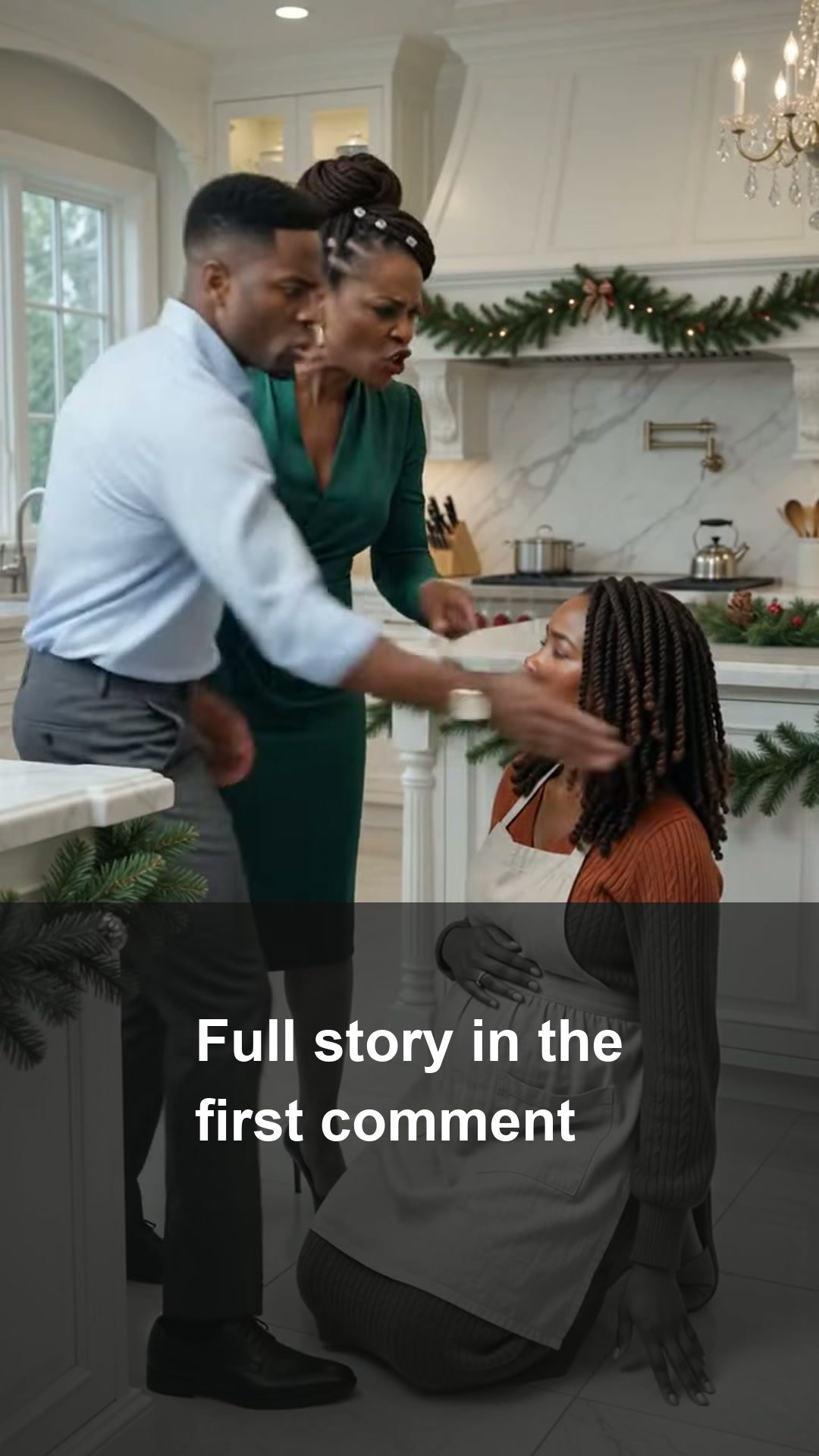
I remember the first time David raised his voice at me. It was three months after the wedding. We were in the kitchen, the marble countertops gleaming under the recessed lighting. I had misplaced his dry-cleaning receipt. It was a small, inconsequential scrap of paper, but when I told him I couldn’t find it, his face changed. The charm didn’t slip; it evaporated. He walked toward me, not with speed, but with a deliberate, suffocating weight.
You don’t understand the optics of this, Elena, he said, his voice dropping to a low, serrated edge. You are a reflection of my standing. If you can’t manage the small things, how am I supposed to trust you with the life we are building?
I stayed silent. I looked at the floor, focusing on the intricate grain of the wood, just like I had done when I was seven. I felt the familiar tightening in my chest, the instinctual urge to apologize, to smooth the path, to become the person who didn’t cause trouble. I felt the cold, familiar pull of the eggshell floor beneath my feet. I chose to stay small. I chose to look down.
But that night, I didn’t go to sleep. I lay in the dark, listening to the hum of the house, the silence ringing in my ears like a high-pitched alarm. I thought about my mother, how she had spent her life trying to maintain a house that was already burning. I thought about the way she had taught me to fear the sound of a closing door. I realized then that David wasn’t protecting me; he was pruning me, clipping away the parts of myself that didn’t fit into the silhouette of his professional image. He wasn’t a partner; he was a curator.
The pattern was so clear, so precise, it was almost laughable. Every argument ended with the same instruction: *Elena, you’re being irrational. Elena, let’s keep this private. Elena, your father’s blood is in your veins, and it’s making you hysterical.* He used my own history as a weapon, turning my father’s ruin into a warning of what would happen if I ever tried to stray. He made me believe that my only value lay in my ability to remain invisible.
I got up and walked to the closet, opening the small, locked box where I kept the old letters from my father. They weren’t letters of apology; they were letters of instruction, written in the frantic, precise handwriting of a man who knew he was being watched. *Observe the patterns, Elena,* one of them read. *They hide their cruelty in the rules they make for you. Break the rules, and you break the man.*
I looked at David sleeping in the next room, his face peaceful, innocent of the chaos he created. I remembered the way his mother, Sylvia, would arrive for dinner, her eyes scanning the room for dust, her tongue sharp enough to carve a person down to the bone. She would look at me, her smile tight and pitying, and say, It’s so brave of you to try, dear, even if you clearly weren’t raised for a house of this stature. She would pat my hand, her rings cold against my skin, and David would smile at her, a silent conspirator in the degradation of his own home.
I had been waiting for a reason to leave for years, but I had been waiting for permission. I had been waiting for a sign that I was allowed to exist outside of their expectations. But sitting there, in the dark, with my father’s letters in my lap, I realized that permission was just another rule. There was no secret to their power; it was entirely built on the assumption that I would never hit back.
I walked to the window and looked out at the estate. The trees stood like sentinels in the night, silent witnesses to the theater playing out behind the expensive glass. I saw the flash of a car pulling into the driveway, a late-night arrival, perhaps a client or a colleague coming to pay their respects to the man who owned the world. I didn’t feel the familiar fear. I felt a cold, sharp clarity. The cycle hadn’t started today, but it was going to end here, in this room, with the weight of everything I had been forced to bury finally rising to the surface. I looked at the digital clock, the red numbers pulsing in the dark. It was time.
My husband, David, paced the length of the marble-floored foyer, his cufflinks catching the chandelier light like shards of ice. He adjusted his silk tie for the tenth time, his vanity a rhythmic, nervous habit that masked the rot of his legal practice. He believed he was the architect of this evening, but he was merely a man building a house of cards on a fault line. Behind him, his mother, Sylvia, arranged the silk napkins on the dinner table with surgical precision. She prided herself on being the keeper of the family brand, yet her hands trembled—a tremor she hid by gripping the linen until her knuckles turned white. She had spent decades molding David into the image of his late, disgraced father, never realizing that by burying his humanity, she had ensured he would eventually devour her own reputation.
I stood in the shadow of the hallway, the weight of the digital recorder in my pocket pressing against my thigh like a live coal. My childhood had been a series of warnings from David about my father, Arthur, painting him as a monster who would ruin us. In truth, Arthur had been the only one to see the cracks in David’s foundation years ago. I remembered the scent of old paper in his library—my sanctuary—and the way he spoke to me, not as a possession, but as a person. His motive now wasn’t vengeance; it was the quiet, terrifying love of a man who knew he had failed me once and refused to do it again.
The doorbell chimed, a low, resonant note that cut through the sterile house like a knife. David froze. The smug veneer of the senior associate vanished, replaced by the panicked eyes of a boy caught stealing. He glanced at the mahogany desk where his work laptop sat, its screen glowing with the encrypted files that documented his fraudulent filings—evidence I had meticulously mirrored to a cloud drive hours ago. Sylvia stood paralyzed, her gaze darting to the door, realizing that if Arthur walked in, the social circle they had spent a fortune to infiltrate would finally see the cracks in their gilded mask.
I didn’t wait for them to recover. I walked toward the entrance, my pulse steadying for the first time in months. The contradiction of my life—the reserved wife who played the part of the fragile doll—collapsed into the reality of a woman who had finally chosen a side. I reached for the brass handle, feeling the cold weight of the metal under my palm.
David hissed, his voice a jagged whisper, “Elena, if you open that door, don’t think you’re coming back.”
I looked at him, really looked at him, and saw a man who had nothing left but his ego. I didn’t feel the need to argue; the time for words had passed when he ignored my requests for a doctor three hours ago. I tightened my grip, the door swinging inward to reveal the tall, imposing silhouette of my father. He didn’t look like a monster. He looked like an exit strategy. As I stepped over the threshold into the crisp, biting air, I felt the phantom weight of the house lift from my shoulders, leaving David to face the silence of his own making.
The interior of my father’s sedan smelled of old leather and menthol, a sharp, sterile contrast to the cloying scent of pine and roast duck that had permeated my clothes for months. Arthur kept his hands at ten and two, his eyes fixed on the winding driveway, his silence a heavy, protective blanket. I didn’t look back at the house, even when the porch light flickered and extinguished, plunging the manicured lawn into a darkness that felt like a mercy.
The first stop was the station. The precinct was a fluorescent-lit cavern, vibrating with the frantic energy of a Tuesday night. I sat on a molded plastic chair, my hands resting on the swell of my belly, listening to the rhythmic clicking of the officer’s keyboard. I recounted the evening, the medical neglect, the forced confinement, the patterns of intimidation that David had polished into a high-art form. When I finished, the officer didn’t look at me with pity; he looked at me with the weary cynicism of a man who had heard it all before. I signed the statement with a shaky hand, the ink blurring slightly against the page. It was a formal police report, a physical manifestation of my refusal to be a silent victim any longer.
The counter-action was instantaneous. My phone buzzed in my pocket before we had even pulled away from the curb. David’s name blinked on the screen, a series of frantic, vitriolic missed calls followed by a text: *You have no idea what you’ve started. Think about your reputation.* I didn’t think. I deleted the thread, then navigated to the banking app. With a few deliberate taps, I severed the joint accounts. I cancelled the credit cards tied to his firm, effectively cutting the arterial line of his control.
The next morning, the air in my father’s study felt thin. I sat across from a woman whose hair was pulled back with terrifying precision. Sarah, a lawyer specializing in high-asset divorces and domestic protection, didn’t waste time on pleasantries. She laid out a stack of documents, her pen poised like a scalpel. We weren’t just filing for separation; we were contesting the terms of our marriage contract and initiating a discovery process that would leave no corner of David’s professional life untouched.
As I initialed the pages, the consequence hummed in the atmosphere like a coming storm. By noon, my father’s contact at the firm confirmed that David had already been summoned to an emergency meeting with the senior partners. He hadn’t just been docked; he had been placed on forced administrative leave pending an investigation into the irregularities I had flagged earlier that morning. My evidence—the encrypted files I’d copied onto a thumb drive—were currently sitting on the lead partner’s desk.
I spent the afternoon at a private clinic. The technician was brisk, her movements efficient as she ran the sensor over my stomach. The monitor pulsed with a sound that felt like the only real thing in my life—a rhythmic, steady thud. I requested a secondary blood sample, the kind that held up in court, the kind that proved not just existence, but the timeline of my condition and the reality of the medical care I had been denied. When the nurse handed me the packet, she squeezed my hand, a silent acknowledgment of the war I was waging. I clutched the envelope, the DNA test results serving as a weapon for the custody battle that loomed in the distance.
I returned to the house I once called home, accompanied by my father, to collect my essentials. The front door was unlocked. Inside, the dining room remained set for a party that had imploded. Crystal glasses sat half-full, and the centerpieces were beginning to wilt. Sylvia was in the kitchen, her face a mask of porcelain rage. She didn’t scream. She merely watched me with eyes that searched for a crack in my resolve. When she realized I wasn’t there to negotiate, she picked up her phone, her fingers flying across the screen, likely alerting the neighborhood gossips, the socialites who curated our existence, that the narrative had officially shifted.
David stood in the doorway of the study, his suit disheveled, his eyes bloodshot. He looked at Arthur, then at me, and for a second, the mask of the charming, invincible lawyer slipped. He tried to speak, but the words were hollow, stuttering things that carried no weight. He looked small against the backdrop of his own trophies.
I didn’t offer a rebuttal. I walked past him, my boots clicking firmly on the hardwood, collecting my journals and the small bag of items I’d managed to pack before the chaos began. As I reached for the handle of the front door, the doorbell rang. It wasn’t a guest. It was a process server, holding a stack of papers so thick they required both hands. He looked at David, then at me, and announced in a flat, monotone voice that the court-ordered injunctions were being served.
The cycle was breaking, but the shrapnel was everywhere. I stepped out into the biting winter air, the wind whipping against my cheeks. My father opened the passenger door, and as I slid into the seat, I saw the neighbors peering through their curtains, the lights of their houses flickering like vultures watching a kill. I leaned my head against the cold glass, the exhaustion finally pulling at my bones, and watched the house go dark. I had pulled the thread, and the entire tapestry of my old life was unraveling, stitch by agonizing stitch, leaving me with nothing but the truth and a long, difficult road ahead. I closed my eyes, the silence of the car settling over me, and for the first time in years, the silence wasn’t something to fear. It was just space. Space for something else to grow.
The morning after, the quiet of the rented apartment was punctured not by the threat of Sylvia’s voice, but by the relentless, rhythmic pinging of my phone. I sat on the edge of a mattress that smelled of cheap laundry detergent and stale air, watching the screen light up with a gallery of notifications. The local legal blog had already picked up the story; a grainy photograph of David being escorted from his office by security guards, his suit jacket rumpled, his face a mask of shock, dominated the newsfeed. Friends I hadn’t spoken to in three years sent frantic, hollow inquiries, their messages oscillating between faux-concern and breathless curiosity. I held the device under the cold faucet in the kitchenette until the screen went black, the water numbing my fingers.
The front door of the complex buzzed. I didn’t move. My father, who had been sitting in the armchair by the window for three hours, stood up. He didn’t ask if I wanted him to answer it. He simply walked to the door and checked the peephole, his posture rigid as a sentry. Through the thin walls, I could hear the muffled, aggressive tone of a courier demanding a signature for a legal summons, likely the first of many. My father’s voice, low and devoid of the performative charm David had perfected, sent the man away with a clipped, final sentence that brooked no argument. He returned to his seat, his eyes heavy with a fatigue that mirrored my own.
I walked to the mirror in the hallway. My skin looked translucent, the bruise under my eye from the night of the collapse beginning to yellow. There was a hollow space in my chest where the anxiety used to live, a void that was slowly filling with the cold, sharp clarity of reality. I touched my abdomen. The baby had been quiet during the drive, but now, a soft, fluttering kick pressed against my palm. A sob caught in my throat, not of grief, but of profound, terrifying relief. I was no longer a prop in a suburban stage play; I was a witness to the collapse of a house of cards I had spent years helping to build.
My phone screen flickered to life again—an email from David’s firm. I opened the preview. They were offering a quiet settlement, a non-disclosure agreement that would vanish if I simply deleted the files I had gathered from his laptop. I looked at my father, who was watching the street below. He had destroyed one career before, and he knew the cost of the aftermath. He didn’t offer advice; he left the choice to me. I reached out and blocked the firm’s email address, then held the power button until the phone died completely. The silence returned, dense and heavy, but this time, it belonged to me. I walked into the kitchen, opened a tin of soup, and waited for the next demand to come, ready to ignore it. The life I had known was ashes, but for the first time, I could breathe.
The divorce decree arrived in a plain manila envelope, smelling faintly of the paper mill and ink. I sat on the floor of my studio apartment, the sunlight hitting the scuffed hardwood in a way that made the dust motes dance like tiny, suspended stars. I traced the signature line where David’s name had been officially crossed out by the state. My thumb hovered over the embossed seal of the family court. It was over. The settlement was meager compared to his former wealth, but it was enough to cover the rent for the coming year and the hospital bills for the baby. I didn’t care about the alimony or the house in the suburbs; I had already left the keys on the granite island the day I walked out.
I stood up and walked to the window. Down below, the street was quiet, save for a delivery truck idling at the corner. There was no one watching the front door anymore. No cameras, no security guards, no social obligations to perform for a neighborhood that hadn’t cared if I was drowning. My phone buzzed on the counter—a notification from an unknown number. I didn’t reach for it. I let it vibrate until the screen went dark, the silence rushing back in to fill the vacuum. I didn’t need to hear from him, and I certainly didn’t need to hear from his mother. Their voices, once the architects of my daily anxiety, had become background noise I finally knew how to mute.
I walked to the kitchen and pulled a bowl from the cabinet. It was chipped at the rim, a remnant of a garage sale I’d stopped at on my way out of town. I heated the soup on the stovetop, watching the steam rise in thin, curling ribbons. My hands were steady. The tremor that had plagued my movements for years had vanished, replaced by a strange, cold clarity. I took a spoonful, the metallic tang of the broth grounding me. This was the first meal I had made in three years that wasn’t designed to appease a palate that thrived on criticism. It was just food. It was just heat. It was just mine.
A soft knock sounded at the door. I didn’t jump. I set the spoon down, wiped my mouth, and looked at the deadbolt. It was my father. He had stopped by every Tuesday at noon, never staying longer than a cup of coffee, never asking for more than a nod. I unlocked the door and stepped back. He held a small bag of groceries in one hand and a stack of books in the other. He didn’t look at the mess of files on the floor. He simply nodded, set the bag on the counter, and sighed. The weight of the world was gone, but the foundation remained. I picked up the pen and signed my name on the final copy of the agreement, feeling the ink bleed into the paper, final and absolute. The hook was gone. The nightmare was buried. I looked at my father and, for the first time in my life, I didn’t need him to save me. I was already home.
The morning air in the small rental smelled of roasted chicory and damp cedar, a sharp, unperfumed scent that felt like a baptism. I stood in the kitchen, my bare heels pressing into the uneven grain of the hardwood floor. There was no hum of a high-end HVAC system, no vibration of hidden security cameras—just the rhythmic drip of the faucet and the distant, muffled barking of a golden retriever in the yard next door.
I sliced a loaf of sourdough, the crust yielding with a satisfying, honest crunch under the serrated blade. I didn’t worry about the crumbs on the counter; I didn’t reach for a cloth to erase my presence. I buttered a piece, the fat melting into the warm bread, and ate it standing up, savoring the salt and the yeast, knowing no one would comment on my appetite or the messy way I held the crust.
My father sat at the small pine table, his knuckles pale as he gripped his coffee mug. He looked at the stack of documents near the toaster, then up at me. You look like you’re finally exhaling, he said, his voice stripped of the gravelly tension he carried when he worked.
I am, I answered. I leaned against the counter, letting the weight of my shoulders drop. I don’t feel like I’m waiting for the floor to tilt anymore.
He studied my face, not with the predatory scrutiny of my former life, but with the quiet observation of a man watching a flower bloom in a dark place. He reached out and tapped the table. You’re done, aren’t you? Not just with him. With the needing to be perfect.
I looked at my hands, steady and still. I decided then that tomorrow, I would buy a dog. I would walk to the park and stop caring if my hair was windblown. The silence in the house didn’t feel empty; it felt like space, enough room for me and the child growing within me to simply exist. The latch on the front door clicked into place, and for the first time in three years, I didn’t reach to check the lock.
The morning air in my new kitchen tasted of nothing but tap water and toast. I watched the dust motes dance in a sliver of uncurtained sunlight, no longer frantic to scrub them away before guests arrived. My phone lay face down on the scarred pine table, its screen dark, untroubled by the vibrating pulse of expectations or the cold requirements of a social calendar. I picked up the heavy, cream-colored cardstock—an invitation to a gala that had arrived in the morning mail—and tore it once, twice, into jagged, indifferent pieces. I walked to the front door, opened it to the biting January wind, and let the scraps flutter into the driveway. They settled against the asphalt, face down in a dark, stagnant puddle of melted snow.
Leave a Reply