The judge’s gavel shattered against the mahogany, but the sound was swallowed by the sudden, violent thud of a heavy metal briefcase hitting the floor.
I stood in the center of the courtroom, the air thick with the smell of floor wax and stale panic. My knuckles were white, pressed hard against the polished wood of the witness stand. The silence stretched, brittle as dry bone.
Admiral Vance stared at the jacket I had draped over the railing. The fabric was stiff with old, oxidized blood. He didn’t look at the judge; he looked at the jagged hole where the shoulder had been cauterized by a plasma cutter.
“You weren’t supposed to be here, Donnelly,” he whispered, his voice cracking like a dry branch.
I didn’t blink. The phantom heat of the Hindu Kush fire flared in my peripheral vision, a familiar, scorching itch. I felt the weight of the hidden recorder in my vest, ticking down the seconds until the feed went live to the press gallery.
If I walked out now, I was a ghost. If I stayed, I was a target. I stepped forward, eyes locked on the exit. The doors were already closing.
The apartment smelled of stale air and the lingering ghost of burnt toast. I pressed my palm against the cool granite of the kitchen island, grounding myself in the stillness before the sunrise. Outside, the San Diego fog clung to the palms like a wet shroud, blurring the jagged silhouette of the harbor. My coffee maker chattered, a rhythmic, mechanical pulse that occupied the silence of the kitchen. I measured exactly two scoops of beans, the grit feeling coarse and predictable against my fingertips. Everything was measured. Everything was calibrated.
I walked to the window. A stray cat darted across the dumpster in the alley, its shadow stretched thin by the streetlamp. I didn’t think about the extraction point or the heat signatures that used to dance in my thermal optics. I thought about the stack of unpaid utilities on the counter and the squeak in my left shoe that I needed to fix with a dab of superglue. Life was a series of small, manageable problems.
The train ride to the hospital was grey and crowded. I stood in the vestibule, clutching the cold metal pole as the carriage swayed. A man in a tailored suit typed furiously on his phone, his thumb moving in a jagged, anxious rhythm. I watched the blurred buildings rush past, a smear of concrete and glass. I was just another commuter, a faceless entity in scrubs, blending into the morning rush with the practiced invisibility I had spent years perfecting.
At the hospital, the air was sharp with the scent of antiseptic and floor wax. I clocked in at exactly 06:45. The electronic beep of my badge was the most honest sound I heard all day.
Hey, Donnelly, you see the weather? Sarah asked, not looking up from her charts. She was frantically clicking her pen, a nervous tic that usually signaled a heavy shift.
Humidity is climbing, I said. I pulled on my latex gloves, the snap of the elastic against my wrists providing a clean, final punctuation to the thought.
I moved to the supply closet to organize the IV trays. The order was soothing. Gauze on the left, saline bags stacked by weight, catheters aligned like soldiers in a barracks. I knew where everything was. I knew how long it took for a wound to reach the clotting stage. I knew how to stabilize a pulse before the shock took hold. But here, the stakes were dictated by policy and protocol, not by who was holding the higher ground.
My pager flickered on my belt, a dull orange light in the dim closet. I ignored it for a second, focusing on the way the light caught the dust motes dancing in the air. The printer down the hall whirred to life, spitting out a patient intake form with a dry, rhythmic clatter. It was a mundane soundtrack to a life that had finally stopped trying to kill me. I felt the familiar weight of my stethoscope around my neck, a heavy, grounding loop that reminded me I was here, in the present, not in the mountains.
I stepped out into the hallway, ready to start the rounds, to ask patients about their pain levels and to chart the progress of their healing. My phone, tucked into the side pocket of my scrubs, gave a single, sharp vibration against my thigh. It wasn’t the ping of a text or the buzzing of an email. It was the specific, jarring tone I hadn’t heard since the day I walked away from the service. I reached into my pocket, my fingers brushing the smooth glass of the screen, and pulled it out. The caller ID was blank. Just a string of zeroes.
The sterile white of the hospital hallway felt too bright, a stark contrast to the darkness that settled in my gut as I stared at the zeroes. I pressed the phone to my ear, the plastic backing cold against my skin. The silence on the other end was absolute, a dead-air weight that felt like an old friend returning to haunt me.
“Claire,” a voice whispered. It was thin, rasping, like paper dragging over gravel.
“Who is this?” I asked. My voice was steady, the triage tone I used to tell mothers their sons weren’t coming home.
“The extraction didn’t end in the Kush, Claire. We’re still bleeding out.”
A crash echoed from the nearby trauma bay, followed by the frantic shouting of a nurse. I turned my head, the hospital lights blurring into streaks of neon. I saw Mason stumbling through the double doors, his shirt soaked in a dark, spreading stain that wasn’t his own. He was clutching his ribs, his face a map of pale, jagged lines. He looked past the staff, his eyes locking onto mine with the desperation of a man drowning in open air.
“Mason?” I let the phone drop to the linoleum. It hit with a dull thud, the call still active, an umbilical cord to a past I had buried in the dirt.
He didn’t speak. He collapsed, his knees hitting the floor with a sickening crack. I didn’t think; I moved. I was at his side before the charge nurse could reach the intercom. I knelt, my hands instinctively finding the source of the heat on his chest. It was a jagged puncture, a professional strike—not a stray bullet, but a measured, surgical entry point.
“Don’t,” he choked out, his fingers clawing at my wrist. His skin was freezing, the sweat on his brow turning to ice. “They’re watching, Claire. They saw me come here.”
“Shut up and breathe,” I commanded, pulling a roll of gauze from his tactical vest, which he’d hidden under a heavy trench coat. The material felt like a ghost in my palms. It was the same weave as the gear we wore in the mountains, the same smell of dust and cordite.
I looked up, scanning the crowded waiting room. A man in a charcoal suit stood near the vending machines, his posture too rigid, his eyes fixed on us with a clinical detachment. He wasn’t waiting for a doctor. He was waiting for the light to go out.
I felt the pulse in Mason’s neck flutter like a trapped moth. I realized then that my anonymity was gone; the moment I pressed my palm to his wound, I had signaled to the ghosts that I was done hiding. I had to choose: save him and step into the crosshairs, or let him bleed and keep my life quiet. I pulled the gauze tight. The decision was already made. I looked at the man in the suit, and for the first time in years, I didn’t blink.
The hospital corridor smelled of bleach and floor wax, a sterile scent that failed to mask the metallic tang of blood on my knuckles. I pressed the phone against my ear, the plastic casing slick with sweat. My father picked up on the third ring, his voice a gravelly echo of the man who had taught me to strip a rifle in the dark. I asked him about the Hindu Kush manifest, the one that supposedly didn’t exist. He went silent, the only sound the rhythmic ticking of a wall clock in his study. He told me the extraction records were burned in 2020, every page turned to ash to protect the contractors. I hung up before he could ask why I was digging, my heart a dull, heavy stone. If the records were ash, why did the man in the charcoal suit have my file in his breast pocket?
I walked into the lobby of the Grand Pacific Hotel, the air thick with the smell of expensive lilies and floor polish. The night manager, a man whose skin looked like wet parchment, didn’t look up from his ledger. I asked about the room registered under the defense firm’s alias. He didn’t blink. He said the room had been empty for a week, cleaned and aired out. I leaned over the mahogany desk, catching my reflection in the polished wood—tired eyes, a jagged scar on my jaw. I told him he was lying, that the trail was still warm. He tapped a key, his fingers trembling, and said a woman with a military patch on her bag had checked out three hours ago. He didn’t know her name, only that she had paid in cash.
I drove toward the nursing station at Pacific Mercy, the city lights blurring into long, neon streaks through the windshield. My pulse was a steady, combat-rhythm hum. I reached Sarah, the day-shift charge nurse, while she was restocking a cart. She didn’t look at me, her hands moving with practiced, frantic precision. I asked about the knife, the one seized from the scene. She dropped a box of syringes. It made a sharp, clattering sound against the tile. She whispered that the evidence locker had been audited at dawn, but the locker assigned to my unit’s incident was empty. She said the supervisor claimed it had been moved to federal storage. I looked at her, seeing the terror she couldn’t hide behind her mask.
I turned the corner, my boots echoing against the linoleum. My mind ran the triage: the manifest was destroyed, the room was empty, the evidence was vanished. Each lead was a severed artery. I needed to find the witness, Paige Moreno, before the suit finished his work. I pulled the car into the gravel lot behind her apartment complex, the engine ticking as it cooled. A single light burned in a second-story window. I checked my pockets for the knife I wasn’t supposed to have, then stepped out into the humid night. The silence of the street was unnatural, a vacuum waiting to be filled. I pushed the gate open. It groaned, a low, rusted warning, and I stepped into the shadows.
The wood of the front door was soft with rot near the lock, yielding to a firm shove without a protest. The apartment smelled of cheap floral air freshener and the metallic tang of dried blood. I didn’t draw the knife. I moved toward the kitchen, my boots silent on the laminate flooring that had bubbled in the heat. Paige sat at the small, laminate table, her back to me. She was staring at a single glass of water, her fingers tracing the rim with a rhythm that suggested she had been doing it for hours. A stack of legal documents lay shredded on the floor, the heavy cream paper torn into confetti. She didn’t turn when I entered, but her breathing hitched, the sound of a shallow, uneven intake that signaled a lung injury I couldn’t see. My hand hovered over her shoulder, feeling the heat radiating off her trembling frame. She was terrified of the silence, of the room, of the invisible weight pressing down on the walls. I didn’t offer comfort; I offered a diagnosis. I knelt, catching her gaze in the reflection of the glass. Her eyes were blown wide, pupils pinned to the point of disappearing. She had been bought, broken, and left to rot in plain sight. I felt the old, cold detachment of the Hindu Kush settle into my marrow, the part of me that viewed human life as a series of failing systems. I needed her to speak, to anchor the truth before the last of her courage dissolved into the floorboards. I reached out and took her hand, steadying the tremor in her wrist. The silence between us grew heavy, thick with the smell of the impending storm. She looked at my hands, then up at my face, her lips turning pale. She leaned in, her voice barely a whisper above the hum of the refrigerator. Tell them I was already dead.
The kitchen floor in my childhood home was linoleum, patterned with yellowed sunflowers that peeled at the corners. I was eight years old, kneeling on the cold floor, trying to superglue the handle of a ceramic mug my mother had dropped during one of her silences. My father stood by the counter, his back rigid, a glass of amber liquid in his hand. He didn’t look at me, but he spoke with that precise, jagged tone that meant a storm was brewing. Do you see what happens when you hold onto things too tightly, Claire? he asked, his voice flat. He didn’t wait for an answer. He threw the empty glass into the sink. It shattered, a sharp, crystalline sound that vibrated in my teeth. I didn’t flinch. I just finished gluing the handle, my fingers sticky with chemical residue, watching the line where the two halves met. I decided then that if I held things together well enough, nobody would notice they had been broken in the first place.
Years later, the high school gymnasium smelled of floor wax and stale sweat. My brother, Leo, was sitting on the bleachers, his varsity jacket bunched up under his chin. He was nineteen, a year older, and he looked smaller than I remembered. He had been kicked out of university for a gambling debt he couldn’t cover, a debt that had quickly morphed into something far more dangerous. He picked at a loose thread on his sleeve, his eyes darting toward the heavy steel doors of the gym. They’re coming, Claire, he whispered, his voice cracking. He didn’t ask for help; he expected it. I felt the familiar weight of the responsibility I had inherited, the unspoken pact that I was the one who kept the foundation from collapsing. I reached into my bag and pulled out the envelope I’d been saving for tuition. I handed it to him without a word. I didn’t ask how much he owed or who he owed it to. I just watched him walk away, knowing that I had bought him time, not safety. I chose to be the anchor, believing that if I was strong enough, I could hold back the tide for both of us.
The apartment in Colorado felt like a mausoleum during my marriage. Mark sat at the small, square table, his laptop open, the blue light washing out his features. He was an officer, a man of logistics and clean edges, the kind who treated our life like a spreadsheet that needed balancing. I had just returned from a rotation, my boots still caked in the dust of a base that didn’t technically exist on any map. I was trying to explain the extraction, the way the air felt when the transport went down, the sound of the men screaming as the fire took them. Mark didn’t look up from his screen. Claire, he said, his tone clinical, you’re bringing the war into the kitchen. I looked at the table—the pristine placemats, the expensive silverware—and felt a sudden, violent urge to flip it over. I realized then that he didn’t want a wife; he wanted a ghost who could maintain the domestic aesthetic of a successful career. I didn’t shout. I went to the closet, took my duffel bag, and packed the few items that were mine. I left the wedding ring on the coaster. I decided that the silence between us was a terminal diagnosis, and I had already learned how to pronounce time of death.
The training base in the Hindu Kush was a landscape of jagged rock and biting wind. I was the medic, the one tasked with stitching together the pieces of men who had been treated as expendable by the contractors funding our existence. I sat in a bunker, the radio static humming in the background, cleaning a surgical kit that never felt sterile enough. My commander, a man whose name was whispered in the corridors of power like a prayer to a dark god, walked in. He tossed a folder onto the table. We’re scrubbing the manifest, he said, his eyes empty of anything resembling humanity. You’ll sign off on the triage reports for the ones we leave behind. I looked at the names on the list—men I had eaten with, men I had shared breath with. My hands stopped shaking. The detachment I had cultivated since the kitchen floor took over, turning my empathy into a diagnostic tool. I signed the documents because I knew that if I didn’t, there would be no one left to witness the truth, however buried it might be. I chose to stay in the dark, believing that being the record-keeper was a form of protection.
Back in the present, the memory of the fire—the heat, the smell of melting plastic, the way the skin of the fallen felt like charred parchment—burned behind my eyelids. I remembered the way my father looked at me when I finally left home, a look of profound, quiet disappointment, as if my refusal to be broken was a personal insult. I remembered the way Leo never called after he vanished, the money I gave him having been nothing more than a temporary bandage on a hemorrhage. The patterns were loops of iron, circular and suffocating. I had spent my entire life trying to be the medic who could fix the unfixable, the daughter who could stand in the debris of her parents’ misery without blinking, the wife who could swallow her own history to keep the peace. I had traded pieces of myself for the illusion of control, believing that if I held the pieces of other people together, I would eventually be granted the right to hold myself.
I looked at Paige, her eyes glassy, her hands trembling in mine. She was the mirror I had spent decades avoiding. She was the result of a system that demanded silence as the price of survival, a system I had been complicit in by merely existing within it. I realized that the reason I reacted to her with such visceral, cold precision was because I recognized the weight of her burden. I had carried that same weight until my spine bent, until I learned to walk with my head down, until the only place I felt comfortable was in the triage tent, where the problems were physical and the solutions were binary. She was asking me to break the pattern, to stop being the one who cleans up the blood and starts being the one who makes the mess.
The courtroom air felt thin, like the oxygen at high altitudes. I thought of the admiral, the way his face had shifted when he recognized me, the recognition of a ghost he had tried to consign to the ash heap of history. I thought of the knife, the evidence that had vanished, the way the world bent to accommodate the people who owned the contracts, the people who owned the judges, the people who owned the silence. I had spent my life thinking that if I was quiet enough, if I was invisible enough, I could outrun the ghosts. I was wrong. The ghost was already in the room, and she had finally decided to speak. I tightened my grip on Paige’s hand. I realized that my entire life had been a long, slow preparation for this single, terminal moment. I wasn’t just saving her; I was reclaiming the parts of myself I had superglued back together years ago. I decided to let the silence shatter. I looked up at the witness stand, my pulse steady, my mind clear of the debris of my past, and I prepared to tell them exactly what the fire had cost.
The witness box creaked under Paige’s shifting weight, a dry, rhythmic sound like bone on bone. She clutched a glass of water, her knuckles white, the condensation pooling in the creases of her palm. She had spent two years as the perfect corporate trophy wife to a man who didn’t exist, trading her testimony for a gated life in La Jolla that felt more like a mausoleum. She wanted to be the victim, but her eyes kept flicking to the gallery where her brother sat, the man who had traded his morality for a Langston pension. He stared at his shoes, his posture a collapsed bridge. I saw the way he shifted his weight, his internal war flickering in the twitch of his jaw; he loved the money, but he hated that he’d bought it with his sister’s voice.
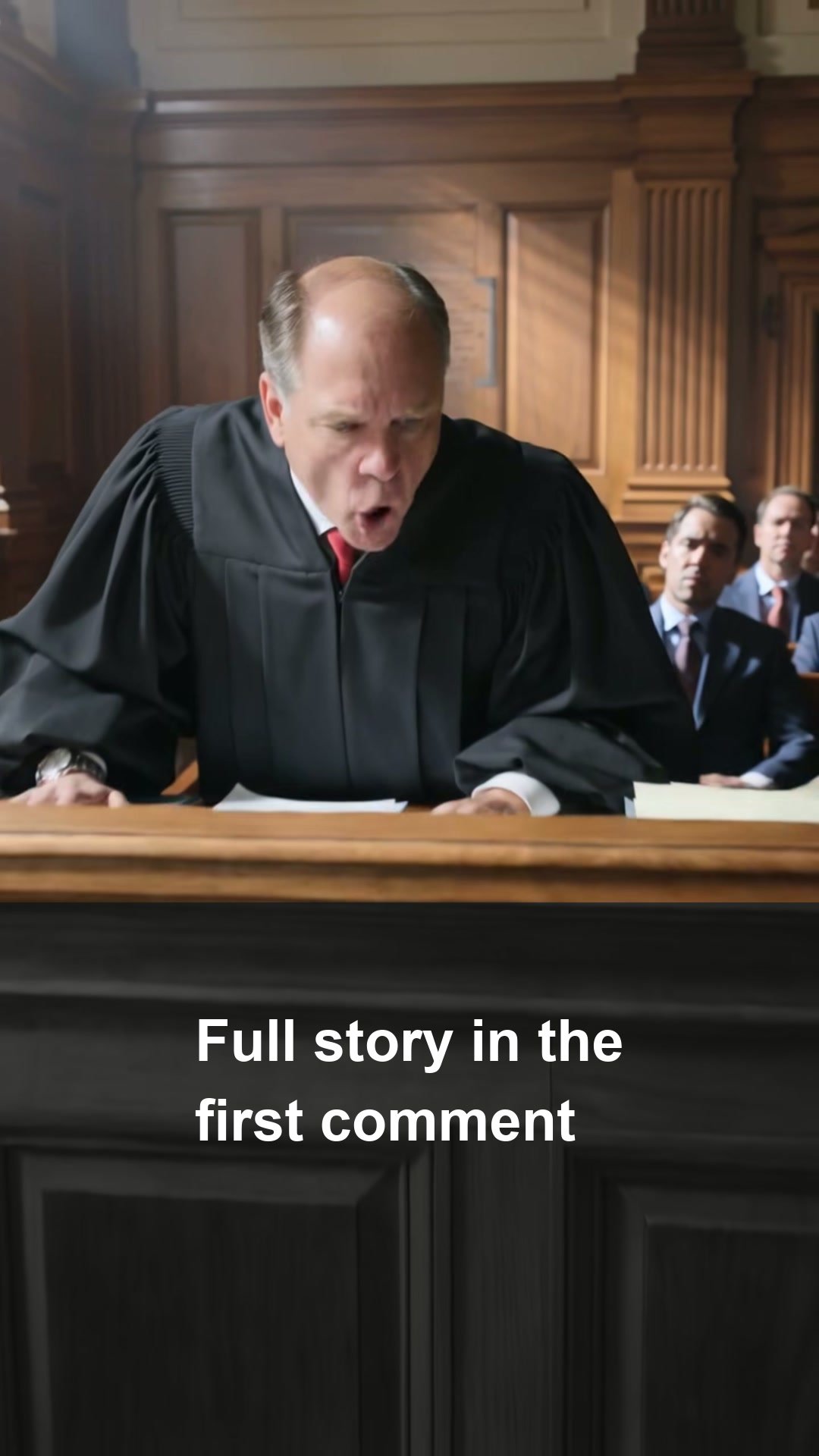
I looked toward the defense table where my lawyer, Elias, tapped a pen against his chin. He was a man of precise, sterile movements, a corporate shark who had spent his career burying secrets until he stumbled upon mine. He was motivated by a crushing, late-life need for redemption that sat uncomfortably beneath his silk suit. He hated the system he served, yet he could not imagine existing outside its hierarchy. He didn’t look at me; he looked at the judge, Judge Sloan, who sat with his hands folded into a steeple of polished marble. Sloan was a creature of habit, a man who measured justice by the prestige of the firm representing the defendant. He had forgotten that he was once a clerk who believed in law; now, he only believed in the durability of his own legacy. He leaned forward, his skin the color of old parchment, and cleared his throat.
The room went cold. Mason, the man I was here to save, sat shackled in his orange jumpsuit. He looked at me, not with gratitude, but with the weary, distant recognition of a fellow casualty. He had been a soldier who believed in orders until the orders turned into fire. His contradiction was his silence; he could have cleared his name months ago by naming his superiors, but he held the secret like a hot coal, terrified that if he opened his hand, he would burn everyone he had ever loved. He looked at Paige, then at me, his gaze lingering on the scar beneath my hairline.
I felt the weight of the courtroom pressing in, the air thick with the smell of floor wax and perfume. My father’s old watch ticked against my wrist, a reminder of a man who died believing the military was a meritocracy. I had served to honor a ghost, only to realize the ghost was a lie. I decided then that I wouldn’t testify for the record; I would testify for the dead. I stood up, the wood of the bench scraping against the floor like a scream. I didn’t wait for the bailiff to gesture. I walked toward the stand, my boots silent on the marble, feeling the eyes of every person in the room—the corrupted, the compromised, and the lost—fixed on my spine. I was the medic, and the triage assessment was clear: this entire structure was bleeding out, and I was the only one with the tourniquet. I caught the Admiral’s eye in the back row; he reached into his pocket, his hand hovering over the coin he had carried for years, his face a map of regret. I knew then that the truth wasn’t a weapon; it was a contagion. I reached the stand and took the oath, my voice steady, my past finally bleeding into the present. The silence shattered.
The air in the courtroom tasted of ozone and dry rot. I placed my hand on the Bible, the texture of the grain pressing into my calloused palm, and looked at the gallery. Langston sat in the front row, his suit jacket sharp enough to draw blood, his thumbs hooked into his vest pockets. He didn’t blink. I didn’t either. I stated my name for the record, the syllables clipped and devoid of the deference the court expected. When the prosecutor asked me to detail the 2020 extraction, I bypassed the narrative fluff. I gave him the coordinates, the casualty count, and the specific serial numbers of the abandoned munitions. The judge’s gavel hit the wood, not once, but three times, a frantic, splintering sound. He tried to sustain an objection that hadn’t been voiced. I kept talking, my voice a rhythmic, clinical pulse.
That evening, I didn’t go home. I went to the precinct on 14th Street. The precinct smelled of stale coffee and industrial cleaner, a scent that triggered a phantom ache in my shoulder. I sat across from Detective Miller, a man whose desk was piled so high with files it looked like a tomb for cold cases. I slid a thumb drive across the scarred laminate surface. It contained the decrypted communications between Langston’s holding company and the shadow contractors who had signed off on the Hindu Kush extraction. Miller looked at the drive, then at me, his eyes tracking the tremor in my left hand. He didn’t touch the drive. He leaned back, his chair groaning under his weight. He told me that filing a report against a Langston affiliate was a quick way to lose a pension, or worse. I didn’t argue. I left the drive on his desk, stood up, and walked out before he could hand it back. By the time I reached my car, my phone buzzed with a notification from my bank. My direct deposit had been flagged as fraudulent, and my entire savings account was locked, pending an internal investigation into suspicious activity.
I drove to the office of Elias Thorne, a lawyer who specialized in military litigation and who had spent the last decade trying to get his license revoked for being too loud. His office was a claustrophobic suite above a pawn shop. I didn’t wait for the receptionist to announce me. I walked into his inner sanctum, where the walls were covered in framed letters of rejection from the Supreme Court. I tossed my remaining cash and the few pieces of jewelry I had left onto his desk. I told him I needed to contest the military records that labeled me AWOL instead of honorably discharged. He looked at the pile, then at the bruises on my knuckles. He didn’t ask how I got them. He simply opened a fresh legal pad and told me that if we started this, the military would come for my head and Langston would come for my life. I nodded. He began to draft the motion.
Three days later, I received a certified letter from the hospital board. I sat in the breakroom, the humming of the vending machine vibrating through my back, and stared at the letterhead. My HR file had been updated. They were citing a discrepancy in my credentialing, alleging that my combat medic certifications were forged. It was a formal complaint, the first step toward firing me and stripping me of my license. I walked to the head administrator’s office, the sterile linoleum clicking under my boots. I didn’t wait for his assistant to buzz me in. I pushed the door open. He was on the phone, his face pale as he looked at me. I placed a copy of my original enlistment papers, stamped with the Pentagon seal, on his desk. I told him if he wanted to play by the rules of the board, we would play by the rules of the federal court. He stopped talking into the receiver. He looked at the document, his eyes widening as he realized the names listed on the signature line were men who were supposedly dead.
I didn’t stop there. I went to the local lab, the one that handled paternity and legal disputes. I provided the sample they needed for the DNA test. It was a long shot, but it was the only way to link the blood found on the knife in the evidence locker to the soldier who had been silenced three years ago. The lab technician wore plastic gloves that creaked in the silence. He told me the test would take weeks. I told him he had forty-eight hours. I handed him an envelope with a judge’s order that Thorne had pulled from a clerk’s office at three in the morning. The technician took the envelope, his hands shaking.
The consequences arrived before the sun set. My car was towed from its spot in the hospital garage, the police claiming it had been reported stolen—by me. I walked home, the city lights blurring into long, jagged needles of neon. When I reached my apartment, the door was ajar. I didn’t pull my weapon; I didn’t have one. I walked into the dark, the scent of expensive cologne lingering in the air. A man in a grey suit stood by my window, looking out at the skyline. He turned, his face illuminated by a passing headlight. He told me to drop the lawsuit, to go back to the hospital, and to forget the Hindu Kush. He said there was a place for me in their new world, a place far away from the wreckage of my own making. He stepped toward me, a checkbook in his hand, his eyes cold and devoid of any human empathy. I looked at the check, then at the jagged shadow he cast against the wall. I realized then that the triage had worked. I had forced them into the open. I pushed past him, grabbed my bag, and headed for the stairs. I had one more filing to make, and I knew exactly which judge would be forced to sign it. The escalation had reached the point of no return; we were both going to break, but I knew which one of us was made of steel.
The courthouse steps were a sea of shifting lenses and frantic microphones, a chaotic ecosystem of news crews and protestors that had swallowed the sidewalk whole. I stood at the top of the granite stairs, the cold weight of the documents in my bag feeling like a lead vest. A reporter from a national network shoved a boom mic toward my face, the foam cover brushing my chin. Ms. Donnelly, are you aware that Langston’s stock plummeted ten percent in the last hour? His voice was high, frantic, vibrating with the hunger of a breaking story. I didn’t look at the lens. I didn’t look at the faces pressed against the police barricades, their signs screaming about blood money and ghosts. I looked at the horizon, at the thin line where the sky met the Pacific, trying to calibrate my pulse to a steady, rhythmic thrum. The cost was no longer private; it was a public inventory of every scar I’d ever hidden. My phone buzzed in my pocket, a persistent, jagged vibration against my thigh. It was a text from the charge nurse at Pacific Mercy. They’d scrubbed my name from the shift board. I was an administrative liability.
I pushed through the swarm, my movements calculated to minimize contact. A man in a suit tried to block my path, holding a business card like a holy relic, but I pivoted, my combat-honed gait cutting through the crowd like a knife through gauze. I reached the bottom step, where the air felt thinner, cleaner. My neighbor, Sarah, was standing near the edge of the police line. She held a protest sign, her knuckles white, her expression caught between fear and a fierce, terrifying pride. When she saw me, her jaw tightened. She didn’t wave. She didn’t call my name. She simply stepped back to let me pass, a silent acknowledgment that the woman who lived in 4B was a stranger to the woman currently burning down the city’s power structure. The divide was absolute. I walked toward the parking garage, the sound of the crowd rising behind me into a dull, oceanic roar.
I reached my car and leaned against the driver’s side door, my breath coming in shallow, controlled bursts. My hands were finally shaking, a delayed reaction to the adrenaline dump. I realized then that I wasn’t just fighting a defense contractor; I was dismantling the life I had painstakingly built in the vacuum of my silence. Everything—the quiet shifts at the ER, the sterile routine, the anonymity—was collateral damage. I reached into my bag and pulled out the file. The court clerk had looked at me with open pity when I handed it over, as if I were a suicide bomber of my own reputation. I looked at the steering wheel, the leather worn thin by years of driving to and from a hospital that now wanted me gone. I had the truth, but the truth had an eviction notice. I turned the ignition, the engine catching with a harsh, metallic rattle. My phone buzzed again. A call from an unknown number. I didn’t answer. I put the car in gear and turned toward the highway, watching the courthouse recede in the rearview mirror until it was nothing more than a jagged, grey tombstone against the skyline. I knew the next few hours would be a triage of scorched earth, and I was the only one left to perform the surgery.
The courtroom bench smelled of lemon wax and stale air. Judge Sloan sat motionless as the federal marshals tightened the cuffs around his wrists, the metal clicking with a finality that silenced the gallery. I watched the steel bite into his suit sleeve, feeling the hum of the room shift from frantic whispers to a heavy, stagnant calm. The charges against Mason were dismissed with prejudice; he stood by the defense table, his shoulders dropping two inches as if a physical weight had been lifted from his spine. I didn’t cheer. I checked the time on my watch, the triage clock in my head already ticking toward the start of my shift at Pacific Mercy.
I left the courthouse through the basement exit, the San Diego humidity sticking to my neck. My apartment was a mess of half-packed cardboard boxes, but the olive jacket—the one stained by the Hindu Kush dust and blood—was finally hanging in the hall closet, the zipper closed, the patch hidden from view. I walked to the kitchen and made coffee. Paige was there, sitting at the small laminate table while Mason poured the water. They didn’t talk about the trial. They talked about the weather and the cost of eggs, the cadence of their voices lacking the frantic, jagged edge of the past months. I didn’t interrupt. I drank my coffee black and felt the tremors in my hands finally taper off, the muscles slackening after years of bracing for an impact that would never come.
Later, at the hospital, the locker room was empty. I opened my locker and found it sitting on the middle shelf: a single, unadorned silver coin. No note, no signature. Just the cold weight of a debt marked paid. I placed it in my pocket, the metal smooth against my thumb. The administrative overhaul had stripped the halls of the executive brass who had tried to bury my records, leaving the floor quiet and clinical.
I took the service elevator to the roof during my break. The sun was dipping below the horizon, bruising the clouds in shades of deep violet and charcoal. I leaned against the rusted railing, looking down at the city grid. The lights were flickering on, one by one, like a patient’s monitor stabilizing. I didn’t have to look over my shoulder anymore. I didn’t have to rehearse my exit strategy. For the first time since the extraction, I took a breath that didn’t catch in my throat. The ghosts were still there, but they were finally behind me. I turned back toward the door, my shift beginning.
The hallway outside my apartment smelled of floor wax and the faint, lingering scent of the neighbor’s burnt toast. I reached into my closet, my fingers brushing the heavy wool of the olive jacket I had kept draped over a kitchen chair for months. I didn’t fold it. I hung it on a wooden hanger, the fabric settling against the wall, silent and weightless.
Mason was in the kitchen. The sound of a metal spatula scraping against the cast-iron skillet was rhythmic, almost musical. He looked up as I entered, his movements fluid rather than the jagged, careful motions he’d used since the trial.
Do you want the eggs over easy? he asked.
I sat at the small, wobbly table. Just the edges crispy, please.
He didn’t look back at the door. He didn’t track the movement of the delivery trucks on the street below. He simply plated the food, sliding a ceramic dish toward me. The steam rose in a thin, steady curl, carrying the smell of butter and black pepper. We ate in a silence that didn’t feel heavy. It was the absence of noise, not the suppression of it. I watched his hand; it was steady, the tremors that had plagued him for years finally absent.
I think I’m going to go to the park, I said, pushing my plate back.
He nodded, a small, genuine smile tugging at his mouth. Take the long way through the garden. The jasmine is blooming.
I walked out into the cool morning air. A stray golden retriever, its collar jingling, trotted toward me and leaned its weight against my knee. I knelt, my hands resting on its coarse fur, and realized my palms weren’t clammy. I stood, looked toward the horizon, and kept walking, the path ahead clear and entirely my own.
I reached the marble steps of the courthouse, the granite cold beneath my heels. The heavy brass doors were already locked for the evening. I pulled the small, serrated blade from my pocket, the one the police had claimed never existed, and placed it on the ledge of the judge’s bench just inside the glass vestibule. It sat there, a jagged, silver sliver against the pristine, sterile white stone. I turned away, the city lights beginning to pulse against the dusk. At the curb, I reached into my bag and pulled out the old olive-drab jacket. I folded it once, twice, and tucked it into the bottom of a nearby donation bin. I didn’t look back. My hands remained still, tucked firmly into the pockets of my own clean, civilian coat.
Leave a Reply