Imagine a world where the very idea of a nation hung by a thread, its future uncertain, its survival dependent on untested leadership. Then, picture another time, centuries later, facing unprecedented global crises, technological upheaval, and deep societal divisions. These are the defining moments that forge great leaders, and America has seen both.
From the revolutionary battlefields to the intricate web of 21st-century geopolitics, the challenges of leading a nation have transformed dramatically. Yet, the core principles of effective leadership—vision, integrity, and resilience—remain timeless. We’re about to uncover how the foundational leadership of George Washington set an enduring precedent, and what crucial lessons current leaders can draw from his extraordinary example.
The Crucible of Creation: Washington’s Uncharted Path
George Washington’s presidency was unlike any other. He wasn’t just governing; he was *inventing* the presidency itself. Every decision he made, every action he took, established a precedent that would shape the office for generations to come. He stepped into a vacuum of power, tasked with transforming a collection of rebellious colonies into a unified republic.
His challenges were monumental: a nascent economy, a fractured political landscape, and the constant threat of foreign interference. The nation was deeply in debt from the Revolutionary War, and the very concept of a federal government was met with suspicion by many. Washington had to inspire trust and demonstrate the viability of a democratic experiment in a world dominated by monarchies.
“To be prepared for war is one of the most effective means of preserving peace.” – George Washington
Washington understood that his personal conduct was inextricably linked to the perception of the new government. He meticulously cultivated an image of dignity and republican virtue, deliberately avoiding any semblance of monarchy. This was a crucial psychological battle, convincing a skeptical populace that their elected leader would not become another king.
Building the Foundation: Uniting a Divided Nation
One of Washington’s most significant accomplishments was his ability to foster unity among disparate states and factions. The early American political scene was rife with ideological clashes, particularly between Federalists and Anti-Federalists. Washington, though a Federalist himself, sought to bridge these divides by appointing a diverse cabinet, including fierce rivals like Alexander Hamilton and Thomas Jefferson.
He navigated regional loyalties and economic interests, working tirelessly to bind the states into a cohesive whole. His leadership during events like the Whiskey Rebellion demonstrated both the strength and the restraint of the federal government, proving that the new republic could enforce its laws without resorting to tyranny.
- Establishing Federal Authority: His response to the Whiskey Rebellion solidified the power of the central government.
- Economic Stability: Supported Hamilton’s financial plans, including the creation of a national bank.
- Foreign Policy Neutrality: Advocated for avoiding entangling alliances, a principle that guided U.S. foreign policy for decades.
Washington’s Farewell Address, a timeless masterpiece of political wisdom, warned against the dangers of partisan divisions and foreign entanglements. It was a profound appeal for national unity and a guide for future leaders, emphasizing the importance of shared values over factional interests.
The Modern Maze: Navigating Global Complexity
Fast forward to today, and the challenges facing leaders are vastly different in scope and nature. While the fundamental need for strong leadership remains, the context has expanded exponentially. Modern presidents grapple with an interconnected world where a crisis in one corner of the globe can have immediate, cascading effects worldwide.
Consider the complexity of modern global challenges: climate change demanding international cooperation, pandemics requiring coordinated health responses, cyber warfare threatening national infrastructure, and economic interdependence creating intricate supply chain vulnerabilities. These issues are often borderless, requiring a nuanced understanding of international relations and technology.
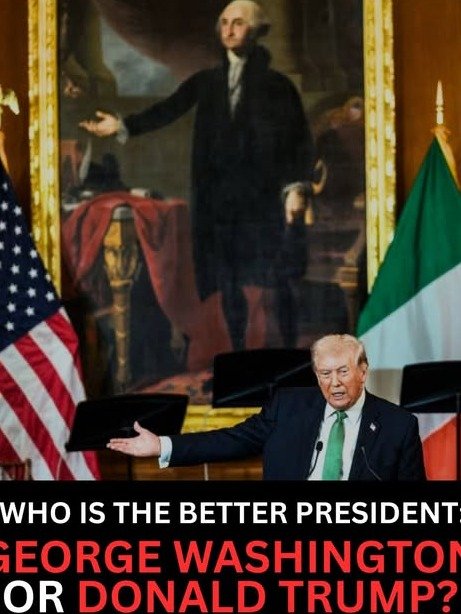
The speed of information, or often, misinformation, also presents a unique challenge. Social media and 24/7 news cycles mean that leaders must communicate effectively and transparently, often in real-time, while battling narratives that can rapidly undermine public trust and cohesion.
Leadership in the Digital Age: Transparency and Trust
Where Washington communicated via horseback and printed pamphlets, modern leaders speak to billions with a single tweet. This instantaneity demands a new level of accountability and authenticity. The public expects immediate answers, and every action is scrutinized under a global microscope.
Building trust in an era of deep polarization and skepticism is perhaps the greatest modern leadership challenge. Leaders must not only present solutions but also explain them convincingly to diverse audiences, often against a backdrop of entrenched political and ideological divides. The very fabric of public discourse is often strained, making consensus-building an arduous task.
“The price of greatness is responsibility.” – Winston Churchill (reflecting a timeless sentiment applicable to all leaders)
The ability to unite a nation, even temporarily, around a common purpose – be it a health crisis, an economic downturn, or a national security threat – is a testament to effective modern leadership. It requires empathy, strategic communication, and the capacity to synthesize vast amounts of complex information into actionable policies.
Timeless Virtues: Lessons from Washington for Today
Despite the vast chasm of time and technology, the core virtues that made Washington an indispensable leader are still profoundly relevant. His unwavering commitment to public service, his ability to prioritize the nation’s long-term interests over personal gain, and his steadfast resolve in the face of adversity offer invaluable lessons.
Washington understood the power of setting a moral example. He voluntarily stepped down after two terms, establishing a peaceful transfer of power, a cornerstone of American democracy. This act of humility and respect for the republican ideal resonated deeply and continues to inspire.
- Integrity and Character: Crucial for maintaining public trust in any era.
- Vision and Foresight: Essential for guiding a nation through current crises and planning for the future.
- National Unity: The constant imperative to bridge divides and foster cohesion.
- Strategic Restraint: Knowing when to act decisively and when to exercise patience.
Modern leaders, while navigating a world Washington could scarcely imagine, can still draw deeply from his well of wisdom. The challenges of founding a nation and leading it through global complexities are different in their specifics, but the underlying demand for courage, vision, and an unshakeable commitment to the greater good remains constant.
The Enduring Legacy: A Call to Action for Future Leaders
The comparison between Washington’s era and our own is not to diminish the unique pressures on contemporary leaders, but to highlight the enduring qualities that define truly transformative leadership. From establishing a nascent republic to steering a global superpower, the burden of decision-making, the need for resilience, and the imperative to serve the people remain at the heart of the presidential office.
As we face new frontiers of technological advancement, environmental concerns, and geopolitical shifts, the lessons from America’s first president resonate more powerfully than ever. True leadership, whether then or now, is about more than just managing crises; it’s about inspiring a nation to believe in a shared future, even when the path ahead is uncertain. It’s about drawing strength from history to forge a stronger tomorrow.
The torch of leadership, first lit by Washington, continues to pass through generations. The question isn’t whether the challenges are harder, but whether today’s leaders possess the same unwavering spirit and commitment to principle that guided America through its very first, most perilous tests.
Leave a Reply