Imagine a critical situation on the highway: an emergency, a complex traffic diversion, or a vital instruction from law enforcement. Now imagine the primary communicator, a commercial truck driver, struggling to understand or be understood. This isn’t just a hypothetical scenario; it’s a growing concern that has top officials revisiting a fundamental aspect of road safety and interstate commerce: English proficiency standards for Commercial Driver’s License (CDL) holders.
The very backbone of our economy, the trucking industry, relies heavily on clear, unambiguous communication. From navigating complex logistics to interacting with emergency services, a driver’s ability to communicate effectively in English is paramount. Yet, as the industry continues to diversify, questions are emerging about whether current standards are sufficient to ensure safety and efficiency on our nation’s roads.
The Heart of the Matter: Why Now?
The discussion around strengthening English proficiency for CDL holders isn’t new, but it has gained renewed urgency. The United States’ vast interstate commerce system is undeniably dependent on the trucking sector, which moves approximately 72.5% of all freight in the country. With such a critical role, any factor impacting safety and operational efficiency naturally draws scrutiny.
Recent incidents, though not always widely publicized, sometimes highlight communication breakdowns that could have been prevented. These range from minor misunderstandings at weigh stations to more serious situations involving accidents or hazardous material spills where immediate, clear communication with first responders is absolutely vital. This growing awareness is pushing regulators to take a closer look at existing requirements.
Current English Proficiency Standards: A Look Under the Hood
Currently, federal regulations, specifically 49 CFR 391.11(b)(2), stipulate that a commercial motor vehicle driver must be able to “read and speak the English language sufficiently to converse with the general public, to understand highway traffic signs and signals in the English language, to respond to official inquiries, and to make entries on reports and records.” This standard has been in place for decades.
However, the interpretation and enforcement of “sufficiently” can vary widely. There isn’t a standardized, rigorous English language test like those required for immigration or certain professional licenses in other fields. Often, the assessment is left to individual state licensing agencies or even the discretion of the examiner during the CDL skills test, leading to inconsistencies.
Safety First: The Undeniable Link to Road Safety
The primary argument for stricter English proficiency is, without a doubt, road safety. Driving a commercial truck is an immense responsibility, requiring constant vigilance and the ability to react quickly and appropriately to dynamic situations. This includes understanding traffic signs, communicating with other drivers via CB radio or gestures, and receiving instructions from dispatch.
“Effective communication is the bedrock of safety on our highways. When a driver cannot fully comprehend instructions or convey critical information, it introduces a significant risk not just to themselves, but to everyone else on the road.” – Industry Safety Advocate
Consider an emergency scenario: a truck driver needs to report an accident, describe a mechanical failure, or understand instructions from a police officer at an incident scene. Any delay or misinterpretation due to language barriers could have severe consequences, escalating a minor problem into a major catastrophe, particularly if hazardous materials are involved.
Economic Ramifications: Balancing Safety with Supply Chain Needs
While safety is paramount, the economic implications of stricter English standards are also a major part of the debate. The trucking industry already faces a persistent driver shortage, estimated to be over 80,000 drivers by 2022. Imposing more stringent language requirements could potentially shrink the available driver pool even further, exacerbating supply chain issues.
A smaller pool of drivers could lead to increased shipping costs, longer delivery times, and ultimately, higher prices for consumers on everything from groceries to electronics. Many immigrant drivers are vital contributors to the trucking workforce, and any new barriers could disproportionately affect these communities, impacting their livelihoods and the industry’s diversity.
The Driver’s Perspective: Challenges and Contributions
For many immigrant drivers, the trucking industry offers a pathway to economic stability and a thriving career. They bring dedication, skill, and a strong work ethic to a demanding profession. The challenge, however, often lies in adapting to a new country and its primary language, especially for those who may not have had extensive formal English education.
Many non-native English speaking drivers manage their routes and duties effectively, relying on visual cues, GPS systems, and often, a basic working knowledge of English. However, the nuances of complex instructions, legal documents, or highly specific emergency communications can still pose difficulties. It’s a delicate balance between acknowledging their invaluable contribution and ensuring they meet all necessary safety benchmarks.
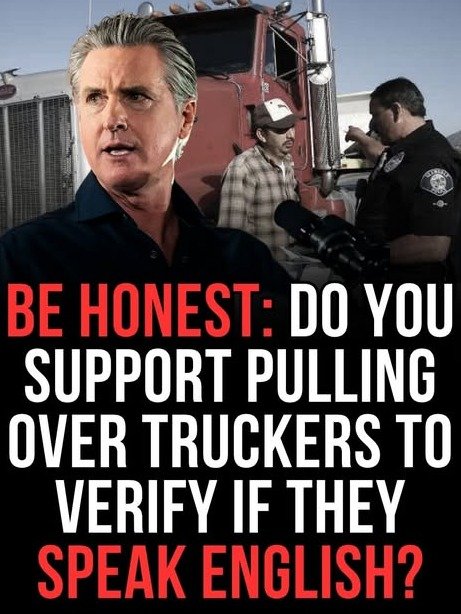
Industry Voices: What Trucking Companies and Associations Say
Trucking companies and industry associations are largely divided on the issue. Some carriers, particularly those operating in regions with diverse populations, have invested in multilingual dispatch services and training programs to bridge communication gaps. They fear that stricter rules could severely impact their ability to recruit and retain drivers.
Others, especially those focused on long-haul, high-risk operations, advocate for clearer, more enforceable standards, arguing that a common language is essential for operational consistency and safety across state lines. They emphasize that while diversity is crucial, it should not come at the expense of fundamental safety requirements.
- Proponents of stricter standards: Emphasize enhanced safety, reduced communication errors, and easier interaction with law enforcement.
- Opponents/Skeptics: Highlight potential exacerbation of driver shortages, concerns about discrimination, and the economic impact on the supply chain.
Navigating the Regulatory Maze: Implementation Challenges
If federal officials decide to implement stronger English proficiency standards, the practical challenges of implementation would be immense. How would “stronger” be defined? Would it involve a standardized test similar to TOEFL or IELTS, tailored for the trucking context? Who would administer these tests, and at what cost?
Moreover, there’s the complex question of existing CDL holders. Would a “grandfather clause” exempt current drivers, or would they be required to re-certify? Mandating re-certification for hundreds of thousands of drivers could create an administrative nightmare and significant disruption. Any new policy would need careful consideration to avoid unintended negative consequences.
Benefits Beyond Safety: Efficiency and Professionalism
Beyond the immediate safety concerns, improved English proficiency could also lead to greater operational efficiency. Clearer communication with shippers, receivers, and logistics personnel can reduce delays, prevent errors in cargo handling, and streamline the entire delivery process. This translates to fewer wasted hours and more predictable supply chains.
Furthermore, it enhances the overall professionalism of the trucking industry. Drivers who can communicate effectively project a stronger image and can better advocate for themselves and their profession. It fosters a more cohesive and understandable operating environment for everyone involved.
Potential Drawbacks and Mitigation Strategies
While the benefits are clear, the potential drawbacks of stricter standards cannot be ignored. The risk of alienating a significant portion of the current and potential driver workforce is real. This could worsen the driver shortage, leading to increased pressure on existing drivers and potentially higher rates for consumers.
Mitigation strategies could include:
- Phased implementation: Allowing ample time for current drivers to meet new standards, perhaps offering subsidized English language training programs.
- Tailored assessments: Developing industry-specific English tests that focus on practical communication needs, rather than academic proficiency.
- Multilingual support: Encouraging companies to invest further in multilingual dispatch and support staff to assist drivers with specific language needs, especially in non-emergency situations.
- Incentives for training: Offering tax breaks or grants for companies that provide English language training to their drivers.
The Road Ahead: What’s Next for This Critical Debate?
The discussion is far from over. Officials will need to weigh the undeniable safety benefits of enhanced communication against the potential economic impacts and challenges of implementation. This involves engaging with trucking associations, driver advocacy groups, safety organizations, and economic experts to forge a path forward that supports both safety and the integrity of our supply chain.
The outcome of this debate could fundamentally reshape the landscape of commercial trucking in America. It’s a complex issue with no easy answers, demanding a thoughtful, balanced approach that prioritizes public safety while acknowledging the vital contributions of all drivers to our nation’s prosperity.
As this critical conversation continues, one thing is clear: the decisions made today about English proficiency for CDL holders will have lasting repercussions, impacting everything from the goods on our shelves to the safety of our highways. Will we find a solution that strengthens our roads without breaking our supply chain? Only time, and careful deliberation, will tell.
Leave a Reply