The lasagna sat in the center of the kitchen island, a bubbling, golden masterpiece of ricotta and resentment. My thumb hovered over the send button, the screen glowing with the time-lapse footage of Maya’s slender hands braiding the pasta sheets while my mother’s voice barked commands from the living room.
The house smelled of herbs and impending ruin. I walked into the dining room where Eleanor sat, polishing silver that didn’t need it. The floorboards groaned under my weight.
“The kitchen is cleared, Mother,” I said, my voice vibrating with a calm I didn’t feel.
She didn’t look up. “Good. The staff can take the leftovers to the shed. I won’t have the scent of onions lingering before the guests arrive.”
I gripped the back of her mahogany chair. The wood felt cold, biting into my palms. I thought of Maya’s face when she realized her own grandmother had forgotten her birthday again, choosing instead to demand a catering-grade feast for people who wouldn’t even acknowledge her existence. I let go of the chair. It was time to stop documenting the cracks and start swinging the sledgehammer. I pressed send.
The silence of the house that morning was a physical weight, thick with the smell of stale floor wax and the faint, lingering scent of my mother’s jasmine perfume. I walked to the kitchen, my footsteps muted by the heavy rugs that Eleanor insisted we keep, even though they were prone to bunching and tripping. Outside, the Connecticut morning was a washed-out grey, the kind of sky that promised drizzle but never delivered. I moved through the motions of a life defined by routine. The drip-feed of the coffee maker was the only punctuation in the quiet room. I watched the dark liquid pool in the glass carafe, counting the seconds until it filled. I thought about the blueprints waiting on my desk at the firm, specifically the structural reinforcement of the Miller project. I needed to focus on concrete and steel, things that behaved exactly the way you told them to.
Maya came downstairs, her hair pulled back in a messy knot, clutching her chemistry textbook. She didn’t say anything, just pulled out the stool at the island and rested her chin on her hand. I poured two mugs. The ceramic was hot against my fingertips. I nudged hers toward her, and she gave me a small, tired smile. It was a practiced gesture, one that didn’t quite reach her eyes. She was sixteen, and she had already learned how to be invisible in our family, a skill she practiced with a quiet, devastating proficiency.
I looked at the clock. Seven forty-two. If I left now, I could beat the worst of the traffic on the I-95. I thought about the commute, the rhythmic white noise of the engine, the way the world blurred into shades of asphalt and pine trees. It was a comfortable isolation. I liked the drive because it required nothing of me. There were no expectations inside a car.
I reached for the toaster, the spring-loaded lever clicking into place with a sharp, mechanical snap. I set the dial to two. I had done this every morning for six years, ever since we moved back into this orbit, ever since Eleanor decided that my daughter’s presence was a logistical inconvenience. I checked the weather app on my phone. Sixty-two degrees, overcast, high of seventy. The kind of day that felt like a placeholder.
My office printer was waiting for me, a behemoth of plastic and gears that jammed if you looked at it wrong. I could already imagine the sound of the paper tearing, the blinking amber light of the error message, the irritation of my assistant, Sarah, clicking her tongue as she pulled the crumpled sheets from the internal tray. It was a small, predictable frustration, the kind I had grown to welcome because it was manageable. It wasn’t like the rest of the house, where every conversation was a minefield of implication and subtext.
I took a sip of the coffee. It was bitter, but I didn’t reach for the sugar. I liked the sharpness of it. I thought about the small talk I would have to navigate at the firm. How was the weekend? Good. And yours? Fine, just fine. The weather. The commute. The building codes. We were all just actors hitting our marks.
I set the mug down, the ceramic clinking against the marble countertop. I decided then that I would stop by the dry cleaners on the way home, pick up the suits, and maybe grab that specific blend of dark roast Maya liked. I wanted to make the evening feel normal, to shield her from the friction of the upcoming dinner. I was halfway to the door, my briefcase in hand, when the silence was shattered. The phone in my pocket vibrated against my hip, a frantic, persistent buzzing that didn’t stop.
I pulled the phone out. It was a digital stampede, a waterfall of pings from the family group chat. My thumb hovered over the screen, watching the messages pile up like an incoming tide. Eleanor had sent an image: a formal, gold-embossed invitation to her seventy-fifth birthday dinner at The Gilded Table. Beneath it, a line of text blinked: “Adults only. Dress code strictly formal. Maya, please ensure the delivery of the floral arrangements arrives at the restaurant by five sharp.”
I looked at Maya. She was still sitting at the kitchen table, her shoulders hunched as she scraped the charred edges off her toast. She hadn’t looked up, hadn’t asked who was calling, as if she already knew the nature of the interruption. She looked like a ghost in her own home, perpetually bracing for the next command. I felt a cold, sharp sensation bloom in my chest, a physical tightening that made it difficult to breathe. It was the same hollow ache I had felt for a decade, watching her hold the camera while Eleanor posed, or watching her clear the plates while her cousins laughed over dessert.
“Dad?” Maya asked, her voice quiet. She finally looked up, her eyes wide, scanning my face for the familiar instruction. “Is it Grandma? Do I need to get the florist on the line?”
I stared at the screen. The cursor pulsed, waiting for a response, a confirmation of her erasure. I thought about the time she missed her school play because she was forced to hem Eleanor’s curtains, and the way she had apologized to me afterward for being too sad to eat dinner. I saw the contrast between her grace and the calculated cruelty vibrating in my palm. The professional mask I wore, the architect’s restraint, shattered.
I didn’t answer her. Instead, I pressed my thumb firmly against the screen, my movements precise and clinical. I opened the file folder I had been secretly maintaining for years—the scanned bank statements, the emails detailing the syphoned trusts, the proof of my mother’s long-term financial cannibalism of the entire extended family. I selected the “send all” option. It took three seconds for the progress bar to reach the end. The documents were now winging their way to every cousin, every aunt, and every disgruntled sibling in the family circle.
“Dad, what are you doing?” Maya whispered, sensing the shift in the air.
I set the phone face down on the marble. The buzzing stopped instantly, replaced by a silence so heavy it felt like a physical weight. I walked over to the kitchen counter, picked up the pristine, untouched lasagna pan she had prepared for the night, and walked toward the back door.
“We aren’t going,” I said. My voice was steady, stripped of the usual accommodating tremor. “We are going to the shelter. And then, we are going to get breakfast somewhere else.”
I reached for the door handle, the sunlight blinding me as I stepped out into the morning, the hook already set.
The shelter intake bay smelled of bleach and floor wax. I left the lasagna with a volunteer who didn’t ask questions, then retreated to my sedan to start the calls. My hands were steady, the clinical coldness of an architect surveying a building slated for demolition.
I dialed my sister, Sarah. She picked up on the third ring, her voice tight with the frantic, performative panic she’d perfected over decades.
“David, where are you? Mom is spiraling. She says you took the centerpiece of the dinner and just vanished. She’s claiming you had a breakdown because of the seating chart.”
I watched a stray dog trot across the parking lot. “The seating chart didn’t include Maya, Sarah. Why did you tell her the restaurant had a hard cap on guests?”
“What? No, that wasn’t me. Mom said the restaurant owner called her personally to say they couldn’t accommodate an extra chair in the private room. She felt terrible about it, honestly.”
I didn’t answer. I hung up and dialed the restaurant, The Gilded Oak. The manager, a man named Henderson whose voice sounded like dry parchment, answered immediately.
“Mr. Sterling, about the bill—”
“I’m not calling about the bill. I’m calling about the seating for tonight. My mother told me you called her to revoke the extra chair for my daughter.”
There was a long silence on the line, followed by the clink of glass. “Mr. Sterling, I haven’t spoken to your mother in three weeks. We have a policy against private room bookings being adjusted mid-week anyway. I was actually calling to tell you the reservation was canceled by your mother’s assistant yesterday morning, citing a ‘sudden family emergency.’”
I stared at the dashboard. The dashboard clock blinked. My mother didn’t have an assistant. She had a rotation of nieces she called ‘volunteers.’
I opened the contact list again. I called the nurse who visited my mother twice a week, a woman named Elena. She answered amidst the hum of a highway.
“Elena, it’s David. Did you assist my mother with any calls yesterday? Specifically regarding a dinner reservation?”
“David, I haven’t been to the house since Tuesday. Your mother fired me. She told me she was going to be traveling for the next month to visit family in Europe. She said she wouldn’t be needing any care or home visits.”
“Europe? She’s hosting a dinner tonight in Connecticut.”
“That’s not what she told the bank, David.”
I felt the air thin in the car. I cranked the ignition, the engine roaring to life with a jagged, hungry sound. The facts were a house of cards, and I was holding the match. Sarah said it was the restaurant; the restaurant said it was a phantom assistant; the nurse said my mother was already mentally miles away, liquidating the present.
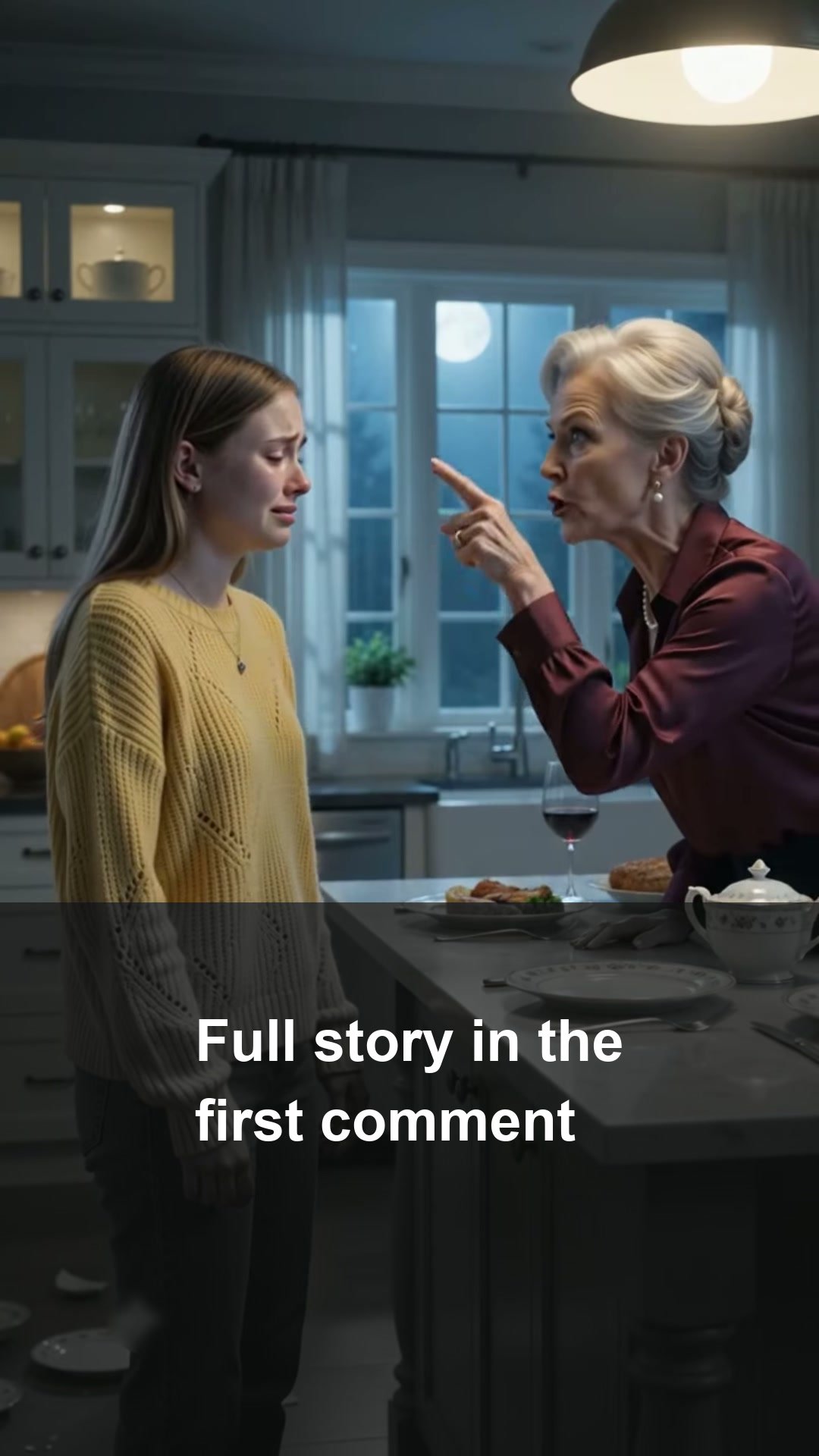
I put the car in drive, the gravel crunching under my tires. My daughter was waiting in the passenger seat, eyes fixed on the horizon, neither of us speaking. I needed to see the bank records in the study, the physical files my mother kept locked in the mahogany desk. If the inheritance was a ghost, I needed to see the grave. I pulled out of the lot, the path forward suddenly, terrifyingly clear. I wasn’t just investigating a snub; I was dismantling a myth. I turned toward the family home, the steering wheel slick under my palms. The next stop was the desk, and the truth wasn’t going to be polite.
The front door of the estate stood tall and mocking, painted in the exact shade of eggshell white my mother insisted upon for forty years. I stepped into the foyer, the scent of lavender floor wax hitting me like a physical blow, grounding me in the architecture of my own suppression. Maya followed, her sneakers barely making a sound on the Italian marble. She didn’t look at the portraits lining the hall, the ones where she had been meticulously cropped out or relegated to the soft-focus background. She looked at her feet.
I walked directly to the study. The mahogany desk felt heavy, a monolith of secrets anchored to the floor. I didn’t bother with the key; I used the flat of my palm to slide the secret catch I’d discovered as a boy hiding from one of her tirades. The drawer groaned open, revealing the neatly tabbed folders, each one a ledger of betrayal. I didn’t reach for the investments or the real estate deeds. My fingers went straight for the thin, yellowing envelope tucked behind the tax returns. It was labeled in her sharp, slanted script: Family Liabilities.
I pulled out a document, the paper crisp and biting against my skin. It was a list, dated three years ago, detailing the exact amount she had siphoned from my daughter’s trust to cover her own gambling debts at the club. The numbers were precise, clinical, and cruel. I felt the air leave the room, the silence stretching until it became a vacuum. Maya stood by the window, watching a gardener rake leaves, her posture thin and tired. She didn’t know yet that her college fund had been the price of my mother’s afternoon gin games.
I held the document out, the paper trembling just enough to betray the calm I’d spent decades perfecting.
I don’t think you realize, Mother, that I’m the only one who kept you from being prosecuted.
The sound of my mother’s laughter in that memory was like glass grinding against glass. I was seven, sitting on the high-pile carpet of her library while she adjusted her pearls in the reflection of a mahogany cabinet. She was preparing for one of her gala committees, the air thick with the smell of hairspray and expensive, cloying lilies. My older brother, Julian, had just broken a porcelain figurine—a delicate, hand-painted shepherdess—and the shards were scattered across the parquet floor like jagged snow. My mother hadn’t yelled. She had simply looked at me, her eyes as vacant as a winter sky, and pointed a manicured finger toward the broom. Clean it, David, she had said, her voice dropping into that melodic, terrifyingly calm register. If the house looks messy, the neighbors will think the family is failing. I spent the next hour picking up microscopic pieces of ceramic, my fingers bleeding, while Julian sat on the sofa watching cartoons. That was the first time I learned that order was a performance, and that I was the one hired to hold the props.
When I was in prep school, the pattern shifted from physical labor to the curation of perception. I remember sitting in the headmaster’s office, the air smelling of floor wax and old leather. I had been caught forging a note to excuse my absence, not because I wanted to skip class, but because I had spent the entire morning scrubbing red wine out of the living room rug after one of my mother’s bridge parties. My mother stood beside me, her posture impeccable, dressed in a charcoal wool suit that cost more than my tuition. I’m so sorry, she told the headmaster, her hand resting lightly on my shoulder, a grip that felt like a vice. David has been struggling with his focus lately; he has such a dramatic imagination. It’s a pity he can’t channel that energy into his studies rather than these little fictions. I stood there, silent, the taste of bile in my throat. I didn’t correct her. I knew that if I spoke, the narrative she had constructed—of the troubled, unruly son—would only solidify. I chose the path of least resistance because she had already colonized the truth.
The money, or the lack of it, was the quiet hum beneath every conversation in our house. My father, a man who seemed to exist only in the periphery of my mother’s ambition, once tried to hand me a twenty-dollar bill before a school dance. My mother intercepted it before it reached my palm. He doesn’t need pocket money, Eleanor had said, her voice sharp enough to cut through the heavy drapes. He needs to learn the value of earning his place. I didn’t see that twenty again. Instead, I saw it disappear into the ledger she kept on her desk, a ledger that dictated which of her children was currently profitable and which was a liability. By the time I reached university, I had become an architect specifically because I wanted to build structures that were honest, where the foundation was visible, where nothing had to be hidden behind velvet wallpaper. I thought I had escaped the ledger. I thought my degree was my armor.
Then came Sarah. When I brought her home for the first time, my mother didn’t look at her face. She looked at her shoes. They were sensible, brown leather flats, lacking the label of a designer brand, and in that split second, I saw my mother’s mental calculator clicking into place. She’s a lovely girl, Mother had said, her smile not reaching her eyes. But she’s so… earnest. It was the ultimate insult in her world, a way of dismissing Sarah’s kindness as a lack of social sophistication. I watched my mother systematically unravel my engagement over the course of an hour, asking pointed questions about Sarah’s father’s plumbing business, laughing at the wrong moments, and making sure to mention the daughters of other socialites who were currently single. She didn’t have to forbid me from marrying her. She just had to make me feel that by choosing Sarah, I was condemning myself to a life of irrelevance. I didn’t marry Sarah. I married into the life my mother wanted, and it was a quiet, suffocating death that took years to acknowledge.
When Maya was born, I thought the cycle would break. I thought the arrival of a granddaughter would soften the sharp edges of my mother’s demands. I was wrong. The first time I brought Maya to the house for Christmas, she was barely three years old, toddling toward the tree with wide, curious eyes. She reached for a glass ornament, and my mother snapped, Don’t touch that, it’s not for play. She didn’t see a grandchild; she saw a clumsy intruder in her carefully curated display. As Maya grew, the relegation became systemic. Maya wasn’t family; she was a prop to be moved, a servant to be managed. Whenever we visited, Maya was tasked with fetching ice, holding the camera, or clearing the plates, while the other cousins sat at the head of the table. I watched my mother’s eyes track Maya’s movements, looking for flaws, looking for reasons to exclude her from the family portrait or the will, looking for ways to remind us that Maya was not quite good enough for the lineage she protected with such viciousness.
I remember the day Maya was excluded from the birthday dinner three years ago. It was her sixteenth birthday, a milestone I had hoped we would celebrate with a quiet family gathering. My mother called me on the Tuesday before. David, she had said, her voice smooth as oil, I’ve decided to make the dinner an adults-only affair. It’s too crowded with the children running about, and I want to have a serious discussion about the estate. Maya is sixteen, I had countered, the phone pressed hard against my ear. She’s an adult in every sense that matters. My mother chuckled, a dry, dismissive sound. She’s a child, David. Don’t be tedious. If she wants to be part of the grown-up world, she needs to learn that she isn’t there yet. I remember looking at Maya through the glass door of our kitchen, watching her help her mother fold laundry, her movements quiet and uncomplaining. I felt a cold, hard knot form in my chest. I had spent forty years being the one to clean up the shards, and now I was watching my daughter pick up the broom.
That was the night I stopped being an observer. I walked into the kitchen, the air cool against my skin, and looked at the stack of bank statements I had been gathering for months. I saw the transfers, the small, consistent siphoning of funds from the trust she had promised to protect for Maya, all redirected toward her private debts at the club. She didn’t just want to control our social standing; she wanted to consume our future to maintain her own crumbling facade. I looked at the kitchen table, the place where we were supposed to eat as a family, and realized it was just a stage set for her vanity. Every insult, every warning I had ignored, every time I had stayed silent for the sake of peace—it had all led to this. I wasn’t protecting my daughter by shielding her from my mother’s cruelty; I was teaching her that the cruelty was inevitable. I reached for my laptop, the screen reflecting my own face, older than I remembered, tired, and finally, unequivocally finished. I didn’t have to raise my voice. I didn’t have to scream. I just had to show her that the ledger was no longer hers to balance. The silence in the room wasn’t peaceful anymore; it was the heavy, pregnant quiet of a fuse that had finally reached the powder. I walked to the window and looked out at the driveway, imagining the moment those doors would slam shut for the last time.
My father, Arthur, sat in his leather armchair, the springs groaning under a weight he’d carried for forty years. He wasn’t a villain, just a man who had traded his spine for a pension and a quiet life in Connecticut. He stared at a framed photo of his mother, Eleanor, his hands tracing the silver edge of the frame. He knew she had siphoned his inheritance to fund her vanity, yet he kept her secrets to maintain the family’s fragile facade. He wanted justice but feared the loneliness of being an outcast. He set the frame facedown on the end table. I’m done, he whispered, his voice cracking like dry parchment. I didn’t answer; I only watched as he tapped the send button on his phone, releasing the documents that would turn the local social club into a bloodbath.
Across town, Eleanor was adjusting her silk scarf in a vanity mirror, her hands steady despite the foundation cracking on her skin. She had built her life on the currency of exclusion, convinced that keeping Maya and me in the peripheral was the only way to keep the family bloodline pure. She had a drawer full of thank-you notes from charities she never supported and a heart that viewed affection as a liability. She checked her reflection, satisfied with the sharpness of her jawline. They are lucky I even notice them, she muttered to the empty room, unaware that the group chat on her phone was currently erupting with the exact figures of the stolen trust. She reached for her pearls, not realizing the rope was already fraying.
My wife, Clara, sat at the kitchen island, her fingers hovering over a stack of unpaid medical bills. She had spent years working double shifts as a physical therapist to offset what Eleanor took from us, all while telling Maya that being treated like a servant was just a quirk of the wealthy. She was a woman who prioritized peace over truth, a contradiction that had nearly broken our daughter’s spirit. She looked up as I entered, her eyes searching mine for an apology I wasn’t going to give. David, is this really necessary? she asked, her voice tight with the fear of lost social standing. I didn’t soften my gaze. It’s not about necessity, Clara, I said, it’s about history. She turned back to the bills, the realization that her sacrifice had been for nothing settling into her shoulders like lead.
Maya stood in the backyard, her hand gripping the cold handle of the garden shears. At sixteen, she had learned to hide her hurt behind a mask of helpfulness, always the one to clear the plates or hold the camera while the others posed. She didn’t want to be a rebel; she wanted to be loved. She looked at the rose bushes, the thorns sharp and unforgiving, and snipped a stem with a precise, violent snap. She didn’t care about the money or the social standing. She only cared that for the first time, she wouldn’t have to cook for the people who whispered about her in the kitchen. She dropped the shears in the dirt, wiped her hands on her jeans, and turned toward the house, finally ready to ask for a seat at her own table. I watched her from the window, knowing that the damage was done, and for the first time, I was grateful for the wreckage.
I drove to the precinct with the folder of bank statements resting on the passenger seat like a live grenade. The air inside the car felt thin, metallic. I walked up to the sergeant’s desk, the linoleum floor scuffed and stained, and pushed the folder across the counter. The sergeant didn’t look up, his pen scratching rhythmically against a ledger, until I tapped the document labeled Trust Diversion Audit. He sighed, a sound of heavy, bureaucratic weariness, and asked if I had a lawyer. I told him I did, then handed him the names of the three cousins whose funds had been systematically drained to cover Eleanor’s gambling debts in Atlantic City. He took the folder, his eyes scanning the columns of numbers, and finally, he gave me a look that wasn’t dismissive. It was the look you give a man who has just set fire to his own house. I walked out into the humid Connecticut air, my hands steady for the first time in a decade.
By noon, I was in the office of Marcus Thorne, a partner at a firm that specialized in the brutal mechanics of estate litigation. The office smelled of old leather and expensive scotch. I sat in a chair that felt designed to make me look small, but I didn’t care about the optics anymore. I laid out the digital breadcrumbs Eleanor had left behind: the emails, the doctored trust documents, the falsified signatures. Thorne leaned back, his glasses reflecting the sunlight, and asked if I understood the cost of a war against a matriarch with a century of social capital. I told him I was prepared to burn the capital to the ground. He nodded, his silence confirming he had been waiting for someone like me for years. He started drafting the filing for the probate court, a document that would effectively freeze every account Eleanor touched. As I signed the retainer, the vibration in my pocket was continuous. My phone was a strobe light of incoming threats from my siblings. I didn’t look at them. I set the phone on his desk and blocked every number in the family contact list, one by one.
The HR complaint was a surgical strike. Eleanor served on the board of the regional arts foundation, a position she used to keep her reputation pristine. I sat at my drafting table, the blue light of the monitor washing out the room, and typed out the formal testimony regarding her misappropriation of the scholarship fund. I attached the scanned receipts showing her personal shopping trips coded as foundation overhead. When I pressed send, I felt the phantom weight of her disapproval vanish. Ten minutes later, the foundation president called. I let it go to voicemail. I could hear the panic in his voice, the realization that his own reputation was now tethered to a sinking ship. He had to act, or he would go down with her. He chose to act. By the time I picked up Maya from school, the email had been sent to the board: Eleanor was under internal review, effective immediately.
That evening, the house was quiet, but the air felt charged, as if a storm were brewing just outside the glass. I took the DNA test kit out of the drawer—a precaution I had bought months ago but feared to use. I swabbed my cheek, then Maya’s, my movements clinical and detached. The lab results wouldn’t be back for weeks, but the act of taking them was the real trigger. If the lineage was as fractured as Eleanor’s secrets suggested, the will would be rendered legally void regardless of her machinations. I sealed the envelope and walked it to the mailbox, listening to the metallic clang of the lid. It was a finality I hadn’t expected to feel.
The counter-attack arrived in the form of a process server on my front porch. He was a small, frantic man in a rumpled suit, clutching a stack of papers that claimed I was harassing a senior citizen. I took the papers without reading them, my gaze fixed on the street where Eleanor’s car was idling. She was sitting in the driver’s seat, staring at our front door, her face a mask of calculated grief. She wanted me to run out, to scream, to give her the ammunition she needed to paint me as the unstable son. I didn’t give her the satisfaction. I turned my back, walked inside, and locked the deadbolt.
Inside, Maya was setting the table. She had cleared away the expensive, chipped china Eleanor had gifted us years ago and replaced it with the simple, mismatched stoneware we’d bought at a thrift shop. She looked at me, her eyes clear, no longer searching for a place to hide. I felt a surge of cold, sharp clarity. The lawsuit would strip the house, the trust, and the social standing. The police report would bring the scrutiny of the state. The HR complaint would finish the job of turning her peers against her. She was a woman who had spent forty years building a monument to her own vanity, and I was the one who had finally realized I was holding the sledgehammer. I walked over to the table and took my seat. The phone on the sideboard vibrated again—a frantic, rhythmic hum—but I didn’t reach for it. I reached for the water pitcher and poured a glass for my daughter. The war was no longer something I was fighting; it was something I was observing, a machine I had set in motion and no longer needed to touch. The silence in the room was heavy, but for the first time, it didn’t feel like a vacuum. It felt like space.
The ink on the notarized document was still damp, a final signature severing the last legal umbilical cord that tethered me to my mother’s estate. I slid the papers across the mahogany desk to the clerk, who stamped them with a hollow, metallic thud that echoed through the nearly empty office. Outside, the Connecticut sun hit the pristine driveway of the house I was vacating, a structure that had never truly been a home, only a stage. I pulled my car keys from my pocket, the metal biting into my palm, a sharp reminder that the heavy lifting of my past was finally being traded for the physical weight of cardboard boxes.
In the driveway, Maya stood by the trunk of the car, her movements fluid and unhurried as she packed the last of our books. She looked up as I approached, her expression devoid of the strained, performative smile she had worn for years whenever my mother was within earshot. She held up her phone, the screen flashing a notification from my mother—a desperate, jagged string of characters—and she pressed delete. There was no hesitation, no glance toward the house where the curtains were drawn against the midday light.
“Is it done?” she asked. Her voice was steady, lacking the anxious lilt that used to signal her fear of saying the wrong thing.
“It is,” I said, catching her eye. “We don’t owe her another minute.”
I thought of the bank records I had released, the way the veneer of her social standing had buckled under the weight of her own greed. She would spend her remaining years explaining away her insolvency, but that was a narrative I was no longer part of. The realization hit me then, not as a triumph, but as a quiet, cooling relief. The house behind us was just wood and glass now, stripped of its power to dictate our worth.
I took the final box from her, the corners digging into my chest. As I stepped toward the driver’s side door, I glanced back at the front porch. The door remained shut, an impenetrable barrier that no longer felt like an exclusion, but an exit. I climbed into the car and turned the ignition, the engine purring to life, drowning out the last traces of the afternoon’s static. We pulled away from the curb, leaving the pristine, empty driveway behind. The road stretched out before us, vast and entirely unscripted, the silence in the car shifting from an absence of noise to the presence of potential.
The coastline at Hammonasset was a gray, salted bruise of a morning, the sand packed hard and cold beneath our boots. Maya stopped at the tide line, her scarf whipped horizontal by the wind, and reached into her coat pocket. She pulled out her phone—the one that had been a tether to a decade of performative expectations—and turned it over in her palm. The screen was dark, reflecting only the turbulent, slate-colored water. Without a word, she pressed the power button, held it until the logo flickered out, and tossed the device into the backseat of my car with a hollow thud.
“Are you hungry?” I asked, my voice thin against the roar of the surf.
She looked at me, her face unlined for the first time in years. “I want pancakes. But not the thin, lemon-zest kind. Just flour, eggs, and syrup. The kind that makes a mess.”
We found a diner three towns over, a place with cracked vinyl booths and the smell of burnt coffee. When the plate arrived, she didn’t arrange the toast into a perfect geometric stack or wipe the rim of the dish with a napkin. She simply ate, syrup pooling against the edges of her plate, a small, messy monument to her own appetite. Watching her, I felt the tight, structural ache in my own chest finally loosen. I had spent forty years drawing blueprints for a life that wasn’t mine, measuring success by the absence of complaints. Here, in the steam of the coffee, there was nothing to measure.
“Dad,” she said, tapping her fork against the porcelain, “we should get a dog. Something big. Something that sheds everywhere.”
I laughed, a sharp, surprising sound. “I think that’s a perfect idea.”
Outside, the first snow of the season began to drift against the glass, blurring the world into soft, white edges. We were no longer waiting for anything to start.
I cleared the remnants of our breakfast, the ceramic plates clicking against one another in the quiet kitchen. Maya stood by the sink, humming a tune I didn’t recognize, her shoulders dropped away from her ears in a way I had never witnessed before. My phone remained face down on the granite island, a dead weight I no longer felt the need to consult. I reached into the cupboard, pushing aside the fine china that had hosted a thousand hollow celebrations, and pulled out two mismatched mugs instead. The sun climbed higher, casting a long, sharp beam of light across the counter. Resting there, forgotten and cold, was a single, pristine lasagna dish we had never bothered to bake. I left it sitting exactly where it was, unadorned, beside a window left wide open to the crisp air.
Leave a Reply