The salmon slipped from Megan’s fork, hitting the porcelain with a wet, heavy thud.
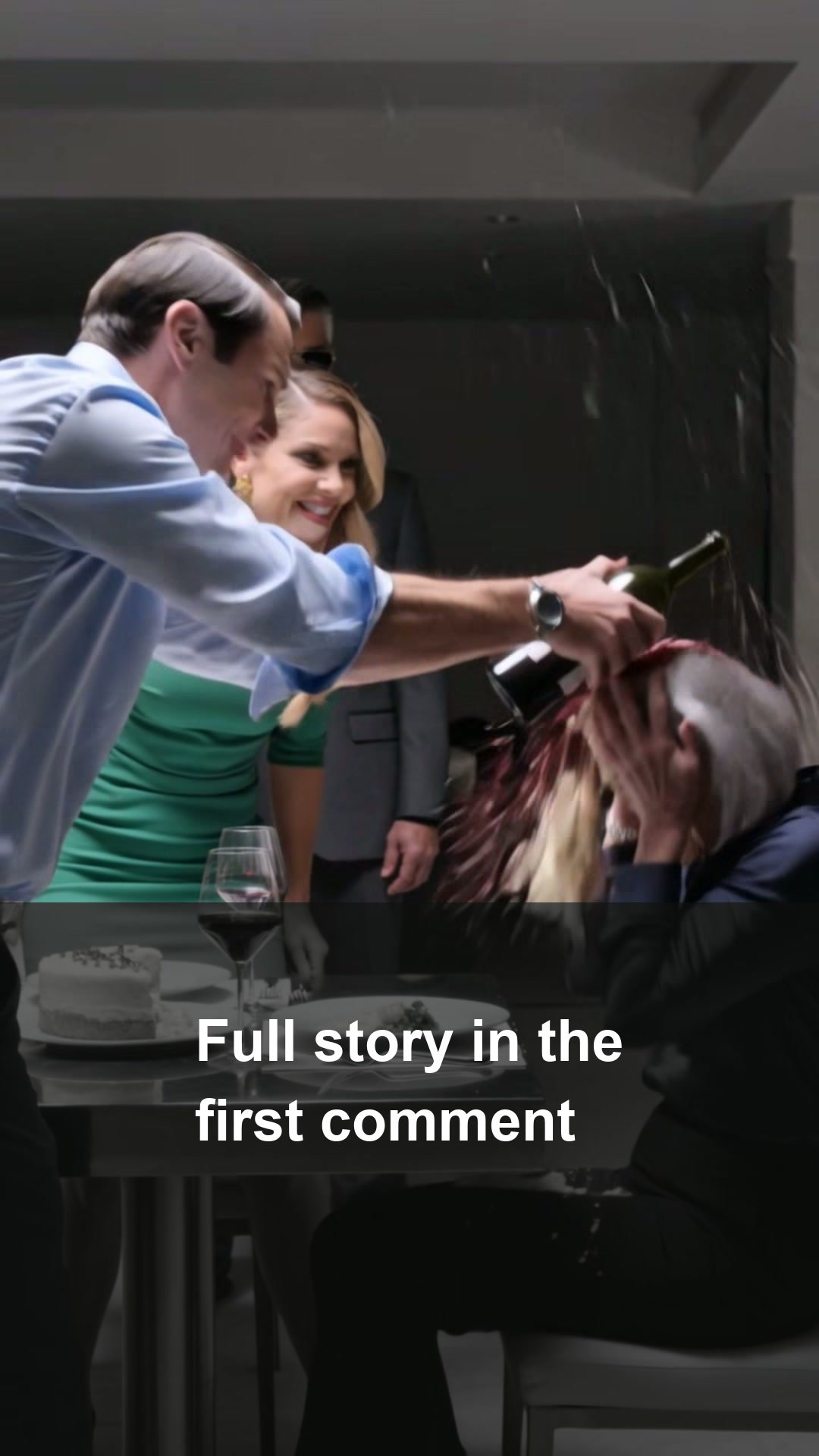
Silence pressurized the dining room, thick as cooling wax. Ryan’s face blanched, his mouth hanging open like a landed fish, while Megan gripped the edge of the mahogany table, her knuckles blooming white. Outside, the wind rattled the French doors, a frantic sound against the sudden stillness inside. I shifted my weight, the chair legs screeching against the hardwood, a jagged note in the vacuum.
“Is that a joke?” Ryan’s voice cracked, high and thin, betraying his carefully groomed composure.
I didn’t answer. I focused on the way the candlelight caught the edge of my wine glass, a perfect, steady bead of red. The recording played on—the sound of my own voice from last Tuesday, detailing every indignity they had laughed about behind my back. It sounded clinical, devoid of the soft, domestic tremor I had worn like a mask for decades.
I stood up, the chair pushing back with a definitive, hollow thud. I didn’t owe them a defense. I didn’t owe them the rest of this dinner. I reached into my pocket and touched the cold, sharp key to the storage unit. It was time.
The morning of the incident began with the precise, rhythmic hum of the espresso machine, a sound I had calibrated to the exact millisecond over the past decade. I watched the dark liquid bead against the glass, ignoring the itch of the wool sweater I’d pulled from the cedar chest. Outside, the driveway was slick with the remnants of last night’s frost, reflecting the pale, washed-out blue of a Tuesday sky that promised nothing of consequence. I tapped the silver spoon against the porcelain saucer, a sharp, metallic note that felt like the only real thing in the room.
Ryan came down the stairs then, his footsteps heavy and rhythmic, a toddler’s impatience grafted onto a man’s frame. He didn’t look at me. He looked past me, his eyes scanning the marble island for the breakfast he expected to be waiting. I slid the plate of buttered toast toward him without a word. He muttered a quick thanks, his phone already glowing against his palm, the screen reflecting in his pupils like a second, frantic sun.
Is the car coming at eight? he asked, his voice muffled by a mouthful of crust.
I checked my watch. Eight-oh-five, I said.
He groaned, a low, dismissive sound that vibrated in the quiet kitchen. You know how traffic gets near the bypass. Can’t you ever just have it ready to go?
I didn’t answer. I thought about the way the light caught the dust motes dancing above the fruit bowl, each one suspended in a state of suspended animation. I could have told him that the driver had been delayed by a delivery truck, or that I had spent the last twenty minutes ensuring the house was locked tight, but the effort of explanation felt like dragging lead weights through water. I chose silence instead. It was a comfortable, well-worn cloak.
I walked to the front door, the hardwood cool beneath my slippers. The world outside was an exercise in predictability. Mrs. Gable was already walking her golden retriever down the cul-de-sac, her gait stiff and determined, her scarf wrapped in the same symmetrical knot she had used for twenty years. A delivery truck idled at the corner, its exhaust clouding the air in a grey, translucent plume. Everything was exactly where it belonged. The hedges were trimmed to the millimeter, the brickwork was free of moss, and the neighbors were busy tending to their manicured lawns, projecting a version of reality that required no maintenance of the soul.
I reached for my coat, the fabric heavy and familiar. I felt a sudden, fleeting urge to leave the door unlocked, to let the wind scatter the mail across the foyer, to break the delicate, invisible web of order I had spent a lifetime spinning. But the impulse passed as quickly as a shadow over a sun-drenched lawn. I adjusted my scarf, checked my reflection in the hall mirror—the same graying hair, the same neutral expression—and turned back to the kitchen.
My phone, lying on the granite counter, suddenly shuddered. It slid an inch toward the edge, a jarring, mechanical vibration that broke the stillness. I stared at the screen, watching the name blink in the sterile white light. The chime was persistent, a shrill, rhythmic demand for attention that sliced through the morning quiet, cutting off the hum of the espresso machine and demanding I return to the role I was playing. I reached out, my fingers hovering over the glass.
The caller was Ryan. He did not ask how I was, or if the birthday preparations were taxing; he simply demanded to know why the dry cleaning had not been delivered to his office. My thumb hovered over the green icon, feeling the phantom weight of thirty years of domestic errands. I remembered the way he used to hold my hand when he was six, his palm small and sticky against my skin, before the entitlement hardened into this brittle, transactional tone. I slid the bar to answer.
Ryan, I said, my voice hitting a level pitch I had spent weeks practicing in the empty guest room.
The cleaner is closed for the holiday, I lied, though I had picked up his shirts yesterday and hidden them in the attic.
His scoff was sharp, a jagged intake of breath that sounded like a tear in fabric. You’re sixty today, Mom. You’re supposed to be celebrating, not forgetting the one thing I actually need you to handle. It’s pathetic, honestly. Megan is already annoyed that you haven’t confirmed the seating chart for tonight.
I looked at the mahogany dining table, where the centerpiece—a heavy, brass-bottomed bowl of hydrangeas—concealed the digital recorder I had activated ten minutes ago. Its tiny, red light was invisible beneath the petals, glowing like a secret pulse.
I won’t be handling the seating chart, Ryan, I said. I heard the clock in the hallway tick, a steady, rhythmic countdown that felt less like time passing and more like a fuse burning down.
Silence stretched across the line, heavy and incredulous. He stopped pacing; I could hear the lack of ambient noise on his end, the sudden stillness of a man who realizes he has lost his audience. What? he barked, his voice dropping an octave into that predatory register he inherited from his father.
I decided then. I would not justify, I would not explain, and I would certainly not apologize for the void I was about to create. I simply tilted the phone away from my mouth, the movement practiced and precise.
The service is suspended, I repeated, and clicked the end call button before he could summon a retort.
The silence that followed was not the heavy, suffocating quiet of a house waiting to be served. It was a clean, sharp vacuum, the sound of a slate being wiped bare. My heart hammered against my ribs, not with the flutter of anxiety, but with the steady, rhythmic beat of a pulse reawakening. I placed the phone facedown on the counter and walked to the window. Outside, the gardener was trimming the hedges with the same precision I had applied to my own erasure. I watched the clippings fall, green and discarded on the manicured lawn. I didn’t reach for my apron. Instead, I walked to the front door, turned the deadbolt, and listened to the satisfying, final click of the latch. The dinner would proceed, the guests would arrive, and for the first time, I would be a spectator to the wreckage of my own making.
I dialed my sister-in-law first. She answered on the second ring, the sound of a clinking martini glass echoing in the background. When I asked about the funeral flowers—the lilies that had arrived wilted and smelling of rot—she laughed, a brittle, sharp sound. She claimed they were fresh from the florist, hand-delivered at dawn. I stared at the kitchen calendar, noting the date she had circled in red for the service. I remembered the heavy scent of decay filling the foyer. She insisted it was my imagination, a symptom of grief-stricken nerves. I hung up before she could ask why I was calling. My hand felt steady as I rested it against the cool marble of the counter. It was a lie, but whose?
I called the hotel next, the place where we had held the wake. The concierge sounded bored, his voice monotone as he scrolled through digital archives. He swore the room had been booked for the full weekend. I told him we had checked out by noon on Saturday. There was a pause, the sound of rhythmic typing, then a sharp intake of breath. He told me the room hadn’t been occupied at all that weekend, that the records showed a cancellation two weeks prior. My reflection in the window seemed to sharpen. I decided then to drive to the nursing facility where my husband had spent his final week.
The drive was an exercise in suppressed momentum. The radio was off. I pulled into the visitor’s lot, the gravel crunching under my tires like broken glass. I found the night nurse, a woman with tired eyes and a name tag that hung crookedly. She was folding laundry in the hallway, the smell of sterile bleach clinging to her uniform. I asked her about the final night, about the visitor who had supposedly come after hours to sign the papers. She didn’t look up. She said no one had come in after seven, that the ward had been locked tight and silent as a grave. I showed her the signature on the document in my purse. Her expression soured, a flash of recognition replaced by a mask of indifference. She told me the doctor who signed that form had died months before my husband was even admitted.
I walked back to my car, the sunlight hitting the windshield with an aggressive, blinding glare. Every piece of the puzzle I collected seemed to be from a different, conflicting set. My sister-in-law, the hotel, the nurse—each story was a jagged shard that refused to fit the frame. I gripped the steering wheel, the leather biting into my palms. The silence of the house I had left behind suddenly felt like a physical weight, pressing against my temples. I realized then that I hadn’t been living in a family; I had been inhabiting a meticulously staged fiction. I put the car in gear. I wasn’t going home. I was going to the source. The next call would be to the estate lawyer, and this time, I wouldn’t accept a polite deflection. The road ahead looked clear, stripped of the haze I had walked through for thirty years. I pressed the accelerator, watching the speedometer climb past the limit, my heart finally beating in time with the engine.
The front door clicked shut behind me, the sound final, like a tomb closing. My son, Ryan, stood in the center of the kitchen, his tie loosened, a wine glass hanging precariously from his fingers. The smell of overcooked salmon hit the air, cloying and heavy. He did not look up from his phone, his thumb flicking across the screen in that frantic, rhythmic motion that had defined our last decade. Beside him, Megan leaned against the marble island, her face pulled into a mask of weary impatience. She sighed, a sharp, jagged sound that cut through the low hum of the refrigerator. I walked to the head of the table, my hand brushing the cool, silver base of the centerpiece. My fingers found the small, black plastic edge of the recorder tucked beneath the floral arrangement. I didn’t pull my hand away. I looked at the three of them—the empty chairs meant for guests who never arrived, the pristine napkins, the life I had curated while forgetting to inhabit it. The air felt thin, stripped of its domestic oxygen. I thought of the suitcase already locked in the trunk of my car, the keys to the storage unit burning against my thigh. I could hear the lawyer’s voice in my head, a reminder that the house was legally mine, that the trust was a paper tiger. Ryan cleared his throat, his gaze finally snapping toward me, sharp and demanding. He opened his mouth, the words already forming—another critique of the menu, another complaint about the timing of the meal. I felt the surge of thirty years of unuttered sentences rising in my chest, a tide that had finally breached the levee. I stopped breathing, holding the moment suspended between the clatter of silverware and the electric hum of the walls. I leaned forward, the recorder pressing hard into my palm. I am not your mother anymore.
The linoleum floor of my childhood kitchen had a pattern of faded daisies that I scrubbed on my knees every Saturday morning. My mother stood at the stove, her back a rigid line of starched cotton, stirring a pot of creamed corn that smelled of scorched sugar. She did not turn when I dropped the heavy glass pitcher; the crash was sharp, immediate, a splintering of expectation. I stood amidst the jagged shards, my palm bleeding a thin, bright line, waiting for the reprimand. Instead, she kept stirring, her rhythm unchanged, her voice low and tight as she said, pick it up, Helen, and don’t make a mess of the floor for me to fix later. I pressed my hand into my apron, the fabric turning stiff and dark, and I learned then that blood was a secondary concern to the surface appearance of a clean room. I knelt, picking up the glass, my fingers trembling, deciding in that quiet, stinging moment that if I was perfect enough, the mess would never happen again.
Years later, in the library where I worked after graduation, the air was thick with the scent of vanilla-colored paper and dust. I spent my days organizing the archives of families like my own, men and women whose lives were preserved in letters that never mentioned the cracks in the foundation. I met Arthur at a gala for the city archives, his suit pressed to a razor edge, his smile practiced and hollow. He didn’t ask about my books; he asked about my ability to host, to manage, to keep the chaos of a household invisible. When he proposed, he held my hand like a ledger entry, his thumb tracing the line of my wrist. I remember the way he looked at me—not as a partner, but as a curator for his own existence. I nodded, convinced that his stability was the antithesis of my mother’s brittle silence, a mistake I would spend the next three decades correcting.
The day we moved into this estate, the house felt like a tomb of marble and white noise. I spent the morning arranging the centerpiece, my fingers moving over the silk petals until they mirrored the magazine spreads I had studied. My sister, Clara, stopped by to inspect the progress, her heels clicking against the foyer floor like a ticking clock. She looked at the velvet drapes, then at me, her mouth twisting into a smirk. She said, it looks like a stage, Helen, but who are you playing for? I smoothed my skirt, the fabric bunching under my knuckles, and told her it was for the family, for the legacy, for the peace that comes with order. She laughed, a sound like dry leaves skittering on pavement, and walked out without a goodbye. I felt a sudden, cold clarity—she saw the costume I had donned, and she despised me for wearing it so well.
Ryan was born in the winter, a month of grey skies and frozen pipes. I remember the hospital room, the sterile white light humming overhead, and Arthur pacing the small space, his frustration audible. The baby was crying, a jagged, relentless sound that pierced the quiet he demanded. When I finally brought him home, the house shifted from a place of aesthetic restraint to a battlefield of small, sticky needs. Ryan was a mirror of his father; he expected the world to rearrange itself around his hunger. I remember sitting on the floor of the nursery at three in the morning, the silence pressing against my eardrums, watching him sleep. I made a secret pact with the shadows that I would protect him from the neglect I had known, giving him every scrap of my own identity until there was nothing left of the girl who once read poetry in the stacks. I gave away my time, my interests, and my voice, piece by piece, like a tithe to a god who never looked down to see the offering.
There was the summer of the house fire, a small, contained disaster in the attic where Arthur kept his business files. The flames were orange and hungry, licking at the rafters, and I remember the rush of adrenaline as I dragged the heavy trunk of his documents toward the stairs. I inhaled the smoke until my lungs burned, my eyes streaming, but I didn’t stop until every ledger was safe on the lawn. Arthur came home to find me sitting on the grass, covered in soot, the files protected beneath my own body. He didn’t ask if I was burned; he knelt beside the boxes, checking the integrity of the binders. He said, you saved the accounts, good, that was close. I looked at the black stains on my skin, the blisters blooming on my palms, and realized then that he wouldn’t have cared if I had burned with the attic, as long as the paperwork remained intact. I stood up, left him with his ledgers, and walked into the house to wash the ash from my face, a task that took three hours of scrubbing.
Marriage became a series of small negotiations where I was the only one conceding ground. At dinner, Arthur would hold his fork mid-air, waiting for the salt, waiting for the wine, waiting for me to anticipate the need before he had to voice it. If I missed a beat, the silence that followed was heavy enough to crush the lungs. I learned to anticipate every tremor of his mood. I learned to watch his eyes for the flicker of annoyance that signaled a failure in service. I became an appliance—a human clockwork mechanism designed to keep the domestic engine humming. I thought this was love, or at least the closest version allowed in our social strata, a carefully curated performance of functionality that we both agreed to maintain for the sake of the neighbors and the estate.
The year before Arthur died, he sat in his armchair, his breath coming in shallow, ragged hitches. He looked at me across the dinner table, his eyes milky with age and indifference. He said, you’ve done a fine job, Helen, but you’ve always been so quiet, as if you’re waiting for an apology that isn’t coming. I felt my chest tighten, the words lodged in my throat like stones. I wanted to tell him that I wasn’t waiting for an apology, I was waiting for an existence. I wanted to tell him that I had spent thirty years being the ghost in his house, haunting the hallways to ensure he never had to lift a finger. Instead, I stood up, cleared his plate, and asked if he needed more water. I decided then, as I watched the silver tray reflect the dim light, that I was done waiting for him to notice the woman he had buried beneath the maintenance of his life.
Now, Ryan sits at the head of the table, his posture an echo of his father’s, his voice laced with the same casual cruelty that defined my upbringing. He speaks of the trust, of the house, of the way the menu lacks the specific preparation he remembers from his childhood. He doesn’t look at me; he looks through me, at the wall, at the status, at the future he assumes is his inheritance. The recorder in my hand is a cold weight, a vessel for the sound of my own voice, finally unshackled. I look at the salmon, the gray-pink flesh cooling on the silver platter, and I remember the day my mother didn’t apologize for the glass. I remember the day I didn’t apologize for the fire. I look at Ryan, his mouth open, ready to offer another critique, and I realize the pattern is not mine to break—it is mine to abandon. The decision is made, simple and final as a closing book. I lean back, the chair legs scraping against the marble, and I wait for the exact moment the room goes quiet enough for the truth to be the only thing left.
Arthur, my husband, had been dead for five years, yet his ghost still occupied the head of the table. I watched Ryan reach for the wine, his movements mirroring his father’s practiced, arrogant grace. Ryan had inherited the firm’s arrogance but none of the late-night work ethic that had bankrupted Arthur’s health. He wanted the house, the prestige, and the woman who would keep his shirts pressed; he didn’t realize that in my absence, he was merely a man in an expensive suit holding an empty glass. My silence, usually his cue to apologize for his own failures, stretched thin and brittle. I didn’t reach for the carafe. He frowned, the skin between his eyebrows bunching like a crumpled contract, and I wondered if he had ever actually looked at my face or just used it as a mirror for his own expectations.
Megan, my daughter-in-law, shifted in her seat, her diamond studs catching the chandelier light. She was a woman who lived by the neighborhood association’s unspoken codes, her life a series of curated optics designed to mask her terror of being ordinary. She had spent the evening complaining about the neighbor’s hedges, her voice a sharp, rhythmic tapping against my composure. Beneath the designer silk, her hands were calloused from the manicured gardening she performed to prove her domestic prowess. She hated me because I saw the way she looked at the house—not as a home, but as a foothold. She wanted me gone so she could strip the wallpaper and pretend she had built the life she merely bought. I let my gaze linger on her neck, imagining her panic when the utilities were cut, and decided I didn’t hate her; I simply felt the relief of being finished with her performance.
Then there was the lawyer, Mr. Henderson, hovering in the periphery of our lives like a vulture with a fountain pen. He had called me that morning, his voice a drone of legal jargon, urging me to keep the trust intact for the sake of the family legacy. He was a man who believed that history was a series of documents to be filed away, not lives to be lived. He had been Arthur’s confidant, knowing full well that the estate was mine, not ours, and had spent years helping Arthur treat my autonomy like a clerical error. I touched the envelope in my blazer pocket—the document that effectively dissolved his billable hours—and realized he was the most pathetic of them all, a man who built his entire reputation on the secrets of people he didn’t even like.
The doctor, the one who had prescribed the sleeping pills I never took, was another thread in this fraying tapestry. He had treated my exhaustion as a symptom of a weak constitution rather than a reaction to a life of forced labor. He wanted me docile, manageable, a fixture in the background of Ryan’s success. I looked at the salmon, now a dull, congealed slab, and remembered the feeling of my own pulse, steady and deliberate, beneath the exhaustion he had diagnosed. I was not sick; I was simply waiting.
I stood up. The chair didn’t scrape this time; it glided over the rug I had spent three days deep-cleaning for a dinner no one would remember. Ryan looked up, his fork halfway to his mouth, the unspoken command to sit back down hovering in the air between us. He opened his mouth to recite a list of chores for the coming week, the rhythm of his life so ingrained he couldn’t see the exit ramp appearing before him. I didn’t offer a rebuttal. I didn’t offer a defense. I simply pressed the button on the center of the table, the small, mechanical click echoing against the silence like a gunshot. The recorder began to play the sound of my own voice, clear and unburdened, and for the first time, I didn’t look at them. I looked at the front door, the wood solid and waiting, and decided that the truth didn’t need their permission to be heard. I walked toward the hallway, leaving the sound of my own independence to fill the room, and I did not look back.
The hallway floorboards groaned under my feet, a familiar rhythm I had spent decades trying to silence with careful, tiptoeing steps. Now, I walked with a heavy, deliberate heel-strike. Behind me, the dining room erupted. Ryan’s voice, usually a tenor of practiced entitlement, cracked into a jagged shriek as he demanded I return to the table. I ignored the sound, reaching the study where my leather-bound briefcase waited, packed since Tuesday. I pulled out the manila folder containing the formal notification of trust dissolution. My hand didn’t tremble as I signed the final acknowledgment. I had spent thirty years being the ghost in the machine; tonight, I was the one pulling the plug.
I walked to the kitchen, the marble countertops cold and sterile under my fingertips. I reached for the wall-mounted landline—a relic we kept for the aesthetics of the estate—and dialed the number for the utility company. When the automated voice prompted for an account holder, I recited my social security number with the cadence of a librarian reciting an overdue fine. I cancelled the electricity, the water, and the high-speed internet, effective at midnight. The operator’s voice was tinny and confused, asking if I was sure about the service disconnect during the weekend. I told her I was absolutely certain.
Ryan burst into the kitchen, his face a mottled, angry red, his silk tie pulled askew. He lunged for my arm, but I side-stepped with a grace that surprised us both. He didn’t know I had been practicing yoga in the sunroom for months, preparing for this exact physical shift. He grabbed the phone instead, stammering at the operator, demanding she reinstate everything. She hung up on him. He turned to me, his chest heaving, and called me a pathetic, lonely old woman. I didn’t feel the sting of the insult. I felt the lightness of a ledger finally balanced. I told him the house was mine, held in my name alone, and that his reliance on my labor had legally ended the moment he signed the last trust amendment.
I left him hyperventilating in the kitchen and drove to the local precinct. The fluorescent lights of the station were harsh, revealing the fine lines around my eyes, but I didn’t reach for my compact to hide them. I filed a report regarding the harassment I had endured for years—the verbal degradation, the psychological confinement. The officer behind the plexiglass looked bored until I produced the transcripts of the recordings I had made over the last six months. He stopped tapping his pen. When he looked up, his expression had shifted from condescension to pity, a reaction I found infinitely more offensive than the hostility. I didn’t want his pity; I wanted the paper trail.
By the time I reached the parking lot, my phone was vibrating with a relentless, rhythmic urgency. Ryan was calling, then Megan, then Ryan again. I unlocked my car and pulled out the second burner phone I had purchased in secret. I dialed my lawyer’s number, the one who specialized in estate litigation. We spoke for ten minutes. I instructed him to file a motion to contest the secondary trust documents Ryan had been trying to manipulate behind my back for the last year. My lawyer laughed, a short, sharp sound of approval. He told me the paperwork would be ready for the judge by Monday morning. I told him to expedite the process, regardless of the cost.
I drove to the neighborhood association office, the windows rolled down, letting the cool night air strip away the lingering scent of that expensive, untouched salmon. I dropped the envelope I had prepared—a detailed account of the family’s true dynamics, including the illegal modifications Ryan had made to the exterior of the property without permits—into the locked drop-box. This would trigger a sequence of fines and inspections that would keep them entangled in bureaucracy for months. It wasn’t revenge; it was the removal of the structure that supported their performance. Without my management, without my money, and without their reputation, they were just two people trapped in a house that was no longer a home.
Back at the house, I parked in the driveway, watching the living room window. The lights flickered as the automated timer, which I had set to override the manual controls, began to cycle through a series of rapid blackouts. I saw Megan pacing, her silhouette frantic against the drapes. She was likely checking her bank accounts, only to find them frozen. I had transferred the remaining household operational funds into a secure, private account an hour ago.
I sat in the dark of the car, breathing in the scent of my own freedom. I pulled a small DNA testing kit from my glove box. I had already collected a hair sample from Ryan’s brush weeks ago. I wasn’t just settling the estate; I was settling the narrative of my own life. I opened the kit, prepared the sample, and dropped it into the mailbox at the corner. The truth, once released, was like an avalanche. You didn’t stop it; you simply moved out of the way and watched the landscape change.
My final act was simple. I walked to the front door, retrieved my suitcase from behind the driver’s seat, and left the house key on the doormat. Ryan threw the door open, his eyes wild, his voice a frantic pitch of confusion. He asked where the money was, where the power went, where I thought I was going. I looked past him, at the foyer where I had spent decades polishing the floor to a mirror shine for people who never looked down. I didn’t answer his questions. I turned toward the driveway, toward the non-refundable one-way ticket waiting in my purse. The air felt thin, and for the first time, it was entirely mine to breathe. As I walked away, I heard the sound of the front door locking from the inside—a futile, final attempt to keep me in. I didn’t look back; I just kept walking until the estate was nothing but a dark shadow against the horizon.
The notifications started as a thin, persistent hum in my pocket before ballooning into a cacophony. I sat on a bus bench in the predawn gray, watching the screen flicker with the wreckage of my old life. Ryan had posted a screenshot of the utility shutoff notice to the neighborhood Facebook group, hoping to garner sympathy by painting me as a senile, vengeful caricature. Instead, the comments section had become an executioner’s block. People who had once complimented my hydrangeas at block parties were now dissecting his entitlement with surgical precision. Megan’s parents had weighed in, their fragile social standing shattered by the audio file I had uploaded to the cloud, which was now being shared like a contagion.
My phone vibrated violently, a call from the local real estate firm. I stared at the caller ID, then pressed the ignore button, watching the number slide into the void. The firm had already received my signed intent to sell. The house, that gilded cage of crown molding and unappreciated labor, was already being scrubbed from the registry of comfortable, domestic perfection. I felt a strange, hollow lightness in my chest, the absence of thirty years of worry over dinner parties and clean linens acting like a localized gravity.
I pulled my scarf tighter against the coastal wind. A woman from my book club—a woman who had spent years nodding politely as I apologized for Ryan’s outbursts—had sent me a message. It wasn’t a question, but a link to a news aggregator where a local columnist had picked up the story. The headline read: The Invisible Backbone Breaks. It felt intrusive, like a stranger trying to put a frame around a painting I was still creating. I deleted the app. I didn’t want their pity, and I certainly didn’t want their analysis. I just wanted the silence that stretched out toward the horizon where the sun was beginning to bleed over the ocean.
My bank statement, checked in a quick, trembling transaction, showed the household accounts were finally, mercifully, bled dry. They were mine now, in the legal sense, though I felt no ownership over the money. It was just fuel. I watched a group of teenagers walk past the bus stop, heads buried in their phones, their thumbs moving in frantic, rhythmic flickers. I wondered if they were reading about us. In the affluent bubble of our suburb, reputation was the only currency that mattered, and I had spent the last twenty-four hours declaring bankruptcy.
My hands, once perpetually stained with the scent of lemon polish and dish soap, felt oddly foreign. I looked at the knuckles, scrubbed clean for the first time in a decade, and realized I didn’t know what I was going to do for breakfast. The thought wasn’t terrifying; it was a blank page. A bus pulled up, its brakes screeching like a dying bird. The driver peered at me through the glass, his face etched with the weariness of a man who saw thousands of lives shifting in the rearview mirror every day.
I stood up, the weight of my handbag—the only thing I truly possessed—pressing against my side. I had abandoned the house, the expectations, and the suffocating performance of motherhood. I stepped onto the bus, the rubber floor damp and smelling of salt and diesel. As the doors hissed shut, cutting off the last of the suburban morning, I didn’t look at my phone one final time. I let it slip into the trash bin by the curb as we pulled away. My next stop was a village where nobody knew how to spell my last name, and where the silence was not a weapon, but a beginning.
The lawyer’s office smelled of lemon polish and stale coffee, a sterile environment that lacked the lingering scent of my husband’s cigar smoke. I placed my fountain pen on the mahogany desk, the nib clicking against the surface with a finality that felt like bone snapping into place. Mr. Henderson pushed the final set of papers toward me, his movements practiced and devoid of the performative pity I had grown accustomed to from the neighbors. I didn’t look at the signatures; the ink was already dry on the house deed, the sale finalized to a developer who would gut the property by the end of the month. My son, Ryan, had sent an email that morning, his tone shifting from vitriol to a frantic, hollow panic, asking where the kitchen shears were kept and complaining that the power company had disconnected the service. I watched the cursor blink on his digital request for help, a small, rhythmic pulse on the screen that held no more weight than a flicker of static. He was learning, perhaps for the first time, that a home is not a static object that maintains itself through magic. I closed the laptop, the screen going dark with a soft, satisfying thud. My own reflection stared back at me in the black glass, a woman with silver hair cut short and eyes that had lost the habit of searching for approval. The settlement money sat in a separate account, untainted by the family trust that had once held me hostage. I pulled my coat tight against the chill of the air conditioning. Mr. Henderson stood, offering a hand I did not shake, choosing instead to nod once, a silent recognition of the transaction. I stepped out of the office and onto the pavement, the city air sharp with the scent of incoming rain. My suitcase was in the trunk of the waiting taxi, containing only the clothes I had chosen to keep and the few books that held no memory of the life I had discarded. I climbed into the back seat, the upholstery smelling of cheap pine freshener. As the driver pulled into traffic, I watched the rearview mirror. The sprawling estate was miles behind me now, a relic of a past that no longer had a claim on my labor. I leaned my head against the cold window, watching the skyline fragment into gray streaks. There was no apology waiting for me, and I realized then that I no longer required one. I reached into my pocket, feeling the cold weight of the train ticket to the coast. The engine hummed beneath me, a steady, rhythmic promise of distance. I was finally, irrevocably, alone.
The salt air hit my face before I even saw the water, a sharp, metallic bite that tasted like slate and renewal. I checked into the small cedar-shingled cabin, the key heavy and cool in my palm. My first real meal was a bowl of mussels, steamed until they popped open, served on a chipped ceramic plate that didn’t match anything I had owned for three decades. I ate slowly, savoring the briny juice, the silence of the room punctuated only by the rhythmic scrape of my fork against the glaze.
A week later, I started the garden. The soil was stubborn, packed hard with clay, but I knelt in it until my knees throbbed. I didn’t care for the precision of the estate’s topiary anymore. I planted lavender and wild sea oats, things that grew aggressively and asked for nothing. A neighbor’s golden retriever, a lanky thing named Barnaby, wandered into the patch one morning, his tongue lolling out in a grin. He sat on my boots, his fur coarse and warm against my shins.
“You’re not supposed to be here, are you?” I asked. My voice sounded deeper, stripped of the apologetic lilt I’d carried for years.
Barnaby thumped his tail, a steady beat against the dirt. I reached out, my fingers tracing the ridge of his spine, feeling the frantic, healthy pulse beneath the skin. It wasn’t the frantic service I was used to; it was just existence. I realized then that I didn’t have to apologize for taking up space, or for feeding someone who wasn’t demanding it. I stood up, brushing the dark, damp earth from my skirt, and walked toward the shoreline. The waves were folding over themselves in long, white ribbons, erasing the footprints I left behind. I walked until my breath came even, until the memory of the house was just a ghost in the wind. I turned toward the horizon, deciding then that the next season would be mine alone.
I pushed open the heavy glass door of the coastal cottage, the salt air stinging my lungs with a sharpness that felt like a baptism. My suitcase sat by the threshold, light enough to lift with one hand. Inside, I placed my heavy, silver-plated watch on the mahogany sideboard—a relic from the estate that had dictated every minute of my existence for three decades. I didn’t wind it. Instead, I walked to the kitchen and found a small, clay bowl I had bought from a roadside stand that morning. I filled it with water and set it on the windowsill. In the center of the bowl, I placed a single, smooth river stone, perfectly still, undisturbed by the ripples of the tide outside. I turned off the light.
Leave a Reply