The diamond bracelet lay nestled in the velvet lining of my clutch, a cold, incriminating weight against my palm.
My mother’s face drained of its carefully applied porcelain hue, her hand trembling as she reached for the edge of the vanity. The floral scent of the suite, once cloying and sweet, turned sharp with the metallic tang of ozone. Outside, the rhythmic thrum of the Atlantic against the estate cliffs felt like a countdown I had started myself.
You stole it, I said, my voice cutting through the stillness like shattered glass.
The makeup artist stood motionless, her reflection in the gilded mirror unnervingly still. She didn’t deny it. She didn’t even blink. Instead, she leaned in, tracing a jagged, familiar scar along her collarbone—a mirror image of the one hidden beneath my own silk bodice.
I stared at that mark, the air vanishing from my lungs. My mother let out a strangled, incoherent sound, but the woman didn’t look at her. She looked only at me.
I need to know the truth, I whispered, clutching the bracelet until the metal bit into my skin.
I turned toward the door, locking it.
The Tuesday before the wedding was an exercise in calculated insignificance. I woke at six, the predawn light in my penthouse apartment filtered through heavy silk curtains, turning the room a soft, bruised violet. The silence was absolute, save for the rhythmic hum of the HVAC unit. I sat at the kitchen island, tracing the grain of the white marble, waiting for the Nespresso machine to finish its labor. The coffee was bitter, scalding, and exactly what I needed to snap the haze of a restless night into focus.
I checked my inbox while the espresso bloomed. Three emails from the florist about the precise shade of white hydrangeas, one from my assistant regarding the seating chart for the rehearsal dinner, and a recurring calendar alert labeled Gallery Acquisition. I deleted the florist emails after confirming the color palette. Efficiency was the only way to keep the chaos of the upcoming weekend from hemorrhaging into my professional life.
My commute was a twenty-minute crawl through Manhattan, the city beginning its daily frantic expansion. I stared at the back of my driver’s head, watching the way he gripped the steering wheel, his knuckles pale and steady. I didn’t speak. I used the time to mentally inventory the gallery’s upcoming exhibition, cataloging the provenance of each piece. When I arrived, the office felt like a sanctuary of order. The air smelled of expensive floor wax and old paper.
I walked to the printer to retrieve the manifest for the afternoon shipment. It jammed, as it always did, the paper accordioning into a tight, useless mess of toner-smeared fiber. I didn’t lose my temper; I simply sighed, reached in with two fingers, and yanked the mangled mess free. It was a small, tactile frustration, the kind that reminded me life was mostly maintenance.
Sarah, my head of PR, leaned against the doorframe, sipping tea from a paper cup. She didn’t mention the looming wedding. She talked about the weather instead, noting how the humidity was already starting to curl the edges of the display posters. We stood there for ten minutes discussing the merits of a new dehumidifying unit, the air conditioner whirring in the background. It was the kind of banal, comfortable exchange that anchored me to reality—a life constructed of careful schedules, expected outcomes, and predictable social maneuvers. I was Sophia Whitmore, the daughter of a legacy, a curator of fine art, a woman who knew exactly where her future was heading.
I returned to my desk, smoothing a stray hair from my temple. My phone sat in the center of my desk, a perfect rectangle of black glass. I felt the familiar pull of anxiety, the subtle itch that something was always left undone, but I pushed it aside. I had twenty-four hours of normalcy left before the Hamptons estate swallowed me whole. I reached for my fountain pen, ready to sign the manifest, feeling the weight of the gold casing against my skin.
Then, the phone rang. It wasn’t the polite chime of a scheduled call, but the jarring, sharp vibration of an incoming notification. It rattled against the mahogany surface, a frantic, rhythmic dance that didn’t stop, cutting through the quiet office like a blade.
I stared at the screen, the caller ID displaying an unknown number. I swiped right, the leather of my chair creaking as I leaned in. Before I could offer my usual greeting, a woman’s voice—thin, metallic, and devoid of professional polish—cut across the line. She was speaking about a discrepancy in the venue’s vintage champagne order, her words tumbling over one another in a way that signaled a frantic amateur.
I checked the time. The caterers were supposed to be vetted, their precision guaranteed by the five-figure deposit I had wired months ago. My thumb traced the edge of the fountain pen. It was a distraction, a minor glitch in the grand architecture of my wedding day. I stood up, the heels of my shoes clicking against the hardwood floor with a rhythmic, sharp intensity that mirrored my rising irritation.
“I don’t care about the labels,” I said, my voice dropping into the icy, authoritative register I used for gallery disputes. “I care about the presentation. If the glass isn’t polished to a mirror finish, don’t bother bringing it out of the crates.”
There was a pause on the other end, a sharp intake of breath that sounded far too intimate for a vendor. Then, a low, rasping laugh. It wasn’t the sound of an employee; it was the sound of someone who found the entire concept of the Whitmore wedding to be a personal affront.
“The glass is fine, Sophia,” the woman said. She didn’t use my title. “But you might want to check your jewelry box. That heirloom bracelet you’re so proud of? It’s not in the safe.”
A cold spike of adrenaline shot through my chest. I pivoted, my gaze flying to the heavy antique vanity where I had placed the diamonds hours earlier. The velvet lining of the box was empty. The silk bed was pressed flat, undisturbed, as if the jewelry had simply dissolved into the air. My heart hammered against my ribs, a frantic, trapped bird. I didn’t think; I moved. I grabbed my clutch, checked the lock on my office door, and marched toward the bridal suite.
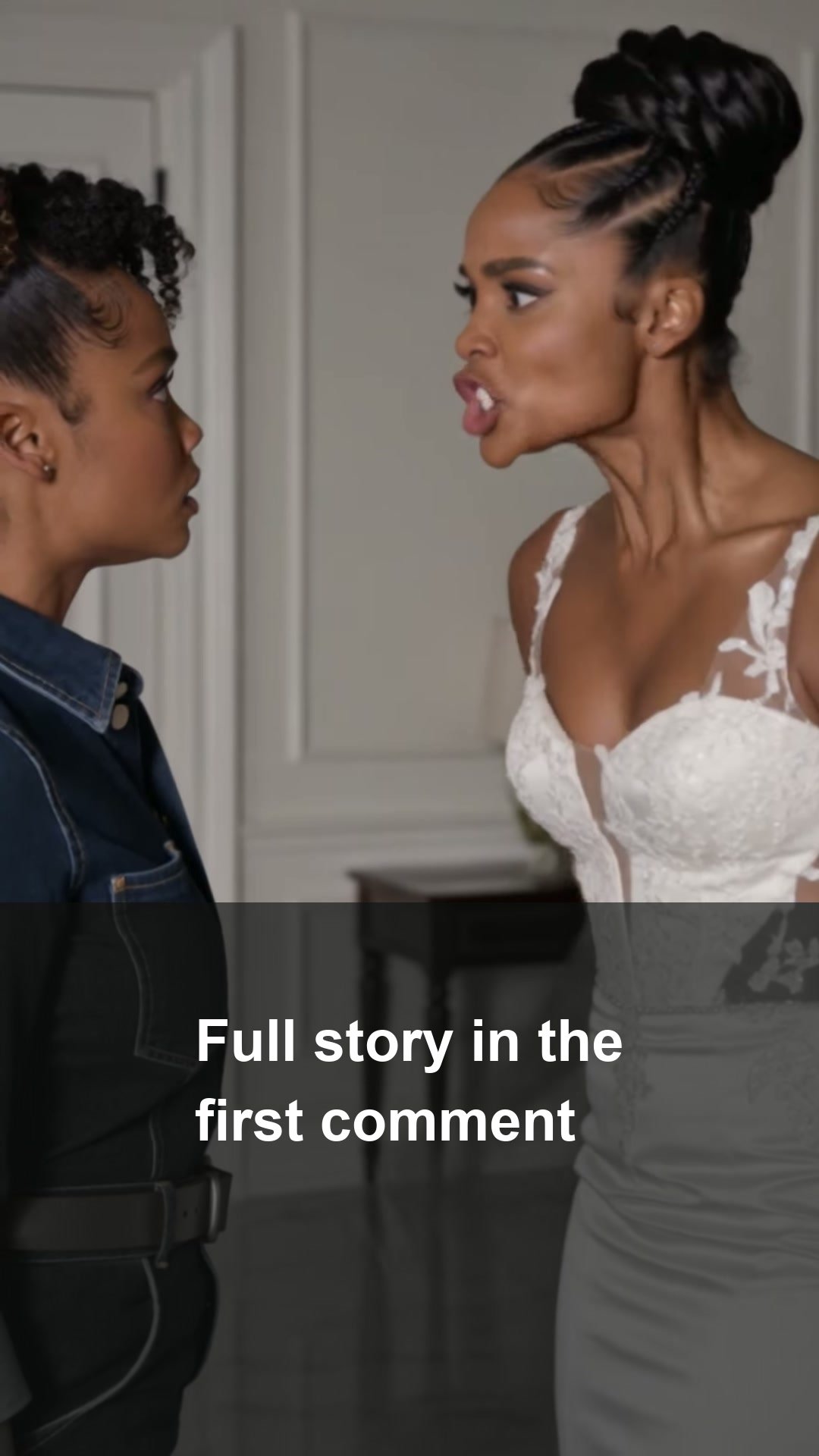
The estate was humming with the frantic energy of pre-ceremony preparations. Florists moved like phantoms through the halls, laden with white lilies that cloyed the air with a funeral scent. I pushed through the double doors of the suite. The makeup artist was standing by the window, her back to me, her kit splayed out on a pristine marble counter. She was holding a strand of pearls, her fingers nimble, almost clinical, as she wiped them with a microfiber cloth.
“Empty your pockets,” I said, my voice ringing off the high, ornate ceilings.
She turned, her face obscured by the shadow of the velvet curtains. I stepped forward, pointing my finger directly at her chest.
“I know you took it. Empty the bag, or I call the police myself.”
She didn’t flinch. She just tilted her head, a slow, predatory movement, and for the first time, our eyes locked. The air in the room didn’t just grow heavy; it vanished.
The woman didn’t empty her bag. Instead, she set the pearls down on the marble, the click sounding like a gunshot in the quiet suite. She walked past me, her shoulder grazing mine with a deliberate, cold weight, and exited into the hallway. I didn’t chase her. I reached for my phone, my thumb hovering over the contact labeled Mother. The wallpaper in the suite felt like it was closing in, patterned with gold-leaf ivy that suddenly looked like barbed wire.
Mother answered on the first ring, her voice a polished, practiced chime. She was already at the altar site, checking the floral arrangements. When I asked about the makeup artist—the one hired through the agency—Mother paused. There was a faint sound of wind behind her, the rustle of expensive silk. She told me we hadn’t hired an independent contractor; the agency had sent a team of four, all registered, all vetted. No one had been sent alone. She sounded bored, the kind of boredom that masks a deeper irritation. My skin crawled with the sudden, sharp memory of Emily’s old nursery, the way Mother used to rearrange the stuffed animals so they all faced the wall. I hung up before she could ask why I was breathing so hard.
I dialed the hotel manager next. My fingers were shaking, making it difficult to hit the numbers. He was in his office, his tone deferential, groveling in that way the staff always did when a Whitmore called. When I described the woman—the height, the dark hair, the stillness—he went silent. He claimed no woman matching that description was on the guest list or the staff roster. In fact, he insisted that the service entrance had been locked since dawn. He suggested, with a thin veneer of professional concern, that I might be suffering from wedding-day nerves. I slammed the phone down. I was wide awake, my pulse hammering a frantic rhythm against my collarbone.
I needed the nurse who had been with the family twenty years ago. Mrs. Gable. She lived in a cramped cottage three towns over, a place I hadn’t visited since I was six. I drove the Porsche hard, the coastal road blurring into a grey streak of salt and pine. When I pulled into her gravel driveway, the sound of the tires crunching was deafening. I found her in the garden, pruning hydrangeas. Her hands were spotted with age, her eyes milky.
She looked at the photo I pulled from my clutch—a grainy shot of the makeup artist I had snapped as she walked out. Mrs. Gable didn’t look at the screen. She looked at me, her expression shifting from confusion to a sudden, brittle terror. She whispered that the girl had died in the winter of 2004, buried in the family plot with the proper headstone. She insisted the doctors had documented everything, the fever, the finality of it. She grabbed my arm, her grip surprisingly iron-like. She told me to stop looking, that the dead don’t like to be disturbed.
I pulled away, my heart stalling. I thought of the pearls, the way the woman had held them—not like a thief, but like an owner. I turned back to the car. My decision was set: I wasn’t going to the wedding. I was going to the cemetery. I needed to see the dirt. I needed to know if it had been moved. I slid into the driver’s seat, the leather burning beneath my palms, and shifted into gear. As I pulled out, I caught sight of a car parked at the end of the lane, its windows tinted a deep, impenetrable black. It began to follow me, keeping a steady, haunting distance.
The winding coastal road blurred into a streak of grey and salt-scrubbed green. My knuckles were white against the steering wheel, my pulse thrumming in my throat like a trapped bird. Every time I glanced at the rearview mirror, the black sedan mimicked my speed, a shadow tethered to my bumper by some invisible, jagged wire. The cemetery gates loomed ahead, iron bars rusted into the shape of weeping willows. I didn’t slow down; I skidded onto the gravel verge, the tires spitting stones into the hedges.
I climbed out, my silk gown rustling harshly in the sudden, humid silence of the grounds. The air smelled of wet earth and ancient decay. I navigated the familiar path toward the Whitmore plot, where the marble angels stood guard over my history. My parents had spent millions on this sanctuary, a monument to a grief that had always felt rehearsed. When I reached the granite slab etched with Emily’s name, I stopped. The surface was pristine, untouched by moss or weathering. I knelt, pressing my palm against the cold stone, searching for the imperfection of a lie.
The footsteps behind me were rhythmic, heavy, and deliberate. I didn’t turn around. I knew the silhouette that emerged into the periphery of my vision—it was my father, his suit coat unbuttoned, his face a mask of practiced stoicism. He didn’t offer a hand to help me up. He simply watched the stone, his breath hitching in a way that felt entirely calculated.
I looked at the dates carved into the granite, then at his feet, stained with the same dark, damp earth I had just driven through. The realization didn’t hit me like a blow; it settled into my lungs, suffocating and cold. I stood, my legs trembling, and looked him square in the eye, waiting for the crack in his perfect, polished armor.
I know she isn’t in there, Dad.
The nursery at the estate smelled perpetually of starch and lilies, a sterile scent that disguised the fact that nothing lived there. I was six, sitting on the plush rug, threading silk ribbons through my fingers while Emily, two years my senior, stared out the window at the hedge maze. She had been coughing for weeks, a dry, rattling sound that Mother insisted was simply a reaction to the sea air. Then came the day the coughing stopped, replaced by the hushed, frantic movement of men in white coats and the sudden, jarring disappearance of her toys. The dollhouse, a sprawling Victorian replica that had occupied the center of our playroom, vanished overnight. When I asked Mother where it had gone, she didn’t look up from her correspondence. She simply smoothed the skirt of her dress, her movements as sharp and precise as a guillotine blade. Emily is gone, Sophia, she said, her voice devoid of default. She was too delicate for this world, and now she is resting where the air is cleaner. She handed me a porcelain figurine of a shepherdess and told me to cherish it, as it was the only thing left of my sister’s legacy. I held that figurine until my knuckles turned white, already learning that in our house, memory was a commodity to be traded for order.
School was a fortress built of reputation. By the time I reached boarding school in Switzerland, the legend of the Whitmore tragedy was a polished artifact I carried in my pocket like a talisman. Whenever a classmate asked about my sister, I recited the lines my father had rehearsed with me over dinner: a lingering illness, a quiet passing, the family’s stoic resilience. I became an expert at the art of the perfect narrative. I learned that if you keep your chin high and your voice steady, no one dares to probe the hollow spaces beneath the words. But there were cracks. I remember a winter break, home from school, stumbling upon a locked cabinet in the attic while looking for a lost riding crop. Inside, I found a stack of medical ledgers, the paper yellowed and crisp. They were labeled with a name that wasn’t mine, filled with technical terms for a chronic condition that had nothing to do with the delicate fragility Mother had described. The dates went on for years past the supposed funeral. I stood in the dark, the dust motes dancing in the sliver of light from the hallway, and realized my entire childhood had been a play directed by people who viewed children as assets to be managed or written off the balance sheet. I didn’t lock the cabinet; I pushed it back into the shadows and walked away, my heart hammering a rhythm of complicity.
Money was the lubricant that kept the family machinery silent. When I was sixteen, I begged my father for a deeper look into the estate’s endowments, curious about the charities my mother publicly championed. He laughed, a short, dry sound that didn’t reach his eyes, and poured himself a glass of amber liquid. You want to curate galleries, Sophia, he said, pacing the library, his shadow stretching long across the mahogany floor. Focus on the art, not the ledger. We maintain our station so you can exist in the light. He didn’t mention Emily, he never did, but the subtext was written in the way he avoided the portrait hanging in the foyer—a painting of us together that had been edited, my own figure now standing alone in a vast, empty garden. I realized then that my life was a curated exhibition. I was the heir, the one who had survived the genetic audit, the one whose blood was deemed pure enough to carry the name forward. I began to spend recklessly, buying things I didn’t want, filling the void with heavy gold chains and silk gowns, trying to purchase a sense of history that hadn’t been manufactured in a boardroom.
The marriage was the final seal on the contract. My fiancé, Julian, was a man whose pedigree was as impeccable as a royal lineage, chosen by my parents at a garden party three seasons ago. We didn’t talk about love; we talked about portfolios, property lines, and the necessity of keeping the bloodline untainted by scandal. During our engagement dinner, Mother leaned in, her perfume cloying and suffocating, and whispered that a wedding was the ultimate test of a woman’s ability to bury the past. She meant it as advice for the reception, a warning to keep my composure regardless of the chaos that usually accompanies such events. I watched her, the way she sipped her wine with absolute, terrifying grace, and I saw the predator behind the pearls. She had discarded a child to preserve an image, and she expected me to do the same for the sake of a wedding. I felt a surge of nausea, but I smiled, the perfect, polite smile of a daughter who knows exactly what is expected of her. I was already planning the color palette for the flowers, already choosing the music that would drown out any discordant notes.
I started having dreams about the hedge maze. In them, I was running through the dark, green walls, searching for the child who had been taken away. Every time I reached the center, I found nothing but a pile of old, discarded clothes and a single, rusted medical tag. I would wake up in my suite, the silence of the estate pressing against my ears like deep water. I became hyper-vigilant, scanning the faces of our domestic staff, wondering if any of them had known the truth, if they had watched the car drive away that morning twenty years ago with the girl who wasn’t supposed to exist. I knew the signs of a secret by heart now: the way a conversation died when I entered a room, the way my father’s jaw would twitch whenever he drank too much gin, the way my mother would catch her own reflection and look away as if she were inspecting a flaw in the glass. I was surrounded by a lifetime of warnings I had chosen to ignore, building a pedestal for myself that was clearly built on top of a shallow, unmarked grave.
The day before the wedding, I found a small, velvet-lined box tucked behind a row of books in the library. It was the bracelet, the one I thought had been lost in the move years ago. It was heavy, the gold etched with a pattern of ivy leaves that matched the ones in the nursery mural. Someone had put it back. My pulse quickened, a cold, sharp spike of adrenaline. This wasn’t a coincidence; it was a taunt. I stood there, the cool metal pressing into my palm, and realized that my family’s pristine history was a fragile, rotting structure. Every insult I had endured, every moment of emotional distance from my parents, every time I had been told to be quieter, thinner, more perfect—it all led to this. I looked at the photograph of my parents on the mantle, their smiles identical, their eyes cold and unblinking. I realized I was just like them, performing the role of the heiress while the truth festered in the cellar. I tucked the bracelet into my pocket, the sharp edges biting into my skin, and decided then and there that I wouldn’t play the part through to the end. The hook was already in my throat, and I was finally ready to pull.
I walked into the parlor where my father, Richard, stood swirling a glass of amber liquid, his posture as rigid as the grandfather clock ticking against the mahogany paneling. He traced the rim of his glass, a habit he developed only when he was calculating the cost of a scandal. I remembered him teaching me to play chess when I was six; he never let me win, claiming that mercy was a weakness that would eventually bankrupt me.
Father, I began, my voice steady despite the tremor in my knees. Did you ever wonder if the truth had a shelf life?
He didn’t look up, his eyes fixed on the fire. Truth is a commodity, Sophia. You learn to trade it for peace, or you lose the estate. He was a man who worshipped his own legacy, yet he couldn’t recall my childhood birthdays without checking the calendar in his study. I saw the contradiction in the way he kept a lock of hair from a girl he claimed had died in a fire—a shrine to a ghost he had manufactured to keep his stocks steady. I decided then that his peace was a prison, and I would be the warden who left the gate unlocked.
Mother was in the conservatory, her fingers buried in the soil of a prize-winning orchid, her nails stained dark with dirt she would later have a maid scrub away. She looked up, her expression a porcelain mask of serenity. You’ve been crying, she noted, her voice devoid of concern. It ruins the makeup. She had spent twenty years perfecting the aesthetic of a grieving widow, yet she was the one who had signed the papers to send Emily away. Her motive was always the preservation of a bloodline that she secretly loathed for its imperfections. I watched her prune a healthy leaf, her vanity so absolute that she pruned her own children to match the shape she desired. I realized she was not a villain, but a coward who feared the ugliness of humanity more than the truth of her own blood.
My brother, Julian, stood by the window, his reflection ghostly against the glass. He was a corporate lawyer whose primary function was burying documents that would expose our family’s insolvency. He polished his watch, a nervous tic that betrayed his anxiety over the impending audit. He loved the structure of the family because it protected him from his own incompetence. I caught his eye, and he quickly turned away, terrified that I might ask him about the boarding school tuition checks. He wanted to be free but lacked the spine to be poor.
I stepped closer to him, sensing his sudden urge to flee. The documents in your safe, Julian. They aren’t insurance anymore. They’re a liability.
He froze, his hand dropping to his side. Don’t, Sophia. You’ll burn us all.
He was right, but I was done playing with fire. I turned my back on them, the collective weight of their expectations falling away like dead skin. I would not be the vessel for their carefully curated lies. I walked toward the front door, the air outside smelling of brine and coming rain, and made a silent vow to find Emily before the sun set. Whatever the cost to my reputation, the debt was finally coming due.
The stone driveway of the estate crunched under my heels, a sound like grinding teeth. I reached the gatehouse, my phone already hot against my palm. I dialed the precinct sergeant I had met at the charity gala three months prior. When he answered, I didn’t offer a pleasantry. I gave him the name of the clinic in Connecticut—the one Emily’s records indicated as her boarding school residence—and reported a kidnapping cold case that was, in truth, an active cover-up. As I spoke, a black sedan pulled up the gravel path, my father’s driver at the wheel, his face a mask of practiced indifference. I cut the call before the sergeant could ask if I was sure, my thumb pressing the end button until the plastic indented my skin.
I walked to the sedan and stared through the tinted glass. My father didn’t lower the window. He simply tapped his ringed finger against the leather seat, a rhythmic, impatient signal for me to get in. I leaned down and tapped the glass twice, then turned on my heel and walked to the perimeter fence. I wasn’t going anywhere with him. I had already set the first gear in motion.
Back inside the main house, I bypassed the ballroom and went straight to the library. I sat at the mahogany desk, the heavy weight of the checkbook ledger staring back at me. I began the process of cancelling the recurring wire transfers to the medical foundation that had functioned as my parents’ hush money for two decades. Each keystroke felt like a fracture in a foundation that had held for twenty-six years. As I hit submit on the final cancellation, the house’s internal intercom buzzed. It was my mother. Sophia, the catering staff is waiting for instructions, she said, her voice brittle and sharp. I watched the progress bar on my laptop hit one hundred percent. I don’t care about the catering, I replied, my voice steady, devoid of the frantic edge I expected to feel. I care about the truth, and you are going to tell me where she is. There was a pause, so profound that the hum of the air conditioning seemed to roar. Then, the line clicked dead.
I didn’t wait for her to regain her composure. I opened my encrypted email and drafted a message to the law firm of Sterling and Vance. I attached the scan of the birth certificate I had found in my father’s desk—the one that still listed Emily as a live birth, uncorrected by the later obituary. I requested an emergency injunction to halt the distribution of my grandmother’s trust, citing evidence of fraud and the deliberate concealment of an heir. I hit send, then sat back. My hands were finally still.
A soft knock at the door preceded the arrival of my HR manager for the gallery, who had been tasked with organizing the wedding’s charitable donations. She looked pale, her eyes darting toward the open door. Sophia, there’s been a formal complaint filed against you, she whispered, sliding a document across the desk. It was a grievance from the makeup artist—Emily. It cited harassment, professional defamation, and emotional distress. I scanned the lines of legalese. It was clever. She was using the very systems I had taught myself to manipulate to get her foot in the door. I looked at the manager. I want you to fire the makeup agency, I said, but keep her on. I need to speak with her directly. The manager looked at me as if I had lost my mind. That’s not how this works, she said. I stood up, my chair scraping against the floorboards. It is exactly how it works when you realize you’ve been standing on a trapdoor your entire life.
By evening, the house was a pressure cooker of stifled whispers. I drove to a private lab in the city, the address I had pulled from a ledger entry buried in the back of my father’s tax returns. The technician was young, unfazed by the exorbitant fee I paid for expedited genetic sequencing. I provided a hair sample I had taken from Emily’s brushes—the very ones I had ordered searched only hours before. I signed the release forms, waving away the privacy waivers. I wanted this on the record. I wanted the state to have the file.
When I returned to the estate, the driveway was blocked by a fleet of black SUVs. My father stood on the porch, flanked by two men in dark suits who carried the unmistakable posture of private security detail. Behind them, the front door was open, spilling yellow light onto the grass. I parked my car, the engine ticking as it cooled. I walked toward them, my heels sinking into the soft turf. My father didn’t speak. He simply gestured to the lawyers standing by the entrance, holding a stack of papers thick enough to be a small book. They were contesting my standing, filing a counter-claim for mental instability, a classic maneuver to strip me of my power of attorney.
I looked past them, into the foyer. Emily was there, standing at the top of the stairs, her expression unreadable. She wasn’t wearing the makeup artist’s uniform anymore. She wore a simple black dress, the same silhouette I had favored for my own gallery openings. She held a small, antique locket—the one I had thought lost in the attic years ago. She opened it, showing me the tiny, faded portrait inside. It was us. Identical, even then. My father reached out to grab my arm, to steer me into the study for a negotiation, but I stepped aside. The consequences were already unfolding in the dark, in the servers of the lab, and in the dockets of the court. I had burned the bridge, and for the first time, I felt the cool, clear air of the wreckage. I looked at my sister, and I didn’t see a victim. I saw a partner.
The digital fallout was surgical. By Monday, the wedding video, which was meant to be a curated highlight reel of floral arrangements and champagne towers, had been scrubbed of its romantic veneer and re-uploaded as a ten-minute exposé. The shaky camera footage captured my father’s face as his mask of aristocratic composure curdled into a snarl of panicked entitlement. I sat in the dim light of my gallery office, watching the view count tick upward in the thousands. It was no longer a secret; it was a global curiosity. My phone vibrated against the glass desk, a constant, low-frequency hum like a trapped hornet. Every notification was a death knell for a business relationship. My primary investor, a man who once praised my eye for provenance, sent a short, brutal email: *The gallery’s reputation is now synonymous with scandal. Do not expect the autumn acquisitions.* I closed the laptop, the screen going black, and stared at my reflection in the polished mahogany. I looked smaller than I had a week ago.
My mother called at noon, her voice tight with the frantic, brittle energy of a woman whose world had shrunk to the size of a jail cell. I didn’t pick up. Instead, I walked to the window. Outside, the street was cluttered with a black sedan and two men in trench coats, their camera lenses aimed directly at the gallery’s front entrance. The community had pivoted from polite nods to aggressive voyeurism. My neighbor, a woman who had once entrusted me with her appraisal business, crossed the street to avoid walking on my sidewalk. I felt a cold, hollow sensation in my chest, a physical thinning of my social standing. It wasn’t the loss of the money that stung; it was the sudden, transparent reality of my friends—how quickly the high-society loyalties dissolved the moment the Whitmore name became a liability.
I opened the bottom drawer and pulled out my resignation letter. It was two sentences long, written on heavy, cream-colored stock. I signed it with a steady hand. If my name was poison, then I would be the one to administer the antidote. I walked to the shredder, the hum of the machine drowning out the distant, muffled sound of a reporter shouting a question through the glass door.
I left the building through the rear alley, a path usually reserved for crates and refuse. Emily was waiting there, leaning against a rusted dumpster, her black dress faded and her hair pulled back in a messy knot. She didn’t look like a long-lost heiress. She looked like a ghost who had finally decided to haunt the living. She didn’t ask if I was okay. She didn’t need to. We walked toward the subway, leaving behind the curated life I had spent twenty-six years meticulously constructing. As I descended into the station, the air grew thick with the smell of ozone and damp concrete. My designer heels clicked harshly against the tiles, a sound that felt entirely foreign in this subterranean world. I realized then that I had no plan, no bank account that wasn’t being audited, and no social invitation for the rest of my life. I reached into my pocket, touched the locket Emily had given me, and felt a strange, sharp relief. I decided to stop checking my phone. I tossed the device into a trash bin near the turnstile, watching it disappear into the grey plastic mouth. I was anonymous for the first time, and the wreckage behind me was finally silent.
The diner was a strip of neon humming against the pre-dawn coastal fog, smelling of burnt coffee and industrial floor cleaner. Emily sat in the corner booth, her movements slow, peeling the label off a glass soda bottle. I slid into the cracked vinyl seat opposite her, my fingers tracing the rim of a thick ceramic mug. The waitress dropped two black coffees without asking, the steam rising in thin, aimless ribbons. Emily leaned forward, her gaze tracking the way I gripped the cup, my knuckles white against the dark liquid. She reached out, her hand hovering over mine for a second before she pulled back, settling for a small, jagged smile that didn’t quite reach her tired eyes.
I told her I’d signed the final papers that morning, transferring the last of the trust into a blind fund for the documentary project. The silence between us wasn’t heavy anymore; it was just quiet. She nudged the sugar dispenser toward me, then tapped her own wedding-less ring finger against the table. I realized then that we were both waiting for a ghost to show up, a phantom parent or a family lawyer, but the diner door stayed shut. I thought about the house in the Hamptons, the way the sunlight hit the mahogany banisters, and how I couldn’t remember the color of the curtains. It didn’t matter. The money was gone, the legacy was a public record of fraud, and I was just a woman drinking bad coffee in a town where no one knew my middle name.
I reached into my bag and pulled out the locket, placing it on the Formica. The gold caught the flicker of the sign outside, casting a long, distorted shadow across the table. Emily covered it with her palm, her eyes finally softening. She had the same birthmark near her ear as I did, a small, dark freckle that our mother had always told us to conceal with foundation. I looked at it, then at her face, and realized the resemblance was no longer a threat to a pristine image, but a marker of shared survival. I made the decision then to stop looking for the exit. We finished our drinks in the low light, the clatter of the kitchen staff the only sound in the room. I stood up and pulled my coat tight, the weight of the past finally detached from my shoulders. Outside, the sun was beginning to bleed over the horizon, turning the grey ocean into a sheet of hammered copper. We walked toward the shoreline together, leaving the diner behind, the gravel crunching under our feet like broken porcelain.
The sand was cold, pressing damply into the thin soles of my loafers as we reached the water’s edge. Emily stopped where the tide licked the shore, her shoulders dropping two inches as she exhaled. She reached out, tracing the gold filigree of the heirloom bracelet—the one I had placed on her wrist an hour ago—with a thumb that was calloused and stained by charcoal. It looked wrong against her frayed sleeve, but it belonged there more than it ever had on mine.
Do you remember the lighthouse? she asked, her voice barely rising above the rhythmic pull of the surf.
I shook my head, my lungs finally expanding without the phantom tightness of a corset. I only remember the stories they told to keep us inside.
She laughed, a sharp, unvarnished sound that lacked the curated poise of our mother’s social circles. We’re allowed to walk as far as we want today, Sophia. No cameras. No schedule.
I looked at the horizon, the expansive, indifferent blue stretching toward a world that didn’t care about the Whitmore legacy. For the first time in twenty-six years, I didn’t feel like an artifact on display. I felt like a body, skin-bound and heavy, tethered to the earth by gravity rather than expectation. I reached out and took her hand, the grip firm and real, anchored by the pulse thrumming beneath her skin.
I think I’d like to see the garden again, I said, the thought blooming suddenly. Not the manicured hedges they used to hide us, but the wild mess where the roses grew over the fence.
She nodded, turning back toward the dunes. There’s a dog at the shelter, a stray. We should stop there on the way back.
I squeezed her hand. I decided that we wouldn’t return to the estate at all. I turned my back on the coastline, ready to walk until the road looked entirely new.
The gravel crunched beneath our boots as we moved past the perimeter gate, leaving the manicured manicures of my former life behind. I stopped at the property line, where the cultivated, clipped hedges gave way to the encroaching thicket of a wild, unpruned rosebush. A gust of salt air whipped up from the dunes, catching the heavy silk of the discarded wedding veil I had dragged behind me. The fabric snagged on a jagged thorn, billowing out like a ghost caught in the briars. I watched the lace fray as the wind pulled at it, tearing away from the lace trim until the veil hung ragged and tethered, a white flag waving uselessly against the brambles. I turned away, leaving the silk to catch the morning dew, and kept walking.
Leave a Reply