The windshield glass blossomed into a thousand white stars, framing the hole where the bullet had just passed through.
My breath hitched, sharp and jagged, as I jammed my foot onto the gas. Beside me, Becca was curled into a ball, her hands clamped over her ears, the smell of burnt rubber and cheap upholstery thick in the cramped cab. I didn’t look at her. I couldn’t. I kept my eyes locked on the dark ribbon of the service road, my knuckles white against the steering wheel.
“Is she still there?” Becca whispered, her voice barely audible over the thrum of the engine.
I checked the rearview mirror, but it was shattered, dangling by a single wire. The darkness behind us was absolute, a void swallowing the road we had just abandoned. My pulse was a frantic metronome against my ribs, counting down the seconds until the next impact. I realized then that my mother wasn’t just chasing us; she was erasing us. The thought wasn’t terrifying—it was tactical. I shifted gears, the transmission grinding in protest. I needed a blind spot. I swung the wheel hard to the right, plunging us into the tree line.
The kitchen clock hummed a low, mechanical B-flat at six in the morning. I sat at the granite island, the surface cold against my forearms, watching the steam rise from a mug of black coffee in perfectly vertical ribbons. The house smelled of nothing—no lingering perfume, no burnt toast, just the sterile, pressurized scent of a home climate-controlled to perfection. My mother entered, her movements economical and silent, wearing a crisp charcoal suit that didn’t have a single microscopic wrinkle. She poured herself a glass of water, the ice cubes clinking with a sound like glass breaking, and set the glass down exactly two inches from the edge of the coaster.
You have the permission slip for the field trip? she asked. Her voice was flat, devoid of the morning softness most mothers used.
I pulled the folded paper from my bag, the edges sharp and white. It’s on the counter.
She didn’t look at it, just nodded once, a quick, downward dip of the chin. Becca will need a ride to practice if you aren’t back by five.
I will be.
I walked to the front door, the hardwood floor quiet under my socks. The commute to school was a monotonous ritual of gridlock and gray sky. The Pacific Northwest drizzle painted the world in shades of slate and charcoal, blurring the manicured hedges of Oakridge into a soft, indistinct wall. At the office, I walked past the lobby printer, which groaned and spat out a stack of documents with a rhythmic, staccato beat. Mrs. Gable, the receptionist, waved a stack of files at me, her face a mask of practiced suburban cheer.
Tough morning commute, Zoe? she called out, not waiting for an answer. The forecast says more rain through Thursday.
I just nodded, my mind already cataloging the exit routes from the main hallway. The weather was a constant, predictable variable, just like the lukewarm lattes and the way the students gossiped about who was dating whom. Everything in Oakridge had a place. Everything had a function. I spent my afternoon in the biology lab, dissecting a frog with clinical, detached precision, marveling at how simple and logical the internal organs were when removed from the chaos of a living thing. There were no secrets in a jar of formaldehyde.
I stopped at the corner store on my way home, the fluorescent lights humming overhead, buzzing with an electrical irritability that made the back of my neck prickle. I bought a pack of gum and a bottle of water, the transaction quick and efficient, the cashier barely glancing up from his phone. I walked to my car, the parking lot empty and vast, the silence of the neighborhood pressing in on me like deep water.
I pulled into the driveway, the gravel crunching under the tires with a sound that felt too loud in the quiet air. The house stood perfectly still. No lights flickered in the windows, and the lawn was trimmed to a height that defied nature. I sat in the driver’s seat for a moment, listening to the engine tick as it cooled, enjoying the absolute, suffocating normalcy of it all. It was a life constructed of glass, transparent and fragile, yet sturdy enough to hold back the tide if you never dared to touch the surface. I reached for the door handle, feeling the weight of the key in my pocket, the metal biting into my palm.
My phone, resting in the passenger seat, suddenly fractured the silence. It didn’t ring—it shrieked, a single, piercing tone that didn’t belong to any ringtone I recognized. I looked down, and the screen flashed a string of numbers that meant absolutely nothing, and yet, everything.
The vibration rattle against the leather seat was rhythmic, a mechanical heartbeat. I didn’t reach for the device. Instead, I watched the pixels burn against the dark cabin, the light reflecting in the rearview mirror where Becca sat, her eyes wide and unblinking in the gloom. The tone died, replaced by the heavy, pressurized silence of the garage. I grabbed the phone, my thumb hovering over the screen, and the text arrived: *Exit by the service gate. The lock is compromised. Do not look back.* It wasn’t signed, but the syntax was my father’s—clinical, devoid of warmth, stripping away the pretense of our suburban life.
Becca leaned forward, her breath hitching. Zoe, what is it? Who is that?
I didn’t answer. I reached for the garage door opener, but the button was dead. The power had been cut from the outside. I looked at the floorboards where the gym bag sat, the bag Dad had insisted was just for his morning racquetball, the one he’d warned me never to move. I pulled the zipper open, my fingers brushing cold steel and nylon.
Mom is in the kitchen, Becca whispered, her voice cracking like dry wood. I heard the pantry door. She was moving boxes again.
The pantry was where the floorboards creaked. That was where she kept the cleaning supplies, the heavy chemicals that smelled of bleach and something sharper, something metallic. My skin crawled with the sudden, sharp memory of her wiping down the knives last Tuesday, her hands moving with a rhythmic, detached precision that I had mistaken for domestic obsession.
We have to go, I said, shifting the gear stick into neutral to roll the car silently toward the manual release.
But Mom—
She isn’t Mom, Becca. Not right now.
I eased the heavy steel door open, the hinges protesting with a low, agonizing groan. Outside, the neighborhood was a tomb of manicured hedges and blue-grey shadows. The SUV crawled past the convenience store with its headlights extinguished, and I realized my mother wasn’t looking for her daughters—she was hunting them. She moved with a strange, predatory fluidity between the streetlamps, a dark silhouette pausing to scan the driveways, her shoulders squared in a way I had never seen in our living room.
She held a black object at her side, the weight of it causing her arm to swing with a pendulum-like lethargy. She stopped at the edge of our driveway, turning her head toward the garage. She didn’t look frantic. She looked methodical. She was checking the perimeter.
I pushed the heavy garage door just enough to slide the car through, my heart hammering against my ribs like a trapped bird. My hands felt clumsy, slick with sweat against the steering wheel. I saw her pivot, her gaze snapping toward the sound of the metal track. She knew. She had been waiting for the door to move.
Get down, I hissed, shoving Becca’s head toward the floor. I hit the ignition. The engine roared to life, a sudden, violent intrusion into the quiet street, and I realized I had just signaled our exact position to the woman who taught me how to tie my shoes.
The asphalt blurred into a gray streak as I pulled onto the arterial road, my knuckles white against the wheel. My phone hummed in the cup holder. It was Dad. The screen light cast a sick, flickering pallor over Becca’s hunched shoulders. I tapped the speaker button, expecting instructions, a destination, a warning.
Zoe? You need to stay at the house, he rasped. His voice was a thin wire, stretched until it threatened to snap.
I’m already gone, I said, watching the rearview mirror for headlights that didn’t belong. Where are you?
I’m at the hospital, he said, but the background noise was wrong. It wasn’t the rhythmic beep of monitors or the shuffle of nurses; it was the metallic, hollow echo of a parking garage. Your mother is with me, Zoe. We’re waiting for the doctors.
My stomach turned. She wasn’t at the house. She was with him. But I’d just seen her in the driveway, standing in the dark, watching the garage like a predator. I gripped the wheel tighter. You’re lying, I said. She’s at the house, Dad. She’s hunting us.
Silence stretched, heavy and suffocating. When he finally spoke, his voice had changed—it was deeper, flatter, stripped of all paternal warmth. You should have stayed put, Zoe.
I killed the call and dialed the front desk of the Oakridge Medical Center. A nurse answered on the third ring, her tone clipped and professional. I asked for my father by name. She sighed, a sound of practiced exhaustion. Honey, there’s no one by that name admitted here, and we haven’t had a trauma entry since Tuesday. I checked the logs again. Nothing.
I slammed the phone back into the cup holder. The hospital was a dead end. I veered into a service station, the tires screeching against the concrete. A man was hunched over the air compressor, his jacket collar turned up against the damp evening air. I slowed, rolling down the window just enough to be heard.
Did you see a silver SUV come through here? Ten minutes ago?
The man didn’t look up. He kept his eyes on the pressure gauge. You mean the black one? The lady in the black sedan came through. She was asking about the back roads toward the county line.
He was wrong. Mom drove an SUV. Everything was shifting, the floorboards of my reality rotting away under my feet. I pulled back onto the road, the engine whining in protest.
If Dad was at a hospital that didn’t exist, and Mom was supposedly driving a car I’d never seen, then the house—the only place that ever felt solid—was a stage set. I thought about the safe in the garage, the way my father’s birthday opened it with a satisfying, mechanical click. He had taught me that combination when I was twelve, a lesson in trust, he’d called it. A lesson in preparation, I realized now.
I pressed the gas, the needle climbing past the limit. I had to reach the only person who hadn’t spoken, the only one whose silence might be the truth. I dialed the secondary line I’d found in my father’s desk, the one labeled with a single, handwritten letter. It rang once, twice, and then a click signaled a connection.
I didn’t wait for a greeting. Where is he? I demanded, my voice cracking.
The voice on the other end was a woman’s, calm and devoid of default. Your father isn’t at the hospital, Zoe. And your mother isn’t hunting you. They’re both waiting for you to realize that you’re the only witness left.
The line went dead. I stared at the dark road ahead. A pair of headlights crested the hill behind me, bright, steady, and closing in fast.
The headlights bloomed, blindingly white, turning the interior of the borrowed sedan into a sterile, clinical cage. I gripped the steering wheel until the leather groaned, my knuckles white under the dome light. Becca was curled into the passenger seat, her breathing shallow, smelling of cheap gas station coffee and terror. I didn’t reach for her. In the rearview mirror, the vehicle behind us didn’t swerve or accelerate; it simply held its distance, a persistent shadow mirroring every twitch of my wrist.
I thought about the safe in the garage, the weight of the handgun I had refused to touch, and the way my mother had once taught me to fold a fitted sheet—with an obsessive, geometric precision that felt less like a chore and more like a tactical exercise. I had analyzed every move, every red flag, every encrypted ping on her phone, convinced I was the protagonist of a rescue mission. I was the protector. I was the one holding the map.
The sedan behind me tapped its brakes, a slow, rhythmic pulse. It was an invitation.
I pulled onto the gravel shoulder, the car tires crunching like breaking bone. I killed the engine, the sudden absence of noise amplifying the frantic hammering of my own heart. I didn’t look at the door handle. I looked at the side mirror, watching the silhouette of the driver emerge from the following vehicle. He didn’t move with the frantic urgency of a predator or the calculated aggression of an operative. He walked with a weary, familiar gait, his shoulders slumping under the weight of a coat I had seen draped over our entryway chair a thousand times.
Becca reached for the lock, her hand trembling. I caught her wrist, pinning it against the console, my eyes fixed on the man approaching the driver’s side. He tapped on the glass, his face obscured by the glare, his shadow long and distorted against the asphalt.
I rolled the window down exactly three inches.
I don’t think you’re my father.
The living room of our house in Oakridge smelled of lemon polish and the metallic tang of the dehumidifier my mother insisted on running year-round. It was eight years ago, or maybe ten. I was sitting on the floor, sorting through a box of my father’s old receipts, looking for a way to kill the silence that always seemed to thicken whenever he was home. He walked in, his suit jacket already off, his tie pulled loose in a way that looked practiced rather than spontaneous. He saw me with the box and didn’t yell, which was worse. He just stood there, the shadow of his frame swallowing the light from the floor lamp.
Zoe, he said, his voice flat, put that back.
I looked up, holding a slip of paper from a hardware store in a city three states away. It was dated a Tuesday, the same Tuesday he’d told me he was stuck in Chicago for a regional sales conference. Why are you buying galvanized nails in Seattle on a Tuesday, Dad?
He didn’t take the receipt. He just walked to the kitchen, opened the pantry, and moved a box of cereal to reveal the small, recessed safe he thought I didn’t know about. He didn’t look at me when he spoke again. Your mother likes order, Zoe. You should learn to appreciate it while you have it.
I stood up, the receipts crinkling in my hand, and felt the first cold prickle of reality. He wasn’t talking about house chores. He was telling me that my curiosity was a malfunction in the machinery of our home. I dropped the receipts into the box and shoved it under the sofa, deciding then that I would stop asking about his business trips. I didn’t want to know the answer. I wanted to be a normal kid in a normal house.
But normalcy was a performance we all rehearsed. I remember the dinner parties where my mother would sit at the head of the table, her smile perfectly symmetrical, her eyes never actually landing on the guests. She would pour wine with a precision that bordered on surgical, her hands never shaking, even when the conversation turned to local politics or the neighborhood watch. She spoke in sentences that were structured like logic puzzles, giving away nothing while appearing to be the life of the party.
One evening, after the guests had left, I found her in the kitchen standing over the sink with a glass of water. The house was quiet, the kind of silence that feels heavy, like a held breath. She was staring at the window, not at the reflection of the room, but at the darkness beyond the glass. She didn’t hear me walk in. Her hand, usually so steady, was gripping the edge of the granite countertop so tightly her knuckles were white.
Mom, I said, startling her. She whipped around, her expression shifting from raw, jagged intensity to the placid mask of a suburban housewife in a single blink.
Zoe, she said, her voice smooth as glass, you should be in bed. It’s a school night.
I didn’t move. I saw you looking outside. Is someone there?
She walked over to me, placed a hand on my shoulder, and patted it once. Her touch was cold, detached, like a doctor checking a reflex. There is no one, Zoe. There is only what we let inside. Go to sleep.
I went to my room and pushed my dresser against the door, a habit I’d developed after she started installing those extra locks on the basement storage room. I spent the night staring at the ceiling, wondering why a family that had everything—the perfect lawn, the top-tier school district, the clean, quiet life—needed so many barriers between its members. I realized that night that our home wasn’t a sanctuary; it was a fortress, and we were the prisoners.
Then there was the day Becca came home from middle school crying because her locker had been searched. She was hysterical, convinced she’d done something wrong, that the school had found the stash of candy or the prohibited stickers she kept hidden in her bag. I found our mother in the garage, hunched over the engine of the SUV, her hands stained with grease. She wasn’t just checking the oil. She was rewiring the ignition, her brow furrowed in deep concentration.
Becca’s upset, I said, leaning against the doorframe. Her locker got tossed.
My mother wiped her hands on a rag, the movement slow and deliberate. That’s unfortunate, she said, not looking up. Tell her to be more careful with where she puts her things. Privacy is a privilege, Zoe, not a right. If you don’t earn it, you don’t get to keep it.
I felt a surge of nausea. She wasn’t worried about the school administration. She was worried about what kind of trail we were leaving behind. I decided right then that I would become the person who cleaned up the mess before anyone else noticed it. I started checking her computer history, looking for the strange signal tones, learning to read the subtle changes in her tone of voice that preceded a disappearance. I watched my father pack his gym bag, not with sneakers and protein bars, but with passports and burner phones he thought were hidden deep in the lining.
The marriage was a quiet war of attrition. They didn’t fight with voices; they fought with absences. A late dinner, a missed anniversary, a sudden, sharp look across the breakfast table that silenced any attempt at conversation. I watched them build a perimeter around us, a glass cage that kept the neighbors out and us in. They taught me how to be suspicious of everyone, how to map out every exit in a room, how to never trust a direct answer.
When I was fourteen, I tried to run away. I packed a backpack with clothes and a few hundred dollars I’d saved from babysitting, and I made it as far as the bus station in the next town over. I sat on the bench, watching the clock tick, feeling the terrifying rush of freedom. Then I saw a car pull into the lot. It wasn’t my mother’s SUV, and it wasn’t my father’s sedan. It was a black, unmarked vehicle I didn’t recognize.
A man stepped out, adjusted his hat, and looked directly at me. He didn’t come over. He just sat in his car and watched. I knew that look. It was the same look my father gave when he was checking the perimeter of a property. I was being watched, not by my parents, but by the things my parents had brought into our lives. I went home that night, walked through the front door, and found my mother in the living room, reading a book. She didn’t ask where I’d been. She didn’t look up. She just said, Dinner is at six, Zoe. Don’t be late.
I knew then that I couldn’t escape them by running. I could only survive by becoming as cold and calculated as they were. I started to memorize their patterns, the cadence of their lies, the specific way they handled their secrets. I learned that every time they hugged us, they were checking for wires or weapons. I learned that every kiss on the forehead was a scan for a fever or a sign of stress.
I sat in my room for years, watching the house, watching them. I saw the way my mother looked at the pantry, the way she checked the backyard at night, the way my father’s hands would hover near his waistband whenever the doorbell rang. It wasn’t a life; it was a long, slow-motion countdown. And now, standing here in the dark, watching this man who claimed to be my father, I understood that the countdown had finally reached zero.
I looked at his hands, resting on the glass, and saw the faint, jagged scar on his thumb. I’d seen that scar when he used to help me with my math homework, when I was little and still believed he was just an accountant. I remembered the way he would tap his pencil against the table, the rhythm steady and hypnotic. But the man outside wasn’t tapping. He was waiting. He was waiting for me to make the decision that would either save us or seal our fate. I looked at Becca, her eyes wide and terrified, and realized she was waiting too. I turned back to the window, the reflection of my own face cold and unfamiliar in the glass. I didn’t open the door. I didn’t pull away. I just stared at him, waiting for him to move, waiting for the truth to finally break the glass.
The kitchen linoleum was cold against my soles, a sharp contrast to the humid, frantic heat radiating off Becca. I stood near the island, gripping a serrated bread knife, its handle slick with my own sweat. My father, Marcus, remained on the porch, his silhouette cast long and distorted by the motion-sensor light. He wasn’t the man who helped with calculus anymore. He was a creature of calculated stillness, a man who had spent fifteen years perfecting the art of the suburban lie. He wanted us to believe he was a victim, a husband blinded by his wife’s betrayal, but I remembered the way he’d checked the perimeter of our yard every night for a decade, his eyes never truly resting. He needed us to trust him because he was terrified of being alone in the aftermath of his own failures.
I didn’t open the door. I shifted my weight, the knife blade catching the porch light. Why are you here, Dad? I called out, my voice steady despite the hammer of my pulse. The silence that followed felt heavy, pressurized. He didn’t answer immediately, instead pressing his palm against the glass. He had a motive—self-preservation—but there was a contradiction in the way his shoulders slumped. He loved us, I knew that, but he loved his mission more. He was a man who sacrificed his daughters’ childhoods for the sake of an agency that likely discarded him the moment the syndicate turned. I felt a surge of cold, clinical disgust. He was just another piece on a board he thought he was playing.
Becca tugged at my sleeve, her fingernails digging into my skin. She was twelve, still operating on the logic of family, still waiting for the adult to make everything okay. She didn’t understand that the adults were the source of the rot. I looked at her, then back at the door. I saw the way he shifted his stance, his weight centering, a move he’d taught me in the garage when he thought we were just playing rough. He was preparing to breach. He wasn’t here to save us; he was here to secure his assets before the feds arrived.
I backed away, pulling Becca toward the mudroom. I needed a distraction. I reached into my pocket and pulled out the burner phone I’d swiped from the safe. I saw the text from Reeves: Proceed to the drainage tunnel. Do not engage. My heart stuttered. I realized then that my father, the lawyer, the neighbor, the soccer dad—he was just a mirror reflecting our own desperation. He wasn’t the villain, and he wasn’t the victim. He was a ghost trying to haunt a house that had already been demolished.
I slammed the mudroom door, the sound echoing like a gunshot in the sterile house. I knew the layout better than he did. I knew the loose floorboard in the pantry where the emergency kit was stashed. I looked at Becca, my eyes hard. We leave through the back, I whispered, my voice devoid of the comfort she was clearly craving. I didn’t care about his reasons anymore. I didn’t care about the years of quiet dinners and weekend trips to the lake. Those were the tactical maneuvers of a ghost. I shoved the bag into her arms, my movements practiced and efficient. We moved into the dark, leaving the man on the porch to argue with his own reflection. The hunt was no longer theirs; it was ours.
The gravel driveway of the station was slick with Pacific Northwest drizzle as I stepped out of the shadows. I gripped the burner phone I had purchased with laundered cash at the transit hub, its weight feeling like a heavy, cold stone in my palm. The fluorescent light of the payphone booth hummed, a low-frequency buzz that grated against my nerves. I dialed the number for the Oakridge precinct, my thumb hovering over the keypad.
I am calling to report a domestic threat, I said, my voice steady, stripped of the tremor that Becca’s sobbing was currently causing in the backseat of the stolen sedan. I provided the address. I specified the presence of a suppressed firearm, the make and model Becca had described from the pantry shelf. The desk sergeant’s voice was bored, thick with the laziness of a rainy Tuesday, until I gave him the file number Dad kept in the garage safe. The line went silent, then sharp. He didn’t ask for my name. He just told me to stay on the line. I hung up instead.
The fallout began the moment the signal cut. I tapped into the primary checking account, the one Mom thought was untouched, and initiated the transfer of every liquid cent into a shell account I’d set up under a false identity months ago. The progress bar crawled across the screen, a digital heartbeat of our survival. The counter-action hit three minutes later: a notification popped up on the burner screen, a bank alert showing an immediate freeze on all assets linked to the Brennan household. They were onto the trail. They were cutting off our oxygen.
I stared at the screen, the blue light reflecting in my pupils. I wouldn’t be a victim of a frozen account. I pulled the legal contact list I had memorized from Dad’s encrypted ledger. I called the firm in downtown Seattle, a name known for handling sensitive, off-the-books litigation. A lawyer answered on the fourth ring, his voice crisp and entirely too calm. I didn’t identify myself. I told him I needed a protective injunction against Elena Brennan, citing imminent bodily harm. When he hesitated, I whispered the code word Dad had drummed into me when I was ten. The lawyer’s tone shifted, instant and compliant. He promised to file the paperwork by morning.
Reaction was immediate. A sleek, black sedan pulled into the gas station lot, headlights off. I saw the driver’s silhouette. It wasn’t the police. It was a private security team, the kind that moved with the precision of a scalpel. They weren’t there to serve a warrant; they were there to verify the target. I didn’t wait for them to exit the vehicle. I drove, my hands white-knuckled on the wheel, weaving through the suburban maze.
I reached the satellite office of the HR department where Mom had supposedly worked for years. I bypassed the receptionist, walked straight to the secure terminal, and logged in using the administrative credentials I had scavenged from her laptop. I filed a formal, high-priority grievance against her, flagging her employee profile for internal investigation. It was a digital Molotov cocktail. The system triggered an automatic alert to corporate security. Within seconds, her access codes were revoked globally, and the office lights in the building behind me flickered as the security protocols went into hard lockdown.
I felt the adrenaline spiking in my blood, a sharp, metallic taste. I knew what came next. By flagging her, I had forced her hand. She wouldn’t be able to hide behind the corporate veil anymore; she had to come out into the open to clean up the mess.
I pulled into a secondary location, a sterile, white-walled clinic on the edge of the city. I had the genetic markers I needed, lifted from a discarded hairbrush in the master suite. I paid in cash, signing the requisition form for a DNA test to confirm the biological link—or the lack thereof—between us and the woman I called Mother. The clerk looked at me, eyes lingering on my bruised knuckles, but she didn’t ask questions. She took the sample and gave me a claim ticket.
The consequences engine roared. As I turned back to the car, my phone pinged with a notification from the courthouse portal. A motion to contest the family will had been filed by a third party—a legal front for the syndicate. They were already moving to claim the house, the land, and the secrets buried in the foundation. They were trying to erase the paper trail before I could expose it.
I sat in the driver’s seat, Becca shivering in the passenger side, her eyes wide and unseeing. I looked at the dashboard clock. Every step I took against them was a step they anticipated. Every legal filing was a target painted on our backs. I had hired a lawyer, frozen their assets, reported their crimes, and started the process of verifying our lineage, but each action had only accelerated the collapse of our world.
I reached out and locked the doors, the mechanism sliding home with a heavy, final clack. I realized then that there was no going back to the suburbs. There was no return to the life where we were just daughters in a manicured yard. The house was empty, the accounts were dead, and the law was no longer our protector—it was a weapon being swung at us from both sides.
I stared into the rearview mirror. A pair of headlights crested the hill behind us, steady and relentless. They had tracked the HR login. I shifted the car into gear, my heart rhythmically steadying into a cold, clinical beat. I didn’t look at Becca. I just pulled into the traffic, the engine screaming as I pushed it toward the interstate, leaving the last shred of our old life in the gutter. The hunt wasn’t just on; it was converging. We were running out of road, and the next move wasn’t a filing or a phone call. It was a gamble.
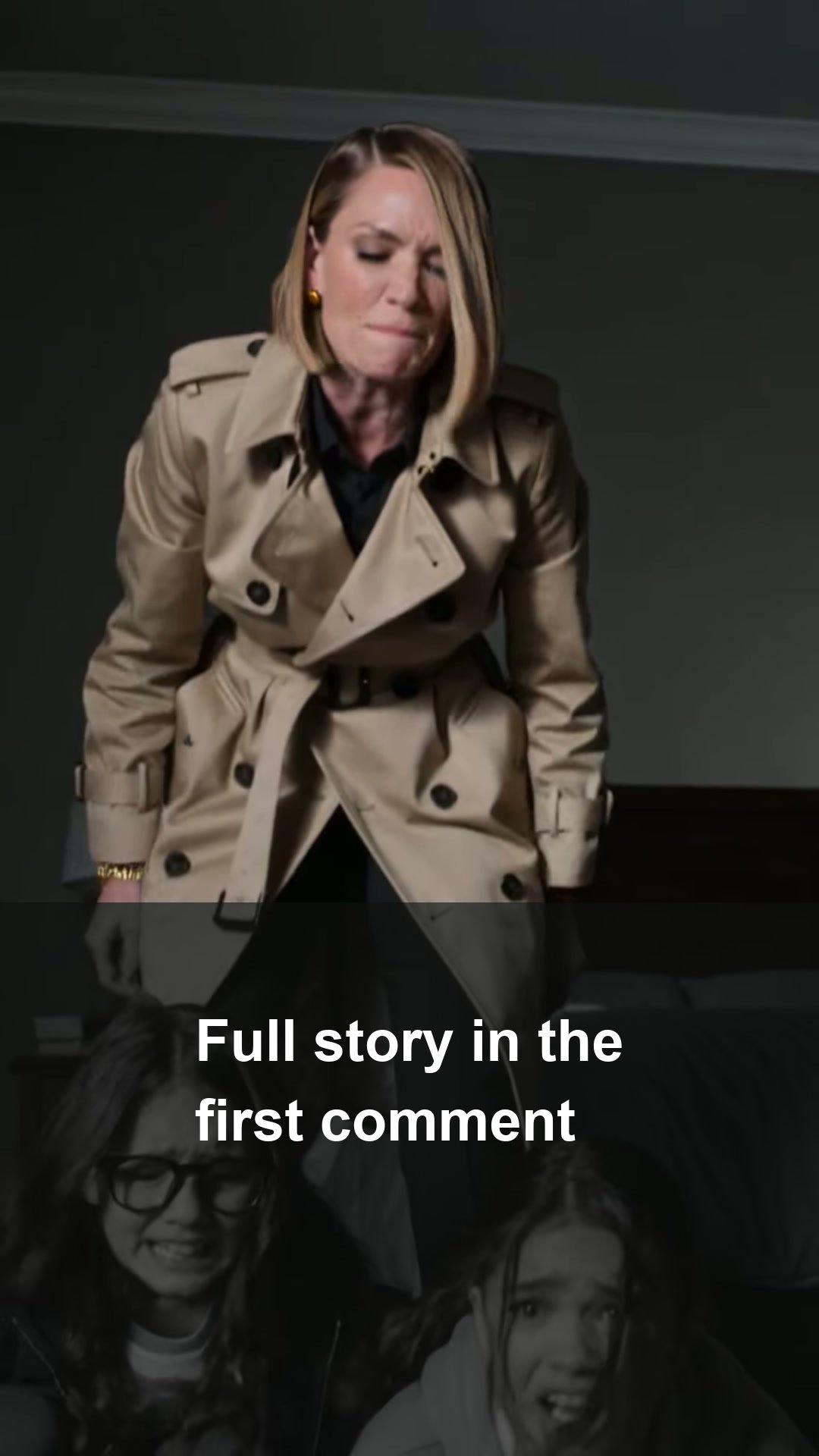
The local news broadcast flickered on the wall-mounted television in the diner, the volume muted but the headline screaming in bold, red font: BRENNAN FAMILY TIES TO FOREIGN SYNDICATE UNMASKED. A picture of me and Becca, taken during the sophomore field trip, sat frozen beside a grainy, black-and-white surveillance shot of Mom in a trench coat. I looked away, my hand gripping a cold coffee cup until my knuckles turned the color of limestone. The waitress didn’t look at us. She just slid the check onto the laminate table, her movements sharp and defensive, as if proximity to our ruin might be contagious.
Becca pulled her hoodie tighter around her face, her eyes fixed on the salt shaker. I reached across and brushed her hand with my thumb, a small, rhythmic motion I hoped felt like stability. I didn’t say anything because the air in the room was already too thin. I thought about the school principal, a man who had praised my essay on civic duty last month, likely now scrubbing my name from the honor roll files. The erasure felt surgical. My phone sat in the trash bin of the gas station three miles back, its silence a phantom limb I still felt twitching in my pocket.
People in the booths behind us leaned in, their voices murmuring like static. A man in a flannel shirt glanced at our table, his brow furrowed in that specific, twitchy way of neighbors who had spent years trading recipes over our picket fence. He whispered to his wife, his gaze lingering on my face with the hungry, invasive curiosity of a scavenger. The intimacy of our town had inverted; we were no longer the Brennans who hosted the annual summer barbecue, but the anomaly in the DNA of their community. We were the tumor they needed to excise to prove their own normalcy.
I stood up, the chair scraping a harsh, dissonant note against the floor. I didn’t apologize for the noise. I grabbed Becca by the shoulder, my grip firm enough to steer her toward the exit without giving her the chance to look back at the screen. Outside, the air tasted of exhaust and impending rain, the Oregon sky pressing down on the suburbs like a lead lid. The neighborhood was quiet, but it was the silence of a held breath. Every garage door was shut, every curtain drawn, the collective judgment of Oakridge manifesting as a barricade of locked deadbolts.
My own reflection in the darkened storefront window startled me. I looked older, my features sharpened by a lack of sleep and the sudden, violent need for objective analysis. I wasn’t seventeen anymore; I was a data point in a federal investigation, a piece of evidence currently occupying space on the sidewalk. I realized then that home wasn’t a place you returned to—it was a history you outran.
I looked at the intersection, weighing the likelihood of a patrol car turning the corner versus the safety of the dark, tree-lined side streets. I decided on the shadows. I took Becca’s hand, her skin clammy and trembling, and stepped away from the light of the main strip. Behind us, a car door slammed, followed by the rapid-fire tapping of someone checking a smartphone. They were already uploading the tip. They were already hunting us to save their own peace of mind. I started to run, keeping my stride measured, dragging the past behind me like a broken leash.
The ferry terminal’s floodlights hummed, a sterile, buzzing sound that vibrated in my teeth. Elena stood by the idling SUV, her posture rigid, a silhouette of calculated menace against the dark water of the sound. She didn’t look like a mother; she looked like a mechanic checking a faulty engine. I pulled Becca behind a stack of rusted shipping containers, the salt air tasting metallic and cold. My father stood near the gangway, his hands raised, palms outward, not in surrender but in a practiced, neutral posture I recognized from his late-night training videos.
Reeves emerged from the shadows of the ticket booth, his weapon drawn but pointed toward the ground, a professional courtesy that signaled the end of the game. Elena saw him, her head snapping toward the movement. She didn’t scream. She didn’t plead. She simply let the car door swing shut with a hollow, final thud.
I don’t think she was ever really our mother, I thought, watching her reach for the concealed holster at the small of her back. She was just a process that had reached its conclusion.
Reeves moved with the speed of a man who had been waiting for this permission for years. He tackled her against the hood of the SUV before she could clear leather. The struggle lasted four seconds. Metal scraped against metal, a guttural grunt, and then the sharp, rhythmic click of steel handcuffs locking around her wrists. My father didn’t move toward her. He didn’t even blink. He looked at me, his eyes hollowed out by the sheer weight of a decade’s worth of lies, and gave a single, imperceptible nod.
The decision hit me with the force of a physical blow: he was already gone. By tomorrow, he would be a redacted name in a government file, a ghost tethered to a new, sterile identity. I looked down at Becca, who was staring at the scene with a terrifying, absolute stillness. I realized I was the only thing left of our lives that wasn’t classified.
Reeves signaled to the black sedan idling near the exit. Two agents approached, their faces obscured by the harsh glare of the terminal lights. They weren’t there to comfort us; they were there to process the wreckage. I tightened my grip on Becca’s hand, feeling the small, sharp bones of her knuckles against my palm. We turned our backs on the terminal, walking toward the sedan. The engine of the SUV continued to run, a lonely, mechanical heartbeat in the cold, until one of the agents reached in and cut the ignition, plunging the entire pier into an absolute, suffocating silence.
The safe house was a beige box in a part of the city that didn’t appear on any of my mental maps. There were no surveillance cameras pointed at our windows, only a thicket of overgrown rhododendrons blocking the street view. Inside, the air smelled of stale lemon polish and someone else’s history.
I spent the first hour testing the floorboards for squeaks, mapping the exit routes, and checking the latch on the back door. It was a reflex, the same way my mother used to scan a room before she sat down. I stopped when I found Becca in the kitchen. She was standing at the counter, methodically lining up five cans of soup by their labels.
“Do we have to stay here?” she asked, not turning around. Her voice lacked its usual sharp edge, sounding thin, like paper tearing.
I didn’t answer. I focused on the way her shoulders slumped, the weight of the last few weeks finally settling into her frame. I wanted to tell her we were safe, but the word felt like a lie I wasn’t prepared to inhabit yet. Instead, I walked over and placed a hand on the small of her back. She leaned into me, just for a second, a silent admission of our collective exhaustion.
“We stay until the noise stops,” I said.
I thought about the house in Oakridge, the pantry with its hidden compartments, and the way I used to track my mother’s footsteps through the hallway. That girl was gone. I looked at the cans of soup—tomato, chicken noodle, vegetable—and felt a strange, hollow relief. There was no mission here. There was only the task of surviving the next hour. I picked up a can of soup and reached for the manual opener in the drawer. It was time to eat something that hadn’t been packed in a go-bag. I decided we would sleep in the same room tonight, without the chair wedged against the door.
The fluorescent lights of the safe house hummed with a sterile, electric buzz that replaced the jagged silence of the road. Becca sat on the edge of the cot, her fingers tracing the hem of the oversized T-shirt I had scavenged from the laundry bin. I watched her steady hands, a stark contrast to the tremors that had racked her frame only hours ago. We didn’t speak of the ferry terminal or the way the federal agents had swarmed the dock like iron filings pulled to a magnet. Instead, I pulled a crisp, white button-down shirt from the suitcase—one of my father’s, left behind in the chaotic scramble of our departure. I laid it flat on the bed. I began to fold the sleeves inward, aligning the seams with military precision. A single blue dress shirt lay discarded on the asphalt back at the terminal, fluttering against the grey pavement like a ghost.
Leave a Reply