The police tape fluttered against the shattered windshield of my sedan, a rhythmic, mocking snap in the humid night air.
I stood on the asphalt, my legs trembling beneath a hospital gown that offered no protection against the suburban chill. The paramedics had already left. My father sat in the driver’s seat of his SUV, his eyes fixed on the glowing monitor of the security feed mounted to his dashboard. He didn’t look at me. The air smelled of burnt rubber and expensive, imported cologne.
“It was just a freak patch of ice, Claire,” he muttered, his fingers drumming a frantic, uneven rhythm against the steering wheel.
“It’s July, Dad.”
He finally turned, his face a mask of practiced, hollow concern. I watched a bead of sweat track through the dust on his temple. My mind cataloged the scene: the lack of skid marks, the pristine state of the garage door, the weight of the sewing kit I had shoved under my hospital bed before escaping. My father wasn’t checking the street for threats. He was checking to see if the police had missed the hidden floorboards. I stepped toward him, my heartbeat echoing the rhythm of his tapping fingers. I knew now.
The kitchen tile was cold against my bare heels, a sharp contrast to the humid July morning pressing against the window glass. I held the ceramic mug with both hands, feeling the heat bleed into my palms as the coffee bloomed—a dark, acidic scent that signaled the start of a Tuesday. My father stood at the granite island, his movements precise, almost surgical. He smoothed his tie in the reflection of the toaster, his silhouette crisp and unyielding. The silence was not heavy; it was domestic, the kind of stillness that precedes the hum of a refrigerator or the distant, rhythmic whir of the lawnmower next door.
You taking the train today, Claire? he asked, not turning around. His voice was steady, the cadence of a man who had perfected the art of the unremarkable.
I have the archives cataloging project, I said, taking a sip. The coffee was too bitter, but I swallowed it anyway. It was a chore to get through, but it was a chore that defined me.
Make sure you don’t stay late, my mother called from the doorway, her silk robe rustling like dry leaves. She was holding a tablet, her thumb scrolling with a rhythmic, impatient swipe. The country club tournament schedule was pushed back again. She didn’t look at me, her attention fixed entirely on the blue light reflecting in her pupils.
I nodded, even though she wasn’t looking. I’ll be back by six. We’re doing a inventory check on the back-office files.
It felt like a rehearsal. My life was a series of small, manageable tasks: the commute on the 8:15 line, the way the air conditioning in the archives chilled my skin to gooseflesh, the specific, mechanical grind of the office printer that always jammed on page forty-two. I lived for the data. I thrived in the quiet rows of cardboard boxes, labeled with dates and names that meant nothing to the world but everything to the history of the firm.
The commute was a blur of gray scenery—the passing suburban train stations, the flicker of sunlight through the trees, the woman in the seat ahead of me tapping her fingernails against a leather briefcase. Everything was in its place. The world was a machine, well-oiled and predictable. I spent the morning filing correspondence from 1994, the paper brittle and smelling of dust. I was efficient. I was invisible. I was exactly where I was supposed to be.
At noon, I stepped out to grab a sandwich, the heat radiating off the asphalt hitting me like a physical weight. The sky was an aggressive, cloudless blue. A group of teenagers laughed near the corner, their voices sharp and jarring in the heavy air. I found myself thinking about the strawberry box in the garage—how it looked like a relic of a softer time, buried under the weight of my father’s meticulously organized tools. I didn’t want to go home, but the habit of returning was stronger than any impulse to stray.
I returned to my desk, the office cooling down as the afternoon dragged on. The printer groaned, spat out a tangled mess of paper, and stopped. I stood up to fix it, my fingers moving with practiced ease, feeling the familiar hum of the machinery.
Then, the phone on my desk let out a single, sharp ring. It cut through the low-level chatter of the room like a blade. I didn’t recognize the number, a string of digits that flickered on the small display. I reached for the receiver, my thumb hovering over the button, a sudden, inexplicable shiver tracing the length of my spine.
I picked up the receiver, the plastic casing feeling oily against my palm. The silence on the other end was heavy, punctuated only by a faint, rhythmic clicking sound, like a stopwatch ticking in an empty room.
Claire, my father’s voice came through, stripped of its usual rehearsed joviality. It sounded thin, serrated at the edges. Stay where you are. Don’t drive.
My grip tightened. Why? I asked, my voice betraying nothing, though my pulse had begun a frantic, irregular drum in my ears.
The clicking stopped. A car is coming for you, he said. We’ve had a… complication with the accounts. You need to come home immediately. Bring the blue ledger from the vanity.
My heart stalled. The blue ledger was the one I had found tucked inside the strawberry box that morning, its pages filled with names I didn’t recognize and sums that didn’t balance. How did you know about that?
There was no answer, only a dial tone that wailed with the intensity of a scream.
I set the phone down and moved toward the coat rack. My movements were clinical, efficient, the way I sorted archives. I grabbed my bag and headed for the parking structure. The air outside was humid, smelling of exhaust and impending rain. My car sat in the corner, a silver smudge against the concrete. As I reached for the handle, a black sedan drifted into the lane, blocking my exit.
The windows were tinted, absolute voids. A door opened, and my mother stepped out. She wasn’t wearing her usual pearls or the structured blazers that announced her status. She wore a heavy, shapeless trench coat, her hair pulled back into a severe, wet-looking knot. She didn’t look at my face; she looked at my hands, specifically the bag I clutched to my chest.
Give it to me, she said. Her tone was flat, devoid of the social cadence she practiced at the club.
I took a step back, my heel catching on a protruding bolt in the pavement. Mom, what is happening? Why are you here?
She stepped closer, her heels clicking against the concrete with a sound like gunshot. You were never supposed to open that box, Claire. You were supposed to be the daughter who didn’t ask questions. You were supposed to be the pretty, empty vase.
She lunged, not for me, but for the bag. I twisted away, the force of the movement sending a jolt of alarm through my chest. As I stumbled, the sedan’s engine roared, the driver shifting into gear. She grabbed my arm, her nails digging into my skin with the precision of a scalpel. She leaned into my ear, her breath smelling of peppermint and cold steel.
Don’t make this messy, she whispered.
I pulled back, realizing then that this wasn’t an intervention. It was an extraction. I turned to run toward the security booth, but the sedan surged forward, clipping my hip and throwing me against the cold, hard wall of the support pillar. The ledger slid across the floor, and as I hit the concrete, the world turned into a jagged blur of grey and red. I watched, helpless, as she picked up the book and walked away.
The hospital lobby smelled of industrial bleach and floor wax. I sat on a rigid plastic chair, my phone vibrating against my thigh like a trapped insect. My father picked up on the first ring, his voice sounding thin, filtered through a bad connection. I asked him about the sedan, about the ledger he claimed had been lost in the fire years ago. There was a long, hollow silence, followed by the sound of his lighter flicking—once, twice. He told me I was suffering from post-traumatic stress, that I had walked into the path of a delivery van, and that he had been in the city all morning. He hung up before I could tell him I saw his face through the windshield. My hands, still shaking, dialed the front desk of the hotel where he allegedly held his meetings. The clerk checked the registry with an agonizingly slow rhythm, tapping his keyboard. No, Mr. Vance hadn’t checked in all week. I stared at the antiseptic white of the floor, cataloging the cracks in the linoleum. My father lied about his location, but he had the ledger. My next call was to Nurse Halloway, the one who had prepped me for discharge. Her voice was brittle, clipped with an edge of irritation. She insisted that my mother had arrived alone to pick me up, signing the release forms at ten that morning. I felt a cold knot tighten in my stomach. If Mother was alone, then who was driving? I pushed the chair back, the screech of plastic against tile sounding like a scream. I needed a witness. I found the security guard at the gatehouse, a man whose skin looked like crumpled parchment. He remembered the sedan, but he swore on his pension that it was a woman behind the wheel, alone, wearing a veil that obscured her features. He didn’t mention my father, but he handed me a crumpled receipt he’d found near the pillar—a parking stub from the municipal garage three blocks from our home. I drove the rental car toward the estate, the steering wheel slick under my palms. The suburban streets were wide, manicured, and utterly silent. Every house looked like a vault. I pulled into the garage, the space where I’d found the sewing kit. The floor had been freshly repaved; the concrete was a different shade of grey, darker and damp. I knelt, pressing my fingers into the cool surface, feeling the slight unevenness where the ground had been disturbed. My mother claimed we were renovating, but the scent of wet cement was fresh, masking something sharper, like old paper and rot. I looked up at the ceiling-mounted camera, its red light blinking in a steady, rhythmic pulse. It was tracking my every movement, staring down at me with a blind, electronic eye. I stood, my hip throbbing with a dull, rhythmic ache. If my father wasn’t in the car, and my mother was the only one there, the ledger wasn’t just a financial record; it was a map of a crime committed in this very room. I turned toward the house, the front door looming, dark and heavy. I decided then that I wouldn’t leave until I found the truth, even if the house was designed to swallow it whole. A shadow moved behind the kitchen curtain, watching me.
I pushed the heavy oak door open. The foyer smelled of lemon polish and the stale, pressed-flower scent of my mother’s perfume. She stood by the console table, her back to me, rearranging a vase of dying lilies. She didn’t turn when the floorboards groaned under my weight. My hip pulsed, a jagged reminder of the concrete stairs she claimed I had tripped down. I walked toward her, my hand trailing along the wall, the velvet wallpaper feeling like sandpaper against my fingertips. I didn’t stop until I was close enough to see the gray roots at her hairline. She placed a single lily stem into the water, the snap of the stalk echoing like a gunshot in the vaulted room. I reached into my pocket, fingers brushing the sharp corner of the medical report I had stolen from Dr. Thorne’s desk. It listed bone fractures consistent with high-impact trauma, not a clumsy fall. I tapped the paper against my thigh, the sound rhythmic and deliberate. She finally turned, her face a mask of practiced, fragile concern. She reached out, her fingers hovering near my bruised cheek, but I flinched back, the movement sending a white-hot spike of pain through my pelvis. My breath hitched, trapped in the tightness of my chest. I watched her eyes shift, the warmth evaporating into a cold, clinical appraisal of my weakness. I had spent twenty-four years believing I was the protected daughter of a prestigious man, the beneficiary of a spotless legacy. The ledger was hidden under the garage floor, but the real crime was standing right in front of me, breathing the same recycled air. I felt the weight of my isolation, a heavy, suffocating shroud. I realized then that there was no accident, only a calculated erasure of my agency. I squared my shoulders, despite the ache, and looked her directly in the eye. I didn’t ask about the ledger. I asked about the night. She smiled, thin and bloodless. I know exactly what you did to me.
The kitchen smelled of floor wax and overripe fruit, a cloying sweetness that clung to the back of my throat. I was seven, standing on a stepstool, reaching for the crystal box my mother kept on the highest shelf of the mahogany hutch. It was meant for display, never for use, filled with porcelain strawberries that looked too real to touch. I wanted to hold one, to feel the cold, glazed surface against my palm. When the glass slipped, the sound was not a crash but a sharp, serrated intake of breath from the doorway. My mother did not rush to hold my hand; she leaned down, spat in my face, and whispered that I had ruined everything. I stood frozen in the shards, blood blooming in a thin red line across my instep, watching her gather the fragments with a dish towel, her face devoid of pity. I learned that day that objects held more value than the mess of a child’s mistake.
At twelve, the house felt like a library where silence was the only permitted language. My father sat at the head of the dining table, his ledger spread out like a holy text, the rhythmic clicking of his fountain pen keeping time with the grandfather clock in the hall. My brother, Leo, sat across from me, his eyes fixed on his plate. He pushed a pea around with his fork, his movements precise, almost robotic. I whispered, asking him if we could go to the park once the sun dipped. My father didn’t look up. He stopped writing, the pen hovering an inch above the paper. He didn’t speak to me, but he reached across the table and firmly placed his hand over Leo’s, a silent command for stillness. Leo went pale, his shoulders hunching toward his ears. I realized then that my father’s authority wasn’t just about money; it was the ability to curate the very atmosphere of our lives, to decide when the air was allowed to vibrate with sound and when it had to remain perfectly, suffocatingly still.
Money was never something you earned in our house; it was a ghost that haunted the corners of every room. When I was sixteen, I found a stack of notices tucked behind the radiator in the mudroom. They were printed on thick, heavy stock, marked with warnings in red ink that felt like an intrusion of vulgar reality into our polished existence. I took them to my mother, holding them out with trembling fingers. She didn’t look at them. She took the papers, walked to the fireplace, and dropped them into the dying embers without breaking her steady gaze at the television. She told me that some things were simply beneath our notice, and that to acknowledge a debt was to invite the creditors to exist. I chose then to stop asking questions, deciding that if I looked away, the debt would lose its power. It was the first time I willingly chose blindness, a practice that would become my survival instinct.
High school was a gauntlet of performance. I kept my grades perfect and my social life carefully curated to reflect well on the Vance name. I remember the night of the Founders’ Gala, standing in the foyer in a dress that felt like a cage, watching my parents greet the guests. They were flawless, masks of calm and prosperity, shaking hands with the very people whose investments were funding the renovation of our summer home. I saw my father lean into a colleague, his voice dropping to a conspiratorial hum, his hand lingering on the man’s shoulder just a second too long. He looked like a saint bestowing a blessing. I stood in the shadows of the staircase, a drink untouched in my hand, feeling the sharp, jagged edge of the truth pressing against my ribs. I knew, with the clarity of an archivist labeling a file, that the prestige was a facade, a temporary structure built on sand.
The summer I turned twenty, Leo tried to leave. I found him in the garage, his duffel bag half-packed, his eyes darting toward the security camera that blinked its red, unblinking eye from the rafters. He told me he couldn’t breathe anymore, that the walls were shrinking, that he felt the theft of our lives in his very marrow. I didn’t help him pack. I stood by the door, terrified of the space he would leave behind, terrified of being the only one left to witness the slow, meticulous decay of our family. He grabbed my arm, his grip bruising, and begged me to come with him. I pulled away, my heart hammering against my ribs, and told him he was being hysterical. I chose to stay because I was afraid of the world outside the Vance estate, a world where money was finite and truths weren’t hidden under floorboards. He left that night, and the next morning, my parents told me he had moved to London for a prestigious apprenticeship. I never checked the address. I never called.
My marriage proposal from Julian was less of a union and more of an acquisition. He was the son of a business partner, a man whose portfolio was already tangled with my father’s. We sat in the solarium, the light filtering through the glass in dusty, golden shafts. He held my hand, his skin dry and cool, and talked about the synergy of our families, the way our merger would solidify the market share in the county. There was no talk of love, no mention of the future beyond the assets. I looked at his face, framed by the expensive, understated haircut he wore like a uniform, and I saw my father’s reflection. I said yes because it was the expected response, the final piece of the architecture my parents had spent my entire life constructing. I didn’t feel joy; I felt the relief of a puzzle piece finally locking into place, trapping me inside the frame.
The warning signs were everywhere, but I treated them like clerical errors. When my father began keeping the garage locked, I told myself it was for security, for the vintage car collection he rarely drove. When my mother started suggesting I store my keepsakes in the attic instead of the utility room, I complied without a second thought, too tired to challenge her territorial shifts. I became an expert in deflection, my mind skating over the cracks in the foundation of our house as if they were nothing more than hairline fractures in the paint. I believed that as long as I followed the script, as long as I played the role of the devoted daughter and the future partner, the house would hold. I was a curator of my own ignorance, meticulously organizing the evidence of my parents’ deceit into files I refused to open, labeling them ‘do not disturb’ so I wouldn’t have to face the inevitable audit of my own soul.
I remember the final dinner before the accident, the way the silence felt thick enough to swallow. My father was staring at the security monitor, his thumb tracing the screen, watching the grainy, black-and-white feed of the driveway. My mother was slicing a strawberry, her knife moving with surgical precision, the red juice staining the white ceramic plate. She looked at me, her eyes devoid of warmth, and asked if I had been searching in the garage again. I felt the lie rise in my throat, a familiar, well-rehearsed taste. I told her I hadn’t even been near the door. She didn’t believe me; she just nodded, a small, tight movement that signaled the end of the conversation. I left the table, my pulse thrumming in my ears, and walked toward the stairs, knowing that the ledger was waiting for me under the loose concrete, a ticking bomb buried in the dirt. I walked toward the trap, believing, even then, that I was the one in control.
The hallway air smelled of stale lilies and bleach as I navigated toward Dr. Thorne’s office, my hip hitching with every step. My father, Arthur, stood by the window, his silhouette rigid against the late afternoon light. He was perpetually checking the security feed on his phone, his thumb hovering over the screen like a weapon. He had spent twenty years curating a reputation for fiscal integrity, yet his left eyelid twitched with the rhythm of a man waiting for the floor to collapse. I watched him study the monitor, his motive clear: he wasn’t guarding our house, he was guarding the evidence of his theft, terrified that a single pixel out of place would lead the authorities to the garage. He saw me and his face hardened into a mask of paternal concern, a performance so practiced it felt like a physical weight. I didn’t say a word, just stared at the vein pulsing in his temple, wondering if he ever felt the guilt, or if his internal ledger had been balanced by years of denial.
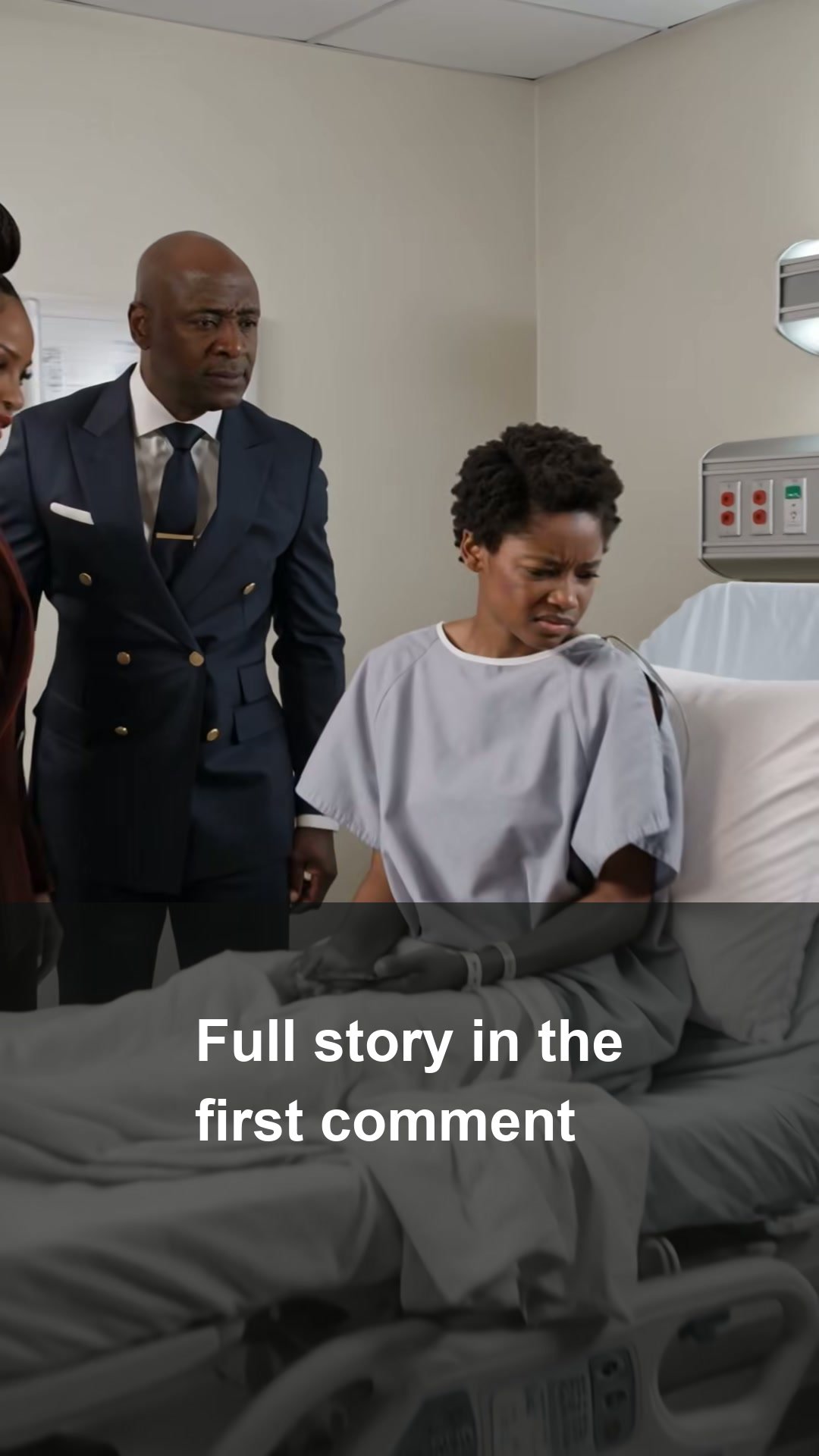
My mother, Eleanor, drifted into the corridor behind him, her heels clicking against the linoleum like a metronome. She wore her status like armor, her silk blouse unwrinkled despite the chaos she’d manufactured. Her contradiction was her obsession with cleanliness; she spent her hours scouring the house to hide the grime of their fraud, yet her hands were never truly clean. She touched my arm, her grip lingering just long enough to be a warning. You’re looking pale, Claire, she whispered, her voice a silk-wrapped blade. I pulled away, the sensation of her skin against mine triggering a sharp, familiar revulsion. I chose to smile, a jagged, hollow expression that signaled I was still playing the part of the broken, forgetful daughter.
At the end of the hall, I saw my brother, Julian. He sat on a plastic chair, hunched over a newspaper, his presence a jarring anomaly. The family narrative was that he was in Zurich, yet here he was, wearing an ill-fitting sweater, his knuckles raw and scabbed. He was the family’s silent accomplice, his motive tied to the trust fund that kept him from ever having to face a day of honest labor. His contradiction was his guilt; he hated the house and the lies, yet he couldn’t leave, tethered by a cowardice that mirrored our father’s. I caught his eye, and he quickly looked down at the sports section, his jaw working as if he were grinding teeth. He knew about the ledger, and he knew my accident was the price of his lifestyle. I turned my head, deciding then that his cowardice was as dangerous as my parents’ malice.
I reached the office door, my fingers trembling as I reached for the handle. Dr. Thorne appeared from within, his coat crisp, his eyes scanning the corridor with a clinical detachment that matched my own. He was my lawyer’s contact, the one man in this sterile tomb who held the keys to my exit. He gave a single, imperceptible nod, a signal that the burner phone was hidden in the supply closet. He was the neighbor who had watched us from across the fence for a decade, his motive hidden behind the oath of his office, his contradiction the fact that he was helping me while knowing the scandal would destroy the community he served. I stepped past him, the cool metal of the handle biting into my palm. I had to get to the garage before they changed the locks. I walked toward the stairwell, my pulse a steady, rhythmic countdown to the truth.
The air in the garage tasted of motor oil and stagnant dust. I pushed the heavy wooden door, the hinge screaming a protest that echoed against the concrete floor. My ribs ached, a sharp reminder of the surgical steel pinning my bones together, but I forced my gait to remain steady. I scanned the floor near the workbench, my eyes cataloging the debris. The loose tile was near the drain, just as I remembered. I pried it up with a rusted screwdriver, the sound of scraping stone grinding against my nerves. There it was: the strawberry box, its glass lid cracked, tucked into the dark void beneath the slab. I pulled it out. The ledger inside was wrapped in plastic, its pages stiff with age. My hands trembled, but I didn’t allow myself to feel the weight of what I was holding. I only saw evidence.
My phone, the burner device Dr. Thorne had supplied, buzzed against my hip. I stepped into the shadows behind the water heater to answer. It was Miller, the attorney.
Claire, are you in position? he asked. His voice was all business, stripped of the neighborly warmth I had known my entire life.
I have it, I whispered. I’m looking at the ledger now. It’s all here. The accounts, the names, the dates of the transfers.
Good. Do not bring it to the house. I’m sending a courier to the alley behind the estate. You need to file the police report tonight. The statute of limitations on the fraud is tight, but the assault—your accident—is our leverage to keep them distracted while we bleed their accounts dry.
I looked at the ledger, the ink fading but the numbers damningly clear. The realization hit me then: this wasn’t just my father’s greed. My mother’s signature was on the last entry, dated three days before my car went off the road.
I’m going to cancel the joint accounts, I said, my voice barely audible.
Do it now, Miller replied. Use the login codes. Once the money is frozen, they’ll know. They’ll come for you.
I hung up and pulled my laptop from my bag, tucking myself between two piles of old gardening supplies. I accessed the portal, my fingers flying over the keys. The screen glowed, illuminating the dust motes dancing in the dark. Transfer. Freeze. Liquidate. Each click felt like an amputation. I watched the numbers on the screen drop to zero, the digital assets evaporating into the void.
A light flickered in the main house. The motion sensor on the garage exterior tripped, bathing the space in a harsh, clinical yellow. Footsteps crunched on the gravel outside. Heavy, rhythmic, deliberate. My mother.
Claire? she called out. The sweetness in her voice was a thin veneer over a razor blade. I saw the lights flicker in the study. I know you’re out here.
I slammed the laptop shut and shoved the ledger into my backpack. I scrambled toward the side door, my breath hitching as a sharp pain bloomed in my side. I didn’t stop. I slipped out just as the handle to the main door turned. I reached the alleyway, the darkness of the suburban night providing a shroud. A black sedan idled there, the driver’s window rolled down just enough to see the glint of a badge. I handed the bag through the window.
Take it, I said. Get it to the precinct.
The courier didn’t speak. He took the bag and vanished into the night. I turned back, my heart hammering against my sternum. I had to go inside. I had to face her, to feign the amnesia, to keep the clock running.
I walked through the back porch, my legs heavy, the adrenaline beginning to curdle into cold, hard logic. My mother stood in the kitchen, a glass of wine in her hand, her eyes tracing the line of my throat. She didn’t look angry; she looked expectant.
You’ve been wandering, she said, taking a slow sip. The silence stretched between us, thick and suffocating. I felt the weight of the burner phone in my pocket. I wondered if she could see the bulge of it, the device that would dismantle her life.
I don’t remember why I went out there, I lied, my voice flat, vacant. I think I was looking for my things. The garage just… it felt familiar.
Her eyes narrowed, a flicker of suspicion crossing her face. She set the glass down on the marble island with a sharp clink. The police called, Claire. About the accident. They seem to think someone tampered with the brake lines.
My skin went cold. My heart skipped a beat, but I forced my expression to remain blank, a canvas of confusion.
Tampered? I asked, my voice rising in a pitch of practiced innocence. Why would anyone do that?
She stepped toward me, her shadow looming large against the white cabinetry. She reached out, her fingers brushing the hair back from my forehead, a gesture that used to feel like love but now felt like a chokehold. I don’t know, darling, she whispered. But I intend to find out who is trying to ruin us.
I looked into her eyes, seeing the predator beneath the mask. I knew then that the police report had already been processed, that the investigation had moved from the shadows into the light. I had hit the first domino. Now, I just had to survive the fall. I stood my ground, my hands balled into fists, as the distant, rhythmic wail of a siren began to bleed into the quiet of the cul-de-sac. It was coming for us. She turned her head toward the sound, her grip on my shoulder tightening until her nails dug into my skin. The game had changed. There was no going back now.
The sirens did not stop at the driveway; they bled into the neighborhood like ink in a glass of water. From the living room window, I watched Mrs. Gable from next door press her face against her front screen, her phone held high to record the parade of black-and-white cruisers. The police tape was already unfurling, a bright yellow snake cutting across our manicured lawn. My mother stood behind me, her reflection in the dark glass a ghostly, rigid mask. She didn’t look at the officers. She adjusted her pearls, the friction of the string against her throat sounding like dry teeth grinding together. She’s going to deny it all, I thought, noting the way her posture remained perfectly vertical, a monument to a collapsed house. I stepped away from the window, my legs heavy, and headed for the study.
I needed the digital trail. My phone buzzed incessantly against my hip—a barrage of notifications from friends I hadn’t spoken to in weeks. *Are you okay? Is it true? Tell me you didn’t know.* I scrolled through the headlines on a local news aggregator. The lead story featured a photo of our estate taken from a drone, the headline screaming about a financial discrepancy that had been an open secret among the local elite. My inbox was a graveyard of professional bridges, my former colleagues at the archive sending brief, dissociative messages about internal audits and the immediate suspension of my access. The community was cauterizing the wound, cutting us out before the rot reached them. I felt a strange, clinical detachment, as if I were cataloging the debris of someone else’s life.
In the study, the ledger sat inside a shoebox on the mahogany desk, its weight far heavier than paper should be. My father had left his laptop open, the screen glowing with an unsent email to a firm in the Cayman Islands. I clicked send. It was a digital suicide note. My mother entered the room, her footsteps silent on the Persian rug. She didn’t scream or plead. She simply leaned against the doorframe, watching me with a cold, hollow curiosity. You are so much like him, she said, her voice devoid of any maternal tremor. You think the truth is a weapon, but it’s just an anchor.
I looked at her, really looked at her—the jagged lines around her mouth, the frantic pulse at her temple. I felt the sharp, stinging realization that she wasn’t mourning our ruin; she was mourning the loss of the performance. I made my decision then. I wouldn’t stay to watch the house be picked clean. I grabbed my coat and pushed past her, the smell of her expensive perfume clashing with the metallic scent of rain and panic drifting in from the open front door. Outside, the air was cold. A reporter near the fence line lunged forward, a camera lens clicking like a hungry insect. I didn’t shield my face. I walked past the officers, past the yellow tape, and toward the streetlights. Every step felt like shedding a layer of lead. I heard my mother call my name from the doorway, a shrill, desperate sound that didn’t reach me. I kept walking, leaving the wreckage behind, wondering if I could ever truly be clean again.
The courtroom air was thin, tasting of ozone and floor wax. I sat on the hard wooden bench, my fingers tracing the grain of the wood until the splinters bit into my skin. The judge shifted his robes, the sound like dry leaves skittering across pavement. My mother, seated at the defendant’s table, did not turn around. Her shoulders were hunched, the expensive silk of her blouse wrinkled, a sharp contrast to the pristine, ironed woman who had spent twenty years maintaining the illusion of our domestic perfection. She looked small, stripped of the jewelry she once used to weigh down her arguments.
My attorney leaned over, his sleeve brushing my arm. He slid a single page across the table: the final settlement of the estate. The house was gone, the bank accounts seized, and the debt-ridden shells of my father’s shell companies were dissolved under the weight of the ledger’s contents. I looked at the signature line. It was my name, yet it felt like a signature I had learned to forge during those long, silent months in the hospital. I picked up the pen and signed. The scratch of the nib was the loudest sound in the room.
The gavel struck. It was a heavy, final thud that silenced the gallery. The clerk read the verdict, but the words were a blur of technical jargon and state statutes. I watched the bailiffs approach the table. They took my mother’s elbows, their hands firm against her pale skin. She stood, her gaze fixed on the wall behind the judge, refusing to acknowledge the space I occupied. The handcuffs clicked—a sharp, metallic snap that echoed the sound of the garage door closing on the night of my accident. She was led through the side door, her steps uneven.
I stood up, my knees stiff. The room felt suddenly empty, the air rushing back into the space she had vacated. I thought about the strawberry box, the red dust of the ledger, and the way the light used to hit the kitchen tiles. That life was a catalog of evidence now, boxed and archived in a vault I would never revisit. I reached into my pocket and touched the smooth, cold surface of the burner phone I had finally kept out of habit. I didn’t need it anymore. I dropped it into the trash can by the exit, the plastic clattering against the metal bin. The lobby doors stood open, framing a patch of grey, indifferent sky. I walked out, the pavement beneath my boots feeling solid and real for the first time in my life.
The drive to the coast took three hours, the heater whistling a low, steady hum that finally drowned out the ringing in my ears. I pulled into a gravel lot where the scent of salt spray and rotting kelp replaced the sterile sting of iodine. My boots crunched over the loose stones, a deliberate, rhythmic sound that anchored me to the earth. I sat on a piece of driftwood, watching the tide churn against the pilings of a skeletal pier.
A golden retriever, its fur matted with burrs, trotted up and nudged my hand with a wet, cold nose. I buried my fingers in the thick coat, feeling the vibration of a low, content whine.
“You’re a long way from home, aren’t you?” I asked. My voice sounded thin, unused to the open air.
The dog didn’t answer, only leaned its weight against my leg, anchoring me. I realized then that my hands weren’t shaking. For the first time in months, I wasn’t cataloging the environment for threats or searching for inconsistencies in the horizon. I was just cold, and the cold felt like a beginning.
I thought about the ledger, the dust of it, and how easily a life built on paper could be shredded by wind and water. I hadn’t come here to think about the past, but the memory surfaced like debris after a storm. I pushed it down, focusing instead on the way the dog’s tail beat a steady rhythm against the sand.
I decided then to leave the estate behind entirely, to stop waiting for a confession that would never come. I stood up, brushing the grit from my jeans. The dog trotted toward the path leading to the small town, looking back expectantly. I took a step, then another, following the creature toward the smell of coffee and woodsmoke, leaving the ocean to wash the salt into the scars. I checked my watch. It was time to start over.
The kitchen counter in my new apartment was empty, save for a small, chipped ceramic bowl I had rescued from a thrift store bin. I walked to the refrigerator, the linoleum cold beneath my bare feet. I reached into the crisper drawer and pulled out a single, glass-hued strawberry, its surface taut and fragrant. I held it for a moment, feeling the weight of the water inside. I didn’t reach for the vintage sewing kit or search for a hidden compartment; I simply set the fruit on the white laminate. I pressed my palm down, slow and deliberate, until the skin split. The juice bled outward, dark and vivid, pooling into the microscopic grooves of the countertop. I left it there, a smear of color on the sterile, rented white.
Leave a Reply