The sound of my skull hitting the marble was the loudest thing I had ever heard, followed immediately by the silence of my husband choosing a side.
My vision flickered, the foyer’s vaulted ceiling turning into a blurred kaleidoscope of gold leaf and shadow. Victoria stood at the top of the landing, her silk heels perfectly aligned with the edge of the riser, her hands tucked neatly into the pockets of her cashmere coat. She didn’t scream. She didn’t move.
Daniel entered the frame, his polished Oxfords clicking rhythmically against the floorboards as he knelt beside me. He didn’t reach for my hand. He reached for the heavy velvet runner, pulling it taut to hide the jagged scrape against the baseboard where my head had impacted.
“Is it done?” I whispered, the copper tang of blood flooding my throat.
Daniel looked up, meeting Victoria’s gaze instead of mine. “The cameras are looping,” he said, his voice as flat and clinical as a structural report. “She fell. It’s a tragic, clumsy accident.”
I watched him stand, his shadow eclipsing the light. He wasn’t my husband; he was an architect of my erasure. I had to get up before he finished the job.
The alarm clock hummed a low, synthetic C-sharp at six-thirty, vibrating against the mahogany nightstand until I silenced it with a palm. The bedroom was still bathed in the grey, filtered light of early October, the air smelling faintly of the lavender wax the housekeepers used on the floorboards. I rolled onto my side, the mattress springs groaning under the shift in weight, and watched the dust motes dance in a column of light. Beside me, Daniel breathed in a slow, rhythmic cadence that suggested a deep, untroubled sleep. He looked like a sketch in charcoal—all sharp angles and soft shadows, his wedding band glinting dully where his hand rested on the duvet.
I slipped out of bed, my feet finding the plush, cool pile of the rug before I moved into the en-suite. The marble vanity was cold against my palms. I rinsed my face, the water stinging slightly where my skin felt dry, and checked the reflection for signs of fatigue. A faint blue vein pulsed at my temple, a minor stress fracture in an otherwise steady facade. I smoothed my hair back, pinned it, and pulled on a cotton sweater that smelled of the cedar closet.
Downstairs, the kitchen was silent, save for the rhythmic hiss of the espresso machine. I measured the grounds with clinical precision, the dark, oily aroma blooming as the water pushed through. I stood by the island, watching the sunrise bleed into the manor’s east window, turning the crown molding into a serrated silhouette against the sky. I drank the coffee black, letting the heat burn away the last of the night’s lethargy. It was a good, predictable rhythm. I had a site inspection at the archives today, a chance to pour over the 19th-century foundation schematics and verify the masonry work for the restoration. Everything in my life felt as solid as a well-laid load-bearing wall.
I grabbed my briefcase from the mudroom. Outside, the driveway was slick with a thin layer of morning dew, the trees shedding their first brittle leaves onto the gravel. The commute was the same twenty-minute stretch of winding backroads I took every Tuesday. I hummed along to the radio, distracted by the way the light hit the stone bridges, already planning the corrective reinforcement I’d recommend for the estate’s east wing. My mind was a tidy ledger of historical integrity and structural logic.
At the office, the printer hummed a steady, mechanical drone, spitting out digitized scans of the Sterling land deeds. I spent the morning annotating the blueprints, my highlighter moving in straight, crisp lines. At lunch, I sat at my desk and ate a piece of fruit, exchanging polite, inconsequential banter with Sarah from accounting about the humidity and the erratic weather patterns of the valley. It was the kind of unremarkable, safe existence I had spent years meticulously curating. I felt untouchable, buffered by the sheer weight of routine and the quiet stability of my work. I was just Maya, the restorer, preoccupied with the past, entirely unaware of how fragile the present had become.
At exactly two in the afternoon, my phone, resting on a stack of architectural manuals, shuddered. The vibration was violent, rattling against the metal desk surface like a trapped insect. I looked down, expecting a text from Daniel about dinner plans. Instead, an unrecognized number flashed on the screen, followed by a persistent, high-pitched ring that sliced through the office air.
I answered, my pulse ticking against my throat. A voice, stripped of any warmth, told me to check the safe behind the library paneling before the sun set. The call disconnected with a sharp, digital click. I stood, the floorboards of the manor groaning under my heels—a sound I usually loved, now sounding like a warning.
In the library, the scent of old paper and wax polish hung heavy. I traced the mahogany molding until my fingernails caught on the seam of a hidden latch. It clicked open, revealing a leather-bound folio. I pulled it out, my hands trembling as I flipped through the pages. It was the original deed to the North Acreage, the one I had been looking for, but the signatures were wrong. They were forgeries, crisp and modern, laid over ink that had supposedly dried sixty years ago.
A shadow stretched across the floor, elongated and jagged. I spun around. Victoria stood in the doorway, her silk dress catching the low afternoon light. Her smile didn’t reach her eyes; it was a static, predatory thing.
You should not have touched that, she said. Her voice was as smooth as polished stone.
I clutched the deed to my chest. This is fraud, Victoria. The entire foundation of this estate is built on stolen ground.
She took a step forward, her heels clicking with rhythmic precision on the hardwood. Accidents happen when people dig where they do not belong, Maya. It would be such a shame for the baby if you were to become… physically compromised.
My heart hammered against my ribs, a trapped bird. I backed away, my eyes darting toward the open door, but she was faster. She surged forward, her hand shoving hard against my shoulder. I stumbled, my feet tangling in the long velvet runner that lined the grand staircase.
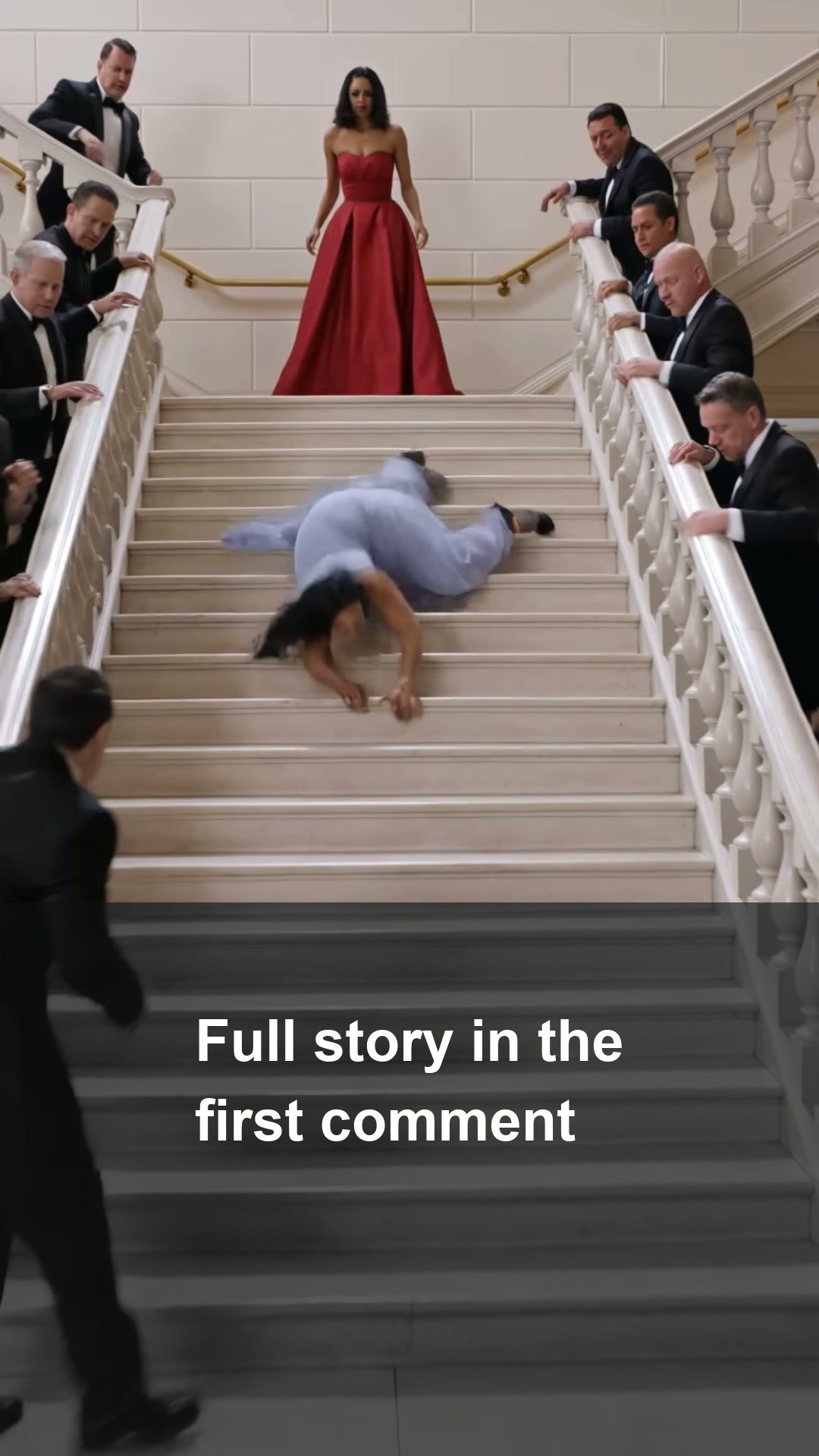
I reached for the banister, but my fingers found only air. Gravity claimed me instantly. I flipped, the world turning into a blurred smear of white marble and dark oak. My head slammed against the stone steps, a sickening, wet thud that vibrated through my skull. My vision fractured, the light turning to jagged silver sparks.
At the base of the stairs, I lay paralyzed. The pain was secondary to the sound of Daniel’s voice descending from the gallery above. He didn’t scream. He didn’t run to me.
Is it done? he asked, his tone clinical, as if he were discussing a minor renovation.
Victoria leaned over the banister, peering down at my broken form. She needs to be gone by morning, she replied.
Daniel walked into my peripheral vision, stepping over my legs without checking my pulse. He adjusted his cufflink, glancing at his watch. Make it look like a tragic fall, he murmured. I’m going to the club to establish my alibi.
The finality of his voice was a cold blade. I held my breath, squeezing my eyes shut to hide the tears that threatened to betray my consciousness. My life was a structural failure, and he was the one holding the demolition charge. I had to move, I had to survive, or the blueprints of my life would be erased.
The lobby of the Sterling Manor smelled of wax and ancient dust. I sat on a velvet ottoman, my fingers tracing the jagged tear in my jeans, the one that had caught on the marble riser when I tumbled. My phone felt like a hot stone in my palm. I dialed the head nurse at the private clinic Daniel claimed had seen me for a concussion checkup three days ago.
The line clicked. Nurse Halloway’s voice was too polished, too rhythmic.
Mrs. Sterling? You’re calling early. Daniel said you were resting until evening.
I never went to the clinic, Halloway, I said, my voice steady despite the thrumming in my skull. Did he book a consultation?
There was a sharp intake of breath, then a silence so prolonged it was a physical weight. There was no booking, Maya. Daniel called to verify that I would be out of town for the weekend, in case you needed a prescription refilled. He was quite insistent about my location.
I hung up. The discrepancy hit me like a second impact. If he hadn’t sent me to the doctor, he had been paving a path of medical gaslighting long before Victoria gave me that final push.
I stood, my balance wavering. I needed the truth of the stairs. I walked into the foyer, ignoring the dizziness, and found Clara, the housemaid, polishing the base of the banister. She wouldn’t meet my eyes.
Clara, were the cameras working on Tuesday? The ones facing the foyer?
She scrubbed harder, the rag making a dry, frantic sound against the mahogany. They were powered down for the electrical upgrade, ma’am. That’s what Mr. Daniel said. He pulled the fuses himself.
But the house was fully lit that night, I countered, stepping closer. The chandeliers didn’t flicker once.
Clara dropped the rag, her hands trembling as she wiped them on her apron. She looked toward the library door, then whispered, They weren’t upgrading, ma’am. He was carrying boxes out. He told me to stay in the kitchens until midnight.
She turned and retreated into the shadows of the servant’s passage, leaving me alone with the staircase. It looked different now—not a grand architectural feature, but a tool of measurement. I pulled my car keys from my pocket, the metal biting into my palm. I had to reach the village records office before they closed.
The drive was a blur of gray trees and rain-slicked asphalt. I parked in front of the town archives, a squat brick building that held the blueprints of every lie the Sterlings had ever built. I went straight to the clerk, an elderly man who had known the family for forty years.
I need the original deed for the East Wing, I said, sliding my architectural credentials across the desk.
He looked at the papers, then up at me, his eyes clouded with a sudden, sharp pity. I’m sorry, Maya. That file was pulled this morning. Daniel Sterling came in with a court order. Said the original was misplaced in the renovation shuffle and needed to be sent to his personal vault for restoration.
My stomach dropped. He wasn’t just hiding the deed; he was actively erasing the evidence of the fraud before I could even find the anchor point. I stepped out into the rain, the cold water soaking through my sweater.
My phone buzzed. A text from Daniel: *Where are you? The gala is in two hours. Dress formal.*
I looked at the manor in the distance, a sprawling, hollow monument built on broken promises. He expected me to be at the party, draped in diamonds, silent as a statue. He still thought I was the woman who trusted the blueprints.
I turned the car away from the estate and toward the city. I didn’t need the original deed anymore. I knew exactly where the stress fractures were, and I knew how to bring the whole structure down.
The rain blurred the city skyline into a smear of grey charcoal. I pulled into the parking structure beneath the city archives, the tires screeching against the damp concrete. My fingers felt numb as I gripped the steering wheel, the leather peeling under my touch. I reached into the glove box and pulled out the flash drive containing the scanned land deeds. It was small, light, and capable of erasing three generations of Sterling wealth.
I walked toward the elevator, my heels clicking against the linoleum. My reflection in the lobby glass caught me off guard—my hair was matted with rain, and my eyes looked like two dark, hollow windows in an abandoned structure. I touched my abdomen, a reflexive, protective gesture. The baby kicked, a tiny, sharp reminder that I wasn’t just fighting for my own survival anymore.
Daniel’s car was idling at the curb when I stepped back out. He swung the door open, his tuxedo jacket catching the dim light of the streetlamp. He looked polished, his face composed in the same mask of entitlement that had governed every decision he’d made since the day we met.
You are late, he said, his voice smooth, devoid of any genuine concern. He didn’t ask if I was hurt or where I had been. He only checked his watch, the gold links catching the light. Victoria is already waiting inside. She’s worried about the optics of you missing the opening toast.
I looked at him, really looked at him, dissecting the set of his jaw and the cold precision of his movements. He wasn’t a partner; he was a gatekeeper for a tomb. I felt the weight of the flash drive in my pocket, a heavy, jagged truth.
I told him I wasn’t going back, that the house was dying, and so was everything he’d built within it.
He laughed, a short, dismissive sound, and reached for my arm. I am not asking you, Maya.
I pulled away, stepping into the dark. I didn’t care about the gala or the money. I had already finished the demolition.
I’m not your wife anymore, Daniel; I’m your witness.
The linoleum in my childhood kitchen always smelled of lemon cleaner and unwashed dishes. My father sat at the small, wobbly table, his hand gripping a ballpoint pen as if it were a weapon. The bills were spread out like a fan of losing cards. I was twelve, standing in the doorway with my backpack straps digging into my shoulders, watching the way his throat moved when he swallowed. He didn’t look up. He just pointed at the seat across from him. I sat down, my feet dangling inches above the floor. He laid out the papers, not explaining the numbers but pointing to the signature lines. You just sign here, Maya, he said, his voice stripped of its usual Sunday-morning warmth. It’s for the house, for the security of your future. I looked at the legal jargon, words like lien and default dancing in blurry rows. I knew even then that I was signing away something I didn’t own, a phantom debt that wasn’t mine to carry. My father’s eyes were fixed on the door, watching for my mother’s return, his focus vibrating with a desperate, frantic energy. I signed, my cursive shaky, and that was the moment I learned that love in my house was a transaction, a ledger that never quite balanced.
Years later, at university, the studio was cold and smelled of graphite and stale coffee. I was hunched over a drafting table, my eyes tracing the load-bearing walls of a Victorian townhouse. The professor walked by, his footsteps heavy, his hand resting briefly on my shoulder. You have a knack for finding the rot, Maya, he said, his tone admiring but distant. Most people look at a facade and see elegance; you look at the foundation and see the cracks. I didn’t answer. I just adjusted the scale rule, my fingers tracing the precise geometry of a blueprint. I thought about the house I grew up in, the way we had patched the roof with tar and duct tape, pretending the water damage wasn’t spreading into the rafters. I realized then that my obsession with restoration was a form of self-defense. If I could map the structure, if I could identify every stress fracture and load-bearing flaw, I could never be caught off guard by a collapse. I decided right then to specialize in historical preservation, to be the one who knew the truth of what lived behind the plaster.
When I met Daniel, he was the embodiment of structural integrity. We met at an exhibition for historic preservation, his suit perfectly tailored, his interest in the archival records of the manor seemingly genuine. He took me to the Sterling estate on our third date. The foyer was vast, the marble floor cold beneath my heels. He led me to the library, his hand steady on the small of my back. Look at these ledgers, he said, his voice dropping to a conspiratorial whisper. They’re centuries old, yet the estate remains standing. It’s because we respect the lineage. I remember the way the chandelier light caught the dust motes dancing between us, making everything seem golden, permanent, and safe. I wanted to believe him. I wanted to believe that some things were built to last, that the rot I spent my life hunting wasn’t universal. I didn’t see the way he looked at the security cameras, or the slight flick of his eyes toward the door whenever the lawyer walked into the room. I was too busy admiring the finish.
Six months into our marriage, the first warning arrived in the form of a post-nuptial agreement. We were in the sunroom, the tea cooling in fine china cups. Daniel slid the document across the mahogany table with the casual grace of someone passing a napkin. It’s just for the auditors, Maya, he said, his smile tight, unreaching. The estate is tangled in so many trusts, we need to shield your assets in case of a lawsuit. I looked at the text, the clauses regarding the manor’s land deed standing out like black ink on white bone. My stomach churned, a familiar, cold sensation I hadn’t felt since childhood. I looked at him, searching for the man who had walked me through the rose garden, but I saw only the gatekeeper. I didn’t say anything, but I didn’t sign it that day. I told him I needed to read the fine print, the architectural historian in me needing to map the logic of the document. He laughed, a soft, patronizing sound. You’re such a perfectionist, darling. That’s why I love you.
I found the truth by accident, tucked away in a box of blueprints in the estate’s attic. It was a dusty, forgotten cache of records from the original land grant. I was cross-referencing the foundation plans for the upcoming renovation when I saw the discrepancy. The property line shifted by three acres in the nineteenth-century map, a deliberate, quiet land grab that had been buried under decades of bureaucratic maneuvering. I traced the line, my heart hammering against my ribs. This wasn’t just a mistake; it was the foundation of the Sterling fortune, an original sin carved into the bedrock of the estate. I sat on the floor, the smell of damp paper filling my lungs, and saw the pattern. My father’s house, the university studio, and now this—the same desperate, greedy scramble for security at the expense of others. I heard footsteps on the stairs, Victoria’s sharp, rhythmic clicking. I shoved the deed into my bag, my hand trembling as I smoothed my skirt. She appeared in the doorway, her smile as thin and cold as a razor blade. Still digging in the past, Maya? She stepped into the room, her gaze sweeping over the open files. We have enough problems in the present, don’t you think?
I started to notice the way Victoria watched me. At dinner, over the clatter of silver against porcelain, her eyes would fix on my throat or my hands, as if she were measuring me for a coffin. One evening, she brought up the staircase. It’s a tragedy, really, the way the history of the house is being forgotten, she mused, swirling her wine. People used to respect the architecture, the way it was designed to discourage intruders. She looked at me, a lingering, pointed gaze. Especially the stairs. They were built to be unforgiving. I didn’t eat. I focused on the wine glass, the way it refracted the light, mirroring the distortion of her words. I realized then that my position in this family wasn’t that of a wife or a daughter-in-law, but of an obstacle. I was a structural flaw that needed to be corrected. I looked at Daniel, hoping for a flicker of recognition, a sign that he knew his sister was threatening me. He was staring at his plate, his face a mask of studied neutrality.
The night before the gala, I found the lawyer in the study with Daniel. They were burning papers in the fireplace, the smoke curling up the chimney like a ghost. I stood in the doorway, hidden by the shadows of the hallway. You’re playing with fire, the lawyer hissed, his voice thin and panicked. If the board finds out the deed was falsified, the entire estate is liquidated. Daniel’s voice was calm, a sharp, terrifying contrast. Maya is the only one who knows, and she’s already signed her life away. I felt the breath leave my lungs, a sharp, piercing pain. I realized the post-nuptial agreement wasn’t just about money; it was a gag order, a legal cage. I didn’t confront them. I walked back to my room, my footsteps silent on the rug, and started packing. I knew then that I wasn’t leaving a house; I was escaping a demolition. I looked at the mirror, my own reflection looking back with a cold, clear, analytical gaze. The blueprints were done. The foundation was gone. All that was left was to walk out before the ceiling fell in.
The Sterling Manor breathed through its floorboards, a structure held together by the rot of its own history. I sat in the morning room, tracing the hairline cracks in the wainscoting with a thumb still raw from the fall. Victoria entered, her heels clicking like teeth against the hardwood. She carried a silver tray of tea, her expression a masterclass in performative concern, though her eyes remained fixed on my hands. She had once been a girl of modest means who married into this rot, and she had spent twenty years polishing the family name to hide the fact that she was the one who kept the ledger of their sins. She poured a cup, the steam rising between us, and her hand trembled just enough to be noticed. She was terrified of the silence I maintained, fearing that my reconstruction of the manor’s history had unearthed her own forgotten origins. I watched the tea swirl, noting the lack of sugar. She wanted me fragile, pliable, and quiet.
I set the cup down without a sip. I thought of Daniel, currently in his study, a man who saw blueprints as suggestions rather than mandates. He believed in the structural integrity of his status, unaware that I had already digitized the original land deeds that rendered his entire inheritance a lie. He was a man who loved me only as an asset, a well-restored addition to his portfolio, never realizing that my training in architectural history made me far more adept at dismantling structures than building them.
Clara, the housekeeper, hurried past the doorway, her apron strings frayed at the ends. She stopped, her eyes darting toward the foyer where the marble still bore the faint indentation of my body. She was the one who had scrubbed the blood from the stone, a task she performed with the mechanical efficiency of someone who had spent her life cleaning up the spills of people who didn’t know the value of a dollar. She held a secret of her own—the receipt for the security camera maintenance that proved the deletion was manual, not a system error. She caught my gaze and looked away, her loyalty pinned between a monthly paycheck and the crushing weight of a truth that could send us both into the streets.
The lawyer, Mr. Sterling’s long-time confidant, sat in the library, his skin the color of aged parchment. He had spent his career drafting clauses to protect the guilty, his existence dedicated to the preservation of a dynasty that had long since outlived its morality. He saw me as a litigation risk, a variable he couldn’t calculate. He didn’t know that I had already triggered the audit that would expose his off-the-books escrow accounts. He was a man of legal precision, but he had forgotten that even the most meticulous contract is worthless if the foundation it rests upon is built on land that doesn’t legally belong to the family.
I stood, the room tilting slightly, and walked toward the door. Each step was a calculation of weight and balance. I could feel the house straining around me, the joists groaning under the pressure of the secrets buried beneath the foyer. I reached for the handle, my grip firm. They were all waiting for me to break, to retreat into the role of the injured wife, but I had already decided. I would not simply leave; I would bring the blueprints down on their heads. The house felt smaller now, a cage made of glass and pretension. I pushed the door open, the morning air sharp and cold, and stepped out into the light, leaving them to their crumbling empire.
The precinct waiting room smelled of industrial floor wax and stale coffee. I sat on a molded plastic chair, my left shoulder throbbing in a steady, rhythmic pulse that kept time with the flickering overhead fluorescent tube. I pulled my phone from my pocket. My thumb hovered over the file marked Foundation_Fraud. With a sharp, decisive tap, I uploaded the digitized 1924 land deed to the public municipal server. The progress bar crawled, then hit one hundred percent. I was no longer a victim; I was a whistleblower.
The detective, a man with skin like crumpled parchment, gestured toward the interview room. I recounted the push, the sound of my skull hitting the marble, and the subsequent silence. I didn’t mention the baby, not yet. I waited until I had the signed statement in my hand, a physical document of state-recognized violence, before I moved to the next phase.
I walked to the corner booth of a diner three blocks away and dialed the bank. My voice was steady, clinical. I read the account numbers I had memorized from the desk drawer in Daniel’s study. I authorized a freeze on the Sterling estate’s primary operating fund, citing the pending criminal investigation into the property’s title fraud. The bank manager sputtered, his professional veneer cracking into a thin, nervous whine. I hung up before he could finish his objection. The immediate consequence arrived within the hour; my phone vibrated with a barrage of missed calls from Daniel. I watched the screen, the names flashing in rhythmic succession like a dying lightbulb, and silenced it.
I met my lawyer in a cramped office that smelled of cedar and old paper. Mr. Henderson was a man of precise movements. I laid the forensic analysis of the staircase renovation—the one Victoria had insisted on—onto his desk. I wanted to contest the Sterling will, specifically the clauses regarding the unborn heir’s trust.
This is going to burn everything down, Maya, he said, his glasses sliding down the bridge of his nose.
Everything is already ash, I replied.
He looked at me, assessing the jagged cut hidden beneath my hair, and nodded once. He filed the petition for an emergency injunction against the estate. By four o’clock, the courier had arrived at Sterling Manor. Through the window of the law office, I imagined the scene: the envelope hitting the foyer floor, the frantic calls to their corporate counsel, the sudden realization that the walls they had lived behind were no longer legally theirs.
By evening, the counter-action hit. A black sedan idled outside the hotel where I had checked in under an alias. A man in a tailored suit—one of the family’s fixers—stood by the lobby door. He didn’t approach; he simply watched, a silent sentinel of intimidation. I felt the weight of the phone in my pocket. I had recorded Daniel an hour after the fall, while he believed I was unconscious in the master bedroom, discussing the “disposal of the liability” with Victoria.
I opened my laptop and emailed the offshore transaction logs to the editor of the regional news outlet. I waited ten seconds. The response was an automated receipt. The damage was now irreversible.
The next morning, I stood before the registrar to file for divorce on the grounds of attempted murder. The clerk’s stamp made a heavy, final sound on the parchment. As I exited the courthouse, the air felt different—thinner, colder. I checked my reflection in the glass door of the lobby. I looked like a stranger, my eyes sharpened by the exhaustion of a marathon runner.
My phone rang. It was Daniel. I answered, keeping the device away from my ear, letting the silence of the line stretch out.
You think you can just dismantle a legacy? he hissed, his voice straining with a pitch I had never heard before. We have lawyers, Maya. We have influence. You’re nothing but a guest in this life.
I looked at the courthouse steps, crowded with reporters already catching wind of the financial discrepancy. I am the architect, I said into the silence. I know exactly which load-bearing wall to remove to make the whole thing collapse.
I hung up and checked my bank account. The small sum I had kept in my personal savings was gone—drained by a retaliatory move from their corporate accounting firm. They had cut off my access to everything, assuming I would starve into submission. They didn’t understand the anatomy of a structure. They thought the house was the foundation. They didn’t realize the foundation was the truth, and I was the only one who had the map to the cracks.
I turned toward the public clinic. It was time for the DNA test, a precautionary measure to secure the child’s rights against their claim of illegitimacy. I sat in the sterile white room, feeling the hum of the city through the vibrating floorboards. I was broke, I was hunted, and I was entirely free.
A nurse entered, clutching a clipboard. She looked at me with a soft, tired sympathy. I didn’t want the sympathy. I wanted the leverage. I reached out, rolling up my sleeve for the needle, watching the skin pull tight over the vein. Outside, the news cycle began to churn. The first headline appeared on my laptop screen: Sterling Manor Records Challenged: Fraud Allegations Mount.
I exhaled, the sound shallow and sharp. The game had shifted from a private struggle to a public demolition. I stood up, my balance restored, and stepped toward the exit. The next piece of the foundation was ready to crumble, and I was the only one left with the strength to swing the hammer.
The lobby of the medical center smelled of industrial disinfectant and stale coffee. I bypassed the automatic doors, stepping into a biting upstate wind that smelled of rain and wet asphalt. My phone buzzed against my palm, a relentless vibration that had become a secondary heartbeat. A notification from the local news feed displayed a grainy photograph of the Sterling gates, now swarming with news vans. The caption read: Architectural Fraud or Family Feud?
I walked toward the town square, my boots clicking rhythmically against the sidewalk. A woman at the bus stop, someone I had shared pleasantries with at the library, pulled her coat tighter and looked away as I approached. I didn’t blame her. In this town, the Sterlings were the sun; their gravity dictated the orbit of every small business and school board election. Now, the sun was going supernova.
I stopped at the glass front of the bakery. The owner, Sarah, was arranging trays of pastries, but she froze when she saw me. She didn’t wave. She didn’t smile. She turned her back to the window, her shoulders hunched. The silence of the street felt heavy, a vacuum sucking the oxygen out of the air. Everyone was picking a side, and the siding was being nailed down in real-time.
My phone screen flared again. A text from Daniel. Maya, the board is calling for an emergency session. People are talking. Just come home and we can frame this as a misunderstanding. I read the words and felt the familiar, clinical detachment return. He was still treating this like a structural repair, trying to patch a load-bearing wall that had already collapsed. I deleted the message. I didn’t need his permission to burn the house down.
I reached the community center where I’d planned my renovation workshops. The door was locked, a handwritten sign taped to the glass: No Solicitation. They weren’t just cutting off the Sterlings; they were cutting off the association. I traced the edge of the tape with my fingernail, feeling the tremor in my own hand. The cost of this wasn’t just the estate. It was the entire life I had curated here, the blueprints I had painstakingly drafted for a future that no longer existed.
I turned the corner and found a small, nondescript bench near the park. I sat down, my legs heavy. I watched a group of parents at the playground stop their conversation as a black sedan—a Sterling car—drove slowly down the street. It was a phantom, a ghost of the influence I had spent years navigating. I wasn’t the victim anymore, but I wasn’t the victor yet either. I was just the catalyst.
I pulled my tablet from my bag and opened the public server. One final click would upload the offshore transaction logs. The weight of the world felt like it was pressing against my ribs, but my breathing remained steady. I looked at the screen, the cursor blinking like a heartbeat. If I did this, there was no going back to the way things were. The dynasty would fall, but the rubble would crush me too. I thought of the nursery I hadn’t yet built, the foundation I needed to pour from scratch. I pressed the key. The data streamed into the ether, and for the first time, the silence didn’t feel like a threat. It felt like space.
The final hearing took place in a courtroom that smelled of floor wax and stale coffee. I sat at the mahogany table, my hand resting flat against the wood, feeling the vibration of a city bus passing outside. Across the aisle, Daniel stared at his shoes, his posture slumped into the shape of a man whose bank accounts had been liquidated. Victoria sat in the defendant’s box, her hands cuffed, her eyes tracking the movement of a fly on the high, vaulted ceiling.
The judge spoke, her voice thin and dry. She moved through the litany of tax liens, the fraudulent deed, and the assault charges with the detachment of a clerk counting inventory. When she finally pronounced the forfeiture of the estate, Daniel didn’t look up. He didn’t even blink when the bailiff ushered Victoria out the side door. I stood, my legs stiff, the weight of the last year shifting into something manageable. I didn’t feel triumph; I felt the sharp, clean burn of a structure stripped to its studs.
Two weeks later, the movers finished with the last box. My new apartment was three rooms, second floor, with uneven floorboards that groaned under my weight. I knelt on the hardwood, pulling a tape gun from a cardboard carton. The air here was thin, scrubbed clean of the Sterling Manor’s suffocating incense. I taped the bottom of a box, the rhythmic screech of the adhesive echoing against the bare walls. I thought about the manor, now a cold shell of boarded windows and police tape, its secrets finally bled dry into the public record.
I walked to the kitchen window and looked out at the street. There was no perimeter fence, no security patrol, just the ordinary chaos of a neighborhood waking up. I touched the gentle, rounded curve of my stomach. The baby kicked, a quick, sharp protest against the silence of the room. I felt the floor under me—firm, level, and entirely mine. There was no marble to slip on here, no grand staircase to anchor a legacy of lies.
I picked up a paintbrush, dipping it into a tin of soft, pale blue paint. I had designed this room myself, every joint and corner accounted for, every load-bearing wall reinforced by truth. I reached for the wall, the bristles dragging against the plaster in a steady, rhythmic stroke. I didn’t look over my shoulder. The foyer of my life was finally empty, and for the first time in years, the foundation felt like it would hold. I turned the brush, painted a clean, vertical line, and began to build.
The oak floorboards beneath my feet groaned—a low, honest sound, miles removed from the hollow, echoing ring of the manor’s grand hall. I set the brush down, my wrist aching, and walked to the window. Outside, the garden was a tangle of wild lavender and neglected sage, a project that required no pedigree to cultivate.
I heard the front door creak, followed by the frantic, uneven clicking of claws against the hardwood. Barnaby, a scruffy terrier with one ear that refused to stand, skidded into the room, his tail drumming against the baseboards. I knelt, the familiar ache in my hip a reminder of old gravity, and buried my fingers in his coarse, earthy fur.
Clara stood in the doorway, balancing a tray with two mugs. She didn’t offer the clinical, practiced smile of the house staff from my previous life.
You’re overworking the plaster, she said, her voice dropping into the quiet space. It needs to breathe before the second coat.
I looked at the wall, the blue pigment already settling into the texture of the plaster. I know, I replied, my voice steady. I just wanted to see it covered.
Clara set the tray down on a stack of cardboard boxes. She didn’t press for conversation, just sat on the floor, watching the light shift across the floorboards. I realized then that the silence didn’t feel heavy. It wasn’t the suffocating, calculated quiet of a house built on secrets; it was simply the absence of noise. I traced the line of the wall with my eyes, identifying the structural integrity of the frame. No hidden voids. No shifting foundations.
I stood, my hand steady as I reached for the warm mug. I didn’t glance toward the hallway once. The fear of what might be lurking in the shadows had finally been replaced by the rhythm of my own pulse. I took a sip, the tea hot and bitter, and turned back to the room. I was ready to finish the trim.
I cleared the drafting table, pushing aside the final stack of Sterling renovation documents. My fingers brushed against the heavy, rolled parchment of the original manor site map, the ink faded and unreliable. I didn’t hesitate. I walked to the recycling bin and let the paper slide from my grip. It didn’t make a sound as it landed against the empty plastic base. My hands felt light, stripped of the grit and history I had spent years trying to preserve. I walked to the window, watching the rain streak the glass, blurring the world outside into soft, grey shapes. On the sidewalk below, a discarded blueprint of a house with the foundation missing lay face-up in a shallow puddle, its intricate lines turning to pulp as the water soaked through the page.
Leave a Reply