The police cruiser lights bled crimson through my son’s kitchen window, turning the granite island into a surgical slab. Daniel stood by the refrigerator, his knuckles white as he gripped a cold bottle of beer, the silence in the room heavy enough to choke on. Outside, the sirens died into a low, rhythmic pulse.
I set my phone face down on the polished marble. The screen still glowed with the Bank of America fraud notification, a digital indictment that wouldn’t stop blinking.
Daniel took a sharp, jagged breath, his eyes darting toward the hallway where his daughter slept. Mom, he whispered, the voice cracking like dry parchment, please tell them it was just a misunderstanding.
I watched him. The man he had become was a stranger wearing my son’s face, a hollow shell built on my own thrift and sacrifice. I didn’t answer. I couldn’t. I only felt the cold, hard weight of the house key in my pocket—the one I’d had re-keyed that afternoon.
I turned away from his trembling hands. I had spent forty years cataloging books; I knew when a story had reached its final, ugly chapter. I walked toward the front door.
The porcelain rim of my teacup felt cool against my lower lip, a stark contrast to the humid Savannah morning already pressing against the kitchen window. I watched the steam rise in a thin, lazy ribbon before dissipating into the filtered light. It was Tuesday, and the world was behaving with a stubborn, clockwork predictability. In the backyard, the azaleas were heavy with dew, bowed toward the damp mulch, while the neighbor’s golden retriever paced his perimeter with rhythmic, unhurried steps.
I moved the coaster a fraction of an inch to the left, aligning it perfectly with the grain of the oak table. Routine was a tether. I finished the last of the Earl Grey, the bergamot scent grounding me before the day truly began. My to-do list sat beside the breadbox, written in my precise, looping script: check the garden irrigation, collect the mail, call the library committee regarding the summer reading budget. There was a profound comfort in these small, discrete tasks.
The commute to the branch library was quiet, the air conditioning in my sedan humming a low, steady B-flat. I navigated the familiar turns, noting that the hydrangeas near the post office were finally beginning to turn that bruised shade of violet. People waved as I passed; I waved back. Everything was as it had been for the last decade.
At the library, the morning shift was a ballet of habit. I unlocked the circulation desk, the heavy brass key biting into my palm with familiar weight. I loaded the printer, the paper stack fanning out with a crisp, dry rustle. When the first patron arrived—Mrs. Gable, looking for a mystery novel set in the Scottish Highlands—we spoke of the unseasonable heat, the humidity, and the inconvenience of the construction on 4th Street.
It’s going to be a scorcher, she said, clutching her cardigan tight despite the warmth.
I smiled, my hands already moving to sort the returns cart. It’s the price we pay for the greenery, I replied.
She nodded, satisfied by the banality of the observation. We were two women tethered to the surface of things, content with the unspoken agreement that life was exactly as it appeared to be. I spent the next three hours shelving biographies, the scent of dust and old glue settling into my pores. I felt the familiar, quiet satisfaction of order restored. When the lunch rush passed, I sat in the staff breakroom, unwrapping a sandwich wrapped in wax paper. I thought about the dinner plans for Sunday. A pot roast, perhaps. Something slow-cooked and heavy, the kind of meal that felt like an anchor. I wondered if Daniel would bring the wine he liked, the one with the heavy glass bottle that felt expensive in the hand.
I decided to stop by the florist on the way home. The mantle looked bare without fresh lilies. It was a small, unnecessary luxury, but the house felt empty when the air didn’t hold the scent of something blooming.
I was standing at the threshold of the shop, my hand hovering over the glass door handle, when my phone vibrated against my hip. The screen illuminated, a sharp, white glare against the dark fabric of my skirt. A notification from the bank flashed in bold, urgent letters. Then another. The phone began to chime—a rhythmic, insistent tone that cut through the muffled chatter of the street.
The screen showed an unauthorized withdrawal of four thousand dollars at a boutique jeweler downtown. My thumb hovered over the notification, my pulse quickening into an unfamiliar, jagged rhythm. The shop door swung inward, and the scent of damp earth and crushed stems filled my lungs, but the beauty of the room felt suddenly artificial. I tapped the alert. A second notification followed, an attempt to open a high-interest line of credit in my name, linked to the very address where Daniel and Marissa currently resided.
I looked at the lilies, their white petals pristine and unblemished. I let the phone slide into my pocket, the metal casing feeling unnaturally heavy, like a stone I was forced to carry. I did not buy the flowers. I turned back toward my car, my gait steady, though my mind was rapidly cataloging the past three months—the missed statements, the sudden interest in my estate planning, the way Marissa had urged me to let her handle the mailbox during my last bout of vertigo.
The drive home was a blur of gray asphalt and encroaching shadows. When I pulled into the cul-de-sac, Daniel’s car was in the drive. He was standing on his porch, holding a tablet, his posture stiff. He spotted my sedan and his shoulders hitched upward.
I stepped out of the car, the silence of the neighborhood pressing against my ears.
Mom, he called out, his voice pitched just a fraction too high. You didn’t answer your phone. I was just coming over to check on you.
I walked toward him, my keys biting into my palm. My bank is calling, I said, keeping my tone even, the way I used to speak to students who tried to lie about overdue books. They are seeing some unusual activity.
Daniel laughed, a short, dry sound that didn’t reach his eyes. It’s probably a glitch, Mom. Their security software has been flagging everything lately. Marissa and I were just talking about how unreliable they are.
He took a step toward me, his hand reaching out to touch my elbow, a familiar, performative gesture of comfort. I flinched, pulling my arm away. The movement was small, but it was enough to halt his advance.
He didn’t know yet that I had seen the boutique address. He didn’t know that I had already memorized the timestamp.
I watched him—my son, the man I had raised to value the sanctity of our name—and realized the ledger of our family life was already stained beyond correction. I felt a cold, sharp detachment settle into my marrow. I needed to see the paperwork. All of it.
I’m going to call them, Daniel, I said, my voice dropping into a register that made him blink. I’m going to resolve this right now.
His face drained of color, the mask of the doting son slipping to reveal a frantic, hollow panic. That’s a mistake, he whispered. Don’t do that.
I turned toward my own front door, my decision hardening like cooling wax. I would walk inside, I would lock the deadbolt, and I would start the investigation.
The silence in my kitchen was heavy, broken only by the rhythmic clicking of my pen against the laminate table. I pulled my address book from the drawer, the leather spine cracked from years of use, and dialed the number for my primary bank. The line hummed with a sterile, synthetic patience. A representative named Mark answered, his voice smoothed by professional indifference. I asked about the recent withdrawal in Savannah, the one that had pinged my phone while Daniel stood trembling in my entryway. Mark paused, the silence stretching long enough for me to hear the distant chime of a call center clock. He told me the transfer was authorized by a secondary account holder—my daughter-in-law, Marissa. He read out the location of the terminal: an ATM in a shopping district three towns over. My throat tightened. Marissa had been at my house, helping me arrange the Sunday lilies, during the exact window of that transaction. I thanked him, hung up, and immediately dialed the hotel where Marissa had claimed to be attending a weekend seminar. The front desk clerk was brisk, annoyed by my inquiry. No, he said, looking through the records, there was no guest by that name registered for the last three weeks. My pulse thrummed behind my ears, a frantic, insistent beat. I stared at the Wedgwood tea set on the counter, the fragile porcelain suddenly appearing like a weapon. I drove to the assisted living facility where I volunteered, hoping to find some clarity in the routine of my past life, but the head nurse met me in the lobby, her eyes darting toward the heavy mahogany doors. She wouldn’t look at me directly. She muttered that Daniel had stopped by yesterday to collect my employment records, claiming I was too ill to manage them myself. When I told her I hadn’t authorized any such request, she retreated into her office, locking the door with a sharp, final click. I walked back to my car, the Savannah heat pressing against my skin like a hot iron. I remembered the witness, a neighbor who had seen a delivery truck at my house at three in the morning, a detail I had dismissed as a simple error. I drove to his house, his porch light flickering in the mid-morning haze. He confirmed the truck, but he added a detail that stopped me cold: he had seen me, or someone dressed exactly like me, stepping out to sign for the packages. He described the gait, the slight hitch in the walk, the very posture I had spent seventy years cultivating. The contradiction was absolute; I had been in bed, sound asleep, miles away. I stood on his gravel driveway, the engine of my car idling, the exhaust pooling around my ankles. The evidence wasn’t just a ledger of mistakes; it was a forgery of my entire existence. I reached into my purse, found the keys, and gripped them until the metal bit into my palm. I had enough now to know the shape of the trap. I turned the car around, the tires crunching against the loose stones. I knew exactly where I had to go next.
The air in my own kitchen felt stale, filtered through the scent of lavender furniture polish that hadn’t masked the underlying rot. I placed my handbag on the granite island, the soft leather thudding like a dead weight. Daniel stood by the window, his back to me, fiddling with the thermostat dial—a nervous tic he had inherited from his father, the same man who once told him that a man’s worth was measured by the security he provided for his kin. I pulled the printouts from my bag, the white sheets stark against the dark stone. My fingers didn’t shake. They felt as precise as the clockwork mechanisms I used to maintain in the library archives. I laid them out in a neat row, a silent inventory of my own erasure. When Daniel finally turned, his smile was a practiced, fragile thing, flickering like a dying bulb. He stepped toward me, his hands outstretched in that performative gesture of comfort he had perfected since his father’s funeral. I took a sharp breath, the kitchen ceiling fan humming a low, mocking rhythm that seemed to measure the distance between the boy I raised and the man standing before me. I looked at the signature on the third page—a jagged, hurried parody of my own elegant, looped script. It was a betrayal of my blood, a theft of the identity I had spent a lifetime building in quiet, honest strokes. I realized then that my silence had been his permission, a blank check I had signed in my own blindness. He reached for the papers, his palms sweating, his eyes darting toward the hallway where Marissa was likely listening. I pulled the stack back, pressing them firmly against the counter, and stared at the ghost of my life written in someone else’s ink. I looked up at him, my voice stripped of its usual warmth, thin as parchment. I have nothing left to give you but my permission to tell the police who stole it.
The kitchen light in our old Victorian on Elm Street always flickered when it rained, a rhythmic, staccato protest against the damp. I was ten, sitting at the mahogany table, while my father stood by the stove, nursing a lukewarm coffee. He didn’t look at me; he looked at the checkbook, his thumb tracing the jagged edge of the stubs as if he were reading a map to a place he didn’t want to go. My mother was upstairs, her muffled, oscillating sobs punctuating the silence of the house. I watched him tear a leaf from the booklet, his movements sharp, almost surgical. He wasn’t crying, but his jaw was locked, a hard, white ridge beneath his skin. He pushed a folded bill toward me, a twenty, its corners soft from too many hands. Don’t tell your mother, he whispered, the sound barely audible over the wind against the glass. We keep the house running, Evelyn. That is the bargain. I took the money, feeling the crisp, forbidden weight of it, and nodded. I learned then that love was not a feeling, but a ledger. It was the ability to look at a deficit and choose to call it a secret instead.
Years later, in the humid, cramped dormitory I shared during my freshman year, I found Daniel’s first report card tucked inside a textbook. He was seven. There was a note from his teacher about his habit of trading other children’s lunch money for favors, a predatory little merchant in corduroys. I sat on the edge of the twin bed, the paper vibrating in my hand, and felt a strange, cold pride. He was resourceful. He didn’t want the food; he wanted the leverage. I didn’t scold him when he came home that weekend. I sat him down on the porch steps, the scent of blooming jasmine heavy in the Savannah heat, and I told him that if he was going to take, he had to be smarter than the people who were losing. I taught him how to balance the books, how to hide the evidence of his own appetite behind a veneer of academic excellence. I thought I was teaching him independence. I was teaching him how to survive in a house where the walls were built on the shaky foundation of what remained unsaid.
The marriage to his father was a long exercise in architectural preservation. My husband loved the aesthetics of stability, the way a well-tended garden masked the rot in the soil. He would bring home expensive watches or fine porcelain cups—the Wedgwood he adored—with a casual, triumphant shrug, as if the price tag were a private joke we shared against the world. I would catalog them in my head, adding them to the imaginary column of debt that defined our existence. One night, he walked into the study while I was organizing the library’s invoices, a task I treated with more reverence than my own household accounts. He leaned over my shoulder, the smell of bourbon clinging to his suit like a second skin. Everything is fine, he lied, his hand resting too heavily on my shoulder. His fingers were cold. I didn’t pull away. I simply closed the ledger, the sound of the snap echoing in the room like a gavel. I knew then that we were living in a house of cards, and that my primary role was to keep the windows shut so the draft wouldn’t bring it all down.
When Daniel brought Marissa home, she smelled like new perfume and ambition. She was a curator of appearances, just like his father. I watched her at the dinner table during that first holiday, her eyes scanning our silver, our china, the way she calculated the shelf life of our social standing. She didn’t look at Daniel; she looked at the room, weighing it. She leaned toward me, her voice a silk thread of false intimacy, and asked about the estate planning, the specific, dry details of a widow’s security. I should have seen the hook then. I should have stood up, cleared the table, and walked out of the house. Instead, I smiled and poured more wine. I recognized the hunger in her because it was the same hunger I had spent thirty years starving. I thought, briefly, that we were the same. I didn’t realize that in her version of the ledger, I was the asset waiting to be liquidated.
I remember the day the first warning arrived in the mail—an addressed envelope that looked like it had been handled too many times, the edges frayed and grey. I pulled it from the box before Daniel could reach it, the paper thin enough to read the logo through the back. A collection agency. My pulse didn’t race; it stopped. I stood by the mailbox, the Georgia sun bleaching the driveway white, and thought of my father in that kitchen, tearing the checkbook apart. I felt the same cold, hollow weight. I walked into the house, my legs steady, and laid the letter on the counter in the hallway. I didn’t open it. I waited. When Daniel walked in, his eyes flicked to the paper, then to me, and he didn’t even try to look surprised. He smiled that gilded, golden-son smile that had been his shield since kindergarten. Mom, you know how these things get mixed up, he said, his voice smooth as oil. Don’t worry about the noise. I’ll handle the bookkeeping. I just nodded. I let him take the envelope. I gave him the silence he needed to finish the job.
It wasn’t a sudden descent. It was a slow, deliberate erosion, like water wearing away a stone. Every time I noticed a missing item—the credit card that vanished, the statement that never appeared in the post, the odd, hurried phone calls that stopped as soon as I entered the room—I told myself it was for the sake of the family. I was the keeper of the record, the librarian who knew where every volume belonged, and I was allowing the shelves to be looted by the people I had raised to value the books more than the library itself. I remember standing in the pantry, watching Marissa rearrange my spices, her hands moving with a frantic, twitching energy. She thought I was oblivious. She didn’t know that I had been keeping a secondary ledger, a secret book of accounts that I hid behind the copies of Virgil and Dante in the study. I had been cataloging their betrayals for months, writing them down in the same precise, looped script they were currently using to forge my life.
I sat on the porch that night, the air thick with the humidity of the coming storm. Daniel sat across from me, sipping a drink he hadn’t earned, his face strained, the edges of his confidence beginning to fray like an old garment. He looked at me, and for a second, the mask slipped. He didn’t see his mother; he saw a resource that was running dry. He was waiting for me to ask, to beg, to offer him another loan, another out. The disgust that washed over me wasn’t sharp; it was heavy, a dense, suffocating realization that the debt he owed was never going to be repaid because he didn’t believe he was in my debt at all. He believed that he was entitled to the inheritance of my life while I was still breathing. I looked at his hands, those same hands that had traded lunch money for leverage twenty years ago, and I realized that the house wasn’t falling down. It had been sold, brick by brick, and I was the one who had kept the receipts. I stood up, the chair scraping against the deck, and felt the finality of it settle into my bones. The bargain was broken. There were no more secrets left to keep.
I walked into the living room where Marissa was folding laundry, her movements precise and performative, the same way she arranged the table for Sunday brunch. She smoothed a silk blouse, her nails perfectly buffed, a woman who treated appearance as a moral imperative. She looked up, offering a smile that didn’t reach her eyes, the same smile she wore when she told me the neighborhood association was concerned about the state of my hedges. I saw the way her fingers trembled as she pulled a tag from a shirt, a tiny, frantic motion that betrayed the composure she spent thousands of dollars a year to project.
Is everything alright, Evelyn? You look like you’ve seen a ghost, she said, her voice dripping with that artificial concern I had mistaken for warmth for years.
I didn’t answer. I thought about the three hundred dollars she spent on a monthly membership to a club she never visited, and the way she’d complained about the rising cost of property taxes as if she weren’t the one siphoning my equity into her own accounts. I decided then that the silence was a weapon I had been too polite to wield. I walked past her into the study, the place where Daniel kept his files, and pulled the ledger from the bottom drawer. It was an old habit, a librarian’s compulsion for order, that had kept me safe for decades, and it would be the tool of his undoing.
Daniel pushed into the room, his tie loosened, his face a mask of sweating, desperate fatigue. He had been a golden boy, the one who won the debate trophies and brought home the grades, but in this light, he was just a man hiding from the bill collector at the door. He tried to take the ledger, his hand hovering over my wrist, but he didn’t touch me. He knew if he did, the fragile illusion of his respect would shatter.
Mom, please, he stammered, his eyes darting to the hallway where the floorboards creaked under Marissa’s pacing. Don’t do this. We can fix the accounts. It’s just an accounting error, a clerical mess.
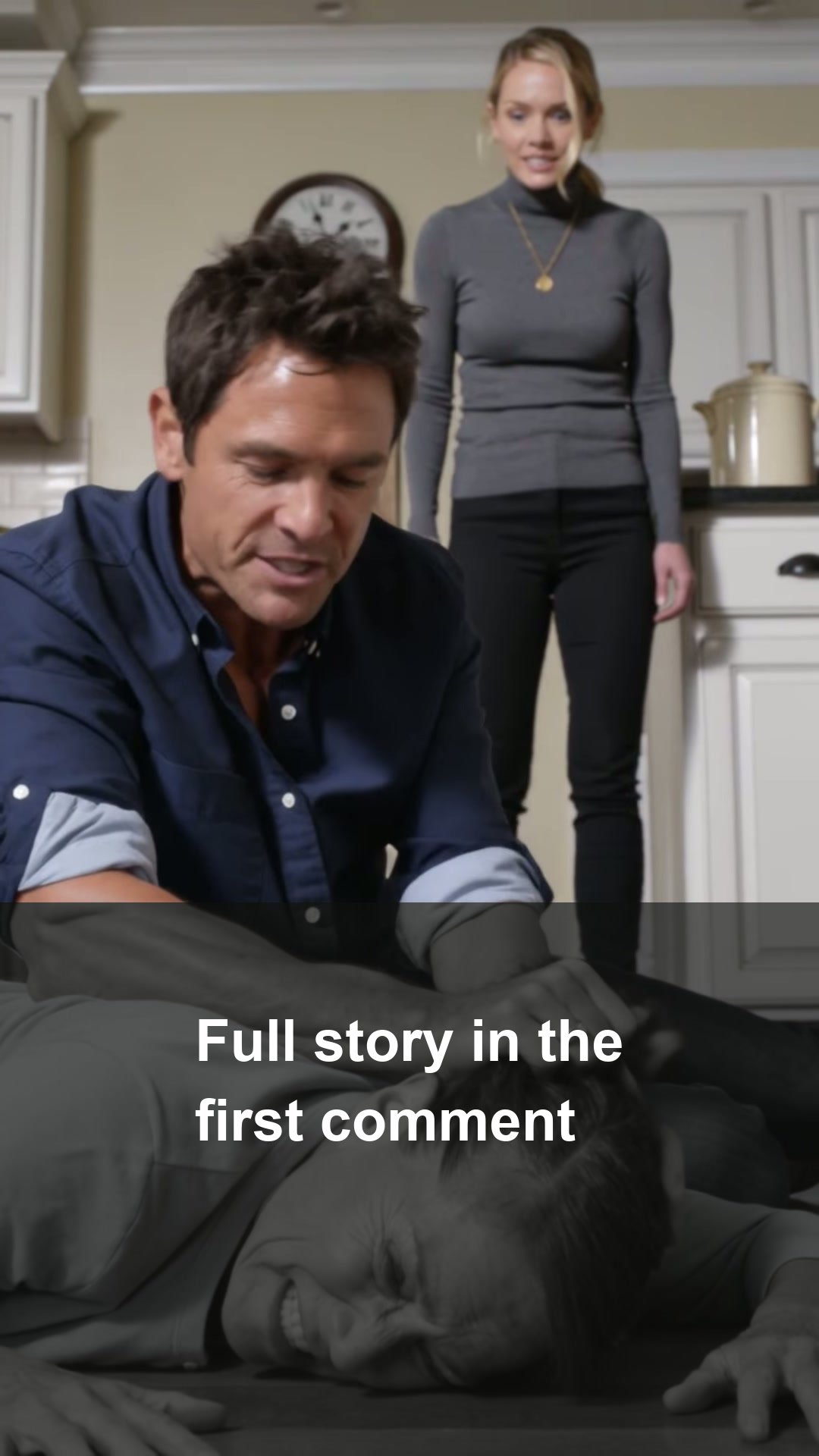
I looked at him and saw only the echo of his father’s entitlement, the belief that the world existed to cushion his failures. He loved me in the way one loves a savings account, useful as long as it remained untapped and predictable. I stepped back, clutching the ledger to my chest. I thought of Agent Miller, his voice on the phone yesterday, steady and devoid of the messy, sentimental history I shared with these people. He had told me that the law didn’t care about the sanctity of bloodlines, only the trail of signatures.
I’m not looking for an explanation, Daniel, I said, my voice as steady as a catalog entry. I’m looking for the exit.
I walked to the kitchen, leaving him standing in the hallway, an empty suit waiting for an apology that would never come. I picked up the phone to call Miller. Sarah was waiting for me at the café, a woman who had spent years warning me that kindness was being mistaken for weakness. She was the mirror I had avoided, the one who didn’t let me hide behind the shame of a broken home. I dialed, listening to the first ring, feeling the weight of the house lift as I prepared to let it all burn. The decision wasn’t about the money anymore; it was about the ledger, finally being empty, waiting for a life written in my own hand. My next move was the hardest, but for the first time, it was mine.
The precinct air smelled of ozone and cheap industrial floor wax. I sat on a molded plastic chair, my purse heavy against my hip, its weight a comfort rather than a burden. When I laid the printed bank statements on the desk, the ink seemed to bleed into the laminate, a physical manifestation of the rot I had finally exposed. Officer Miller did not offer me coffee or sympathy. He pulled a yellow legal pad toward him, his pen clicking with a rhythmic, mechanical precision. I walked him through the timeline: the forged signatures on the home equity line, the unauthorized wire transfers, the persistent, haunting erosion of my nest egg. Every time I said my son’s name, the air in the room grew thinner. I wasn’t grieving; I was cataloging.
I left the station with a file number and a burning sense of clarity. That evening, I sat at my mahogany desk, the one my husband had gifted me forty years ago, and began the process of severing the digital veins Daniel had tapped into my life. I called the credit unions, the investment firms, and the utility providers. I canceled the autopayments for their country club dues, their private school tuition, and the luxury car lease that had been silently draining my accounts. Each click of the mouse felt like pulling shards of glass from my own skin.
My phone vibrated against the blotter. Daniel was calling. I watched the screen glow with his name, a golden font that now looked like a counterfeit coin. I let it ring until it went to voicemail, then went to my email and drafted the formal notice to the estate attorney, contesting the will Daniel had coaxed me into signing last Christmas. I had been a fool, blinded by the performative grace of a son who played the role of a devoted heir while sharpening his teeth behind my back.
Two days later, I was in a lawyer’s office downtown, the view of the Savannah skyline obscured by a fine, grey drizzle. Mr. Sterling looked at my documents with the detached interest of an archeologist examining a shard of broken pottery. He advised me that the police report was the first domino. When I instructed him to file the civil suit for asset recovery, he blinked, a brief flicker of genuine surprise crossing his guarded features. He had expected the elderly widow to cry or perhaps to withdraw. I did neither. I simply signed the retainer agreement, the ink flowing dark and decisive.
The counter-action arrived in the form of a knock at my front door on a Tuesday morning. It was Marissa, her face a mask of practiced, fragile grief. She didn’t wait for an invitation, stepping into my foyer with the entitlement of a landlord. She began with the soft, probing questions, the ones meant to test the structural integrity of my resolve. She spoke of family reputation, of the shame that would surely stain the grandchildren, and of how easily this could all be settled with a quiet withdrawal of the charges. She reached for my hand, her skin cold, her touch predatory.
I pulled away, stepping back into the shadow of the staircase. I told her that the reputation of the Thorne family had been liquidated the moment they viewed my bank accounts as a personal ATM. She froze, her eyes scanning my face for a crack, for the maternal weakness she had banked on for years. She didn’t find it. When she realized the performative kindness was failing, her tone shifted, becoming sharp, thin, and brittle. She threatened to paint me as senile, to have me assessed, to suggest that my mind had turned against the people who loved me most.
I watched her, noticing for the first time the fine lines of desperation around her mouth. She was not a daughter; she was an accomplice in a slow-motion heist. I told her to leave, and when she refused, I dialed 911 on speakerphone, setting the device on the entry table. The sound of the operator’s voice, calm and detached, shattered the scene. Marissa fled, her heels clicking rapidly against the porch steps, a frantic, uneven rhythm.
The final blow to my own comfort came that afternoon, when I visited a private lab. I had begun to suspect the reason for their sudden, frantic need for liquidity. The rumors about the twins, the whispers in the social circles I used to inhabit—they hit me with the force of a physical impact. I provided the sample, my hands steady. The results would take a week. If the biological truth confirmed my darkest suspicion, it would be the final, irreversible severance.
I returned home to find my mailbox stuffed with letters from Daniel’s creditors, envelopes marked urgent in bold, red ink. He was hemorrhaging, and in his panic, he had started calling my friends, spinning a narrative of my declining health and his concern for my welfare. I didn’t call them back to explain. I didn’t defend myself. I sat at my kitchen table, the ledger before me, and began to write a letter to the HR department at Daniel’s firm, detailing the financial fraud and providing the evidence that would strip him of his professional standing.
The screen of my phone lit up again. An email from the court. The judge had set a date for the initial hearing on the asset recovery. It was real now. The legal machinery was grinding into gear, a slow, inevitable force that would flatten everything I had built for the sake of a facade. I looked around the room, at the Wedgwood porcelain, the heavy curtains, the dust motes dancing in the late afternoon light. I was dismantling my life to save what was left of it. I poured a glass of water, took a slow sip, and felt a quiet, hollowed-out peace. The house was finally beginning to belong to me again, one legal filing at a time. The next knock at the door would not be family. It would be a process server. I waited, ready.
The knock did not come. Instead, the silence of the cul-de-sac felt heavy, pressurized by the absence of the Thorne family SUV in the driveway across the street. I stood at the window, pulling the lace curtain back just enough to see the neighborhood turning its collective back. Mrs. Gable, who had spent a decade borrowing my gardening shears, marched past my walkway with her chin tilted at a sharp, defensive angle. When she reached the mailbox, she didn’t even glance toward my porch. The social contagion of the scandal had spread; to be seen speaking to the woman whose son was being dragged into a fraud investigation was to acknowledge the rot in our manicured garden.
My phone vibrated against the granite countertop, a sharp, metallic hum. It was a notification from the neighborhood group chat—a platform usually reserved for lost kittens and lawn care recommendations. A message from Marissa, pinned to the top: I am heartbroken by the baseless, cruel allegations currently being spread by certain family members. Daniel and I are working with counsel to clear our names and reclaim our privacy. Please respect our boundaries.
My thumb hovered over the delete button, but I forced myself to read the replies. They were a rapid-fire sequence of hollow support—praying hands emojis, hearts, and promises of solidarity. The neighbors weren’t just picking sides; they were insulating their own reputations by aggressively defending a fiction they had all participated in. I set the phone face down. The vibration started again, then again. It was as if the digital world was physically shaking the house.
I walked to the kitchen island and opened the drawer where I kept my address book. The ink was faded, the pages soft from years of use. I turned to the back, to the names of people who had known my husband, Arthur. I started crossing them out. Not because I blamed them for their silence, but because I realized the effort it would take to explain the truth—that the golden boy of Savannah was a thief—was an expense I could no longer afford.
The doorbell finally chimed, not with the aggressive insistence of a process server, but with a hesitant, rhythmic tap. I opened it to find Sarah standing there, her eyes swollen. She didn’t offer a hug. She just looked past me into the foyer, her gaze lingering on the empty space where the heirloom cabinet used to stand.
They’re saying you’ve lost your mind, Evelyn, she said, her voice barely rising above the rustle of the oak trees. They’re saying the trauma of the funeral finally cracked you.
I adjusted my cardigan, feeling the weight of the house pressing in on me. I haven’t lost my mind, Sarah. I’ve just lost my appetite for their lies.
She stepped inside, closing the door firmly against the prying eyes of the street. She looked at me, really looked at me, and I saw the recognition of a new, colder reality in her expression. The community was already writing the obituary for my reputation. I decided then that I would not fight the narrative. If they wanted a tragedy, I would let them have one, so long as it was told on my terms.
I need you to testify about the investment seminar last year, I said, walking toward the study. I need the timeline, not the gossip.
Sarah stood still, the weight of the fallout finally settling between us. We weren’t just neighbors anymore; we were witnesses to a demolition. I led the way, leaving the buzzing phone on the counter, its screen lighting up with a fresh barrage of notifications from a world that was rapidly learning to hate me. I reached for the ledger, the sound of the front door latch clicking shut behind me echoing like a final, definitive period.
The courtroom in Savannah smelled of floor wax and stale air, a sterile environment that stripped the gilding off my son’s life. Daniel sat three rows ahead, his shoulders hunched, the expensive suit he wore to the first hearing replaced by a standard-issue charcoal blazer that didn’t quite fit. Marissa wasn’t there; she had filed for divorce two weeks prior, her lawyers already scrubbing her name from the joint debts that had liquidated my retirement fund.
I kept my gaze fixed on the judge’s desk. When the bailiff gestured for me to approach the bench, the floorboards groaned under my feet. I placed my hands on the railing, the wood cool and polished.
State your name for the record, the judge said, her voice devoid of default.
Evelyn Thorne, I replied. My voice did not shake.
The proceedings were swift, a brutal economy of truth. I provided the dates, the forged signatures on the power-of-attorney documents, and the bank logs that traced my savings directly into their country club dues and luxury car leases. Every word felt like a physical weight lifted from my chest. When the judge finalized the protective order, the bailiff stepped between us, preventing the eye contact Daniel tried to force. I did not look back.
The walk to my car was the first moment of true silence I had felt in a year. The sky was a pale, washed-out blue, typical of a Georgia autumn. My lawyer opened the passenger door, but I stood still, watching a leaf drift across the pavement.
It’s over, he said. The restitution order will be enforced through their remaining assets. You’re clear.
I nodded, feeling the phantom pressure of a life defined by others finally dissipate. I drove home not to the cul-de-sac, but to the bungalow I had purchased across town.
I unlocked the front door and pushed it open. The air inside smelled of dust and unpainted walls, a blank slate. I walked into the kitchen and set my bag on the counter, right next to the new high-security lock box where I kept my accounts. I reached into my tote and pulled out the Wedgwood teacup, the porcelain fragile and ornate, a gift from my late husband that had always made me feel like an exhibit in my own home. I walked to the recycling bin and dropped it in. It shattered with a sharp, clean sound.
I sat at the empty kitchen table, the early morning sunlight hitting the wood. There were no ledgers, no hidden debts, no expectations of family loyalty to uphold. I was finally, mercifully, a stranger in my own quiet life. I turned my phone off and left it face down.
The soil in the backyard was cool, damp enough to stain my knees as I pressed a new row of lavender into the garden bed. My hands, once accustomed to the dry, sterile rustle of library cards, were now caked in the grit of the earth. The air held the metallic scent of coming rain, a sharp contrast to the suffocating stillness that had permeated the house for years.
I heard the back screen door creak, followed by the soft, rhythmic clicking of claws on the deck. Barnaby, the rescue terrier with a lopsided ear and a propensity for chasing shadows, trotted over and dropped a slobbery tennis ball onto my trowel.
“Not yet,” I murmured, my voice rasping from disuse. I smoothed the soil over the lavender roots.
Barnaby tilted his head, his dark eyes fixed on my face with an unsettling, uncomplicated intensity. He let out a low huff, then circled twice before collapsing onto my discarded cardigan. He didn’t need a legacy or a performance of gratitude; he just needed the space to exist near me.
I looked back at the house. Through the kitchen window, the reflection of the morning sun caught the countertop, illuminating the empty, dust-free surface where the ledgers used to sit. The silence wasn’t heavy anymore; it was thin, breathable. I thought about the phone tucked away in the junk drawer, uncharged and unheeded. The temptation to reach for it—to see if the world was still demanding my silence or my money—flickered, then vanished.
I picked up the ball. My grip was steady, no longer trembling with the phantom weight of Daniel’s expectations. I tossed it toward the edge of the lawn, watching the dog scramble into a sprint. I decided then that I would not check the mailbox for another week. I stood up, dusted the dirt from my palms, and walked toward the house, finally ready to make breakfast for one.
Inside, the kitchen was cool and shadowed, stripped of the frantic energy that once pulsed through its walls. I cleared the granite island, wiping away the faint, circular ghosts of coffee mugs and the residue of unpaid bills. My movements were rhythmic, stripped of the old, cautious hesitation. I reached into the cabinet for the new ledger—a simple, lined book with a stark white cover—and laid it flat. Beside it, I placed a sharpened pencil, its lead perfectly pointed. The morning sun pushed through the window, striking the desk with a sharp, blinding clarity. I pulled the chair out, the legs scraping softly against the hardwood floor. I sat, opened the book to the first crisp, untouched page, and rested my hand firmly against the paper, leaving it blank.
Leave a Reply