The snow beneath me turned crimson while my husband drove away with the only thing my father ever built for my child.
I lay in the driveway, the gravel digging into my palms like jagged teeth. A single, broken spindle from the walnut crib rolled toward the gutter, tracing a dark, slick path through the slush. My lungs burned, cold air catching on a jagged sob that refused to break free.
Evan’s brake lights winked out at the end of the cul-de-sac, two red embers dying in the dark.
“Mia? Get up,” Patricia’s voice drifted from the porch, sharp and brittle as dry glass. She didn’t move toward me. She stood under the porch light, her shadow stretching long and thin, like a parasite feeding on the silence.
I stared at the spot where the tires had spun. The absence of the crib was a physical pressure in my chest, a hollow space where a heartbeat should have been.
I didn’t answer. I pressed my palm against the frost-covered asphalt, feeling the pulse of the earth. I knew exactly where the cloud server stored the nursery feed. I stood up, leaving my blood on the drive.
The alarm clock hummed a steady, synthetic pulse at 6:15 AM. I reached out, my fingers brushing the cool glass of the nightstand before I found the button to kill the noise. Beside me, Evan was a mound of heavy, rhythmic breathing under the duvet. The room smelled of lavender laundry detergent and the stale, lingering scent of the previous night’s Pinot Noir. I sat up, the floorboards cold beneath my feet, and walked to the kitchen.
The espresso machine groaned, a familiar, mechanical protest as it pressurized. I watched the dark liquid drip into the porcelain mug, counting the seconds—twenty-two, twenty-three, twenty-four. It was the only part of my day that required absolute precision. I took the mug to the island and opened my laptop. My inbox was a list of clean, manageable tasks: data sets for the quarterly audit, a few emails from the accounting firm, a request to standardize the inventory logs for a local boutique. I clicked through them, my cursor moving with a dull, practiced efficiency.
By 8:00 AM, the sun was hitting the kitchen tiles in long, rectangular slats. I poured a second cup and leaned against the counter, staring at the empty nursery door. The paint was a soft, pale cream, flawless and untouched. Evan had insisted on the color, claiming it would brighten the space for the baby. I hadn’t argued. It was easier to let him pick the aesthetics than to defend my own preference for something warmer.
I drove the commute in near silence, the radio tuned to a low-volume station playing classical strings. The suburb moved in a predictable loop: manicured lawns, the smell of damp pine, the occasional jogger waving with a practiced, neighborly smile. I pulled into the office parking lot, my badge chiming against the door reader.
The printer in the main hallway was jammed again. I stood before it, watching the blinking red light of the error code, while Sarah from Marketing leaned against the wall, sipping a green juice.
It is going to be a long week, she said, gesturing to the printer. My husband is convinced the forecast is wrong, but look at that sky.
I looked out the window. The clouds were bruised, a heavy, slate gray gathering over the treeline. It looks like rain, I said.
Definitely, she agreed. Do you have everything ready for the board meeting on Thursday?
I nodded. Just the final tweaks to the projections. It is mostly busy work.
She sighed, a short, sharp sound. I wish I had your focus. Sometimes I feel like I am just running in circles.
I smiled, a stiff, polite pull of the mouth muscles. It is just a routine. If you keep the variables small, the outcome is usually predictable.
I walked back to my desk, sitting in the ergonomic chair that felt molded to my spine. I spent the next six hours refining spreadsheets. I didn’t think about the crib, or the way Evan had started checking my phone when he thought I wasn’t looking, or the way Patricia had stopped asking about my health and started asking about my father’s trust accounts. I focused on the numbers. Numbers did not lie. They did not shift their meaning to suit a narrative.
At 4:45 PM, the office went quiet. People were packing bags, checking their watches, preparing for the transition from professional life to home life. I cleared my screen, closed the laptop, and slid it into my leather bag. My phone, sitting on the desk next to a stack of reports, suddenly vibrated. It buzzed against the wood, a sharp, frantic rattle that drew my eyes immediately. I didn’t recognize the number. I looked at it for a long beat, my heart suddenly heavy in my chest, and pressed the green icon.
The voice on the other end was not a person, but a rhythmic, metallic clicking that resolved into the wheeze of a ventilator. I gripped the edge of my desk, my knuckles turning white against the mahogany grain. It was the sound of the hospice ward, the one I had left behind three years ago when my father passed, yet here it was, bleeding into the sterile quiet of my office.
The line clicked dead. I stared at the screen until the caller ID faded into a black mirror reflecting my own pale, tight-lipped face. A sudden, sharp nausea rolled through me, cold and precise. My father had left no loose ends, no secret debts, yet that sound—that specific, mechanical stutter—was a key turning in a lock I hadn’t known existed. I stood up, my chair scraping against the carpet like a scream, and walked toward the elevator. The lobby felt too large, the marble floors echoing my footsteps with a mocking rhythm.
I reached the parking structure just as the evening fog rolled in from the sound, thick and smelling of brine. Evan’s black SUV was idling near the exit, its headlights cutting through the mist like twin, yellow eyes. I stopped behind a concrete pillar. Through the glass, I saw him talking to Patricia. Her posture was rigid, her head inclined toward his as if she were reading from a script. They weren’t just waiting; they were waiting for something to happen.
Evan leaned over to the passenger seat and pulled a heavy, velvet-wrapped object from the floorboard. My father’s cradle. The walnut rails were distinct, the grain sanded until it felt like polished bone. I had spent months restoring that wood, rubbing oil into the fibers while the twins shifted beneath my ribs. Evan hoisted it into the trunk, his movements hurried, lacking any of the reverence he usually feigned for our history. Patricia leaned out the window, her hand resting briefly on his arm—a gesture of benediction, or perhaps confirmation.
I felt the ground shift, a sudden vertigo that made the concrete sway. They were clearing the house. They were liquidating the last of my sanctuary before I could return home. I stepped out from behind the pillar, my breath hitching in the frigid air. Evan saw me in the rearview mirror. His face didn’t crumble; it hardened into that familiar, terrifying neutrality. He didn’t offer a greeting, didn’t ask why I wasn’t at home. He simply engaged the gears. The tires chirped against the damp pavement as he accelerated, the SUV swerving around the exit ramp with a reckless disregard for the speed bumps.
I stood in the center of the lane, the exhaust fumes stinging my eyes. I didn’t follow. I didn’t shout. I reached into my pocket, my fingers finding the hard, square edge of my phone. I had installed the nursery camera a week ago, a small, blind eye tucked into the crown molding. If they were taking the cradle, they were leaving the room empty. And if they were leaving it empty, they had already moved to the next phase of the erasure. I tapped the icon. The live feed loaded, a flickering grey square of the nursery. The door was wide open, the lock I had installed from the inside shattered against the doorframe, and the room was entirely, violently vacant.
The cold air of the driveway bit into my skin as I tapped the icon again, watching the empty room on my screen. I dialed Evan. The phone rang four times, the sound muffled by the wind, before clicking into a voicemail that had been full for weeks. I hung up and scrolled to Patricia. She picked up on the first ring, her voice crisp, practiced, and infuriatingly devoid of static. She claimed they were at the emergency clinic, that the doctor had insisted on an immediate transfer for my recovery, and that Evan was merely securing my belongings to keep the house free of clutter during my absence. Her tone was a tight wire, vibrating with an practiced authority that made my stomach churn. I didn’t acknowledge her lie; I just hung up, the silence of the street suddenly deafening. I decided to call the clinic. A nurse with a tired, gravelly voice answered, but when I asked for the room number, she paused for a beat too long before stating that no patient under my name had been admitted that evening. My blood turned to ice. I checked the camera feed again, zooming in on the crown molding; the wire had been clipped, leaving the feed frozen on a static, empty frame.
I drove to the hotel where Evan kept his private study, my knuckles white against the steering wheel. The parking lot was desolate, save for a single black sedan idling near the service entrance. A groundskeeper stood by the brick wall, smoking a cigarette, his eyes tracking my car with a bored intensity. I rolled down the window and pressed a twenty-dollar bill against the glass, asking if he had seen a truck loaded with furniture. He spat into the mulch, shaking his head, claiming the side gate had been locked since dusk and that no one had entered or exited the loading bay. His eyes shifted toward the idling sedan, which suddenly pulled away, its tires crunching aggressively over the gravel. I watched the car disappear into the dark, realizing the groundskeeper hadn’t looked at the gate once. The contradiction hung in the air like poison. My mind raced through the data points: the clinic had no record, the house was stripped, and the witness was paid to be blind. The narrative Evan had built was fraying, but the threads were tangled in ways I hadn’t anticipated. I reached for my phone again, my thumb hovering over the contact for the local police department. I knew if I called, they would treat me as a grieving, confused widow, a fragile variable in their pristine social circle. I needed to see the nursery for myself, to touch the dust where the cradle had stood, and find the one piece of evidence they hadn’t realized was missing. I put the car in gear and drove toward the only place where the truth might still be anchored. The hook of the morning was already set; now, I had to see who was pulling the line.
The floorboards of the nursery groaned, a sound that usually signaled comfort but now felt like a taunt. I pressed my palm against the wall where the walnut rail had been bolted. The wood was cold, stripped of its varnish and history. Evan had taken the cradle to make it look like a nursery that never existed, erasing the physical manifestation of the tragedy he had orchestrated. I knelt, tracing the jagged splinter left behind in the drywall. My fingernails dragged through the white paint, uncovering the faint, stubborn indentation of my father’s chisel.
The door creaked behind me. Evan stood in the threshold, his silhouette framed by the hallway light. He didn’t enter. He simply watched me with that practiced, pitying expression he had perfected since the funeral. He held a glass of water, his hand perfectly steady.
“You’re spiraling again, Mia,” he said, his voice dropping into that low, soothing cadence designed to settle a frightened animal. “The doctors told us the house would be a trigger. You need to come downstairs and take your medication.”
I didn’t turn around. I focused on the splinter, the sharp edge digging into my skin until a bead of blood bloomed on my thumb. I thought of the bank statements hidden in the floorboards of my old office, the ones documenting the wire transfers to Patricia’s private accounts, the ones he thought were burned with the rest of the records. I realized then that he wasn’t just gaslighting me; he was waiting for me to break so he could commit me and finalize the liquidation of the estate.
I stood slowly, my joints stiff, and turned to face him. The air in the room felt vacuum-sealed. I could see the slight twitch in his jaw, the calculation beneath his composure.
“I know where you put the cradle, Evan,” I said.
He didn’t blink. He just sipped the water. “You’re confused, Mia. We never had a cradle.”
The cradle hadn’t been a piece of furniture; it had been a manifestation of my father’s terminal guilt. I remember the smell of cedar shavings clinging to his cardigan when he visited the rental house in Portland. I was ten, sitting on the fraying carpet while he measured the width of a plank against his forearm. He didn’t talk about the money he’d lost or the creditors who circled our mailbox like vultures. He just sanded the wood until the grain looked like ripples on a dark pond. Don’t ever let a man decide what your space is worth, he had whispered, his hands trembling with the onset of the tremor that would eventually steal his motor skills. He was building a history for me that didn’t involve his failures. I watched him carve the interlocking vines into the headboard, a tedious, painstaking labor that seemed to exhaust his very marrow. When the bank finally evicted us three months later, he stayed behind to finish the varnish, even as the sheriff’s deputy knocked on the doorframe. He carried that cradle through three different apartments, lugging its weight up narrow stairwells, treating it like an altar. I learned then that love was not a feeling; love was an object you protected until you died.
I met Evan at a fundraiser for the botanical gardens, a place where the air was thick with the scent of lilies and calculated indifference. He was standing near a display of antique tools, his suit jacket pressed to a razor edge. He didn’t look at the flowers; he looked at the price tags. My father had been dead for two years, and I was still living in the shadow of the debt he’d left behind, working double shifts to keep the lights on. Evan approached me with the ease of someone who had never had to consider the cost of a gallon of milk. We spoke about the timber industry, about the fluctuations in the market, and he listened with an intensity that I mistook for genuine curiosity. In reality, he was cataloging my potential. He was measuring the gap between what I possessed and what he could extract. I thought his attentiveness was a shield against the erratic chaos of my upbringing. I didn’t realize he was just a different kind of predator, one who didn’t hunt in the woods but in the soft, vulnerable margins of a person’s loneliness.
Our wedding was an exercise in staged perfection, held at the Vance family estate, a sprawling mansion that felt more like a fortress than a home. Patricia was the architect of our misery, even then. She stood in the foyer, her back as rigid as a steel rod, adjusting the placement of a silver tray with a flick of her manicured finger. You’re marrying into a legacy, Mia, she told me, her voice devoid of warmth, like glass clinking against glass. You would do well to remember that a legacy requires maintenance. She didn’t mean the house. She meant my compliance. I remember standing in the bridal suite, the lace of my gown itching against my skin, watching her through the vanity mirror as she inspected the guest list. She crossed out three names—people who had supported my father when he was failing—with a red pen that looked suspiciously like a threat. I said nothing. I looked at the floor, thinking of the cedar cradle tucked away in the storage unit I was still paying for, a secret anchor in a sea of opulent indifference. I let her dictate the rhythm of the day, convincing myself that surrender was just a form of peace.
The first time Evan lied about money, it was over the utility bill. We were sitting in the kitchen, the marble countertops cold beneath my palms. He told me he’d paid it, his eyes meeting mine with a steady, practiced honesty that made my stomach churn. I knew he hadn’t; I had checked the balance that morning. The discrepancy was small, a few hundred dollars, but it was the architecture of the deception that terrified me. I felt the old, familiar static of my childhood—the feeling of the walls closing in, of the impending crash that my father had always promised was just a temporary setback. I looked at Evan’s hands, the same hands that now hold the cradle hostage, and saw the hidden geometry of his greed. He wasn’t spending the money on luxuries; he was moving it into accounts I couldn’t touch, eroding the foundation of my independence so that I would eventually have to ask him for the air I breathed. I stood up, the chair scraping sharply against the tile, and walked out of the room to keep from screaming. I made the decision then, in the silence of the hallway, to keep my own accounts hidden, to squirrel away the remnants of my father’s meager life insurance in a way Evan could never trace.
My sister, Sarah, was the one who saw it first, though she was too fragile to speak it aloud. We met for coffee in the city, the wind whipping through the alleyway. She looked at the ring on my finger, a heavy, expensive thing that felt like a shackle, and she didn’t congratulate me. She asked how the house felt. When I told her it was quiet, she looked at me with a profound, hollow sadness. Quiet is just another word for hollow, she whispered, stirring her sugar until it dissolved into a gritty sludge. She knew the Vance family history—the rumors of their previous ventures, the way they built their fortune on the ruined reputations of others. She tried to warn me about Patricia, about the way she collected people like ornaments, discarding them the moment they lost their luster. I dismissed her, telling myself she was just bitter about her own failed marriage. I chose to believe in the version of Evan I had invented: the protector, the man who would finally bridge the gap between my father’s poverty and my own security. I chose to ignore the red flags—the way he locked the office door, the way he questioned my every purchase—because the alternative was admitting that I had walked willingly into a cage.
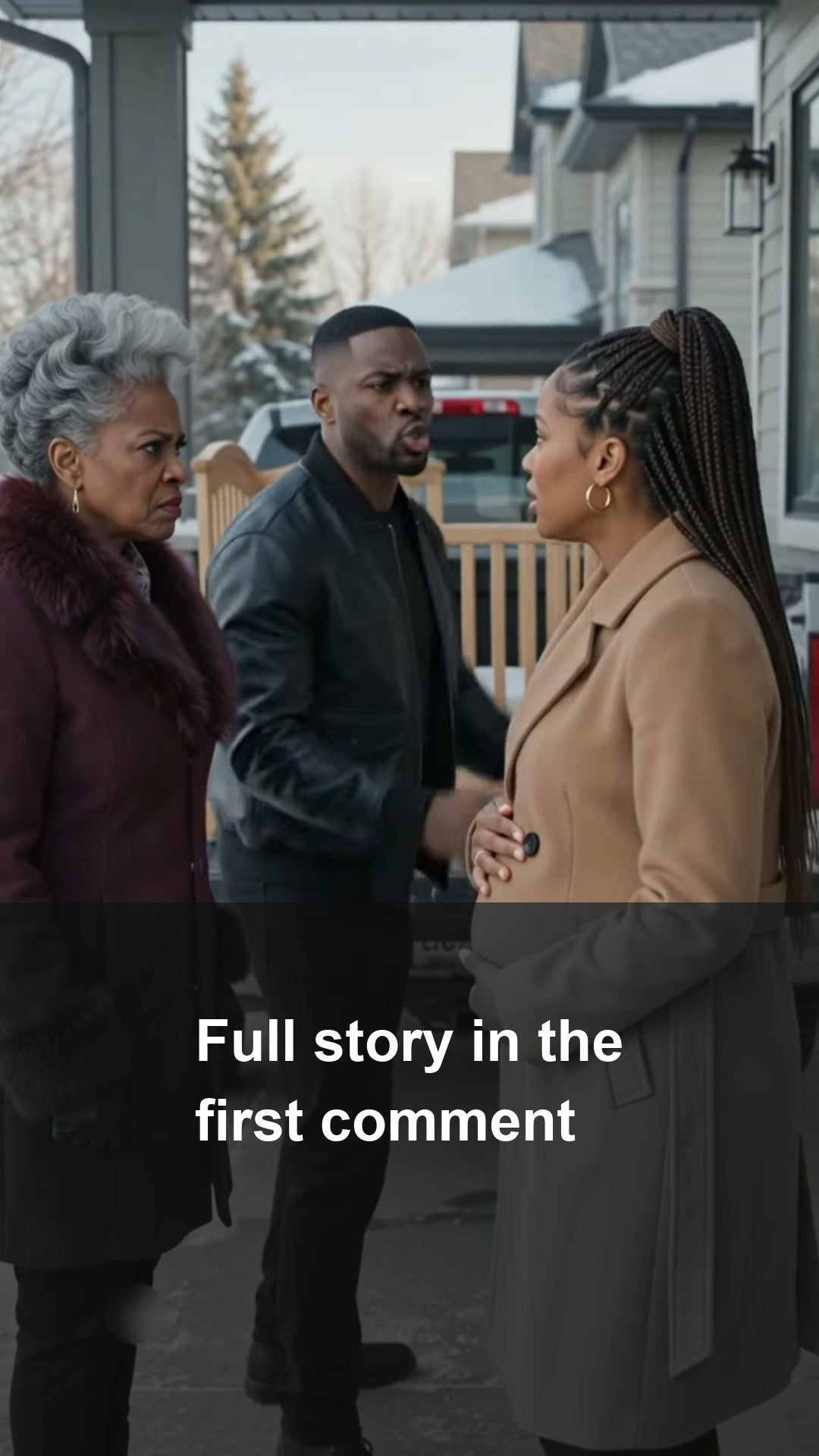
The nursery was supposed to be the turning point. I had spent months restoring the cedar cradle, sanding away the years of neglect, applying a new coat of oil until the wood glowed with a warm, amber light. When I brought it into the house, Patricia had looked at it with undisguised contempt. It’s an antique, she said, her tone dripping with condescension. It’s a liability. We’ve ordered a custom set from Italy. It’s safer, more suited to the optics of our family. I felt the blood drain from my face. That cradle was the only physical tether I had to my father, the only object that proved he had loved me without reservation. I refused to move it. I locked the nursery door, a futile gesture of defiance. Evan arrived home that evening, his face a mask of faux concern. He told me the door needed to be locked for the paint, for the carpet, for the safety of the house. He touched my shoulder, his grip just a fraction too tight, a silent reminder of who owned the roof over my head. I sat on the floor of the bedroom, staring at the locked door, realizing that I had spent my entire life trying to escape the patterns of my parents, only to recreate them in a more elegant, more cruel setting. The cradle wasn’t just wood; it was my father’s debt, and Evan had decided he was going to be the one to collect it. Every day since then has been a slow, deliberate tightening of the knot, a long, agonizing lesson in how much a human being can lose before they finally decide to stop being prey. I looked at Evan across the table, the silence stretching between us like a physical weight, and I knew that the man I had married was the man I had been running from all along.
Evan scraped his fork against the fine china, a sound like glass breaking. He was the architect of his own hollowed-out soul, a man who believed that if he mimicked the cadence of a successful patriarch long enough, the wealth would eventually manifest to match the performance. He looked at me, eyes devoid of the warmth he once mimicked during our honeymoon, and adjusted his silk tie. He didn’t want the inheritance for security; he wanted it to erase the memory of his father’s bankruptcy. He told me the bank needed more liquidity for the estate’s taxes, his voice smooth as polished marble, but his fingers drummed a frantic, uneven rhythm against the linen. I realized then that Evan wasn’t a mastermind; he was a man terrified of being exposed as a fraud. I decided to feed his delusion, nodding slowly as I poured him more wine, knowing the poison of his own ambition was already doing the work for me.
Patricia sat at the head of the table, her spine a rigid line that refused to bend for anyone, least of all her daughter-in-law. She sipped her tea, the steam obscuring the surgical precision of her expression. She had spent decades cultivating a reputation as the gatekeeper of high society, viewing every interaction as a transaction. Her contradiction was her devotion to the Vance legacy, a name she protected by destroying the very people who carried it. She leaned forward, her pearls clicking against the edge of the table. You look pale, Mia, she said, her voice dropping into that practiced, patronizing register that suggested concern while projecting dominance. She didn’t care about my health; she cared that my misery might dampen the evening’s dinner party. I watched the way she touched her wedding ring, a nervous tick she couldn’t suppress, and realized she was just as shackled to this house as I was. I smiled, a thin, tight thing, and told her I was simply tired, watching her relief bloom like a poisonous flower.
Then there was Sarah, my neighbor, whose husband had stopped parking his car in their driveway weeks ago, choosing instead to leave it idling in the dark, watching our windows. Sarah was the mirror I tried not to look into; she had traded her autonomy for a lifestyle that demanded total emotional bankruptcy. She stood on our porch yesterday, clutching a bottle of expensive champagne she hadn’t opened, her eyes darting toward the silent nursery window. We’re all so proud of the way you handle everything, Mia, she whispered, her hands trembling as she smoothed her coat. She was a woman drowning in a sea of appearances, terrified that if she acknowledged my pain, she would have to acknowledge the rot in her own marriage. I didn’t tell her that I knew about her husband’s secret debts. I just took the bottle and felt the weight of it, cold and heavy, a prop in a play we were all forced to perform. I decided then that I would not be the next casualty of their polite, quiet cruelty, and as I retreated back into the house, I made a mental note of every crack in the foundation, every hidden ledger, and every lie that would eventually collapse under its own gravity.
I sat at the kitchen island, the wood grain cold against my forearms, and opened the banking portal on my laptop. The cursor blinked, a rhythmic pulse of anticipation. I moved through the sub-menus, methodical and clinical, and executed the first strike: I revoked the authorization for our joint accounts. I watched the status bars shift from active to restricted. Evan’s payroll deposits would hit a wall by morning, and his credit card, linked to our high-yield savings, would be declined at the valet stand of the country club. I poured a glass of water, my hands steady as stone. I was no longer the grieving widow or the betrayed wife; I was a data analyst performing a system audit on a failing architecture.
The phone rang three minutes after the final transfer. I let it vibrate until the humming stopped, then picked up and dialed my lawyer. Marcus answered on the second ring, his voice low and practiced. I told him I wanted the petition to contest my father’s estate filed by dawn. I detailed the discrepancies in the trust management I had uncovered while Evan was sleeping.
You understand the social cost of a public filing, Mia, Marcus said, his pen scratching against paper in the background. The Vances don’t just sue; they bury.
I don’t care if they bury the foundation, I said, looking at the empty nursery door across the hall. I want the house.
I hung up and headed to the police station. The lobby was sterile, smelling of industrial cleaner and damp wool. I handed the folder of printed, time-stamped security logs to the officer behind the desk. I didn’t offer a narrative. I offered data: the exact time Evan had locked the nursery door, the audio file of him discussing the insurance payout with Patricia, and the sequence of our household items disappearing into the back of his sedan. The officer scanned the pages, his brows knitting into a frown. He looked at me, not with pity, but with the cautious respect one gives to a ticking bomb.
We’ll have to interview your husband, he said.
I expect nothing less, I replied.
When I stepped back into the house, the atmosphere had shifted. The air felt thin, stripped of its domestic comfort. I walked to the office, pulled the hard drive from the safe, and tucked it into my bag. I had an appointment at the clinic in two hours—a private DNA test to confirm the biological trail of the items Evan had claimed were his family heirlooms. I needed to prove they were my father’s, stolen and repurposed.
I reached the clinic, a nondescript office park on the edge of the city. The technician didn’t ask questions; she just performed the swabbing, her face an unreadable mask. As I walked out to my car, a black SUV swerved into the driveway, blocking my exit. Evan stepped out, his face flushed, his movements erratic. He didn’t look like the man who managed the books; he looked like a cornered animal.
Where the hell is the card, Mia? he barked, slamming his palm against my hood. I can’t clear the check-in at the club.
I rolled down the window, the cold air rushing in. It’s cancelled, Evan. The bank notified me of suspicious activity. I’m doing an audit.
He leaned down, his eyes darting to the folder on my passenger seat. You have no idea what you’re doing to us. You’re destroying a reputation that took thirty years to build. Patricia is already calling the board. They’re going to frame this as a breakdown.
Let them, I said, shifting the car into reverse. I looked him directly in the eyes. I’ve already sent the police the footage of the nursery.
His face went white, the blood draining away until his skin looked like parchment. He took a step back, his hands shaking. You wouldn’t. You’re too weak to burn the house down while you’re still inside it.
I smiled, a thin, sharp expression that didn’t reach my eyes. I’m not inside it anymore, Evan. I moved out weeks ago.
I backed around him, leaving him standing in the middle of the empty lot. My phone lit up with a notification from HR. I had filed the formal complaint against Patricia’s firm, citing the illegal use of company resources to manage my father’s estate. The consequences were beginning to cascade, a series of dominoes falling in slow motion. I felt no rush of adrenaline, only a profound, hollow satisfaction.
I drove home in silence, listening to the hum of the engine. When I pulled into the driveway, I saw a notice taped to the front door: a court summons for the estate dispute, delivered ahead of schedule by Marcus. I stepped over it, entered the house, and went straight to the nursery. The room was still empty, the crib gone, but the ghost of the nursery remained. I walked to the window and saw Patricia’s car pull into the driveway, her face a mask of calculated fury. She was coming to do damage control, to offer a compromise, to play the role of the concerned mother-in-law.
I locked the front door from the inside and walked to the kitchen. I didn’t answer the knocking. I watched through the window as she stood on the porch, checking her watch, her confidence fraying with every passing second of silence. She pounded on the wood, her voice muffled but sharp. Mia, open this door. We need to talk about the accounts. We need to handle this before it gets out of hand.
I picked up the landline, disconnected the cord, and set it on the counter. I watched her reach for her phone, her fingers flying across the screen, likely texting Evan, likely trying to coordinate a defense that no longer existed. I sat on the floor, my back against the cabinets, and waited. The power in the house flickered, then held. The silence of the house was no longer a weight; it was a weapon. I had dismantled the infrastructure of their lives, and now, I was going to watch them try to survive the collapse. Outside, a siren wailed in the distance, a sound that grew louder and steadier as it approached, cutting through the quiet of the affluent street. I closed my eyes and listened, waiting for the first knock of the law.
The police cruiser pulled into the driveway, its light bar painting the foyer in rhythmic pulses of red and blue. I watched from the living room window, pulling the heavy velvet curtain just enough to see the neighbor, Mrs. Gable, peering over her manicured hedge with her phone held high, recording the spectacle for the neighborhood group chat. I didn’t feel relief, only a cold, mechanical clarity. My phone buzzed against the hardwood floor; it was a notification from the local news portal, the headline already live: Vance Development Under Investigation for Financial Irregularities. Beneath it, a thread of comments grew like rot, strangers dissecting the ethics of a family I had once called my own.
I walked to the kitchen and poured a glass of water. My hand was steady. I thought of the way Evan used to boast about our social standing at the club, how he measured his worth in invitations to charity galas. Now, those same names were scrubbing his contact from their donor lists. My screen flickered with a message from an old friend, Sarah, who had blocked me months ago on Patricia’s insistence. It was short: I heard everything. I’m leaving Mark. The toxicity was a poison, Mia. I’m so sorry. I stared at the text until it darkened into a black rectangle. I didn’t reply. There was nothing left to say that wouldn’t feel like an autopsy.
The front door opened. The heavy, polished oak frame groaned as two officers ushered Evan inside, his hands cuffed behind his back, his expensive wool coat crumpled and stained with road salt. He looked at me, his face a mask of frantic, sweating desperation. Mia, tell them, he stammered, his voice cracking against the drywall. Tell them it was a misunderstanding, that we just need to settle the accounts. I stood in the doorway of the kitchen, watching him struggle to maintain the arrogance that had defined his life. He looked small, stripped of the veneer of corporate success.
Patricia followed, flanked by a female officer. She didn’t look at me. She scanned the room, her eyes darting to the empty shelf where the crib rail had once sat, then to the stack of legal documents I had left on the mahogany sideboard. Her composure was shattering, the sharp, haughty lines of her mouth drooping into a pathetic, trembling line. I remembered her calling my pregnancy a strategic error. Now, the error was the legacy she had tried to build on a foundation of shifting sand.
The cost to me was the silence that followed when they were finally led out. My skin felt raw, as if I had spent the last three years submerged in icy water. I felt the weight of every lie I had documented, every encrypted file I had decrypted, pressing down on my lungs. The house was mine, but it felt like a tomb. I walked to the front window and saw the crowd gathered at the edge of the property, cameras flashing, voices hushed and hungry. They wanted a tragedy to consume with their morning coffee. I turned my back on them and headed toward the stairs. My decision felt final: I would not stay to watch the slow-motion ruin of their names. I would leave the house to the banks, the courts, and the ghosts. I climbed the stairs, my footsteps echoing in the hollow space, and reached for the suitcase I had hidden in the back of the closet three months ago.
The suitcase was heavy, weighted with hard drives and the few clothes that didn’t smell like the stale perfume Patricia favored. I clicked the locks shut, the metallic snap sounding like a gavel in the sterile room. Below, the front door rattled under the force of the sheriff’s deputies. I didn’t rush. I walked to the mahogany dresser, reached into the bottom drawer, and pulled out the single, hand-carved walnut rail from the crib that had been my father’s final work. My thumb traced the grain, the wood worn smooth by my own trembling touch months ago. I slipped it into the side pocket of the bag.
I descended the stairs, the carpet muffling my departure. Through the foyer glass, I watched the tableau of their ending. Evan stood on the porch, his expensive silk tie askew, his face a mask of frantic, sweating confusion. Patricia stood behind him, her posture rigid, eyes scanning the crowd for someone—anyone—to offer a lifeline that had already been severed. When the handcuffs clicked around Evan’s wrists, he didn’t look at her; he looked at the house, his eyes frantic, realizing the equity he had bled me for was now forfeit to the state. The flashbulbs turned the scene into a stark, overexposed photograph. I did not step out to meet them. Instead, I retreated to the kitchen, where the silence was finally absolute.
I pulled the spare key from the hidden ledge under the granite island. The air in the house felt thinner, purged of the oxygen-sucking anxiety they had cultivated for years. My phone buzzed with a notification from my attorney: the final decree was processed, the assets frozen, and the deed transfer initiated. The house belonged to the history of their failure now. I walked to the mudroom, set my suitcase down, and stared at the door leading to the garage. I thought about the twins, about the nursery that had been a cage, and about the way justice felt more like a hollow ache than a victory.
I picked up the bag and walked out the back door, heading toward the waiting taxi at the end of the driveway. I didn’t look back at the police cruisers or the yellow tape stretching across the lawn. I climbed into the backseat, the driver asking if I wanted the radio on, and I shook my head. I reached into my pocket, touched the ring I had retrieved from the riverbed two days prior, and decided then: I would not stop until the coast was behind me. I turned to look at the garden, already imagining the spade and the sapling. I was finally moving.
The rental cottage in Cannon Beach smelled of salt spray and floor wax. I spent the first three days sitting on the wooden deck, watching the tide erase the lines I imagined in the sand. My hands, usually occupied with spreadsheets or clutching the edges of a grief I couldn’t name, lay still in my lap. I was learning the geography of my own skin again, mapping the places where the tension had finally begun to migrate outward, leaving behind a dull, manageable ache.
On Tuesday, I bought a bag of soil and a small dogwood sapling from the local nursery. The clerk, an older woman with dirt under her nails, didn’t ask why a woman in a heavy coat wanted to dig in the rain. She just handed me a receipt and a nod. Back at the cottage, I broke the ground near the fence line. The rhythm of the shovel—the sharp bite of metal into earth—was the first honest sound I had heard in years.
I am moving, I whispered to the sapling. The soil was cold, clinging to my palms like a confession.
I didn’t think about the nursery or the Vance legacy. I thought about the way the light hit the needles of the pine trees, turning them into needles of gold. By the time I finished, my fingernails were black, and my shoulders were screaming, but I was breathing. A stray golden retriever wandered up from the dunes, tail low, waiting for an invitation. I held out a hand, and he pressed his wet nose against my palm.
I am still here, I thought, and the thought didn’t hurt. It felt like an anchor. I decided to stay another week, to watch the tree take hold before I turned toward the coast. I stood up, wiped the mud on my jeans, and looked toward the horizon. The sun was breaking through the gray, and for the first time, I didn’t reach for my phone to see if anyone was looking for me.
I walked back into the silent cottage, my boots tracking dried silt across the hardwood floor. The space felt stripped of its history, the walls hollower than when I arrived. I moved to the mantle, clearing away the layer of gray dust that had settled over the past week. My fingers brushed against the smooth, polished surface of the single walnut rail I had salvaged from the wreckage of the nursery. I had carried it like a weapon for months, but now, the wood felt light, stripped of its jagged splintering edge. I placed it carefully on the empty shelf, the dark grain catching the last, sharp slant of the afternoon light. I left it there, unanchored, and walked out the front door, leaving the house unlocked behind me.
Leave a Reply