The ink was still wet on the transfer deed when the front door groaned under the weight of the bailiffs.
I stood in the center of the foyer, the marble floor cold beneath my heels, while the heavy brass key hit the floor with a hollow ring. Julien paced the perimeter of the room, his tie loosened, his face a map of veins and pulsing panic. He stopped, his gaze snagging on the stack of legal notices I had fanned across the mahogany console.
Did you really think I wouldn’t notice the offshore accounts, Julien? I asked, my voice flat, surgical.
He didn’t answer. He lunged for the papers, but his hands shook so violently he only managed to sweep them onto the floor. Watching his collapse, I felt a strange, quiet expansion in my chest—a vacuum where my loyalty used to reside. I didn’t reach for him. I didn’t even blink. The power I had spent five years masking was finally visible, sharp enough to cut. I adjusted my blazer, checked the time, and walked toward the exit. If he wanted to know the price of his legacy, he would find it in the foreclosure notice.
The silence in the kitchen was absolute, save for the mechanical whir of the Nespresso machine. I stood by the marble island, watching a single amber bead of coffee crawl down the spout. The light in Boulogne-Billancourt was thin and gray, filtering through the floor-to-ceiling windows to catch the dust motes dancing over the breakfast nook. I tapped my fingernail against the porcelain mug. It was a rhythmic, hollow sound.
Julien was already at the table, his eyes buried in the morning edition of Le Figaro. He wore a crisp, starched shirt that smelled faintly of sandalwood and expensive starch. He didn’t look up when I sat down, merely shifting his saucer an inch to the left to give me room.
It is going to rain this afternoon, he said, his voice clipped and preoccupied. The committee meeting at the Ministry will be a disaster if the traffic crawls like it did on Tuesday.
I stirred my coffee, watching the black liquid swirl into a perfect, dark vortex. I hope you remembered to print the revised site plans for the development, I replied. The ones with the updated zoning variance.
He looked up then, a thin, patronizing smile touching his lips. They are printed, Claire. You worry about these details as if I am an intern. It is a hobby for you, I know, but let me handle the actual architecture.
I nodded, keeping my expression neutral. The subtext of his comment—that my contribution was mere decoration—was as familiar to me as the pattern of the vein in his temple. I focused on the toast on my plate. I am not worried, I said. Just meticulous.
I stood, smoothing the skirt of my charcoal-grey suit. I grabbed my briefcase and my phone. The commute was always the same: forty-five minutes of listening to the low hum of the Parisian streets, the windshield wipers slapping in a syncopated rhythm against the drizzle. I spent the time mentally auditing the week’s closings, the figures neatly organized in my head like rows of ledger entries.
When I arrived at the office, the air was cold and sterile. I walked past the open-plan desks, nodding to the juniors who looked up with a mixture of deference and caution. The office printer was jammed again, sending out a shrill, rhythmic beep that cut through the office chatter. I sighed, walked over, and pulled the tray out, clearing the crumpled paper with two sharp, efficient tugs.
Small talk was a currency I spent sparingly. I checked the weather app—heavy rain expected by four—and pulled up my email. The inbox was a graveyard of urgent requests, all of which I had anticipated days ago. I felt the familiar, grounding weight of my own autonomy beneath the surface of the day, a secret armor hidden under my silk blouse.
I reached for my coffee, my fingers brushing the cool surface of the desk. The morning was perfectly ordinary. The world was aligned, the Delcourt legacy was seemingly secure, and my role as the silent, efficient wife was still intact. I was looking at the quarterly projections when the sound shattered the monotony.
My phone, resting on the mahogany desk, buzzed once. Then it hummed again, a persistent, rhythmic vibration against the wood. I stared at the screen, watching the caller ID flash in the dim light of the office. It was an unknown number, a string of digits that didn’t belong to any of my contacts. I leaned forward, my breath catching in my throat, and pressed my thumb against the glass.
I tapped the speaker icon, expecting a solicitor or a routine office query. Instead, the air in my office grew thin. The file transfer notification on my screen clicked into completion, a small window popping up to reveal a video file labeled simply as Security_Feed_04.mov. I clicked it, and the high-definition footage expanded to fill my monitor.
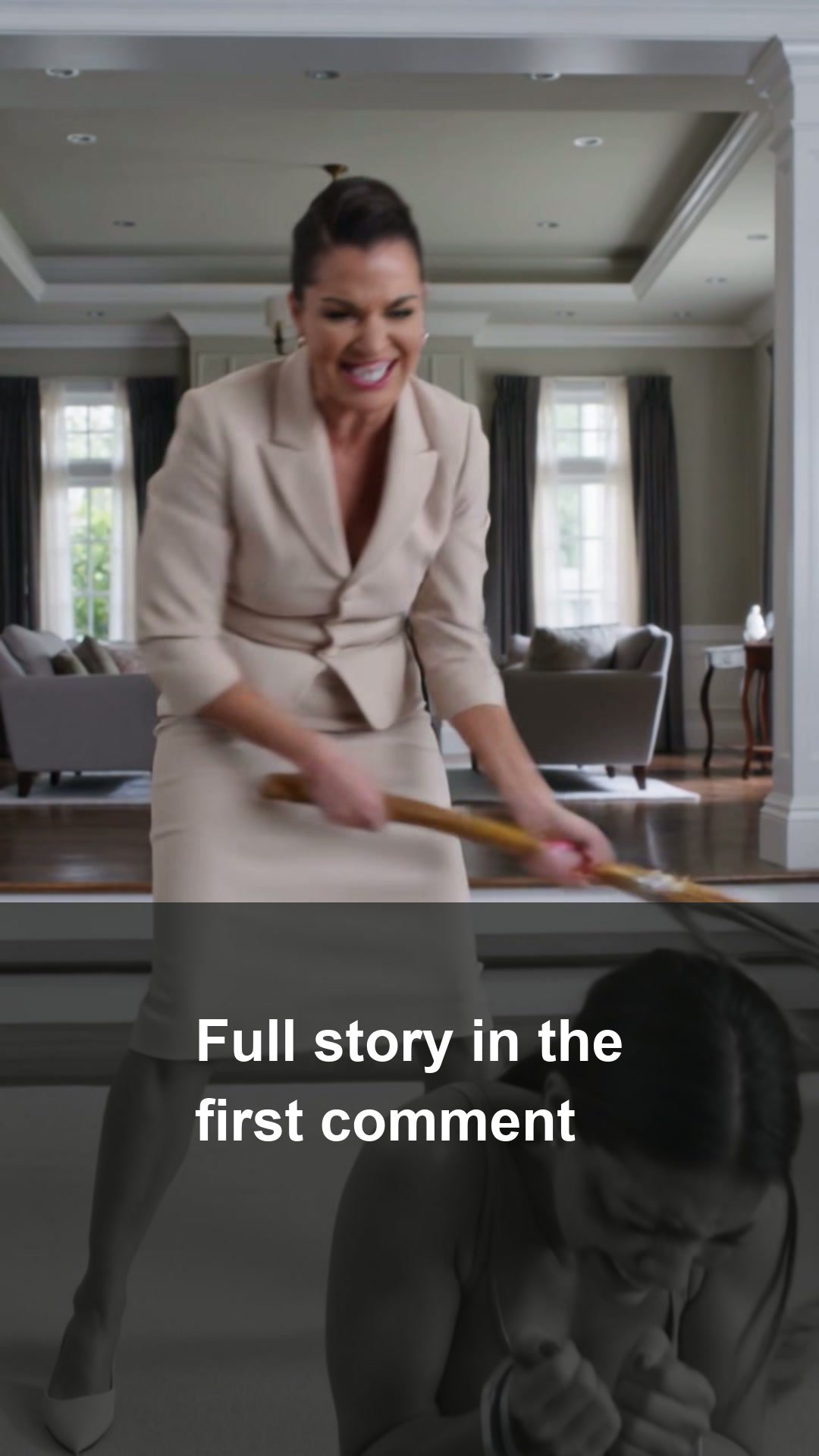
The angle was wide, capturing the expansive, white-stone driveway of my mother’s small house in the Creuse. A black sedan, too sleek for the gravel road, idled near the gate. Then, the frame shifted. Françoise stepped out, her posture rigid, her gloved hands gripping a thin, braided leather strap. She wasn’t holding a dog. She was holding my mother. Monique was on her knees, her face obscured by a messy, grey bun, her wrists bound by the makeshift collar. Françoise pulled, a sharp, practiced tug, and my mother stumbled, dragging her knees through the loose stones.
Françoise laughed. It was a silent, soundless movement on the screen, but I felt the vibration of it in my teeth. She leaned down, whispering something into my mother’s ear, and the older woman flinched, curling into a ball against the dust.
Claire, are you still there? The voice on the phone was static-heavy, male, and unfamiliar. It was the security firm’s night manager, his tone bored, as if he were discussing a minor property infraction rather than a human atrocity.
I didn’t answer. I watched the screen, my hand hovering over the mouse. My fingernails dug into the palm of my other hand, a crescent of sharp, stinging pressure. I wasn’t feeling rage; I was feeling a cold, crystalline clarity that transcended human emotion. Every negotiation, every legal loophole I had crafted to protect the Delcourt interests suddenly felt like a tombstone I had been building for myself.
I looked at the framed photograph of Julien on the corner of my desk, his chin tilted in that practiced, aristocratic arrogance. I thought of the joint account, the shared portfolios, and the illusion of my own safety. The image of the leash, the way the leather bit into my mother’s skin, burned itself into my retina. I realized then that my complicity hadn’t just been a tactical error; it had been an act of violence against the only person who had ever truly known me.
I picked up the phone. I am here, I said, my voice sounding like a blade sliding out of a scabbard. I need you to send the raw data to an external server I am about to authorize.
The manager hesitated. That is a violation of the privacy agreement you signed with the Delcourt estate, he countered, his voice dripping with sudden, cowardly caution.
I stood up, pushing my chair back with a screech that echoed against the silent office walls. I have the power of attorney for every asset attached to that property, I lied, my voice steady, perfectly calibrated. Do you want to be the one to tell the police why you didn’t comply?
I clicked the link for the server transfer, my eyes never leaving my mother’s broken frame on the screen. The trap was set.
The lobby of the Hotel Le Bristol smelled of ozone and expensive lilies. I sat in a velvet armchair, the leather slick against my palms, and dialed my mother’s nursing facility. The phone rang three times before a breathless aide answered. Her voice was sharp, strained by the background hum of an industrial floor polisher. When I asked about my mother’s whereabouts on the night of the fourteenth, the line went deathly quiet. She told me my mother had never left her room, that the logbook was signed and initialed by the night nurse herself. I stared at the concierge desk, where a digital clock ticked off the seconds in red neon. My mother had been in that lobby on camera, being led like a dog by Julien, and yet the facility insisted on a static, falsified reality. I hung up and called the nurse on duty from that night, a woman named Elodie. She picked up on the first ring, her tone defensive before I even spoke. She swore my mother was sedated, tucked away for an early rest. I realized then that the records were a curated fiction. I needed a witness who didn’t work for them.
I drove toward the Delcourt estate, the steering wheel vibrating against my skin like a panicked pulse. The memory of my mother scrubbing floors in the Creuse, her knees purple and calloused, surfaced unbidden. I had clawed my way out of that poverty to buy her safety, only to let her fall into the hands of people who saw her as a prop. I pulled over near the service entrance and approached a gardener I had seen dozens of times, an old man named Henri who spent his life tending to the ivy. He was pruning a boxwood hedge, his hands trembling as he worked. I asked him if he had seen the Delcourts leaving on the fourteenth. He looked over his shoulder, his eyes darting toward the surveillance cameras, and muttered that there were no cars that night, only a private courier van that didn’t belong to the family. He said the house had been empty for a week.
I felt the cold weight of the contradiction settle in my stomach. The hotel manager claimed the footage was from the estate’s private feed, the nursing home claimed my mother never left her bed, and Henri swore the house was shuttered. None of them were telling the truth, or perhaps they were all protecting different versions of a lie. I watched Henri retreat into the shadows of the greenhouse, his shears clicking rhythmically like a metronome. I turned back to my car, the gravel crunching under my heels. The Delcourts had built a labyrinth of misdirection, but they had underestimated the depth of my records. I opened my laptop on the passenger seat, the glow illuminating the dark interior, and began cross-referencing the courier company’s registration with the shell entities I had helped Julien set up years ago. Every thread pointed to a deliberate, coordinated erasure. I shifted the car into gear, my heart slowing into a rhythmic, calculated beat. If they wanted to play with shadows, I would burn the house down to expose what was hiding in the corners. I pulled onto the main road, heading toward the bank to see what Victor had uncovered. The first lie was dismantled; the rest would follow.
The lobby of Saint-Clair’s bank smelled of floor wax and cold ambition. I smoothed my blazer, ignoring the way my palms hummed with a lingering, phantom heat from the steering wheel. Victor was waiting behind his mahogany desk, his face a landscape of carefully curated neutrality. He pushed a tablet toward me, the screen flickering to life with a pixelated, grainy feed dated two days prior.
I watched the footage. The high-ceilinged hallway of the Delcourt estate appeared, distorted by a wide-angle lens. My mother, Monique, shuffled into the frame, her posture hunched, her movements dictated by the sharp tug of a silk cord. Françoise stood behind her, gripping the leash like a lead for a disobedient hound, her mouth curled into a familiar, sneering approximation of grace. Mother did not fight. She merely stared at the floor, her dignity stripped away in the name of a sick, private amusement.
I felt the air thin. The silence in the office became an physical weight, pressing against my eardrums until the pulse in my neck echoed like a metronome. I thought of the small, cramped kitchen in the Creuse, the way Mother had saved her grocery money to buy me my first law school textbook so I would never have to be small for anyone. I had spent six years building a golden cage for them, thinking I was securing a future, while they were busy manufacturing my mother’s subjugation.
I looked at the cursor blinking on the transfer document Victor had prepared. It was a simple legal bypass, a surgical strike that would collapse their entire portfolio into a state of immediate, irreversible insolvency. I didn’t hesitate. I pressed the screen, finalizing the irrevocable transfer of the Boulevard Haussmann property out of the Delcourt trust and into a public charity initiative.
I stood up, the chair scraping sharply against the marble. I turned to Victor, my voice stripped of its professional veneer, cold enough to freeze the room.
You forgot to tell them that I was the one who bought the leash.
The linoleum floor of our kitchen in Creuse was always cold, a damp, grey chill that seeped through the soles of my feet regardless of the season. I remember the sound of my mother’s sewing machine—a rhythmic, metallic chattering that filled the silence between the unpaid bills piled on the scarred pine table. I was ten, sitting on the floor with a set of construction-paper shapes, trying to build a house that wouldn’t collapse when the wind hit the drafty window frames.
Mother looked up, her fingers stained with indigo dye, and pointed at the stack of envelopes. Claire, she said, her voice thin as parchment, they’ve sent the notice again. We have to be smaller this month. We have to be invisible.
I didn’t answer. I just tore the paper in half, then in quarters, feeling the resistance of the cardstock against my small, calloused thumbs. I decided then that I would never be invisible. I would be the one holding the paper, the pen, and the leverage. I realized that the silence in our house wasn’t peace; it was a surrender to the people who owned the land we lived on.
Years later, at university, the pattern repeated in a different dialect. I walked into a seminar room at Sciences Po, my coat frayed at the cuffs, and saw the others. They sat with their legs crossed, wearing cashmere sweaters that cost more than my mother’s annual grocery budget. They talked about summer homes in Saint-Tropez as if they were mundane errands. I sat in the back, my pen poised over a notebook, recording not just the lecture, but the cadence of their arrogance. I learned that money was not a tool; it was a language. If you didn’t speak it with the right accent, you were a ghost in your own life.
I met Julien at a gala where I was working the coat check. I was the person who took his bespoke wool overcoat, feeling the weight of the silk lining against my palms. He didn’t look at me; he looked through me, chatting with a colleague about the zoning laws for a new development in the 8th arrondissement. He made a mistake—a fundamental misreading of a municipal code.
I handed him his ticket and spoke, my voice steady and precise. If you proceed with that filing, Monsieur Delcourt, the city will move for an injunction within forty-eight hours. You’ve miscalculated the historical preservation easement.
He paused, the smile freezing on his face. He looked at me then, truly looked at me, not as a person, but as an anomaly. Who are you? he asked.
I am the one who keeps you from losing your firm, I said.
I thought it was a partnership. I thought that by marrying into the Delcourt name, I was securing a perimeter around my mother’s vulnerability. I was wrong. The marriage was not a union; it was an absorption.
Six months into our marriage, we were at dinner in their family estate in Boulogne-Billancourt. Françoise sat at the head of the table, her spine rigid, her eyes tracking every movement I made. She held a silver fork like a surgical instrument. You have a very efficient way of handling your finances, Claire, she said, her tone dripping with a polite, razor-edged condescension. It’s almost… clinical. Very bourgeois. Julien tells me you handle all his accounts now.
It’s just an optimization, I replied, carefully cutting my meat. It allows him to focus on the creative vision of the firm.
Françoise laughed, a dry, hollow sound. The creative vision. Darling, the Delcourts have survived for three centuries on land and leverage. We don’t need optimization; we need lineage. You should consider merging your accounts into the family trust. It would be so much cleaner for our records.
I looked at Julien. He was staring at his plate, avoiding my eyes, his silence an admission that he agreed with her. He wanted me to hand over the keys to the life I had built from nothing so that he could preserve the illusion of his own competence. He wanted to strip me of the only thing that made me safe.
I felt the familiar cold of the Creuse linoleum in my marrow. I smiled at Françoise, the same way I had practiced in the mirror for years. Of course, I said. I’ll prepare the documents.
I went to my office the next morning. I didn’t merge the accounts. I started the process of separating them. I spent years building a labyrinth of shell companies and offshore trusts, a financial architecture so complex that even the best auditors in Paris wouldn’t be able to map it back to me. I fed Julien fake reports, letting him believe he was the master of our domain while I siphoned the liquidity into a blind trust that legally didn’t exist in his world.
I watched him grow arrogant. He started treating my career as a hobby, a quaint distraction from the real business of being a Delcourt. He would come home, toss his keys on the marble entry table, and complain about the ‘difficulty’ of closing deals that I had already negotiated behind his back.
One evening, he came home late, smelling of expensive cognac and failure. He threw a stack of rejected contracts onto the floor. It’s the market, he spat. The banks are tightening up. I need you to sign over the Haussmann property as collateral. It’s the only way to save the firm.
I looked at the papers. They were clumsy, desperate, and based on a total misunderstanding of the legal climate. He was asking me to destroy my own safety net to bail out his vanity.
I’m sorry, Julien, I said, my voice as calm as a guillotine blade. The Haussmann property is already tied up in a private equity venture. It isn’t available for the firm.
His face turned a mottled, ugly red. You don’t get to decide that, Claire. You’re my wife. Your assets are my assets. That’s how this family works.
He stood up, towering over me, his hand raised in a gesture that was half-plea, half-threat. I felt no fear. I only felt a sudden, crystalline clarity. I looked past him, at the portrait of his grandfather on the wall, the man who had built this hollow empire on the backs of people like my mother. I realized then that I hadn’t been building a marriage; I had been building a cage, and I had finally reached the point where I could lock the door.
I turned to my computer, the screen light reflecting in my eyes. I had the doorbell footage from the morning he had brought his mother home, the day I had watched them treat my mother with such casual, systemic cruelty that I had nearly collapsed. I had watched him laugh while Françoise humiliated the woman who had sacrificed everything to put me through school.
I didn’t argue. I didn’t cry. I didn’t remind him that I was the one who had kept his firm afloat for five years while he played the role of the patrician architect. I simply closed my laptop and left the room, leaving him standing there in the middle of his own crumbling history.
I knew then that I would destroy them not with anger, but with math. I would strip away every layer of their status until they were standing in the cold, exposed to the same wind I had known in my childhood. I would make them invisible.
The decision was already made before I even walked into the room. I had been preparing for this day since I was ten years old, sitting on that cold floor with my construction paper, waiting for the moment when I would finally be the one who held the scissors.
The kitchen in our Boulogne-Billancourt apartment smelled of expensive espresso and the faint, metallic tang of cold ambition. Françoise stood by the marble island, her hands—vein-mapped and heavily ringed—smoothing a silk napkin that cost more than my mother’s first car. She was sharpening a paring knife against a steel rod, her eyes fixed on a perfectly ripe pear. She believed her ancestry was a shield, yet she hadn’t paid a household bill in a decade, living off the credit I generated. She looked up, her lips tightening into a thin, porcelain line. Claire, she snapped, you’ve left the accounts in disarray again; a Delcourt woman does not neglect the ledger. I watched the blade catch the morning light. I felt the sharp, familiar pull of childhood shame, the same ache I felt when the local shopkeeper in Creuse whispered about my mother’s unpaid grocery tab. I didn’t blink. I simply said, The numbers are exactly where they need to be, Françoise. She didn’t press; she didn’t know how to look beneath the surface. I realized then that her arrogance was her blindness. I chose silence, feeding her ego with a false compliance while my mind cataloged the tax loopholes she was too entitled to notice.
Across the city, in a glass-walled office overlooking the Seine, Victor Saint-Clair leaned back in his leather chair, tapping a fountain pen against his teeth. He was a man who traded in secrets, yet he spent his evenings reading poetry he was too embarrassed to share with his peers. He had helped me structure the shell companies because he detested the Delcourts for a slight committed at a gala in 2004—a snub involving a seat placement. He looked at the documents I’d messengered over, his eyebrows arching toward his hairline. You’re going to leave them with nothing but their names, Claire, he remarked, his voice devoid of judgment but heavy with anticipation. I thought of the footage on my phone, the leash, the way my mother had bowed her head to satisfy Françoise’s vanity. I felt the cold, hard logic of retribution settle in my chest. If they want a legacy, they can have the one they’ve earned, I replied. I watched him sign the final authorization; his hand was steady, a surgeon’s precision. He wanted the chaos. I wanted the erasure.
My mother, Monique, sat at my kitchen table, her hands calloused from years of domestic service. She was clutching a cup of tea as if it were a fragile talisman. She had always taught me to be grateful for the scraps thrown by the wealthy, a survival mechanism that had kept us fed but hollowed out our spirits. She watched me with those tired, observant eyes, sensing the shift in the air, the way the house felt less like a home and more like a staging ground. Claire, dear, don’t play with fire, she whispered, her voice trembling with the ghost of her own fear. I reached out and covered her hand with mine, feeling the dry skin, the history of her sacrifice. I thought of how much she had endured to keep me upright, and how I had used that strength to climb a mountain just to topple it. I’m not playing, Maman, I said softly. I’m just cleaning the house. She looked at me, and for the first time, she didn’t look afraid; she looked at me with the terrifying, clear-eyed recognition that her daughter had finally become the monster she once prayed I would never need to be. I stood up, the chair scraping against the floorboards, and headed for the door. The trap was set.
The marble floor of the lobby felt like an ice rink under my heels as I walked toward the reception desk of my own firm. I dropped the manila folder onto the mahogany surface with a deliberate, heavy thud. My assistant, Elena, looked up, her eyes widening at the sight of the official police stamp on the top document—the filing regarding the harassment and illegal confinement of my mother. She started to ask a question, but I cut her off with a sharp, singular motion of my hand. I am filing this as a matter of record, I said, my voice as flat as a dial tone. Process it immediately. By the time I reached my office, my phone was already humming against my hip. I ignored the first three calls from Julien. I sat at my desk and pulled up the interface for our joint accounts. My fingers moved with the practiced rhythm of a pianist. I withdrew the maximum daily limit, then navigated to the bank’s security protocol to revoke his access to the investment portfolio he had treated as his personal slush fund for years. I saw the balance flash: zero. The withdrawal confirmation pinged in the corner of my monitor like a gunshot. I felt a surge of cold, sterile adrenaline. I had spent a decade building his reputation, and now, in ten minutes, I had dismantled his liquidity.
The door to my office swung open without a knock. Julien stood there, his face a mottled, uneven red, his silk tie pulled loose at the collar. You have three minutes to explain why my corporate access has been revoked, he demanded, his voice echoing off the floor-to-ceiling glass. I didn’t look up from the screen. I was currently emailing a severance notice to his primary architectural assistant, the one who had signed off on the fraudulent structural reports I had discovered last month. I am not explaining anything to you, Julien, I said, still staring at the glowing data. I am liquidating our shared interests. The silence that followed was thick, suffocating. He stepped closer, his shadow falling across my keyboard. You’re having a breakdown, he hissed, leaning down so his breath smelled of stale espresso and arrogance. You’re a liability, Claire. I’m calling your firm’s director. I’ll have you escorted out by noon. I finally looked up. I smiled, a genuine, mirthless expression that made him flinch. I already spoke to the director, I said. I handed him the printed resignation of the entire board of the real estate conglomerate—the one I had orchestrated earlier that morning by showing them the footage of his mother and the leash. I’m not being escorted out, Julien. You’re being audited.
He lunged for the papers, but I pulled them back, my grip iron-tight. I stood up, smoothing the front of my blazer. I had already booked a meeting with my lawyer, a man who specialized in the systematic destruction of legacies. I walked past Julien, the scent of his cologne suddenly nauseating, and stepped into the hallway. I felt a strange lightness, as if the air were finally thin enough to breathe. I caught the elevator down to the parking garage. My driver waited by the sedan, but I waved him off. I wanted to walk. I found a payphone on the corner, an antique relic in this part of the city, and dialed the number for the local authorities to report the evidence of tax fraud I had pulled from his server. As I spoke, detailing the shell companies and the offshore accounts, I watched a black town car pull up to the office building. Françoise stepped out, her expression a mask of refined fury. She didn’t see me. She marched into the lobby, her gait stiff with the entitlement of a woman who had never known the consequences of her own cruelty.
I hung up the phone and walked to the nearest café, ordering a black coffee. I pulled out my phone and checked the news feed. The headline was already breaking: an investigation into the Delcourt estate’s financial dealings. I took a sip of the coffee, its bitterness grounding me. I thought of the DNA test kit sitting in my bag, the final nail in the coffin of the Delcourt pedigree, proving the biological inconsistency that would void the inheritance of the family properties. I reached into my purse, tracing the edge of the box. Every action I took today had caused a tremor in their world, and now, they were beginning to collapse under their own weight. I didn’t feel guilty. I felt efficient. I checked my watch. My lawyer was waiting at the courthouse to file for the emergency eviction from their apartment, based on the legal technicality I had tucked into our marriage contract four years ago—a clause I had written myself, laughing at the irony that they were too arrogant to read it. I paid for my coffee and left a generous tip, walking out into the sharp, biting air of a Paris afternoon. I checked my bank account one last time. The balance was growing. My independence was no longer a secret, but a weapon. I turned the corner and saw the sirens, the lights flashing against the stone facade of the building where I had spent the best years of my youth wasting away. The escalation was complete. Now, I just had to watch them fall.
The blue light of the sirens pulsed against the limestone, turning the Delcourt facade into a flickering, sickly strobe. I stood across the street, tucked into the shadow of a newsstand, watching as the concierge—a man who had once bowed to Julien like a feudal vassal—stood back with folded arms, his expression hardened into a permanent sneer. He didn’t stop the bailiffs from carrying out the mahogany console table, the one that had held our mail for years. It landed on the wet pavement with a sharp, splintering crack.
My phone vibrated, a relentless staccato against my palm. The screen was a chaotic feed of notifications: tagged videos of the doorbell footage, a deluge of comments on my professional LinkedIn, and a frantic, missed call from the board of the architectural firm where Julien held his ceremonial position.
“Claire, tell me you aren’t involved,” Victor whispered, his voice tinny through the speaker. He sounded like a man watching a forest fire from a safe distance, his tone balanced between professional concern and genuine amusement.
“I am the architect of the situation, Victor,” I said, my voice steady, stripped of the cadence I usually reserved for the boardroom. I watched as Françoise emerged from the building, her coat clutched tight, her eyes darting toward the cameras. She looked like a ghost, stripped of her context. “My involvement is total.”
“The market is moving, Claire. Everyone is dumping their Delcourt-linked assets. You’ve created a vacuum. It’s… efficient.”
“Efficiency was always the goal,” I replied. I hung up before he could offer his congratulations.
I felt a sudden, sharp ache in my shoulder—a physical manifestation of the tension I had carried like armor for half a decade. The weight of it was receding, leaving me light, almost untethered. A group of neighbors stood nearby, their hushed whispers drifting toward me. They weren’t mourning the fall of an elite family; they were dissecting the scandal as if it were a new, thrilling theater production. Someone laughed. It was a cold, jagged sound that cut through the damp evening air. I realized then that my social circle had never been a community; it had been a shared investment portfolio, and now that the stock had plummeted, I was just another line item to be liquidated.
I adjusted my coat, feeling the crisp edge of the divorce papers in my pocket—the final, quiet seal on the wreckage. A journalist from a mid-tier tabloid pushed past me, camera raised, aiming for the perfect shot of Françoise’s humiliation. He didn’t recognize me; to the world, I was still just the wife, a piece of furniture being moved out of the house.
I decided then to walk toward the metro instead of my car. I didn’t want to be associated with the wreckage any longer than necessary. As I stepped onto the platform, I pulled up my bank application. The figures were solid, unchanging, a stark contrast to the chaos unfolding in the street above. I had traded the Delcourt name for the silence of a life I actually owned. The train arrived with a mechanical whine, the doors sliding open to reveal a crowded, grey carriage. I stepped inside, choosing a seat away from the windows, and waited for the motion to carry me into the dark tunnel.
The courthouse steps were slick with morning rain, the gray limestone soaking up the humidity of a Parisian autumn. I tightened my grip on the leather briefcase, the metal clasp biting into my palm. Julien stood three feet away, his suit jacket rumpled, a stark departure from the immaculate tailoring I had once mandated for him. He stared at the pavement, his jaw working rhythmically, refusing to meet my eyes as the bailiff read the final decree of our dissolution. The judge did not linger on the pleasantries; the signature of the settlement, stripping his remaining equity to cover the tax liabilities I had meticulously unmasked, was a formality that took forty-two seconds. When the ink dried, the silence in the chamber felt vacuum-sealed. I thought of the empty, echoing halls of the Boulogne-Billancourt apartment, now legally transitioned into a municipal trust for low-income families. I didn’t feel the rush of triumph I had anticipated; there was only the cooling sensation of a fever breaking. I turned away, the sharp click of my heels against the marble floor the only sound in the room. I walked past the heavy oak doors and into the rotunda, where the air tasted of wet stone and freedom.
My phone vibrated against my hip, a notification from the bank confirming the final liquidation of the offshore accounts. The numbers danced on the screen, a ledger of a life regained. I walked to the curb and hailed a cab, not looking back at the two silhouettes—Julien and Françoise—standing under the portico like ghosts waiting for a carriage that would never come. They had nowhere to go, no social invitation left to anchor their existence, just a cramped studio in a neighborhood they used to mock. I settled into the backseat, the fabric cold against my skin. I had spent years building walls of gold to keep out a cold that never actually existed; now, I was finally alone in the silence of my own design. I opened my planner and pulled out a clean sheet of paper, the white surface startlingly bright in the dim light. I started a list, not of assets or debts, but of small, inconsequential things: a ticket to the countryside, a fresh bag of coffee, a train ride that didn’t lead to a negotiation. The city blurred past the window, a landscape of glass and steel I no longer needed to conquer. For the first time in a decade, I didn’t have to be the architect of anything. I was simply the occupant.
The train station in Limoges smelled of damp wool and wet iron, a sharp departure from the sterile, ozone-scented air of the Parisian boardrooms. I stepped onto the platform, the weight of the city dropping from my shoulders as the air grew thinner and cleaner. My mother stood near the exit, her hands buried deep in the pockets of a worn, oversized coat, her eyes scanning the crowd with a nervous intensity that vanished the moment she saw me. She didn’t run; she simply stood still, her posture relaxing by a fraction of an inch as I approached.
I reached out, taking the heavy suitcase from her grip before she could protest. The handle was cold, rougher than the leather accessories I was accustomed to holding.
You look tired, Claire, she said, her voice raspy and devoid of the performative polish I had spent years mimicking.
I’m just home, Maman.
She reached out, brushing a stray lock of hair from my forehead. The movement was small, deliberate, and lacked the transactional quality that defined my life in the capital. I felt my chest loosen, a physical expansion that was almost painful. Inside the small cottage, the silence wasn’t a void to be filled with agendas or strategies; it was a soft, enveloping blanket. I sat at the wooden kitchen table, the surface scarred by years of use, and began to peel potatoes. The skin curled away in long, thin ribbons, the earthy scent of the soil clinging to the starch. I watched the dust motes dancing in a shaft of afternoon light, realizing that I didn’t need to account for my time. I could simply exist in this room, in the hum of the kettle, in the quiet rhythm of my mother humming a tune I had almost forgotten. I set the knife down. I would stay through the harvest, and for the first time, I didn’t know what would happen next.
I stood on the porch, the air in the Creuse smelling of damp clover and late autumn decay. My mother stepped out behind me, her hand resting momentarily on the small of my back—a grounding, steady weight. She didn’t ask about the Delcourt estate or the final signatures that had vaporized their lineage into thin air. She only looked at the horizon, where the treeline began to blur into the encroaching shadows of dusk. I felt the absence of the heavy, gold-rimmed watch that used to bind my wrist to Julien’s rigid schedule. My skin felt light, almost fragile in the cooling breeze. Near the threshold of the cottage, half-buried in the tall, unkempt grass, lay a pair of designer heels, their leather ruined by the clay and the rain.
Leave a Reply