The lock clicked, and the brass deadbolt slid back with a finality that felt like a guillotine blade dropping. My father stood on my porch, trembling as he clutched an eviction notice that mirrored the coldness he once showed my dying son. The paper was folded into uneven, frantic creases, the edges damp from the relentless Pacific Northwest drizzle. He didn’t look at my face. He stared at the welcome mat, his expensive loafers ruined by the mud he had tracked across my threshold.
I leaned against the doorframe, crossing my arms to guard the space I had fought to keep for Ethan. The air between us tasted of stagnant cigarette smoke and damp wool.
Where is she? I asked.
Arthur swallowed, his Adam’s apple bobbing in a throat that had once commanded boardrooms. She wouldn’t come. She’s… she’s still at the house.
The silence that followed wasn’t heavy; it was hollow. I realized then that I didn’t care if they had a roof. I only cared that mine was locked. I looked at his shaking hands and felt nothing but the rhythmic, steady thrum of my own pulse. I decided then. I wouldn’t open the door.
The fluorescent lights in the office hummed at a frequency that usually gave me a headache by ten in the morning, but that Tuesday was different. I sat at my desk, the surface scrubbed clean of everything but a black ballpoint pen and a thermos of lukewarm drip coffee. The rhythm of the logistics department was a comforting machine; reports flowed from my screen to the warehouse floor, neat columns of data that never asked for anything but accuracy.
I pulled a sticky note from the dispenser and wrote, Pick up Ethan’s inhaler. The ink smeared slightly against my thumb. It was a small, manageable task in a long, predictable day.
Elena, you coming to the kitchen? Sarah leaned over my cubicle wall, her lanyard swinging like a pendulum. We’re doing the birthday cake for Mike.
I glanced at my watch. Three minutes until the quarterly shipping update. I can’t, I said, not looking up from the spread sheet. The internal audit doesn’t finish itself.
Sarah sighed, the sound echoing the collective exhaustion of the floor. You’re always auditing something. Come on, one slice won’t kill your metrics.
I forced a smile, the kind that didn’t reach my eyes but satisfied the social contract. Maybe in ten.
She left, and I let my shoulders drop an inch. The office felt solid, tangible. It was a world of invoices and deadlines, where input yielded output and nothing was ever lost to sentiment. I sipped the coffee, tasting the metallic tang of the cheap office brew, and felt a strange, quiet pride. This was my life. I had built it like a stone wall, brick by deliberate brick, keeping the chaos of my past tucked firmly on the other side of the suburban border.
The commute home was a masterclass in grey, Pacific Northwest monotony. Rain misted the windshield, the wipers clicking in a steady, hypnotic cadence. I listened to the radio—some low-fi jazz that filled the silence without demanding my attention. I drove the familiar route past the hardware store, the shuttered diner, and the park where Ethan played. Everything was exactly as it should be. The world was orderly. The accounts were balanced.
When I pulled into the driveway, the house stood waiting, warm light spilling from the living room window. Marcus was inside, probably finishing the dishes. Ethan would be working on his Lego project, the click of plastic bricks the only sound in the hallway. I killed the engine and sat for a moment in the dark, watching the rain blur the streetlamps into soft, golden halos. I felt a rare, quiet sense of safety. I was thirty-two, I had a career that respected my competence, and for the first time in years, the horizon was clear. There were no looming surgeries, no emergency calls from my mother, no sudden shifts in the landscape I had so carefully mapped out.
I grabbed my bag, stepped out, and locked the car. The metal click of the key was sharp and final. I walked up the path, my boots crunching on the wet gravel, feeling the weight of the day dissipate. I was home, and the house was a fortress. I reached for the handle, planning to head straight to the kitchen to start dinner, to talk to Marcus about the weekend, to pretend that the world outside was just a backdrop for the life I had curated.
I was halfway to the door when my pocket vibrated against my hip. I paused on the porch, the wet air clinging to my skin. I pulled out the phone. It was an unknown number, a local area code, the digits blinking steadily on the black screen. I stood there, thumb hovering over the glass, debating the intrusion of the outside world. I considered silencing it, dropping it into the bag, and walking into the warmth of the hallway instead. I stared at the phone until the light began to fade, right before the screen went dark. Then, it rang again—a sharp, insistent trill that pierced the evening air.
I answered. The silence on the other end was heavy, punctuated only by the ragged intake of breath that sounded like grinding glass.
Arthur? I asked. My voice was a flat line, a tool for measurement rather than connection.
Elena, the voice croaked. It was thin, stripped of the booming, authoritative cadence he had used to curate his image for three decades. He sounded like a man drowning in a puddle.
The line crackled. Somewhere in the distance, a siren wailed, a sound that made my stomach tighten into a familiar, nauseating knot. I thought of the sterile smell of the oncology ward, the way my parents had avoided eye contact when the bills for Ethan’s treatment arrived, their faces tight with the calculation of their own dwindling liquidity.
I need you to open the gate, he said. Not a request, but the vestige of a command.
I gripped the doorframe, the wood cold and splintered under my fingertips. I looked back at the house, at the sliver of light spilling from the kitchen where Marcus was pouring tea for Ethan. That safety was a fortification I had built brick by agonizing brick.
Why are you calling from a burner? I asked.
He didn’t answer. Instead, the sound of a heavy, metallic thud echoed against the receiver, followed by a sharp, pained hiss. I stepped off the porch, my boots sinking into the damp, mossy earth of the garden. The air smelled of impending frost.
I’m at the end of your driveway, he whispered.
I didn’t need to ask if he was alone. I knew the pattern of his desperation. I walked to the edge of the property, the gravel crunching under my weight. Through the iron bars of the gate, I saw him. He was hunched over, his shoulders slumped as if under the physical weight of his tailor-made coat, which now hung on his frame like a shroud. Martha stood three paces behind him, her hands tucked deep into the pockets of a coat that had seen better decades. She wasn’t looking at him. She was staring at my front door, her eyes searching for a crack in my resolve.
Arthur held up a thick manila envelope. The edges were frayed, the paper stained with road grime.
The bank took the house, he said. His eyes flickered up, meeting mine for the first time in two years. There was no apology in them, only the raw, exposed nerves of a man who had finally run out of other people’s money.
I looked at the gate, then at the envelope, then at the line of my life that ended at this property. I thought of the years I spent believing I was a debtor to their bloodline.
I turned away, the latch clicking shut in my hand. The distance between us wasn’t just physical. It was the space where my survival lived.
Don’t stay on the pavement, I said. It’s private property.
I watched from the foyer as Arthur retreated, his silhouette hunched and strangely small against the backdrop of the grey suburban street. My phone, resting on the console table, buzzed against the mahogany. It was my mother. I didn’t answer. Instead, I picked it up and dialed the number for the branch manager of Pacific Northwest Trust, the institution Arthur had claimed foreclosed on their home. The office was closed, but the automated service directed me to a regional recovery line. I caught a representative after four minutes of hold music.
No, the rep said, her voice clipped and professional. The Vance property in the Heights was not under foreclosure. There was an open line of credit, certainly, but the interest was being serviced by a monthly transfer from a secondary account in Zurich.
My stomach dropped, a cold sensation like swallowing ice. Zurich. That was the account Arthur had told me for years was dry, the one he insisted had been liquidated to pay for Ethan’s initial surgeries. I hung up and stared at the dark screen. If they weren’t bankrupt, why were they on my porch?
I called the hotel where they supposedly lived, the St. Jude Inn. I asked for Arthur Vance. The desk clerk didn’t check the register. He laughed, a dry, dismissive sound. That old man? He checked out three weeks ago, ma’am. Left us with a bill for six hundred in damages. Said his daughter was settling it.
I gripped the phone so hard my knuckles turned white. My mother had told me they were living in their car, that every cent went to their mounting debts. I pulled on my coat, my movements stiff and robotic. I needed to see the nurse who had handled their medical insurance transitions last month. She was the one who had facilitated the documentation that allowed me to claw back a fraction of my savings.
I drove to the clinic, the rain blurring the windshield into a smear of grey and charcoal. Sarah, the nurse, was just locking up. She looked tired, the skin beneath her eyes bruised with exhaustion. When I pressed her about my parents’ financial filings, she sighed and pulled a file from her bag. She told me they had been receiving full pension supplements, enough to cover their rent and then some. She had watched my mother sign for the stipend checks every Tuesday.
They aren’t broke, Elena, Sarah whispered, glancing toward the parking lot. They’re liquidating. Everything they have is being moved into offshore holdings. They aren’t running from debt. They’re hiding assets.
I climbed back into my car and sat in the dark. The contradiction made my head spin. If they had money, why the drama? Why the shivering, the manila envelope, the performance of the destitute? I decided to drive to the old house. The gate was still there, the one I’d helped install. The lights were on in the living room, a warm, inviting amber glow that suggested a life of comfort, not ruin. I watched from the curb. Through the window, I saw my father pouring a glass of amber liquid, his posture relaxed, his face devoid of the tremor he had perfected for my porch. I didn’t step out of the car. I realized then that the truth wasn’t about the money at all. It was about the control. They weren’t bankrupt; they were hunting.
I climbed out of the car, the gravel crunching under my boots like breaking glass. The air in the driveway was stagnant, heavy with the scent of damp pine and the charcoal residue of the outdoor grill. I walked to the front door, bypassing the bell, and pushed it open. The latch clicked, yielding with a familiarity that made my stomach churn.
Arthur was standing by the hearth, the glass of scotch catching the firelight. He didn’t look up until I stood in the doorway, my shadow stretching long and jagged across the expensive Persian rug. He didn’t flinch. Instead, he took a slow, measured sip, his eyes tracking me with the same predatory patience he once used to calculate the return on a bad investment. Behind him, Martha emerged from the kitchen, wiping her hands on a linen towel. She stopped dead, her face shifting from a mask of domestic boredom to the sharp, practiced concern I had spent a lifetime trying to earn.
I looked at the mahogany desk in the corner. There, resting on a leather blotter, was the ledger I had not seen in a decade—the one where they tallied the cost of my childhood, item by item. Piano lessons, braces, the medical bills they claimed they had covered for Ethan while they were actually siphoning the funds for their own ventures. It was all there, recorded in Arthur’s precise, ink-black script. The math of my life, rewritten to suit their ledger.
I felt a cold, hollow space expand in my chest, a vacuum where the daughter who loved them used to reside. I walked to the desk, picked up the fountain pen, and snapped it in two. The ink bled across the ledger, black and permanent. Arthur took a step forward, his voice a low, wheezing command.
I looked him dead in the eye, the silence between us finally heavier than the history we shared.
I hope you die in this house alone.
The kitchen table of my childhood was not a place for eating; it was a surface for the audit. My father, Arthur, sat at the head, his hair slicked back with a pomade that smelled of cedar and desperation. He was counting stacks of twenties, his fingers moving with a rhythmic, avian precision that made my pulse stutter. I was ten, holding a permission slip for a field trip to the science center, the paper trembling in my grip like a dying bird.
Arthur, can I get the twelve dollars for the bus? I asked, my voice barely surfacing above the whir of the refrigerator.
He didn’t look up. He was balancing a column of numbers on a yellow legal pad, his brow furrowed in a way that suggested the world was currently conspiring against his ledger. Twelve dollars, he repeated, the words tasting like ash. You know your mother needs the car serviced, Elena. Do you want to walk to school in the rain, or do you want to learn that some things are luxuries we cannot afford?
I looked at my mother, Martha, who was standing by the stove, stirring a pot of thin soup. She didn’t turn around. She just kept the spoon moving, a steady, hypnotic rotation that said everything she was forbidden to speak.
I just want to go with my class, I whispered.
Arthur pushed the stacks of cash toward his chest, a protective, territorial gesture that became the backdrop of my entire youth. You have a class every day. You have a roof. You have food. Don’t be a drain on the operation, Elena. Investments have to yield a return, and right now, you are strictly overhead.
I left the kitchen and went to my room, hiding the permission slip under my mattress. I decided then that I would stop asking for things. If I became invisible, if I became a line item that didn’t appear on the budget, I wouldn’t have to hear the disappointment in his voice.
The pattern didn’t stop when I left for college. It accelerated. I worked three shifts at a diner, my feet aching until they bled, just to keep my bank account separate from the vortex Arthur and Martha created. I remember the night I came home for winter break, proud of the thousand dollars I had saved—a miracle of skipped meals and broken sleep.
Arthur was in the living room, the lights dim, the air thick with the scent of cheap scotch. He looked older, his shoulders slumping under the weight of some new failed real estate venture.
Elena, he said, his eyes glassy and bright. We’ve had a bit of a setback. The bank is being unreasonable. Just a temporary liquidity issue, dear. You have that savings account, don’t you?
I felt the familiar tightening in my throat, that child-sized fear that I was failing them by having my own resources. I told him no. I lied, even though the passbook was tucked into my jacket pocket, pressing against my ribs like a accusation.
He stood up, his sudden proximity making me dizzy. He didn’t yell. He just looked at me with a profound, performative sadness, as if I had betrayed the entire concept of family. You know, we sacrificed everything to get you here, he said, his voice dropping to a conspiratorial whisper. If we go under, you go under. That’s how this works. You’re a Vance. You don’t hoard when your kin are starving.
I felt the shame take root, a hot, suffocating thing. I pulled the passbook out and handed it to him, watching as the life drained out of my future, one digit at a time. I decided that night that I would never be poor again, and I would never trust a word they said about love.
Years later, when Ethan was born, the dynamic morphed into something more predatory. I remember sitting in the hospital waiting room, the fluorescent lights humming a sterile, mocking tune, while the doctors discussed the complications of Ethan’s lungs. My phone rang. It was Martha.
We need to talk about the inheritance, she said, not asking if my son had survived the surgery. Your father has a lead on a property, but we need the equity from your house to secure the bridge loan.
I looked through the glass at Ethan, tiny and hooked to a dozen blinking machines, his life measured in milliliters and oxygen levels. Mom, I said, my voice cold enough to shatter glass, he’s in the ICU. He might not make it through the night.
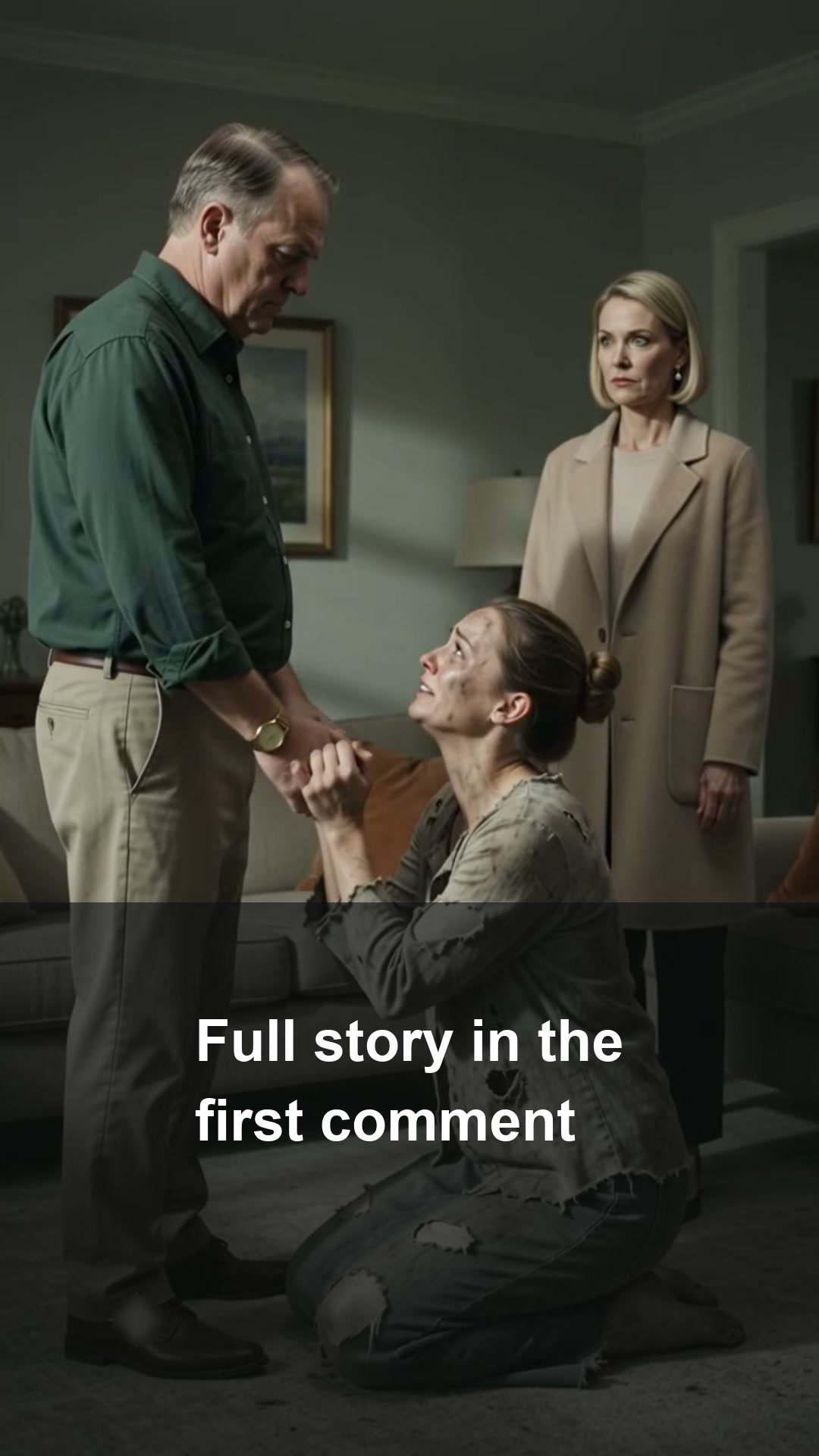
Martha let out a sharp, impatient sigh. We understand that, Elena, but life goes on. Arthur is worried that if we don’t act now, we won’t have anything left to pass down to him. It’s for his future. Don’t be selfish.
I hung up. I went into the room and sat by the incubator, watching Ethan’s chest rise and fall in shallow, stuttering waves. I realized then that they weren’t my parents; they were parasites who had mistaken my love for a buffet. I made a decision: I would treat them with the same cold, calculated indifference they had shown me. I would protect my son by starving them of everything—money, access, and sympathy.
The insults, the warnings I ignored, the way they leveraged every Christmas and birthday into a debt I hadn’t agreed to—it all funneled into that one moment. I remembered high school graduation, the way Arthur checked his watch during my speech, calculating how much the ceremony was costing him in lost billable hours. I remembered my wedding, where they spent the entire reception complaining about the cost of the catering while pocketing the gift money intended for my home fund.
I sat in the silence of my own house, years later, watching the dust motes dance in the light. My brother, Julian, had called me a year ago, begging me to just give them what they wanted so they would stop calling him.
They’re old, Elena, he had said. Just pay the debt and let them fade away.
I had looked at the balance in my son’s medical fund, the money I had spent years clawing back from the brink of their greed. I told Julian that I was done funding their slow-motion wreck. I chose my son. I chose the reality of his breath over the fantasy of their approval.
Now, standing in the kitchen, the ledger shredded, the ink still wet on the table, I looked at Arthur’s trembling hands. He was reaching for the edge of the table, searching for an anchor, but there was nothing left for him to grab.
I thought about the child who once held the science center permission slip, waiting for a sign that she mattered more than a column of numbers. I realized that the child was still there, but she was no longer waiting. She was the one who had finally decided to close the ledger.
I walked to the door and opened it, the wind whipping through the frame, cold and clean. I didn’t feel the sting of the past anymore. I only felt the weight of the present, the solid, unshakeable truth that I had survived.
I looked at him, one last time, and I saw him not as a father, but as a bankrupt concept. I decided then that I would not even watch him leave. I turned my back, leaving him to the porch and the silence, and walked toward the room where my son was playing, his laughter a sound that had never been bought, and would never be sold.
The kitchen floorboards groaned under my feet, a familiar rhythm of a house that had finally learned to be quiet. Through the open doorway, I saw Marcus leaning against the counter, his hands deep in his pockets, his eyes fixed on the coffee machine as if it held the answers to our future. He had spent months playing the role of the neutral buffer, a man whose love for me was constantly tested by his impulse to burn down the bridges I had built. His loyalty was a quiet, suffocating thing, a shield that often felt like a cage. He wanted to protect me from the ghosts, but he didn’t understand that the ghosts were the only thing that had taught me how to run. I stepped into the room, and he turned, the concern in his eyes sharpening into a defensive edge. He opened his mouth to ask if Arthur was gone, but I held up a hand, silencing the question before it could take root in the space between us. I had spent a lifetime responding to the anxieties of others, and I was done.
In the backyard, Ethan was chasing a soccer ball, his movements fluid and unencumbered, a stark contrast to the motionless child who had once spent weeks tethered to a cardiac monitor. He didn’t know that his laughter was the sound of a debt being canceled. He didn’t know that he was the reason I had finally stopped trying to buy my parents’ pride. He was simply playing, living in the narrow, beautiful margin of a life that was no longer mortgaged to someone else’s failures. Watching him, I felt the sharp, stinging realization that his health was the only investment that had ever yielded a return.
Martha would be sitting in their car at the end of the driveway, I knew. She would be staring at the steering wheel, her knuckles white, waiting for Arthur to return with the money they were certain I owed them by birthright. She viewed motherhood as a ledger of accounts receivable, a tally of meals and shelter that I was now expected to balance with my own comfort. She was the enforcer, the woman who had taught me that love was a transaction, yet she remained the one person I had most desperately wanted to impress. I looked down at my hands, steady and calm, and felt the last tether snap. I walked to the junk drawer, pulled out a thick envelope containing the printouts of the local homeless shelter locations and the state-funded legal aid contacts I had prepared weeks ago, and set it on the hallway console. I wouldn’t hand it to them; I wouldn’t give them the satisfaction of a direct encounter. I would leave it there, a testament to the fact that I was no longer an ATM, but a woman with a finite capacity for tragedy. I turned toward the living room, deciding that I would not check the driveway again. I would focus on the sound of the ball hitting the grass, the rhythm of a future that belonged entirely to us. The silence that followed was not empty; it was earned. I took a deep breath, the air tasting of pine and the cold, clean promise of a life without interest rates. I was done paying for a past that had already spent me.
The ink on the printed document was still sharp, the edges of the paper crisp against the mahogany console table. I walked to the kitchen, the linoleum cold beneath my socks. My phone, silenced for three days, buzzed against the granite countertop—a frantic, rhythmic thrumming that signaled Arthur’s caller ID. I didn’t look at the screen. I picked up the landline receiver, my hand steady, and dialed the precinct.
The officer on the other end had a voice like gravel, tired and uninterested in suburban domestic disputes. I didn’t give him a narrative. I gave him dates, transaction IDs, and the specific bank routing numbers where my savings had been siphoned under the guise of an emergency investment. When I mentioned the forged signature on the joint account, the officer’s tone shifted. It was no longer a plea; it was a report of a felony. I hung up, my heart rate steady. The silence that followed felt like a vacuum.
I walked into the study, pulling the laptop toward me. The banking interface was a familiar, hostile landscape. I navigated to the automated payment settings, the ones I had set up five years ago when Arthur insisted he needed bridge financing for his warehouse project. I clicked the toggle. *Cancel.* Then, *Remove Account.* I deleted the recurring transfers that had been bleeding my son’s medical fund for years. The screen refreshed, showing a balance that was finally, unequivocally ours. I closed the tab.
The doorbell rang. Not the polite chime of a visitor, but the insistent, frantic pounding of a man who realized the faucet had run dry. I didn’t move. I walked to the window, peering through the blinds. Arthur was standing on the porch, his face a bruised purple under the porch light, Martha hovering behind him like a ghost. They looked small. They looked like people who had forgotten how to exist without a victim.
I walked to the hallway console and picked up the envelope. I opened the front door, leaving the screen door latched. Arthur’s eyes widened, his hands reaching out, fingers twitching as if expecting cash. I slid the document through the gap in the mesh.
You’re being audited, I said. My voice sounded thin, almost mechanical.
Arthur’s face turned from purple to a sallow, sickly grey. Audited? What are you talking about? Elena, open this door. Your mother is—
I’ve filed a report, I interrupted, my eyes tracking the way his jaw slackened. The bank knows. The police know. If you stay on this property for one more minute, the trespassing charge will be added to the fraud report.
Martha let out a jagged, high-pitched sound—a laugh, or perhaps a sob. She pressed her face against the screen, her makeup smudged. You’re our daughter. You think you can just erase the bloodline? You think you can just stop the payment? We gave you life.
You took my son’s life, I said, and stepped back.
I slammed the front door. The lock clicked—a heavy, final sound. I walked back to the living room and sat on the sofa. My phone was vibrating again, a stream of texts from Martha, then Arthur, then my brother, then a lawyer whose name I recognized from local advertisements. I blocked every single one of them.
The next morning, the lawyer I’d retained, a woman with a sharp bob and a desk cluttered with case files, called me at nine sharp. We’re filing the injunction to contest the will today, she said, her voice brisk. They’ve already tried to call my office three times, Elena. They’re claiming the money was a gift, not a loan. Do you have the texts from three years ago where your father promised repayment?
I had them saved on an encrypted drive. I emailed them to her while Ethan ate his cereal, his legs swinging beneath the table, oblivious to the fact that his grandmother was currently screaming into the void of my blocked notifications. I’m sending the DNA test kit for the paternity dispute they’re threatening, I added. If they want to imply my son isn’t a Vance to avoid the inheritance laws, let them try. It will be the last mistake they ever make.
Good, the lawyer said. Let them keep escalating. Every move they make from here on out is evidence.
I spent the afternoon at my desk at home, logging into the HR portal for my company. I filed the formal complaint regarding the harassment calls the office had received since Arthur had started masquerading as my manager to gain access to my salary details. It was a humiliating process, detailing the breach of my professional autonomy, but as I typed, I felt a strange, cold clarity.
By sunset, the house was quiet again. I stood at the kitchen window and watched a black sedan pull into the driveway. My brother, his face set in a mask of forced neutrality, stepped out. He walked toward the door with an envelope in his hand—the classic emissary of the broken patriarch.
I didn’t answer the door. I watched him stand there for ten minutes, his posture shifting from confidence to annoyance, then to a hesitant, searching fear. He knocked once, twice, then left the envelope on the mat. He drove away, the tires kicking up dust.
I went outside and picked up the envelope. It was a request for a meeting, a mediation offer, a desperate attempt to reset the terms of our war. I walked to the kitchen, opened the fireplace, and dropped the paper into the hearth. I struck a match. The paper curled, the words—pleas for mercy and threats of ruin—turning to black ash.
I returned to the kitchen table. The house felt lighter, the space around me no longer encroached upon by the weight of their demands. I sat down and opened the piggy bank I had placed in the center of the table. I began to sort the loose change I’d promised Ethan he could spend on something frivolous, something that had nothing to do with medical debt or family duty.
The front porch light flickered, then went out. I didn’t get up to fix it. I sat in the dim light, feeling the absolute, terrifying freedom of being completely alone. The phone on the counter finally stayed silent. The escalation had reached its peak, and for the first time, I wasn’t waiting for the crash. I was the one who had set the charges.
The notification chime on my phone became a rhythmic, invasive pulse. It started with my cousin Sarah, a flurry of texts demanding to know why my father had spent the morning sobbing in her driveway, claiming I had left him to die in the cold. I didn’t reply. I stared at the screen until the blue light burned, watching the bubbles of text pop up like blisters. By noon, the local Chamber of Commerce thread had ignited. Arthur’s construction firm, once a pillar of our small-town economy, was being dismantled in real-time by former clients who had finally realized their deposits were paying for his gambling debts, not their home renovations.
I walked into the kitchen, the hardwood cool beneath my feet, and found a stack of mail that wasn’t mine. It was addressed to my parents, redirected here by the post office because they had used my address as their primary business contact for years. I tossed the envelopes, unopened, into the recycling bin. The sound of the paper hitting the bottom was crisp, final.
My phone vibrated against the granite countertop. It was a call from the principal at Ethan’s school. I answered, my voice steady, though my pulse thrummed in my throat.
“Elena, I need to talk to you about the fundraiser,” the principal said, her tone professional but strained. “Arthur Vance showed up in the lobby an hour ago. He was… he was asking parents for cash, citing his grandson’s medical history. It was quite a scene.”
I closed my eyes. “He doesn’t have a grandson in that school anymore, Sarah. Ethan transferred out weeks ago. If he comes back, call the sheriff.”
“I have to consider the reputation of the institution, Elena. People are asking questions about your family. They’re saying you’re being cruel.”
“Then let them ask,” I said, and hung up.
I went to the living room window. A neighbor’s car slowed down as it passed, the driver lingering long enough to look at my front door before speeding off. The community had picked its side: they wanted a villain, and because I wouldn’t provide the expected performance of the dutiful, suffering daughter, I was the one wearing the mask. I felt a sharp, cold spike of isolation. For thirty-two years, my worth had been tied to how well I absorbed the shocks of my parents’ failures. Without that duty, I was invisible, a ghost in my own neighborhood.
I walked to the hallway mirror. My face was tight, my eyes shadowed by a lack of sleep that had nothing to do with exhaustion and everything to do with the adrenaline of finally being free. I touched the cool glass. I wasn’t the monster they painted, but I was no longer the martyr they needed.
I went to the front door and flipped the deadbolt. I had no more social currency to spend on their reputation. I grabbed the recycling bin and hauled it out to the curb, the heavy weight of the mail settling into the trash. The street was quiet, the autumn wind rattling the dry leaves against the sidewalk. I walked back inside and locked the door behind me, knowing that tomorrow, the whispers would be louder, and for the first time in my life, it wouldn’t matter. I turned off the phone and left it on the charger, the screen going black, silencing the noise of a world that had finally stopped owning me.
The kitchen table was clear, save for a single, ceramic piggy bank I had picked up at a garage sale years ago. I picked it up and inverted it; nothing fell out. It was light, hollow, and entirely mine. The morning sun hit the white surface, casting a long, sharp shadow across the wood. I didn’t feel the expected pang of guilt or the phantom itch of a daughter’s duty. I felt only the hum of the refrigerator and the distant, rhythmic thud of a soccer ball hitting the fence in the backyard.
I walked to the living room window. Ethan was out there, his legs moving with a fluid, unchecked energy that still made my chest ache with gratitude. He didn’t know about the legal documents sitting on my desk—the final judgment that denied Arthur’s petition for support and closed the probate loop they had tried to exploit. The silence of the house wasn’t empty; it was peaceful.
The doorbell rang, a sharp, insistent double-tap. I knew the cadence. I didn’t reach for the handle. I walked to the door and looked through the peephole. Arthur stood on the porch, his shoulders hunched under a coat that had seen better winters. Martha stood behind him, clutching her purse as if it contained the life she’d failed to build. I unlocked the door but left the security chain engaged.
“We need to talk about the house, Elena,” Arthur said, his voice cracking. He didn’t look at me; he looked past me, toward the warmth of the hallway. “The bank isn’t listening to reason.”
“I have a list,” I said, sliding a folded piece of paper through the narrow gap. It contained the addresses for the regional housing authority and the contact for the state’s emergency assistance line. “There are people who handle this. I am not one of them.”
Martha’s face contorted, her composure shattering into a jagged mask of indignation. “After everything we gave you? We raised you to know better.”
“You raised me to be a line item,” I said, my voice steady, stripped of the jagged edges of my childhood. “The account is closed.”
I closed the door. The thud of the latch meeting the frame was the final sound of their influence. I retreated to the kitchen and picked up the piggy bank, placing it into the recycling bin. Outside, Ethan laughed, a bright, clear sound that didn’t belong to anyone but himself. I walked to the counter, poured a glass of water, and began the rest of my life.
The garden was a tangle of neglected ivy and late-blooming hydrangea. I knelt in the damp soil, my fingernails caked with dark, cool earth, pulling weeds that had choked the life out of the hydrangeas for three years. It was a rhythmic, mindless labor. Beside me, Buster, the golden retriever we’d adopted the week after the lawyers finalized the paperwork, nudged my shoulder with a wet, insistent nose.
“He needs to fetch, Mom,” Ethan said from the back steps. He was holding a neon-yellow tennis ball, his skin tan from weeks of playing outside, the sickly pallor of the hospital wing replaced by the vibrant flush of a boy who simply existed.
I wiped my brow with the back of a muddy glove. “Give him a minute. Let me finish this row.”
Ethan bounded over, his sneakers crunching on the gravel path. “You’ve been weeding for an hour. Aren’t you tired?”
“I’m resting,” I replied. And I realized, with a shock that felt like sunlight hitting a cold room, that I was telling the truth. My muscles ached, but the frantic, high-pitched thrum of adrenaline that had lived in my chest since my twenties was gone. I wasn’t waiting for a phone to ring or a demand to be met. I was just in the garden.
I sat back on my heels, breathing in the scent of damp moss and pine. I thought of my parents, not with the familiar, acidic spike of resentment, but with the quiet, detached clarity of a closed ledger. They were a problem for a social worker to solve, a footnote in a history I was no longer writing.
“Okay,” I said, standing up and brushing the dirt from my jeans. “Throw the ball.”
As Ethan wound up his arm, I felt the space inside me expand, clean and quiet, a house finally empty of ghosts. Tomorrow, we would go to the coast. The tide was waiting.
I stepped inside the kitchen, the linoleum cool against my bare soles. The house was quiet, save for the rhythmic thud of a soccer ball hitting the siding outside. On the center of the oak table sat my son’s ceramic pig, a dusty relic from a time when I thought childhood was something you could trade for security. I turned it over, shaking it gently until the last copper penny tumbled out and skittered across the wood. It was empty. I didn’t reach for my purse or check the market rates for our savings account. Instead, I picked up the ceramic piece, felt the weight of its hollow belly, and walked to the recycling bin. I dropped it in with a dull, final click. Sunlight caught the rim of the bin, illuminating the empty, white ceramic shard.
Leave a Reply