The sheriff’s deputy stood on my front porch, his hand resting casually on his holstered weapon as he served the eviction notice to my own son.
The paper fluttered in Travis’s grip, a stark white rectangle against the mahogany doorframe. He didn’t look at the document; he looked at me, his eyes wide and vacant, as if he expected me to snatch the clipboard from the officer and offer some rehearsed apology. The air smelled of Melanie’s expensive floral perfume and the stale, lingering scent of my own burnt coffee.
“Mom, tell him,” Travis whispered, his voice cracking. He didn’t understand the math of the situation. He still thought the world operated on my indulgence.
I stepped back, the heels of my loafers clicking sharply against the marble foyer. The cold weight of my house key felt like a lead slug in my pocket. I wouldn’t be needing it anymore.
“I have nothing to say to you, Travis,” I replied, my voice steady, stripped of the guilt I had carried for twenty years.
I turned toward the driveway, leaving the shouting behind me. A black sedan waited at the curb; the engine was already running.
The morning had begun with the precise, rhythmic hum of the espresso machine, a sound that usually signaled the start of a productive day. I stood in the kitchen of my own house—the one I had purchased as an investment property years before Travis and Melanie decided it should be their stage—watching the steam curl against the window. The air was crisp, typical for a Tuesday in the Pacific Northwest, with that persistent gray mist hanging over the manicured hedges. I measured the grounds with a silver scoop, my movements practiced and efficient. It was a chore, yet one I performed with the same focus I had once applied to quarterly earnings reports.
Travis walked in, his phone pressed against his ear, scrolling through an endless feed of real estate listings. He didn’t look at me, only gestured toward the empty fruit bowl with his free hand, a silent demand for restock. I ignored the gesture, placing my mug on the granite island instead.
Did you see the market report, Mom? The property values in this zip code are climbing again, he said, his voice clipped and impatient. We really need to discuss the renovation budget for the master suite. Melanie has ideas.
I looked at the condensation on the glass. The market is volatile, Travis, I replied, my tone neutral. Perhaps you should prioritize the primary mortgage payment before you worry about the crown molding.
He scoffed, a short, dismissive sound that reminded me of his father at his most stubborn. We have time. You always handle the logistics.
I didn’t answer. I focused on the bitter, dark heat of the coffee, feeling the ceramic warmth seep into my palms. My mind drifted to the logistics firm I had built from the ground up, the quiet discipline of managing thousands of containers across an ocean. It was a life of clarity, of cause and effect. If a ship arrived late, there was a penalty. If a contract was breached, there was a consequence. Somewhere along the way, I had allowed myself to believe that the rules of the world didn’t apply to my own kitchen table. I had been subsidizing a fantasy, mistaking my son’s lack of ambition for a temporary delay in his maturity.
I decided then that the ledger was lopsided. I would finish my coffee, I would drive to the office to sign the final dissolution papers for the holding company, and I would stop being the silent partner in a failing business. The house, the furniture, the SUV—they were assets on a balance sheet that had stopped yielding a return years ago. I set my mug down on a coaster with a decisive, soft click.
I looked at the clock. It was 8:14 AM. I had a full day of quiet, methodical work ahead of me, a day where I would be the architect of my own exit. I walked toward the mudroom, my loafers silent on the hardwood, feeling a strange, hollow lightness in my chest. I reached for my coat, ready to step out into the gray, unremarkable morning.
The wall-mounted telephone in the hallway let out a sharp, jarring trill, cutting through the stillness of the house like a blade.
I did not reach for the receiver immediately. I watched the cord vibrate against the floral wallpaper, a relic of a time when this house belonged to a family, not a portfolio. My pulse remained steady, rhythmic as a ticking clock. I picked up the handset, pressing the plastic against my ear.
“Ruth? Where is the deposit?” Melanie’s voice was thin, sharpened by the frantic edge of a woman who had just realized the ATM was empty. “The boutique is holding the order. My card just declined at the register. Fix it.”
I leaned against the doorframe, my gaze tracing the crown molding I had paid to restore three years ago. “There is no deposit, Melanie. The account is closed.”
A silence followed, heavy and suffocating. It was not the silence of shock, but of calculation. “What do you mean, closed? You’re having one of your moods. Just transfer the funds. I have a live stream at noon, and if the collection isn’t here, the whole launch is ruined.”
“The launch is your concern, not mine,” I said. My voice sounded detached, a stranger’s voice echoing in the hallway. “And the house. You have forty-eight hours to remove your personal effects.”
“My what?” She let out a jagged, hysterical laugh. “It’s our house, Ruth. We have a brand to maintain. You’re being ridiculous. I’m going to call Travis. He’ll handle this. He’ll tell you how unreasonable you’re being.”
“Travis is currently in a meeting with the bank’s liquidators,” I lied, though the precision of the statement felt like a prophecy. “He is as aware of the situation as you are.”
I hung up before she could scream. The silence rushed back in, filling the void left by her shrill demands. It was crisp and cold, a perfect, empty room. I looked at my reflection in the hallway mirror. I looked small, gray, and entirely unremarkable. For the first time in two decades, the reflection didn’t look like a mother; it looked like a woman who had finally stopped apologizing for her own success.
I reached for my coat, pulling the wool tight against the drafty house. My keys sat on the console table, a heavy, cold weight in my palm. The front door was a barrier between the debt-ridden life I had fostered and the life I had earned.
I turned the deadbolt. The metal groaned, a protest against the change, but I didn’t hesitate. I pushed the door open, letting the humid Seattle air wash over me. It smelled of pine and impending rain.
I stepped onto the porch and didn’t look back to see if the lights remained on. My sensible loafers hit the pavement with a sharp, deliberate sound. I had three bags packed in the trunk of a rental car parked two blocks away. As I rounded the corner, my phone pinged with a notification from the bank—the first of many automated alerts that would systematically dismantle the charade. I turned the phone off and dropped it into a storm drain.
I bought a burner phone at a kiosk in SeaTac, the plastic casing cheap and greasy under my thumb. My first call went to the concierge at the Grand Rainier. I didn’t identify myself, just asked if Travis had settled his account for the penthouse suite he’d been using for his “client dinners.” The man hesitated, the soft click of a computer mouse rhythmic in the background. He claimed Travis hadn’t been seen in three days, and furthermore, that the suite was registered under a corporate entity I didn’t recognize. I hung up. The man was lying or misinformed; my credit card statements from last week showed room service charges in the hundreds.
I dialed the private nurse who had been attending to Melanie’s “post-operative recovery” since the spring. Her voice was thin, rehearsed. She told me Melanie had been walking, swimming, and eating solid foods for over a week, contradicting the frailty my son had described when he begged for that final emergency wire transfer. She added that Melanie had moved out on Tuesday, driven away by a man in a black sedan. I pressed for a name, but she snapped the line dead. The contradiction sat in my gut like lead. If she had moved out, why was Travis still claiming the house was being prepped for her return?
I drove to the house, parked a block down, and watched the driveway. A delivery truck pulled up—a local florist. The driver, a boy with messy hair, hopped out and wrestled a massive arrangement of lilies onto the porch. I intercepted him by the gate, sliding a twenty into his pocket. I asked who had paid for the order. He looked at his clipboard, frowning. He said the order was processed by a woman calling herself Melanie, but the delivery instructions specifically said to leave them for a man named Julian. He didn’t know who Julian was, only that the tip had been enormous.
My pulse quickened, a rare, sharp spike of adrenaline. The florist left, his truck rumbling away, leaving the scent of lilies to battle the damp Seattle ozone. I walked up to the house. The windows were dark, but the front door stood ajar, just a sliver of black space. I pushed it open. The foyer was stripped bare; the mahogany console table I’d bought in Florence was gone, replaced by a stack of unpaid envelopes.
I checked the hall closet. My spare set of keys, the ones I kept in a hidden lockbox, were missing. The house didn’t feel like a home anymore; it felt like a staging ground for an exit strategy I hadn’t been invited to witness. I picked up one of the envelopes from the floor. It was a notice of intent to lien, addressed to Travis, dated two days ago. He hadn’t just been losing money; he had been hiding the physical dissolution of the property.
I needed to see the bank manager at the downtown branch before the morning rush. I stepped back out into the rain, my loafers slick against the porch steps. The car was waiting. I had a trail of breadcrumbs that led in a dozen different directions, and each one seemed to point toward a life I had never met. I started the engine, shifting into gear. I had to find the ledger, the real one, before they finished erasing the evidence of the last two years. I turned the ignition, the engine purring with a mechanical precision that felt like the only honest thing left in the city.
The downtown branch was a tomb of mahogany and polished brass. My ledger sat on the mahogany desk, heavy and damning. Travis had signed his name to documents that required my power of attorney, forging a series of signatures that lacked the sharp, aggressive stroke of my own. He had treated my life’s work as a bottomless inheritance, a trust fund for a man who didn’t understand the friction of earning a single cent. I traced the ink of the forged signature. My reflection in the glass partition looked older than my sixty-four years. I felt the pulse in my neck, a steady, rhythmic ticking like a countdown.
I left the bank and drove back to the house in the hills. The house, my house, stood as a monument to a delusion. The landscaping was overgrown, the manicured hydrangeas wilting under the grey Seattle sky. Inside, the air smelled of stale espresso and expensive, unlit candles. I found them in the kitchen, surrounded by boxes of unpaid invoices and catalogs for furniture they could never afford. Melanie didn’t look up from her phone. Travis was pacing, his shoes clicking sharply against the marble floor I had paid to install. He looked at me, his eyes darting toward the counter where the mail usually sat. He didn’t ask about the bank. He didn’t ask about the rain. He simply held out his hand, his palm open and expectant, waiting for the credit card he assumed was still bottomless. I looked at the hand, then at the man who had traded his integrity for a facade. I realized then that I wasn’t just paying for his lifestyle; I was paying for his invisibility. I took a slow breath, the silence stretching until it became a physical weight in the room. I looked him dead in the eyes and said, “I am not your mother anymore, I am your creditor.”
The kitchen in our first house was a cramped, galley-style box that smelled perpetually of burnt toast and my father’s cheap cigars. I remember standing on a wooden stool, watching my mother scrub the linoleum until her knuckles turned the color of bone. She didn’t look up when I asked why we couldn’t afford new curtains. She just kept scouring, the wire brush scraping against the floor like a dying insect. She said that wanting things was a moral failing, a sign of a weak character. I promised myself then that I would never be weak. I would be the one who owned the house, the curtains, and the floorboards beneath them. That was the day I learned that money wasn’t currency; it was a wall you built between yourself and the indignity of needing someone else.
Years later, when I was twenty-two and working eighty-hour weeks at the logistics firm, I sat in a board meeting while the men traded anecdotes about their children. I said nothing. My silence was a shield. I felt the sharp, stinging weight of the pager on my hip, vibrating with the pulse of a company that demanded everything. When Travis was born, I didn’t see a child; I saw a liability I had to insulate. I thought if I could build a life dense enough, polished enough, he would never have to touch the rough edges of the world I had escaped. I started the bank accounts before he could walk. I signed the checks for his private schooling with a hand that never trembled, convinced that if I just kept the balance high enough, his love would remain a fixed asset.
I remember his seventh birthday party in the backyard of the old Tudor house. The grass was manicured to a velvet sheen, and the hired magicians were performing in the shade of the oak trees. Travis stood by the catering table, his face smeared with chocolate, looking at the other boys. He wasn’t playing. He was watching the servers, counting the trays, mimicking the way I checked the inventory lists. He didn’t want the cake. He wanted to know how much the magician cost and if he could get a discount for the next year. I felt a cold, jagged spike of pride pierce my chest. I thought he was learning the ledger. I didn’t realize he was learning the price of everything and the value of nothing.
When his father left, the house felt cavernous. I stood in the master bedroom, the walk-in closet holding his expensive suits like hollow shells, and I didn’t cry. I sat on the edge of the bed and calculated the severance package. Travis, only fourteen, wandered in and asked if we would have to move to an apartment. He didn’t ask how I was, or if I was lonely. He asked about the mortgage. He looked at me with those wide, calculating eyes—my eyes—and I realized I had taught him too well. I had taught him that a home was just a line item on a balance sheet. I told him we were fine, that I was a fortress, and he nodded, satisfied that his lifestyle remained secure. I felt a phantom ache, the sudden, sharp realization that I had traded his childhood for a sense of safety I hadn’t yet achieved.
In his early twenties, the patterns solidified. He came to me after a failed tech startup, his shoulders slumped, his voice practiced and thin. We sat on the back patio of the Seattle estate. The view of the lake was panoramic, a shimmering stretch of blue that cost a fortune in property taxes. He asked for an injection of capital, calling it an investment in his future. I looked at the way he tapped his foot, a nervous, rhythmic twitch. I thought about my mother on that wooden stool, the years of scrubbing, the hunger that never truly left the marrow of my bones. I didn’t want him to starve. I didn’t want him to feel that fear. So I wrote the check, and in doing so, I bought his dependency. I traded his agency for my own comfort, telling myself it was motherhood when it was really just an insurance policy against my own history.
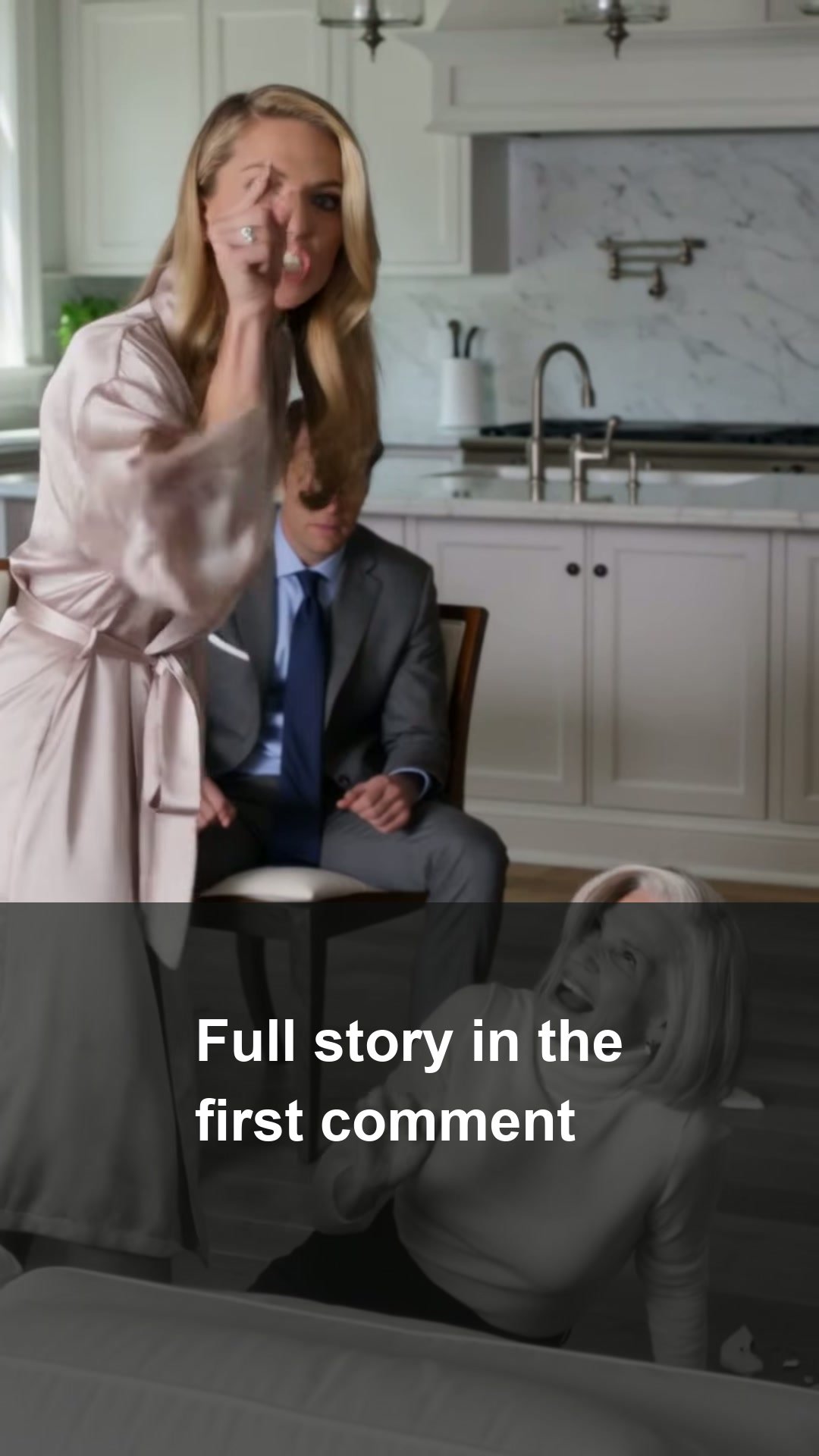
Then came Melanie. She walked into the house like she was performing an inspection for a home magazine. She touched the granite countertops with a proprietary finger, her eyes scanning the moldings and the hardware. She didn’t look at me; she looked at the fixtures. I remember her sitting at my mahogany dining table, drinking wine that cost more than my first month’s rent in Chicago, and telling me how she planned to redecorate “their” living space. She didn’t say “your house.” She said “our home.” She used the language of ownership to colonize the space I had built with blood and cold, hard math. I sat there, sipping my tea, watching Travis look at her with a desperate, hungry devotion. He was tethered to her by the same vanity that drove him to ask for more.
The insults started small, like hairline fractures in a foundation. Melanie would make comments about my “outdated” taste, or hint that I should move to a smaller place, a retirement cottage, to “simplify.” She treated my existence as a temporary inconvenience. I watched Travis listen to her, his silence a betrayal that cut deeper than any word she could have uttered. He would glance at me, but his eyes were vacant, the way a spectator’s might be at a high-stakes game. He wasn’t a son; he was a tenant waiting for the landlord to expire. I sat in my study, the door locked, listening to them discuss the equity they planned to pull out for a vacation home they hadn’t earned. I realized then that my guilt had created a monster, a creature of pure entitlement that consumed everything it touched.
There was a Tuesday, late in October, when the rain lashed against the windows like gravel. I was reviewing the quarterly tax statements and found a hidden credit card statement, a secondary line of credit I had never authorized, maxed out on luxury goods and “consulting fees” that were clearly nothing more than lifestyle maintenance. I stared at the numbers. They danced in front of me, a sequence of zeros that spelled out my failure. I remembered the wooden stool. I remembered the smell of the cigarettes. I had spent forty years running from that kitchen, building a life of precision and power, only to be dismantled by the very person I had tried to protect.
I looked at the photograph on my desk—Travis at ten, holding a trophy he hadn’t won, smiling a smile that was already rehearsed for an audience. I had loved him as a commodity. I had loved him by paying the ransom on his life so he would never have to grow up. The decision hit me with the force of a physical blow, a sudden, crystalline clarity. I didn’t need to yell. I didn’t need to argue. I just needed to close the ledger. I walked to the safe, pulled out the documents, and felt the weight of them in my hands. The paper was heavy, thick, and cold. It was the weight of a life I was no longer willing to bankroll. I stood there for a long time, the house groaning around me, the sounds of my own legacy shifting in the dark. I knew then that the silence I had been cultivating wasn’t peace; it was the prelude to an eviction. I had built this house, and now, I would have to be the one to burn it down.
The kitchen island was a slab of white marble that had never known the warmth of a home-cooked meal. I traced the vein of grey stone, my thumb catching on a microscopic chip near the edge where Melanie had dropped a champagne flute during her birthday party last month. She had laughed as the crystal shattered, blaming the floor for being uneven. I remembered my father, a man who measured his worth by the thickness of his calluses, and how he would have sanded that chip down in seconds. He had taught me that luxury was a reward for labor, a philosophy I had abandoned the day I started writing checks to keep Travis from failing.
Travis walked in, his slippers shuffling against the hardwood with the rhythmic drag of a man who had never felt the urgency of a commute. He stopped, eyes fixed on the coffee machine, avoiding my gaze. He was thirty-two, yet he still carried the slouch of an adolescent hiding a report card. He believed he was an entrepreneur, though his only business venture involved dropshipping cheap LED lights that nobody bought. He didn’t know I was the silent investor in his logistics firm, a shell company I used to launder my guilt into his bank account.
Did you see the new delivery notifications? he asked, his voice thin, lacking the conviction of a man who actually owned anything.
I looked at him, really looked at him, and saw the flicker of panic he hadn’t yet learned to suppress. He was terrified of me, not because of what I might do, but because he knew, deep down, that he was a placeholder in his own life. I wondered if he ever felt the hollow ache of being entirely funded by a mother he barely knew, or if the luxury had successfully anaesthetized his soul.
I don’t track the deliveries, Travis, I said, my tone as flat as a balance sheet.
Melanie sauntered in behind him, her phone held aloft, capturing her morning glow for a feed that consisted mostly of strangers. She saw me and her smile tightened, the practiced expression of an influencer who hated the background noise of real life. She didn’t look at me; she looked at my clothes, judging the lack of a logo, unaware that I owned the very roof shielding her from the Seattle rain. She wanted the status of a matriarch without the burden of a legacy.
Ruth, the contractor says we need the kitchen re-tiled by Friday for the shoot, she said, leaning against the counter as if it were a podium. It’s an investment in our brand.
Our brand, she called it. She saw me as a malfunctioning ATM, a machine that had stopped dispensing paper and started demanding receipts. She hated me because I was the only thing standing between her and a reality she couldn’t filter. I felt a surge of pity for her, a cold, sharp sensation that had replaced my maternal instinct long ago. She was building a house of cards on a foundation I was currently excavating.
The tiles are fine, I said, turning away to stare at the window.
The reaction was immediate; the air in the room grew heavy with the friction of their entitlement. Travis shifted, looking to Melanie for a cue, his dependence on her judgment as pathetic as her dependence on my capital. I didn’t say another word. I walked toward the mudroom, my boots clicking against the marble, a sound that finally felt like an exit. I thought of the villa in Carmel, the way the light hit the Pacific, and the silence waiting for me there. It was a silence I had earned, not one I had bought. I pushed the front door open, the Seattle mist chilling my skin, and didn’t look back to see if they were following. I had closed the ledger; the remaining pages were no longer my concern.
The Seattle mist clung to my coat like a damp shroud as I reached my car. I pulled the key fob from my pocket and pressed the lock button. The satisfying, mechanical thud of the SUV doors sealing confirmed the separation. I sat in the driver’s seat, the leather cold against my palms, and pulled out my phone. My first call was to the bank. I spoke to my private banker, a man who had known the precise value of my portfolio for two decades. I told him to freeze the secondary credit line attached to the property and to cancel every standing order linked to the house’s maintenance. He didn’t ask why; he simply confirmed the reversal of access. When the call ended, the silence in the car felt like a physical weight lifting.
I drove to the office of the attorney I had kept on retainer since my retirement. The waiting room smelled of floor wax and expensive, aged paper. When I was ushered into his office, I didn’t waste time on pleasantries. I slid the folder of property deeds across the mahogany desk. I instructed him to file a formal eviction notice against the occupants of the house. He tapped his pen against his chin, his eyes darting across the dates of the original trust agreement. He warned me that the process would be messy, public, and expensive. I told him the expense was already accounted for. As I walked out, my phone buzzed. It was a notification from the bank—the credit line had been successfully severed. I felt a sharp, cold clarity settle into my bones.
The next day, I arrived at the logistics office downtown. I sat across from the HR lead, a woman who had once been my protege. I filed a formal complaint regarding the unauthorized use of company stationary by my son for his vanity business ventures. It was a calculated move, one that would force a forensic audit of his financial history. As she typed my statement into the portal, I watched her fingers hover over the keys, hesitant. She knew what this would do to his reputation. I didn’t care. I stood up, thanked her, and walked to the elevator. By the time I reached the lobby, my phone was blowing up with missed calls from Travis. I silenced the ringer and dropped the device into my bag.
I went to the clinic that afternoon. I needed the final, objective truth, not the emotional theater of the last few years. I provided the necessary samples for a private DNA test, one that would clarify the legitimacy of the child Melanie claimed was the reason for their constant, exorbitant demands for childcare funds. The technician behind the glass desk spoke in hushed, clinical tones, his eyes avoiding mine. I focused on the wall clock, its ticking rhythm matching my own steady pulse. I wasn’t doing this to hurt anyone; I was doing this to balance the books. I paid the invoice in full and walked out into the sharp, biting afternoon air.
Back at my temporary hotel suite, I opened my laptop and pulled up the court filings for the estate. My husband had left a specific clause regarding the inheritance of the property, a detail I had once thought was merely a safety net. I began the process of contesting the probate distribution. If the house was to be sold, it would be sold on my terms, not held hostage to their lifestyle. I clicked the final button to submit the motion. The screen flickered, confirming the transmission to the courthouse. My phone buzzed again, a frantic text from Melanie this time: Where are you? Why is the card declined? My hands didn’t tremble as I drafted a simple response: The ledger is closed.
That evening, I hired a firm to handle the liquidation of the contents of the house. They arrived at my suite within the hour to discuss the inventory of the high-end furniture I had gifted them. They were ruthless, professional, and entirely interested in the market value of the bespoke pieces. I handed them the itemized list, including the rare antiques that sat in the living room, gathering dust while Travis and Melanie played at being adults. They promised to start the removal on Monday morning. I sat by the window, watching the rain streak against the glass, and thought about the feeling of letting go.
The counter-action was instantaneous. By midnight, my inbox was flooded with threats from Melanie’s lawyers, claiming emotional distress and breach of verbal contract. I forwarded every single one of them to my attorney without reading a word. I knew exactly what was coming next: the public smear campaign, the desperate posts on social media, the attempts to paint me as the villain. I checked my banking app one last time. The accounts were stable, the bleed had stopped, and the house was officially in the crosshairs of a developer I had contacted earlier that evening.
I walked to the balcony and looked out over the city lights. I was no longer the benefactor; I was the architect of their downfall. The realization wasn’t one of joy, but of profound, singular relief. I poured a glass of water, the ice clinking against the crystal, and listened to the silence of the room. My phone buzzed one last time, a call from the bank informing me that the mortgage payments had been rejected by the system. The foreclosure process had officially begun. I turned off the phone and set it on the nightstand. The next step was the quietest one yet: leaving this city behind forever. I turned off the lamp, the darkness wrapping around me like a promise. I had done what was necessary. The consequences would now take their course, indifferent to the people who had spent my life as if it were theirs. I closed my eyes, the sound of the wind outside the only thing left in the room.
The silence of the house did not last long; it migrated to the digital space, where it mutated into a roar. I stood in the middle of a sparse hotel room in downtown Seattle, watching the notifications pile up on a burner phone I had purchased for the transition. My primary device was already wiped, a clean slate. On the screen, a local news blog had picked up the story of the luxury SUV’s repossession from the driveway of my former home. The photo was unflattering, showing the tow truck driver snapping a photo of Melanie screaming at the curb while Travis stood behind her, his hands buried deep in the pockets of a designer jacket I had paid for three seasons ago.
I reached for a bottle of sparkling water on the nightstand, my fingers steady as I unscrewed the cap. It was a mundane action, a stark contrast to the chaos unfolding in the suburbs. My phone buzzed again. It was a text from a former acquaintance, a woman who had spent years hovering around my social circles, eager for a seat at my table. She didn’t ask how I was. She asked if the rumors about the bankruptcy were true, and if it was safe to continue being seen with my son. I deleted the thread without typing a word. The transactional nature of these friendships had always been transparent, but seeing it laid bare in print was oddly clarifying.
I walked to the window and looked out at the rain-slicked streets. Below, the city felt different, stripped of the veneer I had maintained for so long. The fallout had reached the school board, too. I saw a notification from the private academy where I had been funding the tuition for various foundation projects. They were asking for an urgent meeting regarding a sudden budget shortfall. I checked the balance of the specific account I had closed yesterday; it was zero. The realization that I was no longer the invisible tether holding their world together sent a jolt of cold, sharp relief through my chest.
My phone rang. It was an unrecognized number, likely a reporter or a debt collector. I let it go to voicemail, watching the red notification bubble grow. My son, Travis, had left three messages. The first was angry, a frantic demand for the credit card access to be restored so he could pay the property manager. The second was confused, stuttering through an explanation that the bank was claiming the house was no longer under his control. The third was terrifyingly quiet, a realization of the abyss. He didn’t ask where I was. He only asked how he was supposed to live without the infrastructure I had built for him.
I thought of the years I had spent laundering my own guilt through his bank account, thinking I was buying his happiness when I was only purchasing his stagnation. I didn’t feel guilty anymore. I felt like an auditor who had finally finished a long, grueling inventory. I sat down on the edge of the bed and felt the weight of the last decade lift.
I picked up the phone, held the power button until the screen went dark, and dropped the device into the trash can. I had two suitcases waiting by the door and a flight to catch in the morning. I had done my part. The rest was just noise. I walked to the bathroom, splashed cold water on my face, and caught my reflection in the mirror. I didn’t recognize the woman who had lived in that house, but I liked the one staring back at me now. It was time to find out what happened when the funding for the charade finally ran out.
The morning air in Carmel smelled of salt and crushed sage. I stepped onto the terrace of the villa, the terracotta tiles cool against my bare soles. My coffee sat steaming on a wrought-iron table, the only object in sight that wasn’t built on a foundation of compromise. I sat, adjusting my robe, and looked out over the Pacific, where the horizon was a seamless blur of slate and gold. My laptop sat open beside the cup, the screen glowing with a final notification from the Seattle law firm.
The title transfer to the developer was complete. A small chime signaled a new email. It was a digital copy of the eviction notice served at the Seattle property an hour ago. I didn’t open the attachment. I didn’t need to see the look on Travis’s face when the bailiff handed him the paper, nor did I need to witness Melanie’s frantic, performative panic as she realized her online aesthetic was effectively being auctioned off in real-time. The balance sheet of my life had finally reached a zero-sum conclusion.
I picked up the tablet to check the status of my accounts, but my finger hovered over the screen. Instead, I set the device facedown on the stone. There would be no more monitoring, no more auditing the wreckage of their choices. I had spent twenty years calculating the cost of my absence, mistakenly believing that money could buy back a childhood I had already traded for a corner office. I was wrong, but the ledger was closed. I pulled my feet back and tucked them into a pair of sensible walking shoes I had left by the threshold. They were sturdy, reliable, and entirely mine.
My phone vibrated on the table. A blocked number. I knew it was Travis, likely sitting in the driveway of a house he no longer owned, staring at a front door that would lock him out by sundown. I didn’t reach for it. I watched the vibration scoot the phone toward the edge of the table until it teetered and fell, landing softly on the thick outdoor rug. The buzzing stopped. The silence that followed wasn’t the heavy, suffocating quiet of the Seattle kitchen; it was the clean, expansive stillness of a life lived entirely on my own terms. I stood up, walked to the railing, and took a long, steady breath. The sun began its final descent into the water, painting the sky in colors that no one was paying me to admire. I turned my back to the house and walked toward the beach.
The sand was coarse, cooling beneath my bare feet as the tide retreated. I knelt near the waterline, where the foam left behind a dusting of broken shells and sea glass. My thumb traced a shard of cobalt blue, smooth from decades of friction against the rocks. It felt solid, real, and entirely indifferent to the wreckage I had left behind in the North.
I stood and walked toward the cottage. A golden retriever, belonging to the neighbor, trotted over with a frayed rope toy hanging from his jaws. I knelt again, and he dropped the slobbery knot onto my knee.
“Are you looking for a miracle, Barnaby?” I asked.
The dog let out a sharp, expectant huff. I tossed the rope toward the dunes, watching the way he scrambled through the marram grass, all frantic energy and joy. For a moment, the logistics of my past—the debt-to-equity ratios, the mortgage defaults, the crushing weight of a son who looked at me like a bank account—seemed to belong to a person I had once hired to solve a problem. That person was retired.
I went inside. The kitchen smelled of rosemary and lemon. I sliced a sourdough loaf, the crust crackling audibly under the knife, and set it on the table alongside a bowl of olives and a simple, sharp cheddar. No one was coming to dinner. I didn’t have to check the wine cellar for a vintage that would appease a guest’s ego. I simply poured a glass of cold water and listened to the rhythmic thrum of the surf hitting the cliff base.
The quiet didn’t demand an explanation. It didn’t ask for money, or affection, or an apology for my absences years ago. It just existed, a steady, pulsing baseline of peace. I bit into the bread, the salt sharp on my tongue. The debt was settled, the ledger closed, and for the first time in sixty-four years, I was not accountable for anyone else’s hunger. I finished the slice, turned off the lamp, and slept.
The sun rose over the Pacific, turning the white plaster walls of the villa into a blinding, sterile canvas. I stood on the terrace, my feet bare against the cool salt-slicked stone, watching a trawler crawl across the horizon. My phone, once a tether to endless demands and manufactured crises, sat facedown on the heavy oak table, its screen dark and undisturbed. I did not check the notifications. I did not calculate the morning’s overhead or worry about the maintenance of the garden. The air smelled of sage and brine, uncomplicated by the scent of expensive, wasted perfume. I walked to the entryway, the hinges of the heavy cedar door groaning softly as I pushed it wide to catch the breeze. Beside the threshold, a pair of sensible walking shoes sat perfectly aligned, their soles clean and dusted with nothing but coastal sand.
Leave a Reply