The blood from my split lip tasted like pennies as I watched the front door swing shut, the heavy oak frame shuddering in its casing. I stood in the center of the foyer, the hardwood floor cool against my bare feet, staring at the shattered remains of a ceramic vase I hadn’t realized I’d dropped. My hands were vibrating, a rhythmic, mechanical tremor that refused to subside.
“Maya, don’t make this more than it is,” Evan said, his voice terrifyingly steady from the threshold of the hallway. He smoothed his tie, a clinical adjustment that made my stomach turn.
I didn’t answer. I focused on the way the light caught the dust motes dancing between us, analyzing the structural integrity of the room, looking for an exit that didn’t involve walking past him. My mind raced through the blueprints of the house, calculating the distance to the safe, the time it would take to bypass the keypad. If I moved now, I could be in the car before he regained his composure. I took a breath, the air thin and sharp, and stepped toward the kitchen. The floorboard groaned beneath me, a warning I chose to ignore.
The coffee maker hissed, a rhythmic, sputtering sound that anchored the kitchen in the gray light of 6:30 AM. I watched the grounds swell, the dark liquid dripping into the glass carafe with a precision that usually calmed my nerves. Evan was already at the table, his tablet propped against a ceramic coaster. He didn’t look up when I set his mug down, his thumb swiping across the screen with a mechanical, repetitive motion. The morning was damp, the kind of heavy, coastal mist that blurred the outlines of the oak trees in the backyard into charcoal smudges. It felt like a Tuesday defined by nothing more than the commute and the deadline for the municipal library renovation.
I pulled my chair out, the wood scraping against the hardwood with a sharp, dissonant cry. Evan’s jaw tightened, a micro-expression of irritation that passed as quickly as a shadow. He didn’t speak, but he reached out, his hand hovering over my wrist before settling on the sugar bowl. I watched his fingers, noticing a small, dried ink smudge on his middle finger—the mark of a man who worked with pens and contracts, not tools. I thought about the meeting scheduled for ten, the structural report I still needed to finalize. My life was a series of measured loads and stress tests, balanced and predictable.
I’m dropping the dry cleaning on my way to the office, he said, his voice smooth, devoid of any jagged edges. It was a statement of fact, not an offer.
I nodded, blowing on the surface of my coffee. I have the site visit at the library, so I’ll be out until three, I replied.
Good. Don’t forget to review the investment account transfers before the weekend. We need the liquidity for the house upgrades.
I felt a faint prickle at the back of my neck, the sensation of being watched even when his eyes were buried in his screen. I chose to focus on the steam rising from my cup, tracing the swirling patterns until they dissipated into the stale air of the kitchen. It was easier to think about the load-bearing requirements of the library’s new atrium than to question the tightening of our finances. I decided to agree, to keep the morning moving along the tracks we had laid down weeks ago. I needed the quiet, the routine, the feeling that if I just kept the structure sound, the interior would take care of itself.
The house felt like a closed system, airtight and efficient. I looked at the clock on the wall, the second hand sweeping past the twelve. I had thirty minutes before I needed to pull out of the driveway, thirty minutes to exist in this vacuum of normality. I stood up, rinsed my mug, and placed it in the dishwasher with a deliberate click. Everything was in its place. The walls were straight, the floor was level, and the air was still, heavy with the scent of roasted beans and damp earth.
Then, the silence fractured. The sharp, insistent trill of the landline cut through the room, a sound so unexpected it made the breath hitch in my throat. Evan’s hand stopped moving. We both stared at the device on the granite counter, the cord coiled like a black snake. The ringing continued, piercing the mundane morning. I reached out, my fingers trembling slightly as they brushed the cool plastic.
I lifted the receiver. The plastic was slick against my palm, cold and unforgiving. Before I could offer a greeting, the voice on the other end cracked. It was Brooke, Evan’s sister, her words tumbling out in a frantic, disjointed staccato. She wasn’t breathing correctly.
Lauren. She whispered the name, but it felt like a gunshot against the tile backsplash.
I didn’t turn around, but I felt the shift in the room’s atmosphere. The air grew dense, pressurized, as if the ceiling had suddenly lowered a few inches. Evan’s presence expanded, filling the void behind me, his stillness more terrifying than any movement could have been.
Brooke kept talking, her voice thin and wire-frayed. She mentioned a storage unit, a signature forged on a document, and then a date—three years ago. My grip tightened on the phone until my knuckles turned the color of bone. I looked down at the granite, noting the hairline crack near the sink that I had meant to repair. It was a structural failure I had chosen to ignore.
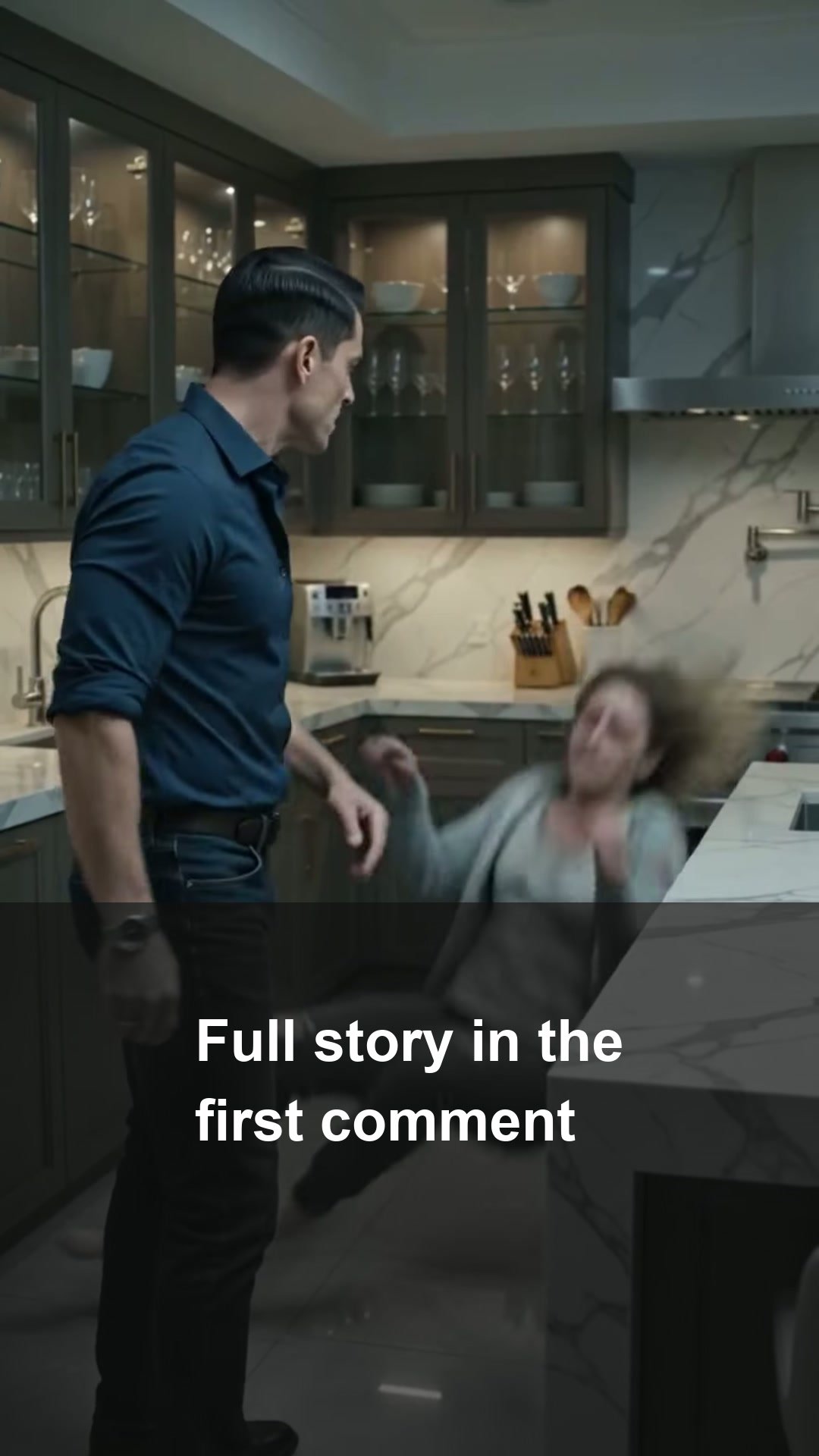
He moved then. It was a sudden, predatory flick of muscle. He didn’t speak, but his hand clamped over mine, his fingers digging into my wrist with enough force to bruise. He didn’t snatch the phone away; he simply squeezed, his weight bearing down on my shoulder until I was forced to lean against the counter.
Why are you listening to her, Maya? His breath was hot against my ear, smelling faintly of the coffee he had just finished. She’s sick. She’s always been sick.
I didn’t answer. I focused on the sound of Brooke sobbing on the other end, a raw, jagged sound that didn’t belong in this meticulously curated kitchen.
I looked at the phone cord, then at the reflection of his eyes in the window above the sink. They were flat, devoid of the warmth he usually performed for the neighbors. He wasn’t hiding the monster anymore because he didn’t think he needed to. The realization hit me with the force of a falling beam: he wasn’t just controlling my accounts; he was managing my reality.
You should hang up, he murmured, his voice dropping into that smooth, practiced cadence he used when he wanted to seem reasonable. Put it down, sweetheart. We have a long day.
My heart hammered against my ribs, a trapped bird desperate for air. I realized then that the house wasn’t a home; it was a containment vessel. Every piece of furniture, every color choice he had forced upon me, had been designed to pin me into a corner.
I ignored his command. I shifted my weight, bracing my heels against the floorboards, and stared directly into his reflection. I didn’t hang up. Instead, I pressed the phone tighter to my ear, listening to the secrets Brooke was unraveling, and reached slowly with my free hand toward the heavy ceramic carafe sitting on the edge of the island. I had to get out.
I left the carafe where it was and walked straight into the guest bathroom, locking the door with a sharp click that sounded like a gunshot in the quiet house. My hands were shaking so violently I nearly dropped the phone into the sink. I pulled up my sister’s contact, my thumb hovering over the call button until the screen dimmed.
Sarah picked up on the first ring. Her voice was thin, frantic. She told me Lauren had disappeared in 2018, just before a planned move to Seattle. She was sure of it; she’d seen the flyers. I hung up before Sarah could ask why I was digging, my pulse a frantic rhythm against my jaw.
I navigated to the hotel’s business registry next. The manager answered on the fourth ring, his voice dripping with the practiced boredom of someone who had seen it all. I posed as an insurance auditor, asking about a 2018 guest record under Lauren’s name. He sighed, the sound of a page turning audible over the line. He told me the records were archived, but he pulled a file. He said Lauren had checked out two days early, alone, and paid in cash. The contradiction hit me like a physical blow: Sarah said she was kidnapped; the records said she walked away with enough cash to vanish.
I stepped out of the bathroom, avoiding the kitchen where Evan was still humming to himself, and slipped into my car. The leather seat felt cold, a stark contrast to the heat rising in my chest. I called the retirement home where Evan’s mother, Martha, had volunteered for years. I reached a nurse who sounded tired, her voice clipped by the constant beep of monitors. I asked about the woman who had helped Martha during that specific winter. The nurse paused for a long time. She said Martha never had a volunteer helper, and that she’d been in a rehabilitation center for her hip during that entire year.
My lungs felt restricted, as if the air in the car had grown thin. If the nurse was right, Martha wasn’t at the house to witness anything. If the hotel manager was right, Lauren wasn’t trapped, she was a ghost of her own making. None of it aligned.
I started the engine, the vibration humming through the soles of my feet. I drove toward the address Sarah had given me—the last place Lauren was seen. The streets were narrow, the houses aging and graying under a heavy sky. I pulled up to a bungalow with peeling paint and saw an old man watering a dead patch of grass. I climbed out, my legs feeling heavy, and held up a photo of Lauren I’d found on a cached social media page.
The man squinted, his eyes watery and distant. He looked at the photo, then at me, and shook his head slowly. He told me the woman in the picture had never lived there. He said he’d lived in that house for thirty years and the only person who lived in the bungalow next door was a man who moved out in a hurry, leaving behind nothing but a pile of burning trash in the yard.
I looked at the charred remains of the grass near the fence. The air smelled of wet ash and old secrets. My stomach turned, a cold, hard knot of realization tightening inside me. The trail wasn’t just cold; it had been scrubbed clean. I checked my phone. Three missed calls from Evan. The screen flashed his name, his digital tether pulling tight. I didn’t call back. I put the car in gear and turned toward the precinct. The investigation wasn’t about finding the truth; it was about identifying which lie was meant to kill me.
The station was a blur of fluorescent lights and the acidic tang of stale coffee. I sat in a plastic chair, tracing the jagged crack in the floor tile with the toe of my boot. Every footstep in the hallway sounded like a closing door. When the detective finally appeared, he didn’t bring a file; he brought a heavy, suffocating silence. He held out a grainy photograph, the edges curled from humidity. It was a picture of a garden gate, the same rusted wrought iron I had seen in my nightmares. My throat felt like it was lined with broken glass. I focused on the geometry of the image—the symmetrical hinges, the way the shadows fell—to keep from screaming. If I could just treat this like a site survey, I could stay intact. The detective cleared his throat, the sound sharp as a gunshot in the cramped room. He laid a piece of paper on the table, a bank statement from three years ago, with my name handwritten in the margin, next to hers. My hands started to tremble, a fine, rhythmic vibration that I couldn’t stop. I thought about the house, the way I had carefully curated every light fixture and floorboard, convinced I was building a future. I had been designing a mausoleum instead. I pushed the photo away, my skin crawling at the contact. I needed to know if it was real, if the foundation of my life had been poured over a body. I stood up, the chair screeching against the linoleum. The detective watched me, his expression unreadable, waiting for me to break. I looked him dead in the eye, my pulse drumming in my ears, and felt the last vestiges of my hope dissolve into something colder, something harder. I didn’t care about the money anymore. I didn’t care about the property lines. I just wanted to know if he had ever loved me at all. I leaned into the space between us, my voice barely a tremor in the stale air, and asked the only thing that mattered.
Tell me where he buried her.
My mother kept the family ledgers in a locked vanity drawer, the kind that smelled of stale Chanel and mothballs. I was seven, pressing my ear against the wood, listening to the friction of her fountain pen against paper. She wasn’t writing poetry; she was calculating the cost of my father’s temper. The math was always the same: if he broke the good china, it cost a week of groceries. If he broke a window, it cost the summer vacation. I learned early that everything had a price, and if you accounted for it correctly, you could manage the wreckage. That was the first time I realized that love wasn’t an emotion, but a line item in a budget.
I sat in the hallway, tracing the grain of the floorboards until my fingers went numb. My father’s boots thudded in the kitchen, a rhythmic, heavy sound that signaled the end of his workday and the beginning of his theater. He didn’t come home to talk; he came home to audit our performances. When the back door slammed, I didn’t run to greet him. I crouched in the dark, watching the shadow stretch across the linoleum like an oil slick. He stopped, his silhouette looming over the kitchen island, and asked my mother where the checkbook was. Her voice didn’t shake. It was thin, metallic, stripped of any warmth. She told him it was in the drawer, but that he would have to work for the key. He laughed, a jagged, hollow sound that made the chandelier in the hallway rattle. I realized then that my mother wasn’t a victim; she was a gatekeeper, trading her spirit for the illusion of domestic order. I decided, right then, that I would never be the person holding the keys to someone else’s cage.
At school, the pattern repeated. I saw it in the way Sarah Miller clutched her backpack when her older brother approached, her knuckles white, her gaze fixed on the floor. We were twelve, and the world was already sorting us into hunters and the hunted. I became the observer, the girl who sat in the back row of geometry class sketching floor plans for houses that couldn’t be breached. I studied the load-bearing walls of the classroom, the way the light hit the structural beams, looking for the weakest point. I wanted to build something that wouldn’t collapse under the weight of a scream. One afternoon, my teacher, Mr. Henderson, caught me drawing. He didn’t scold me. He leaned over my desk, his tie grazing the paper, and whispered that architecture was just biology with more concrete. I didn’t tell him that I was designing a bunker. I just nodded, pretending I was interested in aesthetics, while my mind was busy calculating how much pressure a glass wall could take before it shattered.
When I met Evan, I thought I had finally designed a structure that would hold. He was everything my father wasn’t: precise, measured, a man who spoke in blueprints and long-term investments. We met at a gala, surrounded by the kind of people who valued gold-leaf molding over genuine intimacy. He caught me staring at the ceiling, analyzing the structural load of the plaster roses. He didn’t ask me what I was drinking or if I was having a good time. He asked me if I thought the building would last a century. I told him it was rotting from the inside. He smiled, a slow, deliberate expression that didn’t reach his eyes. That was the trap. I saw it as a commonality of vision, a shared understanding of decay. I didn’t see the hunger behind the smile.
We moved into the suburban house before the paint on our marriage license had dried. It was a beautiful, hollow shell, all open floor plans and soaring ceilings. I spent my days drafting, my nights listening to Evan pace the hallway. He liked the quiet; he said it helped him think. I liked the noise of my work, the scratching of graphite against vellum. But soon, the quiet began to feel like a demand. He started moving my furniture, shifting the drafting table away from the window, claiming the light was too harsh. He wanted the house to look like a showroom, a staging ground for a life he wanted to sell to the neighbors. I didn’t fight him on the decor. I fought him on the bank accounts.
I remember the Tuesday he sat me down in the living room, the leather couch feeling slick under my palms. He had a stack of documents, all neatly bound, the edges perfectly flush. He told me that for our taxes, for our future, we needed to centralize. He used words like synergy and asset protection. I looked at the papers, at the way he had highlighted the sections where I would sign away my signature authority. I felt a cold, familiar pull in my chest—the same sensation I had when I sat outside my mother’s vanity. He was trying to turn me into a line item. I asked him why he needed total control, and he leaned forward, his hands resting on his knees. He told me it was because I was flighty, because I didn’t understand the long game. The insult was so quiet, so clinical, that it almost sounded like an observation. I signed the documents because I wanted to believe him. I wanted to believe that we were a single entity, a structural unit that couldn’t be dismantled.
That was the night I met Brooke. She came over for dinner, a shadow of a person, clutching a glass of wine as if it were a life raft. She didn’t look at me; she looked at the walls, her eyes darting toward the corners, as if she expected the house to speak. Evan was jovial, pouring her wine, his hand lingering on her shoulder just a beat too long. He told a story about their childhood, a sanitized version of events that made his mother look like a saint and his father like a titan of industry. I watched Brooke’s face. Every time he mentioned their mother, she blinked, her skin going sallow. I asked her about her own life, about her work, and Evan interrupted, telling me she was going through a difficult transition. He didn’t let her speak. He didn’t let anyone speak. He was the architect of our reality, and we were just the load-bearing walls he was using to prop up his ego.
I should have walked out then. I saw the tremor in Brooke’s hand when he reached for the wine bottle. I saw the way she looked at the heavy, dark furniture he had forced me to buy, a look of profound, suffocating recognition. I ignored the red flags because they were so neatly arranged. I thought if I just did my part, if I just kept the house clean and the finances balanced, I could avoid the explosion. I treated my marriage like a construction site, assuming that as long as the blueprints were followed, the building would stand. I didn’t realize that Evan wasn’t building a home; he was building a tomb.
The last time I saw Lauren’s name, it wasn’t in a conversation. It was scrawled on a scrap of paper I found tucked into the back of a drawer in the guest room—the room Evan told me to keep locked, for storage. I opened it while he was at work, my heart hammering against my ribs. It was an address, a phone number, and a series of dates, all crossed out. I traced the ink, the handwriting frantic, disjointed. It wasn’t the handwriting of an architect. It was the handwriting of someone who was trying to map an escape route. I heard the front door open, the heavy thud of his shoes on the tile, and I shoved the paper into my pocket, my breath hitching. He didn’t come upstairs. He just started the vacuum, the noise filling the house, a monotonous, screaming roar that made it impossible to think.
I stood in that room, surrounded by his boxes, and realized that I was living in a model of someone else’s failure. Every argument, every demand, every quiet evening where we sat in the dark—it was all a rehearsal. I was being pruned, shaped, and managed until I fit the exact dimensions of the woman who had come before me. I looked at the window, at the way the sunlight hit the floor, and saw the trap for what it was. It wasn’t about money. It wasn’t about the house. It was about the erasure of the individual. I walked out of that room, my hands steady, my mind finally, terrifyingly clear. I had spent my whole life analyzing structures, looking for ways to make them safer, stronger. I realized that some buildings couldn’t be saved. You don’t reinforce a foundation built on rot. You burn it down.
The kitchen counter was cold under my palms, the marble veined like a bruised limb. I stared at the silver toaster, a wedding gift from Evan’s mother, Martha, and saw the reflection of the family dynamic: sleek, polished, and hollowed out. Martha entered, her footsteps silent in velvet slippers. She had spent forty years curating a performance of domestic bliss, sacrificing her own autonomy to ensure her husband’s reputation remained unblemished. She sipped herbal tea, her hand steady, though I saw the fine tremor in her pinky finger—the physical manifestation of a woman who had mastered the art of suppressing screams until they became a quiet, permanent ache.
Do you think the neighbors suspect the tension, Maya? she asked, her voice like glass grinding on silk. She didn’t look at me; she was watching the shadow the garden light cast across the floor.
I looked at the way she held her cup, a porcelain cage. You have a lot of practice keeping secrets, Martha. Why didn’t you stop him?
She flinched, a microscopic tightening of the jaw. I was building a life, not a prison, she whispered. But the contradiction was there, etched into the lines around her mouth: she had built the prison to protect the life. She set the tea down with a sharp click. I wanted security for my children. Whatever the cost.
I stepped back, my skin crawling at the cold utility of her motherhood. My decision crystallized: I wasn’t just fighting Evan; I was fighting the architecture of a lineage that relied on women being silent load-bearing walls.
Brooke walked in then, her shoulders hunched as if expecting a blow. She was Evan’s sister, a woman who had once been a brilliant cellist before her spirit was eroded by the family’s obsession with control. She looked at me with a desperate, frantic intelligence. I kept your journals, she blurted out, her voice cracking. I hid the dates. I knew if you saw the timeline, you’d leave before he could finalize the transfers.
I felt a surge of pity so sharp it blurred my vision. Brooke had survived by playing the fool, a protective mask that had begun to fuse to her skin. She had saved herself by sabotaging others, a coward’s gambit that she hated herself for every single day.
Why now? I asked, keeping my voice low, analytical.
Because I can’t hear her name anymore, Maya. Every time he calls me, I hear Lauren in the static, she said, clutching her elbows. She looked at the door, terrified of the man who occupied the space outside. She chose survival over integrity, and she knew it was a hollow victory.
I walked to the drafting table in the study, my fingers tracing the blueprints I had hidden in the frame. My lawyer, Mr. Henderson, would be waiting for my call. He was a man who lived by the rule of law, yet his private life was a series of abandoned alimony payments and estranged children—a man who prosecuted moral failures while ignoring his own. I grabbed my phone, feeling the weight of the device against my palm.
I looked at the house one last time, seeing not a home but a series of vectors and forces designed to crush. My decision was absolute: I would use their own secrets to dismantle the structure. I dialed Henderson, the ringtone rhythmic and demanding. As the line clicked open, I realized the irony: to reclaim my autonomy, I had to become the very thing Evan feared most—a woman who refused to be held in place. I would burn the house down, metaphorically and legally, and ensure that nothing of this rot remained. I looked at the dark window, my reflection staring back with a cold, terrifying clarity. I was no longer a piece of the furniture. I was the architect of the collapse.
The silence in the kitchen was heavy, the kind of stillness that precedes a structural failure. I set the phone on the granite island, the cool stone pressing against my palm. Across the room, the scent of stale coffee and Evan’s cologne lingered, a suffocating perfume of suburban propriety. I reached for the tablet, my fingers moving with mechanical precision. I opened the banking portal, the interface clean and clinical. With three sharp taps, I severed the joint access, transferring the liquid assets into a private account held in my name alone. The screen glowed white against my face, a digital guillotine.
A notification pinged immediately, a sharp sound that sliced through the room. Evan’s bank app alert. I imagined him staring at his phone, his thumb hovering over the screen, the slow realization of his loss dawning on his carefully groomed features. My heart hammered against my ribs, but my hands remained steady. I was not a wife anymore; I was a claimant.
I moved to the hallway, the floorboards groaning under my weight, and retrieved the fireproof safe from the back of the linen closet. My breathing was shallow, rhythmic, calculated. I swapped the deed and the original marriage certificate for my professional documents. As I locked the safe and slid it into the trunk of my car, the front door rattled.
Evan stood on the porch, his silhouette framed by the harsh glare of the motion-sensor lights. He did not ask what I was doing. He simply walked toward me, his movements fluid and predatory.
Maya, put the box back, he said, his voice dropping into that familiar, terrifying register of forced calm.
I locked the trunk and stepped back, the keys biting into my palm. You aren’t touching this, Evan. I called Henderson. My lawyer is already drafting the paperwork for an annulment.
He stopped, his head tilting slightly, a gesture that used to seem curious and now looked purely reptilian. You’re making a mistake, he whispered, taking a step into my personal space. The air between us ionized. I thought about the way his mother, Martha, looked at me—as if I were a structural defect to be plastered over.
I’m not making a mistake, I said, my voice steady. I’m fixing the foundation.
He reached for my arm, his grip hard enough to bruise. I twisted away, the physical recoil automatic, and pulled the phone from my pocket. I hit the emergency button. The dispatcher’s voice was a flat, comforting monotone in the quiet night. I gave the address, the cross streets, and the specific nature of the disturbance.
He watched me with a sudden, sharp intake of breath, his face darkening. You think you’re so smart, he said, his voice low and vibrating with malice. You think you can go back to being an architect? You’re a guest here, Maya. A guest who’s overstayed her welcome.
He lunged for the phone, but I ducked into the kitchen, creating distance. The sirens started then, a distant, rising wail that promised an end to the charade. Evan went rigid, his eyes tracking the sound. He knew that an official police record meant an investigation, and an investigation meant they would dig. They would find the gaps in his work history, and eventually, they would find Lauren.
The cruiser pulled into the driveway, blue and red lights fracturing the suburban darkness. I opened the door before the officers reached the porch.
He’s in the kitchen, I told the officer, pointing toward the back of the house. He has my documents. He’s threatening me.
The officer looked past me, his gaze fixed on Evan, who had regained his composure with chilling efficiency. He was smiling, a thin, rehearsed expression. Officer, thank god. My wife is having a breakdown. She’s irrational.
I stepped forward, the adrenaline cold and sharp in my veins. That’s a lie. Check the financial logs. Check the records for his previous partner.
The officer’s eyes flicked between us, weighing the evidence of the scene. He gestured for Evan to step outside. As they moved into the yard, the second officer approached me, his notebook open. I told him everything—the financial pressure, the controlling behavior, the name Lauren, and the suspicion that his history was buried in the very dirt of this property.
By the time they cuffed him, the sun was beginning to bleed orange over the horizon. I stood on the porch, watching them lead him to the cruiser. He didn’t look back. He was already calculating his next move, but he didn’t realize that the structure had already collapsed.
I drove to the legal office as soon as the police cleared the perimeter. My lawyer, a woman with sharp eyes and an even sharper suit, looked over the documents I had salvaged.
You’ve started a war, she said, leaning back in her chair. Once we file the restraining order and contest the validity of the estate assets, there’s no going back.
I looked at the files spread across the mahogany desk—the evidence of a life built on ghosts. Good, I said. I want it finished.
I left the office and drove home. The house sat in the morning light, looking smaller than it had the day before. I walked inside, the silence no longer heavy, but empty. I went to the master bedroom, grabbed a heavy armchair—the one Evan had insisted on buying—and dragged it to the center of the room. It scraped against the hardwood, a harsh, grating sound that felt like liberation. I was done with the furniture. I was done with the pretense. I walked to the kitchen, opened the drawer, and took out a set of keys I had hidden weeks ago. I went to the front door, removed the strike plate, and replaced the lock with a deadbolt I had purchased the night he first scared me. I turned the key. It clicked into place, a definitive, irreversible sound. I sat on the floor, the floorboards cool beneath me, and watched the sun climb higher. The structure was gone. Now, I could finally see the light.
The notification chime on my phone became a rhythmic, maddening pulse. I sat on the floor, the deadbolt shimmering in the morning sun, and watched the glass screen light up with a deluge of digital wreckage. A local news aggregator had pushed a headline: Architect’s Husband Under Investigation for Historic Disappearance. Beside it, the school’s parent-teacher portal showed a flurry of automated messages suspending my participation in the committee, their phrasing clinical and cold. They didn’t want the scandal bleeding into their pristine reputation.
I tapped a message from my business partner, Sarah. She didn’t ask how I was. She asked if the office was secure. The firm was already distancing itself, framing my marriage as a private liability rather than a personal tragedy. I stood up, my knees popping, and walked to the window. Across the street, the neighbor, Mrs. Gable, was standing on her porch with a cordless phone pressed to her ear, her gaze fixed directly on my front door. When she saw me move the curtain, she didn’t look away. She just turned her back, walking inside to lock her own door as if I were the contamination.
The phone rang again—a number I didn’t recognize. I answered.
Maya, it’s Brooke, the voice crackled, thin and jagged. You’ve ruined everything. Mother is hysterical, and the firm—Evan’s investors are calling my personal line every five minutes. Do you have any idea what you’ve unleashed?
I held the receiver away from my ear, watching a delivery truck pull into the driveway of a house down the block, the driver pausing to point at my home. I thought about the way Brooke used to smile at me over Sunday dinners, that practiced, hollow expression that never reached her eyes.
I’m not the one who buried a life, Brooke, I said, my voice steady, stripped of the trembling deference I’d practiced for months. Check your own foundation. It’s rotting.
I hung up before she could screech another justification. The silence that followed was heavy, but it was mine. I went to the kitchen and grabbed a trash bag. I didn’t just want the furniture gone; I wanted the physical evidence of his taste erased. I shoveled his expensive, dark-stained coasters, the leather-bound journals he kept on the mantle, and the heavy, oppressive decorative bowls into the plastic. Every object felt like a piece of a puzzle that didn’t fit.
My laptop pinged with an email from a lawyer I’d contacted days prior. *Protective orders filed. Financial freeze initiated. The public narrative is shifting.* I read the words, but they felt like someone else’s life. Outside, a news van pulled to the curb, a reporter stepping out with a microphone in hand. I watched them from the shadow of the hallway, feeling the familiar, clinical instinct to survey the structural integrity of my own situation. They were waiting for a reaction—a scream, a tear, a moment of visible fragility.
I turned off the lights in the front room, leaving the house in a deliberate, quiet darkness. I wasn’t going to give them the drama they traveled for. I walked to the back of the house, to the room I was reclaiming as my studio, and opened the window to let the air in. The scent of damp earth and spring growth pushed back the stale, suffocating air of the life I’d just dismantled. I didn’t need their judgment, and I didn’t need their pity. I pulled my drafting table into the center of the room, positioning it to face the morning sun. I sat down, picked up a pencil, and waited for the police to arrive for the final sweep. The fallout was just the clearing of the site before the build.
The cruiser’s red and blue lights pulsed against the living room wall, rhythmic and clinical. I watched through the window as two officers escorted Evan down the walkway, his wrists bound behind him, his shoulders hunched in a pathetic mimicry of defeat. He didn’t look back at the house, and I didn’t look at him. My pulse remained steady, a flat line on a monitor. I was done with the theater of his presence.
The lead detective stepped inside, his boots tracking grit across the hardwood. He handed me a manila folder, the weight of it anchoring my hand. The annulment papers were signed, the court order granting me sole title to the property finalized. There was no alimony to pay, no joint accounts to untangle; my lawyer had been surgical, slicing away the financial rot with precision.
“The evidence regarding the previous case is with the DA,” the officer said, his voice dropping into a tone of practiced empathy. “You’re safe now, Ms. Miller.”
I nodded, not trusting myself to speak, and closed the door. The latch clicked—a sharp, final sound that resonated through the hallway. I reached into my pocket and touched the new key, the brass cool and heavy. I had changed the locks an hour before they arrived, ensuring that the threshold was finally mine alone.
I walked to the kitchen and began the heavy labor. I dragged the mahogany sideboard, a piece Evan had insisted on because it looked traditional, toward the garage. It scraped against the floor, a jarring protest that made my teeth ache, but I didn’t stop until it was out of sight. Next went the velvet drapes, thick enough to block out the world; I tore them down with a violent tug, the mounting hardware clattering to the floor.
By sunrise, the house was sparse. The shadows had retreated, leaving the corners exposed and clean. The silence that filled the space wasn’t the heavy, suffocating quiet of a hostage situation, but the empty, expectant stillness of a blank canvas.
I sat at my drafting table, the wood smooth beneath my palms. I opened a fresh roll of vellum, pinning it down with lead weights. My hands didn’t tremble as I picked up the T-square. I drew a single, straight line, sharp and intentional. Outside, the neighborhood was waking up, oblivious to the fact that a trap had been dismantled overnight. I leaned over the table, the morning light catching the graphite, and began to sketch the studio exactly as I wanted it. The past was off-site; the foundation was finally mine.
The front door lock clicked with a resonant, metallic finality that tasted like oxygen. I didn’t just change the tumblers; I took the heavy, mahogany-stained bookshelf Evan had insisted on—the one that blocked the southern light—and dragged it to the curb in the rain. My shoulders burned, a dull, physical ache that felt like progress. Each splinter I picked up from the floor was a splinter I no longer had to navigate in my own mind.
I moved the drafting table to the center of the room, positioning it where the sun hit the hardwood at ten in the morning. I started a pot of coffee, the smell of dark roast replacing the lingering scent of Evan’s cologne. When the doorbell rang, I didn’t jump. It was Sarah, holding a small, trembling golden retriever puppy.
“You said you wanted a project,” she said, her voice soft, lacking the pity she had offered two weeks ago.
The puppy looked up, its paws sliding on the foyer tile. It didn’t have a name yet, and it didn’t care about my bank accounts or my pedigree. I reached down, the fur coarse and warm against my palm. The dog leaned into my knee, a small, living anchor.
“He’s perfect,” I said. My voice sounded steady, stripped of the brittle edge I’d carried for a year.
I sat on the floor, ignoring the chair entirely. The house felt vast, but for the first time, it felt like an architecture I had actually designed. I watched the dust motes dance in the light spilling from the windows. I didn’t need to check the locks again. I didn’t need to listen for the gravel crunch of a car pulling into the drive. I looked at the puppy, then at the empty, sun-drenched space where the darkness used to live. I was finally, irrevocably, alone. And that was the start of everything.
I walked to the center of the room, my boots clicking against the bare hardwood. The heavy, mahogany sideboard that had once dominated the wall was gone, sold to a buyer who didn’t care about the stains on its underside. I dragged my heavy wooden drafting table across the floor, the legs leaving faint, parallel scars in the finish. I positioned it directly beneath the south-facing window, catching the glare of the morning sun. I pulled a roll of fresh vellum from the shelf, the paper crisp and smelling faintly of linen. I lined up my mechanical pencil and a steel ruler, centering them on the grain of the wood. With a steady hand, I pressed the lead down and drew a single, perfectly straight line across the empty page, marking a boundary that belonged to no one but me.
Leave a Reply