The ivory heels sat discarded on the patio stones, caked in fresh, dark garden mud. My mother’s voice didn’t even reach me through the speaker; it was just a high-pitched vibration rattling the glass tabletop. Her frantic cadence—a series of staccato demands—cut through the quiet hum of the evening crickets. My thumb hovered over the red icon on my screen, watching the caller ID flash like a warning light. Arthur had lost the board. The patents were public. My choice of escort had effectively dismantled twenty years of carefully curated fraud. I looked at Julian, who stood near the trellis, his hands buried deep in the soil, completely unbothered by the digital collapse happening inches from my hand. He hadn’t asked for the spotlight, yet he had pulled the foundation out from under my father without a single word of spite. I could hang up and let the silence swallow the estate, or I could answer and tether myself to the debris of their legacy for another hour. I pressed the end call button and let the phone slide into the grass, feeling the weight of the Vance name evaporate with the evening mist.
The kitchen floor tiles were cold against my bare feet, a sharp contrast to the humid warmth of a Tuesday in July. I stood at the marble island, the silence of the apartment punctuated only by the rhythmic, mechanical wheeze of the espresso machine. It was 7:15 AM. Outside, the city was already a blur of gray exhaust and yellow taxis, the morning light filtered through the blinds in thin, dusty stripes. I measured exactly two tablespoons of dark roast, watching the grounds settle into the basket. Everything was precise, measured, and entirely under my control.
I walked to the window and cracked it open. The smell of hot asphalt and wet garbage drifted up, the scent of a city that didn’t care about my pending wedding or my mother’s erratic itinerary. My phone lay on the charger, dark and dormant. I felt a flicker of relief. No group chat pings, no demands for seating chart adjustments, just the hum of the refrigerator.
My commute was a series of predictable choreography. The subway platform was crowded with people staring at their shoes, the air heavy with the scent of coffee and damp wool. I kept my head down, nursing a lukewarm paper cup. At the office, the lobby security guard, Jerry, gave me his usual nod.
Morning, Elena. Going to be a scorcher, he said, clicking his pen.
Humidity’s already at eighty percent, I replied, my voice sounding thin in the cavernous room.
I swiped my badge and headed for the elevators, already rehearsing the day’s to-do list. I had three brand identity packages to finalize and a meeting with the lead developer. By 9:00 AM, I was at my desk, the glow of the monitor illuminating the edges of my workspace. The office printer whirred to life in the corner, a steady, comforting chug that drowned out the office small talk.
I spent the next four hours adjusting kerning and hex codes. The work was mindless, tactile, and quiet. I liked the way layers in Photoshop could be hidden or deleted, a luxury I didn’t have in my actual life. Around noon, I walked to the breakroom. The fluorescent lights hummed with a low-frequency buzz that made my temples throb. I poured a glass of tepid water and leaned against the counter, watching a junior associate try to explain a marketing strategy to a wall of disengaged managers.
I should probably call my mother, I thought, staring at the condensation on my glass. She’d want to know why I hadn’t replied to the email about the florist’s invoice. I pushed the thought away, deciding it could wait until dinner. I had to focus on the presentation for the afternoon. My life felt like a well-tended garden, rows of duties and expectations neatly mulched and bordered. As long as I kept to the path, everything would remain intact.
I returned to my desk, sitting down with a sigh that felt heavier than the morning’s commute. I opened a new file, my mouse cursor blinking in the white void of the canvas. The office was quiet, the staff distracted by their own deadlines. I felt a brief, strange sense of equilibrium, the kind of stillness that precedes a sudden shift in atmospheric pressure. I reached for my coffee mug, finding only dregs at the bottom. I was about to stand up and head back to the kitchen when the silence on my desk shattered. My phone, sitting face-up next to the monitor, began to vibrate against the mahogany wood, a frantic, rattling sound that seemed far too loud for the room. I froze, my hand hovering over the screen. The caller ID was a string of digits I didn’t recognize, but the urgency of the buzz made my stomach tighten. I let it ring once, twice, three times, the sound cutting through the stale office air like a siren.
I tapped the speaker icon, my thumb slick with a sudden sheen of cold sweat. The office grew impossibly quiet, the hum of the hard drive receding into the background.
This is Elena, I said, my voice sounding thinner than I intended.
Elena, the voice was a raspy, unfamiliar baritone, underscored by the faint, rhythmic sound of a distant subway train. I am calling from the offices of Miller, Halloway, and Vance. I have a subpoena here regarding the Thorne patent archives.
My skin went cold. The name Thorne felt like a jagged piece of glass in my mouth, yet I hadn’t spoken it in years. My father’s firm had settled those claims before I was even old enough to understand what a copyright was. The memory of the secret room in his study—the one he locked whenever the auditors arrived—flashed behind my eyes.
I think you have the wrong person, I said, though my gaze had already drifted to the wedding photos resting on my shelf.
We have the digital trail from your wedding registry, Elena. The vendor records link your husband’s firm to the same offshore accounts used to bury the Thorne case. The camera caught everything.
I looked at the monitor. My wedding entrance video was paused in a browser tab. There, in the frame, was Julian Thorne. He wasn’t just a guest; he was the man who had offered his arm when my father walked away. He was the man currently staring back at me from the screen, his face caught in a candid moment of quiet grace.
Mr. Thorne? I whispered, the realization settling into my marrow.
He’s not a guest, Elena. He’s the claimant. And he just filed a motion to freeze your father’s assets based on the evidence presented in that video. You’ve just handed him the smoking gun.
My fingers gripped the edge of the desk until the wood bit into my palms. The arrogance of my wedding—the curated perfection, the public display of a family that wasn’t actually there—had been the very thing that dismantled them. I thought of my father’s face, tight with rage, and my mother’s rehearsed excuses. They were currently three thousand miles away, blissfully unaware that the spectacle of my happiness had just turned into a wrecking ball for their empire.
I need to call my father, I said, my voice barely audible.
The lawyer laughed, a short, sharp sound. I wouldn’t do that if I were you. The federal agents are likely already knocking on his front door in Singapore.
I stared at the phone as the line went dead. The silence returned, but it was heavier now, suffocating. I stood up, my chair clattering against the wall. I had a choice: protect the wreckage of my childhood or let the truth burn it to the ground. I walked to the door, my heart hammering a rhythm against my ribs, and reached for my keys. It was time to see exactly what I had started.
The polished wood of the hallway console felt cold beneath my palms. I pressed the speed-dial for my mother, my thumb hovering over the glass screen until the ringing finally cut through the silence of the foyer. She picked up on the third ring, her voice a brittle, practiced veneer of composure that shattered the moment she heard my breath. She told me father was in a boardroom in Singapore, finalizing a merger, and that the disruption caused by my stunt with the gardener had merely been a convenient excuse for his rivals to manufacture a crisis. She sounded like she was reading from a script, her tone polished to a high, neurotic sheen. I hung up before she could ask about the wedding photos. The discrepancy was immediate: the lawyer said the authorities were at the door; my mother said it was a boardroom coup. I left the house, the gravel crunching under my heels like broken glass.
I stopped at the hotel where Julian had been staying, the lobby air smelling faintly of expensive jasmine and floor wax. The concierge, a man with a mustache that looked like a permanent frown, stared past me at the marble pillars. I asked for Julian Thorne’s room number, hoping for a thread to pull. The concierge leaned forward, his fingers tapping a rhythmic, nervous beat against the desk. He said Julian checked out two days ago, immediately following the rehearsal dinner, and that he had never actually occupied the suite registered under his name. He gave me a look of practiced pity, suggesting I might have been the victim of a prank. My stomach turned. If he wasn’t here, who had held my arm as I walked down that aisle? I walked back to my car, the interior stiflingly hot, and stared at the empty passenger seat.
The next call was to the nurse who had cared for my father’s previous partner, a woman named Sarah who held the archives of his early professional life. Her voice was thin, aged by years of hushed secrets. She picked up after a long, agonizing pause. When I asked about the Thorne family patents, she laughed, a dry, rasping sound. She told me Julian Thorne hadn’t been in the country for a decade, that he was living in a quiet, reclusive facility in the north, and that the man I walked with couldn’t possibly be him. I gripped the steering wheel until my knuckles turned white. My mother said he was a distraction; the concierge said he was a ghost; the nurse said he was a legend. I started the engine, the roar of the motor feeling like a scream in the quiet driveway.
I decided to visit the site of the old Thorne estate, now a derelict plot of land choked by invasive ivy. I drove for two hours, the landscape blurring into a smear of grey. At the gate, a man stood with a surveyor’s transit, his posture familiar, his shoulders set with a stillness I had mistaken for grace at the altar. I pulled over, the tires skidding on the dirt shoulder. He looked up, his eyes meeting mine without surprise. He didn’t offer a defense; he simply held up a set of documents, the seal of the patent office embossed in gold. He said the board wasn’t investigating the theft—they were settling the debt, and I was the final, inadvertent witness. I turned the car around, the engine struggling as I steered back toward the city, the truth finally settling in my gut like lead. I had walked into a trap, and the architect was standing right behind me.
The foyer of my childhood home smelled of furniture polish and the stale, pressed-flower sterility of a life lived for appearances. My mother stood by the mahogany console, her silhouette sharp enough to cut glass, rearranging a bowl of porcelain fruit that had not been touched in a decade. She didn’t turn when I slammed the heavy front door, the sound echoing through the cavernous hall like a gunshot. My heels clicked rhythmically against the marble, a frantic, hollow beat that signaled my arrival. I dropped my bag, the leather strap biting into my palm, and saw the reflection of our house in the gilded mirror—a cold, expansive monument to a man who had built his empire on the silent suffering of others.
Arthur sat in his leather wingback chair, nursing a crystal tumbler of scotch, his gaze fixed on the dying embers of the hearth. He looked smaller than he had at the altar, his posture eroded by the sudden weight of the documents I had discovered. I crossed the room, the distance between us closing like a closing account. My breath caught in my throat, not from grief, but from the sudden, jarring clarity of the past twenty-eight years. Everything I had been—the daughter of a titan, the poster child for his legacy—was a ghost. I reached for the edge of the mantle, my knuckles white, staring at the family portrait where he had photoshopped my brother into a better light, leaving me as nothing more than a background feature in his own narrative.
He didn’t look up, even as the silence in the room thickened, pressing against my eardrums until I could hear the mechanical ticking of the wall clock. I realized then that he wasn’t mourning the loss of his company; he was mourning the loss of a tool. I leaned down, bringing my face level with his, and whispered, I never was your daughter, was I?
The first time I learned that my existence was a variable to be balanced, I was six years old, sitting on the plush carpet of my father’s study. He was hunched over a spreadsheet, the blue light of the monitor casting his face in a ghostly, jagged sheen. I had won the regional spelling bee, a small, laminated certificate clutched in my hand, and I had waited two hours for him to finish his call. When he finally hung up, I held the paper out. He didn’t take it. He looked at the clock on the wall, sighed, and asked if I knew how much it had cost to keep the house quiet for those two hours. I sat there, the heat of my own pride curdling into a cold, heavy lump in my stomach, and I tucked the certificate under the sofa cushion. I left it there. I never mentioned the spelling bee again.
At my tenth birthday party, the pattern solidified. My mother had arranged a catering team that rivaled the state dinners held at the local country club, but the guest list was composed entirely of my father’s business associates and their children. My brother, Desmond, three years my senior, was already being groomed as the crown prince. He stood by the punch bowl, regaling a group of men with a rehearsed story about his summer sailing lessons. I watched from the periphery, wearing a silk dress that felt like a cage, as my mother drifted between the adults. She caught my eye, her smile tightening at the corners. She walked over, smoothed my hair with a sharp, impatient tug, and whispered that I was slouching and ruining the aesthetic of the room. She didn’t ask if I was having fun. She asked if I had remembered to smile when the photographer passed by. I forced the muscles in my cheeks to twitch upward, a practiced mask that felt less like a celebration and more like a surrender.
High school was a minefield of academic theft. I spent four months designing a structural model for the state science fair, a delicate bridge of balsa wood and physics. I had hidden the plans in my desk, but one morning, I found them on Desmond’s computer screen. He was adding a few modifications, his voice loud as he explained the load-bearing ratios to our father in the kitchen. When I confronted him, he didn’t even look guilty. He laughed, a casual, dismissive sound that seemed to rewrite reality. He told me that he was the one who could actually defend the project to the judges. He said I was too emotional, that my presentation would crumble under pressure, and that if I made a scene, I would only be embarrassing the family. I stayed quiet. I watched from the back of the auditorium as he accepted a trophy for my bridge. My father clapped the loudest, his eyes glassy with a pride he had never once directed at me.
The university years were meant to be my escape, but the tether was shorter than I imagined. I chose graphic design, a field my father considered a hobby for the aimless. Every time I submitted a project, my mother would call to remind me that the tuition was an investment, not a gift. She would list the failures of cousins, the bankruptcies of neighbors, and the way the social standing of our family depended on my brother’s ascent into the executive board of Vance Holdings. I remember one Tuesday in my junior year, standing in the cold light of a dorm room, listening to her detail the specific, catastrophic damage I would cause if I didn’t attend the gala they had selected for me. She didn’t use threats of disinheritance. She used shame, the quiet, corrosive kind that makes you believe your autonomy is a form of betrayal. I went to the gala. I stood in the corner, holding a glass of champagne I didn’t want, watching my brother talk to investors about the future of a firm that was already rotting from the inside.
Then came the marriage. Or rather, the preparation for it. Desmond had met someone, a woman whose pedigree met my mother’s exacting requirements, and the wedding was planned as a corporate merger. I was the maid of honor, a role that required me to facilitate every detail of his happiness while my own milestones were relegated to footnotes. During the rehearsals, my mother would steer conversations away from my career, away from my engagement to a man she didn’t approve of, and focus entirely on the optics of the wedding day. I saw the way they looked at me—as an auxiliary component. If I was useful, I was loved. If I was independent, I was a liability. I remember standing in the bridal suite, watching my brother complain about the color of the napkins, and realizing that he didn’t know how to do anything for himself. He had been fed, clothed, and promoted by the theft of other people’s labor, and he was terrified that the world would finally notice.
The warnings were there, hidden in plain sight. My father’s hushed phone calls in the middle of the night, the way he would suddenly clear his desk of documents whenever I entered the room, the way he looked at his bank statements with a frantic, animal hunger. I heard him once, shouting at his lawyer, his voice cracking with a frantic desperation I had never heard before. He was talking about patents, about a name—Thorne—and about a debt that had been compounding for twenty years. I didn’t understand the legalities, but I understood the cadence of a man whose house of cards was leaning. I tried to bring it up, once, over breakfast. I mentioned the news stories about the patent lawsuits in the region. My father had set his fork down with such force that the china chipped. He told me, his voice dangerously low, that I was a child playing in a world of wolves. He told me that my duty was to be seen and not heard, to be the decorative element that made his empire look stable and moral. He told me that if I ever questioned his business again, I would be removed from the ledger entirely.
I stopped talking. I started observing. I watched the way he treated the staff, the way he treated my mother, and the way he looked at me—like a piece of property that had become sentient and therefore inconvenient. I realized then that my father didn’t have a conscience; he had a PR strategy. And I was just one more line item in his budget. I felt the slow, steady erosion of my own identity, the way I had learned to shrink myself to fit into the spaces he allowed. Every time I had tried to assert myself—the spelling bee, the bridge, the degree—I had been met with a wall of indifference or hostility. I had spent twenty-eight years trying to earn a love that was predicated on my silence.
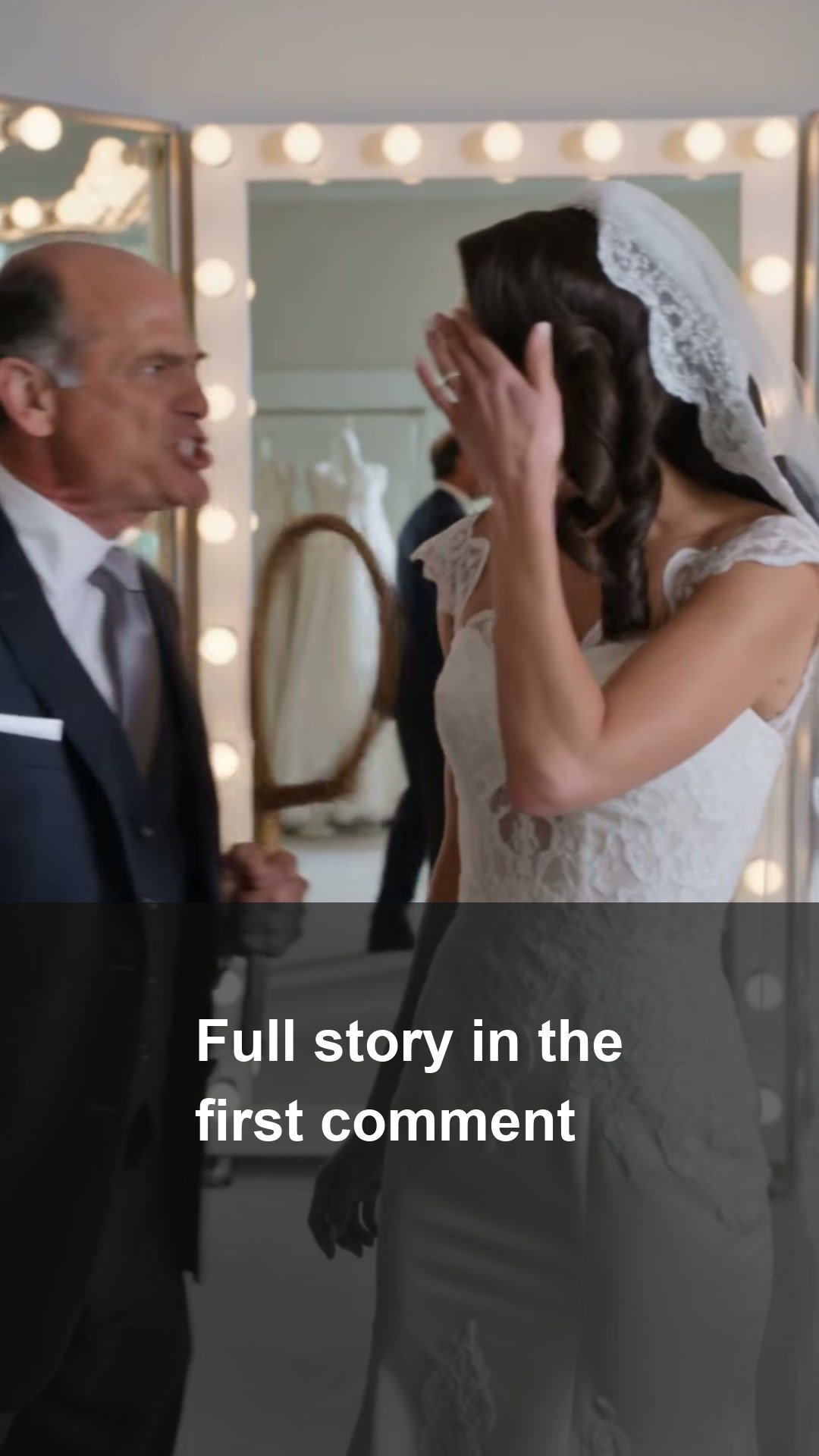
I remember the day I decided to stop trying. I was sitting in the garden, a rare moment of peace, watching the shadows stretch across the lawn. I thought about the wedding, about the man who would walk me down the aisle, and about the fact that I didn’t care what my father thought of him. I didn’t care if he was a titan of industry or a stranger with a kind face. I realized that the only way to save myself was to burn the bridge he had built, even if it meant falling into the water. The silence in the garden felt heavy, absolute. It was the sound of a life ending and another beginning. I walked back into the house, the ivory heels clicking on the marble floor, and I didn’t look at the family portrait on the wall. I didn’t look for my brother. I walked straight to my room, locked the door, and for the first time in my life, I didn’t wait for permission to be who I was. I waited for the world to notice that I had finally, irrevocably, left the building.
The mahogany desk in my father’s study held the scent of stale tobacco and suppressed panic. Arthur Vance sat behind it, his knuckles white as he gripped a crystal glass that remained empty. He had built an empire on stolen patents, a man who viewed innovation as a resource to be mined rather than a gift to be honored. He caught my eye, his face a map of shattered authority. He wanted me to weep for his loss, but I only saw the architecture of his deceit collapsing. I stood in the doorway, my spine a rigid line of defiance. He didn’t ask how I was; he asked if the reporters were still at the gates. I told him they were, and that they weren’t going anywhere.
In the kitchen, my mother, Evelyn, obsessively polished a silver tray that was already spotless. Her history was one of perpetual performance, a woman who had traded her autonomy for a seat at the head of a table that was now being cleared away by creditors. She looked at me, her eyes darting toward the window, whispering about optics and how we might still spin the narrative. She believed that if she just curated the right aesthetic, the reality of Arthur’s fraud would dissolve like sugar in hot tea. I saw the tremor in her hands, the private terror of a woman who had never learned to exist outside of a gilded cage. I told her the era of curation was over.
Down the hall, my brother Desmond was packing a suitcase with movements that were far too sharp, too deliberate. He was a man defined by the unearned momentum of our father’s name, his career a series of ghostwritten successes and borrowed prestige. He stared at his reflection in the hallway mirror, adjusting a tie that no longer opened doors, his jaw set in a pout of profound, unearned injustice. He blamed me for the scandal, as if my choice of a wedding partner had been a deliberate strike against his own trajectory toward Singapore. He looked at me and spat a word about loyalty. I thought of the countless times he had taken credit for my designs while I sat in the shadows of his spotlight. I didn’t defend myself; I simply watched him realize he was finally alone.
Near the back porch, Julian Thorne was inspecting the soil in the planters, his hands caked in the dark, rich loam of the estate he had once lost to my father. He was a man who moved with the quiet gravity of someone who had spent two decades waiting for the earth to reclaim its own. His motive was not vengeance, but restoration. He caught my gaze, his expression unreadable, and I felt the weight of his secret—that he had known exactly who I was before he ever offered to walk me down the aisle. He wasn’t a savior; he was a catalyst. He nudged a seedling toward the light, his contradiction plain: he had destroyed my family’s foundation to build something that could actually sustain life. I stepped onto the porch, the cool air hitting my face, and decided that for the first time, I would choose the gardener over the king. Julian looked up, a small, knowing smile pulling at the corner of his mouth, and held out a trowel. I took it, the metal cold and honest against my palm. The cameras flashed outside the gate, but the garden was silent, waiting for us to plant something that would last.
The heavy iron gates of the estate were vibrating with the rhythmic thud of news vans parked on the manicured grass. I didn’t look at the monitors inside the house. I walked to the mahogany desk in my father’s study, the air smelling of expensive scotch and the dust of a dying legacy. I pulled out my phone and dialed the local precinct. My voice sounded thin, alien to my own ears, as I reported the embezzlement of the trust fund set aside for my education. The officer on the other end asked for account numbers, for dates, for names. I gave them all, reading from the ledger I had found tucked behind a row of law books. As I hung up, the silence of the room felt like a physical weight, pressing against my sternum.
I didn’t wait for the inevitable knock on the door. I logged into my banking portal and clicked the button to freeze the shared secondary accounts. It was a small, mechanical motion—a tap on a glowing screen—but the confirmation notification hit my inbox within seconds. My mother called immediately. I watched the screen flicker with her name, the vibration dancing across the polished wood of the desk. I ignored it. She left a voicemail, her voice tight with a terrifying, rehearsed calm, promising that I was making a mistake that would haunt my career for a decade. I didn’t listen to the end. I deleted the file, the digital silence proving far more deafening than her shrill demands.
I moved to the living room, where the portrait of my father loomed over the fireplace. I reached into my purse and pulled out the business card I had tucked away weeks ago. A partner at Miller & Associates, a firm that specialized in corporate dismantling. I sat on the edge of the velvet sofa and dialed. The woman who answered sounded bored, until I mentioned Arthur Vance and the landscape patents. The temperature in the room seemed to drop. We spoke for twenty minutes, the logistics of a legal offensive laid out in cold, clinical terms. I agreed to everything. I didn’t think about the bridges I was burning; I only focused on the fact that the fire was finally providing some light.
The next morning, the HR department at my design firm sent an automated alert. Someone had filed a formal grievance against me, citing a conflict of interest regarding my recent project’s vendor selection. It was a transparent play—a distraction meant to pull me into a defensive loop. I didn’t panic. I forwarded the threat to the lawyer I had hired the night before. His response was a single line: “Let them file. We have the paper trail for the firm’s backdated contracts.” I hit reply, sent over the digital scans of the Thorne family documents I’d retrieved, and leaned back in my chair. The office around me hummed with the sound of coworkers whispering behind partitions, their eyes darting to my desk whenever I moved.
By noon, the courier arrived at the house with the DNA testing kit my lawyer had insisted on. The box was surprisingly small, light enough to fit in the palm of my hand. I sat at the kitchen table, the plastic wrapper crinkling loudly in the quiet space. I swabbed my cheek, the sensation of the bristles against my skin feeling like an intrusion. I packed the sample back into the envelope, the sealing of the adhesive strip feeling final, irreversible. My father walked in then, his face gray, his tie loosened as if he were struggling to breathe. He looked at the envelope on the table and his eyes widened. He didn’t yell. He just stood there, his hand trembling as he reached for the back of a chair.
I am taking the house, Arthur, I said, my voice steady despite the adrenaline surging through my veins. You have until midnight to vacate the premises before the police serve the protective order.
He laughed, a dry, hacking sound that had no humor in it. You think you can survive without the name? You are a ghost, Elena. You were born a ghost.
I didn’t argue. I went to the filing cabinet in the hall and pulled out the original will, the one that had been altered three times in as many years. I had the new lawyer’s filing papers ready in my briefcase. I walked past him to the front door, the heavy oak frame framing the reporters who had finally breached the gate. I stepped outside, into the blinding glare of the camera lights, and held the documents up to the air. The flashbulbs popped, creating a stuttering, strobe-like effect that made the world feel fragmented and sharp.
I didn’t look at the cameras. I looked at the crowd, searching for a single person who wasn’t there to feed on the carcass of our life. I didn’t find one. I turned back to the house, where my father was still standing in the shadows of the foyer, his silhouette shrinking against the ornate wallpaper. I took out my phone and recorded the scene, uploading the evidence of the contested will directly to the public registry.
The notification for the court date hit my phone before I even reached the gate. It was scheduled for three days from now. The counter-action was instantaneous: my father’s legal team had already issued a gag order, but it was too late. The story was already moving through the servers, branching out into a million disparate threads that no amount of money could pull back. I walked down the long, gravel driveway, the sound of my heels crunching against the stones echoing like a countdown. I had nothing left to protect, which meant I had nothing left to lose. I reached the street, where Julian was waiting in his truck, the engine idling low and steady. He didn’t ask if I was sure. He just opened the door, and as I stepped inside, the house behind us seemed to finally stop being my home.
The truck cab smelled of cedarwood and stale coffee, a sharp contrast to the antiseptic, lemon-scented sterility of the Vance estate. I stared at the dashboard as the notification banners began to cascade down my lock screen in a relentless, flickering blur. Julian didn’t switch on the radio. He kept his hands at ten and two, his gaze fixed on the asphalt ribboning out in front of us, giving me the grace of silence as the world dissolved.
My phone buzzed against my thigh, a persistent, jagged vibration. It was a local news producer, then a college friend I hadn’t spoken to in three years, then a block of unknown numbers. I swiped them away, the glass of the screen cool and slick under my thumb. My LinkedIn notifications were a graveyard of professional ghosts; colleagues who had spent years curating their proximity to my father were now frantically severing their digital ties, deleting endorsements and scrubbing their connection to my portfolio.
By the time we pulled into a roadside diner three towns over, the hashtag had shifted. It was no longer just about the wedding. Someone had unearthed the patent filings from 2004, the ones my father had buried under layers of shell companies and coerced signatures. The comments on my most recent post were a war zone. I saw a stranger defending my choice to walk with Julian, framing it as an act of liberation, while someone else—perhaps a bot, perhaps a vengeful junior associate—posted my childhood address in the threads.
I tucked my phone into my bag and walked to the restroom, the fluorescent lights humming overhead. My reflection looked like a stranger’s. My eyeliner was smudged, a dark, bruised shadow under my eyes, and my dress—the silk that had felt so elegant four hours ago—was wrinkled and stained with the dust of the driveway. I splashed cold water on my face, the shock of it grounding me. I realized then that my identity had been a glass vase Arthur Vance kept on his mantel, and the moment I stepped off the stage, I had shattered it. The pieces weren’t mine to put back together, and for the first time, I didn’t want them to be.
I emerged to find Julian standing by the window. He looked at me, not with pity, but with a quiet, steady expectation. He held a cup of black coffee out, his knuckles mapped with dirt from his morning’s work.
Do you still have the keys to your studio office? he asked.
I touched the brass keychain in my pocket. I do.
They’ll be waiting there, he said, nodding toward the parking lot where a black sedan had just pulled in, its windows tinted a familiar, heavy shade. The press were already hunting, trying to carve a narrative out of the debris.
I took the coffee, the heat radiating through the paper cup. I thought about my brother’s phone call, the one I’d declined an hour ago, and the way my mother had sounded—shrill, frantic, and entirely focused on the plummeting stock price of the family firm. My father’s reputation was a wildfire, and I was the dry brush that had finally caught. But I wasn’t going back to be the fuel.
We leave through the back, I said, the decision settling in my gut with the weight of a stone.
Julian nodded, pulling his jacket tighter. I walked toward the rear exit, leaving my phone on the laminate table, a glowing, buzzing artifact of a life I was finished with. I stepped into the cool evening air, the shadows stretching long and protective across the gravel, and didn’t look back to see if the sedan followed.
The deposition room smelled of stale coffee and industrial carpet cleaner. I sat in a high-backed leather chair, the fabric coarse against my palms. Arthur didn’t look at me. He sat three chairs down, his tie loosened, staring intently at the scuffed toe of his polished oxford. His lawyer tapped a rhythmic, impatient beat on the mahogany table with a gold fountain pen. When I spoke, my voice sounded thinner than I expected, but it held the steady weight of truth. I laid out the trail of patent filings and the backdated signatures I had discovered in the attic files. Every word dismantled his leverage. The board members, watching from the periphery, shifted in unison, their faces hardening into masks of detached professional rejection. I didn’t feel the expected rush of triumph. I felt only a cool, hollow clarity. When I finished, I didn’t wait for the cross-examination. I stood up, gathered my bag, and walked out of the room. The heavy brass door clicked shut behind me, sealing the history I had just incinerated.
Two weeks later, the silence in my new apartment felt like an achievement. I sat on the floor of the empty living room, the late afternoon sun spilling across the hardwood. My phone was gone, replaced by a burner that only Julian and a few trusted friends possessed. I opened the manila envelope on my lap. Inside was the lease for the design studio space in the city, funded by an anonymous grant Julian had secured through his firm, specifically earmarked for independent creative work. I traced the signature line with my thumb. This wasn’t a gift; it was an investment in the version of me that didn’t require a last name to be legitimate.
I went to the back door, where my ivory wedding shoes sat. They were still stained with the dark, rich loam from the garden where Julian and I had planted hydrangeas that morning. I picked them up, feeling the grit of the earth against my fingertips. I thought of the wedding video, the millions of eyes that had watched a girl being walked toward a new life, and realized that for the first time, no one was watching. I dropped the shoes into the bin by the back door, the hollow thud signaling the end of the performance. I walked into the kitchen, poured a glass of cold water, and looked out at the backyard. The soil was damp, waiting for the seeds we had planned for tomorrow. I knew exactly what I was doing next, and for once, the knowledge belonged entirely to me.
The kitchen felt impossibly wide, a cavern of unpolished wood and silence. I set my glass on the granite island, the condensation leaving a ring that I didn’t feel the need to wipe away. Outside, the early autumn sun hung low, casting long, bruised shadows across the raised beds Julian and I had measured out at dawn. I sat on the floor, my legs tucked beneath me, and opened my laptop to the family group chat. The screen was heavy with the digital debris of a decade: missed birthday acknowledgments, passive-aggressive critiques of my career, and the relentless, suffocating expectation of perfection.
My finger hovered over the leave button.
Julian walked in, his boots caked in the same loam that stained my palms. He didn’t ask what I was doing; he just set a mug of black coffee beside me and leaned against the counter, his presence a steady, quiet anchor.
Are you ready, Elena? he asked.
I looked at the cursor, then at his hands, calloused and mapped with the fine lines of someone who spent his life building things that actually lasted. I didn’t have to explain the weight of the last few months. The toxicity didn’t need a summary when the relief was already pulsing in my chest.
I am, I said, and tapped the screen.
The thread vanished, leaving only a blank, clean space. The immediate silence that followed was visceral, a physical pressure lifting from my ears. I stood up, the floorboards creaking under my weight, and walked to the window to watch him move toward the garden. I realized then that I wasn’t waiting for a text to confirm my worth. I wasn’t drafting a defense for a life I was no longer required to justify. I reached for the trowel on the counter, its handle smooth and cool, and stepped out the door. The dirt was waiting, and for the first time, it was mine to shape.
The morning air held a sharp, clean scent of damp earth and coming rain. I knelt in the dark soil, my fingers working the roots of a native fern until the grit packed deep beneath my fingernails. My husband, Julian, didn’t ask if I was ready or if I’d heard the latest news about the firm’s final liquidation. He simply knelt beside me, pressing a stone into the mulch to create a border. I watched the movement of his hands, steady and unhurried, lacking the frantic ego that had defined every interaction in my father’s house. I looked back toward the entryway. Near the threshold, my ivory wedding shoes sat discarded, the satin ruined and stiff, their pointed heels caked thick with fresh, dark garden mud.
Leave a Reply