The champagne flute shattered against the marble floor, but the sound was swallowed by the collective gasp of two hundred of the city’s wealthiest citizens.
The heavy, suffocating scent of lilies and expensive cologne suddenly turned rancid. My mother, Elena, stood three feet to my left, her posture shifting from the rigid, performative grace she had practiced for weeks into a frantic, bird-like trembling. She gripped the edge of a mahogany side table, her knuckles blooming white. Across the room, the color drained from Preston’s face, leaving him looking like a sketch drawn in charcoal, his eyes darting toward the heavy brass doors of the ballroom.
I didn’t look at him. I looked at the ledger I had placed on the podium, its edges worn from months of clandestine folding.
Arthur Vale cleared his throat, a sharp, barking sound that signaled he was ready to regain control of the room, his hand reaching out as if to physically pluck the microphone from my grip. His smile was a calculated weapon, but it didn’t reach his eyes, which were darting toward the exits where the men in dark, ill-fitting suits now stood in silent, immovable lines.
Sophie, put that down, Arthur whispered, his voice a low, gravelly rasp intended only for my ears. You have no idea what you are doing to your future. Think about the house, the name, the life you just secured.
I stared at the back of his neck, at the way his expensive silk tie was knotted with such arrogant precision. He thought this was a tantrum. He thought I was a girl who had lost her temper. He couldn’t see the spreadsheets ghosting behind his eyes, the web of shell companies that fed on the labor of people who looked exactly like my mother.
I looked at my mother instead. She wasn’t looking at the crowd, or the silk, or the spectacle. She was looking at me, and for the first time in years, the humiliation that had defined our lives—the debt collectors, the eviction notices, the way she had apologized for existing in rooms like this—was gone. Her eyes were clear, bright, and terrifyingly steady.
I realized then that I didn’t care about the house. I didn’t care about the Vale name. I cared about the math, and the math finally balanced.
I turned the page, the sound of the paper tearing in the sudden, absolute silence of the room.
If I stop now, I am his. If I finish this, I am mine.
I stepped closer to the microphone, my pulse thrumming in my throat, and spoke the first account number, watching the flicker of panic finally ignite in the eyes of the man sitting at the head of the table. The ballroom began to murmur, a low, rising tide of confusion that would soon become the sound of an empire collapsing.
The alarm on my phone clicked over to 6:00 a.m. with a soft, digital chirp that felt far too cheerful for the gray light filtering through the blinds. I didn’t reach for it immediately. Instead, I lay still, listening to the hum of the city beginning to wake—the distant groan of an early bus, the rhythmic sweep of a street sweeper on the avenue below, the muffled clatter of trash cans being dragged to the curb. It was a Tuesday, unremarkable in every way. My life, at that point, was a series of predictable, interlocking gears.
I sat up, the sheets sliding against my legs, and walked to the kitchen. The linoleum was cool under my bare feet. I measured the grounds into the French press with the precision of a chemist—two scoops, exactly, leveled off with the flat edge of a knife. As the water boiled, I stared out the window at the brick facade of the building opposite mine. A neighbor, a man I’d never spoken to but recognized by the rhythm of his morning routine, was already at his desk, his silhouette cast against a glowing computer screen. We were both just nodes in a network of quiet industry, waiting for the day to demand our attention.
The coffee bloomed in the glass carafe, releasing a sharp, nutty aroma that filled the small apartment. I poured a cup and took it to the balcony, leaning against the cold metal railing. The air tasted of damp pavement and impending rain. I thought about the files waiting for me at the office—the quarterly audits for a mid-sized logistics firm that were, thankfully, as dull as dishwater. There was a comfort in that. My work was about finding the discrepancies, the tiny, jagged edges where the numbers didn’t align. It was a game of logic, and logic always had an answer if you were patient enough to look for it.
By 8:15, I was on the subway. The train was packed with the usual hollow-eyed commuters, all of us staring into our laps, avoiding the eye contact that might invite an unwanted conversation. I held onto the overhead rail, my knuckles white, watching the blurred tunnel walls pass by. I had an appointment for lunch with my mother. She had suggested a bistro near her workplace, a place she called a treat because the tablecloths were actually linen. I felt a familiar, quiet surge of protectiveness. She had spent so many years cleaning the houses of people who didn’t know her name, and now, at least, she could afford the luxury of being served. I reminded myself to bring her the book she’d asked for, the one about mid-century architecture.
I arrived at the office building and swiped my badge. The lobby was aggressively polished, the marble floors reflecting the overhead lights in a way that made me squint. I took the elevator to the fourteenth floor, the ascent a brief, weightless moment of transition. Inside my cubicle, the world was a beige expanse of fabric partitions and the low, constant drone of ventilation.
I turned on my monitor and checked the queue. The office printer, situated in the central alcove, began its morning sputter—a rhythmic, grinding sound like a lawnmower struggling with high grass. I walked over to retrieve a stack of printouts, bumping into Sarah from Human Resources near the water cooler.
Good morning, Sophie, she said, clutching a paper cup. Did you see the forecast? They’re saying it’s going to pour by noon.
I nodded, clutching my files. I hate rain, but the flowers probably need it, I replied, offering a polite, practiced smile. I didn’t care about the flowers, but the small talk felt like a necessary tax on my time.
Hope, Sarah sighed, glancing at the window. It makes the commute home a nightmare. Are you still planning on that weekend trip?
I am, I said, shifting my weight. I just need to finish these reports first. Everything is a little behind.
She laughed, a short, brittle sound. When isn’t it? Well, I’ll let you get to it.
I returned to my desk, feeling the familiar, grounding weight of the spreadsheet on my screen. I spent the next four hours in a trance of data. I tracked a series of small, inconsistent wire transfers that kept appearing in the logistics firm’s ledger, feeling the familiar thrill of the hunt. It was a puzzle. Every digit had a history, every balance had a story if you pulled on the right thread. I lost track of the clock entirely, only noticing the afternoon when the overhead lights flickered and the room grew dim.
My phone, resting face-down on the mahogany desk, suddenly vibrated. It was a sharp, persistent buzzing that cut through the silence of the office, rattling against the hard surface. My heart skipped a beat, a reflexive spike of adrenaline that had no business being there. I looked at the screen, expecting a text from my mother confirming lunch.
Instead, the screen was black, then white, then it began to ring. It wasn’t a contact I recognized. The number was blocked, a long string of digits that seemed to hum with a strange, heavy authority. I hovered my hand over the device, the plastic cool against my palm, staring at the screen as if it were a bomb. I thought about answering, about the simple, mundane relief of a wrong number, but the ringing felt different—insistent, precise, like the sound of an alarm I hadn’t set but knew I had to face.
I took a breath, the air in the office suddenly feeling thin, and picked up the phone.
The sunlight in our apartment didn’t so much enter as it did accumulate, pooling in the dust motes that danced above the breakfast nook. I watched the steam rise from my coffee mug in a thin, erratic ribbon, curling against the cool air of the morning. It was Tuesday, a day of no consequence, marked only by the hum of the refrigerator and the distant, rhythmic thud of the neighbor’s bassline through the floorboards. I traced the rim of the ceramic with my thumb, feeling the faint chip in the glaze—a small, familiar imperfection that grounded me.
Preston was already gone. His side of the bed was made with a clinical precision that suggested he hadn’t slept there at all, or perhaps he had simply never disturbed the sheets. I finished the last of the bitter, dark liquid and stood, the floorboards groaning under my slippers. My routine was a series of kinetic habits: rinsing the mug, stacking the dishwasher, and checking the weather app—68 degrees, a slight chance of overcast. It was the kind of predictability that felt like armor.
The commute was a silent negotiation with the city. I walked the four blocks to the train station, my heels clicking a metronomic beat against the cracked sidewalk. A woman in a charcoal coat walked beside me, her eyes fixed on a screen, her mouth moving in a silent, jagged script of an argument. I looked away, focusing instead on the way the light caught the grime on the shop windows. People were just patterns of movement and expenditure, and I was, for all intents and purposes, a ghost in their ledger.
At the office, the air smelled of stale toner and burnt carpet. I sat at my desk and pulled up the spreadsheet for the morning’s audit, the rows and columns glowing with a sterile, blue-tinted logic. The printer in the corner sputtered to life, a mechanical wheeze followed by the rhythmic clatter of paper being pulled through rollers. My colleague, David, leaned over the partition, holding a crumpled paper cup.
“Did you see the weather report? They’re saying it might rain by five,” he said, his voice grating against the quiet focus of the room.
I looked at the screen, where a discrepancy in a regional supply account stared back at me—a missing decimal, an error that looked like a fingerprint. “I hope not,” I replied, forcing a polite, empty smile. “I didn’t bring an umbrella.”
“It’s always the way, isn’t it? You prepare for one thing and the sky decides to do another.” He laughed, a short, hollow sound, and retreated to his cubicle.
I turned back to the numbers. The work was simple, almost meditative. If you looked long enough at the data, the humanity behind the transactions bled away, leaving only the cold reality of profit and loss. It was safer that way. I thought about the meeting later that afternoon, a routine review of the Vale account, and felt a flicker of annoyance. It was another layer of performance, another day of adjusting my posture to fit the expectations of a world that viewed me as a pleasant accessory. I decided I would order a salad for lunch, something light, something that wouldn’t leave me feeling heavy when I had to navigate the Vale family’s board of directors later in the week.
The office was quiet again, save for the hum of the fluorescent lights. I reached for my water bottle, my fingers brushing the cool plastic, when my phone, resting face-up on the desk, shuddered against the mahogany veneer. It was a sharp, jarring vibration that seemed to disturb the very air of the cubicle. I looked down, expecting the usual notification—a calendar reminder for a conference call or perhaps a quick check-in from my mother about dinner plans.
The screen glowed with an intensity that seemed out of place in the dim office light. I saw the string of numbers, a sequence I didn’t recognize, devoid of a contact name. It was an intrusion, a sudden spike in the steady, low-frequency hum of my morning. I stared at the phone, my heart giving a strange, fluttery beat against my ribs, a physical manifestation of an intuition I couldn’t yet name.
I thought of the laundry I hadn’t folded, the half-finished report on my monitor, the mundane, safe trajectory of the day I had mapped out. I could let it go to voicemail. I could turn the phone over and let the silence reclaim the space. But the vibration persisted, a persistent, rhythmic thrumming that felt like a pulse. My hand hovered over the glass, the cool surface reflecting the harsh overhead lights. I felt a sudden, inexplicable shift in the center of gravity, a sensation like standing on the edge of a platform as a train rushes past, the wind pulling at your clothes.
I reached out, my fingers trembling just enough to be noticeable, and pressed the green icon. The room seemed to expand, the walls receding into a blur of grey, as I brought the phone to my ear.
“Hello?” I said, my voice sounding thin and small in the quiet office.
There was a pause, a heavy, static-filled silence on the other end, followed by the sound of someone breathing—a slow, deliberate intake of air that felt like a secret being held. Then, a sharp, metallic click. The phone began to ring again, but this time, it was the sound of a notification pinging from a different source entirely, a cascading series of alerts that lit up my screen in a frantic, blinding strobe of red.
The ballroom at the Ashford was a cavern of crystal and suffocating expectation, the air thick with the scent of lilies and the metallic tang of chilled champagne. My mother sat at the edge of the dais, her spine rigid, her hands folded over a silk clutch that had cost more than our annual grocery budget three years ago. Preston stood beside her, his hand resting on the back of her chair with a possessiveness that made my skin crawl. He leaned down, his lips moving against her ear, and I saw her shoulders slump, a tiny, involuntary retreat into herself. He laughed then, a dry, dismissive sound that didn’t reach his eyes, pulling back to signal a waiter with a flick of his wrist, his fingers snapping like a whip.
The sound of that snap echoed against the vaulted ceiling, striking a chord in my chest that had been vibrating since the day I first audited the Vale shadow accounts. I looked down at the table. My phone lay near the center of the white lace runner, its screen pulsing with the rhythmic, hypnotic light of the data transfer. It was finished. The encrypted files, the off-shore ledgers, the proof of the laundered endowment funds—it was all live, broadcasting to every terminal connected to the hotel’s network, and from there, to every major financial outlet in the city.
I stood up, the chair scraping sharply against the polished marble floor. The sound was abrasive, cutting through the low hum of polite conversation. Preston turned to look at me, his brow furrowed in that practiced, indulgent expression he reserved for when he thought I was acting out.
Sophie, sit down, he murmured, his voice a smooth veneer of command. You’re making a scene.
I ignored him, my gaze locking onto the massive projection screen behind the bridal party. The gold-leafed wedding monogram flickered, stuttered, and then dissolved into a cascading waterfall of black text on a stark white background. Row after row of debits, dates, and shell-company identifiers scrolled upward, moving with the relentless, unemotional speed of an accounting ledger.
The murmur in the room shifted instantly. It went from the sound of clinking glasses to the sharp intake of five hundred breaths.
Preston squinted at the screen, his hand finally dropping from my mother’s chair. His face drained of color, the tan he’d acquired in the Maldives looking suddenly, grotesquely artificial. He looked at me, then at the screen, his mouth opening and closing before he found his voice.
What the hell is that? he hissed, reaching for my arm, his grip tightening until the skin stung.
I didn’t flinch. I pulled back, the silk of my gown rasping as I stepped toward the stage’s podium. I reached for the microphone. The metal was cold, biting into my palm, but it felt more real than the ring on my finger.
It’s the price of the silence you bought, I said, my voice projecting clearly into the silent room, amplified by the house speakers until every syllable sounded like a gavel strike.
I looked at Arthur Vale, seated at the head table. He had gone perfectly still, his fork hovering halfway to his mouth. He looked old, suddenly—not the titan of industry I had been forced to fear, but a man made of glass waiting for the hammer.
I saw my mother look up. For the first time in her life, the shame was gone from her eyes, replaced by a terrifying, lucid clarity. She stood up, her movements fluid and unhurried, and she walked toward me, bypassing Preston as if he were nothing more than a piece of discarded furniture.
This is the inventory, I whispered into the mic, though the entire room leaned in to hear. This is everything you’ve hidden behind a smile.
I looked at the exit. The doors were already being blocked by figures in dark, nondescript suits. The game was over. I felt a sudden, hollow lightness in my chest, a space where the fear used to live. I turned to Preston, who looked small under the harsh glare of the stage lights, and I let the microphone fall.
The microphone hit the mahogany floor with a dull, amplified thud that echoed through the ballroom, sounding like a gavel strike. Silence did not just settle; it suffocated. Preston’s face was a study in rapid-onset ruin, his skin turning the color of curdled cream as he took a step toward me, his hands twitching at his sides. He opened his mouth, but the only sound was the frantic, rhythmic tapping of a server’s heel somewhere near the service entrance.
I stood my ground, my silk-shod feet planted firmly on the polished wood. I felt the weight of the flash drive still pressed against my thigh, tucked into the hidden pocket of my gown, but the data was already flying. My server had kicked in the moment I spoke the first line. Across the room, on the massive screens intended for the slideshow of our engagement photos, the ledger entries began to bleed into view. Row upon row of offshore conduits, shell companies, and the hollowed-out remains of pension funds appeared in stark, digital black and white.
Preston reached for my arm, his fingers digging into the lace of my sleeve, but his grip was frantic, lacking its usual performative authority. Sophie, he hissed, his voice a jagged blade of panic, you have no idea what you are doing. You are destroying yourself.
I looked down at his hand, then up at his eyes. They were wide, darting toward the back of the room where the federal agents stood like statues, their earpieces glinting under the crystal chandeliers. They aren’t here for me, Preston, I said, my voice cutting through the hum of the air conditioning. They are here for the balance sheet.
A woman at the front table gasped as the name of her own investment firm flashed on the screen, followed by a transaction record that turned her face a deathly shade of grey. The murmur of the crowd swelled, a chaotic, rising tide of confusion and indignation. Someone shouted for the doors to be opened, but the agents didn’t move. The Grand Ballroom, once the pinnacle of exclusivity, had transformed into a locked vault, with every guest inside trapped in the suffocating reality of the Vale fortune.
I felt the phantom weight of the marriage contract in my head, the non-disparagement clause that was supposed to keep my mouth stitched shut for the next twenty years. It felt like a ghost now, a paper chain I had snapped with a single sentence. The air in the room grew thick with the scent of expensive perfume and the metallic tang of fear. My mother, standing just a few feet away, didn’t look at the screens. She looked at me. There was no shame in her expression anymore, only a fierce, quiet pride that made the sharp edges of my anxiety soften.
Preston turned away, his shoulders hunching as if he were trying to physically shrink from the glare of the monitors. He reached into his tuxedo jacket, perhaps searching for a phone or a weapon, but Arthur Vale emerged from the darkness of the stage wings, his face a mask of cold, controlled fury. He didn’t look at me. He looked at the screens, his eyes tracing the numbers with the clinical detachment of a man watching his own funeral procession.
This isn’t over, Arthur muttered, his voice barely audible over the growing roar of the room. It’s just the beginning of the audit.
I stepped back, putting distance between myself and the man I had married only hours ago. I didn’t care about the legal aftermath or the impending bankruptcy of everything he stood for. I cared about the empty space in my chest, the one that used to be filled with the weight of someone else’s expectations. I turned toward my mother, my heart hammering a steady, rhythmic beat against my ribs. I had the keys to the exit in my pocket, and for the first time in my life, the path ahead was entirely my own.
I stepped out of the ballroom and into the service corridor, the sudden absence of the orchestral swell ringing in my ears like a high-frequency tinnitus. The air here smelled of industrial floor wax and stale cabbage. My silk heels clicked sharply against the linoleum, a frantic, rhythmic tapping that mirrored the erratic pulse in my throat. I pulled my phone from the hidden pocket of my gown, the screen illuminating my face in a pale, sterile glow. My first call was to my mother, but I stopped, thumb hovering over the glass. If I started with her, I would never finish the work.
Instead, I dialed the Vale family’s estate office. The line rang three times before being picked up. The voice on the other end was clipped, efficient, and entirely devoid of the panic that should have been permeating the building.
Mr. Henderson, I said, my voice steady despite the adrenaline. Where are the 2023 payroll ledgers for the Ashford site?
Sophie? The line crackled. You shouldn’t be calling here. The accounts are locked under your husband’s mandate. Everything is being transitioned to the offshore holdings as scheduled.
Scheduled? I walked toward the service elevator, staring at the gray steel doors. There was no transition scheduled. I audited the ledger four days ago. The accounts were stable.
There was a long silence, the kind that feels like a weight. Transitions happen when the board demands them, Sophie. Your husband signed the authorization yesterday morning.
I leaned my forehead against the cool, vibrating metal of the elevator door. My stomach dropped. Preston hadn’t signed anything yesterday; we had been at the rehearsal dinner, surrounded by a dozen witnesses. I stared at my reflection in the polished steel, the diamonds at my throat suddenly feeling like a noose. I decided then: he was either lying to me, or someone was impersonating him.
I hung up and immediately dialed the hotel’s night manager, a man named Elias who had spent the last week treating me like a ghost in my own wedding venue.
Elias, I need the log for the freight elevator from this morning, I said, bypassing any greeting.
He didn’t hesitate. Mrs. Vale, I’m afraid I can’t—
I’m not a Vale anymore, Elias. And if you want to keep your license, you’ll tell me who moved the crates out of the basement at four this morning.
There was a heavy sigh on the other end. The nurse. She came through with the catering staff. Said she was dropping off medical supplies for your mother’s suite.
My mother didn’t have a nurse.
I shoved the phone into my clutch and punched the button for the ground floor. My mother was staying in the bridal suite, but I had specifically requested no private staff. The realization hit me with the force of a physical blow: the entire wedding weekend had been a staging ground, not for a marriage, but for a liquidation.
The elevator doors groaned open, revealing the loading dock. I stepped out, nearly colliding with a man in a gray jumpsuit, a cigarette dangling from his lip. He looked at my dress—the elaborate, expensive lace—and then at my eyes, which I knew must have looked wild.
Hey, he grunted, tilting his head toward the parked delivery van. You’re not supposed to be back here, lady.
I ignored him, walking straight toward the van. Did you see a woman in a nurse’s uniform come through here?
The man scoffed, flicking his ash onto the concrete. Nurse? You mean the woman with the heavy suitcases? She didn’t look like a nurse to me. She walked like a soldier. And she didn’t come in; she left. Left about twenty minutes before the ceremony started.
Twenty minutes before I walked down the aisle, the evidence—the physical proof of the offshore laundering—had been driven away. My hands were shaking so hard the diamonds rattled against my skin. I took a deep breath, forcing my heart to slow, forcing the accountant in me to take the lead.
I pulled out my phone again, dialing Marcus Thorne. He was the one person who didn’t care about the Vale name.
Thorne, I said, the moment he answered. The ledger is gone. And my husband’s signature is being forged on documents that haven’t been filed yet.
There was a scratch of a pen on paper, then a low, gravelly hum. I’ve been tracking the movement of the Vale accounts for an hour, Sophie. You’re late. The ledger didn’t go to the bank. It went to a private airstrip in Jersey.
I stared at the delivery van, the engine idling in the distance. My decision solidified into a cold, hard resolve. I wasn’t just auditing a fortune anymore. I was chasing a crime in progress. I turned on my heel, the long train of my dress gathering grease from the floor, and marched toward the exit. I had the keys to my mother’s car in my bag. I was going to intercept the driver, even if I had to drive the Vale dynasty off the road to do it.
The steering wheel of my mother’s battered Honda was slick with the sweat of my palms, a stark contrast to the climate-controlled silence of the wedding car I’d abandoned miles back. I gripped the plastic rim until my knuckles turned white, the engine rattling in a way that felt dangerously honest compared to the smooth, muted hum of a luxury sedan. My phone sat in the passenger seat, vibrating intermittently against the upholstery like a frantic insect. I reached for it, my thumb swiping across the screen to answer the third call from my sister-in-law, Beatrice.
I didn’t let her speak. I’m driving, Beatrice, I said, my voice sharper than a scalpel. Where is the ledger?
The line hissed with static, then the sound of a clinking glass. Sophie, darling, you’re hysterical. The ledger is in the vault. Arthur had it moved for safekeeping during the reception. You know how he gets about the physical records.
I checked the rearview mirror, my eyes scanning for any sign of a black town car. The vault? The vault was emptied three days ago for the audit, I countered, staring at a traffic light that refused to turn green. If it’s in the vault, why is the signature on the transit log showing an override from the Jersey airstrip?
Beatrice went silent. I could hear the faint, muffled sound of a string quartet playing in the background, distorted by distance. You’re overthinking the logistics, Sophie. It’s a wedding. Just come back and dance.
I ended the call before she could finish, the screen glowing with a new notification: a text from the night manager at the Ashford. I tapped it open while accelerating through the intersection. *The guest log you requested was destroyed in the kitchen fire this morning. No records survive.*
My chest tightened. The kitchen fire hadn’t been reported on any news channel. I pulled into a gas station, the neon light flickering above me like a dying star. I stepped out, the smell of gasoline and damp pavement hitting me with a sudden, grounding force. I dialed the head nurse at the hospice where Arthur supposedly kept his private records.
The phone rang twice before a tired, clipped voice answered. Hospice care, this is Sarah.
Sarah, it’s Sophie Vale. I need to know about the courier who visited Arthur’s suite at six this evening. The one with the heavy briefcase.
There was a long pause, punctuated by the rhythmic beep of a heart monitor in the background. Mrs. Vale, Arthur hasn’t had a visitor in three days. He was transferred to the hospital wing after the stroke.
I gripped the phone, my heart hammering against my ribs. A stroke? No one told me about a stroke.
He’s not in the hospital, Sarah, I said, my voice dropping to a whisper. He was at the wedding today. I saw him.
The line remained dead silent for a heartbeat. I’m looking at his chart, Sophie. He’s been in a medically induced coma since Tuesday. There must be some confusion.
I hung up, the world tilting slightly on its axis. Every piece of data I held was contradicting the last: the ledger was in a vault, it was on a plane, it didn’t exist. Arthur was at the wedding, he was in a coma, he was a ghost. I leaned against the cold metal of the gas pump, staring at my reflection in the darkened window of the station. My dress was torn at the hem, stained with the grime of the city, and my hair was falling out of its pins. I looked less like a bride and more like a fugitive.
I thought of my mother, sitting in that quiet diner, waiting for me to tell her that the debt was cleared, that the shadows holding her captive for twenty years had finally evaporated. If I went back now, I would be playing into their narrative. If I kept driving, I was chasing a phantom. I made my decision, reaching into my bag for the spare key to the storage locker where I’d hidden the digital copies of the shell company transfers. I wouldn’t call anyone else. I wouldn’t ask for permission. I was going to the airstrip.
I hopped back into the Honda, the engine sputtering to a start. As I pulled onto the highway, a black sedan tore out of the shadows behind me, its headlights blinding in my rearview mirror, tailing me with the precision of a predator.
The sedan was a velvet-wrapped fist, pressing against my bumper with such calculated aggression that my own car felt like a tin can, fragile and doomed. Every time I swerved to avoid the expansion joints, the other driver mimicked the movement, a shadow tethered to my rear axle. I gripped the wheel until my knuckles turned the color of bone, my breath hitching in the restricted cage of my corset. I thought of the locker, of the encrypted drive tucked inside my bag, and the way the numbers on those screens had danced like ghosts—liquid assets, hidden debts, the lifeblood of families drained to keep the Vale name aloft. My mother’s face flickered in my mind, not as she looked now, bowed by the weight of their condescension, but as she had been the night the bank came for our house. She had scrubbed the kitchen floor until her knees bled, trying to buy back our dignity with soap and water.
I leaned into the accelerator, the engine whining in protest. The sedan surged, its grille filling my rearview mirror, a polished chrome maw. Panic threatened to dissolve my focus, but I pushed it aside, visualizing the ledger: the columns of the Vale fortune were not columns of money, but columns of wreckage. I had spent months auditing their cruelty, turning their hubris into a balance sheet, and here was the final entry. The sedan pulled alongside me, forcing me toward the concrete barrier of the shoulder. My tires screamed, a high-pitched protest against the asphalt, and the scent of burnt rubber filled the cabin, sharp and bitter. I braced for the impact, my heart thumping against my ribs like a trapped bird, and saw Preston’s face through the tinted glass of the passenger door. He wasn’t yelling. He was watching me with that familiar, terrifying stillness, the way he watched a stock portfolio fluctuate before a crash.
I swerved hard, cutting across the lane, and the sedan swerved with me, clipping my rear quarter panel. The jolt snapped my head forward, a whip-crack of pain radiating down my spine. The Honda fishtracked, my senses dulling into a singular, hyper-focused state where the only thing that mattered was the drive in my bag. I slammed the brakes, forcing him to overshoot, the black car sliding ahead as the road narrowed toward the hangar district. I didn’t stop. I pulled onto the gravel, the stones spraying against the undercarriage, and killed the engine. The silence that followed was heavy, sudden, and complete.
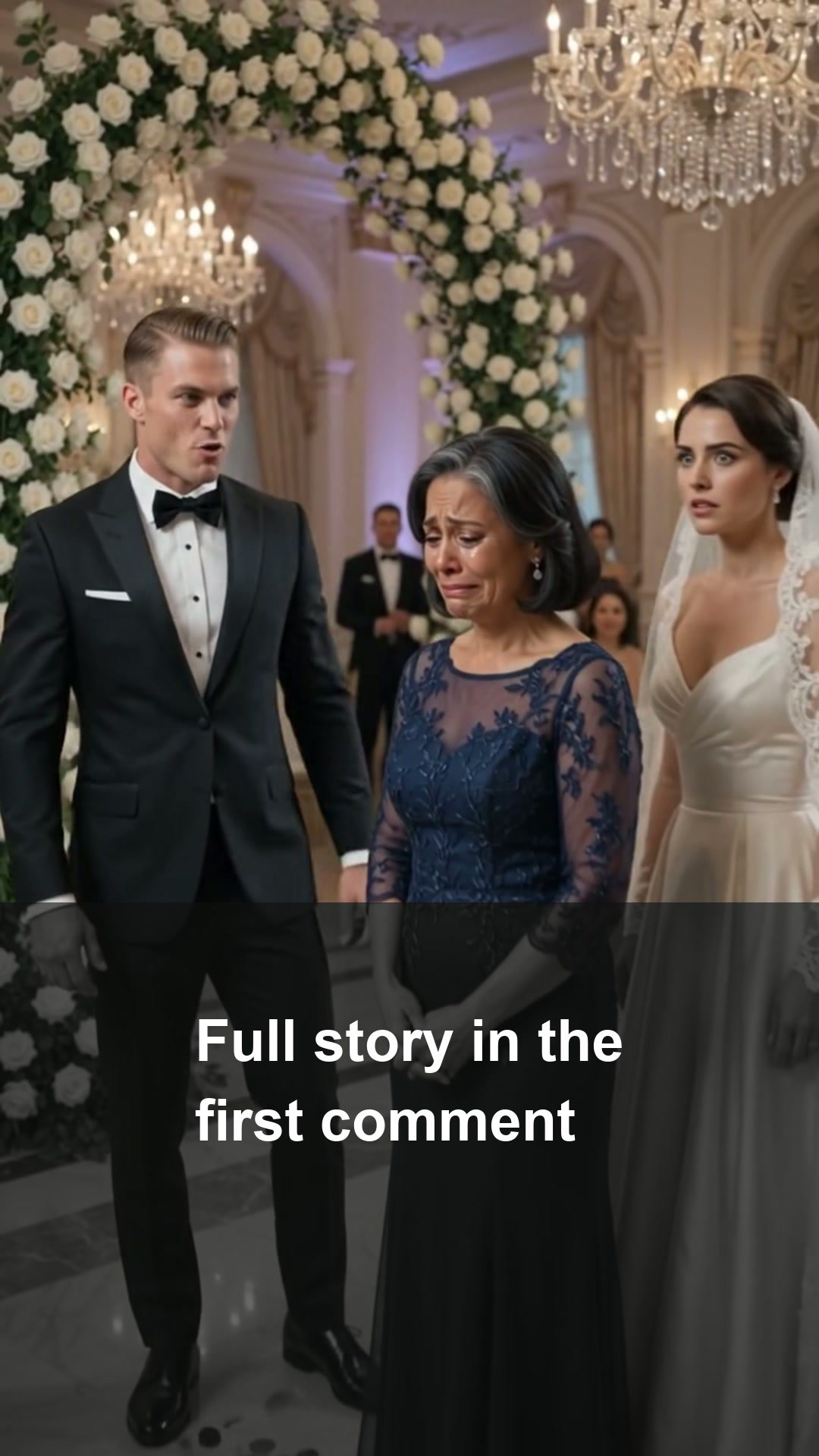
Preston stepped out of the sedan, his tuxedo jacket pristine, his movements fluid as a panther’s. He didn’t rush. He walked toward me with the confidence of a man who owned the very air he breathed, his shoes crunching rhythmically on the dry earth. I scrambled out of the driver’s side, the silk of my wedding gown snagging on the door frame, tearing with a sound like a shallow intake of breath. I stood in the middle of the empty lot, the dress billowing around me in the wind, a bright, white blot against the industrial gray of the hangars. He stopped ten feet away, his expression a mask of disappointment, as if I were a ledger that wouldn’t balance, a minor clerical error he was tasked with correcting.
You’re making a scene, Sophie, he said, his voice smooth and devoid of malice, as if he were merely asking me to pass the salt at a banquet. You’re shivering. Come back to the car, and we can discuss how to bury this little obsession of yours before anyone notices the accounts were accessed.
I looked at his hands, those manicured fingers that had stroked my hair while he whispered about my mother’s inadequacy. I reached into the bag and gripped the cold, hard plastic of the drive, feeling the weight of the entire Vale dynasty resting in my palm. My pulse slowed to a rhythmic, steady beat. I saw him not as a husband, but as a series of bankrupt moral transactions. I thought of the years I had spent learning their language, their secrets, and their cruelty, all so I could finally write the word that would unmake them. I looked past him, toward the dark horizon where the dawn was threatening to break, and felt the last tether of my fear snap. I didn’t owe him a defense. I didn’t owe him an explanation. I only owed him the truth he had spent his entire life manufacturing lies to avoid.
I don’t love you, I said.
The kitchen in our old apartment smelled perpetually of scorched coffee and the damp, metallic rot of the building’s leaking radiator. I was ten, sitting at the formica table, watching my mother’s hands as she sorted through a mountain of white envelopes—the final notices, the late fees, the red-stamped threats from banks that didn’t care about the winter chill creeping through our window panes. She moved with a desperate, quiet precision, sliding the bills into piles by color, as if the hierarchy of the paper could somehow influence the balance in her checking account. I didn’t see a tragedy then; I saw a math problem. I saw variables and constants. I saw the way her shoulders hitched whenever the phone rang, a reflexive spasm of shame that made her look smaller, thinner, less real. When Dad died, he didn’t leave behind a legacy; he left behind a map of his failures, a labyrinth of debt that turned my mother into a ghost in her own home. I remember tracing the edge of the table, feeling the sticky residue of a spilled soda, and promising myself that I would never be a variable in someone else’s equation. I would be the one who wrote the numbers. I watched her swallow her pride alongside her lukewarm tea, nodding when the landlord’s voice crackled through the door about rent arrears, and I realized then that silence wasn’t peace—it was surrender. I decided right there that I would learn the language of the people who held the leash. I would become an accountant, not because I loved the work, but because I needed to know how the cage was built.
Years later, sitting in the sterile, air-conditioned silence of the university library, I pored over the tax codes and the corporate filings of men like Arthur Vale. I wasn’t studying for a degree; I was studying a predator. I found the inconsistencies in the Vale family filings long before I ever met Preston. They were sloppy, arrogant, shielded by layers of offshore entities that screamed of entitlement. I spent my nights in the glow of my monitor, mapping the flow of their money, watching it circulate through shell companies like blood through a bypass. When I met Preston at a charity gala I’d been hired to audit, he didn’t see the woman who had spent months tracking his father’s illicit property acquisitions. He saw a project. He saw a girl who looked like she needed a better tailor and a more expensive zip code. He took my hand, his skin smooth and unnervingly cool, and began to weave the narrative of my rescue. He offered me a world where I would never have to calculate the price of heating again. I let him think he was the benefactor, the savior of a girl from the wrong side of the city. I played the part of the grateful, quiet observer, smiling when he spoke, nodding when he dismissed my questions about his business with a wave of his gold-cuff-linked hand. He thought he was buying a trophy; he didn’t realize he was inviting a forensic investigator into the center of his vault.
I remember the rehearsal dinner, the first time they allowed my mother into their inner circle. We stood in a room paneled in mahogany, surrounded by people who looked at my mother as if she were a piece of furniture that had been awkwardly relocated. Preston’s mother, a woman whose face was a testament to the surgical removal of any genuine expression, asked my mother where she vacationed. When my mother mentioned the small park in our old neighborhood where she spent her Sunday afternoons, the silence that followed was heavy, sharp, and deliberate. Preston didn’t defend her. He laughed, a short, clipped sound that suggested he was in on the joke, and reached out to adjust my necklace, his fingers lingering on my throat just long enough to remind me who owned the jewelry. My mother looked down at her plate, her knuckles white against the fine linen napkin, and I saw the familiar, hollow look of defeat return to her eyes. It was the same look she wore when the bank had come for our house. I felt a cold, hard knot form in the center of my chest. That night, in the suite he had provided for us, I watched him sleep. He looked peaceful, unsuspecting, his face relaxed into the lines of someone who had never known the sting of a hunger that wasn’t a choice. I didn’t hate him then, not yet. I was too busy calculating the cost of the insult. I was tallying up the interest on the debt he had just accrued.
The warnings were always there, written in the margins of the life he tried to build for me. Every time he insisted on a document, every time he made a comment about my background being a charming, if slightly unpolished, curiosity, I added a new entry to the mental ledger I kept. I realized, with a clarity that was almost physical, that the marriage was never meant to be a partnership. It was a transfer of assets. He wanted to own the narrative of my life, to curate my history until it was as bland and palatable as the hors d’oeuvres at his board meetings. But he hadn’t accounted for the fact that I had been keeping my own records. I had found the paper trail—the real one, the one buried beneath the layers of philanthropic posturing. It was beautiful in its complexity, a tapestry of fraud that would make his entire foundation collapse like a house of cards if pulled at the right thread. I looked at his reflection in the bathroom mirror as he brushed his teeth, his movements practiced and rhythmic. He looked like a man who believed he was untouchable because he had never met anyone who had nothing to lose. I leaned against the doorframe, watching him, and he smiled at me through the glass, a gesture that was meant to be reassuring but felt like a threat. I didn’t smile back. I realized that the silence I had lived in with my mother for all those years wasn’t a weakness; it was a holding pattern. I was gathering speed. I was waiting for the exact frequency at which the glass would shatter. And as he turned off the light, plunging us into the darkness of the master bedroom, I knew exactly what I was going to do. I didn’t need to speak. I just needed to start the countdown.
The kitchen table in our old apartment was a laminate slab with a persistent bubble of air trapped under the faux-maple veneer, right where my father used to rest his wrists. I remember the way he would trace that bubble with his thumb while the bills spread out before him like a game of solitaire he was destined to lose. I was eight years old, huddled on the rug with a box of crayons, but the rhythm of his breathing dictated the climate of the room. When he sighed, the air turned thin and sharp. When he tapped his pen against the table, the sound was a metronome counting down to a catastrophe I didn’t yet have the vocabulary to name.
Mom would stand at the sink, her shoulders hunched up to her ears, scrubbing a single plate over and over until the floral pattern had faded into ghost-lines. She never asked him how much was left. She just waited for the silence to break. Then he would stand up, his chair legs scraping against the linoleum, a sound like teeth grinding together, and say, They’re just numbers, Elena. We’re short by three hundred, but it’s just numbers. I watched her hand go to her throat, a reflexive shielding of a pulse I couldn’t see. She didn’t argue. She never argued. She would just walk over to the table, move his hand away from the pile of papers, and begin the ritual of hiding the notices under the placemat.
I learned then that the world was divided into two types of people: the ones who held the pen and the ones who cleaned up the ink. I decided, in that cramped kitchen, that I would never be the one scrubbing. I spent my teenage years in the library, not because I loved the smell of old paper, but because the silence there was structured. It was predictable. I traded my social life for a ledger. I learned that every dollar has a ghost, a paper trail that leads back to the point of origin, and if you follow it long enough, you find the man holding the pen.
By the time I met Preston, I had already spent years auditing the lives of people who looked like him. We were at a charity gala I was working as a junior accountant, my heels aching in a way that reminded me of my mother’s tired feet. Preston walked toward me with that predatory grace of someone who had never had to apologize for taking up space. He didn’t ask me what I thought about the art; he asked me what I thought about the market valuation of the collection. He was testing me, though he thought he was flirting. I gave him the figures, not the opinions. He tilted his head, his eyes narrowing in genuine surprise, and for a moment, I saw the flicker of a challenge. He liked that I didn’t blink. He thought he had found a mirror, but I was a magnifying glass.
Our marriage was a series of well-manicured warnings that I chose to interpret as data points. I remember the rehearsal dinner, the way his father, Arthur, looked at my mother. It was a cold, clinical gaze, as if he were inspecting a piece of upholstery for stains. He didn’t speak to her directly. He spoke *about* her, to the waiter, about the quality of the wine, while Mom sat there, her hands clasped tightly in her lap, wearing a dress she had spent three months of her savings to buy. She looked beautiful, but she looked small. She was an intruder in a world that demanded a specific kind of polish, and she was doing her best to fade into the wallpaper.
Preston laughed at something Arthur said, a brittle, sharp sound that didn’t reach his eyes. He leaned over and touched my arm, his fingers heavy, possessive. You should have told me your mother was so… quiet, Sophie, he whispered. It’s hard to know how to include her when she doesn’t offer anything to the conversation. I felt a surge of heat in my chest, a physical tightening of my lungs. I looked at my mother, who was staring down at her plate, and then at Preston, whose smile was a thin, elegant blade. I didn’t pull away. I didn’t defend her. I just filed the comment away under the header of Liabilities.
That night, back in the sprawling, sterile silence of the Vale estate, I found the first shell company. It was tucked into a quarterly report for a holding company I wasn’t supposed to be reviewing. The entity existed only to bleed the charitable fund dry, moving assets into an account that had no name. I sat on the edge of our massive bed, the blue light of my laptop illuminating the empty space beside me. Preston was asleep, his breathing deep and untroubled. He had no idea that I was inside his walls. He thought he had purchased a bride; he hadn’t realized he had admitted a forensic auditor into the heart of his empire.
I thought about the bubble on my father’s kitchen table. I thought about the way Mom had kept her dignity wrapped in layers of silence for twenty years, waiting for a life that was never going to arrive. I realized then that Preston wasn’t going to change, and neither was Arthur. They were built on the same foundation of rot I had spent my life identifying in other men. Every insult they hurled at my mother, every dismissive glance, every dollar they spent to assert their dominance, was just another piece of evidence. I had been preparing for this my whole life, moving through their world with a mask of compliance while I mapped the veins of their corruption. I wasn’t just his wife anymore. I was the debt collector coming to finalize the account. I closed the laptop, the screen going black, and felt a strange, terrifying sense of peace. The countdown had already begun, and for the first time in my life, I was the one holding the pen.
The kitchen in our old apartment was a cramped, linoleum-floored box that always smelled faintly of burnt coffee and the industrial lemon cleaner my mother used to scrub the grout until her knuckles turned raw. I was ten, sitting at the wobbly Formica table, watching her sort through a stack of late notices. Her fingers, usually steady, were trembling as she pushed a stack of utility bills into a neat, precise pile. My father had died three months prior, leaving behind nothing but a stack of unfiled tax returns and a silence in the house so heavy it felt like a physical weight pressing against my chest. Mom looked up, catching me staring, and smoothed her apron with a sharp, practiced motion. I’m just balancing the books, Sophie, she said, her voice a fragile bridge over a deep, dark canyon. Go finish your homework. I didn’t move. I watched the way she tucked a stray lock of hair behind her ear, a gesture that signaled she was composing herself for the world, hiding the panic that lived behind her eyes. I realized then that she wasn’t balancing anything; she was merely trying to stay afloat in a sea of red ink that wasn’t of her making. I thought about the way the neighborhood kids whispered that we were the ones who couldn’t keep up, the ones whose house was always the first to have the lights go out. It made my skin crawl with a cold, sharp heat. I decided, in that moment, that I would never be the one sorting through bills I didn’t create. I would be the one who understood the numbers so well that they could never hide from me again. I took my math textbook and slammed it shut, the sound echoing like a gunshot in the tiny room.
The school library was where I learned the language of power. I spent my afternoons hunched over dusty ledgers and outdated accounting manuals, tracing the flow of capital like a cartographer mapping uncharted territory. I remember the smell of decaying paper and the way the librarian, a woman with iron-grey hair and eyes that saw too much, would watch me from her desk. One Tuesday, she walked over and laid a hand on my shoulder. You’re looking for something that isn’t in those books, Sophie, she murmured. I pulled away, my heart hammering against my ribs. I’m just studying, I replied, my voice steady, practiced, and devoid of the childish vulnerability I felt whenever I walked past the principal’s office and saw the wealthy donors’ names carved into the brass plaques on the wall. I thought about my mother, working double shifts at the diner, coming home with feet swollen and aching, just to pay for the privilege of existing in a world that thought she was invisible. I decided that math was the only thing that didn’t lie. It didn’t care about your pedigree or your status. It was binary. It was true. I stared at the columns of figures, the assets and the liabilities, and realized that human lives were just variables in an equation that the powerful had rigged. I went home that night and found my mother sitting in the dark, the envelope from the bank sitting unopened on the counter. I picked it up, feeling the thick, expensive paper. I knew then that silence was the currency of the poor, and I was done being poor.
My first encounter with the Vale name wasn’t in a ballroom; it was in a tax audit report for a small contractor my mother had hired to fix our porch. The man had been stiffed on a payment, a pittance to a company like Vale Holdings, but a catastrophe for his family. I was nineteen, an intern at a mid-sized firm, and I spent my nights cross-referencing public filings. I found the shell company buried under three layers of offshore subsidiaries, a classic diversion tactic used to drain liquidity while maintaining the illusion of solvency. I brought the file to my supervisor, my hands shaking with the thrill of the discovery. He looked at it, laughed, and tossed it into the shredder. Don’t go poking into the Vales, Sophie, he said, not looking up from his phone. They own the judges, the auditors, and probably the firm you’re working for right now. Go get me a coffee. I walked to the breakroom, the sound of the shredder a rhythmic, mocking beat in my ears. I stood there, watching the steam rise from the machine, and felt a cold, hard knot of resentment tighten in my gut. I realized that my supervisor, like everyone else in this city, was complicit in the architecture of their dominance. I decided that day that I would not be another cog in their machine. I would be the virus that brought the whole system down. I started keeping a private ledger, a hidden folder on a drive that never touched the office network, tracking every transaction, every offshore transfer, every lie they told to keep the world looking in the other direction.
Then came Preston. He was the perfect predator, smooth and charming, with a smile that never quite reached his eyes. We met at a gala where I was working as a junior accountant, hidden in the shadows of the catering staff. He approached me with a glass of champagne, his gaze sliding over me like I was a piece of art he was considering for his collection. You look out of place, he said, his tone dripping with the casual condescension of a man who had never had to worry about the cost of anything. I told him I was just doing my job. He laughed, a sound like glass breaking, and invited me to dinner. I accepted, not because I was charmed, but because I wanted to be inside the cage. I remember the first time I walked into the Vale estate—the cold, sterile marble floors, the way the air smelled like expensive lilies and old, rotting secrets. Preston watched me from the top of the staircase, his arms crossed, a smug expression on his face that made my skin crawl. You’re going to fit in quite well, he said, as if he were discussing a new piece of furniture. I looked at the grand portrait of his father hanging in the foyer, the man who had built an empire on the backs of people like my mother, and I felt a surge of cold, calculated rage. I had already mapped the offshore accounts; I knew where the bodies were buried, both metaphorical and literal. I decided that the marriage would be my cover, the perfect vantage point to watch the collapse. I stepped over the threshold, the heavy door clicking shut behind me like a trap, and didn’t look back at the life I had left behind. I was already planning the exit strategy for the day the numbers finally stopped adding up.
The ballroom air tasted of refrigerated lilies and expensive, recycled oxygen. I adjusted my silk bodice, feeling the jagged edge of the micro-SD card taped against my ribcage. Preston drifted toward me, his hand resting on the small of my back with the proprietary weight of a man checking the bolt on a safe. He leaned in, his cologne a suffocating blend of cedar and cold iron. My mother, Elena, stood near the edge of the dais, her posture shrinking under the gaze of the Vale matriarchs. She had spent twenty years scrubbing the floors of people who thought she was invisible, and tonight, they were finally looking at her—not with recognition, but with a predatory curiosity that made my teeth ache. I watched Arthur Vale, my new father-in-law, across the room. He was currently gripping a crystal flute, his fingers white-knuckled, whispering to Marcus Thorne, the man I had hired under the guise of an estate lawyer. Arthur believed he was orchestrating a merger; he didn’t know Marcus was an investigator who had spent his career cataloging the specific, agonizing ways men like Arthur hollowed out their communities for profit. I caught Marcus’s eye. He gave a microscopic nod, the signal that the forensic audit was already live on the cloud.
I broke away from Preston, citing a need for water, though my thirst was nothing compared to the hunger I felt for the coming wreckage. I maneuvered toward the kitchen service entrance where the waitstaff moved like ghosts, their faces tired and familiar. One of them, a neighbor from my childhood in the housing blocks, caught my eye and looked away quickly, fearing the retaliation that followed any breach of Vale protocol. It was a cruel irony; I was the girl who had escaped, the one who had learned the secret language of their ledgers, and yet here I was, still bound by the same invisible architecture of class. I thought of my father, a man who had died with nothing but a mountain of medical debt and a lifetime of broken promises to my mother. He had taught me that being honest was a luxury the poor couldn’t afford, a lie I had spent my adulthood proving wrong. I wanted to tear down the ballroom, to strip the gilding from the pillars and show everyone the rotted wood underneath.
I circled back to the center of the room, my heart hammering a frantic, rhythmic code against my ribs. Preston was laughing at a joke made by one of his cousins, his head tilted back with that practiced, effortless grace of someone who had never once worried about the cost of a loaf of bread. He loved me, in his fashion; he loved the idea of me as a curated acquisition, a trophy that proved he could take a girl from the margins and civilize her. He didn’t realize that the polish I had applied over the last year was just a tactical camouflage. I took a deep breath, the silk of my dress rustling like static. I caught my mother’s gaze. She looked fragile, her hands clutching a glass of champagne she hadn’t touched, her eyes searching mine for permission to be proud. For years, I had been the one to comfort her, to tell her that her sacrifice was for a greater good, but in this moment, the roles had warped. She was the witness, and I was the executioner.
I looked at the microphone stand, a slim, silver spear rising from the stage. My pulse slowed as I reached the decision point. I could stop now, retreat into the comfort of the Vale fortune, and live the life of a sequestered bird. But the thought of my mother’s bowed head at the rehearsal dinner—the way Arthur had dismissed her existence as a mere clerical inconvenience—surged back. I walked past the long tables of untouched appetizers, my heels clicking on the marble floor like a countdown. Marcus Thorne was already moving toward the doors, his presence a silent shadow of impending arrest. I felt a surge of detached, clinical exhilaration. I was not just a bride; I was a forensic accountant conducting a final reconciliation. I would balance the ledger tonight, no matter who had to be erased from the balance sheet to make the numbers finally align with the truth. I reached the microphone, the cold metal biting into my palm, and for the first time in my life, I felt entirely, terrifyingly alone. I looked at the crowd, a sea of faces waiting to be entertained, and I realized that the silence I was about to break would echo long after the ballroom had been emptied by the feds. I tapped the mic. The sound shrieked, a sharp, singular note that silenced the room instantly, and I began to speak, the numbers pouring out of me like blood from a wound.
Arthur Vale stood near the velvet drapes, his fingers tracing the rim of a crystal flute as if he were measuring the cost of the glass itself. He had spent forty years building a reputation out of thin air, a man who spoke of legacy while his accountants scrubbed the stains off his ledger. He caught my eye, his face a mask of practiced benevolence that began to twitch as I recited the first string of offshore account numbers linked to the Caiman shelters. He had always prided himself on being the smartest predator in the room, yet his arrogance was his blind spot; he believed everyone, especially the help, was for sale. He had thought he bought me, a quiet, studious daughter-in-law to add a layer of respectability to his jagged business practices. I saw his knuckles whiten, his internal calculation shifting from damage control to total denial. He was a man who lived by the rule that money was power, and as the federal agents moved through the crowd, he realized that power had just been liquidated. He set his glass down with a precise, clinical click, deciding in that moment to reach for his phone to call his fixer, unaware that the signal had already been jammed.
Preston stood beside me, his tuxedo jacket perfectly pressed, his posture rigid with the irritation of a man whose dinner had been interrupted. He looked at me not with anger, but with a bewildered, patronizing pity, as if I were a toy that had developed a glitch. He had spent his life believing that his last name acted as a force field against reality. To him, my existence was a curation project, a way to signal his upward mobility, and the thought that I possessed any agency of my own was a concept he found genuinely incomprehensible. He stepped forward to grab my arm, his hand warm and insistent, a gesture he meant as a silencing mechanism. I stepped back, letting the cold fabric of my gown slide away from his touch, a deliberate severance. He looked at the room, then at his father, his face finally fracturing as he realized his status couldn’t be traded for my silence. He opted for the coward’s retreat, turning toward the service exit, hoping to vanish before the flashbulbs caught his face.
My mother, Elena, was huddled near the corner of the buffet, her head bowed in the way she had practiced for years to avoid drawing attention. She had lived a life of quiet endurance, working under the shadows of men like Arthur Vale, scrubbing floors to ensure I had the books to study, the data to weaponize. Her shame had been a heavy coat she wore in public, but as my voice filled the room, she looked up. I saw the transformation in her shoulders; the years of subservience were dropping away like dead weight. She had been the victim of the very system I was now dismantling, and her motive had always been simple survival. Now, she realized that my ruthlessness was the fruit of her own labor. She didn’t look at the Vales with fear anymore; she looked at me with a terrifying, prideful clarity. She stood up, smoothing her dress, and walked toward the center of the floor, deciding to stand in the light instead of hiding in the corners.
Marcus Thorne stood by the security console, his headset tight against his jaw. He was the cold, procedural force I had spent six months courting through encrypted emails. To the world, he was just a man in a suit, but he was driven by a deep, hollow rage at the systemic theft he saw every day. He was a man who claimed to value only the law, yet I had seen the way his eyes lingered on the photographs of the families the Vales had ruined. He was a professional, but he was also a man who had finally found a cause that mattered more than his pension. He adjusted his earpiece, signaling the agents to move, and his gaze met mine for a fraction of a second. It wasn’t the look of an ally, but the look of a witness. He signaled the perimeter, deciding that this was the night he would finally stop being a bureaucrat and start being an executioner.
The room erupted. The sound of chairs scraping against polished floorboards was a jagged, discordant symphony that replaced the soft hum of the string quartet. I kept reading, the numbers flowing with a terrifying, rhythmic precision, each one a nail in the coffin of the Vale dynasty. The guests began to scatter, their expensive silk dresses rustling like dry leaves. I felt no triumph, only a cold, hollow space where my wedding ring used to be, a vacancy that felt like freedom. I watched them all—the predators, the enablers, the victims—all caught in the web I had spun. I took one final breath, the air in the ballroom feeling thin and metallic, and signaled the end of the broadcast. The hook was set, the trap was closed, and I walked off the stage toward my mother, the silence of the room finally becoming my own.
I left my mother standing by the mahogany exit doors, her hand trembling as she clutched her handbag, but her eyes were bright with a terrifying, newfound clarity. I didn’t say goodbye. I walked straight to the hotel’s business center, a sterile, windowless room that smelled of toner and ozone. The door clicked shut behind me, sealing me off from the murmurs of the ballroom. I sat at a sleek, glass-topped desk and pulled my laptop from my bridal clutch, the device heavy and incongruous against the silk. My fingers flew across the keys, the familiar rhythm of command lines grounding me.
I logged into the Vale family’s primary offshore trust, the one Preston had granted me access to under the guise of household management. With a few swift, surgical keystrokes, I initiated a total freeze on the account, routing the authorization signatures to the federal digital audit portal. The screen flickered green. Access denied. My stomach tightened, but I didn’t panic; I simply moved to the secondary layer, bypassing the administrative oversight with the encryption keys I had spent eighteen months harvesting. The transfer went through. A notification pinged: funds diverted to a sequestered account under the oversight of the Financial Crimes Enforcement Network.
My phone vibrated violently against the desk. Preston. I watched the caller ID pulse, a jagged light in the dim room, and then I swiped left, blocking the number. He would be screaming by now. I knew the tone of his rage—it was the sound of a man who had never been told no. He would call his father, Arthur, and Arthur would call the lawyers, but the digital trail was already locked in a read-only state.
I stood up and walked to the door, opening it just as a man in a charcoal suit turned the corner. He didn’t look like a wedding guest. He moved with the predatory, measured gait of an investigator who had spent his life watching people lie.
Marcus Thorne. We had spoken only once before, via encrypted email, under the pseudonym of a corporate compliance analyst.
He stopped, his eyes flicking to the laptop in my hand. He didn’t smile. He reached into his coat and produced a manila envelope. You did it, he said, his voice barely a whisper against the hum of the hotel air conditioning.
I didn’t answer with words. I handed him the digital drive containing the payroll ledgers for the underpaid contractors. The ones the Vales claimed were paid in full, despite the three-year backlog of documented abuse.
Your mother is outside, he added, glancing toward the ballroom. The police are on their way to clear the perimeter. You realize there is no going back to the table now. Once they see the audit, they will tear this building apart.
I nodded, feeling a strange, detached calm. I had already filed the formal complaint with the Department of Labor via the hotel’s public terminal. I had sent the final bill for my own services—a symbolic gesture, listing my hours as a forensic accountant—to the Vale family’s legal council. It was a declaration of war written in the language of invoices.
I walked past him and found my mother. She was standing by the fountain in the lobby, staring at the marble floor. When she saw me, she stepped forward, her heels clicking against the stone. They’re asking questions, Sophie, she said, her voice steady. The manager—the one who refused to let me help with the flowers—he’s demanding to know why the credit cards are being declined at the bar.
Let them ask, I said. I pulled my wedding band off my finger, the metal cool and inert, and dropped it into the fountain. It hit the water with a dull splash, settling among the pennies tossed by tourists who still believed in luck.
A group of security guards pushed through the glass revolving doors, their expressions confused, their radios chirping with conflicting instructions. Behind them, the blue-and-red flicker of police cruisers began to paint the lobby walls in rhythmic, violent light. I felt the weight of my gown—the yards of tulle, the weighted corset—and realized I didn’t need any of it.
I walked toward the main exit, my mother following in my wake. A man in a suit—a Vale associate, I recognized him from the rehearsal dinner—stepped into my path, his face flushed. Sophie, what have you done? he demanded, his voice cracking. Preston is calling the police, he’s saying you’ve committed a felony.
I didn’t stop. I walked right through his space, forcing him to step aside. I’ve committed to the truth, I said, not bothering to look back. Tell him to check the server logs.
As we reached the heavy brass-trimmed doors, a lawyer I recognized from the firm representing Arthur Vale shoved a legal document into my hand. An injunction, he sputtered. You cannot leave. You have to sign for this.
I took the paper, crumpled it into a ball, and dropped it into the trash can by the door. The consequences of my actions were already unfolding behind me—the freezing of the accounts, the arrival of the authorities, the shredding of the Vale image. The counter-actions would be brutal, but for the first time in my life, I was the one holding the ledger. I pushed the door open, the humid city air hitting my face like a reprieve. The silence of the ballroom was behind us, replaced by the chaotic, beautiful roar of the street. I took my mother’s hand, and we walked into the dark.
The interior of the taxi smelled of stale cigarettes and pine-scented air freshener, a jarring, grounding contrast to the antiseptic, flower-choked luxury of the Ashford ballroom. My mother, Elena, sat rigid beside me, her knuckles white as she gripped her small, worn handbag. I stared out the window, watching the city blur into neon streaks. My phone buzzed incessantly in my lap, a vibration that felt like a trapped insect. I ignored the calls from Preston, the frantic texts from Arthur Vale’s legal team, and the barrage of notifications from my banking app.
I pulled out my laptop, the screen illuminating our faces in the dim backseat. I logged into the primary Vale trust account, my fingers steady as I navigated the interface. I had spent three months mapping these digital veins, and tonight, I began the surgery. I moved the cursor to the transfer authorizations, hitting cancel on the quarterly distribution payments to the family’s offshore shell corporations. With each click, a digital warning flashed in red: Unauthorized Action. I bypassed the two-factor authentication, using the override codes I had lifted from Preston’s tablet during our honeymoon. Within seconds, the liquid assets were locked in a suspended state, inaccessible to the Vale family and their predatory accountants.
My phone went silent, then immediately buzzed with a notification from a private number. Marcus Thorne. I answered, pressing the phone against my ear.
Sophie, he said, his voice clipped and precise. The injunction was served, but you’re already in breach. They’ve filed a motion for an emergency freeze on your personal assets, claiming domestic theft. How much of the core ledger did you move?
I didn’t move it, Marcus, I neutralized it, I said, my voice sounding foreign to my own ears—colder, sharper. I’m sending you the HR complaint now. It covers the systemic underpayment of the janitorial staff at the Ashford, dated back to 2018. It links directly to Arthur’s signature.
There was a pause on the other end, the sound of keyboard clicks echoing in the background. I could hear the satisfaction in his silence. The consequences of my digital sabotage were already beginning to ripple. Back at the hotel, the security detail Preston hired was likely already being questioned by the very federal agents I had invited to the reception under the guise of an inspection.
I looked at my mother. She was staring at the floor mat, her breathing shallow. Mom, I said, reaching out to touch her arm. I’m hiring a lawyer tonight. We aren’t just running; we’re contesting the will. The one the Vales used to justify the initial control of the trust.
She looked up, her eyes wide, haunted. Sophie, they have more money than God. They will bury us under paper until we’re ghosts.
I reached into my bag and pulled out a small, sterile vial. I’d taken it from Preston’s private study two weeks ago—a discarded toothpick, a stray hair from a hairbrush. I held it up. They forgot the most basic rule of accounting, Mom. You can’t hide the liability if the parentage is a fiction. I’m filing for the DNA test tomorrow morning. If Arthur isn’t the biological successor he claims to be, the entire Vale dynasty collapses under the weight of its own genealogical fraud.
The taxi hit a pothole, jolting us forward. I saw the flash of blue lights in the distance—not for us, but for the chaos unfolding at the Ashford. My phone vibrated again. A message from Preston. Not a threat this time, but a picture: my mother’s old house, a ‘For Sale’ sign being ripped down by a crew of men in suits. A direct hit. He was seizing my past while I was dismantling his future.
I didn’t blink. I opened my email and attached the final, encrypted cache of payroll documents—the real ones, the ones showing the illegal kickbacks to the city council members who had fast-tracked the Ashford’s building permits. I hit Send. It went to the city’s largest newspaper and the regional district attorney’s office simultaneously.
The weight of the wedding gown felt like a suit of armor I was finally stripping away. I pulled the pins from my hair, the heavy veil falling to the floor of the taxi like a discarded skin. I was no longer Sophie Vale, the ornamental wife. I was a forensic accountant with a vendetta and a clear path to total ruin. I looked at the screen of my laptop. The Vale Holdings stock price was plummeting in real-time, a jagged red line diving toward zero.
The driver glanced at us through the rearview mirror, his eyes lingering on my silk dress and the shattered remnants of my veil. I met his gaze, my face an unreadable mask of cold, hard data.
Keep driving, I said. We aren’t going home.
The fluorescent hum of the downtown police precinct felt like an intrusive buzzing against my teeth, a stark departure from the velvet-lined silence of the Ashford. I sat on a hard plastic chair, my silk dress bunched uncomfortably around my waist. Beside me, my mother, Elena, clutched her handbag until her knuckles turned a ghostly white. Every time the heavy electromagnetic doors clicked open, she flinched. I didn’t. I was looking at the digital file on my tablet: a complete ledger of the Vale family’s offshore shadow accounts, the ones they thought were buried under layers of untraceable shell entities. I didn’t just have their secrets; I had their financial heartbeat.
I stood up and approached the intake sergeant, my movements deliberate. I laid the tablet on the counter, the screen glowing with a spreadsheet that would ignite a bonfire of investigations. I am filing a formal complaint regarding Vale Holdings, I said, my voice steady, stripped of the polite lilt I had been forced to adopt for the last year. These are the records for the money laundering operations currently funneling through their charity endowment. I have the wire transfers, the dates, and the signatures.
The sergeant blinked, his eyes scanning the data, and his shift in demeanor was instantaneous. He stopped typing and leaned in, his professionalism sharpening into genuine interest. He didn’t ask if I was sure; he just pointed toward a glass-walled office at the back. When I walked toward it, the phone in my pocket began to vibrate—a rhythmic, insistent thrum. Preston. I let it ring. I watched the caller ID flash until it cut to voicemail, then I hit the block button.
In the office, Marcus Thorne—the investigator I had tipped off weeks ago—was already waiting, his desk littered with manila folders. He looked at me, then at the tablet, and let out a dry, humorless laugh. You really did it, he whispered, pulling a chair out for me. You burned the whole house down before the cake was even cut.
I didn’t answer. I sat down and picked up his pen. I had an appointment with a lawyer at ten, someone who specialized in asset recovery and divorce under extreme duress. I began signing the affidavits that would legally sever my ties to the Vale estate while simultaneously naming myself as the key witness in the fraud investigation. With every signature, I felt the tightening in my chest loosen. I wasn’t just exposing them; I was reclaiming the agency they had tried to buy with a diamond ring and a prenuptial agreement designed to render me voiceless.
My phone vibrated again. Another call from Preston, followed by a text from Arthur Vale. It was a single line of text, cold and threatening: *Do you have any idea what you’ve destroyed?* I typed a reply, my fingers hovering over the glass: *I know exactly what I destroyed. The question is whether you have anything left to build on.* I hit send, then dropped the phone into the precinct’s evidence bin.
The immediate counter-action arrived within minutes. My mother’s phone rang—a restricted number. She answered, her face draining of color as she listened. When she hung up, her hands were finally still. They’ve frozen our accounts, she said, her voice hollow. The house, the cards, the emergency funds—it’s all gone. They’re trying to starve us out before the morning.
I looked at the documents on the desk. They thought that money was the only language I spoke, that stripping me of access would force me to crawl back for a settlement. They didn’t understand that I had spent the last three years calculating the cost of this exact moment. I turned to Thorne. I’m ready to file for an emergency injunction to contest the will and the trust structure, I said. If they want to play a game of attrition, let’s see how they fare when their assets are under the control of a federal receiver.
Thorne nodded, reaching for a phone. The room felt suddenly cramped, the air thick with the realization that there was no going back. I had traded a life of comfort for a life of consequence, and for the first time in years, the weight of the data in my hands felt like freedom. The next beat of this war would be in court, where the Vales couldn’t pay their way out of the truth. I stood up, walked to the precinct window, and looked out at the city skyline. Somewhere out there, the Vale legacy was already crumbling into dust. I didn’t care about the money anymore; I cared about the silence they had forced upon us, and the fact that I had finally, irrevocably, broken it.
The precinct window was smudged with the greasy prints of a dozen palms, a stark contrast to the floor-to-ceiling glass of the Ashford ballroom I had left only hours ago. I traced a line through the grime, watching the city pulse with a rhythm that had nothing to do with the Vale family’s stock ticker. My phone, tucked into the silk clutch I still clutched like a shield, vibrated against my hip—a relentless, stuttering Morse code of outrage. I pulled it out, the screen illuminating my reflection: pale, eyes rimmed with the charcoal remains of my mascara, a ghost in a designer gown.
A notification from the bridal group chat blinked: *Sophie, tell me this is a PR stunt? My father is on the board. He’s liquidating everything.* I swiped it away. Then another: *How could you do this to Preston? He’s devastated.* I let out a jagged breath, a sound that cracked in the quiet of the interrogation room. I didn’t reply. I couldn’t explain the geometry of their ruin to people who viewed accountability as a social faux pas.
Thorne stepped back into the room, his tie loosened, a stack of folders under his arm. He looked at me, not with the predatory gaze of the men I was used to, but with a clinical appreciation. He laid a document on the metal table, the edges curled from the heat of a high-speed printer. It was a freeze order. My name was at the bottom, right next to the federal seal.
Is it done? I asked, my voice thin, sounding like someone else.
The accounts are locked, he said, pulling out a chair and sitting heavily. The news outlets are having a field day. Your husband’s face is currently occupying every screen from here to London. The board of Vale Holdings is trying to stage a coup, but the evidence you provided is too granular. They can’t claim ignorance when the ledgers are this precise.
I sat down, the fabric of my dress bunching awkwardly against the hard metal of the chair. The material, which had cost more than my mother’s first car, suddenly felt like a costume. I reached for the zipper at my side.
What are you doing? Thorne asked, momentarily startled.
I’m finished with it, I said, and the rasp of the zipper sounded like a gunshot in the sterile room. I stepped out of the heavy, boned bodice, feeling the rush of air against my skin as the structure collapsed into a heap of ivory lace on the floor. Beneath it, I wore a simple camisole I’d hidden under the layers of tulle. I looked down at the pile of fabric. It was a carcass.
Outside the window, a news helicopter hummed, a low-frequency vibration that rattled the windowpane. I knew what was happening down there. My mother was likely being hounded by cameras, her quiet life in the suburbs trampled by the weight of my explosion. My hands began to shake—a delayed reaction, the physical tax of maintaining composure finally demanding payment.
They’re going to come for you, Sophie, Thorne said, his voice dropping to a low, warning register. Not just the Vales. The people who lost money when the stock cratered. The sycophants, the creditors, the friends who found their portfolios lightened by your audit. You’ve made yourself a target for every person who built their ego on the foundations of that fraud.
I looked at the folders on the table. My life as a Vale was a data set I had successfully corrupted. I had the knowledge of where every cent was buried, and that was a dangerous gravity to inhabit. But for the first time, I wasn’t auditing them to protect my mother’s status; I was auditing them to ensure that the debt was paid in full.
Let them come, I said, reaching for my bag to retrieve my laptop. I have the secondary backups. If they want to play the game of leverage, I’m the one holding the board.
Thorne leaned back, a faint, grim smile touching his lips. He didn’t offer a platitude. He didn’t tell me it would be easy. He just pushed a fresh notebook across the table and a heavy black pen.
Then let’s start the audit, he said.
I opened the laptop, the glow of the screen washing out the shadows in the room. Somewhere, a block away, I could hear the distant, indistinct roar of a crowd—a mix of protest, curiosity, and the hungry, shifting appetite of a public that loved a scandal more than the truth. I ignored it. I clicked into the first directory of the shell companies, my fingers finding their rhythm on the keys. The panic was still there, a cold knot in my stomach, but it was eclipsed by the precision of the work. I was no longer the charity bride. I was the architect of the fallout, and I was just getting started.
The silence of the safe house was punctuated only by the rhythmic clicking of my keyboard and the occasional, jarring vibration of my burner phone. Every time it hummed, I saw a new notification: a headline from the Financial Times, a frantic text from a former bridesmaid asking if I was safe, a slew of death threats from anonymous accounts that had somehow scraped my mother’s old address from a public registry. I picked up the phone, the cheap plastic casing slick with the moisture of my palms, and held it under the desk lamp. The screen was a strobe light of catastrophe. Preston’s face was everywhere—a high-resolution capture of his expression as I had revealed the offshore conduits, his mouth agape, his eyes searching the room for an exit that federal agents had already blocked.
I set the phone face down. My hands were shaking, not from fear, but from the residual adrenaline of the audit. I looked at the wall, where a single, water-stained calendar hung, a stark contrast to the marble-clad reality I had occupied for the last year. I thought of the wedding cake, a towering, five-tiered monstrosity of fondant and gold leaf that had ended up face-down on the Ashford’s carpet. That image was already a meme, captioned with snide remarks about the fragility of inheritance. I reached for a glass of water, my fingers brushing against the cold, heavy weight of my engagement ring, which I had discarded on the table like a piece of refuse. The diamond caught the harsh fluorescent light, throwing a jagged, artificial spark across the room.
I felt a sudden, sharp ache in my back. I stood up and walked to the window, pulling the heavy velvet curtain back just a fraction. Below, on the street, a small group of people stood on the sidewalk. They weren’t journalists; they were bystanders, their faces illuminated by the blue glow of their phones as they livestreamed the building. I saw one man point toward my floor. He was wearing a Vale Holdings hoodie—probably purchased at a clearance rack in the wake of the stock price collapse. The irony was a physical weight in my chest. To them, the Vales were a narrative, a tragedy to be consumed and discarded. To me, they were the people who had looked at my mother as if she were a piece of inventory in a warehouse. I let the curtain drop, severing the link to the street.
I need to finalize the ledger for the SEC, I told myself, my voice sounding thin and brittle in the small, quiet room. I went back to the laptop, my eyes burning. Marcus Thorne had warned me that the retaliation would be swift, that the family’s legal team would attempt to paint me as a disgruntled, unstable spouse rather than a whistleblower. I began to draft a memo, detailing the exact timeline of the shell company transactions. Every keystroke was a bridge I was burning. I knew that by morning, my own name would be stripped of its associations with the Vale fortune and replaced with labels of betrayal and malice. I would lose the lifestyle, the social standing, and the illusion of security I had bought at the cost of my pride.
I stopped typing and looked at the clock. It was nearly three in the morning. Somewhere in the city, Elena was sleeping in a hotel room under an assumed name, protected by the security detail Marcus had insisted upon. The thought of her peaceful, quiet rest was the only anchor I had. I pushed away from the desk, the chair legs scraping harshly against the hardwood floor. I walked to the kitchenette, my steps heavy. I didn’t want the money. I never had. I wanted the audit to be the final word on their power. I took a deep breath, the air smelling of stale coffee and old dust, and felt a strange, cold clarity.
I decided then that I would not read the comments. I would not look at the social media threads dissection of my wedding dress, my tone of voice, or the way I had looked at Preston. I would remain a ghost in the machine, a name on a file, a voice on a recording. I went back to the computer, my decision crystallized. I would finish the upload. I hit the enter key, the progress bar creeping slowly across the screen, a digital countdown to the final dissolution of everything I had spent the last year building.
My burner phone began to vibrate again, a persistent, aggressive buzzing that slid across the table. I didn’t reach for it. I watched the progress bar hit ninety-nine percent, the hum of the cooling fan rising in pitch. The screen flickered, and then the confirmation message appeared: Upload Complete. I stared at the screen, the data now in the hands of the investigators, and waited for the world to change.
The heavy glass doors of the Ashford Hotel groaned as I pushed them open, the sound muffled by the torrential rain outside. The ballroom behind me was a hive of frantic motion, the rhythmic thud of federal agents’ boots echoing against the marble floors, but here, under the granite overhang of the entrance, the city breathed. I stood for a moment, the hem of my white silk gown soaking up the gray slush of the gutter. My mother leaned into me, her hand gripping my forearm with a strength I hadn’t felt from her in decades. She wasn’t shivering, despite the damp cold biting through her thin evening shawl.
I reached up to the back of my neck and unhooked the clasp of the diamond necklace Preston had insisted I wear, the cold metal falling into my palm like a dead weight. I didn’t look at it; I dropped it into the nearest trash bin, watching it disappear among the discarded cigarette butts and wet napkins. The physical sensation of the weight leaving my collarbone felt like a lungful of oxygen after being held underwater for a year. I looked at my mother and saw the lines around her eyes, etched by years of silent endurance, beginning to soften. She didn’t ask where we were going, and I didn’t offer a destination. We simply started walking, our heels clicking in discordant rhythm against the slick sidewalk.
A black taxi pulled to the curb, its yellow light glowing like a beacon in the gloom. I opened the door, the interior smelling faintly of pine air freshener and old upholstery—a scent so profoundly ordinary it made my chest ache. As we settled into the backseat, I felt the pins in my hair tugging at my scalp. I reached up, hands shaking for the first time that night, and began pulling them out one by one. The heavy, ornate veil, which had felt like a shroud of lace and expectation, slipped from my head and pooled on the floor mat. My hair tumbled down, messy and real.
I looked out the window as we pulled away, watching the flashes of camera bulbs flickering inside the ballroom windows like dying fireflies. The Vale fortune was being dismantled in real-time, the spreadsheets I had spent nights auditing now serving as the blueprints for their destruction. Preston would be in a room somewhere, likely screaming at a lawyer, his world stripped of its gilded veneer. I found I couldn’t summon the anger I’d expected to feel. There was only a profound, hollow stillness. I had traded the security of their name for the absolute, terrifying freedom of having nothing left to lose.
The taxi driver caught my eye in the rearview mirror, his face unreadable beneath the brim of a baseball cap. Where to, he asked, his voice gravelly and tired. I looked at my mother. She was staring at her own hands, turning her plain gold wedding band—the one my father had bought her before the debt took everything else—over and over. She looked up, met my gaze, and a small, genuine smile touched her lips. She didn’t look like a woman who had just lost her footing in the upper echelon of society; she looked like a woman who had finally put down a heavy suitcase she’d been carrying for twenty years. A diner, I said, my voice sounding steadier than I felt. Somewhere quiet. Somewhere they serve coffee that tastes like charcoal and doesn’t come in bone china.
The driver nodded and pulled back into the flow of traffic, the streetlights reflecting in the rain-streaked windows like smeared constellations. I leaned my head against the cool glass, the rhythm of the road settling into my bones. The forensic reports were already being processed by the authorities, and by morning, the headlines would be filled with the details of the Vale shell companies, the laundered charitable donations, and the systematic exploitation of their own payroll. My name would be attached to it, of course—the whistleblowing bride, the betrayal from within. It didn’t matter. The money was gone, the status was incinerated, and the legal battle would likely drag on for years, but the leverage they had held over me was shattered. I owned my own time again.
We pulled up to a dimly lit diner on the edge of the industrial district, the neon sign buzzing with a flickering hum. It was a place where nobody cared who you were or what you wore, a sanctuary of grease and indifference. We stepped out, the rain having slowed to a drizzle, and walked through the heavy steel door. The air inside was warm, thick with the smell of frying onions and burnt coffee. We slid into a cracked vinyl booth near the back, the red upholstery worn smooth by a thousand tired travelers. My mother reached across the table, her fingers interlacing with mine. Her skin was warm, a stark contrast to the sterile, freezing luxury of the Ashford.
For a long time, we didn’t speak. We watched the waitress pour steaming black coffee into thick, white ceramic mugs, the steam rising in lazy curls toward the ceiling. I traced the pattern of a cigarette burn on the laminate tabletop, a small, dark scar in the wood. It was the most honest thing I had looked at all day. I thought about the files, the digital breadcrumbs, the way the numbers had finally resolved into a picture of ruin. I had expected to feel a sense of triumph, a surge of adrenaline at the closing of the trap, but instead, I felt a strange, quiet expansion in my chest.
I realized then that the audit wasn’t just about the Vales; it was the final reconciliation of my own life. Every ledger entry I had analyzed, every offshore account I had traced, had been a way to prove that the world wasn’t as untouchable as they wanted us to believe. The system had flaws, and I had been the one to find them. I took a sip of the coffee, the bitterness sharp and grounding. It was exactly what I needed. I looked at my mother, who was watching me with an expression of quiet pride, the shame that had defined our lives for so long finally extinguished. The bill for my freedom had been high, paid in the currency of a ruined reputation and a broken marriage, but as I sat there in the quiet of the diner, listening to the rain tap against the window, I knew it was the most profitable deal I would ever make. The future was unwritten, stripped of the expectations of others, and for the first time in my life, I wasn’t auditing the past. I was finally, irrevocably, looking forward.
The clinic smelled of lemon polish and stale peppermint, a sterile scent that once would have triggered a spike in my heart rate, but today, it felt like an invitation to exhale. Dr. Aris sat in the oversized armchair opposite me, her notepad resting on her knee like a shield. She didn’t press; she didn’t dissect. She simply allowed the silence to stretch, a quiet space where the weight of the last few months could finally settle into the floorboards rather than my lungs. I traced the line of a fraying thread on my sweater, the physical texture of the wool a grounding tether to reality. When I finally spoke, my voice sounded thinner, less rehearsed than it had been during the months I spent hiding behind spreadsheets and legal jargon. I told her about the way the silence in the apartment felt different now, no longer a vacuum waiting for Preston’s demands, but a canvas. I realized then that my identity had been a ledger of other people’s expectations, and for the first time, the columns were blank. I chose to stay in that room for the full hour, not because I was analyzing my trauma, but because I was learning how to simply inhabit a chair without preparing a defense.
A week later, the Pacific hit the shoreline with a rhythm that felt like a heartbeat. The beach was nearly empty, save for a golden retriever chasing a frisbee near the surf line. I walked until the salt spray misted my skin, my toes sinking into the wet, cold sand. My mother was a few paces behind, her coat collar turned up against the breeze. She caught up to me, her hand sliding into mine, her grip steady—no longer the trembling touch of a woman braced for an insult. We watched the waves pull back, dragging shells and sea glass into the deep. I thought about the sheer volume of paper I had shredded, the digital ghosts I had exorcised, and how none of that mattered against the simple, tactile reality of cold water against my heels. I decided right then that I would stop checking the news for updates on the Vale firm’s dissolution. I didn’t need to see the fallout to know the bridge was burned. I let go of her hand to reach down and pick up a smooth, grey stone, turning it over in my palm. It was solid, unremarkable, and entirely mine.
My birthday arrived in late November, a grey, drizzling day that felt intimate rather than lonely. We hadn’t bought a cake, but my mother had unearthed an old recipe for spice bread that filled the small kitchen with the scent of cloves and burnt sugar. We sat at the tiny laminate table, the same one I had done my homework on as a child, eating our slices while the radio played low-volume jazz. There were no diamonds, no performative gestures of affection, only the honest sound of forks scraping against plates. I felt a strange, sharp pang of gratitude. It wasn’t the kind of happiness I had been promised in the ballroom, which felt like a brittle glass sculpture, but something deeper, more malleable. I looked at the window, watching the rain blur the streetlights, and realized I didn’t need to audit this moment. It was complete in its own simplicity. I promised myself I would not look for a substitute for the Vales; I would remain, for the first time, strictly in the red of my own life.
Christmas was the first true test of our new quiet. We didn’t do gifts, just a long walk through the city park, where the trees stood skeletal and silver against the twilight. We passed a shelter where people were setting up a communal dinner, the warmth of the lights spilling out onto the frost-dusted grass. We stopped to watch, and a small, scruffy terrier trotted up to us, sniffing my boots with an earnest, wagging tail. Its owner, a man in a thick wool coat, smiled and let the dog linger. I knelt, feeling the dog’s coarse fur beneath my fingers, the raw, living pulse of a creature that didn’t care about my net worth or my failed marriage. It was a small connection, a ripple in the static of my recovery. As the dog licked my hand, I felt the last of the tightness in my chest dissolve. I decided that we would bring a bag of supplies back tomorrow. It was a small, practical choice, a way to move outward from the center of my own healing and into the world again, one step at a time.
I left the apartment just as the sun began to bleed across the skyline, painting the grey concrete of the city in shades of bruised orange and gold. My mother was already awake, sitting at the small, laminate-topped table she had insisted on keeping when we moved into the studio. She was nursing a mug of lukewarm coffee, her eyes fixed on the ledger I had left open beside her. She didn’t look up when I entered, her pen scratching rhythmic, steady lines against the paper, reconciling the numbers that had once terrified her. I watched her for a long moment, noting how the constant tremor in her hands had finally vanished, replaced by the precise, surgical grip of someone who was no longer afraid of the balance sheet. I walked to the window and pushed it open, letting the humid, unrefined air of the city flow into the cramped space. It smelled of exhaust, damp pavement, and the endless, messy potential of a Tuesday morning. I went to the front door, reaching down to grab my worn, scuffed work boots—the ones with the split sole and the cracked leather that I had kept from my years auditing the accounts of those who would never need to tie their own laces. I looked at the pristine, high-heeled silk pumps sitting in the corner, still pristine and entirely useless, their satin surface gathering a fine layer of dust. I nudged the expensive shoes aside with my heel, clearing a space on the floor. I sat on the edge of the radiator, hooked my fingers through the frayed loops of the boots, and pulled them tight, the double-knot snapping into place with a sharp, final sound. In the center of the otherwise empty floor, one of Preston’s gold-plated, monogrammed cufflinks lay abandoned, catching the morning light as it rolled toward the baseboard.
Leave a Reply