The cold steel of the handcuffs clicked shut around Preston’s wrists, silencing the wedding party instantly. My brother’s face, usually composed in a practiced smirk, fractured into a blotchy, frantic mess of red skin and bulging veins. He lunged toward me, but the detective stepped between us, his leather holster creaking with the movement.
I stood on the marble floor of the ballroom, clutching Sophie’s hand. Her pulse fluttered against my palm like a trapped bird. Around us, the scent of expensive lilies and suffocating perfume curdled in the air. Margaret gripped her champagne flute so hard her knuckles turned the color of parchment, her gaze darting toward the silent, watching guests.
“Don’t,” I whispered, the word sharp and clinical as a scalpel, feeling the familiar weight of my father’s impending rage pressing against my spine.
I didn’t flinch. I had spent thirty-four years measuring the cracks in this foundation, and tonight, I finally understood how to make it collapse. I reached into my clutch, felt the hard, rectangular edge of the USB drive, and realized the leverage was already mine. I would not bury this. I would burn it down.
The alarm clock on my nightstand ticked exactly three times before I hit the button, silencing the morning digital chirp. The bedroom was bathed in the thin, grey light of a Chicago Tuesday, the kind of light that made the dust motes look like suspended debris. I swung my legs over the edge of the bed, my feet meeting the cold hardwood. Downstairs, the coffee maker hissed, a rhythmic, wheezing sound that anchored the house in reality.
I spent ten minutes in the kitchen, watching the dark liquid fill the glass carafe. Sophie was still asleep, her breathing deep and rhythmic through the monitor on the counter. I liked the morning for its lack of expectations. There were no Vance family galas to coordinate, no Preston to appease, no Mother to critique the way I held my spoon. Just the smell of roasted beans and the quiet hum of the refrigerator. I stirred a splash of almond milk into my mug, watching the swirls dissipate into a pale, uniform tan.
The commute was a series of predictable adjustments. I sat on the Blue Line, staring at the blurred advertisements for law firms and local universities rushing past the window. My bag was heavy with blueprints for the renovation of a nineteenth-century brownstone in Lincoln Park—a project defined by structural integrity, not social optics. I liked brick and mortar because they followed laws of physics, not the shifting, capricious whims of my father’s ego.
When I reached the office, the air smelled of ozone and industrial toner. The lobby printer was jammed again, a blinking orange light signaling a paper path error.
Good morning, Evelyn, Sarah said, not looking up from her inbox. The forecast calls for rain by noon. Did you bring your umbrella?
I checked the window. A wall of slate-colored clouds was beginning to press against the skyline, obscuring the tops of the skyscrapers. No, I said, reaching for a stack of project files. I prefer the rain. It keeps the streets empty.
Small talk was a currency I had grown tired of spending. I walked to my desk, the architectural drawings rolled neatly into a cylinder under my arm. My monitor flickered to life, showing the grid lines of the foundation I was tasked with reinforcing. The task was simple: identify the load-bearing walls, strip away the rotted plaster, and expose the frame. It felt satisfying to work on something that required honesty. If the wood was warped, you couldn’t paint over it. You had to replace it, or the whole thing would eventually sag.
I took a sip of my coffee. It had gone cold. I thought about the weekend, the impending wedding, the rehearsed smiles, and the suffocating rigidity of the Vance estate. I thought about how much energy it took to keep the glass facade of our lives from shattering under the slightest pressure. I looked at the blueprints and found comfort in their rigid, predictable lines. I decided then that I would finish this drawing before lunch, clear my desk, and focus on the structural integrity of my own life.
The phone on my desk gave a single, sharp ring. It vibrated against the mahogany surface, the sound echoing in the sudden, mid-morning lull of the office. I didn’t reach for it immediately. I watched the caller ID blink, a series of digits that felt heavy and intrusive. It was the private line. The one that only ever brought the weight of the family, the one that meant the facade had developed a new, jagged crack. I reached out, my fingers hovering an inch above the plastic, and felt the silence of the office solidify.
I pressed the phone to my ear, but no greeting came from the other end—only the muffled, chaotic rhythm of a crowd and the sharp, rhythmic pulse of a monitor. Then, the voice came through, thin and fractured. It was Sophie, gasping for air, her words tumbling over each other in a frantic, disjointed stream. She was at the hotel, in the bridal suite, and she wasn’t alone. She told me about the necklace—the sapphire heirloom Preston had insisted she try on, the one he had tucked into her clutch while the photographer wasn’t looking. He hadn’t asked for it back. He had simply walked into the room, his face a mask of practiced, charming concern, and called the hotel security. He told them he had caught the thief red-handed.
My heart hammered against my ribs, a dull, physical ache. I didn’t ask her if she had done it; I knew the blueprint of Preston’s malice better than I knew my own reflection. I listened to the background noise—the distant, authoritative bark of a man claiming he had been robbed, the frantic scurrying of hotel staff, and then the sound of a struggle. A chair overturned. Sophie screamed, a sharp, ragged sound that ended in a sickening thud.
I didn’t speak. I stood up, the chair scraping loudly against the hardwood floor, a sound that seemed to shatter the professional calm of my office.
Evelyn, please, she sobbed, her voice dropping to a terrified whisper. He hit me. He said I was an embarrassment. He’s telling them I’ve been stealing for years.
I looked down at the blueprints on my desk, the lines suddenly blurred and meaningless. The structural integrity of my life wasn’t just compromised; it was collapsing. I felt the heat rising in my throat, a cold, calculated fury that had been smoldering since childhood. I didn’t offer comfort. I didn’t tell her it would be alright, because for the first time in my life, I knew that version of the truth was a lie.
I’m coming, I said. My voice was steady, precise, and entirely devoid of the trembling I felt in my hands. Don’t say another word to them. Do not apologize. Do you hear me?
I dropped the phone onto the desk. It landed with a soft, hollow thud, the line still open, the frantic murmurs of the hotel room still leaking out like poison. I walked toward the coat rack, my movements mechanical. I realized then that my parents wouldn’t protect her. They would burn her to save the wedding, to save the day, to save the golden reflection of Preston in the eyes of their guests. I grabbed my keys, the metal biting into my palm. I wasn’t just going to the hotel to pick up my daughter. I was going to dismantle the entire foundation of the Vance house, brick by brick, until there was nothing left but dust.
The elevator at the St. Regis smelled of ozone and expensive lilies. I stared at my reflection in the polished brass doors, tracing the lines of fatigue around my eyes, until the metal slid open to reveal the lobby’s hushed, cream-colored opulence. My father’s lawyer, Marcus, stood by the concierge desk, his posture as rigid as a tombstone. He didn’t look at me when I approached, but his voice was thin, rehearsed.
Evelyn, there was a misunderstanding, he said, his eyes fixed on a point somewhere above my left shoulder. The necklace was found in the girl’s coat. It’s handled.
Where is Sophie? I asked, my voice flat.
She’s with her grandmother in the bridal suite. Resting. It’s best we don’t complicate the narrative before the ceremony concludes.
I felt the familiar, acidic bile of childhood—the sensation of being told I hadn’t seen what I had just seen. I stepped into his personal space, watching the thin veneer of his professionalism flicker. You are not her lawyer, Marcus. Move.
He didn’t move, but the hotel manager, a man named Sterling with sweat glistening on his upper lip, stepped forward. Ms. Vance, there is no footage of the hallway in question. A technical glitch during the gala setup. Total server failure.
I turned to him, keeping my hands at my sides to stop them from shaking. A technical glitch that only erased five minutes of hallway activity?
It’s a black hole, he muttered, not meeting my gaze. The system is… temperamental.
I walked past them both, toward the service elevator. My phone buzzed. It was the nurse from the urgent care clinic where I’d taken Sophie for a preliminary checkup before the wedding. I picked up, my stride not breaking.
Ms. Vance, the clinic intake notes say the contusion on the child’s scalp was caused by a fall? the nurse asked, her tone clinical. But the bruising pattern suggests a blunt force impact, possibly a heavy object.
I stopped, my hand hovering over the elevator button. That’s not what I told the triage desk.
The records were updated by a man claiming to be your brother’s representative, she said. He said you were confused, under duress, and wished to amend the statement to prevent a police report.
The lobby lights seemed to dim, the gold-leaf molding around the ceiling turning into prison bars. I wasn’t just fighting a thief; I was fighting an entire architecture of lies designed to collapse on top of me.
I hung up and dialed the catering captain, a woman named Sarah who had been hovering near the gift table when Sophie was accused. She answered on the fourth ring, her voice a sharp, terrified whisper.
I saw him, Evelyn, Sarah hissed, the background noise of clinking silverware muffled. He shoved her into the service closet. He had the diamond strand in his hand before he even touched her. He told me if I said anything, he’d see to it that my immigration status was reviewed.
And the necklace?
It wasn’t in her bag, Sarah said. I saw him drop it into her pocket while she was sobbing. I’m leaving the hotel. I’m never coming back.
The elevator chimed, a cheery, hollow sound. I stepped inside, the steel doors closing on the lobby and the network of spies and cowards. I pressed the button for the penthouse. The decision was a cold, sharp blade in my chest: they had traded a child’s safety for the optics of a wedding, and they had miscalculated the one thing they never bothered to understand—that I was the one who built the blueprints they lived in. I knew exactly where the load-bearing walls were. I just needed to start swinging the hammer.
The penthouse smelled of lilies and stale champagne. My father stood by the floor-to-ceiling window, silhouetted against the glittering grid of the city, his back stiff with a lifetime of practiced arrogance. Beside him, Margaret hovered over a tablet, scrolling through social media feeds with the frantic energy of a general losing a war. My daughter sat on the velvet chaise in the corner, her dress stained with the wine Preston had tipped over her, her eyes fixed on the intricate patterns of the rug. She was silent, the kind of silence that usually preceded a reprimand.
I walked toward the center of the room, my heels clicking with deliberate, measured force. I didn’t look at the expensive art or the mahogany bar. I looked at the floorboard near the door, where the hidden security uplink terminal was housed behind a decorative panel. I had designed the renovation of this suite five years ago; I knew the wiring schematics by heart.
Father turned, his expression a mixture of performative disappointment and genuine annoyance. Evelyn, he sighed, his voice echoing in the cavernous space. We are trying to preserve the dignity of this family while you insist on indulging Sophie’s histrionics. Preston is the groom. He has responsibilities.
I felt the weight of the flash drive in my blazer pocket. It contained the unedited surveillance feed from the mezzanine, the one showing Preston planting the necklace and then shoving Sophie hard enough to hit her head against the marble pillar. I imagined the footage projected onto the ballroom’s main screen, replacing the slideshow of their childhood memories. The blueprint of their legacy was flawed, rotten at the foundation.
I took a step toward my father, my voice steady, stripped of the trembling deference they had spent thirty years cultivating. I’m not here to discuss dignity, Father. I’m here to tell you that you chose the wrong child to break.
You’ve always been a disappointment, he said, turning back to the window.
I’m the only one who knows how to burn this house down.
The first time I learned that my existence was a structural error in the Vance family blueprint, I was eight years old and standing in the center of the conservatory. It was a humid July afternoon, the kind that turned the glass walls of our home into an oven. Preston, three years my senior and already sporting the manicured confidence of a young prince, had decided to dismantle a clockwork music box my grandmother had left for me. He hadn’t just broken it; he had pulverized the gears with a heavy brass letter opener, scattering the tiny, gold-plated teeth across the Persian rug like shrapnel. When the housemaid heard the crunching of springs under her feet and screamed, Preston didn’t flinch. He simply knelt in the debris, pressed his palms into the sharp brass shards until his skin bled, and began to sob.
By the time my mother swept into the room, Preston was a portrait of martyred innocence, pointing a trembling finger at me. She didn’t ask for my side of the story. She didn’t look at the letter opener resting on the velvet cushion near his hand. She looked at the blood on his knuckles, sighed with a weary, performative disappointment, and told me that my jealousy was becoming a serious character defect. I remember the way the sunlight hit the dust motes dancing between us, the absolute stillness of the room. I tried to speak, to point out the logic of the situation—that the broken box was mine, that I had been in the garden—but she held up a hand. We do not make scenes, Evelyn, she whispered, her voice like cold silk. We fix our mistakes. You will go to your room and reflect on why you felt the need to hurt your brother.
I spent the next six hours staring at the floral wallpaper, listening to the muffled, cheerful sound of Preston playing video games in the room next door. I decided then, in the suffocating silence of that nursery, that if truth held no currency in this house, I would stop trying to spend it.
Years later, the pattern repeated itself with the precision of a metronome. At fifteen, when Preston crashed my father’s vintage Jaguar into the stone gatepost, he was drunk. He crawled out of the wreckage and walked the mile home in the rain, leaving the engine running and the doors wide open. My father didn’t call the police; he called his contact at the precinct to report the car stolen by an unknown joyrider. That night, I sat in the study, watching my father pour two fingers of scotch while Preston sat on the leather sofa, shivering and dry-eyed. I asked, simply, why we were lying. My father turned the glass in his hand, the ice clinking a rhythmic, hollow sound against the crystal. Strength is about knowing what to protect, he said, not looking at me. Your brother has a future. You have a temperament that requires containment. If you speak of this, you aren’t just betraying him; you are betraying the name on your birth certificate.
I looked at the light reflecting off his signet ring. I realized then that my father didn’t love Preston; he loved the mirror Preston provided. My brother was a reflection of everything my father wanted to be—aggressive, entitled, and untouchable. I was merely the smudge on the glass that refused to be wiped away.
The marriage was the final attempt to cement this farce. I was twenty-two, freshly graduated with a degree in architecture, and I had foolishly believed I could build a life that didn’t revolve around the Vance orbit. I had taken a junior position at a firm in the city, living in a studio apartment that smelled of old wood and paint thinner. It was the only time in my life I felt real. Then came the phone call from my mother, the one where she told me I was needed home to oversee the renovation of the family’s summer estate. It wasn’t a request; it was a mobilization. When I arrived, I found Preston sitting in the kitchen, surrounded by overdue notices and legal summonses he had hidden from my parents. He needed a scapegoat for his failing real estate ventures, someone with a steady hand to forge signatures and balance the ledgers into a fiction of solvency.
I refused. I told him he was a parasite. He didn’t get angry; he laughed, a thin, sharp sound that made the hair on my arms stand up. He reached across the table, grabbed my hand, and squeezed until the bones in my knuckles ground together. You think you’re better than this? he hissed, his face inches from mine, his eyes vacant of any human warmth. You are a Vance. You’ve been scrubbing my messes since you were in diapers. If you don’t sign these, I’ll tell the board exactly where your little ‘savings’ came from. I’ll make sure you never work in this city again.
I looked at his manicured nails, the same hands that had crushed my music box a decade prior. I felt the same cold terror, but beneath it, something else—a hardening, like mortar drying in the sun. I signed the documents. Not because I was afraid of him, but because I needed to see the full architecture of his depravity. I needed to know exactly how much rope he would require to hang himself.
I spent the next three years watching him weave his web of lies, documenting every transaction, every stolen item, every broken promise. I became the ghost in his machine, the architect of his eventual collapse. I went to their dinners, I wore their designer clothes, and I smiled when they told me I was finally becoming a ‘contributing member of the family.’ Every insult they hurled at me—my coldness, my lack of social grace, my ‘unfortunate’ independence—was a brick I added to the wall I was building around them.
The night before the wedding, I found Sophie in the hallway, clutching a stray ribbon from her flower girl dress. She was crying because Preston had told her she looked ‘cheap’ in her gown. I picked her up, held her tight against my chest, and felt the familiar tremor of the Vance house beneath our feet. My mother walked past, gave us a look of icy judgment, and told Sophie to stop blubbering, as it would ruin the photographs. She didn’t see a child in pain; she saw a lighting issue, a flaw in the composition.
I stood there, smoothing Sophie’s hair, and felt the weight of the flash drive hidden in my clutch. My mother’s eyes were hard, fixed on the future of the family name, blind to the fact that I had already replaced the foundation with balsa wood. She thought I was still the girl in the conservatory, waiting for a pardon that would never come. She didn’t realize that I had stopped waiting for their approval the moment I realized they were incapable of seeing anyone but themselves.
I looked at Preston, standing by the bar, holding court, his laugh ringing out like a bell in a cathedral. He looked so polished, so perfected, so entirely unaware that the floor beneath him was already missing. I felt a surge of something that wasn’t anger. It was a precise, mathematical relief. The pattern was complete. The error had been identified. All that remained was to trigger the demolition. I turned my back on the ballroom, held Sophie’s hand, and walked toward the security office, ready to show them exactly what a Vance looks like when the glass breaks.
The hotel security office smelled of stale coffee and ozone, the monitors glowing with the clinical, silent pulse of a life lived behind a lens. I sat on a hard-backed chair, Sophie tucked into my side, her small fingers gripping my thumb until her knuckles turned white. Detective Miller stood near the door, his notepad a bastion of indifference in a room suffocating with history. He was a man who saw victims as paperwork and perpetrators as statistics, a detachment I found suddenly, desperately comforting. He didn’t care about the Vance name; he cared about the sequence of events.
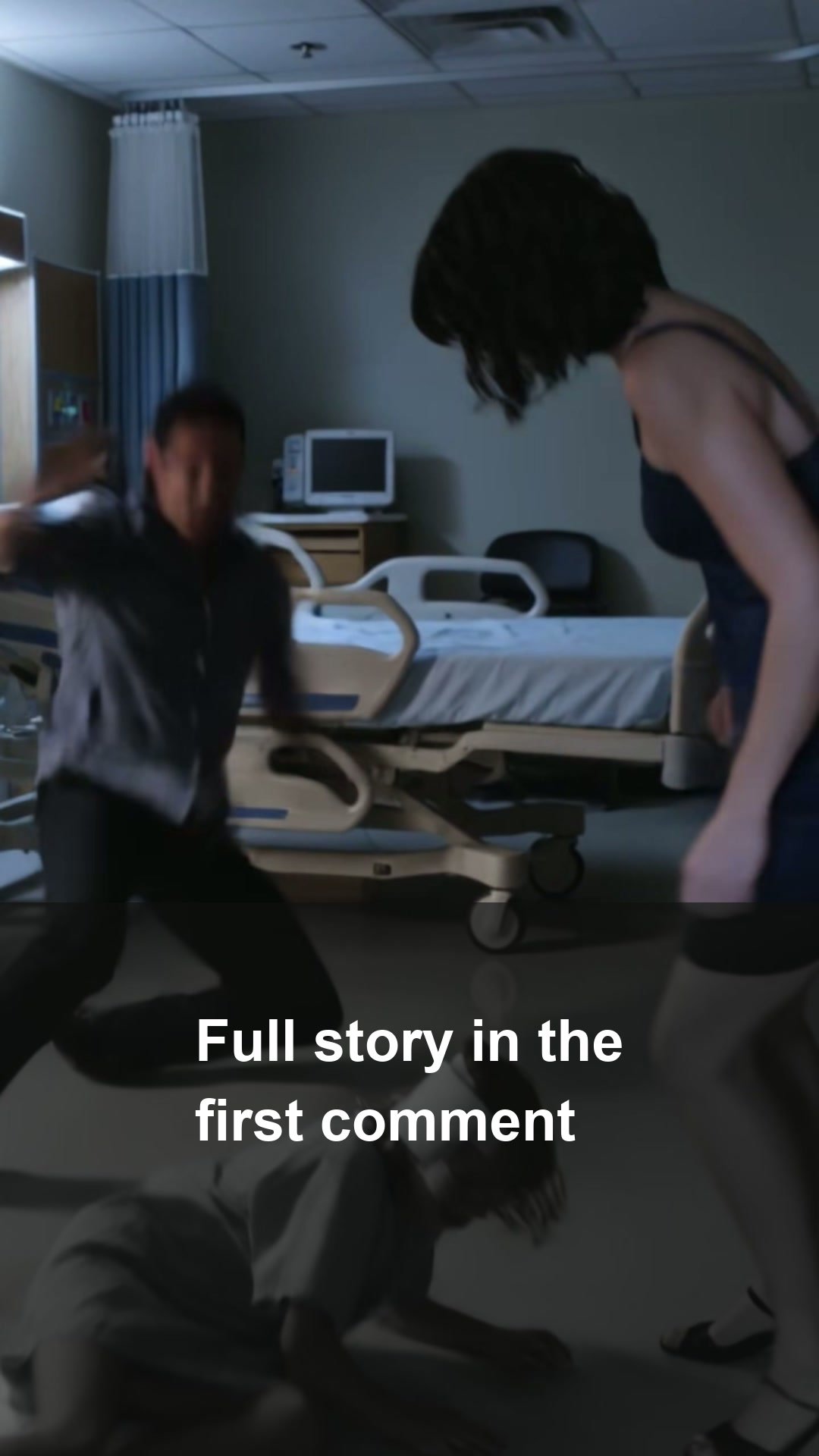
My father, Arthur, paced the hallway outside, his silhouette passing the frosted glass of the office door. He was a man who equated wealth with moral immunity, a delusion he had fed Preston since birth. He thought he was protecting a legacy, but he was merely curating a museum of rotting artifacts. I remembered the way he’d stare at my architecture sketches as a child, dismissing them as frivolous, while praising Preston’s ability to break toys and blame the maid. He had built his own cage, and now the bars were closing in.
Mother, Margaret, appeared in the doorway, her pearls catching the flickering monitor light. She looked at Sophie—not with concern, but with the calculation of a director checking the lighting on a ruined set. Her silence wasn’t grief; it was the frantic arithmetic of reputation management. She would sacrifice her own granddaughter to keep the champagne flowing, provided the optics held. I watched her hand tremble as she reached for her phone, no doubt drafting a lie for the board of governors. She had spent thirty years polishing the family brand until it was so reflective she could no longer see the reality beneath the surface.
Preston paced behind her, his tuxedo jacket discarded, his tie hanging loose. He looked like a wounded animal, not because he was sorry, but because the script had failed him. He had spent his life convinced that his violence was just another form of charisma, a privilege of his station. He caught my eye through the glass, his expression shifting from arrogance to a hollow, frantic fear. He was realizing that I was the one variable he had never calculated. He had always counted on my silence as a structural requirement of our family.
Then there was Elena, his bride, standing near the elevators. She was clutching her clutch, her face a mask of calculated abandonment. She had married into a crown, only to find it was forged from lead. I saw the moment she looked at the security footage playing on the corner monitor, her jaw tightening as she realized the social cost of standing by him. She was already mentally drafting the annulment papers, her survival instinct overriding her ambition. She was a climber who had finally looked down and realized the mountain was crumbling.
I turned back to the screen, watching the grainy, black-and-white feed of Preston grabbing Sophie. It was a brutal, ugly, necessary truth. I held the USB drive in my palm, a small piece of plastic that weighed heavier than the entire Vance estate. I looked at Sophie, whose breathing was evening out, her trust in me the only thing that felt real. My life had been defined by the architecture of others, by the blueprints of expectations I never drafted. I pushed the drive toward Miller. I decided then that I would not just dismantle the house; I would burn the blueprints. I looked at my reflection in the dark monitor—a woman built from the debris of a broken family—and for the first time, I liked the geometry of what I saw. The hook was set, and the pull would be absolute.
The precinct air smelled of burnt coffee and industrial floor wax. I sat on a hard plastic chair, my knees pressed together, while Detective Miller scanned the files I had brought. I tapped my thumbnail against the metal rim of my handbag. The sound was sharp, a rhythmic ticking against the silence of the room. I had spent thirty-four years measuring the space between what was said and what was true. Today, I was closing the gap.
Miller looked up, his brow furrowing as he processed the timestamped footage from the hotel’s security server. “This isn’t just a theft allegation, Evelyn. This is aggravated assault. If I file this, there is no cooling-off period. No family summit. It becomes a matter of public record.”
“I am aware,” I said. My voice was steady, stripped of the reflexive apology I had kept in my throat since childhood.
I signed the affidavit. Each stroke of the pen felt like shedding a layer of leaded glass. I wasn’t just reporting Preston; I was reporting the entire ecosystem that had nourished his violence. As the ink dried, my phone buzzed against the desk. A notification from the Vance family trust administrator appeared: *Urgent: Meeting requested regarding account irregularities.*
I ignored it. I walked to the bank three blocks away, the humidity of the Chicago afternoon sticking my shirt to my back. I entered the lobby, the marble floors cold even through my soles. I stood at the teller’s desk and withdrew the authorization for the family’s oversight of my personal assets.
“Are you sure, Ms. Vance? Your father’s firm has held these powers of attorney since your marriage,” the clerk asked, her smile practiced and thin.
“I am entirely certain,” I replied. “Terminate the access. All of it.”
The clerk’s eyes widened, a flicker of genuine alarm crossing her face. She reached for a telephone, her fingers hovering over the keypad. She was calculating the risk of upsetting the Vance patriarch. I watched her, waiting. She didn’t call him. Instead, she entered a sequence of commands, the click of keys sounding like gunfire in the quiet vault.
By the time I reached my office, a letter from my father’s attorney was waiting on my desk. It was heavy cream stock, the embossed seal mocking me. I didn’t open it. I called my own counsel instead, a sharp-featured woman who specialized in civil litigation and inheritance disputes.
“I want to contest the current distribution of the will,” I told her, looking out at the city skyline. “I want full transparency on the liquid assets. And I am filing an HR complaint against Preston’s firm for his conduct on company time, using the evidence of his criminal status.”
There was a pause on the line. “Evelyn, that will effectively trigger a declaration of war. They will liquidate your trust within twenty-four hours.”
“Let them,” I said. “I would rather be bankrupt than indebted to their version of reality.”
I hung up and checked on Sophie. She was sitting in the corner of the room, drawing with charcoal pencils, her movements deliberate. I realized then that my actions were not just for the past; they were for her future. I called a private diagnostic lab. I needed medical records of the bruising on her arm, a formal report that could not be dismissed as a childhood accident.
That evening, the counter-strike arrived. My mother called. I watched the phone vibrate on the mahogany table, the light flickering against the wood grain. I answered on the fourth ring.
“Evelyn,” she said, her voice a razor blade wrapped in velvet. “Your father is furious. The police arrived at the house an hour ago. You have humiliated us. You have endangered the entire reputation of the family. Do you have any idea what you have done?”
“I told the truth, Mother. It’s an architectural flaw in this family. I’m simply correcting it.”
“If you don’t drop the charges, we will take Sophie,” she whispered. The threat hung in the air, cold and calculated. “We have the means to ensure you are seen as an unfit mother. We have the doctors, the psychiatrists, the history. Do not test us.”
My breath hitched, but I didn’t let it shake. I looked at the desk, where the copy of the police report sat. “You’ve spent years building a house on a lie, Mother. You forgot that I’m the one who designed the foundations. I know exactly where the rot is. If you go near my daughter, I will pull the walls down on top of you.”
I hung up and blocked the number. My hands were finally still. I went to the kitchen and made tea, the heat of the mug grounding me. The silence of the house felt different now; it wasn’t the silence of waiting for a blow, but the silence of an empty lot after a demolition.
A moment later, a courier arrived at the door. He held an envelope from my father’s legal team—a summons to court regarding custody and a formal notice of my immediate disinheritance. I took the envelope with a thin smile. It was the document I had been waiting for. It was the proof that they were afraid.
I walked back into the living room and placed the envelope in the shredder. The mechanical teeth whirred, tearing through the heavy cream paper, turning the Vance legacy into dust. Sophie looked up from her drawing, her eyes wide, expectant.
“Is it over?” she asked.
“No,” I said, watching the shredded remains fall into the bin. “But the blueprints are gone. Now, we build.”
I sat at the table and began drafting my response to the court, each word precise, each sentence a brick in a wall they would never be able to climb. The phone began to ring again, a constant, shrill demand for my attention, but I didn’t look at the screen. I was done answering to ghosts.
The phone vibrated against the marble countertop with a frantic, stuttering rhythm that made the fine china in the adjacent glass cabinet rattle. I didn’t reach for it. Instead, I stood at the window of my office, watching a black sedan idle at the curb. A photographer leaned against the brickwork of the building across the street, his camera lens glinting like a predator’s eye. He wasn’t the first today.
My secretary, Clara, hovered in the doorway, her knuckles white as she gripped a stack of thick, cream-colored envelopes—legal summons, threats from firm partners, desperate pleas from my mother. She looked terrified, the crisp polish of her professional demeanor cracking under the weight of the neighborhood’s newfound obsession with our ruin.
Did the firm call? I asked, my voice flat, devoid of the tremor she was currently struggling to suppress.
They called, she whispered, her eyes darting to the phone, which had finally stopped its siren-like pulsing. They said the board is meeting at four. They aren’t just firing Preston, Evelyn. They’re scrubbing the website. They’re scrubbing everyone associated with the name.
I turned away from the window, the sunlight catching the dust motes in the air. The cost of dismantling the Vance architecture was higher than the emotional price tag I had anticipated. It was a structural collapse that leveled everything in its radius. My phone chimed again, a notification from a mutual acquaintance—a woman I had known since childhood—deleting me from her social media circle. It was a digital eviction.
I need you to send the resignation letter to the architectural board, I said, reaching for my tablet.
You’re walking away from the firm? Clara gasped, stepping fully into the room. But you built that department. They can’t hold you responsible for what your brother did in a hotel ballroom.
The architecture is tainted, I said, my finger hovering over the screen. If I stay, the structure remains. If I leave, the foundation finally gives way.
I hit send. A heavy silence settled over the office, punctuated only by the distant, muffled sound of a news van turning onto the street. The community was no longer whispering; they were filming. The school headmaster had emailed earlier, suggesting that Sophie take a prolonged leave of absence for the sake of the other students. They didn’t want the spectacle of my family’s violence in their halls.
I thought of Sophie in the next room, coloring with a feverish intensity, trying to map out a world where she wasn’t a headline. My chest tightened, a sharp, physical ache that felt like a fracture in my own design. I had fought to protect her, but in doing so, I had stripped away the insulation that kept the world at bay.
I walked to the shredder, the sound of it still echoing in my mind, and pulled the final, un-shredded document from the stack. It was a letter from my father, written on his private stationary, a pathetic list of demands for my silence. I watched the ink smear under my thumb.
Give the keys to the courier when he arrives, I told Clara. Everything is in the safe.
She nodded, her eyes rimmed with red. As she turned to leave, I caught my reflection in the dark glass of the monitor. I looked like a stranger—hollowed out, stripped of the veneer that had defined my thirty-four years. I sat down and opened the legal file for the custody hearing. There was no more family to answer to, only the cold, hard logic of the law. I took a breath, feeling the air move through a house that was no longer a stage. The demolition was complete. Now, I had to figure out how to live in the open air.
The courtroom air smelled of floor wax and stale coffee. I sat on a hard-backed wooden bench, the surface splintering slightly against my palms. Detective Miller stood by the mahogany partition, his posture rigid. He held a manila folder containing the forensic analysis of the hotel’s security footage. When the clerk called the case of the People versus Preston Vance, the doors at the back of the room creaked open. Preston walked in, his suit looking two sizes too large, his hair uncharacteristically unkempt. He didn’t look at me. He scanned the gallery for a familiar face, a lawyer or a parent, but found only the cold, fluorescent glow reflecting off the linoleum.
The judge adjusted her spectacles, her voice thin and dry. She reviewed the plea agreement. Preston’s defense counsel, a man who had once accepted invitations to our family galas, avoided eye contact with the bench.
I’m pleading no contest, Preston whispered. His voice was a thin, dry reed.
The judge looked over the rim of her glasses. Mr. Vance, do you understand the implications of this charge for your standing?
He nodded, his throat working hard. I understand.
I felt a sudden, sharp clarity. This wasn’t the collapse of a dynasty; it was the simple, mechanical failure of a machine that had been poorly maintained for decades. My phone vibrated in my pocket—a notification from the bank confirming that the wire transfer from the final dissolution of the trust had arrived in our new account. I didn’t check it. I didn’t need to. I looked at the back of Preston’s neck, at the collar of his shirt, and felt nothing. The anger that had fueled the last month had evaporated, leaving behind a sterile, quiet room.
After the gavel struck, the sentence was swift: six months in county lockup followed by mandatory anger management. There would be no secret settlements, no hidden bribes to make the assault on Sophie vanish. As he was led away in handcuffs, his wrists clicking into the steel cuffs with a finality that sounded like a dropped glass, I stood up.
I walked out of the building and into the humid Chicago afternoon. My car was waiting in the loading zone, packed with the last of our belongings. Sophie was already inside, coloring in a notebook, her breathing steady and deep. She looked up and smiled, a real, unforced expression. I started the engine, shifting the gear into drive. I didn’t look back at the grey stone facade of the courthouse. I turned north, toward the highway, and left the silence behind.
Three months later, the air in the cottage smelled of brine and damp cedar. I pushed open the sliding glass door, the rollers catching on a grain of sand. Outside, the Pacific hammered against the bluff, a rhythmic, indifferent pulse that replaced the jagged anxiety of the city.
Sophie sat on the back deck, her fingers tangled in the coarse fur of a Golden Retriever mix we’d adopted from the local shelter. She wasn’t holding her breath anymore. She wasn’t scanning the horizon for a luxury car or a familiar, condemning face. She looked up as I stepped out, a smear of jam on her cheek.
Did you see the whale, Mom? She pointed toward the surf, her voice flat and bright, devoid of the practiced, fearful cadence she used to affect around my parents.
I leaned against the railing, feeling the sun sink into my shoulders. The heavy, polished marble tables of my old life were gone, replaced by this splintered, salt-worn wood. I haven’t looked yet, I said. I was too busy making toast.
She laughed, a small, genuine sound that made the tension in my jaw finally let go. I realized then that I hadn’t apologized for anything in hours. There were no excuses to be drafted, no blueprints to justify our presence, no glass-walled expectations to uphold. I watched the dog nudge her hand, demanding more contact, and she leaned into him, trusting the weight of his head against her knee.
I felt the silence of the house behind me, empty of history. My reflection in the window was blurred, lacking the sharp, curated edges I once carried like armor. I reached out and took a piece of toast from the plate, the bread crusty and warm. We have the whole afternoon, I thought. I decided then that I would not check my phone until the sun went down. The screen remained face-down on the kitchen counter, dark and irrelevant.
I walked to the kitchen window and watched a delivery truck idle at the curb, its driver checking a map with frustrated, rhythmic taps against the steering wheel. In our old life, the world existed to serve us, a mechanism greased by my father’s checks and calibrated to Preston’s whims. I looked down at the dining table, a scarred piece of pine we had salvaged from a garage sale. It was bare. No silver, no embossed stationery, no hidden cameras masked as decor. My thumb traced a deep, jagged groove in the wood where someone had once gouged it with a knife, a mark of history that felt honest compared to the sterile surfaces of the Vance estate. I took a plain ceramic bowl and set it center-stage, catching the hard, unadorned morning light.
Leave a Reply