The red welt bloomed across Ana’s cheek like a fresh bruise on a porcelain doll.
The boutique’s air conditioner hummed, a sterile, rhythmic drone that did nothing to mask the ringing silence following the strike. My mother stood over the girl, her knuckles white as she smoothed the lapel of her Chanel blazer, her breathing steady and cold. The silk of my own dress felt like a suffocating shroud against my skin.
I stared at the shattered glass display case, shards sparkling like diamonds under the recessed lighting. My mother didn’t look at the mess. She looked at her reflection in the remaining glass, checking her lipstick with the practiced indifference of a predator.
Do you have anything to say, Clara? she asked, her voice light, as if we were discussing the weather.
I looked at the girl, who was trembling, clutching a torn fabric swatch to her chest. I could smell the expensive, cloying perfume masking the sharp scent of fear. My throat tightened, a bitter bile rising. I reached for my phone in my pocket, my thumb hovering over the screen. I chose to record.
The espresso machine in the kitchen hissed, a sharp, metallic sound that cut through the morning stillness of the penthouse. I watched the dark liquid drip into the bone-china cup, the steam curling against the cold marble of the countertop. Outside, the city was just waking up; the gray light of a Manhattan Tuesday bled through the floor-to-ceiling windows, turning the distant skyscrapers into jagged silhouettes. Everything felt heavy, settled, and utterly permanent.
I carried the cup to the foyer, my heels clicking a rhythmic, hollow beat against the polished limestone. My father was already at the breakfast table, his eyes locked onto a tablet. He didn’t look up when I sat down. He was chewing a piece of dry toast with surgical precision, the crust barely making a sound between his teeth.
Another day of the gallery, he said, his voice as dry as the toast. Are you meeting the new donors at ten?
I nodded, blowing on the surface of my coffee. I have the files ready. It’s just the usual logistics—the new installation, the climate control issues in the sub-basement, the donor luncheon.
He finally glanced at me, his gaze scanning my blazer as if checking for a misplaced thread. See that you’re focused. The board is sensitive about the overhead right now.
I felt the familiar, dull ache of the script we were forced to read every morning. It was a play we had performed for twenty years, every line rehearsed, every emotion dampened to a manageable hum. I thought about the stack of catalogs waiting for me at the gallery, the dusty smell of the storage room, and the way the printer in the corner always jammed when I tried to run the quarterly reports. It was a small, suffocating life, but it was predictable. I liked the predictability. It was the only thing that kept the world from feeling like it might tilt off its axis.
The weather forecast on the television was muted, a woman in a bright suit gesturing toward a map of the tristate area. Rain expected by noon. I stared at the screen, imagining the droplets hitting the glass of my office window, blurring the city into smudges of gray and blue. I decided I would walk to the gallery today; I needed the biting cold of the pavement to snap me out of the lethargy that had been clinging to me since the weekend.
I stood up, the chair scraping against the stone with a sound that made me wince. I adjusted my cuffs, checked my reflection in the gilded mirror by the door, and smoothed a wrinkle that wasn’t there. My life felt like a museum exhibit—carefully curated, perpetually dusted, and entirely devoid of life. I reached for my bag, the leather cool and smooth beneath my fingers. I was thinking about the gallery’s coffee machine, wondering if I should bring a packet of better beans, when the silence was abruptly severed.
My phone, resting on the marble console, shuddered. It didn’t just vibrate; it seemed to protest against the surface, a frantic, buzzing insect trapped in glass. I looked down. The screen lit up with an unfamiliar, blocked number. My father’s head snapped up from his tablet, his eyes narrowing. I reached out, my pulse skipping a beat, and placed my thumb against the glass.
The boutique was a pressurized chamber of ozone and expensive perfume. I held the phone to my ear, but the line was a hollow, static-filled void. Across the velvet-carpeted floor, my mother stood before a display of silk scarves, her posture rigid as a mannequin’s. A teenage girl—Ana, I realized, the new shop assistant—approached with a stack of invoices. She moved with a clumsy, apologetic gait, her shoelace catching on the edge of the display pedestal. The glass case wobbled. A heavy crystal paperweight shifted, tipping over the edge to shatter against the floorboards.
My mother spun around, the movement sharp enough to catch the light off her diamond studs. She didn’t look at the mess. She looked at Ana.
I am sorry, ma’am, I didn’t mean, the girl stammered, her hands fumbling to gather the shards.
My mother’s face drained of color, then flushed a violent, mottled red. You clumsy, pathetic little thing, she hissed, her voice vibrating with a cold, distilled rage I usually only saw her reserve for slow drivers or incompetent florists. She stepped into Ana’s personal space, towering over her. You think you belong in here with your cheap hands and your failure?
Mother, stop, I whispered, though the distance felt like a canyon.
Ana backed away, her heel hitting the base of a floor-to-ceiling mirror. She looked small, her uniform hanging loose on her frame. Please, I just need this job. My mother’s hand moved with the practiced, terrifying speed of a striking cobra. The slap was a wet, resonant crack that silenced the entire street outside. Ana’s head whipped to the side, her glasses clattering to the floor. She didn’t cry out; she simply stared at the wall, her hand coming up to touch a blossoming red mark on her cheek.
My stomach turned over, a cold, hard stone sinking into my gut. My mother adjusted her silk sleeve, her breathing rhythmic and undisturbed, as if she had just swatted a fly. She reached into her purse, pulled out a stack of crisp bills, and tossed them into the girl’s lap. There. Get out before I have you arrested for the damage to the inventory.
I looked at the scene, the shattered glass reflecting the gold-leafed ceiling, the girl’s trembling shoulders, and my mother’s pristine, unbothered profile. I realized then that the museum wasn’t just a metaphor for our home; it was a cage, and we were the architects of our own suffocating display. My father began to type on his tablet again, the tapping sound rhythmic and indifferent. I didn’t want to be in this room. I didn’t want to be in this family. I took a single step toward the door, my heels clicking like gunfire against the marble, wondering if the girl on the floor had already recorded the whole thing on the phone clutched in her hand. I stepped into the light of the street, leaving the wreckage behind.
The midday sun hit the sidewalk, turning the pavement into a blinding glare that made my eyes ache. I ducked into the shadows of a side alley, my breath hitched in my throat as I pulled my phone from my clutch. My thumb hovered over my father’s contact, the screen showing his professional headshot—a man who looked nothing like the one currently ignoring a scandal in the boardroom. I tapped the call button.
“Clara,” his voice was clipped, background static suggesting he was already moving to a private car. “I hope you are not doing anything impulsive.”
“Where is she, Dad?” I asked, my voice thin.
“She is in the car. We are handling the PR cleanup. Do not engage with the press.”
“The girl, Dad. What happened to her?”
“What girl? You mean the shop assistant? She was stealing, Clara. That’s what the store manager said. Isabella was simply… intervening.”
I ended the call, the silence of the alley suddenly heavy. If she was stealing, why was there no security? I dialed the boutique manager’s direct line, the phone ringing into a hollow, empty void before a breathless, trembling voice answered.
“The boutique is closed,” the manager said, her voice jagged. “Please, I have nothing to say.”
“This is Clara Sterling. Was the girl stealing? I saw the confrontation.”
“Stealing?” The woman let out a wet, hysterical laugh that turned into a sob. “She wasn’t an employee. She was a delivery girl. She was supposed to leave the parcel at the desk, but your mother… she just snapped. There was no theft, Miss Sterling. There was only a scream, and then your mother’s hands.”
The line went dead. I felt a cold knot tighten in my stomach, the kind that reminded me of my mother’s periodic, unexplained rages. I pulled up the contact for the private clinic Mother used for her ‘nerves,’ the one where the staff was paid to be deaf and blind.
“Nurse Evelyn,” I said, my tone as icy and professional as a corporate merger. “My mother checked in, didn’t she? Did the girl come with her?”
“Your mother is not here, Clara,” Evelyn said, her voice smooth, rehearsed. “And we have no record of any delivery girl. You must be mistaken.”
I looked at the call logs, the time stamps mocking me. My father said theft; the manager said a random delivery; the nurse said she didn’t exist. Someone was lying, or perhaps they were all reciting lines from a script I hadn’t been given yet. I hailed a cab, my hands shaking as I punched the address of the boutique into my phone. I needed to see the place where the lie had started. The driver stared at me in the rearview mirror, his eyes curious, but I stared out the window, watching the city blur into streaks of grey and gold. Every street corner felt like a stage set for a play I was suddenly, violently, unwilling to star in. If the girl was a ghost, then my mother was a phantom, and I was the only one left with a pulse in this city of glass. I gripped the door handle, deciding then that if I couldn’t find the truth in the boardrooms, I would hunt it down in the dirt. The cab screeched to a halt at the boutique’s corner, and I saw a police cruiser parked diagonally across the entrance, the blue lights pulsing rhythmically against the glass storefront—a strobe light illuminating the shattered display.
The rain slicked the sidewalk into a black mirror, reflecting the stuttering blue light of the cruisers. I stepped out of the cab, the cold air biting through my thin silk blazer. My mother stood near the threshold, her posture a rigid, familiar fortress of Chanel and denial. She was speaking to an officer, her hands gesturing with that practiced, elegant sweep that usually silenced boardrooms. Behind her, the boutique’s floor was a mosaic of pulverized crystal and spilled perfume. The scent—heavy, cloying jasmine—stuck to the back of my throat like bile.
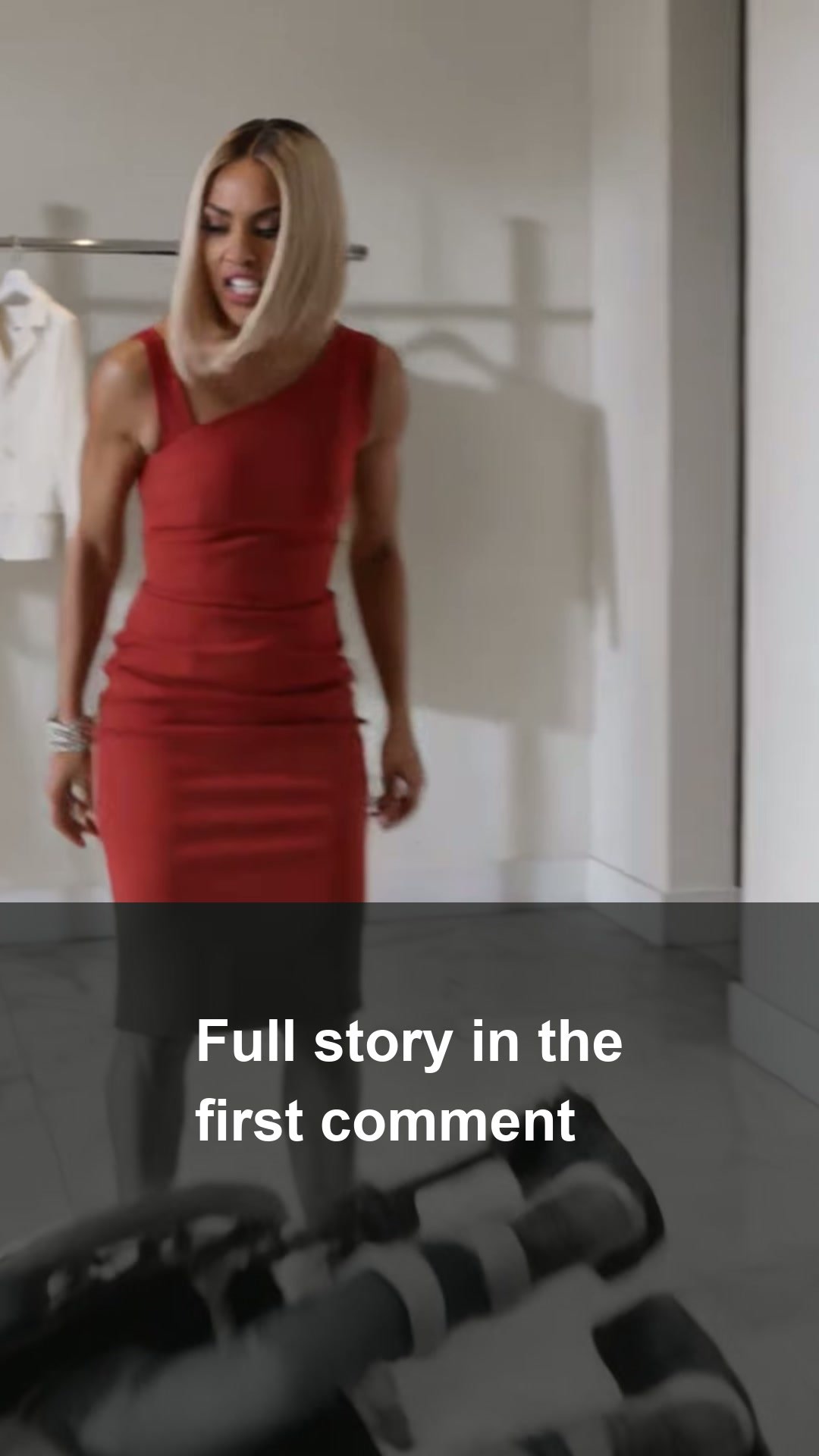
I walked toward them, my heels clicking a frantic, uneven rhythm against the pavement. My mother caught my eye, her expression shifting instantly into a rehearsed mask of maternal indignation. She didn’t look like a woman who had just terrorized a teenager; she looked like a martyr adjusting her halo. I thought of the video already tearing through the feeds, the raw, ugly reality of her hand connecting with that girl’s skin. The memory of my mother’s voice earlier that day, complaining about the cost of the floor-to-ceiling windows while calling the shop assistant a stray dog, echoed in my mind.
I stopped ten feet away. My mother straightened her coat, the fabric crisp and expensive, completely untouched by the chaos behind her. She reached for my arm, her touch cold and possessive, expecting me to fall into the secondary role of the grieving, supportive daughter. I looked at the officer, then at the shattered glass, and finally back at the woman who had spent twenty years teaching me how to hide the bloodstains of our privilege behind layers of gold leaf. She leaned in, whispering about legal teams and PR strategies, her breath smelling of peppermint and expensive wine. I didn’t pull away. I just stared at her, seeing the small, frightened girl she’d buried beneath the diamonds.
“Mother, tell me, was hitting her the only way you could remember who you used to be?”
The marble floor of our penthouse foyer was so polished I could see the reflection of my own rigid posture. I was seven, standing near the mahogany sideboard, while my mother, Isabella, stood before the floor-to-ceiling mirror adjusting her diamond collar. She wasn’t looking at her reflection; she was scouring it for flaws. She turned, her heel clicking like a metronome, and stopped in front of a ceramic vase that had been shifted an inch by the housekeeper. She didn’t yell. She simply took the vase and slid it off the edge, watching it shatter into a thousand jagged white teeth. When the housekeeper rushed in, apologizing with a frantic, stuttering apology, Mother didn’t look at her face. She looked at her shoes. Are those scuffed, she asked, her voice as flat and sharp as a razor blade. Get them out of my sight, she told my father, who was reading the paper in the armchair, his eyes never moving from the stock tickers. I stood there, holding my breath, realizing then that in this house, an imperfection was not a mistake; it was a character defect. I learned that day that if I kept my movements small and my silence heavy, I would remain invisible, and if I remained invisible, I would remain safe.
At ten, the lessons expanded to the dinner table. My sister, Ana, had been crying about a failed math test. She sat at the long table, the silver cutlery feeling too heavy in her small hands. Mother was carving a roast, the knife sliding through the meat with surgical precision. Tears are a luxury we cannot afford, Mother said, not looking up. She pointed the carving fork at Ana. If you cannot master a simple equation, how do you expect to master the world of men who view you as a decorative plant? Ana stopped crying instantly, her breath hitching in a way that sounded like a broken clock. I reached under the table and squeezed her hand, but she pulled away, her skin icy. I remember staring at the crystal chandelier above us, counting the prisms, trying to memorize the way light bent through glass. I realized then that Ana was the crack in the foundation my mother was so desperate to pave over, and that my job was to act as the mortar, filling in the gaps before anyone noticed the structure was swaying.
By fourteen, the house felt more like a museum of things we weren’t allowed to touch. Father’s political career was ascending, and our home became a stage set for donors who smelled like stale cologne and aggressive ambition. I watched my mother in the kitchen, prepping for a fundraiser, her hands trembling as she arranged a bowl of fruit. She looked at me, her eyes darting, and grabbed my wrist. You see them, don’t you, she hissed. They are vultures, Clara. They are waiting for us to falter. They want to see the dirt under our nails, so you will keep your gloves on, and you will smile until your jaw aches. I looked at the bowl of perfectly waxed apples and wondered if they were hollow inside, just like us. I decided that night that I would become an expert at the mask, learning to mimic her cold, distant grace so perfectly that I might eventually convince myself it was real.
The summer I turned sixteen, the silence between me and Ana became a wall of lead. We were in the backseat of the town car, driving to a gala, the leather upholstery creaking under us. Ana was looking out the window at a group of teenagers laughing on a street corner, their clothes mismatched and vibrant. She touched the glass, her fingertips leaving a ghost of a print. They look happy, she whispered. I didn’t turn my head. Don’t look at them, I said, my voice echoing the cadence Mother used when she was warning us about the help. They are performative, Ana. They don’t have the burden of legacy. I felt the lie souring in my throat, but I forced myself to swallow it. I was protecting her, or so I told myself, by stripping away her curiosity. I saw the disappointment in her eyes, a dull, aching exhaustion, and I realized then that I wasn’t her sister anymore; I was just another guard in her prison.
University was supposed to be the escape, but Mother’s voice followed me in the form of frantic, late-night texts. Are you wearing the blazer I sent? Did you reach out to the board members? I sat in my small dorm room, the walls thin enough to hear the students next door fighting over a boy, and I felt a phantom weight on my chest. I opened my jewelry box, looking at the pearl necklace she had given me for graduation. It felt like a tether. I thought about the time she took me to the jewelry store when I was twelve, pointing to a diamond pendant. This is what you are worth, she had said, not as a compliment, but as a warning. If you lose your luster, you are nothing. I took the pearls out and placed them in the back of my desk drawer, burying them under old art supplies. I decided that night to change my major, to study something that didn’t require me to be a prop in a theater of wealth, though I knew the theater was currently paying my tuition.
The last time I saw my father before the fallout, he was standing in the study, his silhouette framed by the expansive window overlooking the city lights. He was holding a drink, his hand steady, a contrast to the chaos brewing in his campaign offices. We don’t talk about the money, Clara, he said, his back to me. We talk about the vision. He turned around, and for a second, I saw his eyes—not the politician’s, not the father’s, but a man who had sold every scrap of his integrity for the privilege of being at the top of the pile. I remember the smell of his expensive cigar, a scent that always meant we were about to be lectured on the importance of appearances. I didn’t say a word. I just nodded, feeling the weight of the gold-plated lie pulling my shoulders down. I knew then that his vision was a hollow tomb, and that we were all just artifacts waiting to be curated, cataloged, and eventually discarded when the exhibit lost its appeal.
I spent the next hour in my childhood bedroom, surrounded by the remnants of a girl who never existed. I pulled a book from the shelf and found a folded note I’d written to myself when I was ten, a list of things I wanted to be: a painter, a traveler, someone who didn’t worry about the polish on the floor. I looked at the vanity mirror, the gilded edges chipped and peeling, revealing the cheap, gray metal underneath. I saw my mother’s ghost in the glass, the way she tilted her head to command attention, the way she narrowed her eyes to judge worth. I leaned forward, pressing my palms against the cold surface, and felt the tremors of a decade of suppressed rage beginning to vibrate through the floorboards. I realized that every time I had corrected Ana, every time I had adjusted my skirt to be more modest, every time I had stayed quiet while my mother decimated someone beneath us, I was just building the cage larger. I stood up, walked to the door, and locked it—not to keep the world out, but to finally separate myself from the version of me that lived for the approval of a woman who had never learned how to be human. The sound of the lock clicking into place was the loudest thing I had ever heard.
The lock’s metallic snap vibrated through the floorboards, a clean severance that sent a tremor up my spine. My mother, Isabella, stood by the mahogany writing desk, her fingers tracing the edge of a silver letter opener with a rhythmic, predatory grace. Her history was a map of scars hidden beneath silk—a girl from a dusty Midwestern town who had clawed her way into this Manhattan fortress by treating vulnerability as a lethal contagion. She needed to break others before they could remind her of the dirt she had crawled out of, and her private contradiction was that she hated this life of luxury, yet she would kill to keep it because it was the only shield she possessed. She looked up, her gaze icy. What are you doing, Clara? she asked, her voice a practiced, velvet rasp. I didn’t answer, instead watching my father, Marcus, hovering in the doorway of the study. He clutched his phone, his thumb hovering over the screen, the blue light washing out his features. He was a man who measured his existence in polling numbers and lobbyist kickbacks; his motive was purely the preservation of his political ascent, yet his contradiction was a crushing, secret exhaustion—he missed the days when he was a low-level clerk who didn’t have to lie for a living. He wouldn’t look at me, only at the screen. The press is already calling, he muttered, his voice brittle. I felt the weight of his fear, a cold, hollow thing. I decided then that I would not be the sacrifice they offered to the hungry wolves on the internet. I walked past him, his shoulder flinching as I moved, and stepped into the hallway where my brother, Julian, sat on the floor, surrounded by shredded remnants of our family’s digital presence. Julian was the golden boy, the one groomed to inherit the mantle of our family’s influence, but his motive was a desperate, quiet attempt to disappear. He spent his days scrubbing our history, terrified that if he stopped, he’d have to confront the fact that he had no identity of his own. He looked up, his eyes glassy. The video is at ten million views, he whispered. I looked at the lawyer, Mr. Sterling, who stood by the window, checking his watch with the bored precision of a man waiting for a flight. He was a creature of billable hours, committed to the law only insofar as it could be bent, yet his private misery was his daughter, who had cut him off years ago; he treated every case like a surrogate battle he could win for a child who wouldn’t speak to him. He sighed, the sound sharp in the quiet room. If you step out that door, Clara, you are no longer a client of this firm, he warned. My pulse quickened, a steady, rhythmic thrumming in my ears. I thought of Ana, the girl my mother had struck, her face a mask of bewildered terror. I realized then that my silence had been the mortar keeping these walls standing. I looked at them all—the architect of abuse, the coward, the hollow heir, and the mercenary—and felt the terrifying, wonderful lightness of being an outcast. I walked toward the front door, my hand closing around the cool brass handle. I’m not a client, I said, and pushed the door open to the street.
The air in midtown Manhattan was thin and sharp, carrying the metallic tang of exhaust and the relentless pulse of the city. I stood on the corner of 57th, the weight of the mahogany-paneled office still clinging to my shoulders like a shroud. I reached into my bag, pulled out my phone, and opened the banking app that had funded my existence since birth. My thumb hovered over the ‘Transfer’ button, then moved to ‘Account Management.’ I hit ‘Close Account.’ The screen flickered, a hollow confirmation popping up: Access Denied. I laughed, a jagged sound that startled a man pushing a hot dog cart. My father had already locked the parental controls from the boardroom. I didn’t hesitate. I walked into the nearest Chase branch, my heels clicking like gunfire against the marble floor, and told the teller I needed to report unauthorized access to my trust. The line was long, the fluorescent lights buzzing with an irritating, clinical hum. I felt the gaze of a security guard, heavy and suspicious, as I insisted on speaking to a manager about a frozen ledger.
I went to the precinct three blocks over, the smell of damp wool and old coffee clinging to the walls. I sat in a plastic chair, watching the clock tick. When the detective finally gestured for me to enter his cubicle, I didn’t play the socialite. I laid out the digital copy of the video—the one that had already been scrubbed from the main servers—and filed the assault report. He looked at the screen, then at my designer coat, his mouth twisting into a skeptical frown. He asked if I was looking for a payout or a headline. I told him I wanted the truth, and he scribbled something into a ledger that looked like it hadn’t been updated since the eighties. As I left, a black sedan idled at the curb. The tinted window slid down just an inch, revealing the silver cufflink of my father’s attorney. He didn’t speak, just stared, his presence a silent threat meant to mimic the power I had just tried to strip away.
By noon, I was sitting in the cramped office of a labor attorney I’d found through a mutual friend who had once been disgraced by the firm. The office smelled of stale nicotine and desperation. I handed him the documentation of the HR complaint I’d just emailed to my mother’s foundation. He looked over the documents, his spectacles sliding down his nose. You realize this is suicide, he said, his voice raspy. He didn’t wait for an answer. He began drafting the formal notice to the foundation’s board. While he typed, my phone vibrated incessantly. Marcus. I ignored it until the screen went black, then hit block. Within an hour, my phone pinged with a notification: my credit card was declined at a deli for a simple sandwich. They were burning the bridges before I could even cross them. The attorney looked up, his eyes hard. They’re moving faster than we expected. They’ve already filed an injunction to claim your silence on the grounds of a non-disclosure agreement you signed at eighteen.
I left his office and headed to the clinic where Ana had been treated. The lobby was a warren of folding chairs and fluorescent light. I approached the intake desk, my hands trembling. I needed the records of her injuries for the assault case. The nurse behind the plexiglass shook her head, citing privacy laws. I didn’t argue. I pulled out a blank sheet of paper and wrote a note for Ana, promising that I would not stop until the medical costs were covered and the person who did this was held accountable. As I turned to leave, two men in grey suits stepped into the doorway, blocking the exit. They weren’t police. They were private security, the kind that didn’t use badges. One of them held out a thick envelope: a cease-and-desist order, a demand for the return of family property, and a threat of litigation that would bankrupt me in a week.
I pushed past them, the anger burning in my chest like bile. I went to the courthouse, my lungs tight, and filed the petition to contest the distribution of the estate. It was a massive, public move, a declaration of war against the family trust. I stood at the clerk’s desk, the cool wood grain pressing into my palms, and signed the affidavit. The clerk looked at the name—Isabella Sterling—and her eyes widened. She stared at me, then back at the papers. By the time I walked out of the courthouse, the digital world had caught up. My father’s team had released a statement to the press, a carefully curated narrative about my ‘mental instability’ and ‘addiction issues.’ My face was already on the blogs, a blurred screenshot from the surveillance footage outside the shop.
I ducked into a public park, the wind whipping through the trees. I sat on a bench, looking at the DNA test kit I’d bought on the way over. It was a stupid, desperate reach, a way to prove that the blood running through my veins didn’t share the rot of the people I’d been raised by. I opened the package, the plastic crinkling in the quiet park. A man in a suit sat on the bench opposite me, watching. He was holding a briefcase. He didn’t make a move, just watched, his eyes unblinking. I realized then that I wasn’t just fighting a family; I was fighting an ecosystem. I pricked my finger, the tiny drop of blood blooming on the swab, and sealed the envelope. I walked to the mailbox on the corner, dropped the test inside, and watched it fall into the dark metal void. As I turned away, the sound of a camera shutter clicked in the distance. The cycle had accelerated, and there was no way to hit the brakes.
The digital erosion of our name began not with a roar, but with the rhythmic, discordant pinging of my phone as I walked toward the subway. Each notification was a jagged shard: a tag on Instagram, a thread on X, a news alert from a tabloid I usually pretended didn’t exist. I pulled my coat collar tighter, the wool scratching against my throat. My screen lit up with a video still of my mother’s hand in mid-air, her face twisted into a mask of vitriol that no amount of cosmetic surgery could mask. Beside me, a woman in a business suit leaned away, her eyes darting from my face to the screen of her own device. I was no longer a person; I was a landmark of notoriety.
I ducked into a coffee shop, the bell above the door chiming with irritating cheer. I ordered an espresso, my fingers trembling as I reached for my credit card. The barista didn’t take it. She looked at the card, then at my face, her expression settling into a cold, hard curiosity. We don’t serve your kind here, she said, her voice barely rising above the hiss of the milk steamer. I looked at the line of customers behind me, their phones already angled in my direction, recording. I realized then that my presence was an affront to their collective morality. I tucked the card away, turned, and walked out into the biting wind.
At the gallery, the locks had been changed. A note, printed on cheap white paper and taped to the glass, informed me that my internship was suspended pending an internal review. My belongings were piled on the sidewalk in a cardboard box, exposed to the city grit. A passerby kicked the box, sending a stack of art history journals skittering into the gutter. I knelt to retrieve them, the damp pavement soaking through my trousers. The weight of the box felt different now; it wasn’t just paper and pens, but the debris of a life I had been curated to lead.
My father’s car was idling at the curb, a sleek, black predator that usually commanded respect but now just drew glares. He rolled the window down an inch. The air inside the car smelled of expensive leather and panic. Get in, he commanded, his jaw tight. I stood up, the wet journal heavy in my hand, and shook my head. I looked at the familiar, cold line of his profile, the man who had traded his daughter’s reputation for the illusion of control. I realized I didn’t want to be protected; I wanted to be finished with him. I turned my back on the car, walking toward the subway entrance. He shouted something, but his voice was swallowed by the screech of an arriving bus. I descended into the subterranean dark, leaving the sunlight and the spectacle above, knowing that every step I took away from him was a step into a world that finally, mercifully, had no idea who I was. The subway tunnel opened up, a cavernous, indifferent mouth, and I stepped into the train, feeling the heavy doors slide shut behind me with a final, echoing thud.
The courtroom smelled of floor wax and stale coffee, a stark departure from the jasmine-scented air of our drawing room. I sat in the hard-backed gallery bench, my hands clasped tightly in my lap to hide the tremor in my fingers. Mother stood before the judge, her posture rigid, a thin shell of a woman stripped of her designer armor. She wore a grey wool suit that looked like a costume, her hair pulled back into a severe, utilitarian bun.
The judge’s voice was a low, rhythmic drone. He spoke of accountability and the restoration of public trust. When he sentenced her to two hundred hours of community service at the East Side outreach clinic—the very place she had once spat upon during a gala dinner—the courtroom felt suddenly, impossibly quiet. She didn’t turn to look at me. She simply nodded, her gaze fixed on the mahogany bench, the pride that had been her only defense finally crumbling into dust.
I stood and walked out, the heavy double doors swinging shut behind me with a decisive click. Outside, the city light was grey and muted, but it felt cleaner than the air inside.
Three weeks later, the final box sat on the floor of my studio apartment in Queens. It was a small space, smelling faintly of the neighbor’s cooking and the radiator’s metallic heat. I picked up a pair of red-soled heels from the bottom of the last box. They looked ridiculous here, perched on the scuffed linoleum floor. I placed them in a cardboard box by the curb, leaving them for a stranger to claim.
I walked to the kitchen and filled a chipped ceramic mug with lukewarm coffee. My reflection in the window was a blur of shadows, but my hands were steady. I looked at the table—a cheap, secondhand thing I’d dragged up the stairs myself. It didn’t belong in a museum; it belonged to me.
My phone vibrated against the wood. A text from Ana, a simple photo of a park bench in the early morning sun, a bird perched on the backrest. No captions, no demands. Just the evidence of a morning spent without fear. I set the phone down and listened to the silence of the apartment. There was no ticking of a grandfather clock here, no heavy curtains to shut out the world. I drank the coffee, the bitter taste grounding me. Outside, the street noise rose—a siren, a laugh, the steady rhythm of a city that didn’t care about my name. I took a breath, turned the deadbolt on my door, and finally began.
The humidity of July clung to the window screen, smelling of damp earth and city exhaust, a stark contrast to the sterile, filtered air I had inhaled for twenty years. I sat on the floor, the rough grain of the floorboards pressing into my shins, and opened a bag of soil. My fingernails filled with black grit as I pressed a sprig of mint into a plastic pot. It was small, fragrant, and entirely mine.
There was a light scratch at the door. I stood, my knees popping, to let in Barnaby, the golden retriever I had adopted from the shelter two towns over. He didn’t pace like Mother; he didn’t check the perimeter for threats. He simply leaned his heavy, warm weight against my shins, waiting for nothing in particular.
I knelt to scratch behind his ears, his fur coarse and smelling of sunshine.
Do you want to walk, I asked. He tilted his head, his tail thumping once against the baseboard.
We walked to the park, avoiding the manicured lawns of the upper district in favor of the overgrown trails near the river. Ana was already there, sitting on a bench with a sketchpad propped on her knees. She didn’t look over her shoulder as I approached; she didn’t flinch when a cyclist rattled past. She looked like someone learning to breathe after a long time underwater.
She looked up, her smile tired but genuine. You brought the dog, she said.
He likes the shade, I replied, sitting beside her.
We watched the water churn against the concrete pylons. For the first time, the silence between us wasn’t a vacuum waiting to be filled with apologies or excuses; it was just space. I looked at my hands, the dirt still etched into the creases of my skin, and realized I didn’t want to wash it off. I wanted to see if I could grow something else. I reached into my pocket, pulling out a handful of scattered seeds, and held them out.
She hesitated, then scooped the grains into her palm. Her skin was rough, a map of the retail shifts she’d worked since the boutique shuttered, and the sight of it made my chest tighten. You think they’ll take? she asked, her voice steady. I nodded, not trusting the sudden lump in my throat. We pressed our thumbs into the damp earth near the fountain, carving out small, shallow graves for the future. Marcus called then, his name flashing on the screen like a frantic heartbeat, but I silenced the phone and slid it deep into the dark gap between the park bench slats. It didn’t belong to me anymore. I stood up, dusting the dark, fragrant soil from my jeans, and turned toward the subway entrance. Near the curb, a pair of red-soled, designer heels sat abandoned and dusty in a cardboard moving box.
Leave a Reply