The police lights turned the living room curtains into pulsing, violent veins of red and blue.
I stood in the center of the foyer, the hardwood floor cooling under my bare feet as the front door clicked shut, locking me out of my own life. Megan’s heels clattered against the driveway, a sharp, rhythmic sound of finality that echoed against the desert silence. She had not looked back. She hadn’t even bothered to take the urn.
“Dad, you’re confused,” she had said, her voice smooth as polished stone, her hand resting on her husband’s forearm like a brand of ownership. “The house is legally mine now. It’s for the best.”
I stared at the heavy oak door. My fingers traced the grain, feeling the deep, familiar gouge near the handle where Megan had crashed her tricycle twenty years ago. The physical weight of the betrayal was a cold, leaden stone in my gut, but my pulse remained steady. I didn’t blink. I didn’t plead. I simply reached into my pocket and touched the cold edge of the brass key to the safe-deposit box. The eviction was a tactical error; she had mistaken my grief for weakness.
The Tuesday before the funeral, the world had been defined by the hum of the refrigerator and the specific, rhythmic ticking of the wall clock in the hallway. I sat at the mahogany desk in my office, the air heavy with the scent of old paper and the sharp, acidic tang of black coffee. Caroline had left a mug on the coaster, a ring of dark moisture staining the wood. I stared at it, noting the precise diameter, before pushing it aside to review the deposition transcripts for the Henderson case.
The office blinds were drawn, allowing only thin, horizontal slats of Arizona sunlight to bisect the room. I liked the dust motes dancing in those beams; they felt like the only things in the house that weren’t under my jurisdiction. I picked up my fountain pen, the nib scratching against the thick, ivory-colored bond paper. Every motion was deliberate. I was a man of procedure, and procedure was a shield against the erratic nature of life.
At ten, I heard the familiar rattle of the mail slot. I stood up, stretching the stiffness from my lower back, and walked into the foyer. The floorboards creaked in the exact spot they always did, a groan of aging wood that I had meant to fix for a decade. I gathered the envelopes—mostly solicitations and the weekly legal gazette—and stepped onto the front porch. The heat hit me instantly, a dry, abrasive warmth that smelled of sagebrush and the neighbor’s freshly trimmed Bermuda grass.
Mrs. Gable was walking her golden retriever near the curb, her face obscured by an oversized sun hat. She waved, a slow, languid movement. I raised my hand in return, a polite, distant gesture. We didn’t speak. The silence of the neighborhood was a commodity we all protected, a tacit agreement to remain comfortably oblivious to one another’s interior lives.
Back inside, the office printer started its cycle, a mechanical whir followed by the sharp, rhythmic clatter of pages feeding into the tray. I watched the output, the ink still tacky to the touch. The Henderson file was clean, concise, and utterly predictable. I felt a fleeting sense of satisfaction. If the law was followed, the outcome was inevitable. That was the comfort of the courtroom; it was a theater where the rules were fixed, even if the actors were liars.
I took another sip of coffee. It was lukewarm now, a bitter, metallic dregs at the bottom of the ceramic. I thought about calling Caroline to discuss dinner, perhaps suggesting the steakhouse on 5th, but decided against it. She was likely still at the gallery, caught up in the minutiae of cataloging the new acquisitions. I would wait until five. Everything had a designated time.
The house was perfectly still, a vacuum of domestic order. I leaned back in my chair, closing my eyes for a moment to listen to the faint, distant sound of a leaf blower humming somewhere three streets over. It was the sound of a functioning society, a world that made sense. I felt entirely in control, a retired prosecutor who had long ago mastered the art of compartmentalization. I opened the Henderson file again, ready to highlight the inconsistencies in the witness’s timeline, when the sharp, electronic trill of the landline cut through the silence like a scalpel. I stared at the phone on the desk, watching it vibrate against the wood, and for a second, I felt an inexplicable, jagged prickle of dread at the base of my neck. I reached out, my thumb hovering over the receiver, wondering who could possibly be calling at this hour.
The voice on the other end was Megan’s, brittle and rehearsed, lacking the tremor of grief I had expected to find there. She didn’t ask how I was, or if the house felt empty without her mother’s presence. She simply stated that the realtor would be arriving at noon to photograph the interior for a quick listing. The transition from the stillness of my study to the reality of her intent was instantaneous, a shift in atmosphere as sharp as a sudden drop in barometric pressure. I felt my grip tighten on the receiver until the plastic creaked against my knuckles, the familiar weight of a courtroom gavel ghosting into my palm. I told her the house was not for sale, my voice steady, stripped of the fatherly warmth she likely expected me to lean on. She interrupted, her words accelerating into a litany of maintenance costs and market volatility, as if she were reading from a script prepared by someone else—presumably Michael. I let her finish, the silence between us expanding to fill the room, until the only sound was her shallow, impatient breathing. She had mistaken my silence for submission, a common error made by those who didn’t understand the difference between a pause for reflection and a pause for preparation. I thought of the basement safe, hidden behind the heavy oak paneling, and the document Caroline had insisted I keep sealed until the specific moment that the walls began to close in. The irony was almost clinical. She thought she was executing a plan, but she was merely providing the evidence required to trigger the contingency. I decided then that I would not argue. Arguing was for the weak, for those who still held a glimmer of hope that the other side might be persuaded by logic or sentiment. Instead, I stood up, walked to the window, and watched a black SUV turn onto our street, moving with a predatory slowness. My daughter had played her hand before the funeral flowers had even wilted, assuming I was too diminished by loss to guard the threshold. She was counting on my grief to act as a blindfold. I turned away from the window and headed toward the study door, my steps measured and deliberate. I was not leaving this house. The deed she held was a paper tiger, and she was about to learn that in the law, as in life, possession is only nine-tenths of the truth. I reached for the handle of the office door, feeling the cold brass under my hand, and wondered briefly if she would realize the magnitude of her mistake before the ink dried on the eviction notice. I opened the door, ready to greet our guests, and felt the familiar, invigorating rush of a case finally moving to trial. The hook was set, and for the first time in weeks, the fog in my head cleared, leaving only the razor-sharp focus of the hunt.
The study smelled of dry cedar and the lingering ghost of Caroline’s lavender perfume. Megan stood by the mahogany desk, her fingers tapping a frantic rhythm against the leather blotter. She had already cleared the shelves of the books I had spent forty years curating, stacking them into plastic crates like evidence seized from a crime scene. When I entered, she didn’t look up. She kept her gaze fixed on the drawer where I kept the trust documents, her shoulders hunched with the sharp, jagged tension of a woman who felt she had already won.
I took the envelope from my breast pocket, the paper heavy and cream-colored. It felt like a verdict. I set it on the desk, the soft thud sounding like a gavel in the stillness. My daughter finally turned, her eyes narrowed, scanning the room for the weakness she expected to find in me. She looked older than her thirty years, her face hardened by the exact kind of performative grief I had spent my career dissecting in courtrooms.
I traced the edge of the envelope with my thumb, relishing the silence. She thought she was evicting a tired, grieving man. She had no idea that she was actually standing in the middle of her own bankruptcy. She reached for the envelope, her nails clicking against the desk, a smirk forming that didn’t quite reach her eyes. She expected a plea, or perhaps a check, or the surrender of the keys. She expected a father’s capitulation. I watched the way her breath hitched, the way her predatory posture shifted into something like confusion as she realized the seal was unbroken, the ink fresh, and the witness signatures from the firm in Phoenix were still valid and ironclad.
I leaned into her space, my voice steady, stripped of all warmth. You never asked why your mother spent her final months teaching me how to be a landlord.
Megan retreated, her heels skittering on the hardwood like panicked insects. She looked at the envelope, then at me, her face a pale map of sudden, frantic recalculations. She wanted to be the architect of my decline, but she had failed to read the blueprints of the foundation. She didn’t know her mother had seen the hunger in her eyes years ago, the same way Caroline had once looked at the silver spoons in her own father’s house. Megan had spent her youth curating an image of effortless grace, never realizing that every expensive gala and private school tuition had been a loan against a future she was now forfeiting. She thought she was the predator; she was merely the collateral.
Michael stood in the doorway, his shoulders rigid, fingers tapping a nervous rhythm against his thigh. He was a man who measured his worth in interest rates and square footage, a developer of cardboard dreams who had spent their entire marriage waiting for my assets to liquefy. He looked at the legal seal on the envelope and his jaw tightened; he had leveraged their joint accounts against the expectation of this inheritance, gambling on my obsolescence. He had no history of his own, only a long, dusty trail of failed startups and bad debt that I had quietly documented for three years. He shifted his weight, his eyes darting to the window as if expecting a bailiff. He was desperate to maintain the illusion of control, but he was drowning in a balance sheet he didn’t write.
I turned to the window. The neighbor, Mrs. Gable, was watching from behind her blinds across the street, a woman who spent her days trading secrets like currency. She was the one who had reported our property improvements to the city inspectors under Michael’s name, hoping to leverage a zoning dispute into a discount on her own property taxes. She was a scavenger of social capital, a woman who had once been a legal secretary and still thought she understood the weight of a subpoena. She hated me because I had once prosecuted her brother for fraud, and she hated Megan because she saw in her a younger, meaner version of herself.
I felt the weight of the house around me, a structure built on the bones of a marriage that was never as stable as the neighbors believed. Caroline had been the one to insist on the trust, her hand trembling as she signed the papers in the ICU, her mind sharp enough to anticipate this exact moment of betrayal. She had loved our daughter, but she had never trusted her with the keys to the kingdom. My own contradiction was the silence I had kept, the way I had let Megan believe I was a fading, senile relic when I was actually the ghost guarding the vault.
I walked to the desk and picked up the paperweight. The room felt cold, clinical, and perfectly arranged. I had spent forty years putting men like Michael in cells and women like Megan in positions where they could no longer do harm. I watched them now, two architects of their own ruin, waiting for me to speak. I tapped the envelope against my palm, the sound echoing through the quiet foyer. Decision made, I didn’t hand them the papers. I set them back on the mahogany surface and walked toward the study. The hook would be the audit, the final, surgical cut that would reveal just how deep their debt really went.
I walked into the study, the floorboards groaning under my feet—a sound I had once found charming, but now recognized as the rhythm of a failing foundation. My fingers moved with the practiced, muscle-memory efficiency of a man who had spent decades preparing closing arguments. I opened the floor safe, the tumblers clicking into place with a mechanical finality that felt like the snapping of handcuffs. I pulled out Caroline’s original ledger, the one she had titled in her precise, sloping script: Contingency.
Behind me, the door creaked. Megan’s shadow stretched across the rug, long and jagged. Dad, the realtor is coming at four. You haven’t packed the kitchen. Her voice was thin, a glass edge pressing against my neck. I didn’t turn around. I simply slid a single document from the file—the bank mandate signed in 1994, granting me sole, irrevocable power of attorney over the estate’s liquid assets.
I picked up the landline, the plastic warm and greasy against my ear, and dialed the private banker. The silence in the room became a vacuum. When the bank representative answered, I kept my voice flat, devoid of the tremor of age they expected to hear. I am initiating a total freeze on all accounts linked to the primary trust, I said. Effective immediately. Revoke all secondary access codes.
Megan’s breath hitched. She stepped into the light, her face a mask of performative confusion. What are you doing, Lester? Don’t call me that, I said, finally swiveling my chair to face her. It sounds like you’re reading from a script. She paled, her eyes darting to the ledger. I picked up my pen and signed the formal notice of intent to contest the deed transfer. The ink sat wet and black, a stain on the paper that matched the dark circles forming under her eyes.
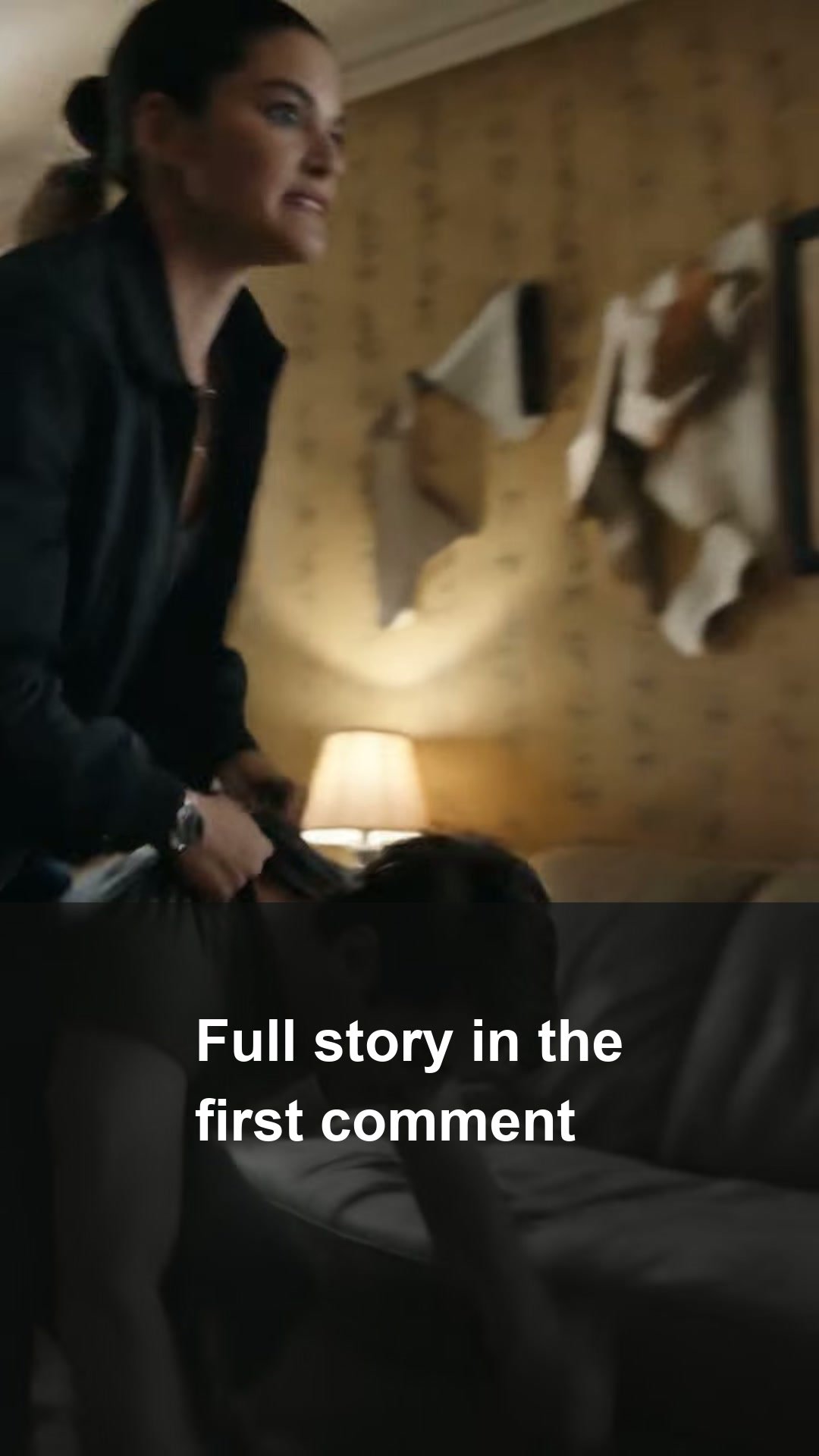
I stood, my knees popping, and walked to the hallway where Michael was busy hanging a painting of his own choosing—a gaudy, abstract mess that violated every aesthetic rule Caroline had ever set. Michael, I said, my voice cutting through the house like a whip. Put the hammer down. He turned, the tool dangling from his hand. His bravado was a flimsy thing, built on the assumption that I was too senile to notice his siphoning of funds. I am filing a police report for the unauthorized removal of my wife’s personal legal files, I continued, stepping into his personal space. You have three hours to return them to the mahogany desk, or the report will include a charge of grand larceny.
He laughed, but it was a jagged, brittle sound. You’re senile, old man. Who do you think the police will believe? I reached into my jacket and pulled out a digital recorder. I didn’t need to play it back; the mere sight of the blinking red light was enough to drain the color from his cheeks. I have recordings of your conversations with the contractors, Michael. I know about the kickbacks on the kitchen renovation.
He didn’t move. He stared at the recorder as if it were a coiled snake. I turned and walked toward the front door, leaving the house’s heavy frame behind. I drove to the law offices of Sterling and Vance, a firm that had handled the prosecution of the state’s most complex white-collar crimes for thirty years. I didn’t sit in the lobby. I walked straight into the senior partner’s office, the man who had been my intern four decades ago.
We spoke for an hour. I presented the DNA test request—a contingency Caroline had baked into the trust regarding the legitimacy of the inheritance claim if the daughter failed to uphold the sanctity of the family home. It was a cold, cruel trap, and she had set it with a brilliance that made me miss her with a sharp, physical ache. I walked out of the office with a stack of subpoenas. By tomorrow morning, the courts would be flooded with motions that would strip the foundation out from under the life Megan and Michael had built.
When I returned, the house was dark. My key turned in the lock with a heavy, metallic rasp. The silence was different now. It was no longer the silence of a home, but the silence of a tomb. I found Megan sitting on the floor in the foyer, her phone pressed to her ear, listening to a voice mail. She didn’t look up as I crossed the floor. She looked small, stripped of the veneer of ownership she had worn like a costume.
I went to the kitchen and made a cup of black coffee, the steam rising in the dim light of the overhead fluorescent. I could hear Michael in the upstairs bedroom, the sound of drawers being emptied, frantic, chaotic. He was looking for the cash, for the jewelry, for anything that wasn’t tied to the accounts I had successfully locked.
I sat at the table and watched the rain begin to lash against the glass, blurring the manicured perfection of the Arizona garden. My phone buzzed. It was a notification from the bank—an attempted override of the freeze. It was a desperate, amateur move. I watched the status update to “denied,” then pushed the phone face down on the wood.
Megan walked into the room, her hair disheveled, her eyes rimmed with red. She didn’t speak, she just stood by the door, waiting for me to break, to offer her a bridge back to the life she had assumed was her birthright. I took a slow, steady sip of my coffee. I didn’t offer a seat. I didn’t offer an apology. I simply opened the legal folder again, my eyes scanning the next line of defense. The escalation was no longer a theory; it was a physical momentum, a landslide I had triggered and had no intention of stopping. I looked up at her, and for the first time in years, I didn’t see my daughter. I saw a hostile witness waiting for the final, devastating question. My heart rate stayed perfectly steady, a slow, calm beat against the rising panic in the house. I had spent my life as a prosecutor; I knew exactly how to dismantle a case, and I had just begun the cross-examination of my own family.
The news moved through Paradise Valley like a brushfire, fueled by the dry air and the social currency of shared scandal. By Thursday, the neighborhood WhatsApp groups—those digital nests of manicured lawn disputes and valet-parking grievances—were buzzing with a single, redacted truth. I stood in my kitchen, tracing the grain of the marble island, as my phone vibrated incessantly on the granite. Each ping was a notification from the club secretary, the local chamber of commerce, or some distant acquaintance who had suddenly found a conscience. My membership at the Valley Club, held for thirty years, had been placed under review. A courtesy, they called it. A soft banishment to prevent the bleeding of my daughter’s public humiliation from staining their pristine fairways.
I didn’t answer. I didn’t care.
Outside, a grey sedan idling near the curb caught my attention. It was one of Michael’s associates, a man who had once shaken my hand with a grip too firm and a smile too practiced. Now, he was documenting the arrival of the process servers. I stepped onto the porch, the desert sun blindingly bright against the stucco, and watched as he scrambled to pull away, his tires kicking up a spray of decorative gravel. He was terrified of being associated with the wreckage. It was a common instinct in this zip code: run toward money, run faster away from the smell of insolvency.
Later that afternoon, a delivery driver from the local floral shop left a bouquet on the doorstep. It wasn’t a gesture of comfort; the card, signed by a collective of mothers from Megan’s PTA circle, was a pointed enquiry about the status of the trust. They weren’t checking on me. They were calculating their own risk. I tipped the flowers into the trash bin without reading the note. The cost of this dismantling was becoming clear: I was becoming a ghost in my own zip code, a man defined by the ruin I had authored.
The silence in the house was heavy, broken only by the hum of the refrigerator and the distant, rhythmic chirping of a desert wren. I retreated to the library, pulling a heavy tome from the shelf, but the text blurred. My hands, once steady enough to argue a life sentence before a jury, had developed a tremor. It wasn’t fear—I had no fear left for Megan or her husband—but the physical exhaustion of a long-term tactical engagement. I had spent my life holding people accountable for their crimes, but I hadn’t realized how much of my own soul I would have to spend as the judge, jury, and executioner of my own blood.
My phone rang again. It was the head of the neighborhood association, his voice dripping with the faux-concern of a man who feared a drop in property values.
Lester, he began, his voice thin, people are talking. The rumors about the estate, the debts… it’s creating a bit of an atmosphere. Perhaps it’s time to move on?
I didn’t let him finish. The atmosphere you’re sensing, I said, my voice as cold as a courtroom transcript, is the sound of reality finally catching up to the residents of this street.
I hung up before he could respond. My decision was set. I walked to the window and watched the sunset turn the mountains a bruised, deep purple. I was alone, ostracized by a community that only valued the polish of a life, not the integrity of it. I had won the legal battle, but the fallout was a wide, barren landscape of my own making. I turned away from the window, my reflection ghosting in the dark glass, and picked up the phone to call my lawyer. It was time to release the final, most damaging set of files to the press. If they wanted a scandal, I would give them the entire, unvarnished history.
The lawyer’s office smelled of expensive lemon polish and sterile paper. I slid the heavy manila folder across the mahogany desk, the documents inside detailing Michael’s shell companies and the specific, damning dates Megan had signed off on the fraudulent home improvements. Mr. Henderson didn’t look up as he flipped through the pages, his pen hovering over the signature line that would authorize the release to the local gazette. The silence in the room was absolute, broken only by the rhythmic ticking of a grandfather clock that seemed to measure the end of my family’s vanity. I watched his hand move with surgical precision. It was done. When he handed me the receipt for the filing, the weight of the last three months lifted from my shoulders, leaving behind a cold, hollow clarity. I thought of Caroline and the way she used to hide her ledger in the back of the law books, a safeguard against this exact brand of greed. I decided then that I would not wait for the press to break the news; I would be home before the ink dried.
The drive back to Paradise Valley felt shorter than usual, the tires humming against the asphalt. When I reached the villa, the front gate was unlocked, swinging slightly in the desert breeze. I saw Megan’s car in the driveway, half-packed with designer luggage, her husband standing by the trunk, shouting into a dead cell phone. He looked smaller than he had at the funeral, his suit rumpled, his bravado eroded by the creditors already circling his failing projects. I parked my car, walked past them without a word, and unlocked the front door. The house was quiet, the air cool and still. Inside, the master bedroom was stripped bare, but the study remained untouched, my books still lining the mahogany shelves. I sat in the leather chair that had been my sanctuary for forty years. My bank accounts were frozen to them, the trust was sealed, and the estate was securely under my control. I pulled a worn volume of tort law from the shelf, feeling the spine crack under my grip. A small, yellowed envelope slid out from between the pages, bearing Caroline’s handwriting. I opened it, reading the final instructions she had left for this exact moment. I was no longer a target; I was the architect of my own peace. I turned the lamp on, the warm light bathing the room, and began to read.
The morning air in Paradise Valley tasted of dry heat and blooming sage. I carried my coffee to the back porch, the ceramic mug warming my palms. The silence was not the heavy, stifling quiet of an interrogation room, but the expansive, indifferent stillness of the desert. I sat in the wicker chair, the one Caroline used to tilt back until the legs groaned, and watched the shadows shorten across the flagstone patio.
I set the mug down and walked to the corner of the yard where the blue doghouse had stood for six years. Megan’s golden retriever had been a frantic, shedding creature that tracked mud onto the travertine floors. I knelt, my knees popping, and began digging into the hard, sun-baked earth. My trowel struck a buried root, jarring my wrist. I paused, wiping sweat from my forehead with the back of my hand.
“It’s time,” I whispered to the empty air.
I wasn’t sure if I was speaking to Caroline or to the version of myself that had spent decades anticipating a betrayal that finally arrived. I dug deeper, creating a circle of fresh, dark soil. From my pocket, I pulled the blue paint-chipped board I had salvaged from the doghouse. It was rough, splintered, and held the ghosts of the past. I jammed it into the earth, marking the center of the patch.
I reached into the bag of lavender seeds I’d bought at the market. They were small, insignificant grains. I scattered them around the marker. If they took root, the garden would be purple by summer, smelling of clean, sharp memory. I stood up, brushing dirt from my trousers. The pressure in my chest, a constant, dull thrum for months, had eased into something manageable. I realized then that I didn’t owe anyone a performance of grief or a justification for my solitude. I walked back toward the house, my pace steady, already deciding which book to pull from the shelf next.
I stepped onto the patio and set my coffee mug on the iron table. The house was quiet, stripped of the frantic, rehearsed energy Megan and her husband had once brought through the front door. I looked past the glass sliders to the yard. The midday sun blazed over the desert, casting sharp, uncompromising shadows against the stucco walls. My gaze settled on the spot where the blue doghouse had stood, now replaced by the turned earth and the small, jagged piece of salvaged wood. The paint on the board had curled and flaked away under the intense heat, revealing the raw, weathered grain beneath. It stood perfectly upright in the loose soil, a singular, uneven anchor in the bright Arizona light, motionless as the wind began to stir the surrounding dust.
Leave a Reply