The bullet hole in my shoulder felt less like a wound and more like a period at the end of a long, tedious sentence.
I slumped against the damp mahogany of the riverbank, the mud soaking through my silk shirt. The scent of rotting vegetation filled my nostrils, thick and cloying. Above, the dense canopy filtered the sunlight into sickly green slivers. My right hand, slick with blood, gripped the heavy gold signet ring I had pried from my finger in the dark. It was the only thing of value I had left that wasn’t digitized, tracked, or already mortgaged by Jason’s insatiable ambition.
Elena stood ten paces away, her machete resting against her hip, her face an unreadable mask of shadows. I didn’t ask if she had seen the shot; the way she avoided my eyes was answer enough. I reached for the satellite phone buried in my pocket, my fingers trembling against the cold metal.
If I die here, the empire dies with me. If I survive, the empire becomes their tomb. I typed the code to initiate the ghost audit. My legacy ends today. I am no longer a father; I am a creditor.
The alarm clock on my bedside table hummed at 5:00 AM, a vibration that rattled the crystal water glass until it ticked against the mahogany surface. I sat up, the joints in my hips protesting the shift in gravity, and stared at the gray light filtering through the heavy silk curtains of my penthouse. The room smelled of cedar and the faint, lingering ozone of the air purifier. My routine was a ritual of precision: shave, cold water to the face, the crisp starch of a white dress shirt, and the weight of the cufflink fastening against my wrist.
In the kitchen, the espresso machine hissed, a rhythmic, pressurized sound that punctuated the silence of the empty apartment. I leaned against the marble counter, watching the dark, viscous liquid swirl into the porcelain cup. There was a specific, comforting neutrality to the morning that I had relied on for forty years. I didn’t think about Jason. I didn’t think about the ledger sheets or the quarterly projections. I thought about the temperature of the coffee and the fact that the barista at the lobby kiosk always put a dusting of cinnamon on top without being asked.
The commute was a blur of steel and glass. The back of the town car provided a cocoon, the tinted windows turning the bustling New York streets into a silent, detached film strip. I watched a delivery truck nudge a bike messenger, the friction of the city playing out in slow motion while I checked the market ticker on my tablet. Everything was in the green. Everything was exactly where it was supposed to be.
I arrived at the headquarters at 7:15 AM. The lobby smelled of floor wax and the faint, citrus tang of the cleaning crew’s supplies. I nodded to the night shift security guard, a man named Miller whose name I kept on a post-it note in my pocket.
Morning, Mr. Vance, he said, not looking up from his monitor. Traffic is looking rough on the FDR.
I suspect it usually is, I replied, stepping into the elevator.
The ride to the executive floor was silent, a vertical ascent into the rarefied air of the top tier. My office was already illuminated by the pre-dawn glow, the vast desk clear of everything except a pristine fountain pen and a leather-bound folio. I sat down, the familiar creak of the chair greeting me like an old friend. I pulled a document toward me, the edges of the paper sharp and stiff.
The printer in the corner churned to life, its mechanical whir a steady, mechanical pulse. It spat out the last of the shipping manifests—thousands of tons of steel and containerized cargo moving across the Pacific, oblivious to the man signing his name at the bottom of the page. I felt the familiar weight of the pen, the smooth glide of the nib against the stock, the simple satisfaction of order being maintained.
My phone sat on the edge of the desk, perfectly aligned with the corner of the blotter. I looked at the forecast on the screen: overcast, chance of rain in the afternoon, nothing that would disrupt the global flow. I reached for the telephone receiver, intending to call my secretary to confirm the agenda for the afternoon board meeting, but my hand hovered in the air.
The silence of the room was absolute, broken only by the rhythmic, low-frequency hum of the city vibrating through the glass facade. I felt, for a fleeting second, a strange, hollow sense of contentment. The empire was balanced. The legacy was secured. The world was behaving.
Then, the phone rang. It was not the crisp, digital chirp of an internal extension, but the jarring, sharp-edged ring of an outside line. I paused, my finger inches from the receiver, watching the light blink with an insistent, rhythmic urgency.
I picked up the receiver. Jason’s voice was too loud, distorted by the crackle of a satellite uplink. He didn’t ask how I was, or comment on the storm reports, or mention the quarterly figures. He simply said, “The river is higher than we thought, Dad. You need to come down now. The trust document—the physical one—it’s at the site. If you want the signature finalized before the board meeting, we do it in the canopy.”
I looked at the mahogany desk. My fountain pen sat in its cradle, a heavy, obsidian weight. I thought of the countless contracts signed in this room, all of them built on the assumption of mutual greed. “You’re asking me to fly to the Amazon for a signature,” I said. “You’ve never been efficient with your time before, Jason.”
There was a pause, long enough for the hum of the office air conditioning to reassert itself. “I’m trying to make this right,” he said. The tremor in his voice wasn’t fear; it was the practiced modulation of a man reciting a script he’d rehearsed in front of a mirror. “Sarah wants us to have a fresh start. Just the three of us.”
I looked out the window at the skyline of lower Manhattan, the steel and glass monuments to my own vanity. If I stayed, I would continue to be a man who owned the world but couldn’t name the color of his son’s eyes. If I went, I would be a man playing a game I had invented, against two novices who thought they were holding all the cards.
“I’ll be there by Wednesday,” I said.
The flight was a blur of thin air and recycled oxygen. By the time we reached the river platform, the humidity had turned my tailored suit into a second, suffocating skin. The heat was a physical weight, pressing the air from my lungs. Jason stood by the railing, his knuckles white against the weathered wood, while Sarah hovered in the shade of a palm frond, her gaze fixed not on the water, but on the small, leather-bound briefcase I carried.
“The signature,” Jason prompted. He stepped closer, his shadow falling long and sharp across the planks.
I set the briefcase down. I didn’t open it. I watched the black, silt-heavy water churn against the pilings. It looked thick enough to walk on, or deep enough to swallow a legacy entire.
“Is this it?” I asked, gesturing to the expanse of green. “The fresh start?”
Sarah laughed, a thin, brittle sound that didn’t reach her eyes. She moved to my left, blocking the path back to the skiff. Jason moved to my right. They didn’t touch me; they simply shifted, closing the radius of the circle until I could smell the sharp, metallic scent of the river rising to meet us.
I knew then. The realization wasn’t a shock; it was a cold, clinical verification of data. I had taught my son to eliminate obstacles, and I had become the final one.
I leaned over the railing, feeling the vibration of the current beneath the wood. I stood up, turned to them, and nodded. “Very well,” I said. “Let’s finish this.”
The hospital corridor smelled of antiseptic and floor wax, a sterile scent that burned the back of my throat. I sat on a plastic chair, the vinyl tacky against my palms, and pulled the phone from my jacket pocket. It was heavy, a relic of a life I was currently scrubbing away. My hand trembled—not from fear, but from the adrenaline of the audit. I dialed the head nurse at the clinic in Manaus.
“Mr. Vance?” she asked, her voice dropping to a professionally hushed tone. “We were told your vitals stabilized and you were discharged to your son’s care on Tuesday.”
“I never reached the clinic,” I said. My voice sounded thin, clinical. “Who signed the release papers?”
“Your son, sir. He brought the paperwork in at six in the morning. He seemed… distraught. He said you wanted the privacy of a private recovery wing.”
I stared at the fluorescent lights until they blurred into white streaks. Jason had never been to the clinic. He had been on the river with me. I hung up without saying goodbye.
The hotel concierge in the city answered on the third ring. He was the one who had arranged the charter boat. “Mr. Vance, I’m so sorry to hear about the accident,” he started, his voice dripping with practiced, oily sympathy. “The captain said the weather turned unexpectedly. He claims he warned you and your son against the excursion.”
“The captain?” I asked. “I never saw a captain. My son piloted the boat himself.”
There was a long silence, filled only by the muffled static of international lines. “That is impossible, sir. The captain was a local guide named Mateo. He was paid in full three days before you even arrived.”
I looked at my hands, still stained with the dark, iron-rich silt of the river. If Jason had hired a guide, where was the man? I needed a witness.
I called Elena, the woman who had sold me the supplies for the expedition. She had been the only one who seemed to understand the river’s lethality.
“Mr. Vance,” she said, her voice jagged. “I heard the news. The river is a hungry thing.”
“Elena, did my son hire a guide?”
“He came to me, yes. He wanted a pilot who could keep his mouth shut about where you were going. I told him I wouldn’t touch a Vance contract.”
“Did he leave alone?”
“He left with a woman,” she replied. “Blonde. Very sharp-eyed. She was carrying a heavy metal case. Not the type for gear. The type for documents.”
Sarah. The image of her standing on the dock flashed in my mind—not the grieving daughter-in-law, but the architect of a ledger. She hadn’t been planning a vacation; she had been planning a transfer.
I stood up, the legs of the plastic chair screeching against the tile. The information was a jagged puzzle; the clinic said I was there, the hotel said I had a captain, and the guide saw a briefcase. Nothing aligned. I needed to see the river-house base where they kept their gear. I walked toward the exit, my gait steady, the clinical detachment of a CEO returning to clear a failing department.
I grabbed a rental car from the lot and drove toward the docks. Every mile was a calculation of loss. I wasn’t just chasing my murderers; I was chasing the evidence of their incompetence. If they thought they had succeeded, they would have left behind a trail of paper. And in my experience, people always leave the most incriminating things right where they think no one will ever look.
The river-house was a rotting timber structure perched on stilts over the black, stagnant water. I pulled the rental into the tall reeds, the engine ticking as it cooled. My hands, once accustomed to signing billion-dollar acquisitions, were steady as I gripped the tire iron from the trunk. I moved toward the back entrance, stepping over discarded nets and rusted fuel drums. The air inside smelled of stale humidity and the metallic tang of dried blood on the floorboards.
I pushed into the main room. It was sparse—a cot, a crate of supplies, and a laptop humming on a folding table. Jason’s signature leather satchel lay open nearby, discarded with the casual arrogance of a man who believed his father was already at the bottom of the river. I knelt by the table. My fingers hovered over the keyboard, tapping a key to wake the screen. A spreadsheet lay exposed, rows of asset liquidations highlighted in crimson. Beside it, a draft of a letter addressed to the board of directors, already typed and waiting for the death certificate that would never come.
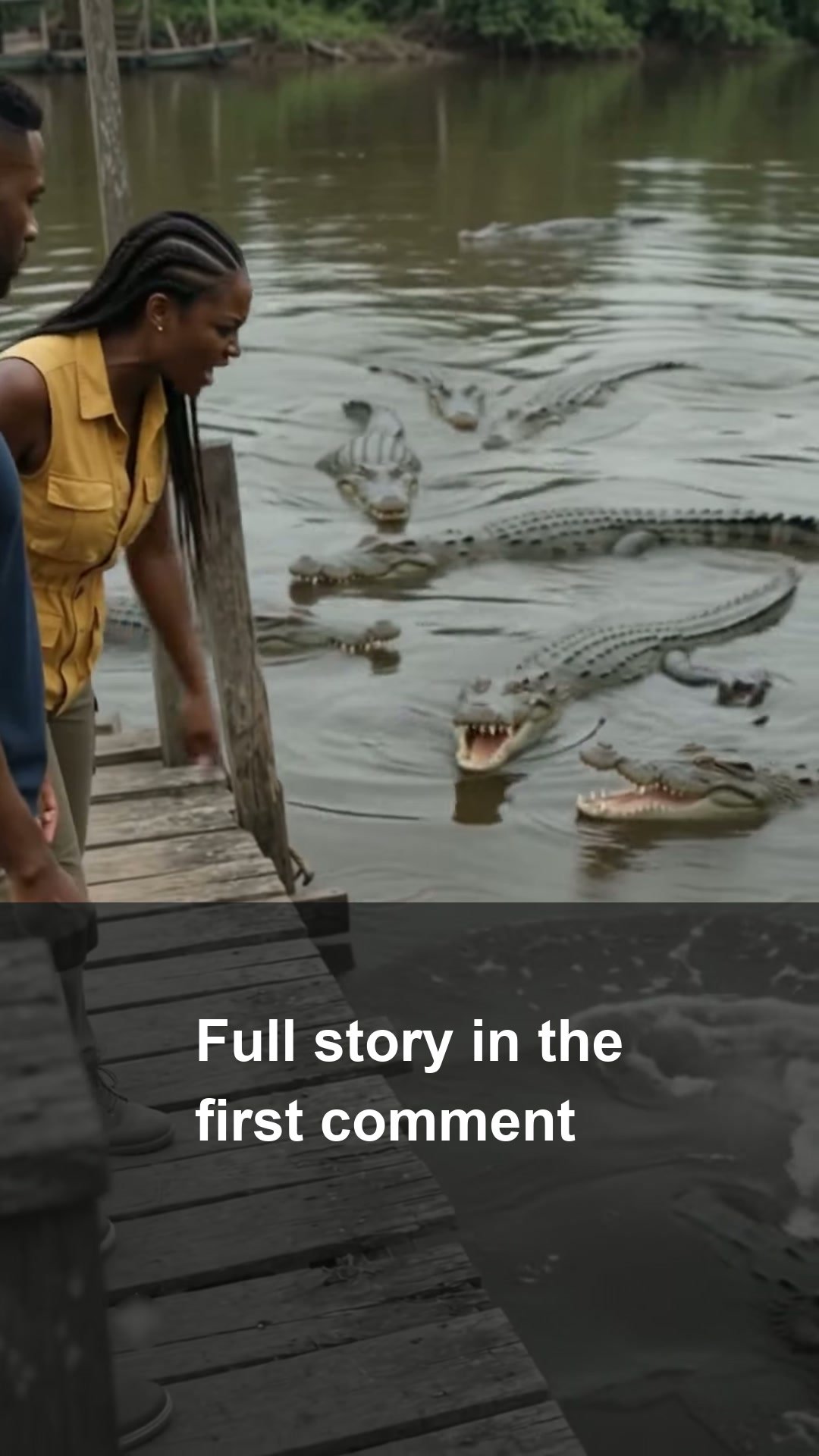
I heard the wet slap of footsteps on the wooden landing outside. The wood groaned under a familiar, heavy stride. I didn’t hide; I simply stood, turning my back to the door as Jason pushed inside, his face flushed with the exertion of the trek. He stopped dead, his breath hitching in a jagged, pathetic rhythm. The silence between us stretched, thick and suffocating, punctuated only by the distant, rhythmic thrum of the outboard motor circling the bend. He looked at the screen, then at my hands, his eyes darting toward the open door as if seeking a way to vanish into the silt. He opened his mouth, a protest forming, but I silenced him with a single, sharp look. I walked toward him, the distance closing until he was forced to step back.
I realized then that I hadn’t raised a son; I had raised a liquidation.
I’m the only thing you ever failed to kill.
The nursery in the Connecticut house smelled perpetually of lemon wax and ozone, the scent of expensive, air-purified isolation. I remember the sound of the hardwood floor beneath my oxfords—a rhythmic, hollow tapping—as I paced back and forth while Jason sat on the Persian rug. He was seven, assembling a complex model of a cargo freighter, the tiny plastic cranes and containers scattered like colorful debris. I didn’t sit with him. I stood near the mahogany desk, reviewing quarterly projections for the Pacific routes. When I looked down, he wasn’t playing. He was watching me. He had my eyes, but they lacked the necessary flicker of ambition. They were just mirrors, reflecting my own impatience back at me. I cleared my throat, a sharp, singular sound that made him flinch. I told him he was holding the tweezers incorrectly, that precision was the only thing separating a builder from a laborer. He didn’t cry. He simply tightened his grip until his knuckles turned the color of the white plastic hull, his jaw setting in a line that mirrored my own. I thought I was teaching him focus. I was actually teaching him that affection was a commodity earned only through perfect execution.
Years later, the boardroom became our secondary nursery. The Vance Global headquarters was a temple of glass and steel, and I installed Jason as a junior analyst the moment he graduated. I remember the day he presented his first major logistics overhaul. He stood at the head of the long, obsidian table, his suit perfectly tailored, his voice steady but carrying the thin, frantic edge of a man trying to outrun his own shadow. He had optimized the fuel consumption for our fleet, saving millions, but he had done it by cutting the safety protocols in the Singapore sector. When he finished, the room was silent. I looked at the charts, then at his face—that familiar, expectant mask. I didn’t offer praise. I leaned forward, resting my chin on my interlocked fingers, and asked him how many families would be compensated when the inevitable mechanical failures occurred. He blinked, his composure fracturing for a heartbeat. He argued that the figures justified the human cost, that I had taught him to prioritize the bottom line above all else. I stood up, walked to the window, and stared at the Manhattan skyline. I decided then that he wasn’t a partner; he was a liability in a bespoke suit. I told him the figures were correct but his perspective was amateur. He left the room without a word, his heels clicking against the floor with a rhythmic, controlled anger I should have recognized as a threat.
The marriage to Sarah was a strategic alignment I failed to scrutinize, blinded by the convenience of her family’s connections in the insurance industry. The rehearsal dinner at the Pierre was a study in excess—chilled champagne, white lilies, and the kind of forced laughter that sounds like grinding glass. I watched them from the corner of the room, Sarah leaning in to whisper something in Jason’s ear, her hand resting on his forearm with a pressure that looked more like an anchor than an embrace. She caught me watching and offered a smile—the kind that never reached her eyes, a sharp, practiced curve of the lips. I felt a sudden, freezing certainty: she wasn’t a wife; she was a project manager. Later that night, in the quiet of the library, Jason approached me for the first time without a business agenda. He was intoxicated, his tie loosened, his posture sloppy. He asked me if I was proud of him, his voice thick with a resentment he couldn’t quite bury under the scotch. I told him that pride was a sentiment, and sentiments were the primary cause of bankruptcy. He laughed, a short, jagged sound that turned into a cough. He told me he was going to make sure I never had to worry about sentiment again. I dismissed it as the ramblings of a drunk, a man who couldn’t handle the scale of the legacy he was inheriting.
There were red flags I chose to interpret as efficiency. The way Sarah would corner me at board functions, her voice honey-smooth, asking about the specific clauses in the living trust. She framed it as concern for the family’s stability, but her eyes were always scanning the documents, dissecting the fine print. She wanted to know how quickly the assets could be liquidated in the event of my retirement or demise. I told her that Vance Global was a living organism and it didn’t survive amputation. She just nodded, her fingers tracing the rim of her crystal glass, a predatory softness in her demeanor that I mistook for cleverness. I thought she was ambitious, and I had always admired ambition. I didn’t realize she was looking for the carotid artery of my empire. I remember sitting in my study, the shadows stretching long across the floor as I reviewed the ledger of our family life. The entries were all deficits. There were no holidays remembered, no birthdays celebrated without a corporate merger or a trip to a port city. The only thing I had ever successfully managed to grow was a pair of opportunists.
The pattern of their resentment was a slow-motion collapse. I saw it in the way Jason began to bypass me in meetings, speaking directly to the minority shareholders, suggesting that my oversight was becoming archaic, a drag on the company’s agility. He was trying to frame me as a relic. When I confronted him in the office, the air conditioner hummed, a low, mechanical drone that filled the silence I refused to break. He stood by the door, his hands in his pockets, his posture loose and mocking. He told me the world had moved on from the era of the patriarch, that ships were now just floating containers of data, and I was holding the steering wheel of a ghost ship. I didn’t yell. I looked at the pen on my desk, the heavy gold fountain pen I’d used to sign every contract for forty years, and realized I didn’t want to sign anything for him ever again. I decided that day to restructure the holdings. I moved the liquid assets into a blind trust, a cage they couldn’t see but would eventually hit when they tried to move the money. I kept the paperwork in the wall safe behind the portrait of my father—a man who, like me, valued the strength of the vault over the warmth of the hearth.
I ignored the warning signs of their desperation because I wanted to believe they were capable of playing the game with the same cold precision I had modeled for them. When they suggested the Amazon trip, the ‘bonding’ excursion to the remote riverbed, I knew it was a performance. I should have seen the script. I should have recognized the way Jason checked his watch every ten minutes, the way Sarah avoided looking at the water when we approached the docks. They were impatient, not for the view, but for the conclusion. They treated the journey like a high-stakes deal where the outcome was already determined by the fine print. I packed my bags, my hands steady, feeling the familiar, cold rhythm of a negotiation about to turn hostile. I knew they were waiting for the deep water, the place where no signal reaches and the silt swallows the evidence of a mistake. As the outboard motor cut through the black water of the tributary, the smell of rotting vegetation hit me, the pungent scent of an ending. I sat in the center of the boat, watching the back of their heads, realizing that the entire structure of my life—the empire, the ships, the billions—had been merely a training ground for this exact betrayal. I wasn’t just a father being hunted; I was a master watching his students finally attempt to apply his own cruel lessons. They weren’t betraying me; they were simply following the trajectory I had set for them. And for that, I knew exactly how to dismantle them.
The outboard motor sputtered into a rhythmic, metallic cough, vibrating against the base of my spine. Jason was steering, his posture rigid, his knuckles white against the tiller. He was a man playing the role of a grieving son, but his eyes kept darting to the horizon, calculating the distance to the extraction point like a logistics manager measuring a shipment’s transit time. He wanted to be me—the ruthless architect of outcomes—but he lacked the patience to let the structure settle. He was burning the house down to keep the insurance money.
Beside him, Sarah stared at the dark, swirling water. She looked fragile, her silk blouse pristine despite the humidity, a mask of curated innocence. She was checking the time on her watch, a gold piece I had given her for their anniversary. It was a tactical error; she thought time was a commodity she could spend, never realizing it was the only thing she couldn’t replenish. I remembered her at the hospital last month, asking the lawyer about the liquidity of the trust while holding my hand. She touched people the way a vulture touches a carcass, testing for softness.
Behind us, Elena sat in the shadows of the prow, her face a map of the river’s history. She was the one who had navigated us into this dead end, a woman who traded in silence because it was the only currency the jungle didn’t devalue. She watched me with a terrifying neutrality, a predator who knew I was already dead to the world but had decided I was worth more as a ghost. She was my only ally because she didn’t care about my money, only the survival of the riverbed that would soon hide my body.
Jason cleared his throat, the sound sharp against the dense, humid air. Dad, he said, his voice straining for a tremor of manufactured grief, we should have checked the fuel levels before leaving the camp.
I adjusted my glasses, feeling the cold weight of the satellite tracker I had sewn into my vest weeks ago. It was the only tangible thing I had left of my life’s work. I realized then that my life had been a series of spreadsheets where I had forgotten to include the human cost. I had raised a son to value the ledger over the soul, and now the ledger was coming for me.
I looked at Sarah’s reflection in the water—blurred, distorted, fading. My contradiction had been my greatest failure: I had built a global network that connected continents, yet I had never bothered to learn the frequency of my own son’s resentment. I wanted to tell him he was doing it wrong, that he had to strike when the board was distracted, not when the boat was miles from shore. But I remained silent, watching the dark water lap against the hull.
I decided then to stop being the mentor. I would let them commit the murder they were rehearsing, but I would ensure the trail led directly back to their own front door. I shifted my weight, feeling the slight drag of the boat as we neared the shallow bank. Elena caught my eye and offered a microscopic nod, confirming the path ahead was clear. My decision was fixed. I would survive the river, not for myself, but to witness the look on Jason’s face when he realized he had inherited nothing but a prison sentence. The boat touched the mud with a soft, final thud. It was time to stop teaching and start destroying.
The damp heat of the jungle clung to my skin like a second, unwanted shroud. I stepped onto the riverbank, the mud squelching beneath my boots, and reached into the hidden compartment of my vest to retrieve the satellite phone. My hands, calloused from decades of ledger-signing and steering ships, remained steady. I dialed the direct line to my private counsel in New York. The connection hummed with static before Arthur’s voice cut through the background noise of a bustling city. I told him I was alive, then I gave him the first of my orders. Cancel the corporate access codes. All of them. As I spoke, I watched Jason standing near the bow, his posture rigid as he scanned the treeline for movement. He thought he was hunting me; he didn’t know he was already an unlisted asset being liquidated.
Arthur hesitated, his professional mask slipping into confusion. I cut him off, my voice a blade of ice. I told him to initiate the ghost audit of the shipping manifests dated three months prior. If Jason had been skimming, I wanted the digital paper trail exposed by the time the sun hit the meridian. I ended the call and tucked the device away, the cold plastic burning against my ribs. I had spent my life building a fortress, and now I was going to turn it into a cage for my own son.
Two days later, I sat in a cramped, fluorescent-lit office in a border town, the air smelling of stale cigarettes and floor wax. I filed the police report. I didn’t frame it as an attempted murder—not yet—but as a report of a missing person and potential kidnapping involving my son, Jason Vance. The officer behind the counter tapped at his keyboard, his eyes glazing over as he entered the data. He looked at me, seeing only a tired, sun-scorched old man. He didn’t see the architect of a global empire. I signed the documents with a flourish, knowing that the moment the digital entry went live, Jason’s credit cards would hit a wall of automated holds and fraud alerts. The counter-action was instantaneous: he would try to access the emergency trust.
I moved to the next phase, hiring a local private investigator with a reputation for being as ruthless as he was discreet. I met him in a cafe where the coffee was bitter and the walls were paper-thin. I handed him an envelope containing the encrypted logs from the boat’s navigation system, a device Jason didn’t know I had tampered with to track his every deviation toward the dangerous shoals. I told him to present the findings to the local authorities alongside the paternity dispute papers I had already drafted. I needed a DNA test to confirm the biological link—not because I doubted it, but because the trust required a blood-tie validation for any primary inheritance claims. By forcing the test now, I was effectively stalling the probate process, creating a legal purgatory where his access to my accounts would be frozen indefinitely.
I walked out into the heat, my shadow lengthening against the cracked pavement. I felt a strange, detached satisfaction. Every action I took forced Jason to scramble, to make mistakes, to overreach. He would call the bank. They would tell him the accounts were under investigation. He would call the lawyers. They would tell him the paternity test was a prerequisite. He would spiral.
That afternoon, I bypassed the HR department of Vance Global and sent a direct, encrypted memo to the board of directors. I flagged a series of gross ethics violations—the illegal off-shore shipping of restricted materials that Jason had been quietly facilitating behind my back. It was a poison pill. By alerting the board, I ensured that any movement he made to consolidate power would be met with an internal investigation. They wouldn’t just see a grieving son; they would see a liability. I watched the status of the memo change to ‘read’ on my screen, the notification blinking like a heartbeat.
I retreated to a small, rented room to wait. My thoughts were clinical, stripped of the fatherly affection that had been the anchor of my previous failure. I remembered the way Jason used to sit at my desk, playing with my fountain pen, looking at the world as if it were a map of resources to be conquered. I had taught him that. I had given him the tools to tear me down, and now, I was using the same blueprints to bury him.
A knock at the door startled me. It was Elena. She held out a phone, her face etched with a mix of fear and curiosity. She had received a message from a contact in the city. Jason had just filed a petition in court, attempting to declare me legally dead to bypass the DNA requirement. He was frantic, desperate, and fast. He was losing his grip on the narrative.
I took the phone, my thumb hovering over the dial key. I had the power to stop him, to step into the light and declare my presence, but that would be a mercy I was no longer willing to grant. Instead, I decided to leak the location of his illicit storage facility to the federal investigators. I would let them find the evidence of his conspiracy while he was busy arguing with a judge over a tombstone that didn’t exist. The hook was set. I watched the screen glow, the finality of my decision settling in my chest. He wanted my legacy, and I would give it to him—every debt, every crime, and every consequence. I picked up the pen from the nightstand, its weight familiar, and began to draft the final affidavit, a document that would serve as the opening salvo in the destruction of everything he thought he had won.
The morning news cycle hit like a slow-moving landslide. I sat in the corner of a dimly lit café in Manaus, my face obscured by a brimmed hat, watching the television mounted above the espresso machine. The headline, Vance Global Shipping CEO Declared Deceased, flashed in aggressive, sterile font. Beside it, a looping image of Jason at the memorial service—his face crafted into a mask of curated grief—looked hollower than I remembered. He was clutching Sarah’s hand so tightly her knuckles had turned translucent.
My phone, a burner device I kept strictly for the audit, vibrated against the scarred wooden table. A notification from a private equity monitor: Vance Global stock had shed twelve percent in three hours. Investors were smelling the rot before the body was even cold. I watched the numbers tick downward, a rhythmic pulse of financial hemorrhaging. I remembered the day I built the first branch of the company, the sheer, intoxicating weight of the ticker tape in my hand, and contrasted it with the cold, digital annihilation currently unfolding. It was cleaner this way.
I set the phone down and signaled for the check. A woman at the next table caught my eye, her expression one of morbid curiosity—the look people reserve for someone who has just witnessed a car wreck they didn’t know they were looking for. She leaned toward her companion, whispering, and pointed at the television. I realized then that my face was becoming a permanent fixture of the public consciousness, a ghost story told in boardrooms and dive bars alike.
The cost was not just the business. It was the absolute evaporation of my privacy. I walked out into the humid heat, the weight of the affidavit burning in my jacket pocket. Every step felt heavier, as if the air itself were thickening with the scrutiny of a thousand eyes. I stopped at a public kiosk to buy a newspaper. The front page featured a column titled The Inheritance of Greed, a scathing critique of the Vance family dynamic. It wasn’t just about the money; the reporters were digging into the childhood I had paved with gold and barren of affection. They were dissecting my failures as a father to explain my son’s monstrosity.
I reached the rental car, my reflection caught in the side mirror. I looked older, my skin textured like the riverbank where I had nearly died. The isolation I had sought had become a prison of my own making, guarded by the very chaos I had unleashed. I had wanted them to lose everything, but I hadn’t accounted for the way the world would strip me bare in the process. My name was no longer a synonym for success; it was a cautionary tale, a stain.
I gripped the steering wheel, the leather cold and unforgiving. The board of directors was meeting in an hour to finalize the succession vote. If I stayed in the shadows, I would remain a ghost, but I would be a ghost who had successfully burned his own house down to kill the rats inside. I shifted the car into gear, the engine turning over with a reluctant whine. I had to go to the terminal. I had to see the look on Jason’s face when he realized his victory was merely the prologue to his imprisonment. I pressed the accelerator, merging into the heavy traffic, and felt the final tether to my old life snap. There was no going back to the man I was before the river; there was only the architect of the collapse.
The boardroom smelled of floor wax and expensive, nervous sweat. I stood behind the soundproof glass of the observation gallery, my hands resting on the cool, brushed-steel railing. Below, Jason sat at the head of the mahogany table, his tie loosened, his eyes scanning the digital tablet with a desperate, predatory hunger. Beside him, Sarah toyed with her wedding ring, her knuckles white. She looked toward the door every thirty seconds, expecting the final confirmation of the trust transfer.
The chairman cleared his throat, the sound magnified by the overhead speakers. He didn’t look at Jason. He looked at the folder containing the federal indictment papers, the ones I had dropped on his desk at dawn.
“Mr. Vance,” the chairman said, his voice flat. “The audit of the blind trust has returned findings that supersede our current voting agenda. It appears there has been a systematic attempt to defraud the estate.”
Jason stood up, his chair clattering backward against the plush carpet. “What is this? We’re here to vote on the succession, not—”
“You are here to be removed,” I whispered to the empty room.
Two men in dark suits entered from the side door, their badges flashing briefly under the recessed lights. They didn’t rush. They moved with the terrifying, practiced efficiency of men who have already won. They placed their hands on Jason’s shoulders just as he began to shout, a high, thin sound that lacked any trace of the authority he had been trying to project for months. Sarah didn’t scream. She simply stared at the pen on the table, her face draining of color until she looked like a wax figurine left too close to a flame.
I watched as they led him out. He didn’t look back, and he didn’t see me in the shadows above. He was already calculating his next lie, already trying to draft a narrative where he was the victim of a corporate coup. He never understood that the empire was never mine to give; it was a structure I had built to test him, and he had failed the only test that mattered: he had forgotten that an architect can always tear down what he has designed.
I turned away, the glass separating me from the wreckage of my own bloodline. The silence in the hallway was absolute. I walked toward the private elevator, my footsteps echoing against the marble. I didn’t feel the surge of triumph I had expected. I felt only a profound, hollow weightlessness. I reached the lobby and stepped out into the biting winter air, the cold stinging my skin, washing away the lingering, humid ghost of the Amazon. I was finally, truly, alone.
I walked three blocks before stopping at a small neighborhood park. The iron bench was frosted with a thin, brittle layer of rime that groaned under my weight. My hands, still carrying the ghost-tremor of the river, felt foreign in my pockets. I pulled a thermos from my bag, the steam rising in lazy, erratic ribbons against the gray sky. The coffee was black, bitter, and scalding, a sharp sensory anchor that brought me back to the present moment.
A stray dog, a terrier mix with one folded ear, trotted toward me, its nails clicking rhythmically on the frozen path. It stopped a few feet away, tail oscillating in a slow, hopeful arc. I reached down, my fingers brushing its coarse, cold fur.
Is he yours? a woman asked, her voice muffled by a thick wool scarf.
No, I said, looking at the animal. He’s just wandering.
She nodded, her eyes lingering on the empty park behind me before she continued walking. I watched her go, realizing for the first time in decades that I did not need to know where she was headed or what she owned. I took another slow sip of coffee. The silence here wasn’t the heavy, predatory silence of the jungle; it was expansive, neutral, and indifferent to my existence.
I leaned back, closing my eyes. I expected the familiar flashes of the boardroom or the sharp, rehearsed smile of my daughter-in-law to surface, but there was only the sound of distant traffic and the rhythmic, steady breathing of the dog at my feet. The empire was dissolving into spreadsheets and legal filings, and the man who had built it was simply a spectator now. I stood up, the dog trailing close behind my boots. I had no destination, no board meeting, and no bloodline to manage. I began to walk, following the dog toward the edge of the city.
The walk led me to the edge of the estate, where the manicured lawn gave way to the wild, unkempt weeds of the perimeter fence. I stopped, the iron gate cold against my palm. I thought of the ink-stained ledgers that had defined my seventy years, the weight of a name that demanded constant, brutal maintenance. It was a phantom hunger, a hollow architecture that crumbled the moment I stopped feeding it my life. I let go of the iron, the metal biting into my skin, and turned my back on the sprawling glass towers silhouetted against the horizon. On the mahogany desk inside the study, a single, pristine fountain pen lay abandoned and forgotten, its cap missing, while the office windows reflected only the quiet, empty garden.
Leave a Reply