A disturbing narrative has begun to surface, one that suggests the challenges faced by women in America are somehow comparable to the brutal, systemic oppression endured by women under the Iranian regime. This isn’t just a misguided comparison; it’s a dangerous distortion of reality that trivializes profound suffering and undermines the very concept of human rights.
For too long, some voices, often from within the Democratic sphere, have attempted to downplay the stark differences, implying that American women aren’t “much better off.” But when we peel back the layers and confront the undeniable facts, the contrast couldn’t be more glaring. It’s time to set the record straight and challenge this false equivalence head-on.
The Chilling Reality for Women in Iran
Let’s begin by examining the daily existence for millions of women and girls in Iran. Their lives are governed by a strict, theocratic regime that systematically curtails their fundamental freedoms from birth. This isn’t about cultural differences; it’s about a state-enforced system designed to control, subjugate, and silence half of its population.
One of the most visible forms of this oppression is the mandatory hijab. Women are legally required to cover their hair and bodies in public, not by choice, but under threat of arrest, fines, and even physical violence from the notorious “morality police.” The tragic death of Mahsa Amini in 2022, after being detained for allegedly violating these laws, ignited a nationwide uprising, underscoring the lethal consequences of this enforced dress code.
But the oppression extends far beyond attire. In Iran, women are considered legal minors under the guardianship of their male relatives. A woman needs her father’s or husband’s permission to obtain a passport, travel abroad, or even get certain medical procedures. Her testimony in court is worth half that of a man’s, and she has significantly fewer rights in matters of divorce and child custody.
- Bodily Autonomy: Severely restricted, with mandatory dress codes and limitations on reproductive choices.
- Legal Equality: Women are not equal to men in court testimony, inheritance, or marriage/divorce rights.
- Freedom of Movement: Requires male guardian’s permission for travel abroad.
- Political & Social Participation: Limited roles and severe crackdowns on dissent.
Women are routinely barred from attending certain sporting events, holding specific judicial or political offices, and even singing in public as soloists. The state actively suppresses any form of protest or advocacy for women’s rights, with activists facing lengthy prison sentences and brutal treatment. This isn’t a society grappling with gender inequality; it’s a society where women’s rights are fundamentally denied by law and enforced by state violence.
American Women: A World Apart
Now, let’s turn our attention to the United States. To suggest that American women face conditions “not much better” than their Iranian counterparts is to willfully ignore the foundational principles of a democratic society, however imperfectly applied. American women, by law, are afforded equal rights, and critically, they possess the freedom to fight for more.
Do American women face challenges? Absolutely. Issues like the gender pay gap, underrepresentation in leadership roles, and ongoing debates over reproductive rights are very real and demand continued attention and action. Domestic violence and sexual assault remain horrific problems that society must address with greater urgency and effectiveness. These are systemic issues that require reform, advocacy, and cultural shifts.
“The ability to protest, to vote, to organize, and to legally challenge discrimination are not minor privileges; they are the bedrock of freedom that Iranian women can only dream of.”
However, the crucial distinction lies in the ability of American women to address these challenges. They can vote, run for office, organize protests, form advocacy groups, write articles, speak freely, and utilize the legal system to challenge discriminatory practices. They can choose their attire, pursue any career, travel independently, and make personal decisions about their bodies without fear of state-sanctioned violence or imprisonment.
- Legal Equality: Guaranteed by law, with ongoing efforts to enforce and expand.
- Freedom of Expression: Protected by the First Amendment, allowing for advocacy and dissent.
- Bodily Autonomy: While debated, women generally control their medical decisions and dress.
- Political Participation: Women vote, run for office, and hold positions at all levels of government.
The very existence of movements like #MeToo or the ongoing debates around reproductive freedom demonstrate the robust capacity for self-criticism and the constant struggle for improvement within American society. These are not struggles against a totalitarian regime but within a democratic framework that, however flawed, allows for progress and change driven by its citizens.
The Danger of False Equivalence
Why does this comparison matter so much? Because equating the struggles of American women with the systematic subjugation in Iran is profoundly harmful. It serves to:
- Trivialise Genuine Oppression: It diminishes the horrific realities faced by women in Iran, making their fight for basic human dignity seem less urgent or unique.
- Undermine Human Rights Advocacy: By blurring the lines, it weakens the global call for justice and freedom for those truly living under tyrannical rule.
- Distort Reality: It presents a false narrative that can mislead the public and hinder informed policy discussions both domestically and internationally.
- Discredit Legitimate Activism: It can be used to dismiss valid concerns about gender inequality in the U.S. by framing them as “overreactions” if they are supposedly “no worse” than Iran.
To suggest that American women, who can freely pursue education, careers, and personal choices, are “not much better off” than women in a society where they can be beaten or killed for showing a strand of hair, is not just intellectually dishonest; it’s morally reprehensible. It demonstrates a profound lack of understanding of what true oppression looks like.
A Call for Clarity and Moral Courage
While no nation is perfect, and every society has room for improvement, there’s a fundamental, unbridgeable chasm between a country where women are fighting for more rights within a democratic system, and one where they are fighting for basic human rights and freedom against a brutally oppressive regime. To ignore this distinction is to betray the very women who risk everything for a glimmer of the freedoms we take for granted.
We must reject any narrative that seeks to diminish the suffering of Iranian women by drawing false equivalencies. Instead, we should unequivocally stand with those who are fighting for their fundamental human rights, and speak with clarity about the stark differences between a free society and one under authoritarian control. The bravery of Iranian women deserves our unwavering support, not a dismissive comparison.
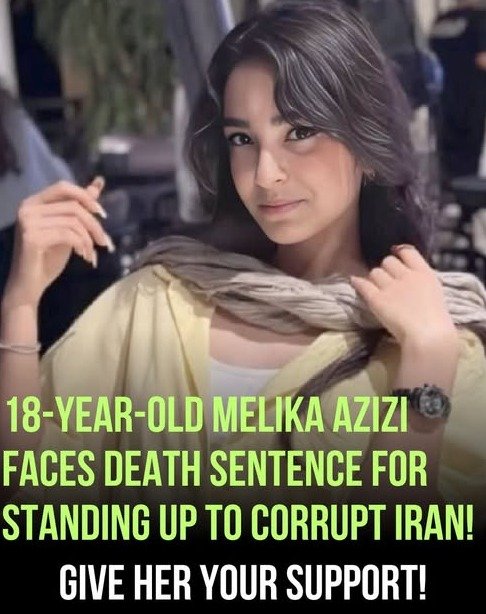
So, to those who continue to push this narrative: look closely at the facts. Look at the images. Listen to the desperate pleas. The answer to “got any response” is a resounding challenge to acknowledge the truth, for the sake of human dignity and the global fight for freedom.
The Path Forward: Acknowledging True Disparity
Understanding the profound disparity in women’s rights between Iran and the United States isn’t about patriotic chest-thumping. It’s about a clear-eyed assessment of reality and a commitment to human rights. It’s about recognizing that while American women continue their vital work of pushing for greater equality and justice within a democratic framework, women in Iran are struggling for the very foundational liberties that define human existence.
We must be careful not to conflate the ongoing, important work of achieving gender equity in democratic societies with the desperate struggle against state-sponsored gender apartheid. Both are important, but they are profoundly different in their nature, scope, and stakes. Let us not allow political rhetoric to cloud our moral judgment or obscure the undeniable truth.
The conversation should not be about whether American women have “arrived” at perfect equality, but about the fundamental freedoms they possess to pursue that equality. This is a freedom that Iranian women are systematically denied, and it is a difference that we must never, ever forget.
Leave a Reply