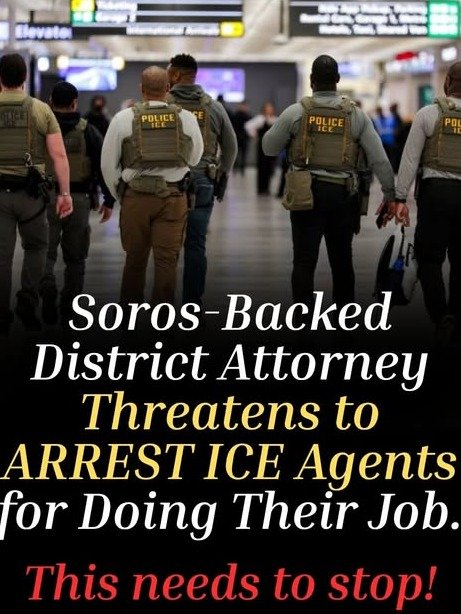
Imagine a city where the top prosecutor openly challenges federal immigration enforcement, creating a firestorm of controversy and raising profound questions about the very fabric of law and order. This isn’t a hypothetical scenario; it’s the reality unfolding in Philadelphia, where District Attorney Larry Krasner, a figure widely recognized for his progressive stance and backing from George Soros-linked funding, has issued a stark warning to ICE agents.
This bold move has ignited a fierce debate, pitting local progressive policies against federal authority, and sparking intense discussions about justice, politics, and who truly holds the reins of power in America’s major cities. What exactly is happening in the City of Brotherly Love, and why should you be paying attention?
The Progressive Prosecutor: Larry Krasner’s Vision
Larry Krasner’s tenure as Philadelphia’s District Attorney has been nothing short of transformative, marked by a commitment to sweeping criminal justice reform. Elected in 2017, his platform promised an end to mass incarceration, a reduction in cash bail, and a focus on addressing the root causes of crime rather than simply punishing offenders. His supporters hail him as a champion of civil rights and an innovator challenging a broken system.
Before becoming DA, Krasner spent decades as a defense attorney, often suing the police department. This background has profoundly shaped his approach to prosecution, leading to policies that have significantly altered the landscape of law enforcement in Philadelphia. His critics, however, argue that his reforms have gone too far, potentially jeopardizing public safety and undermining the authority of law enforcement.
The Influence of Soros-Linked Funding
A crucial aspect of the narrative surrounding DA Krasner is the significant financial backing he received from organizations linked to billionaire philanthropist George Soros. These funds, channeled through various political action committees, have supported a wave of ‘progressive prosecutor’ candidates across the nation, aiming to reform the criminal justice system from within.
For many, this funding represents a vital investment in systemic change, empowering candidates committed to addressing inequalities and reducing incarceration rates. However, for others, it raises concerns about external influence on local elections and the potential for a national agenda to override local community values and public safety priorities. The debate over the source and impact of this funding is central to understanding the broader political context.
The ICE Warning: A Line in the Sand
The latest flashpoint in Philadelphia’s ongoing legal and political drama involves DA Krasner’s explicit warning to agents from U.S. Immigration and Customs Enforcement (ICE). This directive effectively communicated that ICE agents operating within Philadelphia might face legal scrutiny, or even prosecution, if their actions are deemed to overstep legal boundaries or violate the rights of individuals.
This warning is a direct outgrowth of Philadelphia’s status as a ‘sanctuary city,’ a designation that generally limits local law enforcement’s cooperation with federal immigration authorities. Krasner’s office has consistently emphasized the importance of protecting the rights of all city residents, regardless of immigration status, viewing aggressive ICE tactics as a threat to community trust and safety.
Why the Warning? Understanding Krasner’s Stance
DA Krasner’s office has articulated several reasons behind its firm stance against certain ICE operations. Firstly, there’s a strong belief that aggressive federal immigration enforcement can erode trust between immigrant communities and local law enforcement, making residents less likely to report crimes or cooperate with police, thereby endangering everyone.
“Our office is committed to upholding the rights of all Philadelphians, and that includes ensuring that federal agents operate within the bounds of the law,” a spokesperson from Krasner’s office might state, emphasizing the need for accountability. “When federal actions create fear and distrust, it makes our city less safe for everyone.”
Secondly, there are legal interpretations at play. Krasner’s team argues that some ICE actions may violate constitutional protections or existing local ordinances. By issuing a warning, the DA’s office is asserting its role in overseeing all law enforcement activity within its jurisdiction, federal or otherwise.
The Backlash: Critics and Concerns
Unsurprisingly, Krasner’s warning to ICE has met with significant backlash from various quarters. Critics, including federal officials, conservative commentators, and even some local law enforcement figures, argue that the DA is overstepping his authority and obstructing federal law enforcement efforts.
Many believe that federal immigration laws must be enforced uniformly across the country, and that local jurisdictions should not be able to impede these operations. Concerns have been raised about the potential for increased crime, the undermining of national security, and the dangerous precedent such actions could set for other cities.
- Public Safety Concerns: Opponents argue that hindering ICE operations could allow individuals who pose a threat to remain in communities.
- Rule of Law: Critics emphasize that federal law should take precedence and that local DAs should not selectively enforce or obstruct it.
- Inter-Agency Conflict: The warning creates friction between local and federal agencies, potentially harming cooperation on other critical issues.
Law vs. Politics: A Deeper Dive
The core of this controversy lies in the fundamental tension between law and politics. While the law is meant to be impartial and universally applied, its interpretation and enforcement are often heavily influenced by political ideologies and priorities. Krasner’s actions are a clear manifestation of this dynamic.
His supporters see his stance as a politically courageous move to protect vulnerable populations and reform an immigration system they view as unjust. They argue that a DA’s role extends beyond mere prosecution to advocating for the rights and well-being of the entire community, even if it means challenging federal mandates.
Conversely, his detractors view it as a political overreach, an attempt to impose a progressive agenda that disregards federal statutes and potentially compromises public safety. They believe that a DA’s primary responsibility is to uphold all laws, not to pick and choose based on political leanings.
The Impact on Philadelphia Residents
This ongoing conflict has tangible implications for the people of Philadelphia. For immigrant communities, particularly undocumented individuals, the DA’s warning might offer a sense of security and protection, reinforcing the city’s sanctuary status and reducing fears of arbitrary detention and deportation.
However, for other residents, especially those concerned about crime or the perception of lawlessness, Krasner’s policies and his stance against ICE might be a source of anxiety. The debate often centers on whether these progressive policies genuinely make the city safer for everyone or inadvertently create new challenges.
A National Trend? The Rise of Progressive DAs
Philadelphia’s situation is not isolated; it’s part of a broader national trend. Across the United States, a growing number of ‘progressive prosecutors,’ often backed by similar reform-minded funding, are being elected in major cities. These DAs are challenging traditional tough-on-crime approaches, advocating for policies that prioritize rehabilitation, reduce racial disparities, and question the efficacy of mass incarceration.
From Los Angeles to St. Louis, these prosecutors are reshaping local justice systems, often clashing with established law enforcement hierarchies and federal agencies. The conflict in Philadelphia serves as a microcosm of this larger ideological battle playing out across the country, highlighting deep divisions over the future direction of criminal justice.
What Lies Ahead? The Future of Justice in Philadelphia
The standoff between DA Larry Krasner’s office and ICE agents is far from over. It represents a significant test of local autonomy versus federal authority, and the outcome could have lasting implications for how immigration enforcement and criminal justice reform are approached in urban centers nationwide.
As the debate continues, Philadelphians, and indeed all Americans, are left to grapple with fundamental questions: What is the proper balance between local sovereignty and federal law? How do we ensure public safety while also protecting civil liberties? And what role should politics play in the impartial administration of justice?
The answers to these questions will not only shape the future of Philadelphia but could also set precedents for how cities navigate the complex intersection of law, politics, and community values for years to come. Staying informed on this evolving situation is crucial for understanding the direction of justice in our modern society.
Conclusion: A City at a Crossroads
Philadelphia stands at a critical juncture, with its District Attorney at the forefront of a national movement to redefine justice. Larry Krasner’s warning to ICE is more than just a local dispute; it’s a powerful symbol of the ongoing ideological struggle over how our laws are enforced, who they protect, and the ultimate vision for a just society. The implications of this battle extend far beyond the city limits, touching on the very principles of governance and the rights of every individual.
Leave a Reply