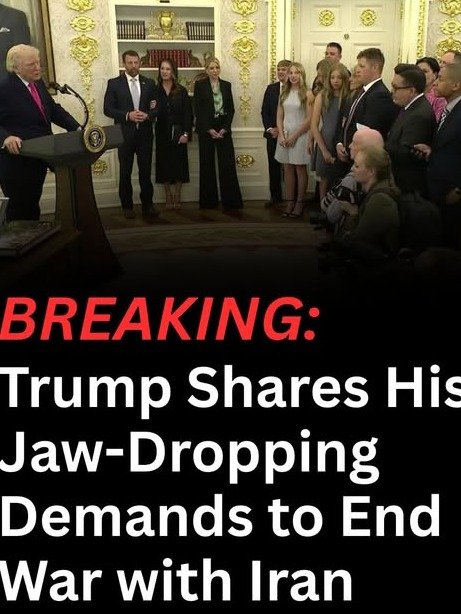
Imagine a geopolitical earthquake, one where a major regional power is told, unequivocally, to dismantle its most controversial capabilities entirely. This isn’t a hypothetical scenario; it’s the stark reality of President Trump’s unprecedented, no-compromise approach toward Iran. His administration laid down a clear, unyielding demand: a complete and total shutdown of Iran’s nuclear ambitions, including an absolute halt to all uranium enrichment.
This isn’t merely a tweak to an existing deal or a call for stricter oversight. It represents a fundamental shift in global diplomacy, signaling an end to the era of incremental concessions with Tehran. The message is unambiguous: the United States will accept nothing less than zero uranium enrichment, challenging the very foundation of Iran’s stated nuclear program and potentially reshaping the balance of power in the volatile Middle East.
A Radical Departure from Past Policies
For decades, international efforts to curb Iran’s nuclear program largely centered on containment, monitoring, and limiting enrichment levels. The Joint Comprehensive Plan of Action (JCPOA), widely known as the Iran Nuclear Deal, was the culmination of these efforts, allowing Iran to maintain some enrichment capacity under stringent international supervision in exchange for sanctions relief. However, President Trump viewed this agreement as fundamentally flawed and insufficient.
His administration argued that the JCPOA did not adequately address Iran’s ballistic missile program, its support for regional proxy groups, or the deal’s sunset clauses, which would eventually allow Iran to expand its nuclear activities. The withdrawal from the JCPOA in May 2018 marked the beginning of this ‘maximum pressure’ campaign, designed to compel Iran back to the negotiating table for a ‘better deal’ – one that would be far more comprehensive and restrictive.
The Meaning of ‘Zero Enrichment’
The demand for ‘zero uranium enrichment’ is a game-changer. Uranium enrichment is a dual-use technology, meaning it can be used for peaceful purposes, such as generating electricity, or for military applications, like producing fissile material for nuclear weapons. Under the JCPOA, Iran was permitted to enrich uranium to 3.67% purity, far below weapons-grade levels (typically around 90%).
By demanding ‘zero enrichment,’ the Trump administration effectively sought to strip Iran of any indigenous capability to produce enriched uranium, regardless of its stated purpose. This policy goes beyond merely preventing weaponization; it aims to eliminate the *potential* for weaponization by removing the entire infrastructure and knowledge base for enrichment. It’s an unprecedented demand that Iran views as an infringement on its sovereign rights and its right to peaceful nuclear energy.
Why Such a Tough Stance?
The rationale behind this stringent approach is multifaceted. Firstly, it stems from a deep distrust of the Iranian regime’s intentions, fueled by its history of clandestine nuclear activities prior to the JCPOA and its continued development of ballistic missiles. The administration believed that any level of enrichment, even low-level, presented an unacceptable risk, creating a pathway to a nuclear weapon should Iran decide to break out of its commitments.
Secondly, the ‘no compromise’ stance was driven by broader regional security concerns. Iran’s actions in the Middle East—including its support for Hezbollah in Lebanon, Houthi rebels in Yemen, and various militias in Iraq and Syria—were seen as destabilizing forces. The administration linked Iran’s nuclear ambitions to its aggressive regional posture, believing that a nuclear-capable Iran would be an even greater threat to allies like Israel and Saudi Arabia.
“We will not allow the world’s leading state sponsor of terror to possess the world’s most deadly weapons,” stated Secretary of State Mike Pompeo, encapsulating the administration’s core belief. This sentiment underscored the comprehensive nature of the demands, extending beyond nuclear issues to encompass Iran’s overall behavior.
The Pillars of ‘Maximum Pressure’
To enforce this ‘no compromise’ stance, the Trump administration unleashed an aggressive ‘maximum pressure’ campaign, primarily through economic sanctions. These sanctions were designed to cripple Iran’s economy, cut off its revenue streams, and force its leadership to reconsider its policies. Key elements of this campaign included:
- Oil Sanctions: Targeting Iran’s crucial oil exports, aiming to reduce them to zero.
- Financial Sanctions: Imposing restrictions on Iran’s banking sector and its ability to conduct international transactions.
- Sectoral Sanctions: Targeting other vital sectors of the Iranian economy, such as shipping, metals, and petrochemicals.
- Secondary Sanctions: Threatening to penalize any foreign entities or countries that continued to do business with sanctioned Iranian entities.
The goal was to create such immense economic pain that the regime would have no choice but to capitulate to the U.S. demands. This strategy was predicated on the belief that economic hardship would either force a change in Tehran’s behavior or lead to internal unrest that could destabilize the regime.
International Reactions and Divisions
The ‘no compromise’ approach created significant rifts on the international stage. While allies like Israel and Saudi Arabia largely supported the tougher stance, European powers (France, Germany, UK) expressed strong opposition. They argued that the JCPOA, despite its flaws, was the best mechanism for containing Iran’s nuclear program and that abandoning it risked escalating tensions and pushing Iran closer to developing a bomb.
European nations attempted to preserve the deal and create mechanisms to circumvent U.S. sanctions, but these efforts largely proved ineffective against the might of the American financial system. China and Russia also criticized the U.S. approach, viewing it as unilateral and destabilizing, and continued to advocate for the preservation of the JCPOA.
The Path Forward: Escalation and Diplomacy
The ‘zero enrichment’ demand, coupled with maximum pressure, led to a period of heightened tensions in the Persian Gulf. Iran responded by gradually reducing its compliance with the JCPOA, increasing its uranium enrichment levels, and stockpiling enriched uranium beyond the deal’s limits. This tit-for-tat escalation included attacks on oil tankers, drone incidents, and missile strikes on oil facilities, bringing the region to the brink of conflict.
Despite the aggressive rhetoric and actions, the ultimate goal of the Trump administration was to force Iran into a new, more comprehensive negotiation. However, Iran consistently refused to negotiate under duress, demanding that the U.S. first lift sanctions and return to the JCPOA. This created a diplomatic stalemate, with both sides entrenched in their positions, unwilling to be the first to blink.
Long-Term Implications and Unanswered Questions
The long-term implications of this ‘no compromise’ policy are still unfolding. While it certainly put unprecedented pressure on the Iranian economy, it also led to Iran accelerating some aspects of its nuclear program and increasing regional provocations. Critics argued that such an absolutist stance left little room for de-escalation or diplomatic breakthroughs, increasing the risk of miscalculation and conflict.
The question remains whether a ‘zero enrichment’ demand is ultimately achievable through peaceful means, or if it’s a bridge too far for any sovereign nation to accept. The Trump administration’s bold gamble redefined the parameters of engagement with Iran, setting a precedent that any future deal would have to be far more restrictive than ever imagined before. The world watches to see if this uncompromising approach will ultimately lead to a more secure Middle East, or if it will inadvertently pave the way for greater instability.
Regardless of the outcome, President Trump’s ‘no compromise’ stance on Iran’s nuclear program has undeniably left an indelible mark on international relations, forcing a re-evaluation of what is considered acceptable in the pursuit of non-proliferation and regional security. It’s a high-stakes strategy with potentially world-altering consequences.
Leave a Reply