The security manager’s voice was barely a whisper, but it sounded like a gavel coming down in the middle of my reception. He leaned over the white-clothed table, his breath smelling of stale espresso and rain. I watched the golden liquid in Julian’s glass catch the light, perfectly clear, perfectly lethal.
The cliffside wind whipped my veil against the glass, a frantic, rhythmic tapping. Julian was across the patio, flushed and vibrant, gesturing wildly to my mother. He didn’t notice me watching the monitor on the manager’s phone—the grainy, silent footage of him hovering over the bar, shaking a fine white powder into the flute he’d later hand to me.
“The tox screen confirms it, Elena,” the manager murmured. “He kept the remainder in his cufflinks.”
My heart didn’t race. It settled, cold and heavy as a lead weight. I turned the diamond on my finger, the metal biting into my skin. I could scream, shatter the evening, and watch the guests recoil. Or I could let him drink the toast he had meticulously prepared for me.
“Let him finish his speech,” I said.
I stood, smoothing my dress, and began the long walk toward the stage.
The alarm clock hummed at six-fifteen, a persistent, tinny vibration against the mahogany nightstand. I reached out, my fingers finding the edge of the device before my eyes had even adjusted to the gray light filtering through the blinds. The room smelled of lavender detergent and the faint, lingering dust of a life lived by schedule. I sat up, the sheets pooling around my waist, and checked the weather app. Overcast, fifty-four degrees, humidity rising. It was the kind of Tuesday that demanded a wool coat and a low tolerance for small talk.
In the kitchen, the espresso machine hissed, a rhythmic, pressurized sound that punctuated the silence of the apartment. I watched the dark liquid drip into the porcelain mug, calculating the grind size against the ambient temperature. It was a tedious, necessary ritual. I took the first sip standing by the window, watching a delivery truck navigate the narrow street below. The driver struggled with a heavy box, his frustration visible even from three stories up as he checked his watch. I noted the way his shoulders slumped when the neighbor leaned out to complain. A simple failure of logistics.
The commute was an exercise in predictability. I took the train, finding the same corner seat as always, the upholstery worn smooth by a thousand identical passengers. I spent the twenty-minute ride reviewing the quarterly risk assessment files on my tablet, highlighting discrepancies in the supply chain projections. My mind felt like a well-organized filing cabinet, each thought tucked away behind a crisp, manila folder. I didn’t look at the other commuters. They were variables, background noise in the architecture of my day.
At the office, the air was recirculated and sterile. I walked past the breakroom where the communal printer was laboring through a massive document, its fan whirring with a high-pitched, metallic whine. Mark from accounting was standing by the sugar bowl, stirring his coffee with a plastic straw.
Good morning, Elena, he said, his smile tight and practiced. Looks like the servers are acting up again.
Just the printer, I replied, not breaking stride. It’s an easy fix if you clear the cache.
I didn’t wait for his response. My office door clicked shut behind me, creating a vacuum of calm. I sat at my desk and opened my laptop. The screen glowed, illuminating the clean lines of my workspace. Everything was in its place: the pen set aligned with the edge of the blotter, the phone stationed precisely at the four o’clock position, the spreadsheet waiting for my input. I spent three hours analyzing patterns of instability in emerging markets, identifying weaknesses that others were too distracted to notice. I enjoyed the work. It was honest, predictable, and devoid of the messy, irrational undercurrents that usually governed human behavior.
At noon, I took a salad to the park bench across the street. The wind was picking up, tossing dry leaves against the iron fence. I ate slowly, watching a squirrel dart between trash cans, assessing its path, noting how it favored the shade. It was a quiet, unremarkable Tuesday, the kind that leaves no trace in the memory. I was thinking about the upcoming weekend, about the final adjustments to the guest list and the logistical demands of a high-stakes event, feeling entirely in control of the geometry of my future.
I walked back to the building, my heels clicking a steady, rhythmic cadence against the pavement. I reached my floor just as the building intercom chirped. I set my bag down on the desk, feeling the weight of the day’s tasks receding. My phone, resting on its charging pad, suddenly erupted with a sharp, insistent ring that cut through the office quiet like a blade.
The security manager’s voice was barely a whisper, but it sounded like a gavel coming down in the middle of my reception. He leaned into my ear, his breath smelling faintly of peppermint and industrial cleaner, his eyes darting toward the ornate silver tray Julian was currently maneuvering through the crowd. I stood near the edge of the cliffside terrace, the saltwater breeze catching the lace of my veil, and watched the way my brother’s hands trembled against the crystal stem of the glass intended for my groom.
The security manager pointed a discreet finger toward the feed on his tablet. The grainy monochrome image showed Julian in the catering tent, five minutes prior, dropping a translucent, viscous bead into the flute marked with a blue silk ribbon. It was the exact glass he had just placed in front of Mark.
I took the glass from the table. The liquid shimmered, perfectly clear, holding the light of the setting sun. I turned to Julian, who stood three feet away, his forced smile looking like a jagged crack in a porcelain mask.
Julian, you forgot the bitters, I said, my voice steady, stripped of any tremor.
His eyes widened, the pupils pinpricks of frantic energy. I don’t know what you mean, Elena. It’s just standard vintage.
I held the glass out, my thumb resting against the rim, and tilted it toward him. You’ve always had a discerning palate, haven’t you? Ever since the summers at the lake house, when you were so fond of keeping the best parts of everything for yourself.
The music swelled, a string quartet playing something light and inconsequential, while the guests drifted around us like ships in a fog. My pulse hammered in my throat, a clinical, rhythmic count, but my face remained a mask of practiced calm. I looked at Mark, who was laughing at something a groomsman had said, unaware that his equilibrium was seconds away from being compromised.
Drink it, I whispered, stepping into his personal space. Prove to me it’s the vintage you promised.
The color drained from Julian’s face, leaving him looking like a sketch on parchment. He glanced toward our parents, who were busy holding court near the dessert station, their laughter echoing against the limestone walls. He knew I had the footage. He could see it in the way I held my phone, the screen still glowing with the recorded loop of his movements in the tent.
I am not playing your games today, Elena, he hissed, his knuckles white as he gripped the tray.
I didn’t argue. I simply moved the glass closer to his lips, forcing him to either accept the poison he had curated or drop the act entirely in front of the entire Malibu elite. He chose the latter. His hand spasmed, the tray clattering onto the marble floor, silver spilling everywhere in a chaotic, metallic shriek. The room went silent. I turned away, signaling to the security manager to move in before Julian could bolt. The game was over; the trap had snapped shut.
I retreated to the bridal suite, the heavy oak door clicking shut like a lock on a vault. My phone felt like a live wire in my palm. I called Mother first. The line rang three times before she picked up, her voice a brittle tapestry of practiced composure. She sounded like she was reading from a script, insisting Julian had suffered a sudden, inexplicable hypoglycemic episode. She blamed the heat, the humidity, and my choice of outdoor venue. When I pressed her about the specific vial I had seen him slide into his jacket, she cut me off, claiming my imagination was a byproduct of bridal nerves. She didn’t ask how I was, only if the guests had noticed the spill.
I hung up and dialed the hotel concierge. The man’s voice was slick, oiled by years of catering to the Malibu elite. He claimed the staff had been instructed to leave the catering area entirely unmonitored during the toasts at my brother’s request. He said Julian had tipped him a thousand dollars to ensure the servers remained in the kitchens until the glasses were cleared. My gut tightened. The concierge’s story directly contradicted the security manager’s report that the kitchen staff had been ordered to stand down by my father, not Julian.
I walked to the floor-to-ceiling windows, looking out at the cliffside. A nurse from the responding ambulance team was still lingering near the catering tent, filling out a clipboard. I caught her on her way to her vehicle. She wouldn’t look me in the eye, her pen scratching rhythmically against the plastic. She told me Julian’s blood work was clear—no trace of the substance he’d been handling. She insisted he was merely exhausted, dehydrated. But I had seen his pupils. They were blown wide, black pits that didn’t react to the stage lights. When I mentioned the tremor in his hands, she stopped writing, her thumb nervously rubbing the edge of the clipboard. She claimed I was mistaken, that his hands were perfectly steady when they loaded him onto the gurney.
I watched her drive away, the ambulance tires spitting gravel into the night. It was a perfectly choreographed denial. Everyone was protecting the family reputation, even the strangers I had hired. My thoughts turned to the head waiter, a man named Elias who had been with the estate for a decade. I found him near the service entrance, scrubbing champagne off the marble with a rag that was already gray. He didn’t wait for me to ask. He leaned in, his voice a low, jagged rasp. He told me he hadn’t seen Julian near the drinks at all. He said it was my husband who had rearranged the tray.
The floor seemed to tilt beneath my heels. My husband had been at my side the entire time, his hand on the small of my back, his eyes fixed on the dais. If Elias was telling the truth, then the footage I recorded was either a hallucination or a sophisticated loop. I needed to see the raw feed from the security room myself. I turned and headed for the basement stairs, the silk of my dress rustling like dry leaves. If everyone was lying, the truth was hidden in the blind spots of the cameras. I moved with the clinical focus of an analyst, ignoring the rising thrum of adrenaline. The first move of my endgame had been clean, but the board was already changing. I reached the service elevator and pressed the button for the basement, listening to the hum of the cables. My reflection in the stainless steel doors looked like a stranger—pale, sharp-eyed, and utterly untethered. Someone had moved the goalposts, and I was going to find out who held the keys to the gate.
The basement air smelled of ozone and floor wax. I pushed open the security office door, the hinges groaning against the silence. Miller sat hunched over the monitors, a cigarette smoldering in a ceramic tray. He didn’t jump, just angled the screen so the blue light washed over my wedding gown, turning the white silk into a ghostly, flickering gray. On the screen, Julian stood by the bar, his movements rhythmic, precise. He tipped a tiny, clear vial into my personal flute, his face twisted into that familiar, slack-jawed grin he wore whenever he thought he was winning. He wasn’t just sabotaging a drink; he was dismantling a life.
I watched him signal the server, his fingers trembling with a frantic, jagged energy. The memory hit me with the force of a physical blow—Julian at seven, knocking my tower of blocks over just to watch me cry, his eyes wide and hungry for the chaos he had sown. He hadn’t changed; he had simply traded blocks for toxins. My pulse remained steady, a metronome counting down the seconds to his inevitable collapse. I reached into my clutch, fingers brushing the cold glass of my phone, and pulled out the flash drive. The calculation was complete. I had the footage, the proof of his malice, and the leverage to ensure he never touched my life again.
I leaned over the console, my reflection overlapping his on the screen. The weight of the moment pressed against my ribs, a cold, hard knot of clarity. I didn’t feel anger, only the profound relief of a problem finally solved. I looked at the monitor one last time, watching Julian raise a glass to his own reflection in the mirror behind the bar. He had no idea the game was already over. I turned toward the stairs, my voice barely a whisper, yet it sounded like a gavel coming down in the middle of my reception.
I hope you enjoyed the drink you saved for me.
The smell of lavender and floor wax in our childhood foyer still feels like a physical weight against my throat. I was seven, standing on the polished marble, watching Julian, at five, tip a pitcher of red fruit punch into my open backpack. He didn’t look at me. He looked at the bottom of the stairs, waiting for our mother to descend. When she reached the landing and saw the dripping bag, the stained textbooks, and the ruined lace of my favorite pinafore, she didn’t ask what happened. She looked at Julian, who stood with his hands tucked into his pockets, vibrating with a desperate, frantic energy, and she sighed. Elena, she said, her voice thin and tired, why must you be so careless with your things? Julian didn’t say a word, but as she walked away to fetch a cloth, he tilted his head. A small, jagged smile touched his lips. It was the first time I understood that my loss was his currency.
I learned to track the rhythm of his sabotage like a metronome. By the time I was twelve, I had started cataloging his movements in a notebook I kept taped beneath my desk. I recorded the date he swapped the internal components of my science project, the afternoon he told our father I had failed my history exam so he could secure the weekend camping trip for himself, and the way he would sit at the dinner table afterward, perfectly still, waiting for the inevitable reprimand to land on me. Dad would lean back, swirling his scotch, his eyes sliding past me to focus on Julian’s academic progress. Julian would meet my gaze, his eyes wide and innocent, the very portrait of a dutiful son. I decided then that I would stop giving him ammunition. I started leaving fake drafts of my essays on the computer, loaded with subtle, logical fallacies that Julian would inevitably copy and submit as his own, only to be humiliated by the teachers who had warned me weeks prior. He never learned. He only got more ambitious.
The summer before college, we sat on the back patio, the air heavy with the scent of jasmine and impending change. Julian was nursing a beer, his fingers tapping a restless rhythm against the sweating glass. He asked me, out of nowhere, if I really thought my acceptance to the university was a matter of merit. He tipped his head back, laughing at a joke only he could hear. I remember the way the sun caught the sharp angles of his jaw, the way he looked almost fragile, like a glass sculpture waiting to be shattered. I told him that merit was just a variable in a larger equation he hadn’t yet learned to solve. He stopped laughing. His face hardened, the skin pulling tight over his cheekbones. I realized then that he didn’t just want to win; he wanted to hollow me out until I matched the void he carried inside. I stepped away from the table, my shadow stretching long and distorted across the stone, and I felt a strange, cold thrill of detachment. I didn’t hate him. I pitied the tiny, cramped world he had built to sustain himself.
The pattern followed me into adulthood, a shadow that refused to dissipate. When I started my career in risk assessment, Julian found ways to intersect with my life, always under the guise of family obligation. He showed up at my first apartment in the city, smelling of expensive cologne and cheap desperation, asking for a loan to cover a business venture that smelled of fraud. I knew, even then, that the money wasn’t the goal. He wanted the access. He wanted to see if he could find the one thread that, if pulled, would unravel the tapestry I had spent years weaving. I handed him the check, watching the way his hands trembled as he folded it. I knew he would use it to bury himself deeper in whatever disaster he was courting, and I watched, silent, as he walked out the door. I didn’t warn him. I didn’t stop him. I just logged the event, adding it to the growing file of his inevitable collapse.
My engagement was supposed to be the anomaly in this sequence. When I told them about the wedding, my mother’s first response was to ask if Julian would be involved in the planning. She spoke about it as if it were a mandatory tax, a price to be paid for the comfort of appearing like a normal, functional family. Julian called me two days later, his voice smooth, stripped of the jagged edges I knew so well. He talked about champagne selection, about the importance of the vintage, about wanting to curate a moment that would define our legacy. He sounded like a man drowning, clinging to the only thing he thought could keep him afloat: the perception of control. I listened to the hollow timbre of his voice, the way he hesitated before mentioning the catering company he insisted on using—a firm I knew, from a simple background search, had ties to his failing ventures. I didn’t interrupt. I let him weave the narrative. I let him believe he was the architect.
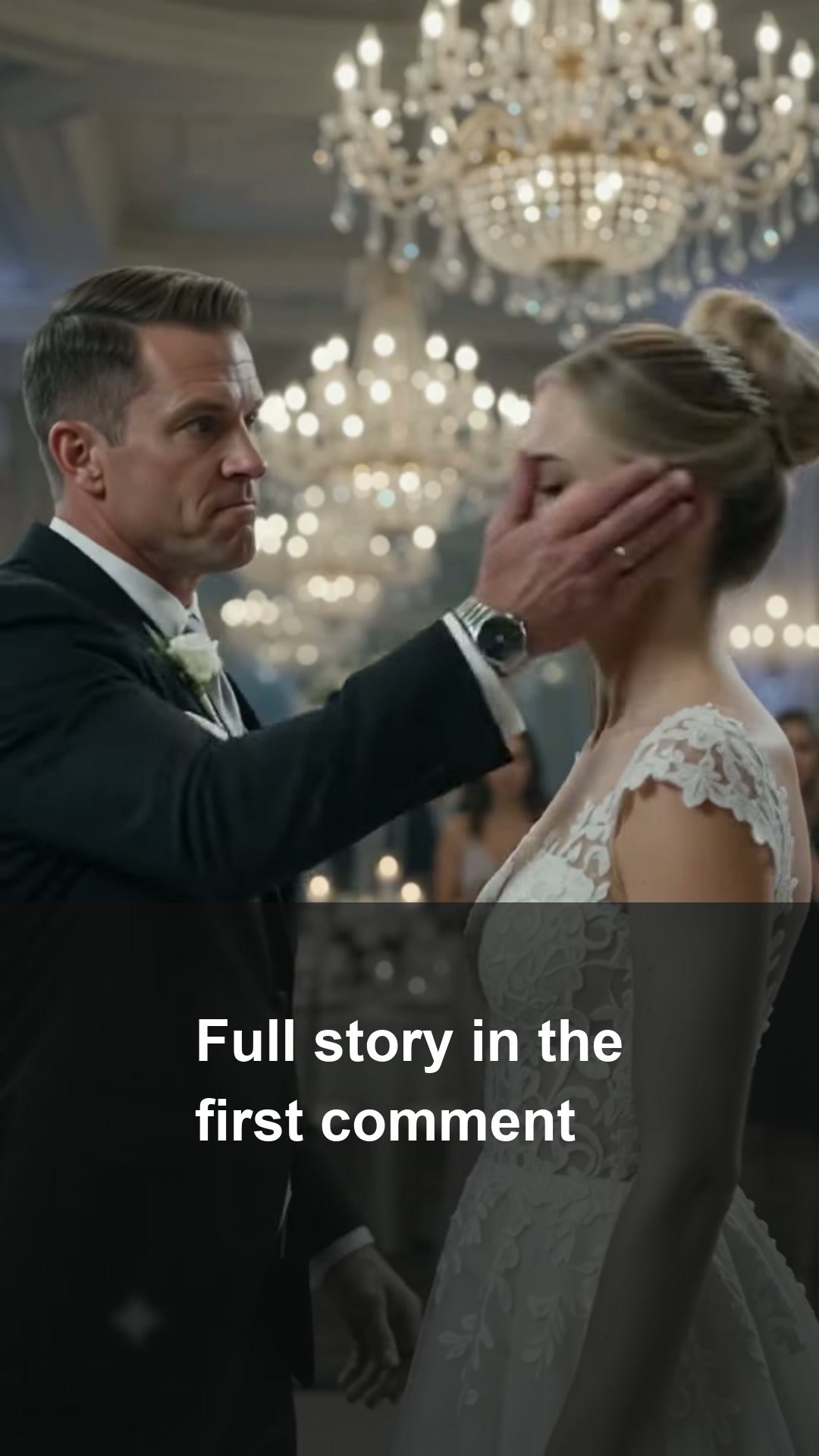
The night of the rehearsal dinner, the air in the ballroom felt sterile, sanitized. Julian was everywhere, his presence a low-frequency hum of anxiety. I watched him from across the room as he adjusted the display, his movements precise, almost surgical. He looked at me, and for a split second, the mask dropped. It wasn’t hatred I saw in his eyes; it was a profound, aching boredom, the look of a gambler who had bet everything on a hand he knew was rigged. I walked over to him, the fabric of my dress brushing against the velvet chair covers. I asked him if he was sure he had everything he needed. He looked at the glass in his hand, the liquid shimmering under the chandelier, and he smiled. It was the same smile he had worn when he ruined my pinafore twenty years ago, only now, it looked like a death rattle.
I felt the weight of the phone in my pocket, the recording of the security feed already queued, the evidence of his petty, destructive little game locked away in the cloud. I thought about the years of stolen credit, the sabotaged projects, the cold, silent meals where we pretended we weren’t enemies. Every time I had tried to be the bigger person, he had interpreted it as weakness. Every act of grace I extended had been used as a lever to pry open my life. I realized, standing there in the middle of the room, that my mistake hadn’t been trusting him. My mistake had been assuming he was capable of change. He was a creature of habit, a broken mechanism that could only produce one result.
The music swelled, a soft, discordant string quartet that seemed to mock the tension coiled in my stomach. I turned my back on him, walking toward the terrace to breathe in the salt air of the coast. The cliffside felt steady beneath my feet, a stark contrast to the shifting, unstable ground Julian occupied. I didn’t need to check on him. I knew exactly what he was doing. He was waiting for the toast, waiting for the moment he could offer me a drink that would leave me incapacitated, exposed, and humiliated in front of the people whose opinions he valued more than his own life. He was waiting for the applause that would never come.
I looked out at the ocean, the black water churning against the rocks. The decision was already made. There would be no confrontation, no dramatic scene, no shouting. There would only be the cold, efficient application of consequences. I would let him serve the drink, I would let him watch me, and then, at the precise, calculated moment, I would show him that the game was not something you played against me—it was something you survived, if you were lucky. I took a deep breath, the cold air filling my lungs, and I felt the last remnants of my childhood fear dissolve. The cycle was ending here, on this cliff, in the light of a moon that didn’t care about the petty grievances of a family that had forgotten how to love. I walked back toward the ballroom, my heels clicking a steady, rhythmic beat against the stone, ready for the final act.
The ballroom smelled of lilies and high-octane ambition. My father stood by the mahogany bar, his silk tie cinched with the precision of a noose. He was a man who measured his own worth by the thickness of his stock portfolio, yet he spent every waking hour terrified that someone would notice he had never actually built a thing of value. He tapped his signet ring against the wood, a rhythmic ticking that signaled his impatience for the toast. He wanted the spectacle, not the ceremony. I caught his eye and saw the familiar, hollow hunger; he loved me only when I functioned as a trophy in his gallery. I looked away, my hand tightening on the stem of my own untouched glass.
My mother hovered near the orchestra, her smile stretched thin enough to snap. She had spent thirty years performing the role of the devoted matriarch, a part that required her to swallow every insult and bury every truth in favor of maintaining the family brand. She caught me looking and smoothed her skirt, her fingers trembling slightly. She was the architect of our domestic silence, the one who taught us that keeping the peace was worth more than keeping our souls. She wanted this day to be flawless, oblivious to the fact that the foundation was already liquefying. I didn’t pity her. She chose the gilded cage every morning she woke up beside him.
Julian emerged from the shadows of the catering corridor, his face a map of practiced nonchalance. He wiped his palms on his trousers—a betrayal of his nerves. He believed he was the puppeteer, convinced that he was carving his name into the family legacy by dismantling mine. His motive was a pathetic, ancient rot: he needed me to fail so he could feel like he had succeeded by default. He saw me not as a sister, but as a hurdle in a race he had already lost. He poured the champagne with a flourish that made my stomach turn, his eyes darting toward the guests to see if anyone was watching his performative generosity.
I stepped into his path, the heavy silk of my dress rustling like dead leaves. I leaned in, my voice a blade wrapped in lace. Julian, your hand is shaking, I whispered. He stiffened, his pupils dilating as he realized I had seen the vial tucked into his cuff during the rehearsal. He tried to laugh, but the sound caught in his throat like a dry bone. He was a man who lived for the kill, never once considering that the hunter might be holding a mirror. I stood my ground, my posture rigid, every muscle coiled for the shift in power.
He didn’t answer, just turned away, his jaw tight. He was already planning his next move, convinced that his brilliance would rescue him from the mess he’d just poured into my glass. He thought he was untouchable because he was a Vance. He didn’t know that my legal counsel, a woman named Sarah who hated our family almost as much as I did, was already positioned by the terrace doors. Sarah had the police dispatch number on speed dial and a forensic kit in her handbag. She wasn’t just a lawyer; she was a survivor of a similar predatory brother, a detail that made her loyalty absolute.
I took the glass from his hand, the crystal cool against my skin. I didn’t look at it. I looked at the security manager, Marcus, standing by the monitors in the corner. He nodded once, a subtle inclination of the head that confirmed he had the feed from the bar taped and archived. He wasn’t just hired help; he was a man who had lost his own family to a similar, slow-motion inheritance war, and he had a grudge against the wealthy that transcended his paycheck.
I glanced at my husband, Mark, who stood a few feet away, laughing at a joke he didn’t care about. He was a good man, but he was fundamentally blind to the dark current beneath our surface. He assumed the world operated on decency. I felt a surge of cold, sharp grief—the realization that he would never truly know who I was, because I could never trust him with the monster I had become to survive this family.
I raised the glass, catching Julian’s desperate, hungry eyes, and began to speak. The room fell silent, the air thick with the scent of lilies and the metallic tang of the trap closing shut. I didn’t feel nervous. I felt heavy, anchored by the truth. I knew what was coming next, and for the first time in my life, I didn’t care who saw the blood on the floor. I decided then: this would be the last toast I ever made. I looked Julian dead in the eye and took the first sip.
The champagne tasted like metallic rot, but I swallowed it, keeping my gaze locked on Julian. He watched my throat move, his own chest heaving with a rhythmic, frantic tension. I didn’t reach for the water. I didn’t flinch. Instead, I tapped the side of my flute with a fingernail, the sound echoing through the ballroom like a gunshot. The guests leaned in, waiting for a sentimental anecdote, but I gave them an inventory. I detailed the precise chemical composition of the sedative he had slipped into the toast. I read the timestamps from the security feed I had already synced to the cloud. Julian’s face drained of color, his skin turning the translucent, waxy white of a funeral lily. He tried to stand, but his knees buckled, and he collapsed into his chair with a wet, heavy thud.
I didn’t rush to his side. I didn’t offer a hand. I walked to the head table, picked up my phone, and dialed the precinct captain I had met during the venue’s pre-event security briefing. My voice remained steady, a clinical recitation of facts. I reported an attempted poisoning, a clear threat to public safety, and a domestic security breach. As I spoke, I could feel the ambient noise of the wedding die out. The music stopped. The guests retreated into a tight, fearful circle, leaving Julian isolated in his velvet chair, his eyes rolling back as the sedative took hold. My mother rushed over, her silk gown rustling like dry leaves, but I stepped into her path, blocking her view of her golden son. I didn’t need to speak; the coldness in my eyes was enough to make her flinch.
The next morning, the sun bled through the curtains of the hotel suite, exposing the dust motes dancing in the air. I sat at the mahogany desk, my fingers moving with methodical precision across the laptop keyboard. I logged into my brokerage account and initiated a permanent freeze on the joint trust Julian and I had shared since childhood. Every automatic payment—his car lease, his private membership dues, the recurring fees for the high-end storage unit he used to hide his failures—was canceled with a single click. I watched the confirmation screens blink green, then gray. It was a surgical excision of his influence. I felt no triumph, only the hollow satisfaction of a risk assessment completed.
The phone vibrated against the wood. It was a call from the family’s estate lawyer, a man who had spent twenty years polishing the Vance reputation. I answered, listening to his frantic, stuttered attempts to contain the situation. He spoke of damage control and family honor. I cut him off. I hired a litigator from the city—a woman known for her scorched-earth tactics in inheritance disputes—and instructed her to file an immediate petition to contest my father’s will, citing Julian’s history of financial misappropriation and professional sabotage. The lawyer on the other end of the line went silent. When he finally spoke, his voice was thin, stripped of its habitual arrogance. He knew the leverage had shifted.
I didn’t stop there. I walked to the bathroom and pulled the small, sealed packet from my clutch—the hair sample I had collected from Julian’s hairbrush months ago. I sent it to a private lab, requesting a full toxicological profile and a comparison against the residue I had scraped from the base of the champagne flute. I needed the biological proof to cement the legal narrative. My marriage was now a landscape of evidence, but I didn’t care. I opened the door to find my husband standing in the hallway, his expression a mixture of confusion and dawning horror. He looked at me as if he were seeing a ghost.
I walked past him toward the HR department of the firm where Julian held his executive role. I had already emailed the board of directors, attaching the timestamped videos of his previous office sabotage attempts, verified by the digital audit I’d conducted in secret over the last two years. As I typed the final report, the notification pinged on my screen: the firm had placed Julian on indefinite administrative leave. The email was cold, formal, and utterly final.
I stood in the center of the office, surrounded by the sterile scent of toner and recycled air. My phone buzzed again—a frantic text from my mother, pleading for me to drop the charges, promising me everything if I would just disappear for a while. I deleted the message without opening it. My decision was set. I walked to the window, watching the police cruiser pull into the driveway of our childhood home, its blue lights reflecting off the perfectly manicured hedges. I had spent my life playing by their rules, and now, I was the one rewriting the game. I felt the weight of the veil still pinned to my hair, heavy and useless. I reached up, pulled the pins, and let the white lace fall to the floor in a heap. I was finally alone, and for the first time, I could see the path forward clearly, unencumbered by the ghosts of what I was supposed to be. I turned toward the door, my heart beating with the slow, steady rhythm of a ticking clock, waiting to see who would try to stop me next.
The morning light hit the hotel suite with a clinical, unforgiving glare. My phone, resting on the velvet vanity, pulsed with a relentless staccato of notifications. I didn’t reach for it. I watched the screen light up: a flurry of Instagram tags, panicked messages from my father’s assistant, and a thread from my college roommate asking if it was true, if Julian had really been escorted out in handcuffs while the band played jazz. I picked up the heavy crystal carafe, my hands perfectly steady, and poured a glass of water. I drank it slowly, savoring the lack of grit or chemical residue.
The door buzzer cut through the silence like a serrated blade. I didn’t move. Through the peephole, I saw a woman in a sharp blazer—a PR consultant for my father’s firm, her face tight with a frantic, professional mask. She knocked again, a sharp, rhythmic sound that echoed in the corridor. I pulled the heavy curtain shut, plunging the room back into shadow. I didn’t owe her an audience. I didn’t owe anyone the polished narrative they were desperate to craft.
My mother called at nine. The ringtone, a custom melody I hadn’t changed in years, sounded archaic. I watched the vibration scoot the phone across the glass tabletop until it hit the edge. I didn’t answer. She would be weeping, blaming the guests, blaming the venue, blaming me for not protecting the family brand. She would talk about the cost of the scandal, never the cost of Julian’s life, which had been eroding long before he poured that sedative. I let the call drop to voicemail and pressed the power button, plunging the world into a blessed, dark silence.
I walked to the balcony, looking down at the street. A news van was parked near the hotel entrance, its satellite dish pointed toward the sky like a weapon. A few guests from the night before were milling about the valet stand, their heads huddled in conversation. I saw the mother of one of my childhood friends look up toward my window, her expression a mix of curiosity and visceral disgust. I had been their golden girl, the safe, predictable daughter. Now, I was the one who had laid the trap, the one who had invited the police to the party.
The social media storm was already shifting. A video snippet of Julian’s collapse, filmed by a cousin with too much champagne and not enough discretion, was circulating. The comments were a grotesque tapestry of speculation. Some called me a hero for exposing his cruelty; others called me a sociopath for standing by and letting the poison work. I felt no satisfaction, only a cold, mechanical detachment. I had calculated the risks of exposing him, and the fallout was exactly as volatile as my spreadsheets had predicted.
I looked at my husband, asleep in the bedroom. He had been a silent witness to the entire orchestration, his loyalty resting on a foundation of complicity that had begun to crack under the weight of the investigation. The police had already reached out to his firm. His future, like mine, was now permanently tethered to the wreckage of my family name. I walked back into the room and sat on the edge of the bed, watching his chest rise and fall. The silence of the room was heavy, a vacuum where a life used to be. I had won the game, but I realized then that in a match with no survivors, the victory was just another form of loss.
The hotel suite was a tomb of velvet and marble, overlooking a Pacific that offered no consolation. I pulled the heavy, cathedral-length veil from my hair, the pins dragging against my scalp until I finally shook them loose. They clattered onto the nightstand, a sharp, metallic sound that signaled the end of the masquerade. My parents’ attorney had sent the final paperwork by courier an hour ago; the severance of my trust, the formal disinheritance, and the ironclad nondisclosure agreements were all waiting for a signature. Julian was currently in a holding cell, the toxicology report confirming his intent was as lethal as his ambition. The family lawyers were already distancing themselves, scrub-brushing his reputation as if he were a wine stain they could bleach out of the carpet.
I walked to the minibar and picked up a crystal glass, holding it under the faucet until it brimmed with plain, tepid tap water. I watched the surface for any hint of movement or distortion, my finger hovering near the rim. Years of hyper-vigilance had hardwired my instincts to expect an adversary in every beverage, a phantom hand stirring a drop of poison into my glass. I drank it in one long swallow, the water tasteless and dull. It was the first time in my life that I had consumed something without running a risk assessment.
I looked back at the bed. My husband stirred, his eyelids fluttering. When he saw me, he didn’t reach out; he looked at the divorce papers on the mahogany desk, then back at me. He understood the math as well as I did. Our marriage had been the final piece of my family’s chess set, and with the board now overturned, he was no longer a partner but a liability.
“Is it done?” he asked, his voice raw from the night’s debris.
“It’s empty,” I replied.
I didn’t offer a platitude. I didn’t reach for his hand. I walked to the balcony and stepped out into the night air. The city lights below looked like discarded embers, cold and scattered. I thought of the empty champagne flute abandoned on the lawn, the way it caught the moonlight like a hollow eye. The freedom I had fought for felt like a vacuum, a terrifying lack of pressure. I reached into my pocket and touched the fountain pen I had kept from the courier’s envelope. I needed to sign the papers to dissolve the ties, to finalize the erasure of the Vance name from my existence. I turned back toward the room, ready to sign away the inheritance that had defined my worth, deciding then that I would rather be destitute and nameless than a player in their game. I walked to the desk, uncapped the pen, and felt the weight of the silence. It was time to leave.
I left the hotel suite before the sun crested the Pacific, leaving the dress in a heap on the carpet like a discarded skin. The drive up the coast was a blur of gray asphalt and churning water. I pulled over at a hidden trailhead in Malibu, the kind where the salt spray eats the paint off the guardrails. I walked until my heels sank into the damp sand. The silence of the beach was absolute, broken only by the rhythmic, indifferent pulse of the tide. I sat on a piece of driftwood and watched a seagull pick at a tangle of kelp. It was the first time in months my pulse didn’t feel like a countdown.
Three weeks later, I sat in the therapist’s office. The air smelled of stale coffee and lavender.
“You haven’t touched the trust fund,” Dr. Aris noted, her gaze steady behind her spectacles.
I traced the grain of the wooden armrest. “I don’t want their legacy coloring my breakfast.”
“And the nightmares?”
“They’ve stopped,” I said, though it wasn’t entirely true. The vigilance remained, a permanent layer of scar tissue over my nervous system. I still checked the seal on every bottle I opened, a reflex I couldn’t seem to excise.
I left the office and drove to the shelter. I picked the quietest dog in the back row, a grizzled terrier with a clouded eye and a slow, cautious gait. He didn’t bark when I opened the cage; he just leaned his weight against my shins.
Back home, the garden was overgrown, a tangle of jasmine choking the trellis. I spent the afternoon pruning, the shears snapping through dry stems. For the first time, I didn’t worry about who was watching from the shadows. I planted rosemary in the soft, dark earth. I was finally, mercifully, boring. I looked at the gate, then back at the house. I had everything I had ever calculated for, yet the void remained. I reached for the garden hose, deciding then that I would grow something that didn’t need to be defended.
I retreated to the porch, my knees aching against the weathered wood. The house was quiet, save for the rhythmic pulse of the irrigation system cycling on. I picked up the glass I had left on the side table hours ago, the rim still smudged with a faint, ghostly fingerprint. I tilted it, watching the clear water swirl in the moonlight, free of the bitterness I had once learned to anticipate in every pour. My hands were steady, no longer tracing the phantom paths of potential threats or mapping out defensive maneuvers. I set the glass down near the edge of the railing. Beyond the patio, tucked into the manicured lawn near the rosebushes, a single crystal champagne flute lay on its side in the grass, catching the moonlight.
Leave a Reply