The silver scissors hit the gravel with a dull, final thud, severing the last rose bush Julian planted the week he died. Vanessa froze, her fingers still curled in the air, the jagged edges of the photo album cover fluttering between us like a dying bird. She blinked, the rehearsed mask of the sweet, helpful fiancée slipping to reveal a mouth pulled tight into a thin, trembling line.
I stood by the French doors, the weight of the tablet in my hand cold and steady against my palm. The garden, usually a sanctuary of controlled growth, felt suddenly suffocating.
Why are you doing this, Vanessa? I asked, my voice barely audible over the distant drone of the surf.
She straightened her silk blouse, eyes darting toward the security camera hidden in the trellis. You are imagining things again, Evelyn, she hissed, her tone dripping with practiced pity. You really should consider that facility Daniel looked into.
I watched her pulse flutter at the base of her throat. I knew then that she thought she had cut the wires. I pressed the screen, turning it to face her, and watched her entire world fracture in the reflection of my glass.
The morning light hit the kitchen island at a sharp, insistent angle, illuminating the dust motes dancing above the granite. I stood by the counter, the kettle whistling a low, rising pitch that vibrated against the marrow of my bones. My routine was a series of small, rhythmic certainties: two scoops of dark roast, the ceramic filter, the slow, clockwise pour of boiling water. The kitchen smelled of burnt beans and damp earth, a scent that had anchored my existence for thirty years.
I carried my mug to the window. Outside, the gardener was clipping the hedges into perfect, unnatural spheres. The rhythm of his shears—snip, snip, pause—was the metronome of my life. I watched a black sedan crawl down the long, gravel driveway. Daniel was leaving for the city, his suit jacket draped over the passenger seat, his phone already pressed to his ear. He didn’t look up at the house. He never did at this hour; he was already miles away, lost in the architecture of code and quarterly projections.
I turned to the sink and rinsed my mug, the porcelain clinking against the faucet. I had an appointment with the archivist downtown to discuss the estate’s donation to the library, a task I had been delaying for months. I reached for my coat, feeling the heavy wool against my shoulders, and checked the hall mirror. My hair was pulled back in a severe, silver twist, not a strand out of place. I looked like a woman who possessed everything and felt nothing.
The drive was unremarkable. The coastal highway was slick with morning fog, and the radio played a low, instrumental jazz that blurred the edges of the horizon. I stopped at the intersection near the old clock tower, where the traffic lights were perpetually out of sync. A woman in the car beside me was arguing with someone on speakerphone, her gestures frantic, her lips pulled back in a jagged line of frustration. I looked away, preferring the neutral stare of the gray Atlantic churning against the cliffs.
When I reached the office, the printer in the foyer was jammed again. The intern, a boy with nervous eyes and ink-stained thumbs, was swearing under his breath as he wrestled with the paper tray.
Morning, Mrs. Thorne, he said, not looking up. The humidity is wreaking havoc with the sensors.
I nodded, offering a small, practiced smile. It’s just the salt air, I said. It gets into everything if you let it.
I walked to my desk, where a stack of folders awaited my review. The stillness of the office was heavy, a suffocating velvet shroud. I sat down, feeling the familiar ache in my lower back, and opened the first file. The contents were mundane: property tax assessments, structural maintenance logs, the list of items earmarked for the estate sale. I picked up a pen and began to note the discrepancies. It was peaceful, in a way. It was the kind of order that allowed you to ignore the fact that the floor was slowly eroding beneath your feet.
I reached for my coffee, but my hand stopped in mid-air. The silence of the room was absolute, save for the rhythmic, mechanical pulse of the clock on the wall. Then, the sharp, discordant trill of my phone cut through the air, vibrating violently against the glass tabletop, sliding an inch toward the edge with every ring.
I stared at the screen. Daniel’s name pulsed in the dark, a frantic beacon. I didn’t answer. Instead, I stood and walked to the floor-to-ceiling window overlooking the west terrace, my pulse thrumming in my throat. Outside, the garden was a study in evening shadows, the hydrangeas heavy and bruised under the moonlight.
Vanessa was there. She wasn’t pacing. She was kneeling by the rose bushes Julian had planted on our thirtieth anniversary, her silhouette sharp against the stone wall. Chloe stood three feet away, a cigarette held loosely in her fingers, her head tilted toward the house as if she were keeping watch. Vanessa reached into her oversized silk tote, pulled out a pair of heavy, professional-grade garden shears, and leaned into the center of the largest bush.
She didn’t just snip; she hacked. The metallic *snick-snick* sound carried clearly through the glass of the closed window. She was methodically decapitating the blooms, shredding them into the dirt with a jagged, rhythmic violence. My hand went to the latch. The cold brass bit into my palm, but I didn’t turn it. I watched as she kicked the severed heads into a pile, her face tight, her movements devoid of the grace she performed for Daniel.
The garden gate creaked.
Daniel stepped into the frame, his shoulders hunched, his phone still pressed to his ear. He stopped cold. The scene was static: Vanessa frozen with the shears hovering over a crushed stalk, Chloe dropping her cigarette into the mulch, and me, paralyzed behind the glass.
Vanessa spun around. She didn’t look startled. She looked like a predator caught in a beam of light. She dropped the shears; they landed with a dull thud, half-buried by the velvet petals she had just destroyed. She moved toward him instantly, her hands fluttering up to her throat, her expression shifting into that practiced, fragile mask of bewildered innocence.
She spoke, her voice thin and reedy, reaching me even through the double-pane glass. I couldn’t catch every word, but the cadence was unmistakable: the rapid-fire apology, the frantic gesturing toward the rose bush, the downward tilt of her head. She was playing the victim of a sudden, inexplicable panic attack, a nervous breakdown caused by the weight of the house.
Daniel’s posture shifted. He didn’t embrace her. He stood like a statue, his gaze drifting from the ruined roses to the shears on the ground. He looked up, his eyes locking onto the window where I stood. He saw me. He saw the way I held the curtain, the stillness in my posture, the absolute lack of surprise on my face.
I didn’t wave. I didn’t tap on the glass. I simply watched him realize that the silence he had trusted was a lie. I stepped back into the shadows of the study, letting the heavy velvet drape fall, leaving him to look at a dark window and a garden filled with dead, headless flowers.
The study smelled of cedar and the faint, biting scent of ozone from the silent server rack. I sat at the mahogany desk, my phone a cold weight in my palm, and dialed the number for the Azure Coast Hotel. The desk clerk answered on the third ring, his voice polished to a thin, professional veneer. I asked about the morning reservation Vanessa claimed to have kept—the one that supposedly excused her from the house while she was actually standing in my garden. He paused, the sound of tapping keys echoing in the silence. He told me there was no record of a guest by her name checking out at ten, nor any record of a brunch reservation for two. He apologized, his voice dipping into a practiced, sycophantic register, and then he contradicted himself: he remembered her, actually, but she had been alone, and she had spent the entire morning in the lobby lounge, arguing into her phone.
I set the phone down. My hands were steady, which surprised me. I dialed the nurse, Mrs. Gable, the one Vanessa had hired to monitor my supposed decline. The line crackled. When I asked about the medication schedule she had allegedly left for me on Tuesday, she sounded confused. She said she hadn’t been to the estate since Monday, and that Vanessa had specifically instructed her to stay away because I was having a quiet, meditative week. She added, with a note of genuine concern, that my dosage hadn’t been changed, despite the erratic notes Vanessa had shown me earlier that morning.
I stood and walked to the window. The garden was still. I felt the sharp, sudden need to see the witness. I drove to the village, the tires crunching over the gravel driveway, leaving the estate behind like a shed skin. I found the landscaper, Elias, near the public park. He was wiping sweat from his forehead with a grease-stained rag. He looked at me, then at the ground, his body tightening. I asked him if he had seen the shears. He swallowed hard. He said he hadn’t been near the rose bushes in days, but then he looked up, his eyes darting toward the distant Thorne estate, and whispered that he had seen a car—a black sedan—parked by the north gate for hours every afternoon this week. Vanessa hadn’t been in the house, and she hadn’t been at the hotel. She had been watching.
I leaned against the hood of my car, the metal biting into my skin through my coat. The timeline was a jagged, broken mirror. Each piece of information rendered the last one useless. I thought of Daniel, standing in the garden, his face a canvas of disbelief. He believed he was protecting a woman who was unraveling; he didn’t realize he was the one being unraveled. I pulled my keys from my pocket. The decision formed in the quiet space between my heartbeats: I would not confront her. I would not ask for an explanation. I would keep the contradictions piling up until the structure she had built for me, and for him, collapsed under the sheer mass of its own deceit. I turned the ignition, the engine growling to life, and drove back toward the house. My next stop was the server room. The truth wasn’t in their voices; it was in the footage they thought had been erased.
The server room was a tomb of humming fans and tangled fiber optics, tucked behind the mahogany paneling of Julian’s study. My fingers trembled as I navigated the interface, the blue light of the monitor washing out the color from my skin. Each click was a strike against the silence I had maintained for months. The logs were there, hidden behind a firewall Vanessa had clumsily patched, thinking she had scrubbed the history clean.
I scrolled past weeks of mundane entries until the frame froze on a Tuesday afternoon. There was Vanessa, standing in my bedroom, her movements precise and predatory. She held my husband’s signet ring between her thumb and forefinger, weighing it like a common trinket before slipping it into a velvet-lined pouch she had tucked into her designer handbag. Beside her, Chloe watched the doorway, a shallow, nervous grin fixed on her face as she checked her reflection in my vanity mirror. They weren’t just taking jewelry; they were dismantling the remnants of my life to ensure I had nothing left to tether me to this house.
I pulled the drive, the plastic casing cold and grounding against my palm. The weight of it was enough to anchor me. I walked out of the study and into the hallway, where the evening light stretched long and thin across the floorboards. Daniel was standing by the foyer, his coat thrown over the banister, waiting for the dinner he thought would bridge the gap between his past and his curated future. He looked tired, the lines around his eyes betraying the strain of a life built on her fabrications.
He looked up as I approached, his expression softening into that practiced, weary patience he had adopted whenever I entered a room.
I held out the drive, letting it slide into his open palm. I didn’t say a word as he frowned at the object, his thumb brushing the cool metal.
She hasn’t been stealing my jewelry, Daniel.
The smell of ozone and wet cedar always pulled me back to the summer of 1974. My father’s study in our old house, the one with the drafty windows and the floorboards that groaned like living things, smelled of that same ozone before a storm. I was ten, sitting on the rug, tracing the geometric patterns in the weave while my mother paced. She held a crystal vase—a wedding gift, she had told me once—and her knuckles were white. My father’s voice came from behind the mahogany desk, low and clipped, a surgeon performing an incision. He didn’t raise his tone, yet the air in the room grew heavy, suffocating. He was telling her that her concern for the household budget was an intrusion, a lack of faith in his management. She didn’t argue. She simply set the vase down on the edge of the desk. It wasn’t a hard motion, but the sound it made against the wood was sharp, final. He didn’t look up from his ledger. I watched his hand, steady and unyielding, move the fountain pen across the cream-colored paper. My mother walked out of the room without a sound, and I stayed, paralyzed by the sudden, freezing realization that I was the only witness to a disappearance. She never asked about the vase again, and he never acknowledged it was gone.
Years later, at university, the pattern repeated in the dorm room I shared with a girl who had a penchant for borrowing things that didn’t belong to her. I remember the afternoon I found my mother’s pearl brooch pinned to the lapel of her denim jacket. The sunlight hit the pearls, exposing them in their theft. When I pointed it out, she laughed, a sound like glass beads hitting a floor, and asked me why I was so attached to dead things. She made me feel small, petty, a relic of a hoarding past. I didn’t take the brooch back. I let her wear it until she lost it, and the shame I felt for not fighting for it settled into my marrow. I decided then that I would never be the one to escalate. I thought, in my youthful arrogance, that by refusing to participate in the conflict, I was transcending it. I was wrong. I was only creating a vacuum.
Julian had been different, or so I had convinced myself during the first decade of our marriage. We were in the kitchen of this house, the morning light pouring over the marble island. He was pouring coffee, his movements precise and graceful. I mentioned that the gardener had been trimming the hedges too low, that the privacy of the property felt compromised. He turned, his gaze distant, and said, Evelyn, you worry about the perimeter too much. He didn’t hear the warning in my voice. He heard an annoyance to be managed. That was the day I realized my voice had become a background noise in his life, something to be adjusted for comfort, not listened to for truth. I looked at the coffee swirling in his mug and decided, with a quiet, icy clarity, that if he wouldn’t listen to the words, he would have to live with the silence. I stopped mentioning the small erosions. I began to watch instead.
Daniel was six when he broke his first toy. It was a wooden train, painted bright red, a gift from his grandfather. He had wept until his face was the color of a bruised plum. I knelt on the playroom floor, the dust motes dancing in the shaft of afternoon sun, and tried to glue the pieces back together. My fingers shook. I wanted to tell him that things could be repaired, that if we held the pieces long enough, the bond would return. He watched me, his small, dark eyes reflecting my own desperation. He didn’t care about the train. He cared about the fact that it had changed, that the smooth, unbroken surface of his world had been marred by a mistake. I finished the work, the glue drying into a thin, translucent scar, and he looked at it and pushed it away. He never touched it again. I understood, even then, that he favored the illusion of perfection over the labor of restoration.
The marriage to my own life felt like that train. Every time something shifted—a piece of jewelry missing, a document misplaced, a boundary blurred—I played the role of the glue. I kept the house silent. I kept the records. I watched the people around me, like the dinner party guests who would whisper about my vintage attire, and I smiled, a polite, distant expression that kept them at arm’s length. They saw an aging woman obsessed with preservation. They didn’t see the woman who had spent forty years learning how to read the intent behind a gesture. They didn’t know that I had cataloged every disappearance, every snide remark, every instance of gaslighting as if they were archival entries in a library that only I could access.
There was a Sunday in late autumn, years after Julian’s death, when Daniel brought a colleague over for lunch. A man who spoke about the house as if it were a liability, a drain on the estate’s liquidity. I sat at the head of the table, listening to the clatter of silverware, watching Daniel laugh at the man’s jokes about the outdated architecture. My heart felt like a stone in my chest, heavy and cold. I looked at Daniel’s hands, the same hands as his father’s, and saw them gripping his wine glass with a casual ease that made me want to scream. I chose, instead, to pick up my fork and eat my salad in silence. I decided that night, as I watched the moon rise over the coast, that the next time someone tried to erase a part of my history, I would not be the glue. I would be the witness.
Vanessa arrived with a smile that didn’t reach her eyes, a sharp, metallic smile that reminded me of the scissors she would later bring into my garden. She walked through the rooms with a proprietary stride, her fingers trailing over the mahogany, the silk, the silver. She spoke about modernization, about shedding the weight of the past. She treated me like a broken window that needed to be replaced. I watched her, the way she monitored Daniel’s schedule, the way she subtly isolated him from the memories that held him to this house. I remembered the girl in the dorm room, the pearl brooch, the wooden train. I remembered the silence of my mother, the way she had surrendered her treasures to avoid the sound of an argument. I saw the same strategy unfolding, a slow, methodical erasure designed to make me feel insane, or dead, or irrelevant.
I went to the study one evening, long after the house had gone quiet. The desk was still there, the one where my father had sat, the one where Julian had worked. I opened the floorboard, the wood yielding with a familiar groan, and touched the cold, hard surface of the server housing. I had spent months, years even, ensuring that the eyes of this house never closed. Vanessa thought she had blinded me, that she had cut the wires, that she had silenced the truth. She didn’t understand that I had been practicing silence for a lifetime. I didn’t need to yell to be heard. I didn’t need to fight to win. I only needed to wait for the moment when the mask slipped.
I stood in the hall, the drive weighing nothing in my hand, and looked at my son. He was a man who lived in the light of data, convinced that what he couldn’t see didn’t exist. He had spent his life avoiding the messy, broken edges of things, opting for the pristine, the efficient, the curated. He hadn’t realized that the silence he cherished was not peace—it was the sound of a house being dismantled brick by brick. He looked at me, his brow furrowed, waiting for an explanation I would not provide in words. The truth was not a conversation. It was a record. It was the smell of ozone, the weight of a stolen brooch, the sharp, cold snap of scissors against a rose. The past wasn’t something to be outrun; it was the foundation I had been documenting for the day the structure finally failed. I didn’t have to tell him. I only had to show him what I had seen all along.
I walked to the study, my heels clicking against the marble with a rhythm that felt like a ticking clock. Vanessa stood by the desk, her fingers tracing the edge of a mahogany box that had held Julian’s cufflinks for thirty years. She looked up, her expression a masterclass in practiced innocence, yet her pulse visibly hammered at the base of her throat. I had spent my life managing this estate, cataloging the silver and the spirits, and she had spent three months trying to inventory my soul. She was a woman who thought wealth was a ladder to be climbed, never realizing the rungs were made of other people’s lives.
I placed the tablet on the blotter. Vanessa tilted her head, her glossy hair catching the light of the chandelier. You look tired, Evelyn, she said, her voice dropping into that syrupy, patronizing cadence she reserved for my supposed lapses in memory. Daniel, dear, don’t you think she needs more help? Maybe a facility? I’ve seen the brochures.
Daniel stood behind her, his hand resting on the back of her chair. He was the architect of encrypted systems, a man who could map the movement of global data but couldn’t see the woman standing in his kitchen sabotaging his own bloodline. He was a man who wanted a clean interface for his life, free of the friction of grief. I knew his contradiction—he craved the warmth of a home he refused to actually live in.
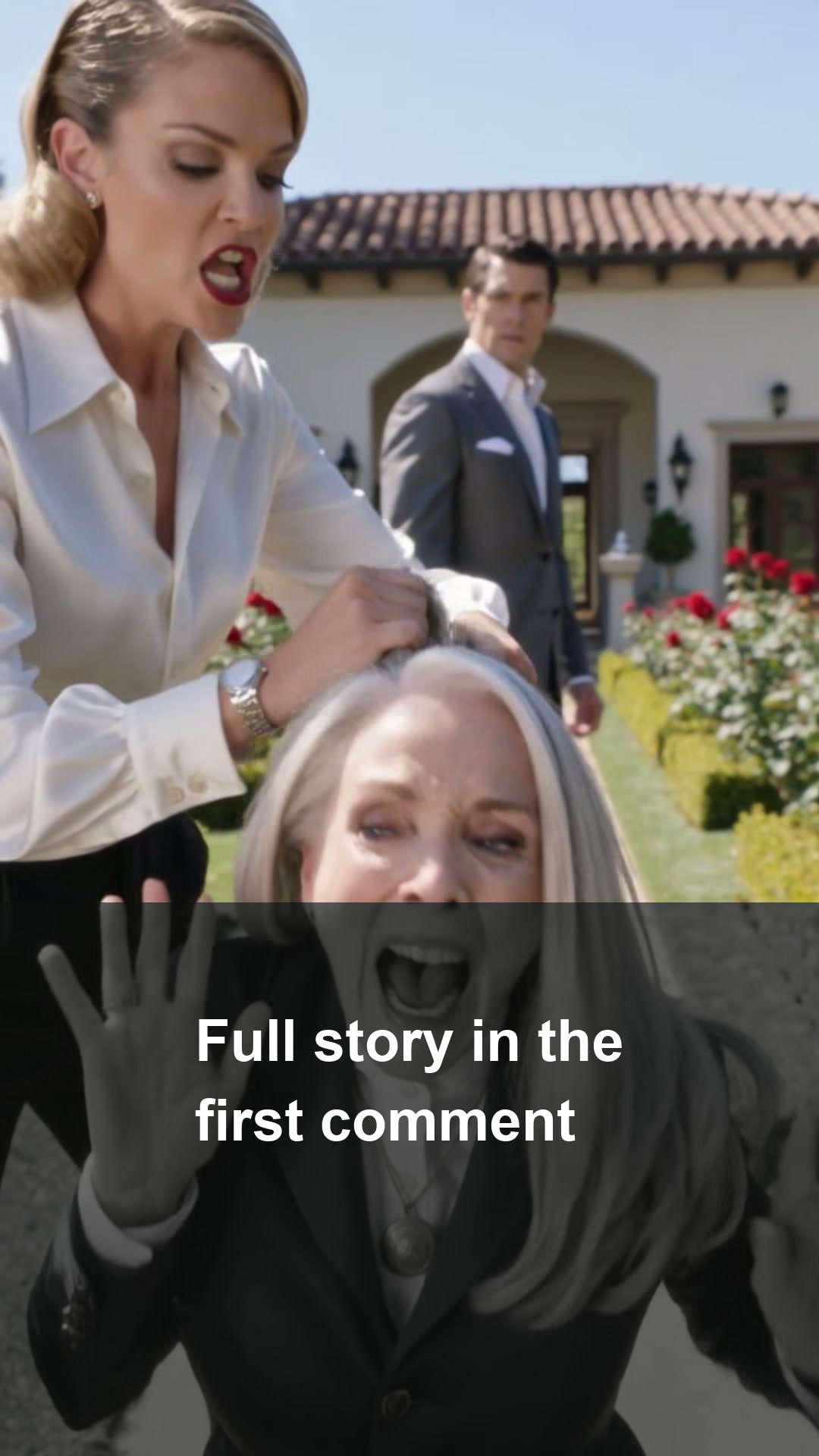
I didn’t answer. I swiped the screen, activating the playback from the garden. On the screen, the image was crisp: Vanessa, her face twisted into a mask of bored malice, snipping the heads off the roses Julian had planted the year he fell ill. Then the audio cut in—the sharp, metallic snip of the scissors, followed by her comment to Chloe about how the old woman would eventually forget why she was even crying.
Chloe, standing by the doorway, let out a sharp, jagged breath. Her hands, usually busy checking her reflection in the darkened glass of the windows, went still. She was the shadow, the accomplice who lived vicariously through Vanessa’s cruelty, convinced that if she held the coat while Vanessa did the stealing, she might inherit the scraps. Now, she looked at the door, her exit path blocked by the sudden, freezing tension in the room.
Daniel’s hand dropped from the chair. He looked at the screen, then at me, then at the woman he had intended to marry. The silence stretched, heavy as a shroud. He looked at Vanessa not with anger, but with the clinical detachment of a man discovering a fatal bug in his most expensive project. He didn’t see a lover; he saw a liability.
I watched him realize that his sanctuary had been occupied by a squatter. I had saved every receipt, every timestamp, every quiet moment of cruelty recorded by a system Vanessa thought she had blinded. I was the keeper of the ledger, and the account was closed. Vanessa’s eyes darted toward the window, her poise unraveling like a cheap hem. She opened her mouth to speak, but the words were hollow, lacking the weight of truth. I stepped back, letting the digital evidence speak for me. I had held my tongue for the sake of his happiness, but I realized now that silence had only been an invitation for rot. I decided then: there would be no shouting. Only the cold, sterile mechanics of an eviction. I walked to the study door, my hand hovering over the light switch, and felt the house breathe for the first time in months. The next beat would be the sound of the front door closing on a life that never belonged here.
The study remained cold, the air thick with the scent of old paper and the metallic tang of the server I had forced back to life. My fingers, steady despite the adrenaline coursing through my veins, tapped the final command into the terminal. I watched as the progress bar hit one hundred percent: the archived footage of Vanessa and Chloe systematically stripping the library’s rare collection was now uploaded to a secure, cloud-based vault. I hit send, triggering an automated email to the local precinct’s fraud division. The silence of the house was no longer a cage; it was a sanctuary of evidence.
I walked to the kitchen, where the silence was interrupted by the rhythmic *thwack* of the garden shears Vanessa had left on the marble island. I picked them up with a linen napkin, sealing them into a plastic evidence bag. My phone vibrated against the stone countertop—a notification from the bank. The joint account she had insisted on opening for “household improvements” was now empty, the funds transferred into a private escrow I had established three hours ago.
The front door clicked open. Vanessa walked in, her heels clicking with a sharp, practiced confidence that lacked its usual polish. She paused, noticing the silence.
Evelyn, she started, her voice dropping into that saccharine tone she saved for public appearances, why is the Wi-Fi down? I’m trying to confirm the guest list for the gala and nothing is loading.
I turned slowly, holding the bag with the shears between us. I didn’t answer. Instead, I placed the bag on the counter. The metal clinked against the granite. Her eyes flickered to the bag, then back to my face, her pupils dilating.
What is that, she asked, her voice hitching, a jagged edge appearing in her composure.
Evidence, I said, my voice thin but unwavering. I filed a report with the police fifteen minutes ago. The theft of the silver, the unauthorized access to the estate accounts, and the tampering with my husband’s medical directives. It’s all there, Vanessa.
She laughed, a brittle, high sound that died quickly in the vaulted ceiling of the kitchen. You think you’re clever, don’t you? Daniel will have you in a facility before sunset. You’re confused. You’ve always been confused.
I didn’t blink. I reached into my cardigan pocket and pulled out the thick, cream-colored envelope containing the restraining order I had drafted with my lawyer earlier that morning. I slid it across the marble.
I’m not confused, I said. I’m simply finished.
Her face went slack, the mask of the doting daughter-in-law dissolving to reveal the raw, desperate avarice beneath. She snatched the envelope, tore it open, and scanned the pages. Her hands began to shake—a frantic, hummingbird tremor that betrayed the fragility of her entire construct. She reached for her phone, no doubt to call Daniel, but I had already disabled the guest network access for her devices. She tapped the screen repeatedly, her face reddening as the ‘No Connection’ icon mocked her.
You can’t do this, she hissed, stepping into my personal space. This is my home now. You’re a ghost in your own life, Evelyn. Nobody listens to a bitter widow.
I stepped back, maintaining the distance she hated because it rendered her aggression impotent. I had hired a process server who was, at this very moment, waiting in his car at the end of the driveway. He wasn’t there for her; he was there for the legal filing that declared the estate’s power of attorney had been reverted to me as the sole executor.
The lawyer will be here by six, I said. And Daniel will be back from the city at seven. I’ve already sent him the footage from the rose garden. The scissors, the snipped stems, the way you smiled when you thought I was looking away. He’s seen it all.
She froze. The silence between us stretched, heavy with the weight of her crumbling future. She looked at the door, then at me, her bravado replaced by a cold, animalistic fear.
He loves me, she whispered, though the conviction had leaked out of the statement.
He loves a version of you that doesn’t exist, I replied. I walked past her, my footsteps echoing on the hardwood floors I had reclaimed. As I reached the hallway, I heard the sound of her throwing the shears against the wall—a sharp, violent clang that signaled the end of her pretense.
I sat in the parlor and opened the file of medical records she had falsified. My husband’s signature, a flourish of ink he had perfected over forty years, had been expertly forged. I compared it to the genuine document I had retrieved from the hidden wall safe. The disparity was obvious now that I knew what to look for—the pressure of the pen, the slight hesitation in the loops. I picked up my pen and began to note the discrepancies, drafting the final affidavit for the court hearing scheduled for Monday.
Outside, the sun dipped below the horizon, casting long, sharp shadows across the floorboards. I heard the muffled sound of an engine pulling into the gravel drive—the police, or perhaps the process server. I didn’t get up. I simply smoothed the paper on the desk, feeling the pulse of the house settle into a steady, rhythmic hum. The escalation had been exhausting, but the path forward was clear. The trap she had laid for me had become the very instrument of her undoing, and for the first time since my husband’s funeral, I felt the sharp, clean clarity of a life that was finally, truly my own. I looked at the photograph of my son on the mantel and waited for the sound of the front door opening.
The front door creaked open, but it wasn’t the heavy, familiar stride of my son. It was the frantic, clicking rhythm of high heels on marble—Vanessa, breathless and smelling of expensive, sterile perfume. She stopped short in the foyer, her eyes darting toward the desk where the surveillance printouts lay like a deck of cards. She didn’t see me at first, tucked into the shadow of the wingback chair, my hands folded over my lap like a statue in a garden.
Where is he, Evelyn? she hissed, her voice losing its polished veneer of socialite grace. I checked the news. Your little stunt with the server—it’s trending, for god’s sake.
I stood up, the joints in my knees popping in the sudden quiet. The news outlets were already pinging my phone, a deluge of notifications illuminating the darkened study. The firm’s stock ticker was plummeting, a red line slashing downward on my screen. I held the phone out toward her, the glow reflecting in her widened, panicked pupils. Daniel had bypassed his PR team entirely; he had posted the raw footage—the audio of her mocking my dead husband, the deliberate destruction of my heirlooms—directly to the company’s verified feed.
It’s not a stunt, I said, my voice sounding steadier than I felt. It’s an autopsy of a relationship.
Vanessa’s hand flew to her throat, her fingers trembling as she pulled out her own device. She began scrolling, her thumb frantic, before she let out a sharp, jagged sound—a laugh that was mostly air. Chloe, her sister, had already scrubbed her social media accounts, but the internet was a tomb that refused to stay closed. Screenshots of her fabricated medical claims were being dismantled by strangers in comment sections. Her life, built on the shifting sands of curated status, was being washed away by the very tech-obsessed demographic she had spent years trying to infiltrate.
You think this matters? She stepped closer, her face contorting into a mask of pure, unadulterated spite. You think Daniel cares about a few old vases and a cranky mother? He’ll blame you for the scandal. He’ll bury you.
I walked to the window, watching the gates at the end of the long driveway. Two black SUVs were idling there, blocked by the security protocol Daniel had reset only an hour ago. He wasn’t coming to save her reputation. He was coming to reclaim his home.
The cost of this isn’t his love, Vanessa, I whispered, watching her shadow stretch long and thin across the rug. It’s your relevance. You’re not a tragedy. You’re just a footnote in a server log.
She lunged toward the desk, likely aiming for the primary drive, but stopped when she saw the look on my face—a predatory stillness I hadn’t known I possessed. The police sirens began to wail in the distance, a low, rising note that cut through the coastal fog. My neighbors, the people who had offered polite, hollow sympathies while Vanessa sowed seeds of doubt about my sanity, were peering through their curtains, their cameras trained on my driveway. My life had become a piece of public property, stripped of its privacy and laid bare for the consumption of the masses.
My heart hammered against my ribs, the physical toll of the last few months finally surfacing as a dull ache in my chest. I had lost the sanctuary of my home, traded it for the cold, bright light of public scrutiny. But as the first cruiser turned into the drive, its blue lights washing the house in an ethereal, pulsing color, I realized the house was finally silent. No more whispers. No more misplaced jewelry. No more invisible wars.
I turned my back on her and walked toward the door. I had one final thing to do before Daniel arrived: I had to step out onto the porch and face the world that had watched me break, so I could show them how I intended to mend.
The lock clicked shut behind me. I didn’t look back to see if she was still there.
The morning air bit at my skin, sharp and smelling of salt and damp earth. I stood on the porch steps, the wood grain rough under my palms as I gripped the railing. A black sedan crunched up the gravel driveway, the engine cutting out with a final, decisive click. Daniel stepped out, his suit jacket rumpled, his eyes red-rimmed and hollow. He didn’t look at the house; he looked at me.
He walked up the steps, stopping three feet away. He held a thick manila envelope, the edges frayed from his tight grip. He didn’t offer a hug. He just held the document out, his hand trembling. It was the injunction, signed by a judge less than an hour ago, effectively freezing every account Vanessa had touched and barring her from the property line.
I took the envelope, the paper heavy and cold. I thought of the stolen rings and the medical charts, the small, quiet violences that had defined my life for months. I remembered the feeling of helplessness, a phantom weight I had carried since Julian died.
“She’s gone, Mother,” Daniel said, his voice cracking. He looked toward the rose bushes where the garden shears had been discarded. “The police took her statement. The fraud case is moving to the grand jury on Monday.”
I nodded, feeling a strange, hollow relief settle into my bones. The house felt lighter, the oppressive modern decor she had insisted upon now looking like nothing more than clutter to be hauled to the curb. I knew the social fallout would be brutal; our circle was not known for its mercy to those who failed so spectacularly.
“I’m not selling the house, Daniel,” I said, my voice steady. It was the first time I had voiced the decision aloud, and it felt like reclaiming a lost limb.
He looked at the front door, then back at me, a flicker of his old self surfacing in his gaze. “I know. I think… I think I need to stay for a while. If you’ll have me.”
I reached out and touched his sleeve. He didn’t pull away. I finally let out the breath I felt like I had been holding since the day she arrived. The garden gate clicked shut in the distance, a solitary, metallic sound that signaled the end of the intrusion. I turned toward the foyer, the threshold no longer a barrier but a point of entry. I was finished with the archives of the dead. It was time to start living in the rooms they had left behind.
The kitchen smelled of burnt rosemary and relief. I scraped the charred bits from the iron skillet, the sound harsh against the silence of the house. Daniel sat at the island, his fingers tracing the grain of the oak table where his father used to spread out architectural blueprints. He wasn’t scrolling through his phone. He was simply watching the dust motes dance in the late afternoon light.
“I haven’t cooked a real meal in months,” I said, sliding a plate of roasted chicken toward him. The steam rose in delicate, swirling ribbons.
Daniel looked up, his eyes lingering on my hands. “It smells like Sunday when I was ten.” He picked up his fork, hesitated, then took a bite. “Everything tastes like home, Mom. I forgot what that meant.”
I felt the tight knot behind my ribs finally loosen. It wasn’t a sudden surge of joy, but a quiet, steady warmth—the feeling of blood returning to a limb that had been asleep for too long. I thought about the boxes of synthetic decor Vanessa had stuffed into the attic, the cheap, mass-produced art that had choked the life out of these walls. They were gone now, hauled to the curb before the sun even hit the horizon.
“We should clear the rose garden tomorrow,” I said, pouring two glasses of iced tea. “The soil is sour where she pruned too deeply.”
Daniel nodded, his expression softening into something I hadn’t seen in years—a genuine, uncalculated openness. “I’ll handle the heavy lifting. I want to spend the weekend outdoors.”
I sat across from him, resting my palms flat against the cool stone surface. The house no longer felt like a vault. It felt like a foundation. I decided then that I would stop checking the cameras. I didn’t need to document the peace I was finally starting to breathe. I stood up, moved toward the window, and watched a stray ginger tabby—a new stray, bold and curious—trot across the lawn toward the birdbath.
The screen on my tablet blinked as I swiped the administrative password into the dark. I navigated to the primary server and pressed delete, watching the progress bar crawl toward completion. The digital eyes that had kept watch over my trauma were now nothing more than empty black glass. Daniel called my name from the porch, his voice losing the strained, defensive edge he had worn for months. I stepped out into the humid evening air, the scent of damp earth rising to meet me. I walked to the edge of the rose bed where the soil was darkest. With the toe of my slipper, I pushed aside a heavy, damp layer of mulch. Beneath the skeletal thorns lay a pair of silver-handled garden shears, half-submerged in the dirt, petals covering the blades.
Leave a Reply