The basement door didn’t just open; it splintered inward, showering the mahogany floorboards in white-painted shrapnel.
I stood in the center of the debris, my fingernails caked in the dark, damp grit of the foundation. The silence from the dining room was absolute, a vacuum where the clinking of crystal and the hum of polite, rehearsed ambition had been only seconds before. Marcus sat at the head of the table, his wine glass frozen halfway to his lips, his face drained of its practiced, charming warmth.
I took a single, shaky step onto the hardwood. My shadow stretched long and jagged under the chandelier’s artificial light.
“He lied about the storage space,” I said. My voice was a thin, raspy thread that nonetheless cut through the stillness.
Evelyn’s hand flew to the gold chain at her throat, her fingers curling tight around the pendant as if to anchor herself. She didn’t look at me; she stared at the surgeon, Dr. Aris, whose professional composure was fracturing in real-time. I gripped my stomach, shielding the frantic, rhythmic kicking beneath my palm. I chose my next word carefully. I needed them to see the blood.
The morning alarm clock was a soft, rhythmic trill that signaled the beginning of a life measured in minutes and paperclips. I rolled over, the duvet cool against my skin, watching the slivers of Pacific Northwest light filter through the blinds in thin, dusty stripes. Marcus was already up, the sharp scent of dark-roast coffee drifting from the kitchen to signal his productivity. I lay there for a moment, listening to the hum of the house—the settle of timber, the distant rattle of the heater, the absolute, unremarkable peace of a Tuesday that had no business being anything else.
In the kitchen, Marcus stood by the counter, his movements precise as he folded a newspaper. He wore his grey wool sweater, the sleeves pushed up to his elbows. He handed me a ceramic mug, his thumb brushing against my knuckles. It was a gesture of affection that felt so mundane it was invisible.
Drink it before it cools, he said, his tone casual, almost clinical in its efficiency.
I took a sip, the heat blooming in my chest. It tasted like ash and burnt beans, a routine I hadn’t questioned in three years. I thought about the files waiting for me at the archives, the rows of manila folders that needed re-indexing, the quiet, predictable satisfaction of organizing the past. I didn’t want to leave the warmth of the kitchen.
I have a lunch meeting at the bistro with the board, Marcus noted, not looking up from his screen. I’ll be back by six. Don’t worry about the errands. I’ll pick up the groceries on my way home.
I nodded, feeling the weight of the day’s trivialities. Everything was set. I walked to the hallway, grabbed my coat, and checked my reflection in the foyer mirror. I looked like a woman who had nowhere to go but to her desk. I didn’t see the woman who would eventually be found behind a basement wall; I saw a woman who worried about whether she’d remembered to turn off the iron.
My commute was a blur of grey pavement and heavy mist clinging to the pine trees. At the office, the printer jammed for the third time that morning, a shrill, screeching protest that made my teeth ache. I spent ten minutes pulling out crumpled, torn sheets of paper, my fingernails stained with black toner. My coworker, Sarah, leaned against the doorframe, chatting about the erratic weather.
It’s supposed to pour all night, she said, stirring her tea. Can you imagine? The roads are going to be a nightmare by dinner.
I laughed, a light, airy sound that felt like something I’d practiced in a dream. I’m just looking forward to getting home and turning on the fireplace, I replied.
I truly believed it. I felt the comforting structure of my life pressing against me, a shell that kept the chaos of the world out. I was an archivist. I dealt in records and stability. I didn’t know that my life was a ledger, and the last page was already being turned.
I was sitting at my desk, organizing the afternoon’s correspondence, when the vibration started. My phone sat on the blotter, a sleek, black rectangle of glass and plastic. It shivered once, then twice, the sound a dull thud against the mahogany. I looked down, thinking it was Marcus, wondering if he’d forgotten his keys again.
The screen lit up, the notification flashing in the dim light of the office.
The notification was not from Marcus. It was an email from my former supervisor, a routine inquiry about a digital archive transfer I had initiated months before my marriage. It was a digital ghost from a life I had carefully dismantled, a reminder that my fingerprints still existed somewhere outside this house. My hand trembled as I reached for the phone, the metal of the device cold against my palm. I stared at the time stamp, then at the heavy, velvet curtains Marcus had insisted on keeping drawn against the afternoon sun.
I heard the distinct, metallic click of the front door deadbolt, followed by the muffled chime of crystal glasses clinking in the foyer. Marcus was home early, his voice booming with the practiced, melodic charm he reserved for his professional circle.
I’m so glad you could make it, Julian, Dr. Aris, he said, his tone dripping with a synthetic warmth that made the skin on my arms prickle. Evelyn is finishing the appetizers in the kitchen.
I stood, my pulse hammering against my ribs. I had three minutes before they settled into the dining room, three minutes before the basement door—my temporary sanctuary—became my cage. I crossed the floor, my footsteps muffled by the thick Persian rug, and reached for the loose floorboard under the mahogany desk. I pried it up, my fingernails scraping against the jagged wood, and retrieved the heavy, tarnished brass key Evelyn had carelessly dropped during her last visit.
The basement door was at the end of the hallway, a monolithic slab of dark oak that Marcus had reinforced with industrial steel. I knelt, sliding the key into the lock. It jammed, the mechanism resisting, a silent scream of friction.
Elara? Marcus’s voice shifted, the charm replaced by a razor-thin edge of suspicion. Why are you standing in the dark?
I didn’t answer. I twisted the key with every ounce of my remaining strength, my knuckles turning white. The internal tumblers groaned, then gave way with a sharp, echoing snap that resonated through the floorboards.
The door swung inward, revealing the yawning, stale-smelling void of the staircase. I looked back. Marcus stood at the entrance of the hallway, his face a mask of polished stone, his eyes locking onto mine with a predatory stillness that silenced the air. Behind him, Julian and Dr. Aris appeared, their expressions shifting from polite curiosity to sudden, sharp confusion as they saw the door standing wide, the darkness of the basement spilling into the pristine, candlelit hallway.
I felt the baby shift, a sharp, frantic kick against my ribs, grounding me in the reality of my own body. I didn’t think about the consequences. I didn’t think about the archives or the stability I had once craved. I stepped into the basement, letting the door hang open as a jagged wound in the architecture of his perfect house.
Help me, I whispered, the sound too thin to carry but heavy enough to hang in the air.
Marcus took a step forward, his smile finally cracking.
The scent of pine needles and industrial floor wax clung to the hospital corridor. I sat on a plastic chair, the surface cold against my thighs, my fingers tracing the jagged edge of a stolen gold key. I dialed my father’s number. The phone vibrated against the plastic, a rhythmic, mechanical buzzing that mirrored the pulse in my throat. When he answered, his voice sounded like wet gravel, distant and preoccupied with a merger he had been discussing for months.
He told me I was safe, that Marcus was merely protecting me from the stress of the public eye. His words were a mirror image of the ones Marcus whispered in the dark, and the dissonance made my vision blur at the edges. I ended the call. It was a lie. Everything he said was a curated performance designed to keep the status quo.
I stood, my legs stiff, and walked to the nurses’ station. A nurse with tired eyes and a name tag that read Sarah looked up, her pen hovering over a chart. I asked about the ambulance logs from the night of the dinner party. She blinked, a slow, deliberate movement, and said the house had never requested an emergency transport. She claimed there was no record of a disturbance, no record of a struggle. My lungs tightened. I knew the weight of the stretcher, the cold air hitting my sweat-dampened skin, yet the paper in front of her remained stubbornly blank. She was lying, or she was being made to lie.
I left the station and stepped outside. The driveway was damp, the air thick with the smell of rain on asphalt. I found the witness, a neighbor named Mr. Henderson who had been walking his dog near the estate that night. He was bent over his mailbox, his hands shaking as he sorted through junk mail. I approached him, my voice steady, clinical. I asked him if he had seen the police cruisers. He looked at me, then past me, his eyes darting toward the treeline of the estate. He insisted that the street had been silent, that no sirens had broken the quiet of the night. He had seen nothing but shadows.
The car ride to the estate felt like moving through deep water. The dashboard clock blinked a relentless, neon green 3:00 AM. I gripped the wheel, the leather cold and slick under my palms. Each piece of information was a jagged shard that refused to fit into a whole. My father said I was home. The nurse said I was never taken. The neighbor said the night never happened.
I reached the estate, the iron gates looming in the headlights. The house stood silent, a monolithic structure of glass and steel. It looked pristine, untouched by the chaos I remembered. I turned the car around, the tires crunching over the gravel, the sound loud and intrusive in the heavy silence. I needed to see the basement again, to prove the foundation was as hollow as their promises. I was the archive now, and the only history that mattered was the one carved into my own skin. I drove back toward the city, the road stretching out like a ribbon of uncertainty, knowing that if I didn’t find a singular truth, the lies would eventually bury us both.
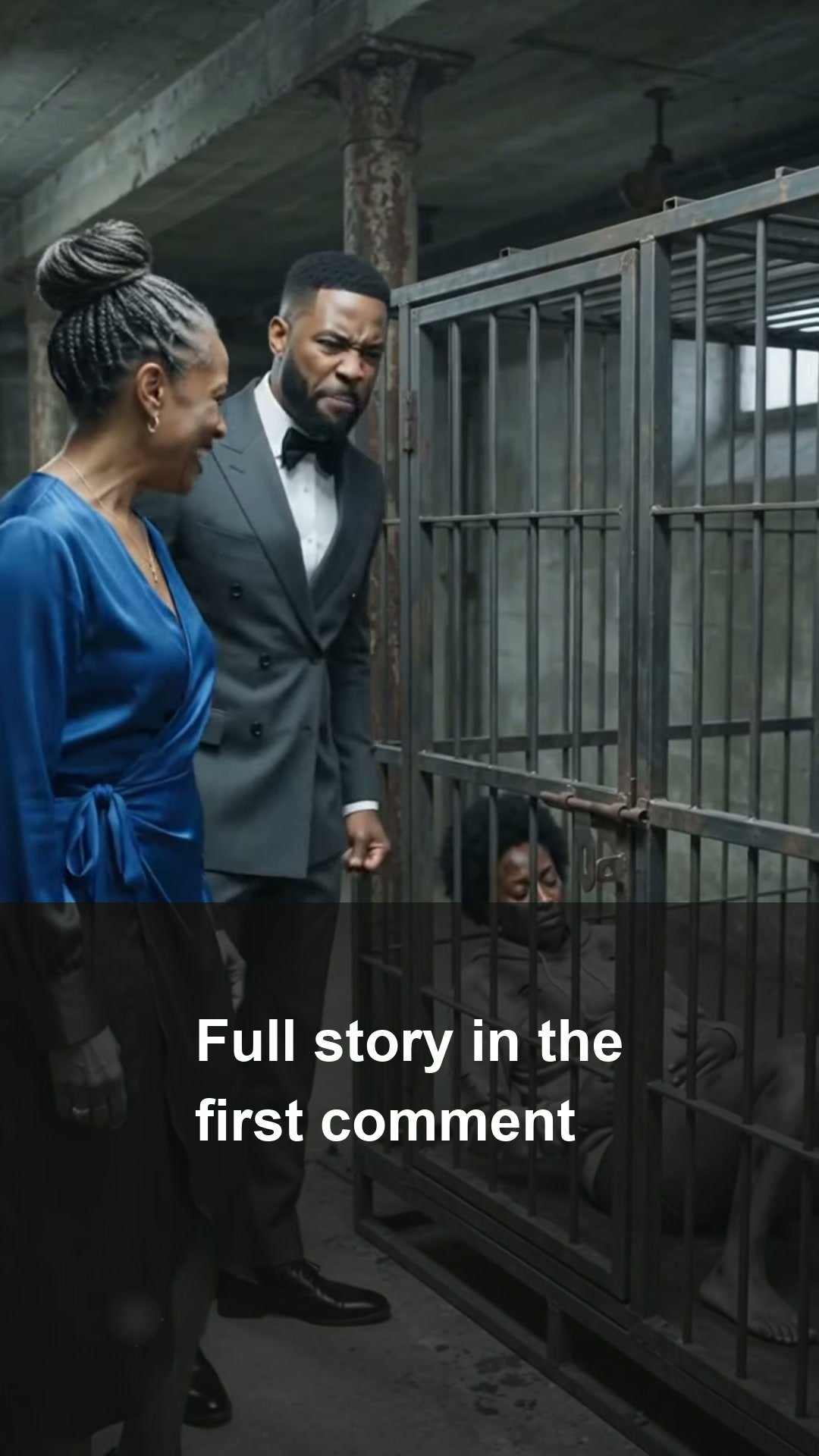
The smell of expensive Bordeaux and roasted rosemary bled through the floorboards, thick enough to coat my throat. Above me, the dinner party hummed—a rhythmic, dissonant pulse of silverware clinking against china and the calculated laughter of men who believed they owned the world. I sat on the cold concrete, my fingers tracing the jagged, rusted edge of the metal scrap I had pried from the cage. The vibration of their voices felt like a physical weight, pressing down on the ceiling, demanding my silence. I pressed my palm against the cool, damp basement wall, tracing the hidden seam where the foundation met the earth. My child kicked, a sharp, frantic movement against my ribs that mirrored the erratic ticking of the basement clock. I ignored the ache in my joints and crawled toward the heavy, reinforced door. I reached up, my bruised fingers trembling as I gripped the lock I had spent weeks studying, the mechanism cold and unyielding against my skin. The laughter above peaked, a sharp crescendo of approval for one of Marcus’s polished, dishonest anecdotes about our life together. I felt the surge of bile, the sudden clarity of the predator seeing the trap for the first time. I didn’t just want to leave; I wanted to break the glass. I stood, my knees locking, and jammed the metal shard into the keyhole. It clicked, a tiny, metallic victory that echoed louder than the music in the dining room. I pushed the door open just a crack, letting the scent of perfume and fresh air rush into my lungs, a stark contrast to the stale, subterranean air I had breathed for months. I stepped into the hallway, my shadow stretching long and distorted against the pristine white wallpaper. I found them all standing in the foyer, glasses raised, frozen as I walked into the light. Marcus turned, his smile brittle, his eyes screaming for me to retreat back into the dark. I looked directly at Julian, then at the doctor, and finally, I looked at Marcus. I am not the woman you keep, I am the evidence of what you have done.
The kitchen floor in my childhood home was linoleum, patterned with faux-marble swirls that I traced with my index finger while my father threw a glass plate against the sink. The sound was a sharp, crystalline explosion, shards dancing across the tiles like jagged diamonds. My mother didn’t scream; she just started counting the silverware, her voice trembling into a rhythmic, desperate tally. One fork, two spoons, a dented knife. I was seven, and I learned then that if you counted, the world stayed anchored. If you looked up, the chaos would claim you. I stayed on the floor, watching the light catch on a sliver of glass near my shoe, wondering why she didn’t just pick it up. I decided then that I would always be the one to clean the edges, to smooth the seams, to ensure the house looked whole even when the foundation was splintering.
Ten years later, in the humid silence of a high school library, Marcus sat across from me. He wasn’t violent then. He was precise. He organized his pens by color and his notes by font size. He caught me staring at the way he aligned his highlighter with the edge of his notebook and didn’t look away. You’re scanning for threats, he said, his voice low enough to slide under the librarian’s radar. I felt a cold prickle of recognition, like finding a mirror in a dark room. I thought he was observant. I thought he understood the burden of watching everything. I decided he was the only person who saw the real me—the girl who kept the silverware counted and the glass swept away. I didn’t see the way he monitored my breathing, or how he shifted his body to block the exit when he spoke. I felt safe because he was predictable, and I mistook his control for a shield.
My brother, Leo, was the one who tried to warn me. He stood on the porch of our first apartment, his boots caked in mud, looking at the deadbolt Marcus had installed. It was a heavy, industrial-grade steel lock, entirely unnecessary for a ground-floor unit. Why does he want the keys to your life, Elara? he asked, thumbing the edge of his own door key. I laughed, a brittle sound that felt like glass hitting tile. He just likes to keep things secure, I said, feeling that familiar, defensive heat rise in my chest. I didn’t want to admit that the lock made me feel like a possession. I wanted the stability, the appearance of a man who cared enough to fortify the walls. I chose to ignore the way Leo looked at me—with the tired, hollow eyes of someone who knew the end of the story before the first chapter was even written. I walked inside and locked the door behind me, and I felt a sense of relief that now, I knew exactly who was on the outside.
Marriage felt like moving into a tomb that had been polished to a high, blinding shine. We had a dinner party for his associates—the same kind of polished, teeth-baring affairs that happen in houses like this. Evelyn, his mother, stood by the mantel, her fingers twitching against the gold chain around her neck. She held a spare key to every room, a physical manifestation of her own desperate need to preside over our decay. She leaned toward me, her breath smelling of peppermint and secrets. You look tired, Elara, she whispered, her eyes tracking the way Marcus gripped my arm to steer me toward a guest. It wasn’t concern. It was a tally. She was counting the cracks in my composure the way my mother had counted the forks. I realized then that I wasn’t a wife; I was a project, a fragile, vintage heirloom that needed constant guarding to keep from shattering under the pressure of their expectations. I smiled at the guest, a man whose name I’d already forgotten, and felt the metal of my wedding band biting into my skin. I decided to stop talking. Silence was the only thing they couldn’t misinterpret.
Money was never a problem, which meant it was the only problem. Marcus kept me on an allowance that was calculated down to the cent, a ledger he kept in the top drawer of his mahogany desk. Every grocery trip, every medical co-pay, every incidental expense was a point of contention he could use to prove my instability. He’d lay the receipts out on the dining table, his finger tapping the paper. You’re drifting again, he’d say, not looking at me. You spend on things you don’t need because you don’t know what you have. I felt the air in the room thin. I remembered the kitchen floor, the linoleum, the way the world was supposed to be orderly. I started to hide small things—a stray coin, a note written on the back of a grocery list, a singular moment of autonomy kept in a drawer he hadn’t yet thought to check. I was hoarding my own existence, gathering the evidence of myself in case I eventually dissolved into the wallpaper.
The warnings were always soft, hidden in the pauses between sentences. Dr. Aris once came over for dinner, back when I was still allowed to sit at the table. He was talking about trauma, about the way the brain rewrites history to survive. He looked right at me, his scalpel-sharp eyes dissecting the tremor in my hand as I poured the wine. Sometimes, the body knows the truth even when the mind refuses to acknowledge the cage, he said, his voice clinical, detached. I stared at the wine, the deep, blood-red stain it made on the white cloth. I thought he was speaking to me, a secret signal. I spent the rest of the night testing the limits of the room, gauging the distance to the door, wondering if he saw the way Marcus was watching his every move. I decided that night that if I ever spoke, it would be to someone who wasn’t afraid of the blood.
But the pattern was older than the marriage, older than the school, older than the house. It was the rhythm of my life: the threat, the tension, the silence, the inevitable breakage. I remembered my father’s face, the way his eyes would go flat right before he raised his hand. It was the exact same shade of indifference Marcus wore when he told me I wasn’t allowed to leave the basement. It wasn’t about the guests or the house or the money. It was about the fact that they all viewed life as a series of objects to be arranged, a gallery of things they owned, and if an object threatened to walk away, it had to be rendered immobile. I looked at the golden key around Evelyn’s neck, the one she wore like a badge of office. I saw how she touched it, a nervous, habitual flick of the nail against the metal. That key wasn’t for safety. It was for the cage. I realized then that my entire life had been a long, slow walk toward this basement. The locks weren’t installed today. They were built into the foundation of everything I had ever called a home. I wasn’t just escaping a room; I was breaking the cycle of every floor I had ever sat on, every piece of glass I had ever cleaned up, and every silence I had ever kept. The door was open now. The present, with its bright, blinding lights and its terrified guests, was just the final, necessary explosion.
The kitchen tile was cold against my bare heels as I watched them through the narrow gap of the servant’s passage. Julian stood by the mahogany hutch, swirling a glass of vintage scotch, his eyes fixed on a painting of a landscape he didn’t realize was a cover for a wall safe. He was a man who spent his life constructing bridges for corporate giants, yet he stood here, blind to the structural collapse happening ten feet away. He believed in the solidity of wealth, assuming that if a house cost millions, the people inside must be worth millions, too. I knew his secret: he had spent his youth embezzling to pay for a mistress’s apartment, a fact that made him terrified of scrutiny, making him the perfect, fragile witness to the truth.
Beside him, Dr. Aris leaned against the marble island, checking his watch with the clinical precision of a man who equated human anatomy with clockwork. He had once saved my father’s life in a routine bypass, a memory that made my stomach churn with the weight of irony; he prided himself on being a healer, yet his gaze drifted over the bruising on my wrist as if it were nothing more than a cosmetic blemish. He didn’t see a woman being broken; he saw a patient who lacked the discipline to be healthy. He was a man of science who had turned his back on the biological reality of suffering because it was easier to diagnose a nervous disorder than to acknowledge a monster.
Evelyn walked into the frame, her hand instinctively rising to the gold chain at her throat. She looked like a queen, or a jailer, or a grandmother. She believed she was protecting a lineage, convinced that my imprisonment was a form of preservation—a way to keep the Marcus she had failed to raise from drifting into the same void his father had left behind. She didn’t hate me; she simply didn’t view me as a person. I was a vessel for her grandson, an extension of her family’s legacy that needed to be kept in a climate-controlled environment, away from the corruption of the world. She caught my eye for a fraction of a second, her expression hardening, and I realized her contradiction: she worshipped the very name she was suffocating to keep pure.
Marcus entered from the hallway, his smile a serrated blade. He was the architect of this theater, a man terrified that if he stopped performing, the floor would vanish beneath him. He was performing for Officer Miller, whose presence in the foyer was a testament to the power of a handshake. Miller was a man who measured justice by the length of a friendship, clinging to the belief that men like Marcus were the Gemini-Latest of civilization. He saw the badges and the fine tailoring, and he allowed those symbols to blind him to the scent of decay rising from the basement stairs.
I reached for the heavy iron fire poker propped against the furnace. My hands were shaking, not from terror, but from the sudden, sharp clarity of the trap I had built for them. I wasn’t just a captive; I was the curator of their ruin. I looked at the gold key hanging from Evelyn’s neck, the metal glinting in the harsh recessed lighting. I didn’t want to just walk out of the basement; I wanted to force them all to look at what they had allowed to exist under the guise of an evening meal. My decision was absolute. I would break the silence, and I would make sure the sound shattered every porcelain plate, every polite laugh, and every lie they had used to hold this room together. The lock clicked under my hand, and I moved toward the door, the weight of the key already heavy in my mind.
I sat in the sterile, fluorescent glare of the precinct waiting room, my fingers tracing the jagged edge of the medical report I had stolen from the basement’s hidden cache. The air smelled of industrial bleach and wet pavement. Officer Miller sat across from me, his coffee cooling in a Styrofoam cup, his posture rigid with the discomfort of a man watching his social world crumble. I placed the documents on the desk. They were stained with the dust of my incarceration, but the ink was clear. When I spoke, my voice didn’t shake; it was the archival tone I used to use when classifying evidence. I reported the false imprisonment, the systematic starvation, and the forced isolation. Miller’s eyes flickered from the pages to my face, then toward the door, as if he expected Marcus to walk in and command him to ignore the reality shifting beneath his feet. He took a long, stalling breath, his jaw muscles working. My decision was set: I would drag the institutional rot into the light. I watched his hand move toward his radio, a reluctant, irreversible betrayal.
The next day, I sat in the minimalist office of a high-priced firm downtown, the city traffic a muted hum through the triple-paned glass. The lawyer, a woman with sharp features and even sharper eyes, flipped through the bank statements I had managed to pull from the archives Marcus thought were secure. I had cancelled the joint power of attorney and frozen every liquid asset Marcus used to curate his status. The lawyer leaned back, her chair creaking, and watched me with a mix of professional curiosity and human revulsion. She told me the counter-suit would be scorched earth. I nodded. Every dollar drained from his accounts was a brick pulled from the foundation of his ego. I walked out of the building into the biting wind, knowing that by nightfall, his credit cards would be declined at the very club where he bought his relevance.
My phone vibrated in my palm, a relentless rhythm of missed calls from Marcus that I silenced and deleted without hesitation. I checked into a hotel under a private alias and waited for the notification. It came three hours later: an email from HR at his firm. I had sent them the timestamped logs of his behavior, the internal correspondence that proved he used company resources to track my movements. The company’s response was swift, an automated message confirming an internal investigation into professional conduct. My chest felt tight, the phantom weight of the basement still pulling at my lungs, but I breathed through it. I had turned the corporate machinery against its most pampered cog. He would lose his career before he even realized his marriage was truly over.
I arrived at the laboratory for the DNA test, the technician’s sterile touch against my arm a stark contrast to the rough hands of my past. The needle felt like a release, a physical manifestation of the truth I was finally allowed to claim. As the vial filled with my blood, I thought of the future—a life where no one owned my medical history. Outside the clinic, I saw his car idling at the intersection. He didn’t see me, but he was looking for me, his head snapping toward every passing shadow. The escalation was working; he was becoming the frantic creature he had spent years pretending I was. I stepped into a cab and gave the driver a different address, my heart hammering against my ribs, not in fear, but in the rhythm of a hunter who has finally cornered her prey.
The final move required a visit to the surrogate’s office of the county court. I stood before the clerk, my hands steady as I filed the papers to contest the will his mother, Evelyn, had forced me to sign under duress. I laid out the evidence of coercion, the notarized threats, and the medical records detailing the abuse I suffered while he groomed his inheritance. The clerk looked at me, a flicker of genuine pity in her eyes, before she stamped the motion. It was done. The legal system was now a weapon aimed directly at the heart of the family legacy.
As I walked out into the rain, my phone finally buzzed with a message from an unknown number. It was a photo of our front door, the wood splintered, the lock hanging uselessly from the frame. They had found the basement empty. The consequence engine had roared to life. Marcus was no longer a husband or a homeowner; he was a man being hunted by the very authorities he believed were his subordinates. I reached into my coat, touched the cool, sharp key I had salvaged from the house, and allowed myself a single, jagged breath of unmonitored air. The structure was collapsing, and for the first time in years, I was standing on the outside of the debris, watching it fall.
The streetlights of the suburban enclave flickered in the persistent drizzle, casting long, bruised shadows over the police tape that now bisected our driveway. I sat in the back of the ambulance, the interior smelling of sterile plastic and industrial cleaner, watching the reflection of flashing blue lights dance across the dark windows. Outside, the neighborhood had transformed into a theater of voyeurism. Neighbors stood on their manicured lawns, clutching lukewarm mugs of coffee, their faces illuminated by the glow of smartphones. They weren’t looking at me; they were recording the spectacle of Marcus’s undoing, documenting the moment their social compass spun toward chaos.
Officer Miller stepped toward the ambulance, his shoulders slumped as if the weight of his badge had doubled in the last hour. He avoided my gaze, his hand hovering near his holster, then dropping to his side. He didn’t say he was sorry. He didn’t have to. The betrayal was etched into the tight line of his jaw.
Marcus is gone, he said, his voice flat, stripped of the authority he usually wore like a second skin. The warrant for the secondary properties just went through. People are talking, Elara. Every donor, every board member—they’re all scrubbing their social media accounts. You’re the headline now.
I looked at my hands, resting against the thin, synthetic blanket. The knuckles were white, still locked in a phantom grip. I felt a strange, cold distance from the woman Miller was describing. I wasn’t a person to them anymore; I was a data point in their shared disgrace, a piece of evidence that had suddenly gained sentience.
He hesitated, then cleared his throat. There was an incident at the school. They’ve pulled the kids out of the enrichment program. They’re calling it a potential security risk, but we both know what they’re calling it in the group chats.
The thought of those frantic, scrolling screens—the digital pulse of a community deciding how to reframe their silence as ignorance—made my vision blur. They needed me to be a victim, or they needed me to be a siren, but they couldn’t afford for me to just be a woman who had survived. If I was a survivor, it meant they had been blind.
I looked up at Miller, my voice thin but steady. Did you check the basement, Miller? Did you see the walls?
He flinched, the sound of the rain against the ambulance roof filling the silence between us. He turned away, disappearing into the sea of blue light and shifting figures.
I leaned back, the metal frame of the stretcher biting into my spine. My phone, tucked into the pocket of the coat I had grabbed on my way out, began to vibrate against my hip. A steady, incessant hum of notifications. Strangers offering support, journalists demanding a statement, Marcus’s associates trying to negotiate the terms of their own survival. I reached inside and pulled the device out, the screen lighting up my palm. I watched the messages stack up—a cascade of digital noise, all of it built on the foundation of what I had been forced to endure.
I pressed the power button, plunging the screen into blackness. The silence that followed was absolute. I decided then that I would not be the center of their narrative. I would be the silence that replaced it. I stood up, pushing the back doors of the ambulance open, and stepped out into the rain, leaving the wreckage of their world behind me.
The rain slicked the driveway, turning the gravel into a slurry of grey mud and crushed quartz. Near the edge of the ambulance’s rear bumper, a thin, tarnished gold chain lay half-buried in the silt. I stepped over it, my boots heavy with the weight of the night’s debris. Officer Miller stood near the edge of the police cruiser, his uniform jacket open, his eyes fixed on the house. When he saw me, he took a half-step forward, then stopped, his hands hovering at his sides as if he didn’t know whether to offer a blanket or an apology. I didn’t look at him. I looked at the house, the windows dark now that the fire alarm had finally been silenced.
Inside the station, the finality came in the form of a thick, manila folder. I sat in a plastic chair that groaned under the weight of my exhaustion. A clerk slid a pen across the laminate table, the plastic clicking against the surface. I signed the divorce papers with a hand that had stopped shaking hours ago. Every stroke of the ink was a severance of the legal binds Marcus had used to define my existence. He was being held in a holding cell two floors down, his status reduced to a booking number, his reputation dismantled by the very testimonies of the guests he had invited to witness his glory.
Evelyn’s lawyer had been the first to call, offering a quiet settlement to keep her name out of the headlines. I watched the clock on the wall, the second hand twitching forward with mechanical indifference. I decided that the money was an anchor, not a life raft. I refused the terms, opting instead for the court to decide the scope of her complicity.
I left the station through the side exit, avoiding the throng of reporters huddled under umbrellas by the main entrance. My car, recovered from the long-term parking lot, waited for me in the drizzle. I sat behind the wheel, the interior smelling faintly of the dust I had left behind in the basement. I ran my fingers over the dashboard, feeling the reality of the clean plastic. The engine turned over on the first try, a steady, rhythmic thrum that matched the beating of my own heart. I turned the headlights on, the beams cutting through the gloom of the parking lot. I shifted into drive, steering away from the estate, away from the archive of my own trauma, and onto the main road. I checked the mirror once, seeing nothing but the receding lights of the station, and then I kept going.
The air in the cabin smelled of damp pine and salt as I pulled into the gravel drive of the rented bungalow. I stepped out, the soles of my shoes crunching against the wet stones. A small, golden-eyed terrier trotted from the porch, tilting its head. I knelt, my knees aching from the damp, and let the dog press its cold nose into my palm. It didn’t flinch. It didn’t wait for a command.
Inside, the kitchen was flooded with the late afternoon light of the Oregon coast. I set a carton of eggs on the counter. I cracked one into a pan, the sizzle sharp and sudden. I ate standing up, the yolk running against the crust of toasted bread. The taste was metallic, then rich. It was the first meal I had finished without gauging the reaction of a man standing over my shoulder.
My phone vibrated on the wooden table, a text from the therapist, Dr. Aris’s colleague. I turned the device face down. I didn’t want to recount the basement; I wanted to track the movement of the dust motes in the sunbeams. I walked to the garden, where the soil was dark and loose. I pressed a handful of damp earth between my fingers, feeling the grit under my nails. It felt like a tether to the world I had reclaimed.
I had spent my birthday in that windowless room, counting the floorboards until I lost track of the numbers. Today, the calendar on the wall said December, but the hydrangeas were still stubborn, green leaves clinging to the stalks. I reached out and pruned a dead branch, the snap of the wood clean and decisive. I would not plant anything new until the spring. For now, I would simply watch the tide retreat and return, a rhythm I finally owned. I went back inside and locked the door, not because I was afraid, but because I enjoyed the click.
The ambulance doors swung shut, sealing away the sterile scent of the hospital and the suffocating hum of the sirens. I stood by the driveway, the gravel shifting unevenly beneath my feet as the heavy vehicle lurched into motion. The tires crunched, spitting up a spray of cold, wet earth. Beneath the tread of the departing ambulance, I saw the glint of something thin and metallic. It was the gold chain Evelyn had worn like a shackle, now snapped into three jagged segments, half-buried in the thick, dark mud of the drive. It lay there, twisted and dull, no longer a mark of authority but a discarded trinket being ground deeper into the slush. I turned away, leaving the metal to sink into the rain-soaked ground, and walked toward the house.
Leave a Reply